
Report Feature
Bird Food Market Trends and Forecast
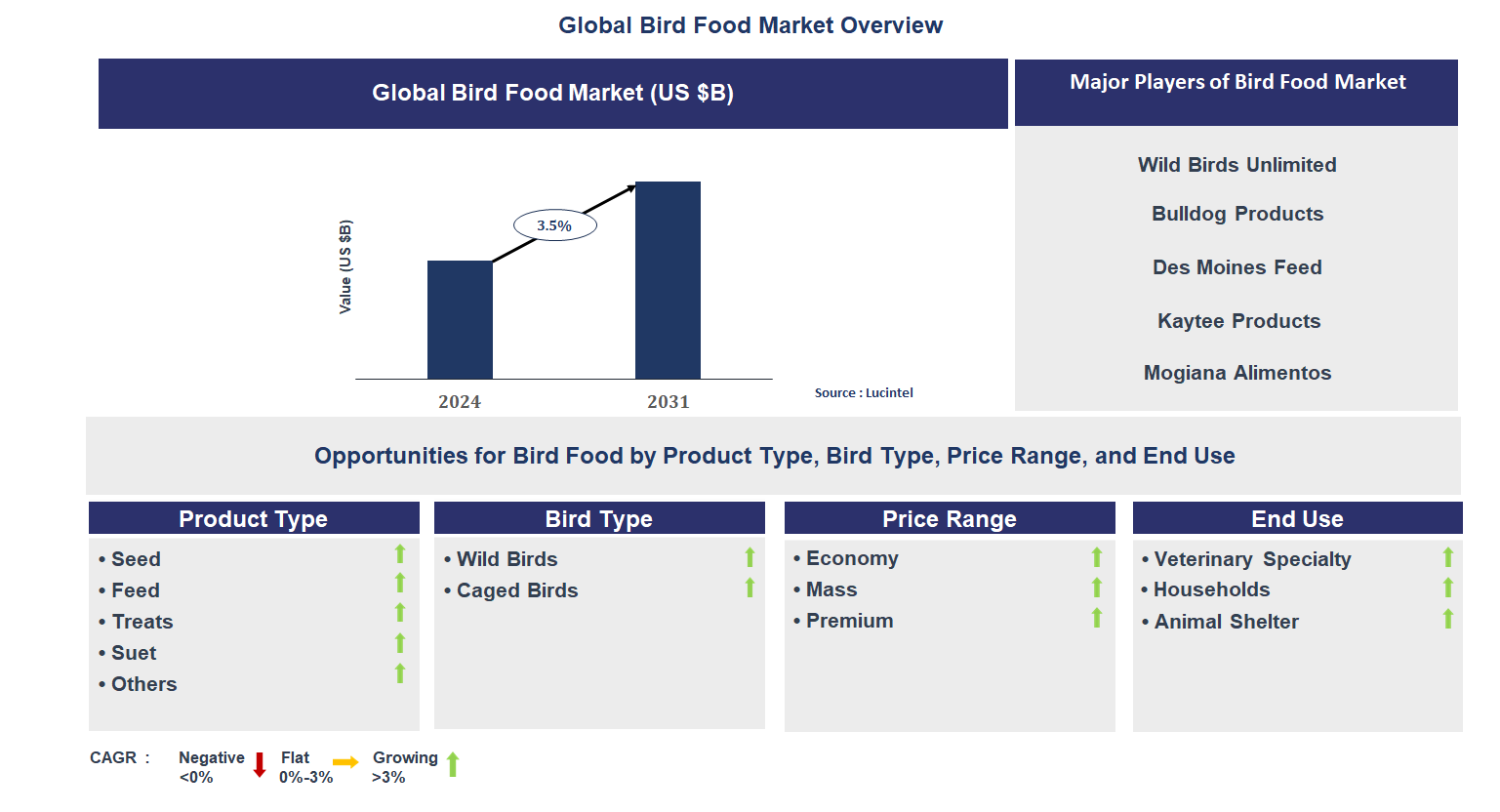
The future of the global bird food market looks promising with opportunities in the veterinary specialty, household, and animal shelter markets. The global bird food market is expected to grow with a CAGR of 3.5% from 2025 to 2031. The major drivers for this market are the increasing popularity of pet bird ownership, the rising demand for nutritious bird food options, and the growing awareness of bird health & wellness.• Lucintel forecasts that, within the product type category, treat is expected to witness the highest growth over the forecast period.
• Within the end use category, household is expected to witness the highest growth.
• In terms of region, APAC is expected to witness the highest growth over the forecast period. Gain valuable insights for your business decisions with our comprehensive 150+ page report. Sample figures with some insights are shown below.
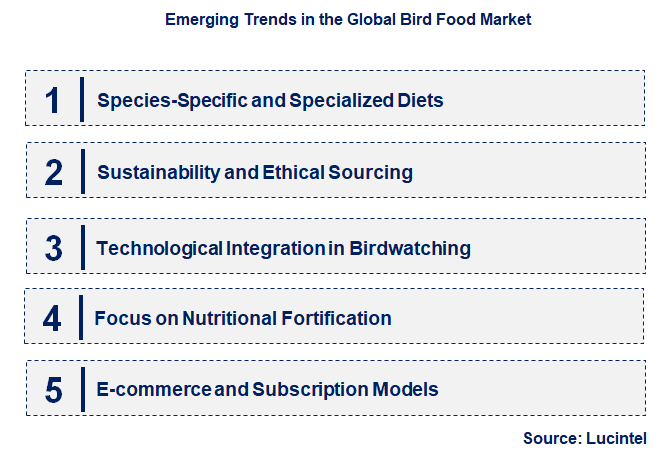
Emerging Trends in the Bird Food Market
The bird food market is being reshaped by several key trends, which are pushing the industry toward greater innovation and specialization. These trends are driven by a convergence of consumer consciousness, a focus on health and sustainability, and technological advancements, all of which are influencing product offerings and consumer behavior.• Species-Specific and Specialized Diets: A key trend is the increasing demand for species-specific and specialized bird food. Consumers are moving away from generic seed mixes and are seeking diets tailored to the nutritional needs of particular bird species or for specific purposes, such as breeding or molting. This trend is driven by a greater understanding of avian nutrition and a desire to provide optimal health for pet and wild birds.
• Sustainability and Ethical Sourcing: A significant trend is the increasing demand for sustainable and ethically sourced bird food. Consumers are concerned about the environmental impact of their purchases and are seeking products made from organic, non-GMO, and responsibly sourced ingredients. This trend is pushing brands to adopt eco-friendly packaging and transparent supply chains to build consumer trust and loyalty.
• Technological Integration in Birdwatching: A major trend is the integration of technology into the bird feeding hobby. Smart feeders with built-in cameras and AI-powered bird identification are gaining popularity. This trend is enhancing the birdwatching experience by allowing enthusiasts to identify and observe birds in their backyard from their smartphones, which in turn drives demand for premium bird food.
• Focus on Nutritional Fortification: The market is seeing a growing trend toward nutritionally fortified bird food. Brands are adding essential vitamins, minerals, and probiotics to their products to support avian health, feather quality, and immunity. This trend is a direct response to a major health concern among bird owners and is elevating the market from basic sustenance to a focus on complete wellness.
• E-commerce and Subscription Models: The shift to e-commerce and the rise of subscription-based models is a major trend. Brands are leveraging online platforms to sell directly to consumers and offer convenient, recurring delivery services. This trend is making it easier for customers to access a wide variety of specialized products and is ensuring a steady supply of bird food, regardless of a season. These emerging trends are fundamentally reshaping the bird food market by prioritizing consumer values, convenience, and product quality. The focus on species-specific diets and nutritional fortification is building brand loyalty, while the rise of sustainable products and technological integration is broadening the market’s appeal. The shift to e-commerce is enabling these changes, creating a more sophisticated and consumer-centric industry.
Recent Development in the Bird Food Market
The bird food market is experiencing a period of significant development, marked by a surge in innovation and a strategic focus on specific end-user needs. These changes are influencing product offerings, distribution channels, and market growth, with a clear emphasis on enhancing product performance and meeting the evolving demands of consumers.• Development of Fortified Diets: A key recent development is the widespread development of nutritionally fortified bird food. Manufacturers are now producing pelleted diets and seed mixes that are enriched with vitamins, minerals, and amino acids to ensure a balanced diet. This development is a direct response to veterinary recommendations and a growing consumer awareness of avian health.
• Introduction of Smart Feeders: A significant development is the introduction and popularization of smart bird feeders. These feeders feature built-in cameras and AI technology that can identify different bird species, capture photos and videos, and send notifications to the owner’s phone. This development has transformed birdwatching into a more engaging, high-tech hobby.
• Rise of Sustainable Packaging: The market is witnessing a notable development in the use of sustainable and eco-friendly packaging. Brands are adopting resealable pouches, compostable bags, and recyclable containers to appeal to environmentally conscious consumers. This development is not only a response to consumer demand but also a strategic move to improve a brand’s public image.
• Growth of Direct-to-Consumer Channels: A recent development is the rapid growth of direct-to-consumer (DTC) sales and online retail for bird food. Brands are using their websites and social media to sell products directly to consumers, bypassing traditional retail channels. This development allows for a wider product range and a more direct relationship with customers.
• Focus on Species-Specific Offerings: A recent development is the increased focus on species-specific bird food. Brands are creating specialized mixes for a variety of birds, such as finches, canaries, and parrots, as well as for regional wild bird populations. This development is catering to the unique dietary needs of different birds and is a key driver of product innovation. These recent developments are profoundly impacting the bird food market by elevating the standards of product quality, technology, and sustainability. The shift toward fortified diets and smart feeders is enhancing product functionality and the consumer experience, while the growth of sustainable packaging and DTC channels is transforming how brands are created and distributed.
Strategic Growth Opportunities in the Bird Food Market
The bird food market presents numerous strategic growth opportunities across various key applications. These opportunities are driven by the need for enhanced product quality, health, and efficacy in a wide range of products. Companies can leverage these trends to innovate and expand their market presence.• E-commerce and Subscription Services: The e-commerce and subscription service segment presents a prime growth opportunity. By offering a convenient, recurring delivery service, companies can build a loyal customer base, ensure a steady supply, and bypass traditional retail costs. This model is particularly appealing to consumers who want the convenience of not having to restock frequently.
• Nutritionally Enhanced Products: The nutritionally enhanced products segment offers a significant growth opportunity. By developing and marketing fortified and species-specific diets, companies can appeal to the health-conscious pet owner. This is a high-value segment that can command a premium price and create a reputation for quality and expertise in avian nutrition.
• Sustainable and Organic Products: The sustainable and organic products market is a major growth area. As more consumers prioritize environmental responsibility, there is a growing demand for bird food made with organic ingredients and packaged in eco-friendly materials. Companies can capitalize on this by promoting their sustainable practices and ethical sourcing.
• Backyard Birdwatching Accessories: The backyard birdwatching accessories segment is a high-growth area. By integrating with high-tech bird feeders, cameras, and monitoring apps, companies can create a more engaging experience for enthusiasts. Providing a comprehensive line of accessories and technological products is a key area for expansion.
• International Market Expansion: International markets, particularly in Asia, offer a lucrative opportunity. With rising disposable incomes and a growing interest in pet ownership and backyard birding, companies can expand their presence through strategic partnerships and localized marketing efforts. This strategy can significantly boost brand visibility and sales in untapped markets. Strategic growth opportunities in the bird food market are concentrated in high-value, consumer-centric segments. By focusing on e-commerce, nutritionally enhanced products, sustainable offerings, and high-tech accessories, companies can align their strategies with the most dynamic parts of the market. This targeted approach will drive product innovation and market leadership, ensuring sustained growth and profitability.
Bird Food Market Driver and Challenges
The bird food market is influenced by a dynamic interplay of technological, economic, and regulatory factors. The major drivers are creating a strong demand for high-quality and functional solutions, pushing the industry forward. However, several challenges related to costs, regulations, and market competition must be addressed for sustained growth. The factors responsible for driving the bird food market include: 1. Growing Pet Humanization: A major driver is the increasing humanization of pets, where bird owners view their animals as family members. This trend leads to a greater willingness to spend on high-quality, specialized, and nutritionally balanced bird food, driving a shift from commodity products to premium and niche offerings. 2. Increasing Popularity of Birdwatching: A key driver is the rising popularity of birdwatching as a recreational activity, particularly in urban areas. This trend is fueling the demand for wild bird food, feeders, and accessories, as people seek to reconnect with nature and attract a diverse range of birds to their backyards. 3. Rising Disposable Income: Rising disposable incomes in emerging economies are a significant market driver. As more people can afford discretionary purchases, the demand for premium bird food and accessories increases, fueling market growth and creating new customer segments beyond traditional markets. 4. E-commerce and Digital Marketing: The growth of e-commerce and digital marketing is a major driver. Online platforms offer a wide variety of products and provide brands with a direct channel to consumers, enabling them to market specialized products and build a community around their brand. 5. Focus on Animal Health: The growing focus on animal health is a key driver. Consumers are becoming more educated about the nutritional needs of birds and are demanding products that support their well-being. This has led to the development of fortified, species-specific, and health-focused bird food. Challenges in the bird food market are: 1. Fluctuating Raw Material Prices: A significant challenge is the volatility of raw material prices, such as seeds and grains. Factors like climate change, crop failures, and supply chain disruptions can lead to unpredictable price fluctuations, which impact profit margins and make it difficult for businesses to maintain stable pricing. 2. Intense Competition and Market Saturation: The bird food market is highly competitive, with numerous established brands and new entrants. This can lead to aggressive price wars and marketing campaigns, which compress profit margins and make it difficult for new businesses to compete and sustain growth. 3. Seasonal Demand and Inventory Management: The market faces a major challenge with its seasonal nature. Demand for wild bird food is typically highest in winter, which creates logistical and inventory management issues. Companies must effectively manage supply to meet seasonal peaks without overstocking during off-seasons. The bird food market is experiencing robust growth driven by the powerful trends of pet humanization, birdwatching, and technological innovation. However, this growth is tempered by significant challenges, including volatile raw material prices, intense competition, and the seasonal nature of demand. The ability of companies to innovate and provide a unique value proposition while managing these external factors will be crucial for sustained market growth.List of Bird Food Companies
Companies in the market compete on the basis of product quality offered. Major players in this market focus on expanding their manufacturing facilities, R&D investments, infrastructural development, and leverage integration opportunities across the value chain. With these strategies bird food companies cater increasing demand, ensure competitive effectiveness, develop innovative products & technologies, reduce production costs, and expand their customer base. Some of the bird food companies profiled in this report include-• Wild Birds Unlimited
• Bulldog Products
• Des Moines Feed
• Kaytee Products
• Mogiana Alimentos
• Pennington Seed
• D Pet Products
• F.M. Brown’s Sons
• Wagner’s
• Hartz
Bird Food Market by Segment
The study includes a forecast for the global bird food market by product type, bird type, price range, end use, and region.Bird Food Market by Product Type [Value from 2019 to 2031]:
• Seed
• Feed
• Treats
• Suet
• Others
Bird Food Market by Bird Type [Value from 2019 to 2031]:
• Wild Birds
• Caged Birds
Bird Food Market by Price Range [Value from 2019 to 2031]:
• Economy
• Mass
• Premium
Bird Food Market by End Use [Value from 2019 to 2031]:
• Veterinary Specialty
• Households
• Animal Shelter
Bird Food Market by Region [Value from 2019 to 2031]:
• North America
• Europe
• Asia Pacific
• The Rest of the World
Country Wise Outlook for the Bird Food Market
The global bird food market is undergoing a significant transformation, driven by a growing focus on pet well-being, sustainability, and technological integration. Recent developments in major countries are characterized by a shift toward species-specific and nutritionally enhanced products, a strong emphasis on eco-friendly packaging, and the rise of e-commerce as a primary distribution channel, reflecting the increasing humanization of pets and the growing popularity of birdwatching.• United States: The U.S. market is a leader in product innovation and backyard bird feeding. Recent developments include a strong demand for high-quality, fortified seed mixes and suet cakes, driven by a desire to attract specific bird species. The market is also seeing a surge in smart feeders with AI-powered cameras, and a growing consumer preference for organic, non-GMO bird food.
• China: China’s bird food market is experiencing rapid growth, propelled by a burgeoning middle class and an increase in pet bird ownership. Recent developments are marked by a swift expansion of online retail platforms and a demand for a wide variety of imported and domestic bird food. There is also a growing interest in specialized, species-specific food for exotic birds.
• Germany: Germany’s market is characterized by a strong focus on quality and environmental responsibility. Recent developments are centered on the demand for high-quality, sustainably sourced bird food and eco-friendly packaging. The market is also seeing a rise in specialized products for wild birds, reflecting a national commitment to conservation and a deep-seated culture of backyard bird feeding.
• India: India’s bird food market is in a rapid growth phase, fueled by its young, urban population and rising disposable incomes. Recent developments include the emergence of online-first brands that offer a variety of bird food at accessible price points. There is a growing awareness of the nutritional needs of pet birds, leading to a shift from traditional grain mixes to more balanced, pellet-based diets.
• Japan: Japan’s bird food market is highly sophisticated, focusing on precision and health. Recent developments include a growing demand for high-quality, nutritionally complete pelleted diets for pet birds. The market is also seeing a strategic shift toward innovative products that cater to the specific dietary needs of a wide range of popular pet bird species, such as parrots and finches, reflecting a detail-oriented consumer base.

Features of the Global Bird Food Market
Market Size Estimates: Bird food market size estimation in terms of value ($B). Trend and Forecast Analysis: Market trends (2019 to 2024) and forecast (2025 to 2031) by various segments and regions. Segmentation Analysis: Bird food market size by various segments, such as by product type, bird type, price range, end use, and region in terms of value ($B). Regional Analysis: Bird food market breakdown by North America, Europe, Asia Pacific, and Rest of the World. Growth Opportunities: Analysis of growth opportunities in different product types, bird types, price range, end uses, and regions for the bird food market. Strategic Analysis: This includes M&A, new product development, and competitive landscape of the bird food market. Analysis of competitive intensity of the industry based on Porter’s Five Forces model.
FAQ
Q1. What is the growth forecast for bird food market? Answer: The global bird food market is expected to grow with a CAGR of 3.5% from 2025 to 2031. Q2. What are the major drivers influencing the growth of the bird food market? Answer: The major drivers for this market are the increasing popularity of pet bird ownership, the rising demand for nutritious bird food options, and the growing awareness of bird health & wellness. Q3. What are the major segments for bird food market? Answer: The future of the bird food market looks promising with opportunities in the veterinary specialty, household, and animal shelter markets. Q4. Who are the key bird food market companies? Answer: Some of the key bird food companies are as follows:• Wild Birds Unlimited
• Bulldog Products
• Des Moines Feed
• Kaytee Products
• Mogiana Alimentos
• Pennington Seed
• D Pet Products
• F.M. Brown’s Sons
• Wagner’s
• Hartz Q5. Which bird food market segment will be the largest in future? Answer: Lucintel forecasts that, within the product type category, treat is expected to witness the highest growth over the forecast period. Q6. In bird food market, which region is expected to be the largest in next 5 years? Answer: In terms of region, APAC is expected to witness the highest growth over the forecast period. Q7. Do we receive customization in this report? Answer: Yes, Lucintel provides 10% customization without any additional cost.
Table of Contents
List of Figures
List of Tables
Methodology
- In-depth interviews of the major players in this market
- Detailed secondary research from competitors’ financial statements and published data
- Extensive searches of published works, market, and database information pertaining to industry news, company press releases, and customer intentions
- A compilation of the experiences, judgments, and insights of Lucintel’s professionals, who have analyzed and tracked this market over the years.


Buy Now
Choose a license that fits your team. Instant PDF delivery.
Prices exclude taxes. Instant delivery. Custom licensing available on request.
Key Questions
- • What are some of the most promising, high-growth opportunities for the bird food market by product type (seed, feed, treats, suet, and others), bird type (wild birds and caged birds), price range (economy, mass, and premium), end use (veterinary specialty, households, and animal shelter), and region (North America, Europe, Asia Pacific, and the Rest of the World)?
- • Which segments will grow at a faster pace and why?
- • Which region will grow at a faster pace and why?
- • What are the key factors affecting market dynamics? What are the key challenges and business risks in this market?
- • What are the business risks and competitive threats in this market?
- • What are the emerging trends in this market and the reasons behind them?
- • What are some of the changing demands of customers in the market?
- • What are the new developments in the market? Which companies are leading these developments?
- • Who are the major players in this market? What strategic initiatives are key players pursuing for business growth?
- • What are some of the competing products in this market and how big of a threat do they pose for loss of market share by material or product substitution?
- • What M&A activity has occurred in the last 5 years and what has its impact been on the industry? For any questions related to Bird Food Market, Bird Food Market Size, Bird Food Market Growth, Bird Food Market Analysis, Bird Food Market Report, Bird Food Market Share, Bird Food Market Trends, Bird Food Market Forecast, Bird Food Companies, write Lucintel analyst at email: helpdesk@lucintel.com. We will be glad to get back to you soon.


