
Market Report · May 18, 2026

This market report covers trends, opportunities, and forecasts in the global data pipeline tool market to 2031 by technology (on premises and cloud based), application (big data analytics, customer relationship management, real time analytics, sales and marketing management, and others), and region (North America, Europe, Asia Pacific, and the Rest of the World)
We'll send your sample report shortly.
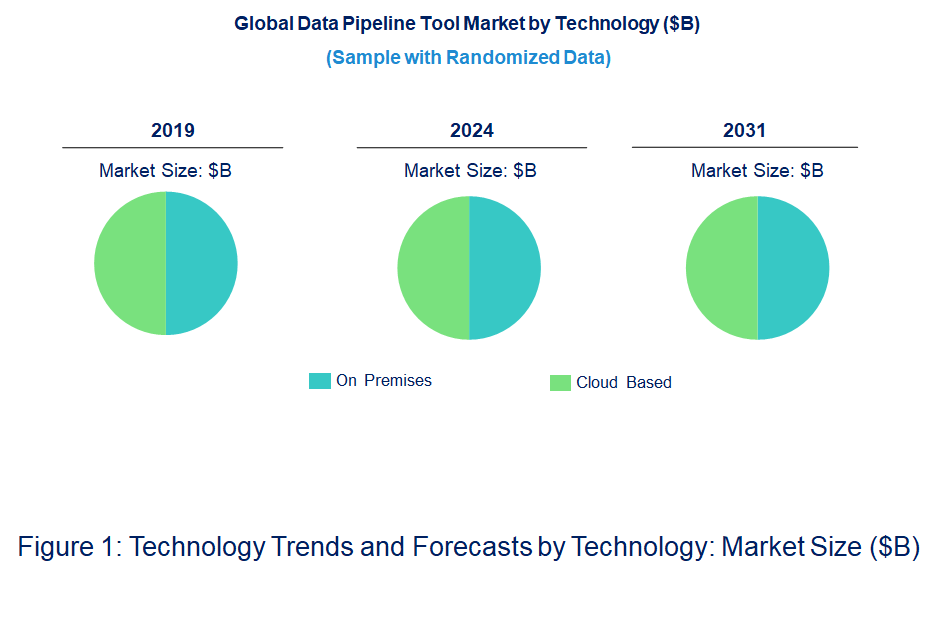
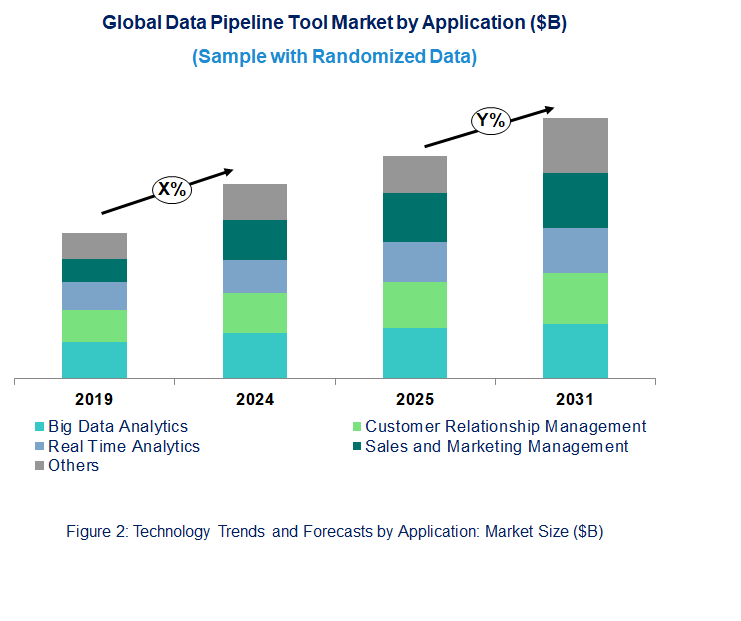
• Shift to Cloud-Based Solutions: Cloud-based data pipeline tools are becoming the industry standard due to their scalability, flexibility, and reduced infrastructure costs. These tools allow businesses to process and manage data remotely, enabling faster access and better collaboration, especially in big data analytics and real-time analytics.
• Integration with Artificial Intelligence and Machine Learning: AI and ML are enhancing data pipeline tools by automating data cleaning, processing, and analytics. These technologies can identify patterns, optimize workflows, and improve decision-making processes, making data pipelines more intelligent and efficient, especially in areas like customer relationship management.
• Real-Time Data Processing: Real-time data processing is gaining traction in the market as businesses require instant insights. Data pipeline tools that support real-time analytics are crucial for applications in sales and marketing management, where timely access to data can drive faster decisions and responses.
• Data Pipeline Automation: Automation is increasingly being incorporated into data pipelines to minimize manual intervention, reduce errors, and accelerate data flow. This trend helps companies handle large volumes of data with minimal human involvement, resulting in increased efficiency in analytics processes.
• Open-Source Data Pipeline Tools: Open-source tools are gaining popularity as they provide businesses with more flexibility and customization options without the high cost of proprietary solutions. Open-source platforms allow for more collaborative development and faster innovation, making them particularly attractive to smaller businesses and startups. These emerging trends are transforming the data pipeline tool market by introducing greater automation, scalability, and intelligence. As cloud solutions, AI, and real-time processing become more prevalent, businesses will be able to handle larger datasets more effectively, ensuring better performance across a wide range of applications.
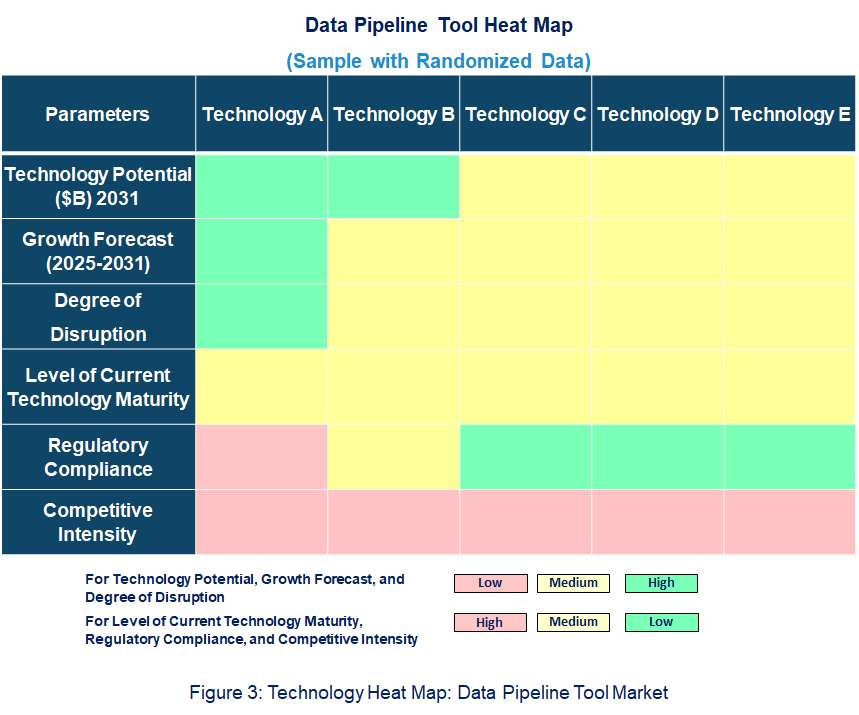
• Potential in Technology: The technology potential of the data pipeline tool market is immense, driven by the increasing need for businesses to manage and process large volumes of data across multiple applications. Cloud-based solutions, in particular, have significant potential due to their scalability, cost-effectiveness, and ability to handle complex data workflows. These tools enable businesses to process data in real-time, which is crucial for applications like real-time analytics and customer relationship management. Artificial intelligence (AI) and machine learning (ML) further enhance the potential of data pipeline tools by automating data processing tasks such as cleaning, integration, and analytics, resulting in more accurate and faster insights.
• Degree of Disruption: The degree of disruption in this market is high, as the shift from on-premise to cloud-based solutions and the integration of AI and ML are fundamentally changing how businesses manage their data pipelines.
• Current Technology Maturity Level: Current technology maturity is relatively high, with several mature cloud platforms and data pipeline tools already widely adopted by businesses. However, AI and ML integration in data pipelines are still evolving and may take time to achieve full potential across all sectors.
• Regulatory Compliance: Regulatory compliance is becoming increasingly important, especially in industries like healthcare and finance, where data privacy and security are critical. Data pipeline tools must adhere to regulations such as GDPR and HIPAA, ensuring secure and compliant data processing.
• IBM Corporation: IBM has introduced advanced AI-powered data pipeline tools as part of its cloud offerings. These tools leverage machine learning for data processing, helping businesses automate workflows, clean data, and integrate data from disparate sources. IBM’s focus on hybrid cloud solutions makes it a versatile option for enterprises looking to combine on-premise and cloud capabilities.
• Oracle Corporation: Oracle has strengthened its data pipeline tools with innovations in cloud-native integrations. Its data management platform helps organizations streamline data ingestion, transformation, and analytics workflows. Oracle's ability to handle both structured and unstructured data in real-time has made it a popular choice for enterprises with complex data requirements.
• Software AG: Software AG has enhanced its data pipeline offerings by integrating data integration and analytics into its tools. The company focuses on providing real-time data processing capabilities, enabling businesses to derive actionable insights from vast data streams. This integration boosts operational efficiency, especially for industries like manufacturing and supply chain.
• Amazon Web Services (AWS): AWS continues to lead the market with its fully managed data pipeline services. Their offerings, such as AWS Data Pipeline and AWS Glue, facilitate seamless data flow management and allow organizations to run complex ETL (extract, transform, load) operations in a scalable environment. AWS’s global reach and powerful cloud infrastructure have made it a dominant player in the market.
• Precisely Holdings, LLC: Precisely Holdings, LLC focuses on delivering highly accurate and compliant data pipeline tools. They emphasize data integrity, ensuring that the data used in pipelines is clean and accurate. Precisely’s tools are especially valuable for industries like finance, where data precision and regulatory compliance are critical.
• Microsoft Corporation: Microsoft has made strides in its data pipeline offerings with Azure Data Factory, a cloud-based data integration service. It allows enterprises to automate and orchestrate data workflows, and its integration with other Azure services enhances its capabilities for big data analytics. Microsoft’s focus on scalability and compliance helps businesses manage data pipelines more efficiently across industries. These developments indicate the growing sophistication of data pipeline tools, allowing businesses to handle large volumes of data more effectively, integrate AI for enhanced analytics, and ensure regulatory compliance, ultimately driving digital transformation.
• Growing Demand for Real-Time Data Processing: With industries needing faster decision-making, the demand for real-time data processing is higher than ever. Tools capable of continuous data integration and processing are in great demand. This shift enables businesses to analyze data as it’s generated, improving operational efficiency and agility in fast-moving sectors.
• Cloud Adoption and Scalability: The increasing shift to cloud platforms is enhancing the scalability of data pipelines. Cloud-based tools allow businesses to handle large datasets with ease and offer a more flexible and cost-efficient approach to managing data, driving innovation in industries like e-commerce and finance.
• AI and Machine Learning Integration: Integrating AI and machine learning within data pipelines is revolutionizing data management. These technologies automate tasks like data cleaning, transformation, and analysis, which improves the overall efficiency of data pipelines. Automation also enhances predictive analytics, enabling businesses to make informed decisions faster.
• Automation and Operational Efficiency: Businesses are increasingly looking for automated solutions to minimize manual intervention. Automated data pipelines reduce errors, speed up processes, and allow employees to focus on strategic tasks. This contributes to significant cost savings and higher productivity, especially in data-intensive sectors like healthcare and marketing. Challenges:
• Data Security and Privacy Concerns: As organizations process more sensitive data, concerns over privacy and security are growing. Compliance with data protection regulations like GDPR and CCPA adds complexity, requiring tools to integrate robust security features like encryption and access control to prevent data breaches and unauthorized access.
• Integration with Legacy Systems: Many organizations still rely on legacy systems, making the integration with modern data pipeline tools complex and costly. The lack of compatibility between old and new technologies can slow down implementation and hinder the full potential of automated data pipelines.
• Complexity in Managing Big Data: With the growing volume and variety of data, managing large datasets across multiple sources is challenging. Businesses need advanced tools to ensure smooth data flow and prevent issues like data inconsistency and latency, which can hinder accurate analysis and decision-making.
• High Costs of Implementation: Implementing advanced data pipeline solutions can be expensive, especially for smaller businesses. The cost of migrating to cloud-based or AI-driven systems, along with the required infrastructure, can be a barrier to entry for many organizations, limiting market growth. The data pipeline tool market is driven by advancements in cloud computing, real-time data processing, and AI integration, which help businesses enhance efficiency and make faster, data-driven decisions. However, challenges related to data security, system integration, and high costs persist. Overcoming these hurdles is essential for the continued growth and evolution of the market.
• IBM Corporation
• Oracle Corporation
• Software AG
• Amazon Web Services
• Precisely Holdings
• Microsoft Corporation
• Technology Readiness by Technology Type (On Premises, Cloud-Based) for data pipeline tool market: On-premises tools offer control but lack scalability for big data needs. Cloud-based solutions are more mature and prepared for future advancements, enabling automation, scalability, and cost efficiency. They support real-time data processing, AI integration, and regulatory compliance, making them more competitive in industries like healthcare and finance.
• Competitive Intensity and Regulatory Compliance of Different Technologies (On Premises, Cloud-Based) for data pipeline tool market: The cloud-based data pipeline tool market is growing rapidly due to scalability, cost-efficiency, and better regulatory compliance features, such as GDPR and HIPAA. On-premises tools remain relevant for businesses requiring strict control, but are less adaptable for the evolving regulatory landscape. Cloud solutions offer built-in compliance features and are more competitive as regulatory requirements increase.
• Disruption Potential of Different Technologies (On Premises, Cloud-Based) for data pipeline tool market: On-premises solutions offer control and security but lack scalability compared to cloud-based tools, which disrupt the market with flexibility, cost-effectiveness, and quick scalability. Cloud solutions enable faster data processing, real-time analytics, and seamless integration with minimal infrastructure. This shift is transforming industries like e-commerce and finance, where speed and scalability are key. Cloud services also reduce costs, improve collaboration, and enhance automation, driving more efficient decision-making and innovation.
• On Premises
• Cloud Based
• Big Data Analytics
• Customer Relationship Management
• Real Time Analytics
• Sales and Marketing Management
• Others
• North America
• Europe
• Asia Pacific
• The Rest of the World
• Latest Developments and Innovations in the Data Pipeline Tool Technologies
• Companies / Ecosystems
• Strategic Opportunities by Technology Type


Choose a license that fits your team. Instant PDF delivery.
Prices exclude taxes. Instant delivery. Custom licensing available on request.
Market Report · May 18, 2026
Market Report · May 18, 2026
Market Report · May 18, 2026
Trusted partner for strategic intelligence and business growth


Receive a complimentary market analysis tailored to your industry. Our analysts will identify key growth opportunities and competitive dynamics specific to your business.

Market size, growth rate, and key trend analysis for your specific sector.

Top competitor positioning and market share analysis.

Strategic recommendations backed by data-driven insights.
Get curated market intelligence and competitive moves straight to your inbox.
By subscribing, you agree to receive our monthly insights. Unsubscribe anytime.
Receive a complimentary market analysis tailored to your industry. Our analysts will identify key growth opportunities and competitive dynamics specific to your business.
Market size, growth rate, and key trend analysis for your specific sector.
Top competitor positioning and market share analysis.
Strategic recommendations backed by data-driven insights.
Get curated market intelligence, emerging trends, and competitive moves straight to your inbox each month.
By subscribing, you agree to receive our monthly insights. Unsubscribe anytime.
We'll send your sample report shortly.