
Market Report · July 31, 2026

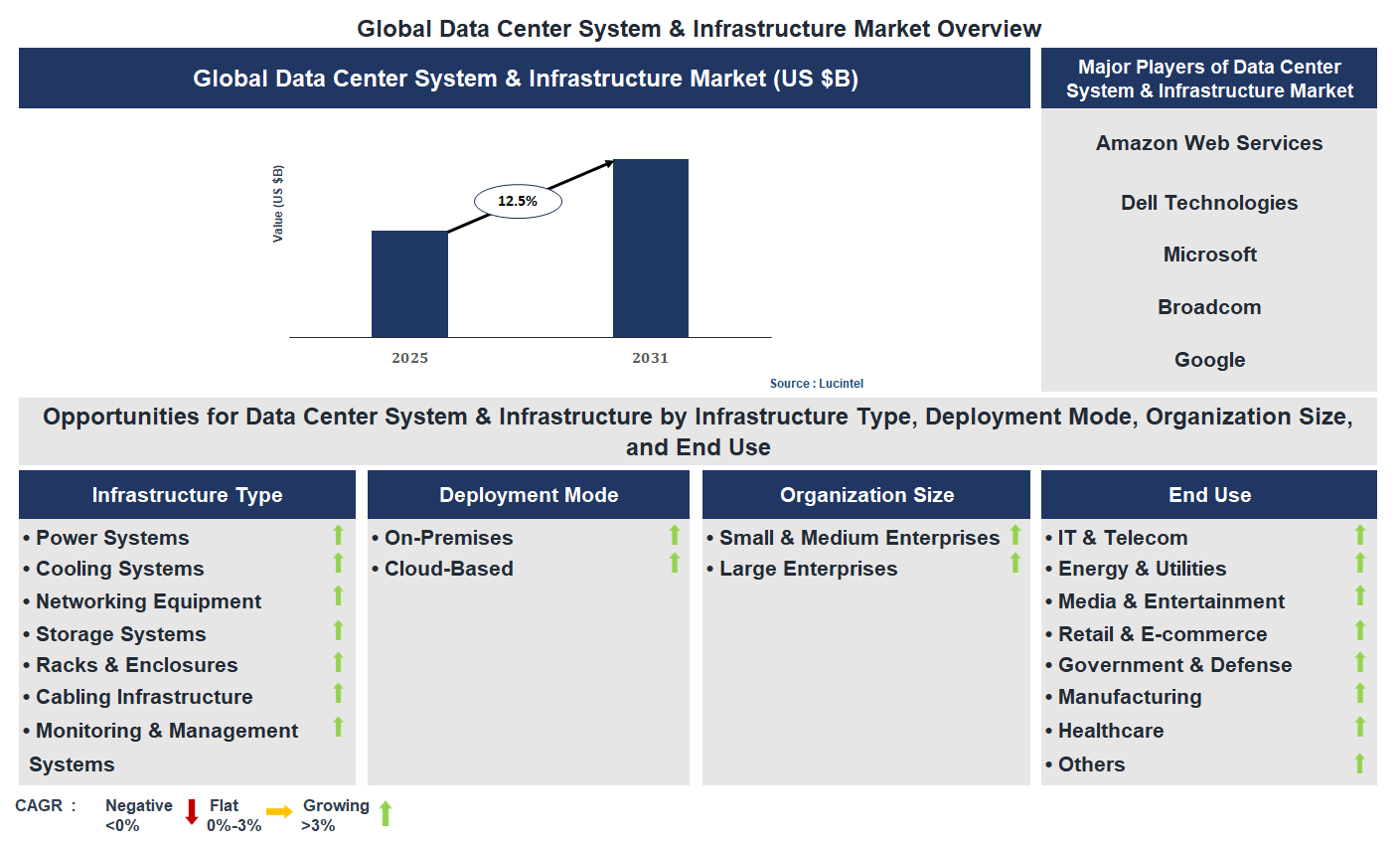
Key data points: The growth forecast = 12.5% annually for the next 7 years. Scroll below to get more insights. This market report covers trends, opportunities and forecasts in data center system & infrastructure market to 2031 by infrastructure type (power systems, cooling systems, networking equipment, storage systems, racks & enclosures, cabling infrastructure, and monitoring & management systems), deployment mode (on-premises and cloud-based), organization size (small & medium enterprises and large enterprises), end use (IT & telecom, energy & utilities, media & entertainment, retail & E-commerce, government & defense, manufacturing, healthcare, and others), and region (North America, Europe, Asia Pacific, and the Rest of the World)
We'll send your sample report shortly.
• Lucintel forecasts that, within the infrastructure type category, cooling system is expected to witness the highest growth over the forecast period.
• Within the end use category, healthcare is expected to witness the highest growth.
• In terms of region, APAC is expected to witness the highest growth over the forecast period. Gain valuable insights for your business decisions with our comprehensive 150+ page report. Sample figures with some insights are shown below.
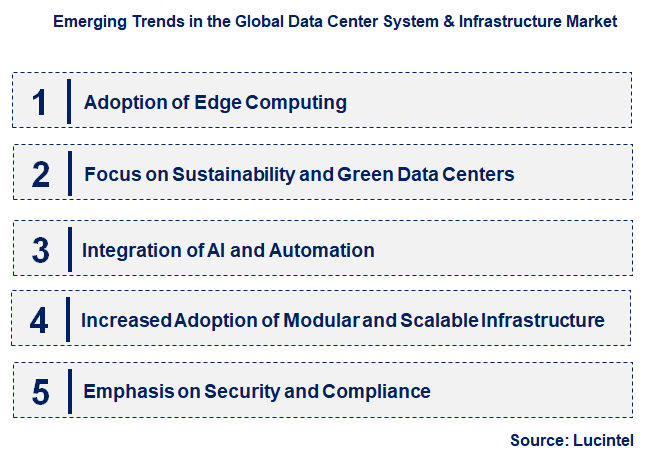
• Adoption of Edge Computing: The rise of edge computing is decentralizing data processing closer to data sources, such as IoT devices and local servers. This trend reduces latency, improves real-time data analysis, and alleviates pressure on centralized data centers. As industries like manufacturing, healthcare, and retail increasingly rely on instant data insights, edge infrastructure becomes critical. This shift enables faster decision-making, enhances user experiences, and supports the growth of smart cities and autonomous systems, fundamentally transforming traditional data center architectures.
• Focus on Sustainability and Green Data Centers: Environmental concerns and regulatory pressures are driving the adoption of eco-friendly data center solutions. Innovations include energy-efficient cooling systems, renewable energy integration, and sustainable building materials. Green data centers reduce carbon footprints, lower operational costs, and meet corporate social responsibility goals. This trend is prompting vendors to develop sustainable infrastructure, which is increasingly becoming a key differentiator in the market. As demand for sustainable practices grows, the industry is moving toward more responsible and energy-conscious data center operations.
• Integration of AI and Automation: Artificial Intelligence (AI) and automation are revolutionizing data center management by enabling predictive maintenance, intelligent workload distribution, and enhanced security protocols. These technologies improve operational efficiency, reduce downtime, and optimize resource utilization. Automated systems can monitor infrastructure health in real-time, predict failures before they occur, and streamline routine tasks. The integration of AI-driven tools is making data centers more resilient, cost-effective, and capable of handling complex, dynamic workloads, thus transforming traditional management practices.
• Increased Adoption of Modular and Scalable Infrastructure: Modular data centers offer flexibility, rapid deployment, and cost savings by allowing organizations to expand infrastructure incrementally. This trend supports the dynamic needs of businesses, especially in cloud computing and colocation services. Scalable solutions enable quick adaptation to changing data demands without significant upfront investments. Modular designs also facilitate easier maintenance and upgrades, reducing downtime. As digital transformation accelerates, the demand for adaptable, scalable infrastructure is reshaping how data centers are built and expanded, making them more agile and responsive.
• Emphasis on Security and Compliance: With rising cyber threats and stringent data regulations, security and compliance are paramount in data center design and operation. Emerging trends include advanced cybersecurity measures, such as AI-powered threat detection, and adherence to global standards like GDPR and HIPAA. Data centers are increasingly implementing robust physical security, encryption, and access controls. This focus ensures data integrity, privacy, and regulatory compliance, which are critical for maintaining customer trust and avoiding penalties. As data security becomes more complex, the market is prioritizing innovative solutions to safeguard critical infrastructure. In summary, these emerging trends—edge computing, sustainability, AI integration, modular infrastructure, and security—are collectively reshaping the data center system & infrastructure market. They are driving innovation, enhancing efficiency, and promoting responsible growth, positioning the industry for a more agile, sustainable, and secure future.
• Adoption of Edge Data Centers: The rise of edge computing has led to increased deployment of smaller, localized data centers. This development reduces latency, improves data processing speeds, and supports real-time applications, especially in IoT and 5G networks. It enables businesses to handle data closer to the source, enhancing performance and user experience.
• Growth of Modular Data Center Solutions: Modular data centers offer scalable, flexible, and faster deployment options compared to traditional setups. They allow organizations to expand infrastructure incrementally, reducing upfront costs and minimizing disruption. This approach is particularly attractive for rapid deployment in remote or high-demand areas, boosting overall market growth.
• Integration of AI and Automation Technologies: AI-driven management systems optimize data center operations by improving energy efficiency, predictive maintenance, and security. Automation reduces manual intervention, enhances reliability, and lowers operational costs. This integration is transforming data center management into a more intelligent and efficient process.
• Emphasis on Sustainable and Green Data Centers: Increasing environmental concerns are pushing the market towards energy-efficient designs, renewable energy sources, and eco-friendly cooling solutions. Green data centers reduce carbon footprints and operational costs, aligning with global sustainability goals and attracting environmentally conscious clients.
• Expansion of Cloud Service Providers and Hyperscale Data Centers: Major cloud providers are investing heavily in hyperscale data centers to meet rising demand for cloud services. This expansion drives innovation in infrastructure design, increases capacity, and fosters competitive pricing, further accelerating market growth and technological advancement. In summary, these developments are significantly impacting the data center system & infrastructure market by enhancing scalability, efficiency, and sustainability. The adoption of edge and modular solutions, coupled with AI integration, is enabling faster deployment and smarter operations. Emphasis on green initiatives aligns the market with global sustainability trends, while the expansion of hyperscale data centers supports the growing demand for cloud services. Collectively, these trends are positioning the market for sustained growth and innovation in the coming years.
• Edge Computing Expansion: The rise of IoT and real-time data processing is fueling the deployment of edge data centers. These localized infrastructures reduce latency, improve data security, and enable faster decision-making. As industries like manufacturing, healthcare, and retail adopt edge solutions, demand for specialized hardware and scalable infrastructure grows, creating new revenue streams and market segments.
• Green Data Center Technologies: Sustainability initiatives are prompting investments in energy-efficient hardware, renewable energy integration, and innovative cooling solutions. These green technologies reduce operational costs and carbon footprints, appealing to environmentally conscious organizations. The shift toward eco-friendly infrastructure is expected to drive market growth and compliance with global environmental standards.
• Modular and Scalable Infrastructure: The need for flexible, rapidly deployable data center solutions is increasing. Modular systems allow organizations to expand capacity incrementally, minimizing upfront costs and reducing deployment time. This approach supports dynamic business needs and fosters innovation, making it a key growth driver in the market.
• Cloud Infrastructure Investment: The ongoing migration to cloud platforms is boosting demand for robust, scalable data center infrastructure. Investments in hyperscale data centers and hybrid cloud solutions enable organizations to optimize performance and cost-efficiency. This trend is accelerating the development of advanced infrastructure components tailored for cloud environments.
• Security and Compliance Solutions: As data volumes grow, so do cybersecurity threats and regulatory requirements. Enhanced security infrastructure, including advanced firewalls, encryption, and compliance management tools, is critical. These solutions protect sensitive data and ensure adherence to industry standards, fostering trust and enabling market expansion. In summary, these growth opportunities are transforming the data center system & infrastructure market by fostering innovation, sustainability, and security. They enable organizations to meet increasing data demands efficiently while supporting digital transformation initiatives. As these trends continue to evolve, the market is poised for sustained growth, driven by technological advancements and changing enterprise needs.
• Technological Advancements: The continuous evolution of hardware, software, and networking technologies enhances data center efficiency, security, and scalability. Innovations like edge computing, AI integration, and energy-efficient systems enable data centers to handle increasing workloads and reduce operational costs. These technological improvements attract investments and foster market growth by providing more reliable and flexible infrastructure solutions.
• Growing Data Volumes: The exponential increase in data generated by IoT devices, cloud computing, and digital services necessitates robust data center infrastructure. Organizations require scalable and high-capacity systems to store, process, and analyze data efficiently. This surge in data volume drives demand for advanced data center solutions, fueling market expansion across various industries.
• Cloud Adoption and Digital Transformation: The shift towards cloud-based services and digital transformation initiatives by enterprises accelerates the need for modern data center infrastructure. Cloud providers and enterprises invest heavily in scalable, secure, and energy-efficient systems to support their operations, leading to increased market demand for integrated data center solutions.
• Regulatory and Compliance Requirements: Stringent data privacy, security, and environmental regulations compel data centers to upgrade infrastructure to meet compliance standards. This drives investments in secure, resilient, and environmentally sustainable systems, fostering market growth while ensuring adherence to legal frameworks. The challenges facing the data center system & infrastructure market include:-
• High Capital Expenditure: Establishing and maintaining advanced data center infrastructure requires significant upfront investment in hardware, software, and facilities. This high capital expenditure can be a barrier for smaller organizations and limits rapid expansion, impacting overall market growth.
• Environmental and Energy Concerns: Data centers consume substantial amounts of energy, raising environmental sustainability issues. Increasing regulatory pressure to reduce carbon footprints and adopt renewable energy sources necessitates costly upgrades and innovative solutions, which can hinder market development.
• Rapid Technological Obsolescence: The fast pace of technological change leads to frequent hardware and software obsolescence. Data centers must continually upgrade to stay competitive, incurring high costs and operational disruptions, which pose challenges to long-term planning and investment stability. In summary, the data center system & infrastructure market is driven by technological innovation, data growth, and digital transformation, which create significant opportunities for growth. However, high capital costs, environmental concerns, and rapid technological changes present notable challenges. These factors collectively influence market dynamics, requiring stakeholders to balance innovation with sustainability and cost-efficiency. Strategic adaptation to these drivers and challenges will be crucial for sustained growth and competitiveness in this evolving industry landscape.
• Amazon Web Services
• Dell Technologies
• Microsoft
• Broadcom
• Oracle
• Meta
• IBM
• Equinix
• Huawei Technologies
• Power Systems
• Cooling Systems
• Networking Equipment
• Storage Systems
• Racks & Enclosures
• Cabling Infrastructure
• Monitoring & Management Systems
• On-Premises
• Cloud-Based
• Small & Medium Enterprises
• Large Enterprises
• IT & Telecom
• Energy & Utilities
• Media & Entertainment
• Retail & E-commerce
• Government & Defense
• Manufacturing
• Healthcare
• Others
• North America
• Europe
• Asia Pacific
• The Rest of the World
• United States: The US market is witnessing significant investments in green data center technologies, with a focus on energy efficiency and renewable energy integration. Major players are adopting modular and scalable infrastructure solutions to support cloud services and AI workloads. The adoption of edge computing is accelerating, driven by the need for low latency applications. Regulatory initiatives are promoting sustainable practices, and there is a growing trend toward automation and AI-driven management systems to optimize operations.
• China: China is rapidly expanding its data center infrastructure to support its digital economy and 5G rollout. The government’s policies favor large-scale investments in hyperscale data centers, emphasizing energy efficiency and environmental sustainability. Domestic companies are leading in innovative cooling solutions and modular designs. The market is also seeing increased adoption of cloud services and AI, with a focus on reducing energy consumption and carbon emissions. Strategic initiatives aim to position China as a global data hub, fostering technological self-reliance.
• Germany: Germany’s data center market is characterized by a strong emphasis on sustainability and energy efficiency, driven by EU regulations and environmental commitments. Investments are directed toward renewable energy-powered infrastructure and innovative cooling technologies. The market is witnessing a rise in hyperscale data centers and colocation facilities, catering to the growing demand for cloud services. Digital transformation initiatives and Industry 4.0 are fueling demand for robust, secure, and sustainable data infrastructure, with a focus on data sovereignty and privacy.
• India: India’s data center sector is experiencing rapid growth due to increasing internet penetration, digital payments, and government initiatives like Digital India. Investments are focused on expanding capacity, with a strong emphasis on cost-effective, energy-efficient solutions. The market is witnessing a surge in hyperscale data centers and colocation facilities, driven by local and international players. Innovations in cooling and power management are critical to overcoming infrastructural challenges. The government’s supportive policies and incentives are further boosting market growth and technological adoption.
• Japan: Japan’s data center market is evolving with a focus on disaster resilience, energy efficiency, and advanced automation. The country is investing in next-generation infrastructure to support IoT, AI, and robotics applications. Green data centers powered by renewable energy are gaining prominence, aligned with Japan’s environmental goals. The adoption of edge computing is increasing to support smart city initiatives. Regulatory frameworks are encouraging sustainable practices, and technological innovation is driving the development of highly secure, efficient, and resilient data center infrastructure.


• Amazon Web Services
• Dell Technologies
• Microsoft
• Broadcom
• Oracle
• Meta
• IBM
• Equinix
• Huawei Technologies Q5. Which data center system & infrastructure market segment will be the largest in future? Answer: Lucintel forecasts that, within the infrastructure type category, cooling system is expected to witness the highest growth over the forecast period. Q6. In data center system & infrastructure market, which region is expected to be the largest in next 5 years? Answer: In terms of region, APAC is expected to witness the highest growth over the forecast period. Q7. Do we receive customization in this report? Answer: Yes, Lucintel provides 10% customization without any additional cost.


Choose a license that fits your team. Instant PDF delivery.
Prices exclude taxes. Instant delivery. Custom licensing available on request.
Market Report · July 31, 2026
Market Report · July 31, 2026
Market Report · July 31, 2026
Trusted partner for strategic intelligence and business growth


Receive a complimentary market analysis tailored to your industry. Our analysts will identify key growth opportunities and competitive dynamics specific to your business.

Market size, growth rate, and key trend analysis for your specific sector.

Top competitor positioning and market share analysis.

Strategic recommendations backed by data-driven insights.
Get curated market intelligence and competitive moves straight to your inbox.
By subscribing, you agree to receive our monthly insights. Unsubscribe anytime.
Receive a complimentary market analysis tailored to your industry. Our analysts will identify key growth opportunities and competitive dynamics specific to your business.
Market size, growth rate, and key trend analysis for your specific sector.
Top competitor positioning and market share analysis.
Strategic recommendations backed by data-driven insights.
Get curated market intelligence, emerging trends, and competitive moves straight to your inbox each month.
By subscribing, you agree to receive our monthly insights. Unsubscribe anytime.
We'll send your sample report shortly.