
Market Report · May 18, 2026

This market report covers trends, opportunities, and forecasts in the global data center power market to 2031 by technology (pdu, ups, busway, and others), end use (it & telecommunications, bfsi, government, energy, and others), and region (North America, Europe, Asia Pacific, and the Rest of the World)
We'll send your sample report shortly.
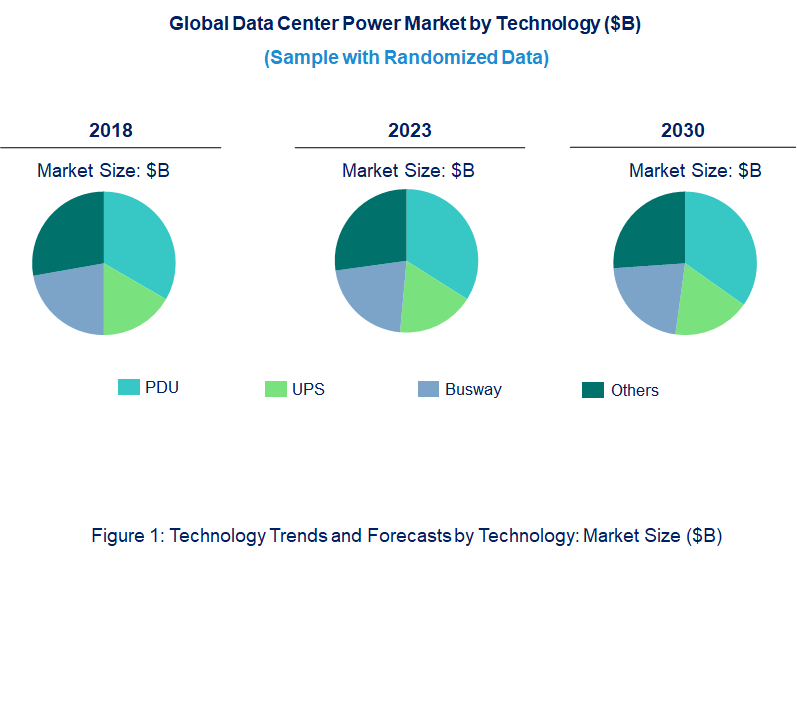
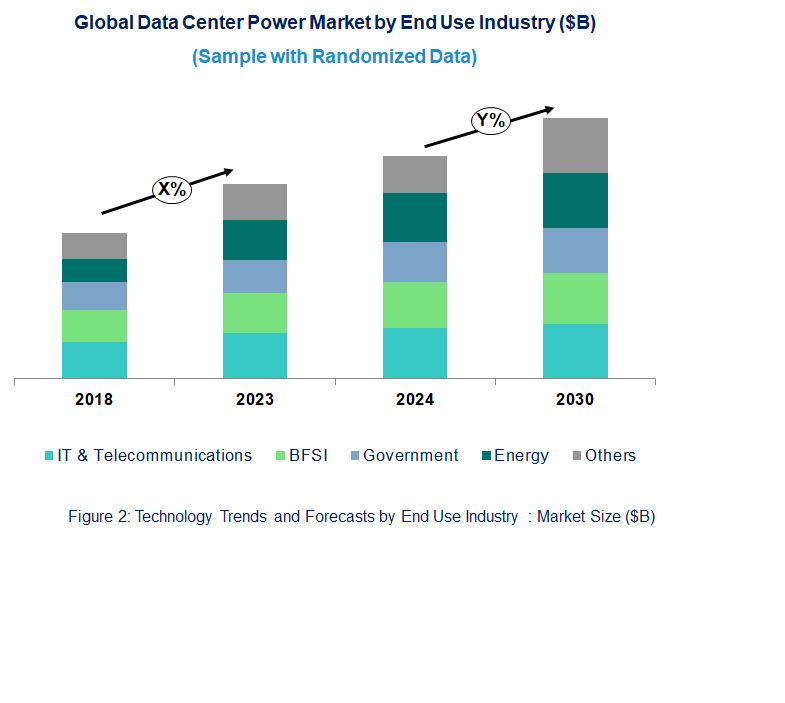
• Shift to Modular and Scalable Solutions: Modular UPS and PDU systems are gaining popularity, allowing data centers to scale power infrastructure as needed, providing both cost and energy efficiencies.
• Energy Efficiency and Sustainability Focus: With rising energy costs and environmental concerns, there is an increasing emphasis on energy-efficient power solutions, such as high-efficiency UPS systems and the use of renewable energy sources.
• Integration of Intelligent Power Systems: Intelligent PDUs and UPS systems, integrated with monitoring, predictive maintenance, and analytics features, are becoming the norm for improved operational efficiency.
• Adoption of DC Power Architecture: Direct current (DC) power systems are gaining traction in some data centers due to their potential for reducing energy losses compared to traditional AC-based systems.
• Edge Data Centers and Remote Power Solutions: The rise of edge computing is pushing the demand for smaller, more flexible, and remotely monitored power solutions, especially for distributed data centers. These trends reflect a shift toward more flexible, efficient, and sustainable data center power systems, which are crucial for handling the increased demands of modern digital infrastructure.
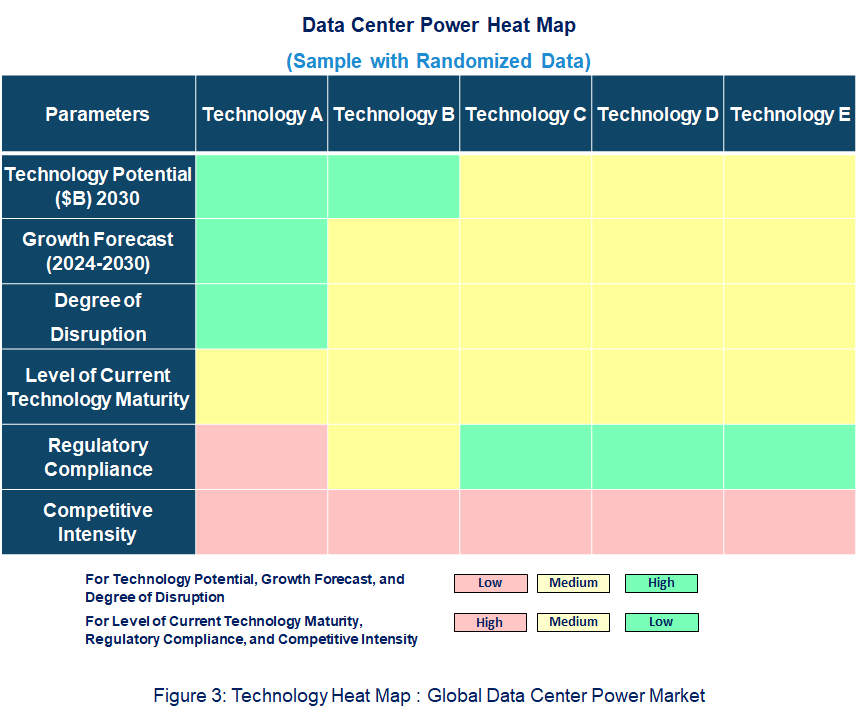
• Technology Potential: The technology potential of the data center power market is substantial, driven by the increasing reliance on cloud computing, edge data centers, and hyperscale facilities. Technologies such as intelligent power distribution units (PDUs), uninterruptible power supplies (UPS), and software-defined power management are evolving rapidly. Integration of AI for energy optimization and renewable energy adoption further enhances the power infrastructure. These innovations help improve energy efficiency, reduce operational costs, and enable sustainability. As demand for data processing continues to grow, the market is expected to scale significantly, making power technologies a cornerstone of modern data center infrastructure.
• Degree of Disruption: The disruption potential is high as traditional data center power systems give way to modular, scalable, and software-controlled alternatives. Innovations such as lithium-ion UPS systems, fuel cells, and grid-interactive power solutions are transforming how power is managed and consumed. Emerging startups and global tech giants are both contributing to this transformation. Additionally, real-time monitoring and predictive analytics are allowing proactive management of power systems, leading to reduced downtime and optimized performance. This shift is challenging legacy systems and prompting significant investments in newer, more efficient technologies.
• Level of Current Technology Maturity: The maturity level of core technologies such as traditional UPS, PDUs, and backup generators is high, with widespread global adoption. However, newer technologies like AI-enabled power management, lithium-ion battery integration, and DC power distribution are still in their early to mid-adoption stages. Hyperscale data centers are leading the adoption of advanced technologies, while small and medium enterprises are gradually transitioning. The overall market is in a state of transition, with a balanced mix of mature infrastructure and emerging solutions.
• Regulatory Compliance: Regulatory compliance in the data center power market is increasingly stringent, with governments mandating energy efficiency and carbon reduction goals. Compliance with standards such as ISO 50001 (energy management), Uptime Institute certifications, and region-specific environmental regulations is crucial. Data center operators are also required to meet emissions targets and energy reporting mandates. Compliance not only mitigates legal risk but also boosts corporate sustainability credentials. As energy consumption remains a critical concern, aligning with global green data center initiatives and ESG frameworks is becoming a key priority for stakeholders.
• ABB: ABB has been focusing on energy-efficient power solutions and modular UPS systems, helping data centers improve scalability and reliability.
• Black Box: Black Box offers intelligent power solutions, including remote power management, which are crucial for optimizing energy consumption in data centers.
• Eaton: Eaton’s advancements in modular UPS and PDU systems are setting new benchmarks for energy efficiency and system flexibility in the data center industry.
• General Electric: GE is developing advanced UPS and power distribution systems, with a focus on improving energy efficiency and supporting renewable energy integration.
• Generac Power Systems: Generac has been expanding its UPS and backup power solutions, enhancing reliability and resilience in data centers, especially in critical applications.
• Huawei Technologies: Huawei is advancing in the DC power architecture and AI-based power management systems, pushing data center energy efficiency and operational intelligence.
• Legrand: Legrand has made significant strides in developing intelligent power management systems, enhancing monitoring capabilities and integration with data center infrastructure management (DCIM) systems. These developments are helping data centers transition to more energy-efficient, scalable, and resilient power solutions, which are key to supporting the growing demands of digital infrastructure.
• Rising Demand for Hyperscale and Edge Data Centers The global surge in cloud services and real-time applications is driving demand for hyperscale and edge data centers. This increases the need for scalable and reliable power infrastructure, boosting investments in modular UPS and smart PDU systems.
• Focus on Energy Efficiency and Sustainability With rising energy costs and environmental concerns, data centers are under pressure to reduce power consumption. This encourages adoption of high-efficiency power systems and renewable integrations like solar and fuel cells, aligning with ESG targets and reducing operational expenses.
• Adoption of AI and High-Density Computing AI workloads and high-density servers require advanced power solutions with greater capacity and cooling. This is accelerating the shift toward lithium-ion UPS and intelligent power management systems that can adapt to dynamic power loads. Major Challenges
• High Capital Expenditure and Infrastructure Costs Deploying modern power systems, especially in hyperscale or edge facilities, demands significant investment. Costs related to equipment, installation, and maintenance can hinder small and mid-sized operators from upgrading outdated infrastructure.
• Complex Regulatory and Compliance Requirements Data center power systems must adhere to numerous local and international standards (e.g., IEC, ENERGY STAR, ISO). Navigating evolving regulations around energy efficiency, emissions, and safety adds compliance complexity and costs.
• Limited Availability of Skilled Workforce Advanced power systems require specialized installation, monitoring, and maintenance skills. The shortage of skilled professionals can slow deployment and increase operational risk, especially for emerging markets. The drivers fueling the data center power market such as hyperscale demand, sustainability, and AI adoption—are opening up significant opportunities for innovation and growth. However, to fully capitalize, companies must navigate financial, regulatory, and talent-related challenges. Success will depend on scalable, efficient power strategies that balance performance with sustainability and compliance.
• Abb
• Black Box
• Eaton
• General Electric
• Generac Power Systems
• Huawei Technologies
• Technology Readiness and Key Applications: UPS and PDUs are highly mature and widely deployed across all data center types—from enterprise to colocation and hyperscale—ensuring power continuity and distribution. Intelligent PDUs support remote energy monitoring, essential for modern, distributed data centers. Busway systems are at an advanced readiness stage, particularly in facilities requiring modular and scalable power layouts, like cloud and edge environments. Emerging technologies in the “Others” category, including battery energy storage systems (BESS) and renewable-based microgrids, are still in early adoption but gaining ground in green data center initiatives. UPS systems are critical for backup during grid outages and brownouts. PDUs manage load balancing and power metering. Busways simplify reconfiguration in high-growth environments. Other solutions are being tested for long-term resilience and energy optimization. Overall, most technologies are deployment-ready, with growing applications tied to sustainability, modularity, and energy intelligence.
• Competitive Intensity and Regulatory Compliance: The competitive landscape for UPS and PDUs is intense, driven by leading players like Schneider Electric, Eaton, and Vertiv, all vying to offer smarter, more efficient systems. UPS sees high innovation and differentiation through energy storage tech and digital control systems. PDUs face competition via pricing and integration with intelligent monitoring software. Busway systems are gaining traction in high-density deployments, with fewer but specialized players. Regulatory compliance is critical across all technologies, covering safety standards (UL, CE), energy efficiency (ENERGY STAR), and environmental norms (RoHS, WEEE). Data center operators must comply with Tier standards (Uptime Institute), ISO certifications, and regional electrical codes. Increasing pressure for sustainability and carbon neutrality adds another layer of compliance complexity. Vendors must align with evolving regulations tied to renewable integration, battery disposal, and energy reporting. Competitive intensity is closely linked to innovation, service reliability, and regulatory alignment.
• Disruption Potential: In the data center power market, UPS (Uninterruptible Power Supply) systems have the highest disruption potential due to increasing demands for uptime, integration with lithium-ion batteries, and smart grid readiness. PDUs (Power Distribution Units) are evolving with intelligent monitoring features but are less disruptive. Busways offer a modular, flexible alternative to traditional cabling, enabling efficient power distribution in high-density environments—signaling moderate disruption potential. Other technologies, including fuel cells and renewable-integrated systems, represent emerging disruptors as sustainability becomes a priority. As edge and hyperscale data centers expand, the need for efficient, scalable, and smart power solutions fuels the shift. Integration with DC power systems, AI-based load management, and battery storage enhances disruption. Hybrid solutions that blend UPS with renewable and grid-tied sources are reshaping energy strategies. Overall, disruption is highest where technology meets flexibility, efficiency, and sustainability demands in modern data centers.
• PDU
• UPS
• Busway
• Others
• IT & Telecommunications
• BFSI
• Government
• Energy
• Others
• North America
• Europe
• Asia Pacific
• The Rest of the World
• Latest Developments and Innovations in the Data Center Power Technologies
• Companies / Ecosystems
• Strategic Opportunities by Technology Type


Choose a license that fits your team. Instant PDF delivery.
Prices exclude taxes. Instant delivery. Custom licensing available on request.
Market Report · May 18, 2026
Market Report · May 18, 2026
Market Report · May 18, 2026
Trusted partner for strategic intelligence and business growth


Receive a complimentary market analysis tailored to your industry. Our analysts will identify key growth opportunities and competitive dynamics specific to your business.

Market size, growth rate, and key trend analysis for your specific sector.

Top competitor positioning and market share analysis.

Strategic recommendations backed by data-driven insights.
Get curated market intelligence and competitive moves straight to your inbox.
By subscribing, you agree to receive our monthly insights. Unsubscribe anytime.
Receive a complimentary market analysis tailored to your industry. Our analysts will identify key growth opportunities and competitive dynamics specific to your business.
Market size, growth rate, and key trend analysis for your specific sector.
Top competitor positioning and market share analysis.
Strategic recommendations backed by data-driven insights.
Get curated market intelligence, emerging trends, and competitive moves straight to your inbox each month.
By subscribing, you agree to receive our monthly insights. Unsubscribe anytime.
We'll send your sample report shortly.