
Market Report · May 18, 2026

This market report covers trends, opportunities, and forecasts in the global data center pcie chip market to 2031 by technology (gen 3, gen 4, gen 5, and others), end use (cloud service providers, telecommunication companies, enterprises, and others), and region (North America, Europe, Asia Pacific, and the Rest of the World)
We'll send your sample report shortly.
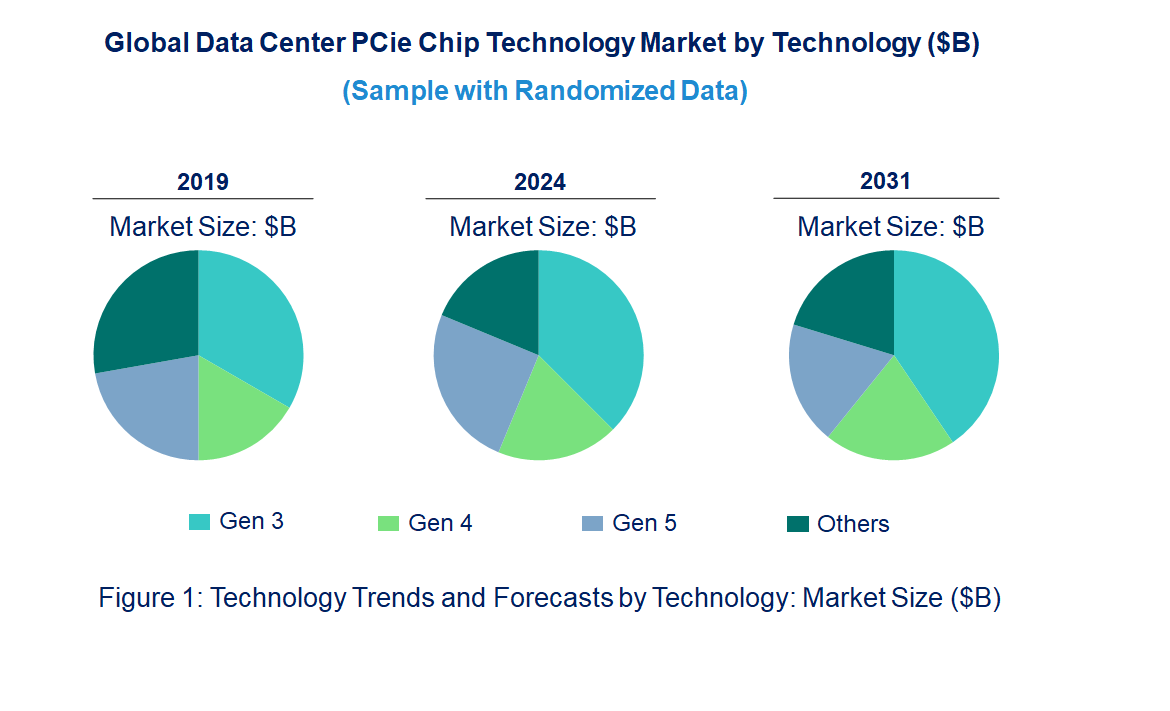
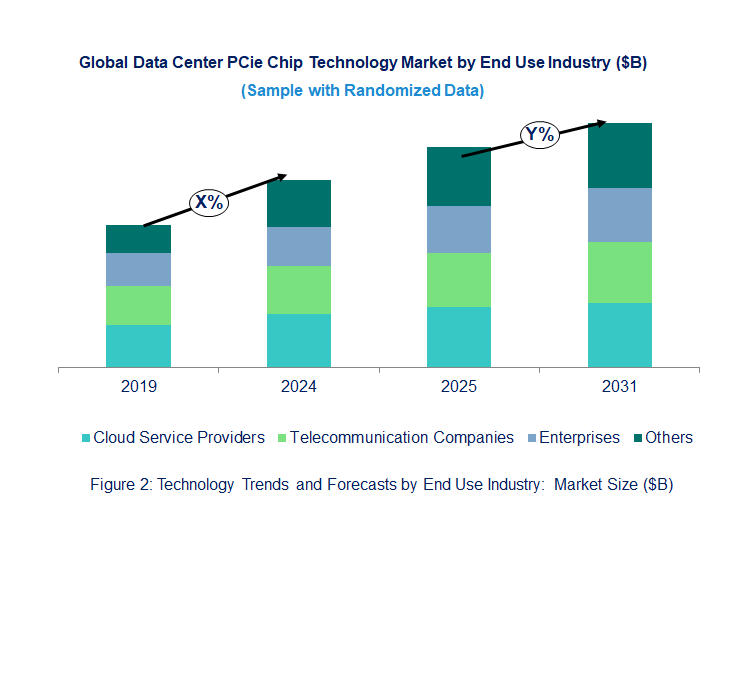
• Adoption of PCIe Gen 4 and Gen 5: The transition to PCIe Gen 4 and Gen 5 technologies is accelerating as they provide faster data transfer rates and better bandwidth, enabling high-performance computing, cloud services, and AI workloads. The shift to these generations ensures that data centers can handle larger volumes of data with minimal latency.
• Increased demand for AI and machine learning workloads: Data centers are increasingly supporting AI and machine learning applications, which require significant computational power and fast data access. PCIe chips are evolving to support these demanding workloads, with Gen 4 and Gen 5 technologies offering the necessary speed and bandwidth to optimize AI and ML processing.
• High-Performance GPUs Integration: Integration of high-performance GPUs in data centers is on the rise to support high-performance computing and artificial intelligence applications. PCIe Gen 4 and Gen 5 chips are in development to effectively support the high throughput and low latency needs of today’s GPUs, enabling higher performance for cloud-based AI and gaming services.
• Expansion of Cloud Data Centers: As cloud service providers expand their infrastructure, they require more sophisticated PCIe chips capable of dealing with massive data and fast-paced transactions. PCIe Gen 5 increases throughput and makes cloud data centers more efficient for complex workloads, improving performance in large-scale applications and services.
• Integration of Edge Computing: Edge computing will be a key factor driving the demand for PCIe chips that provide high performance in distributed edge data centers. PCIe Gen 4 and Gen 5 chips will help process and transfer data more efficiently, closer to the source, reducing latency and improving real-time analytics for edge devices. These emerging trends, such as the adoption of PCIe Gen 4 and Gen 5 technologies, growth in the demand for AI and ML workloads, integration of GPUs, expansion of the cloud, and edge computing, are revolutionizing the data center PCIe chip market. These trends enable faster and more efficient data processing, support modern applications, and enhance overall data center performance.
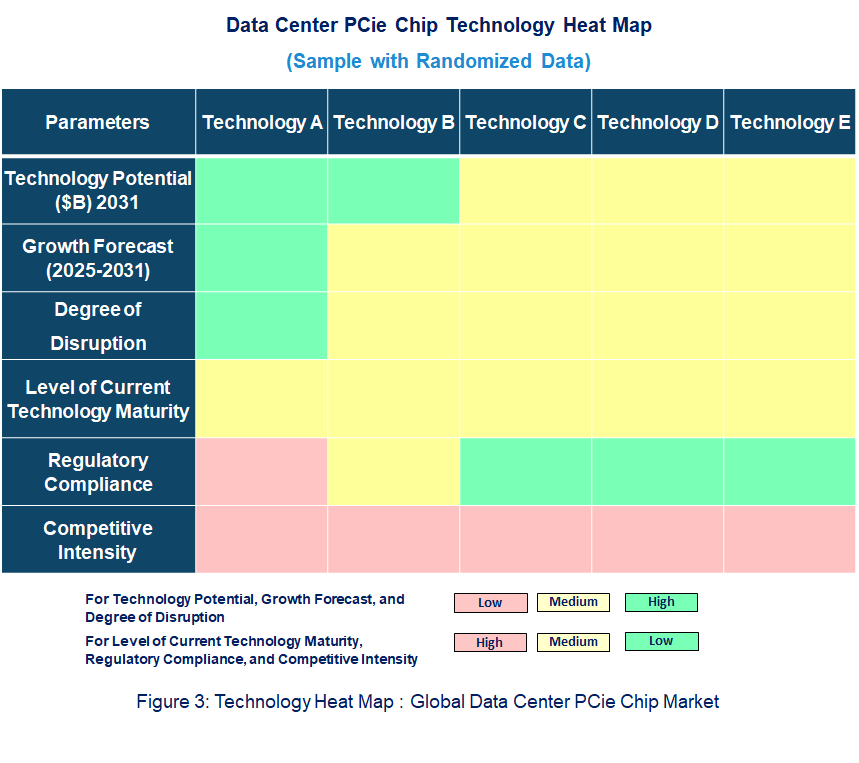
• Technology Potential: PCIe chip technology has immense potential in the data center due to the increased need for faster and more efficient interconnects in data processing. PCIe 4.0, and more so the newly emerging standards of PCIe 5.0 (and 6.0), offer higher data transfer rates, lower latency, and larger bandwidths for applications like high-frequency trading, AI workloads, and real-time analytics. These advancements will enable better data center processing for larger volumes, supporting innovations in machine learning, edge computing, and virtualization.
• Level of Disruption: PCIe chips create significant disruption by promoting ultra-fast and low-latency data center communications. The shift to PCIe 4.0 and 5.0 reshapes modern data center architectures, enabling faster processing and better integration with emerging technologies like GPUs and high-performance storage systems.
• Technology Maturity: PCIe chip technology is fully mature and widely adopted in data center applications. PCIe 4.0 is already in use, and PCIe 5.0 is gradually becoming the standard, helping expand throughput and performance limits.
• Regulatory Compliance: PCIe chips must comply with standards set by the PCI Special Interest Group (PCI-SIG) for interoperability and compliance. They must also adhere to environmental standards like RoHS (Restriction of Hazardous Substances) and CE certification for safe and sustainable operation in data centers.
• Intel Corporation: Intel has made significant strides with its PCIe Gen 4 and Gen 5 solutions, providing chips that support increased performance and throughput for data centers. Intel’s innovation in Xeon processors integrates with PCIe Gen 4 and Gen 5 interfaces, facilitating faster data access and optimizing performance for cloud and AI workloads.
• Broadcom Inc.: Broadcom is a leader in providing high-speed PCIe Gen 4 and Gen 5 solutions for data centers. Their innovations in network and storage solutions powered by PCIe Gen 5 are fueling the growing demand for faster data transfers and higher bandwidth in enterprise IT environments.
• NVIDIA Corporation: NVIDIA’s GPUs are designed to integrate PCIe Gen 4 and Gen 5 technologies, particularly for AI, machine learning, and high-performance computing applications. Their GPUs, combined with high-performance PCIe chips, are helping data centers meet the computational demands of AI workloads and large-scale data processing applications.
• Advanced Micro Devices, Inc. (AMD): AMD’s PCIe Gen 4-enabled EPYC processors and Radeon Instinct GPUs empower data centers by providing higher data throughput and bandwidth to meet the performance needs of cloud computing, AI, and HPC applications.
• Marvell Technology Group Ltd.: Marvell’s PCIe Gen 4 and Gen 5 chips are designed to optimize storage, networking, and security functions in data centers. Their solutions help ensure faster data throughput, lower latency, and more reliable data processing, catering to the high demands of enterprise IT and cloud infrastructure.
• Microchip Technology Inc.: Microchip offers high-performance PCIe chips designed for security and reliability, particularly in embedded and IoT devices in data centers. Their PCIe solutions improve data handling, enhancing the overall performance of cloud and storage applications.
• Texas Instruments Incorporated: Texas Instruments focuses on PCIe solutions aimed at improving industrial and automotive applications. Their chips support high-speed data transfer in data centers, which deal with IoT and edge computing data.
• Xilinx, Inc.: Xilinx offers PCIe Gen 4 and Gen 5 solutions optimized for FPGA-based acceleration in data centers. Their silicon accelerates workloads for AI, machine learning, and network processing, where efficiency and speed are critical for cloud providers and telecom companies.
• Qualcomm Technologies, Inc.: Qualcomm’s PCIe solutions are developed for the 5G and mobile application spaces, which are expected to increase data processing speed and improve network performance in data centers. Their chips are optimized for data throughput for telecom providers and edge computing.
• Samsung Electronics Co., Ltd.: Samsung integrates PCIe Gen 4 and Gen 5 technology into its high-performance NAND flash memory products, enabling data centers to manage and store massive volumes of data. Their chips aim to improve storage performance and capacity in cloud and enterprise applications. Ongoing developments from key players like Intel, AMD, NVIDIA, and Broadcom are transforming the data center PCIe chip market by advancing performance, speed, and scalability. The innovation they continue to drive with PCIe Gen 4 and Gen 5 is enabling data centers to meet the needs of modern applications such as AI, cloud computing, and edge computing.
• High-Performance Computing Demand: With the rise of AI, machine learning, and big data analytics, the demand for faster, high-performance data centers is growing. PCIe Gen 4 and Gen 5 technologies are expected to deliver the speed and bandwidth required for these demanding applications.
• Expansion of Cloud Data Centers: As cloud service providers expand their infrastructure, there is a growing need for more advanced PCIe chips with higher data throughput and lower latency. The move to PCIe Gen 4 and Gen 5 solutions is helping cloud providers meet these needs.
• Higher Adoption of AI and Edge Computing: With the increasing importance of AI and edge computing in data processing, there is growing demand for high-speed, low-latency PCIe chips in data centers. The increasing scale of AI workloads is propelling the market toward PCIe Gen 4 and Gen 5 solutions.
• Telecommunication Network Upgrades: The establishment of 5G networks and sophisticated telecommunications infrastructure is driving demand for fast data transfer and high-speed chips. PCIe Gen 4 and Gen 5 chips are essential to ensure the scalability and efficiency of next-generation telecom networks. Challenges in the data center PCIe chip market include:
• High Development Costs: Developing high-performance PCIe Gen 4 and Gen 5 chips involves significant R&D and manufacturing costs. Companies must balance the need for innovation with the cost of production to remain competitive.
• Complexity of Integration: Integrating PCIe Gen 4 and Gen 5 solutions into existing infrastructure is complex. Data centers must ensure compatibility with legacy systems and infrastructure, which can delay the adoption of these advanced technologies.
• Energy Efficiency Concerns: While PCIe Gen 4 and Gen 5 offer higher performance, they also require more power. As energy efficiency becomes a greater focus in the data center industry, the challenge is to develop high-performance PCIe chips that balance speed with energy consumption. The major drivers of the data center PCIe chip market, which include the need for high-performance computing, the widespread expansion of cloud infrastructure, the adoption of AI, and network modernization, are fueling the increasing demand for faster and highly efficient technologies. However, challenges such as high development costs, integration complexity, and energy efficiency remain significant barriers.
• Intel Corporation
• Broadcom Inc.
• NVIDIA Corporation
• Advanced Micro Devices, Inc. (AMD)
• Marvell Technology Group Ltd.
• Microchip Technology Inc.
• Technology Readiness by Type: Gen 3 PCIe is widely deployed and trusted, though its lower bandwidth limits its application. Gen 4 PCIe is mature for high-speed applications and integrated into today’s data centers. Gen 5 PCIe is gaining traction and is ready for advanced workloads like real-time analytics. Gen 6 and emerging technologies are still under development, promising future performance benefits. Competitive intensity is high, with Gen 4 and Gen 5 pushing the limits of these technologies, leaving legacy systems like Gen 3 behind. Compliance with regulatory standards for power, data integrity, and EMI is maintained.
• Competitive Intensity and Compliance with Regulations: The competition is intense, as Gen 3, Gen 4, and Gen 5 PCIe technologies cater to different needs. Gen 3 exists in legacy systems, while Gen 4 and Gen 5 are designed for high-performance data centers. Key players like Intel and AMD dominate the market. Regulatory compliance ensures data integrity, power efficiency, and EMI control. New generations must adhere to industry standards like PCI-SIG and energy efficiency protocols to remain competitive.
• Disruption Potential of Various Technologies: Gen 3, Gen 4, and Gen 5 PCIe technologies have different disruption potentials in the data center market. Gen 3 PCIe is cheaper but slower, so it is being replaced by higher-generation speeds. Gen 4 PCIe, which is twice as fast as Gen 3, is ideal for high-speed applications like AI and storage. Gen 5 PCIe pushes performance further and supports extreme workloads in next-gen data centers. Emerging technologies like Gen 6 and optical interconnects promise even faster speeds that will revolutionize architectures and performance in data centers.
• Gen 3
• Gen 4
• Gen 5
• Others
• Cloud Service Providers
• Telecommunication Companies
• Enterprises
• Others
• North America
• Europe
• Asia Pacific
• The Rest of the World
• Latest Developments and Innovations in the Data Center PCIe Chip Technologies
• Companies / Ecosystems
• Strategic Opportunities by Technology Type


Choose a license that fits your team. Instant PDF delivery.
Prices exclude taxes. Instant delivery. Custom licensing available on request.
Market Report · May 18, 2026
Market Report · May 18, 2026
Market Report · May 18, 2026
Trusted partner for strategic intelligence and business growth


Receive a complimentary market analysis tailored to your industry. Our analysts will identify key growth opportunities and competitive dynamics specific to your business.

Market size, growth rate, and key trend analysis for your specific sector.

Top competitor positioning and market share analysis.

Strategic recommendations backed by data-driven insights.
Get curated market intelligence and competitive moves straight to your inbox.
By subscribing, you agree to receive our monthly insights. Unsubscribe anytime.
Receive a complimentary market analysis tailored to your industry. Our analysts will identify key growth opportunities and competitive dynamics specific to your business.
Market size, growth rate, and key trend analysis for your specific sector.
Top competitor positioning and market share analysis.
Strategic recommendations backed by data-driven insights.
Get curated market intelligence, emerging trends, and competitive moves straight to your inbox each month.
By subscribing, you agree to receive our monthly insights. Unsubscribe anytime.
We'll send your sample report shortly.