
Market Report · May 18, 2026

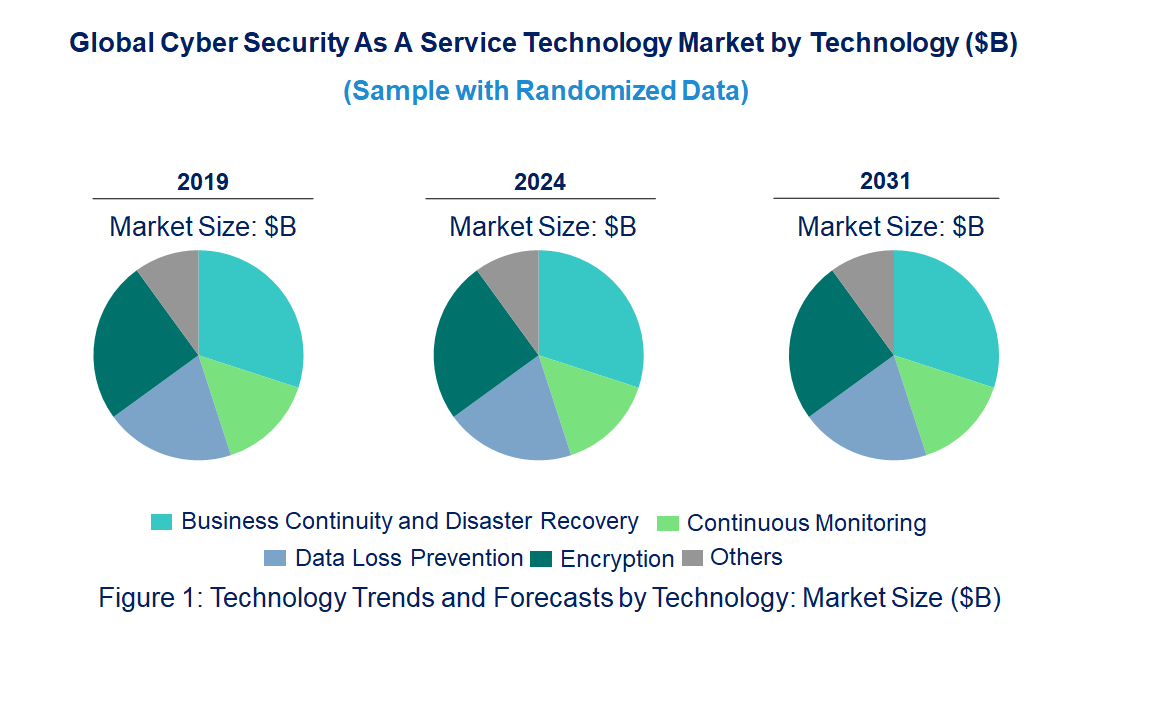
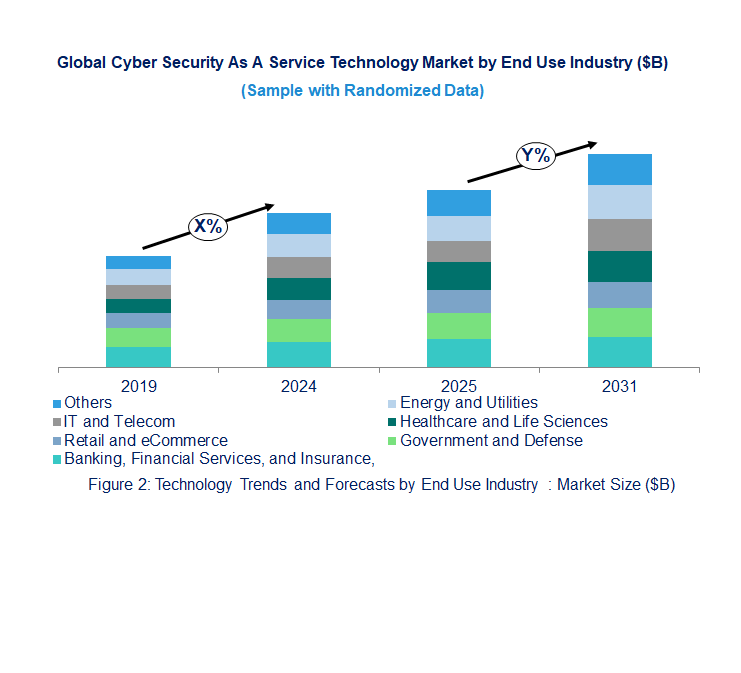
This market report covers trends, opportunities, and forecasts in the global cyber security as a service market to 2031 by technology (business continuity and disaster recovery, continuous monitoring, data loss prevention, encryption, and others), end use industry (banking, financial services, and insurance, government and defense, retail and e-commerce, healthcare and life sciences, it and telecom, energy and utilities, and others), and region (North America, Europe, Asia Pacific, and the Rest of the World)
We'll send your sample report shortly.
• AI and Machine Learning Integration: AI-based threat detection and machine learning algorithms are changing the game for CSaaS. It enables real-time anomaly detection, predictive threat intelligence, and automated responses, thus identifying security breaches faster and mitigating them.
• Implementation of Zero Trust Architecture: Zero Trust Architecture is gaining popularity in CSaaS solutions. ZTA is a kind of architecture that continuously verifies users and devices, regardless of their location, ensuring that only authenticated entities can access the infrastructure and data, reducing insider threats and unauthorized access.
• Cloud-Native Security Solutions: Cloud-native cyber security services are scalable and adaptable, protecting global infrastructure. Multi-region deployment, real-time monitoring, and encryption technologies safeguard cloud applications and data storage, thereby ensuring operational continuity and compliance.
• Security Orchestration and Automation (SOAR): SOAR technologies enable automated incident response, threat intelligence integration, and streamlined workflows. By orchestrating multiple security tools, organizations achieve faster response times, reduced manual intervention, and enhanced overall efficiency in threat management.
• Compliance-Driven Security Services: This increasingly moves CSaaS providers to position their solutions with global compliance standards like ISO/IEC 27001, GDPR, and NIST in the market. This increases protection and transparency of data frameworks while ensuring security, to maintain trust across all industries. These technology trends in cyber security as a service —AI-driven detection, zero-trust implementation, cloud-native scalability, automation, and compliance alignment—are reshaping the market by delivering more proactive, integrated, and cost-effective cyber security solutions. Organizations now benefit from agile, resilient security systems that provide comprehensive protection across digital infrastructure, ensuring continuity of operations and compliance with global cyber security standards.
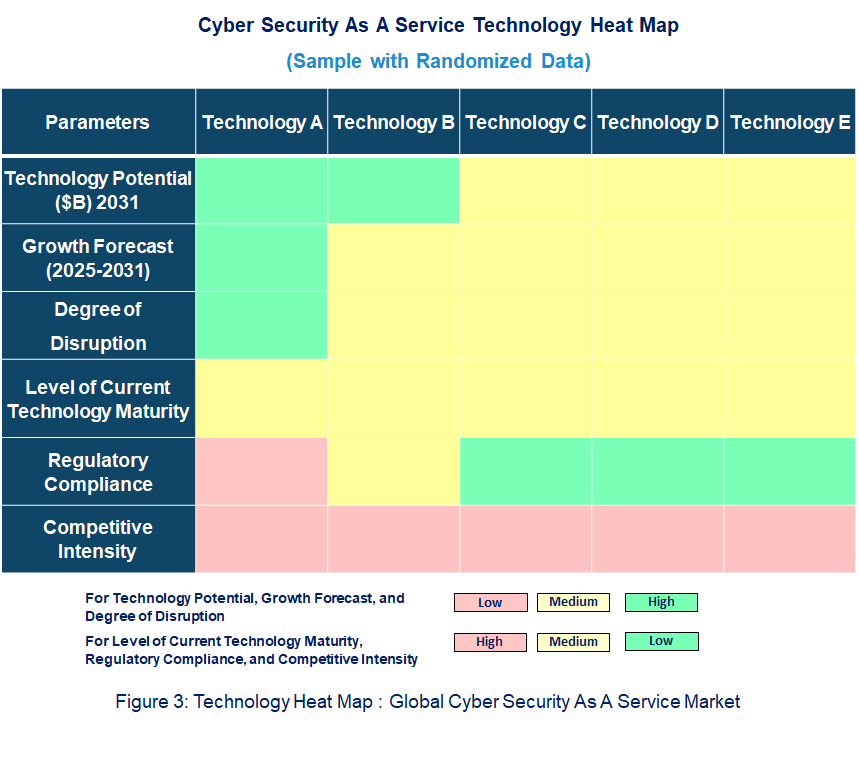
• Technology Potential: CSaaS offers high potential as it is highly scalable, cost-effective, and flexible. Organizations need not invest in large-scale infrastructures to avail high-class cyber security solutions. With the help of cloud-native services, real-time threat detection is possible along with proactive monitoring and smooth updates.
• Degree of Disruption: CSaaS is very disruptive as it is displacing traditional, on-premise security models in organizations with agile cloud-based systems. This shift has automation, faster threat response, and predictive analytics, but requires a major shift in IT workflows, vendor integration, and data handling.
• Current Technology Maturity Level: CSaaS technologies are now at an advanced stage of maturity. Currently, leading vendors such as Microsoft, Google, and Amazon offer robust solutions. However, these have matured because they continuously integrate AI, machine learning, and threat intelligence. Still, cross-sector interoperability remains a challenge.
• Regulatory Compliance: CSaaS solutions strictly comply with the global standards, such as ISO 27001, GDPR, HIPAA, and NIST frameworks. Compliance will ensure data integrity, protection of privacy, and transparency that are paramount in keeping the trust and following the laws in very highly regulated markets.
• Trend Micro: Trend Micro has enhanced its CSaaS offerings with the integration of advanced AI-driven threat intelligence and machine learning. Their cloud-native solutions are focused on endpoint protection, threat detection, and real-time response to ensure complete visibility across global infrastructure.
• IBM: IBM's cloud-based security services now feature AI-enriched threat intelligence via IBM Security QRadar. Its incorporation of automated incident response and data protection solutions helps enterprises detect, analyze, and mitigate threats more rapidly and accurately.
• Microsoft: Microsoft has included robust cyber security tools in its Azure platform. This platform offers comprehensive identity protection, threat detection, and multi-layered security. Its solutions, such as Microsoft Sentinel, focus on advanced analytics and cloud-native security orchestration.
• Zscaler: Zscaler offers cloud security solutions using zero-trust architecture for securing access of users to applications and networks. They mainly help to minimize lateral movement threats, along with protection for data, through scalable cloud-native gateways.
• McAfee: McAfee's Cloud-native cyber security solutions deliver an integrated form of threat protection and endpoint management. The advanced machine learning algorithms provided ensure the improvement in detection rates for malware while complying with international data protection standards.
• Forcepoint: Forcepoint continues to advance its cloud security services, which now include AI-driven data loss prevention and threat intelligence. Their solutions seek to secure cloud infrastructure, protect sensitive information, and ensure compliance across diverse sectors.
• Sophos: Sophos offers a unified cloud cyber security service through its Sophos Central platform. It combines next-gen firewall protection, endpoint security, and threat intelligence to deliver scalable, real-time protection for enterprises.
• Clearswift: Clearswift focuses on content and data security, protecting against data breaches and insider threats. Its email and web security solutions allow organizations to maintain compliance while keeping sensitive communication and files safe.
• Alert Logic: Alert Logic provides a strong MDR service, which involves proactive threat detection, 24/7 monitoring, and incident response for cloud and on-premise infrastructure. Their solutions utilize AI and threat intelligence to minimize downtime.
• Cygilant: Cygilant is a cyber security company that improves the security of mid-sized organizations through scalable, cost-effective CSaaS solutions. They offer automated monitoring, vulnerability management, and incident response services to ensure compliance and resilience.
• Barracuda Networks: Barracuda Networks specializes in cloud-native email and network protection solutions, integrating threat intelligence and firewall technologies. Their services offer scalable, multi-layered security to protect cloud applications, endpoints, and network infrastructure. The cyber security as a service market developments from key players such as Trend Micro, IBM, Microsoft, and others show the trend of strong, scalable, and integrated security solutions. Using AI, machine learning, zero-trust architecture, and cloud-native infrastructure, they are molding the cyber security landscape into one that will prioritize real-time threat intelligence, automated responses, and global compliance adherence.
• Scalability of Cloud Solutions: Cloud-based cyber security solutions provide unparalleled scalability. This can help organizations adjust their security resources to their growth infrastructure. Such flexibility can enable optimum cost optimization while maintaining strong protection from cyber threats in all corners of global operations.
• AI and Machine Learning Integration: Integrating AI and machine learning enhances threat detection and response times. Predictive algorithms enable real-time analysis and proactive mitigation of security breaches, thereby significantly reducing the risk of data loss and downtime.
• Adoption of Zero Trust Architecture: The zero-trust model is becoming prominent, ensuring strict access control across networks. This approach minimizes lateral movement risks, thereby providing enhanced protection for data, applications, and infrastructure.
• Regulatory Compliance Across Industries: A large factor driving the adoption of CSaaS is its support for global compliance standards such as ISO 27001, GDPR, and HIPAA. Solutions delivered through CSaaS ensure compliance with the standards while ensuring data integrity and transparency.
• Managed Security Service Providers (MSSPs): MSSPs provide expert cyber security services. Organizations can outsource threat detection and incident response, thus ensuring protection and compliance without a full-time in-house IT security team. Challenges
• Data Privacy and Compliance Risks: Since CSaaS providers often handle sensitive client data, ensuring compliance with various regulatory standards (such as GDPR, HIPAA, etc.) can be challenging. Companies must trust third-party vendors to follow strict data protection practices, which raises concerns about data breaches and privacy violations.
• Integration with Existing IT Infrastructure: Integrating CSaaS solutions with an organization's existing IT infrastructure and security tools can be complex. Compatibility issues, differing security protocols, and the need for ongoing management can create integration bottlenecks, leading to inefficiencies or gaps in protection.
• Trend Micro
• IBM
• Microsoft
• Zscaler
• MCafee
• Forcepoint
• Technology Readiness by Technology Type: Business Continuity and Disaster Recovery solutions are very mature. They are cloud-based as well as on-premises and can support global enterprises. Continuous Monitoring technologies utilize AI and machine learning for real-time threat detection and mitigation. Data Loss Prevention tools are also very mature. Solutions ensure HIPAA and GDPR compliance across all industries. Encryption technologies are highly advanced, with AES, RSA, and quantum-safe encryption methods being widely used. Other solutions, including cloud-native security architectures, can provide cost-effective, scalable infrastructure protection. These cloud-based models are ready for deployment across all sectors. Advanced multi-platform integration tools enable seamless operation within diverse IT ecosystems. Blockchain-based security applications offer increasing reliability for data integrity protection. Automated recovery technologies ensure minimal downtime, with readiness for disaster recovery sites globally. Providers offer hybrid and fully integrated solutions to meet different enterprise requirements. All the technologies mature into their application-specific critical workloads across finance, healthcare, manufacturing, and retail, then delivering strong, scalable protection with industry-wide compliance.
• Competitive Intensity and Regulatory Compliance: Competition in cyber security as a service within the business continuity and disaster recovery market is relatively high, with numerous vendors assuring compliance with the standards for ISO 22301. Continuous Monitoring solutions face competitors in the form of vendors providing AI-based anomaly detection products while ensuring GDPR compliance. DLP tools also keep competing as they ensure compliance with HIPAA and CCPA requirements. Encryption technologies also face stiff competition since their evolution is continuous to ensure them of NIST and AES standards. Other solutions, cloud security platforms, compete on scalability and regulatory compliance across industries. Compliance requirements push the service providers to meet the standards of ISO 27001 and SOC 2, thereby promoting transparency and accountability. Providers are compliant with regional laws such as GDPR and HIPAA, ensuring global deployment. Speed and reliability in automated recovery technologies compete strictly with ITIL and COBIT standards. Companies use the multi-platform integration capabilities for competition. Constant updates and patch management ensure compliance with changes in cyber security frameworks. In aggregate, these technologies constitute a competitive landscape that is focused on delivering trust, scalability, and compliance assurance across enterprises.
• Disruption Potential of Different Technologies: The disruptive potential would be created, as BCDR will ensure organizations would not face being shut down, even due to unexpected events, with help from Continuous Monitoring technology-detection of anomalies, and real-time risks about prolonged outages. Tools like Data Loss Prevention identify and thereby mitigate data breaches proactively, protecting sensitive information. Encryption protects data end transit and while at rest, thus offering nearly infeasible conditions for attackers to intercept that data. Other emerging solutions, like cloud-based security architectures, provide scalable and cost-effective protection. AI-driven analytics are integrated to enhance the efficiency of threat detection, while multi-layered access control frameworks reduce internal vulnerabilities. Disruptive advances in Blockchain-based security solutions improve data integrity. Automated recovery technologies minimize manual intervention during system failures. Cloud-native BCDR services ensure global accessibility and reliability. Finally, quantum-resistant cryptographic methods are emerging as a safeguard against future quantum computing threats.
• Business Continuity and Disaster Recovery
• Continuous Monitoring
• Data Loss Prevention
• Encryption
• Others
• Banking, Financial Services, and Insurance,
• Government and Defense
• Retail and eCommerce
• Healthcare and Life Sciences
• IT and Telecom
• Energy and Utilities
• Others
• North America
• Europe
• Asia Pacific
• The Rest of the World
• Latest Developments and Innovations in the Cyber Security As A Service Technologies
• Companies / Ecosystems
• Strategic Opportunities by Technology Type


Choose a license that fits your team. Instant PDF delivery.
Prices exclude taxes. Instant delivery. Custom licensing available on request.
Market Report · May 18, 2026
Market Report · May 18, 2026
Market Report · May 18, 2026
Trusted partner for strategic intelligence and business growth


Receive a complimentary market analysis tailored to your industry. Our analysts will identify key growth opportunities and competitive dynamics specific to your business.

Market size, growth rate, and key trend analysis for your specific sector.

Top competitor positioning and market share analysis.

Strategic recommendations backed by data-driven insights.
Get curated market intelligence and competitive moves straight to your inbox.
By subscribing, you agree to receive our monthly insights. Unsubscribe anytime.
Receive a complimentary market analysis tailored to your industry. Our analysts will identify key growth opportunities and competitive dynamics specific to your business.
Market size, growth rate, and key trend analysis for your specific sector.
Top competitor positioning and market share analysis.
Strategic recommendations backed by data-driven insights.
Get curated market intelligence, emerging trends, and competitive moves straight to your inbox each month.
By subscribing, you agree to receive our monthly insights. Unsubscribe anytime.
We'll send your sample report shortly.