
Report Feature
Customized Genetic Testing Market Trends and Forecast
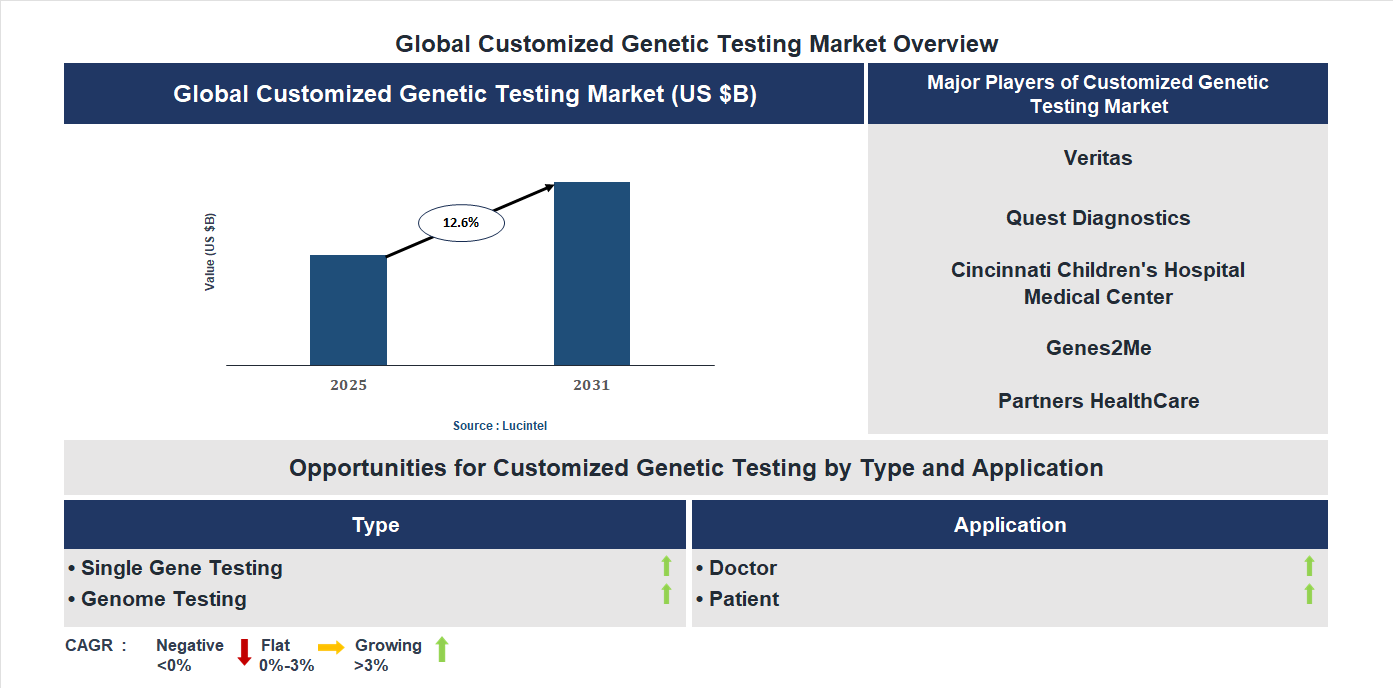
The future of the global customized genetic testing market looks promising with opportunities in the single gene testing and genome testing markets. The global customized genetic testing market is expected to grow with a CAGR of 12.6% from 2025 to 2031. The major drivers for this market are the increasing demand for personalized healthcare solutions, the rising adoption of direct-to-consumer genetic testing, and the growing awareness of genetic disorder risk.• Lucintel forecasts that, within the application category, patient is expected to witness higher growth over the forecast period.
• Within the type category, genome testing is expected to witness higher growth.
• In terms of region, APAC is expected to witness the highest growth over the forecast period. Gain valuable insights for your business decisions with our comprehensive 150+ page report. Sample figures with some insights are shown below.
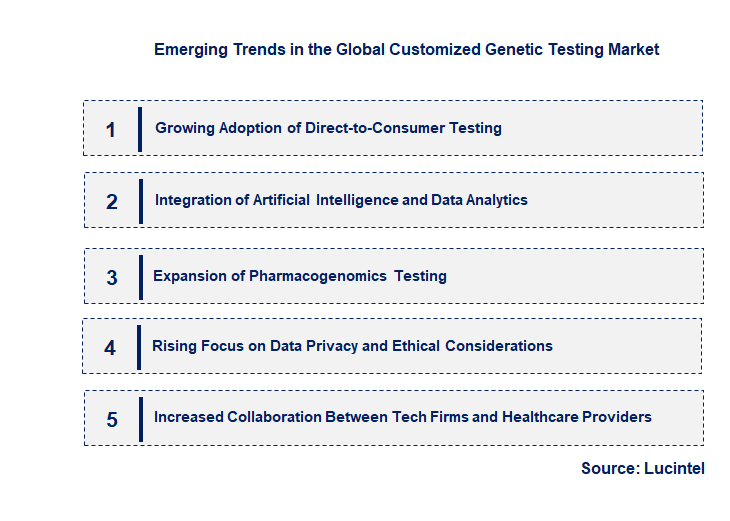
Emerging Trends in the Customized Genetic Testing Market
The customized genetic testing market is experiencing rapid growth driven by technological advancements, increasing consumer awareness, and a shift towards personalized healthcare. As consumers seek tailored health insights and preventative strategies, companies are innovating to meet these demands. The market is also influenced by regulatory changes, data privacy concerns, and the integration of artificial intelligence. These factors collectively shape the landscape, creating new opportunities and challenges. Understanding the emerging trends is crucial for stakeholders aiming to capitalize on this evolving sector. The following five key trends highlight the major developments transforming the customized genetic testing market.• Growing Adoption of Direct-to-Consumer (DTC) Testing: Consumers increasingly prefer accessible, affordable genetic testing services without medical intermediaries. DTC testing offers convenience, privacy, and immediate results, fueling market expansion. Companies like 23andMe and AncestryDNA are leading this trend, making genetic insights more mainstream. This shift democratizes access to genetic information, empowering individuals to make informed health and lifestyle decisions. However, it also raises concerns about data accuracy, interpretation, and regulatory oversight, prompting calls for clearer guidelines to ensure consumer safety and data privacy.
• Integration of Artificial Intelligence and Data Analytics: AI and advanced data analytics are revolutionizing genetic testing by enhancing result accuracy and providing deeper insights. Machine learning algorithms analyze vast genetic datasets to identify patterns linked to diseases, traits, and drug responses. This integration enables personalized treatment plans and predictive health assessments. AI-driven tools also improve the efficiency of genetic data interpretation, reducing turnaround times. As a result, healthcare providers and consumers benefit from more precise, actionable information, accelerating the shift toward truly personalized medicine and expanding the market’s capabilities.
• Expansion of Pharmacogenomics Testing: Pharmacogenomics, which studies how genes affect drug response, is gaining prominence in personalized medicine. Customized genetic testing helps identify optimal medications and dosages, minimizing adverse effects and improving efficacy. This trend is driven by the increasing need for tailored therapies in complex conditions like cancer and mental health disorders. Pharmaceutical companies are collaborating with genetic testing firms to develop targeted treatments. The expansion of pharmacogenomics enhances treatment outcomes, reduces healthcare costs, and fosters innovation in drug development, making it a pivotal trend shaping the future of personalized healthcare.
• Rising Focus on Data Privacy and Ethical Considerations: As genetic testing involves sensitive personal data, privacy concerns are at the forefront. Consumers and regulators demand stricter data protection measures, transparent consent processes, and ethical guidelines. Companies are investing in secure data storage, anonymization techniques, and clear policies to build trust. Ethical debates also surround issues like genetic discrimination and data ownership. Addressing these concerns is essential for sustainable growth, influencing market regulations and company practices. This trend underscores the importance of balancing innovation with responsible data management to maintain consumer confidence and market integrity.
• Increased Collaboration Between Tech Firms and Healthcare Providers: Strategic partnerships are becoming more common, combining technological expertise with clinical insights. Tech giants and startups are collaborating with hospitals, research institutions, and biotech firms to develop advanced genetic testing solutions. These collaborations facilitate the integration of genetic data into electronic health records, improve diagnostic accuracy, and expand access to personalized treatments. Such partnerships accelerate innovation, streamline regulatory approval processes, and enhance market reach. This trend is transforming the landscape by fostering a more interconnected, efficient ecosystem that benefits consumers through improved healthcare outcomes and innovative service offerings. In summary, these emerging trends are fundamentally reshaping the customized genetic testing market by making genetic insights more accessible, accurate, and ethically managed. They are driving innovation, expanding applications, and fostering collaborations that are paving the way for a more personalized, efficient, and trustworthy healthcare paradigm.
Recent Development in the Customized Genetic Testing Market
The customized genetic testing market has experienced rapid growth driven by technological advancements, increasing consumer awareness, and the rising prevalence of genetic disorders. As personalized medicine gains traction, key developments are shaping the future landscape of this industry. These innovations are enhancing test accuracy, expanding application areas, and improving accessibility, thereby transforming healthcare delivery. Stakeholders are focusing on integrating genetic testing into routine clinical practice, fostering collaborations, and addressing ethical concerns. The following are five significant recent developments that are influencing the markets trajectory and future prospects.• Technological Advancements in Sequencing: The emergence of next-generation sequencing (NGS) technologies has significantly improved the speed, accuracy, and cost-effectiveness of genetic testing. This development allows for comprehensive analysis of multiple genes simultaneously, enabling more precise diagnoses and personalized treatment plans. As a result, healthcare providers can offer tailored therapies, leading to better patient outcomes and increased adoption of genetic testing services.
• Expansion of Direct-to-Consumer (DTC) Testing: The rise of DTC genetic testing services has democratized access to genetic information, allowing consumers to obtain insights into their health, ancestry, and traits without medical intermediaries. This trend has increased market reach, driven consumer engagement, and prompted regulatory discussions. The convenience and affordability of DTC tests are making genetic testing more mainstream, although concerns about accuracy and interpretation remain.
• Integration with Digital Health Platforms: The integration of genetic testing data with digital health platforms and mobile applications has enhanced data management, analysis, and sharing. This development facilitates real-time health monitoring, personalized wellness plans, and remote consultations. It also improves patient engagement and adherence to treatment, thereby expanding the utility of genetic testing in preventive healthcare and chronic disease management.
• Growing Focus on Rare and Genetic Disorders: Increased research and awareness have led to the development of specialized tests for rare and genetic disorders. This focus has improved early diagnosis and intervention, reducing disease burden and healthcare costs. The market is witnessing collaborations between biotech firms and healthcare providers to develop targeted tests, which are crucial for personalized treatment strategies and improving patient quality of life.
• Regulatory and Ethical Frameworks Enhancement: Governments and regulatory bodies are establishing clearer guidelines and standards for genetic testing, including data privacy, consent, and ethical considerations. These frameworks aim to ensure test accuracy, protect consumer rights, and foster trust in genetic testing services. Strengthening regulations is also encouraging industry innovation while addressing ethical concerns related to genetic data usage. In summary, these developments are collectively propelling the customized genetic testing market toward greater accuracy, accessibility, and integration into mainstream healthcare. They are fostering innovation, expanding application areas, and addressing ethical and regulatory challenges, ultimately enhancing personalized medicine and improving patient outcomes worldwide.
Strategic Growth Opportunities in the Customized Genetic Testing Market
The customized genetic testing market is experiencing rapid expansion driven by technological advancements, increasing healthcare awareness, and personalized medicine trends. As consumers and healthcare providers seek tailored diagnostic solutions, the market is poised for significant growth across various applications. Key growth opportunities are emerging in areas such as oncology, reproductive health, rare diseases, pharmacogenomics, and wellness. These opportunities are transforming healthcare delivery, enabling more precise treatments, early diagnosis, and preventive care. Companies that capitalize on these trends can gain competitive advantages and meet the rising demand for personalized genetic insights, ultimately shaping the future landscape of healthcare.• Oncology: Enhanced personalized cancer treatments : Customized genetic testing allows for precise identification of genetic mutations in tumors, enabling targeted therapies that improve patient outcomes and reduce side effects. This growth opportunity is revolutionizing cancer care by facilitating early detection, prognosis, and tailored treatment plans, thus increasing survival rates and quality of life for patients.
• Reproductive Health: Improved fertility and prenatal screening : Genetic testing in reproductive health helps identify genetic disorders early in pregnancy and assess embryo viability. This reduces the risk of hereditary diseases, supports informed decision-making, and enhances fertility treatments. The expansion of these services is making reproductive healthcare more accurate, accessible, and less invasive.
• Rare Diseases: Accelerated diagnosis and management : Customized genetic testing provides definitive diagnosis for rare genetic disorders that often go undetected with conventional methods. Early and accurate diagnosis enables timely intervention, personalized management plans, and better patient outcomes. This growth opportunity addresses unmet needs in the rare disease community, fostering innovation and research.
• Pharmacogenomics: Personalized medication management : Genetic testing helps determine individual responses to drugs, optimizing dosages and reducing adverse effects. This application enhances treatment efficacy, minimizes trial-and-error prescribing, and supports the development of personalized medicine. The expansion of pharmacogenomics is transforming drug development and clinical practice.
• Wellness and Preventive Care: Tailored health insights and lifestyle recommendations : Genetic testing is increasingly used for wellness purposes, providing insights into predispositions and lifestyle factors. This empowers consumers to make informed health choices, adopt preventive measures, and improve overall well-being. The growth in this segment is driving a shift towards proactive healthcare and personalized wellness strategies. In summary, these key growth opportunities are significantly impacting the customized genetic testing market by expanding its scope, improving healthcare outcomes, and fostering innovation. They are enabling more precise, early, and personalized interventions across various medical fields, ultimately transforming the landscape of healthcare and wellness.
Customized Genetic Testing Market Driver and Challenges
The customized genetic testing market is influenced by a variety of technological, economic, and regulatory factors that shape its growth trajectory. Advances in genomic sequencing technologies have significantly reduced testing costs and increased accuracy, making personalized medicine more accessible. Economic factors such as rising healthcare expenditures and increasing consumer awareness drive demand for tailored genetic insights. Regulatory frameworks, including approvals and data privacy laws, impact market operations and innovation. Additionally, growing prevalence of genetic disorders and chronic diseases fuels the need for customized testing solutions. These interconnected drivers and challenges collectively determine the market’s expansion potential and strategic direction. The factors responsible for driving the customized genetic testing market include:-• Technological Advancements: Rapid innovations in genomic sequencing and bioinformatics tools have revolutionized genetic testing. These advancements enable faster, more accurate, and cost-effective tests, making personalized medicine feasible for a broader population. As technology continues to evolve, the scope of genetic insights expands, fostering increased adoption among healthcare providers and consumers. The integration of artificial intelligence and machine learning further enhances data analysis, leading to more precise diagnostics and treatment plans. This technological progress not only accelerates market growth but also opens new avenues for research and development, ensuring the market remains dynamic and competitive.
• Rising Prevalence of Genetic Disorders: The increasing incidence of genetic disorders such as cystic fibrosis, Huntington’s disease, and various cancers is a significant driver. Early detection through customized genetic testing allows for timely intervention, improving patient outcomes and reducing long-term healthcare costs. As awareness about genetic predispositions grows, more individuals seek personalized testing to understand their health risks. This trend is supported by demographic shifts, including aging populations, which are more susceptible to genetic conditions. Consequently, the demand for tailored testing solutions is expected to rise, fueling market expansion and encouraging innovation in diagnostic techniques.
• Growing Adoption of Personalized Medicine: The shift towards personalized medicine is transforming healthcare by enabling treatments tailored to individual genetic profiles. Customized genetic testing plays a crucial role in this paradigm, guiding drug selection, dosage, and preventive strategies. Healthcare providers increasingly recognize the benefits of personalized approaches, leading to higher adoption rates. This trend is supported by the development of targeted therapies and companion diagnostics, which rely heavily on genetic insights. As healthcare systems worldwide aim to improve efficacy and reduce adverse effects, the demand for customized testing is expected to grow substantially, driving market growth and fostering collaborations between biotech firms and clinicians.
• Increasing Healthcare Expenditure and Awareness: Rising healthcare spending globally, coupled with increased awareness about genetic testing benefits, propels market growth. Consumers are more informed about genetic risks and the availability of personalized solutions, leading to higher demand for testing services. Governments and private insurers are also beginning to cover genetic testing, reducing financial barriers. Educational campaigns and advocacy groups further promote understanding of genetic health management. This increased awareness and financial support create a conducive environment for market expansion, encouraging investments in research, infrastructure, and service delivery, ultimately making genetic testing more accessible and integrated into routine healthcare. The challenges facing this customized genetic testing market include:-
• Regulatory and Ethical Concerns: The genetic testing industry faces complex regulatory landscapes that vary across regions, impacting product approval and market entry. Ethical issues related to data privacy, consent, and potential misuse of genetic information pose significant hurdles. Stringent regulations can delay product launches and increase compliance costs, while ethical debates may influence public acceptance. Ensuring data security and addressing concerns about genetic discrimination are critical for market sustainability. Navigating these regulatory and ethical challenges requires ongoing collaboration between industry stakeholders, policymakers, and advocacy groups to establish clear guidelines that balance innovation with consumer protection.
• Data Privacy and Security Risks: The sensitive nature of genetic data necessitates robust security measures to prevent breaches and misuse. Increasing cyber threats and inadequate data protection frameworks threaten consumer trust and market stability. Concerns over unauthorized access, data sharing without consent, and potential discrimination hinder consumer willingness to undergo testing. Companies must invest heavily in cybersecurity and transparent data management practices to mitigate these risks. Failure to do so could result in legal liabilities, reputational damage, and reduced market growth, emphasizing the importance of establishing strong data governance policies aligned with international standards.
• High Cost and Limited Accessibility: Despite technological advancements, the high cost of genetic testing remains a barrier, especially in low-income regions. Limited access to testing facilities and lack of insurance coverage further restrict market reach. This disparity hampers widespread adoption and equitable healthcare delivery. Additionally, the cost of developing and maintaining sophisticated testing infrastructure can be prohibitive for smaller providers. Addressing affordability and accessibility issues requires strategic investments, policy interventions, and innovative business models to ensure that personalized genetic testing benefits a broader population, thereby supporting sustainable market growth. In summary, the customized genetic testing market is driven by rapid technological innovations, increasing disease prevalence, a shift towards personalized medicine, and rising healthcare awareness. However, regulatory complexities, data privacy concerns, and high costs pose significant challenges. These factors collectively influence the market’s evolution, requiring stakeholders to balance innovation with ethical and economic considerations. Overcoming these hurdles will be crucial for expanding access, ensuring data security, and fostering sustainable growth, ultimately transforming healthcare through personalized genetic insights.
List of Customized Genetic Testing Companies
Companies in the market compete on the basis of product quality offered. Major players in this market focus on expanding their manufacturing facilities, R&D investments, infrastructural development, and leverage integration opportunities across the value chain. With these strategies customized genetic testing companies cater increasing demand, ensure competitive effectiveness, develop innovative products & technologies, reduce production costs, and expand their customer base. Some of the customized genetic testing companies profiled in this report include-• Veritas
• Quest Diagnostics
• Cincinnati Childrens Hospital Medical Center
• Genes2Me
• Partners HealthCare
• CEN4GEN
• Nutrigenomix
• Positive Bioscience
• Mapmygenome
• Gene by Gene
Customized Genetic Testing Market by Segment
The study includes a forecast for the global customized genetic testing market by type, application, and region.Customized Genetic Testing Market by Type [Value from 2019 to 2031]:
• Single Gene Testing
• Genome Testing
Customized Genetic Testing Market by Application [Value from 2019 to 2031]:
• Doctor
• Patient
Customized Genetic Testing Market by Region [Value from 2019 to 2031]:
• North America
• Europe
• Asia Pacific
• The Rest of the World
Country Wise Outlook for the Customized Genetic Testing Market
The customized genetic testing market has experienced rapid growth driven by technological advancements, increasing consumer awareness, and expanding applications in healthcare, personalized medicine, and wellness. As countries adopt innovative genetic solutions, regulatory frameworks and market dynamics vary, influencing development trajectories. The United States, China, Germany, India, and Japan are key players, each contributing uniquely to this evolving landscape. Their investments in research, healthcare infrastructure, and regulatory policies shape the global markets future, fostering innovation and accessibility. Understanding these regional developments provides insight into the global trends and opportunities within the customized genetic testing industry.• United States: The US leads in technological innovation and market adoption, with significant investments from biotech firms and healthcare providers. Advances include the integration of genetic testing into routine clinical practice, expansion of direct-to-consumer testing services, and increased regulatory clarity. Companies like 23andMe and Illumina are pioneering personalized health solutions, while government initiatives support research and development. The market is also witnessing growing consumer demand for wellness and ancestry testing, driving further growth.
• China: China is rapidly expanding its genetic testing market through government support, increased R&D, and a large consumer base. The country focuses on integrating genetic testing into public health programs and personalized medicine initiatives. Domestic companies are developing affordable testing kits, and collaborations with international firms are boosting technological capabilities. Regulatory frameworks are evolving to ensure safety and efficacy, fostering a conducive environment for market growth and innovation.
• Germany: Germany emphasizes regulatory compliance and data privacy, influencing the development of the genetic testing market. The country is advancing in clinical applications, especially in oncology and rare diseases, supported by strong healthcare infrastructure. German biotech firms are innovating in genetic diagnostics, and partnerships with academic institutions are fostering research. The market is characterized by cautious adoption, balancing innovation with strict legal and ethical standards.
• India: India’s genetic testing market is experiencing rapid growth due to increasing awareness, decreasing testing costs, and a large population. The focus is on affordable, accessible testing services for hereditary diseases, cancer, and pharmacogenomics. Local startups and international companies are expanding their presence, supported by government initiatives promoting precision medicine. Challenges include regulatory hurdles and data privacy concerns, but overall, the market is poised for significant expansion.
• Japan: Japan is advancing in personalized medicine, with a focus on aging-related diseases and cancer. The government promotes genetic research and clinical integration through funding and policy support. Japanese companies are developing innovative diagnostic tools, and collaborations with global firms are enhancing technological capabilities. Ethical considerations and data privacy are prioritized, leading to a cautious but steady growth trajectory in the genetic testing market.

Features of the Global Customized Genetic Testing Market
Market Size Estimates: Customized genetic testing market size estimation in terms of value ($B). Trend and Forecast Analysis: Market trends (2019 to 2024) and forecast (2025 to 2031) by various segments and regions. Segmentation Analysis: Customized genetic testing market size by type, application, and region in terms of value ($B). Regional Analysis: Customized genetic testing market breakdown by North America, Europe, Asia Pacific, and Rest of the World. Growth Opportunities: Analysis of growth opportunities in different types, applications, and regions for the customized genetic testing market. Strategic Analysis: This includes M&A, new product development, and competitive landscape of the customized genetic testing market. Analysis of competitive intensity of the industry based on Porter’s Five Forces model.
FAQ
Q1. What is the growth forecast for customized genetic testing market? Answer: The global customized genetic testing market is expected to grow with a CAGR of 12.6% from 2025 to 2031. Q2. What are the major drivers influencing the growth of the customized genetic testing market? Answer: The major drivers for this market are the increasing demand for personalized healthcare solutions, the rising adoption of direct-to-consumer genetic testing, and the growing awareness of genetic disorder risk. Q3. What are the major segments for customized genetic testing market? Answer: The future of the customized genetic testing market looks promising with opportunities in the single gene testing and genome testing markets. Q4. Who are the key customized genetic testing market companies? Answer: Some of the key customized genetic testing companies are as follows:• Veritas
• Quest Diagnostics
• Cincinnati Childrens Hospital Medical Center
• Genes2Me
• Partners HealthCare
• CEN4GEN
• Nutrigenomix
• Positive Bioscience
• Mapmygenome
• Gene by Gene Q5. Which customized genetic testing market segment will be the largest in future? Answer: Lucintel forecasts that, within the application category, patient is expected to witness higher growth over the forecast period. Q6. In customized genetic testing market, which region is expected to be the largest in next 5 years? Answer: In terms of region, APAC is expected to witness the highest growth over the forecast period. Q7. Do we receive customization in this report? Answer: Yes, Lucintel provides 10% customization without any additional cost.
Table of Contents
List of Figures
List of Tables
Methodology
- In-depth interviews of the major players in this market
- Detailed secondary research from competitors’ financial statements and published data
- Extensive searches of published works, market, and database information pertaining to industry news, company press releases, and customer intentions
- A compilation of the experiences, judgments, and insights of Lucintel’s professionals, who have analyzed and tracked this market over the years.


Buy Now
Choose a license that fits your team. Instant PDF delivery.
Prices exclude taxes. Instant delivery. Custom licensing available on request.
Key Questions
- • What are some of the most promising, high-growth opportunities for the customized genetic testing market by type (single gene testing and genome testing), application (doctor and patient), and region (North America, Europe, Asia Pacific, and the Rest of the World)?
- • Which segments will grow at a faster pace and why?
- • Which region will grow at a faster pace and why?
- • What are the key factors affecting market dynamics? What are the key challenges and business risks in this market?
- • What are the business risks and competitive threats in this market?
- • What are the emerging trends in this market and the reasons behind them?
- • What are some of the changing demands of customers in the market?
- • What are the new developments in the market? Which companies are leading these developments?
- • Who are the major players in this market? What strategic initiatives are key players pursuing for business growth?
- • What are some of the competing products in this market and how big of a threat do they pose for loss of market share by material or product substitution?
- • What M&A activity has occurred in the last 5 years and what has its impact been on the industry? For any questions related to Customized Genetic Testing Market, Customized Genetic Testing Market Size, Customized Genetic Testing Market Growth, Customized Genetic Testing Market Analysis, Customized Genetic Testing Market Report, Customized Genetic Testing Market Share, Customized Genetic Testing Market Trends, Customized Genetic Testing Market Forecast, Customized Genetic Testing Companies, write Lucintel analyst at email: helpdesk@lucintel.com. We will be glad to get back to you soon.


