
Market Report · May 18, 2026

This market report covers trends, opportunities, and forecasts in the global crypto derivative trading platform market to 2031 by technology (blockchain integration technology, smart contract technology, api connectivity technology, ai-powered risk management technology, and others), application (retail investor and professional investor), and region (North America, Europe, Asia Pacific, and the Rest of the World)
We'll send your sample report shortly.
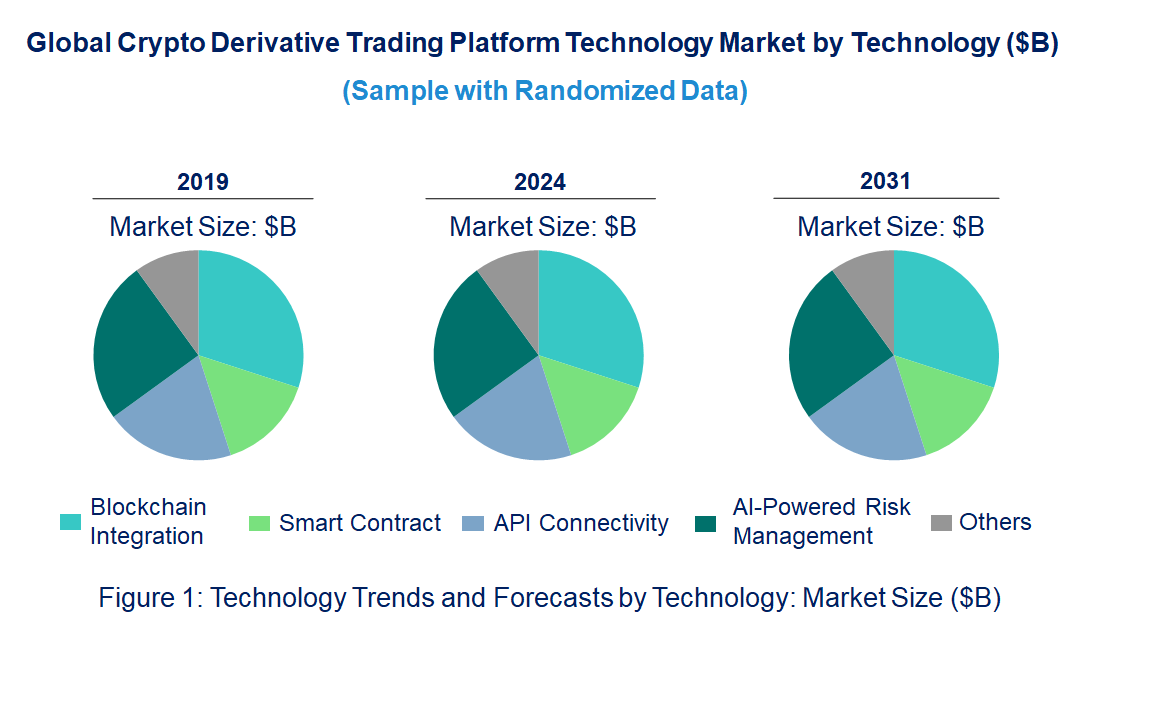
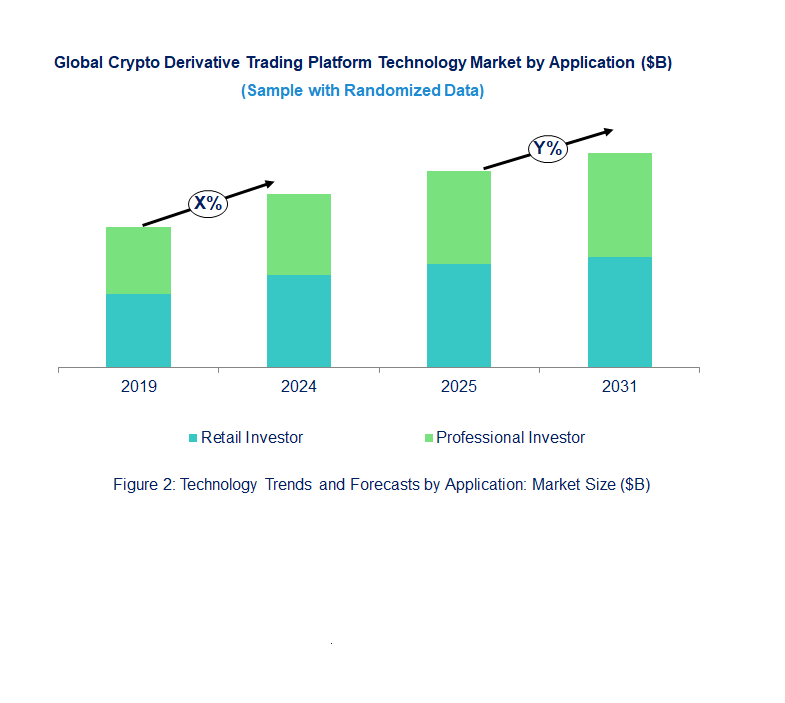
• Attachment of Blockchain Technology: The integration of blockchain technology into crypto derivative trading platforms is progressing rapidly. This helps increase transparency, decentralization, and security, reducing the risks associated with using a single exchange platform.
• Adoption of Smart Contracts: Smart contract technology is now integrated into crypto derivative platforms. This enforces trades automatically, only when specific prerequisites are met. It also helps lower human error and risk in the system and reduces the cost of having agents as arbitrators.
• Rise of AI-Powered Risk Management: Predictive analytics using AI and machine learning is being employed more rapidly on the platforms for effective risk management. These technologies provide an edge by scanning large volumes of information about market movements and suggesting the best actions for smart trading in real-time.
• API Connectivity Improvements: API connectivity has evolved to provide integration capabilities with multiple exchanges, wallets, and other cryptocurrency services. This enables traders to open and manage their crypto derivative positions across separate accounts and platforms.
• Developed Services for Retail Investors: Platforms are offering features and functionalities designed for the growing number of retail investors. Notable features include a user-friendly interface, reduced transaction costs, and educational resources to facilitate crypto derivatives trading for retail investors. These recent developments emphasize the active innovation occurring in the crypto derivative trading platform market. The integration of blockchain technology and smart contracts, AI risk management solutions, and enhanced API connectivity are changing the technological landscape for these platforms. These advancements improve the operational capabilities and safety of trading platforms while broadening their reach to more investors. As a result, these technologies are disrupting the industry and changing the landscape for crypto derivative trading by enhancing the accessibility, agility, and safety of derivatives for both retail and institutional traders.
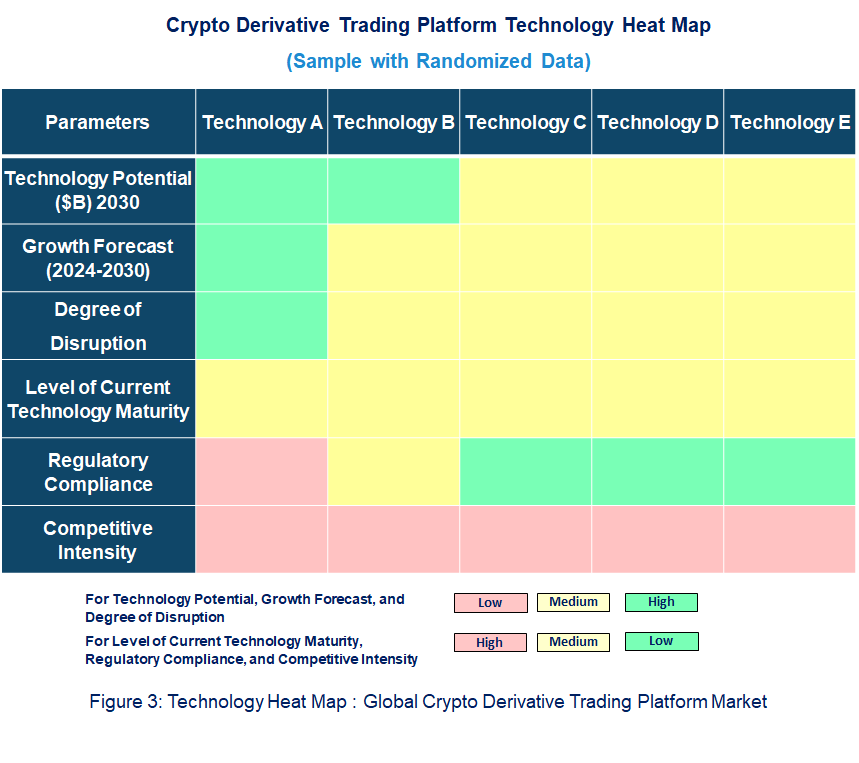
• Potential in Technology: Derivative trading in crypto has many beneficial applications, as blockchain technology provides decentralized solutions and increased accountability and security for smart contracts, AI-based risk management, and advanced API connectivity. Moreover, risks related to the crypto market can be mitigated, as AI would help in risk management by increasing the accuracy of predictions. Furthermore, advanced APIs will help overcome these challenges, thus providing a better experience overall.
• Degree of Disruption: These technologies can be highly disruptive, especially blockchain and smart contracts, which reduce control and eliminate unnecessary middleman interactions, leading to financial improvements. What’s even more intriguing is that AI, along with machine learning, has made a radical shift in traditional risk management. AI acts as a real-time predictor of analytics. These changes indicate that the crypto derivative markets are being reformed for the better.
• Current Technology Maturity Level: Most organizations have embraced the use of smart contract and blockchain technology. However, the use of AI solutions and APIs is still in the novice stage. AI in risk management is still in the test phase, and although acquisitions are beginning to grow, there is still much to overcome before they capture the market fully.
• Regulatory Compliance: The legal framework for derivatives in cryptocurrency is still not rigid, which complicates matters due to the rapid evolution of technology. Platforms that want to survive and expand in this fast-changing industry must navigate the various regulations.
• Eurex: Due to its increasing involvement in the cryptocurrency markets, Wennberg understands how important it is for entities such as asset managers to devise effective hedging strategies. Therefore, as part of its commitment, the company has begun offering new products, including Bitcoin and Ethereum Futures, which have strengthened strategies targeting asset managers who require liquidity trading options. This allows them to hedge with their own assets while providing investors with constant high liquidity. The introduction of this new product has enhanced their position as leaders in providing contemporary currency strategies, fused with top-tier regulations and professional technologies.
• FIX: To meet the growing demand for low-latency services in the cryptocurrency markets, FIX launched a new service focusing on cost-reducing technologies and eliminating latency in trading. This milestone is important as their ability to manage operations in the evolving cryptocurrency market is a necessary requirement. Offering cryptocurrencies as a substitute is positioning FIX well to broaden its horizons within the sector through its strong ecosystem.
• Delta Exchange: Delta Exchange is a DeFi exchange that provides tokenized assets and growing perpetual contracts. These products allow users to be part of the expanding Decentralized Finance sector, making Delta a hybrid between the CeFi and DeFi markets. This enables users to have a unique trading experience with high leverage and low cost, thus establishing Delta as a market leader.
• Bybit: Bybit has launched revolutionary options trading and added many new products to its derivatives trading platform. This development enables traders to have more effective hedging tools while enhancing Bybit’s appeal to retail investors and professional traders. More importantly, it strengthens Bybit’s position in the competitive crypto derivatives market.
• B2Broker: B2Broker has enhanced its provision of white-label and liquidity solutions for crypto derivatives. This allows brokers to easily build and manage their own crypto derivative platforms, opening up the crypto trading universe for everyone and enabling B2Broker to meet the growing demand for crypto liquidity solutions in the market.
• StormGain: StormGain has automated its trading features by using AI tools, which allow users to trade crypto derivatives based on forecasts. This progress improves the decision-making experience for both novices and professional traders, differentiating StormGain due to its automation capabilities and AI features.
• Bingbon: Bingbon launched cross-platform trading in a new form, allowing users to trade Bitcoin and other crypto assets on multiple devices simultaneously. This makes it easier for users who want to trade on several devices, which is beneficial for Bingbon, as it now appeals to a wide range of traders looking for a more crypto derivatives-focused platform. All of these changes are expected to take place in the Crypto Derivative Trading Platform Market as the leaders introduce new technologies and features for asset management to increase investments, liquidity, and meet the supply of today’s most innovative crypto derivative products.
• Institutional Adoption: The increasing participation of institutional investors is driving demand for more advanced crypto derivatives products. This shift brings more credibility and stability to the market, which in turn facilitates higher liquidity and new financial products focused on professional traders, further developing the growth of the market.
• Technological Advancements: Continuous innovations in blockchain, AI risk control systems, and smart contracts enhance the efficiency and safety of platforms. The adoption of advanced technology allows quicker processing of trades while reducing costs and increasing security, making crypto derivatives appealing to a broader audience.
• Regulatory Evolution: Clearer guidelines from governments and regulatory authorities worldwide regarding the trading of crypto derivatives give more confidence to investors and reduce uncertainty in the market. This regulatory clarity is essential for the sustainable advancement of the market and allows both retail and institutional investors seeking safety and compliance to enter.
• Increased Retail Participation: The growing involvement of retail investors in crypto trading is expanding the market’s reach. Advanced crypto derivatives trading platforms with low costs and educational resources are helping retail investors actively trade, thus increasing the variety of investors. Challenges:
• Risks Related to States: The ongoing transformation of states’ crypto laws in different locations causes confusion and poses a threat for both platform providers and traders. Jurisdictional restrictions on the enforceability of crypto contracts can potentially slow the development of the entire market.
• Lack of Security: Risks associated with hacking, malicious activities, and cyber-attacks are putting the crypto derivatives market at risk. Crypto derivative platforms are regularly exposed to malicious activities, which necessitates proper measures to avoid losses and maintain trust.
• Volatility in the Crypto Market: The crypto market, being an unregulated space, experiences extreme fluctuations and conditions that are beyond control. This erratic behavior of prices can deter long-term investors and increase the likelihood of price swings on the platforms.
• Inefficiencies in Liquidity: Low liquidity in certain markets results in wider spreads, slippage, and less effective price action. Platforms lacking deep liquidity will face difficulties engaging and retaining traders in liquid markets. The trends in the crypto derivative trading platform market can be attributed to a shift towards institutional adoption, technological growth, and increased retail participation. On the other hand, issues such as lack of regulatory clarity, security concerns, market risk, and liquidity issues need to be addressed to promote sustainable growth over time. Once these issues are resolved, platforms will be able to tap into new audiences and fully utilize the benefits of crypto derivatives trading.
• Eurex
• FIX
• Delta Exchange
• Bybit
• B2Broker
• StormGain
• Blockchain integration technology is quite advanced and is sufficiently utilized in several markets, although the legal environment is still complex, and compliance across markets remains an issue.
• Smart contract technology is also advanced, especially on Ethereum. However, precise legal frameworks for enforcing contracts are still in development.
• Numerous effective APIs are available for data transfer, but concerns about privacy and compliance with regulations for data continue to be a challenge.
• AI-enabled risk management solutions are still in progress, and new solutions have set a good tone for the industry, but widespread adoption faces several barriers in terms of the right measures and standing approval.
• Other technologies, such as machine learning for fraud detection, are gaining traction across companies. However, they are still cutting-edge and need further refinement for wide-scale application.
• There is significant competition in blockchain technologies as platforms compete for supremacy in the decentralized finance market.
• Even though smart contracts face regulatory issues regarding execution and legal concerns, these self-executing systems are highly effective and rapidly adapting to innovations.
• Regulatory issues regarding data sharing remain, but API infrastructure is poised for extensive adaptation and increased platform scalability.
• There is growing support for advanced risk management solutions, which currently offer real-time risk assessments. However, regulatory concerns regarding market manipulation and accuracy still exist.
• Regulatory expectations, such as AML and KYC, will always be a concern as technologies continue to evolve, especially with increased market activity. Competitive Intensity and Regulatory Compliance:
• With the increasing push for decentralized solutions, competition among platforms to roll out blockchain integration is fierce, while regulators struggle to classify and regulate assets on such networks.
• There is growing competition in the development of self-executing tamper-proof smart contracts. However, the lack of regulatory compliance, due to the varying legal systems, poses a real challenge.
• API connectivity technology faces stiff competition as companies strive to build cost-effective and scalable systems, while regulatory development for data protection is still in progress.
• Competition for AI risk management is intensifying as modern analytics techniques improve. However, AI solutions need to comply with financial regulations regarding market manipulation and trend forecasting.
• Market competition includes machine learning and data encryption, leading to the rapid adoption of these technologies by platforms amid fierce competition and regulatory uncertainty.
• The landscape for cryptocurrencies and their derivatives is fast-changing, with global governance standards playing a significant role.
• Regulation is increasing in these technology-driven markets, with a focus on investor protection, anti-money laundering, and preventing market abuse.
• As market stakes rise, so does the need for systems that ensure safety and remain competitive while complying with regulations.
• Leaked documents indicate that new regulations will result in increased transparency, data security, and accountability on these platforms.
• One of the biggest points of contention is how to promote evolution while adhering to regulatory requirements within the cryptocurrency derivatives market. Disruption Potential by Technology Type:
• Digital currencies foster international trade through online customer interactions.
• Self-executing agreements eliminate paperwork during transactions, reducing processing time.
• API integrations across services and platforms address liquidity issues.
• Machine learning is used to formulate algorithms for predicting market trends and aids in quick decision-making.
• Quantum computing and cloud computing are expected to bring higher processing power and scalability.
• Trust in the system is built as power shifts to a uniform party, removing the influence of superpowers.
• Transactions become quicker and less susceptible to fraud due to fewer human interfaces.
• API technologies facilitate the creation of highly tailored trading solutions, accelerating market entry.
• Confidence-building is gradual, and investments grow without the fear of losing financial resources.
• The era of trading is being transformed by technologies that allow decentralized apps to function independently.
• Blockchain Integration Technology
• Smart Contract Technology
• API Connectivity Technology
• AI-Powered Risk Management Technology
• Others
• Retail Investor
• Professional Investor
• North America
• Europe
• Asia Pacific
• The Rest of the World
• Latest Developments and Innovations in the Crypto Derivative Trading Platform Technologies
• Companies / Ecosystems
• Strategic Opportunities by Technology Type


Choose a license that fits your team. Instant PDF delivery.
Prices exclude taxes. Instant delivery. Custom licensing available on request.
Market Report · May 18, 2026
Market Report · May 18, 2026
Market Report · May 18, 2026
Trusted partner for strategic intelligence and business growth


Receive a complimentary market analysis tailored to your industry. Our analysts will identify key growth opportunities and competitive dynamics specific to your business.

Market size, growth rate, and key trend analysis for your specific sector.

Top competitor positioning and market share analysis.

Strategic recommendations backed by data-driven insights.
Get curated market intelligence and competitive moves straight to your inbox.
By subscribing, you agree to receive our monthly insights. Unsubscribe anytime.
Receive a complimentary market analysis tailored to your industry. Our analysts will identify key growth opportunities and competitive dynamics specific to your business.
Market size, growth rate, and key trend analysis for your specific sector.
Top competitor positioning and market share analysis.
Strategic recommendations backed by data-driven insights.
Get curated market intelligence, emerging trends, and competitive moves straight to your inbox each month.
By subscribing, you agree to receive our monthly insights. Unsubscribe anytime.
We'll send your sample report shortly.