
Report Feature
Cross Linked Polymer Market Trends and Forecast
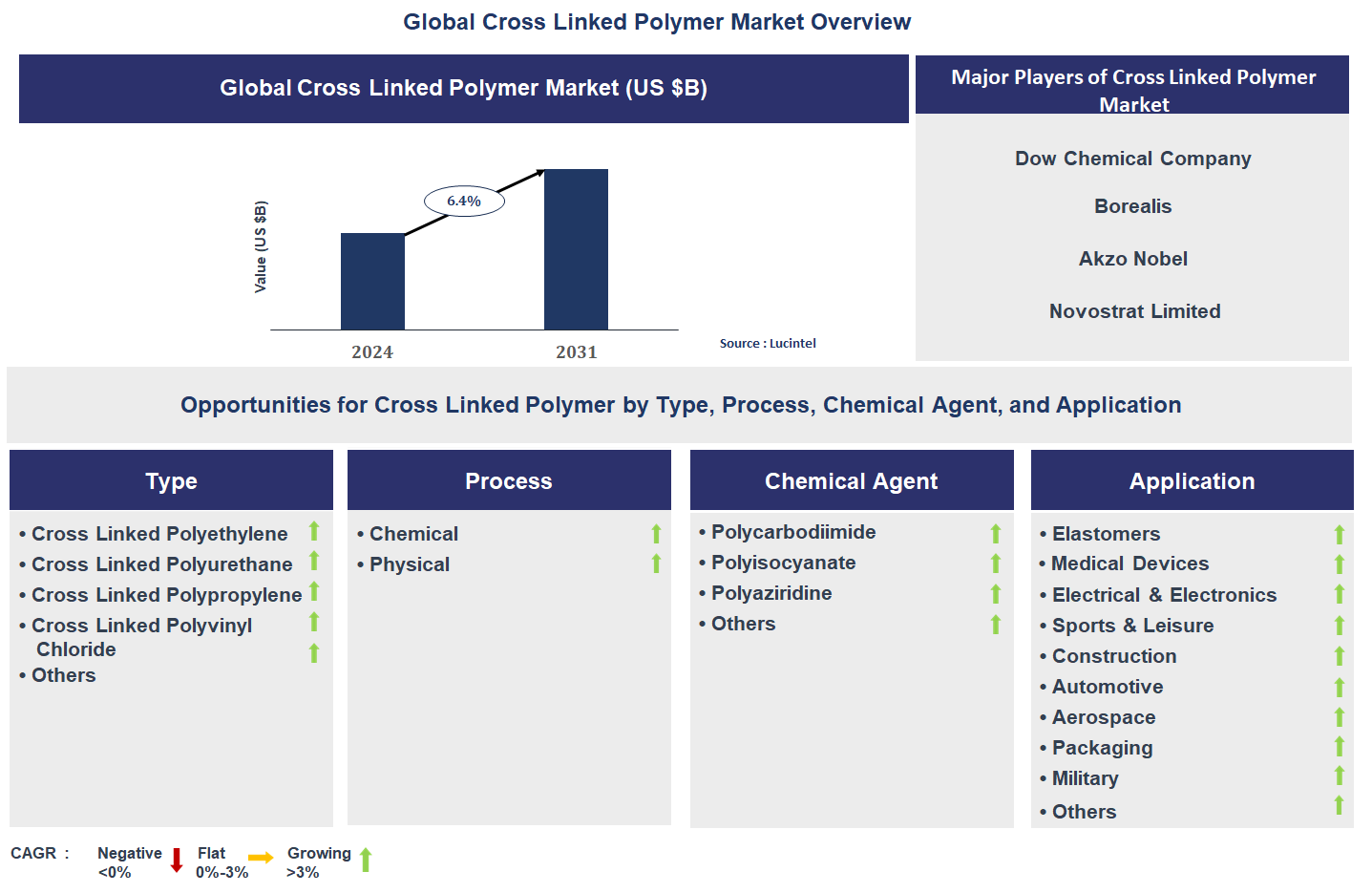
The future of the global cross linked polymer market looks promising with opportunities in the elastomer, medical device, electrical & electronics, sport & leisure, construction, automotive, aerospace, packaging, and military markets. The global cross linked polymer market is expected to grow with a CAGR of 6.4% from 2025 to 2031. The major drivers for this market are the increasing demand for high-performance material applications, the rising use in automotive & construction industries, and the growing need for durable insulation & wiring solutions.• Lucintel forecasts that, within the type category, cross linked polyethylene is expected to witness the highest growth over the forecast period.
• Within the application category, automotive is expected to witness the highest growth.
• In terms of region, APAC is expected to witness the highest growth over the forecast period. Gain valuable insights for your business decisions with our comprehensive 150+ page report. Sample figures with some insights are shown below.
Emerging Trends in the Cross Linked Polymer Market
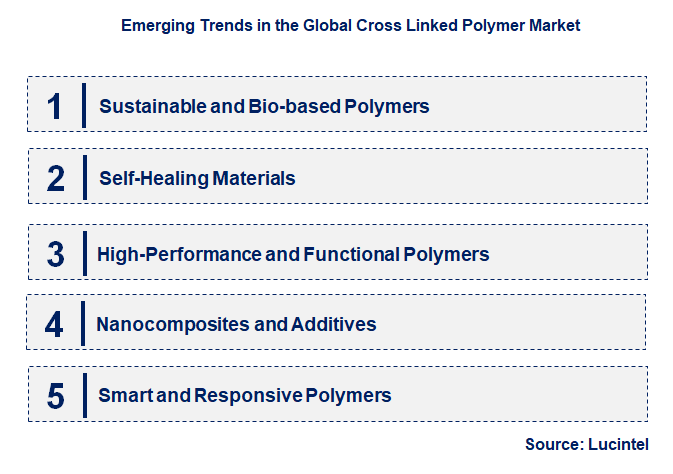
The cross linked polymer market is undergoing a significant transformation driven by technological innovation and shifting industry demands. These emerging trends reflect a collective move towards enhanced performance, sustainability, and intelligent functionality. The industry is responding to global challenges like climate change and resource scarcity by developing smarter, more efficient materials that can extend product lifecycles and reduce environmental impact.• Sustainable and Bio-based Polymers: The industry is moving toward materials with a smaller environmental footprint. This involves using renewable feedstocks and developing polymers that are recyclable or biodegradable. The goal is to reduce reliance on fossil fuels and address the end-of-life challenges associated with traditional cross linked materials, which are notoriously difficult to recycle.
• Self-Healing Materials: Advancements in polymer chemistry are enabling the creation of materials that can repair themselves automatically. This trend is crucial for applications where durability and long-term reliability are paramount, such as in automotive coatings and aerospace components. These polymers can extend product lifecycles, reducing maintenance costs and waste.
• High-Performance and Functional Polymers: The demand for polymers that can withstand extreme conditions is growing, particularly in sectors like aerospace, electronics, and energy. This trend focuses on enhancing properties like thermal stability, chemical resistance, and electrical insulation. These materials are critical for high-stakes applications where performance failure can have severe consequences.
• Nanocomposites and Additives: The integration of nanotechnology is revolutionizing polymer properties. By incorporating nanoparticles or other additives, manufacturers can create cross linked polymers with superior mechanical strength, thermal conductivity, or flame retardancy. This allows for a new generation of materials with tailored properties for specific high-tech applications.
• Smart and Responsive Polymers: This trend involves developing polymers that can change their properties in response to external stimuli like heat, light, or pH. These "smart" materials are finding applications in medical devices, sensors, and actuators. Their ability to react to their environment opens up opportunities for intelligent systems and personalized healthcare solutions. These trends are reshaping the cross linked polymer market by prioritizing innovation, sustainability, and high performance. They are pushing the industry away from commodity products toward specialized, value-added materials. This shift is creating new markets and requiring companies to invest heavily in R&D to stay competitive. Ultimately, these advancements are leading to more durable, efficient, and environmentally friendly products across a wide range of applications.
Recent Development in the Cross Linked Polymer Market
The cross linked polymer market is being shaped by several key developments, driven by technological progress, shifting market demands, and a growing emphasis on sustainability. These developments are not isolated but rather interconnected, influencing material properties, manufacturing processes, and final applications across various industries. They reflect a strategic response to the need for more efficient and durable materials.• Advanced XLPE for Power Cables: This development involves the creation of next-generation XLPE (cross linked polyethylene) with enhanced thermal and electrical properties. The impact is significant for the energy sector, particularly in high-voltage power transmission and renewable energy infrastructure. It allows for more efficient and reliable power grids, reducing energy loss and supporting the global push for electrification and clean energy.
• Water-Based Cross-linking Agents: A key development is the transition from solvent-based to water-based cross-linking agents, driven by environmental regulations. This shift significantly reduces the emission of volatile organic compounds (VOCs). The impact is a greener, safer manufacturing process and a growing market for eco-friendly coatings, adhesives, and sealants, especially in the automotive and construction sectors.
• Innovations in 3D Printing Materials: Recent developments have introduced cross linked polymers specifically designed for 3D printing. These materials offer superior mechanical strength, heat resistance, and dimensional stability compared to traditional 3D-printed plastics. Their impact is a revolution in prototyping and manufacturing, enabling the creation of high-performance components for aerospace, medical devices, and custom industrial parts with complex geometries.
• Biocompatible Cross-linked Polymers: There’s a strong focus on developing biocompatible cross linked polymers for medical and pharmaceutical applications. These materials are used in drug delivery systems, prosthetics, and implants. The impact is a huge leap forward in patient care, as these polymers offer improved drug efficacy, reduced rejection rates, and enhanced performance in critical medical devices, ensuring patient safety and treatment effectiveness.
• Self-Healing and Scratch-Resistant Coatings: This development involves creating coatings that can autonomously repair minor damage like scratches and abrasions. The impact is a significant extension of product lifespan for goods like automobiles, consumer electronics, and furniture. It enhances aesthetic appeal and reduces the need for frequent maintenance or replacement, leading to long-term cost savings for both manufacturers and consumers. These developments are profoundly impacting the cross linked polymer market by driving innovation and value creation. They’re enabling the creation of smarter, more sustainable, and high-performance products. By addressing critical industry needs—from environmental concerns to durability and functionality—these advancements are not only fueling market growth but also setting new standards for material science and engineering.
Strategic Growth Opportunities in the Cross Linked Polymer Market
The cross linked polymer market offers significant strategic growth opportunities across various key applications. These opportunities are driven by a convergence of factors, including technological advancements, increasing demand for high-performance materials, and a global emphasis on sustainability. Companies that can strategically align their products with these emerging needs are well-positioned for future success and market leadership.• Automotive: Lightweighting and EVs: The shift towards electric vehicles and the constant push for fuel efficiency in traditional cars are major growth drivers. Cross-linked polymers are ideal for reducing vehicle weight while providing the necessary strength, durability, and electrical insulation for battery components and wiring. This opportunity is critical for a more sustainable and high-performing automotive future.
• Construction: Piping and Coatings: The global construction boom, particularly in developing economies, is fueling demand for durable and corrosion-resistant materials. Cross-linked polyethylene (PEX) is replacing traditional metal pipes in plumbing and radiant heating systems. This represents a significant growth area due to its cost-effectiveness, ease of installation, and superior performance.
• Electrical & Electronics: Cable Insulation: The rapid expansion of power grids, telecommunications networks, and the proliferation of electronic devices create a huge market for high-performance insulating materials. Cross-linked polymers provide exceptional thermal and electrical resistance, making them essential for insulating cables, wires, and electronic components in critical infrastructure projects and consumer electronics.
• Medical Devices: Biocompatible Materials: The healthcare sector presents a high-value opportunity for cross linked polymers due to the demand for biocompatible, sterilizable, and durable materials. Applications range from catheters and surgical instruments to drug delivery systems and dental composites. This area is driven by an aging global population and continuous innovation in medical technology.
• Packaging: Enhanced Barrier Films: The packaging industry is seeking new ways to extend product shelf life and reduce waste. Cross-linked polymers can be used to create high-performance barrier films that offer superior protection against moisture, oxygen, and other gases. This is a key opportunity for food and pharmaceutical packaging, where product integrity is paramount. These strategic growth opportunities are reshaping the market by directing investment and innovation toward high-value, specialized applications. They demonstrate how cross linked polymers are no longer just commodity materials but crucial components enabling advancements in critical industries. By targeting these applications, companies can unlock new revenue streams and strengthen their position in a competitive global market.
Cross Linked Polymer Market Driver and Challenges
The cross linked polymer market is influenced by a complex interplay of drivers and challenges, including various technological, economic, and regulatory factors. These elements shape market dynamics, pushing for innovation while simultaneously creating hurdles that require strategic navigation. The balance between these forces dictates the market’s trajectory and future potential. The factors responsible for driving the cross linked polymer market include: 1. Rising demand for high-performance materials: Industries like aerospace, automotive, and electronics increasingly require materials with superior properties like enhanced strength, heat resistance, and durability. Cross-linking allows polymers to achieve these high-performance characteristics. This is a significant driver, as it directly responds to the needs of modern, high-tech manufacturing and engineering. 2. Growth in the construction industry: Rapid urbanization and infrastructure development globally, especially in emerging economies, are fueling the demand for durable and efficient building materials. Cross-linked polymers are widely used in pipes, insulation, and coatings. This driver is tied to macroeconomic trends and is crucial for the market’s continued expansion. 3. Increasing adoption of electric vehicles: The booming EV market is a powerful driver for the cross linked polymer market. These materials are essential for battery components, lightweighting, and insulating high-voltage cables. Their use helps to improve vehicle range and safety. This trend is a major factor shaping future demand. 4. Technological advancements in polymer science: Continuous innovation in cross-linking methods, new polymer formulations, and manufacturing processes is expanding the capabilities of these materials. The development of self-healing and smart polymers is a key example. This driver encourages new applications and improves the efficiency of production. 5. Shift toward sustainable materials: Growing environmental consciousness and stringent regulations are pushing industries to adopt greener materials. The development of bio-based cross-linking agents and more recyclable polymers is a direct response. This driver is transforming the industry by promoting eco-friendly practices and products. Challenges in the cross linked polymer market are: 1. Complexity and cost of production: The cross-linking process can be complex and expensive, requiring specialized equipment and precise control over reaction conditions. This can pose a barrier to entry for smaller companies and increase the final product cost. This challenge impacts market competitiveness and pricing strategies. 2. Limited recyclability: Traditional cross linked thermoset polymers are difficult to recycle due to their irreversible chemical bonds. This creates a significant environmental challenge and runs counter to circular economy goals. This challenge has spurred the need for innovative recycling technologies. 3. Stringent environmental regulations: Some cross-linking agents and processes involve volatile organic compounds (VOCs) and other hazardous chemicals, which are subject to strict environmental regulations. Compliance with these rules can increase production costs and complexity. This challenge requires manufacturers to invest in cleaner, safer alternatives. The impact of these drivers and challenges is a market in flux, driven by innovation and demand for high-performance, sustainable products, while simultaneously grappling with the technical and regulatory hurdles of its own chemistry. The market’s future success will depend on its ability to leverage the drivers while effectively addressing the inherent challenges.List of Cross Linked Polymer Companies
Companies in the market compete on the basis of product quality offered. Major players in this market focus on expanding their manufacturing facilities, R&D investments, infrastructural development, and leverage integration opportunities across the value chain. With these strategies cross linked polymer companies cater increasing demand, ensure competitive effectiveness, develop innovative products & technologies, reduce production costs, and expand their customer base. Some of the cross linked polymer companies profiled in this report include-• Dow Chemical Company
• Borealis
• Akzo Nobel
• Novostrat Limited
Cross Linked Polymer Market by Segment
The study includes a forecast for the global cross linked polymer market by type, process, chemical agent, application, and region.Cross Linked Polymer Market by Type [Value from 2019 to 2031]:
• Cross Linked Polyethylene
• Cross Linked Polyurethane
• Cross Linked Polypropylene
• Cross Linked Polyvinyl Chloride
• Others
Cross Linked Polymer Market by Process [Value from 2019 to 2031]:
• Chemical
• Physical
Cross Linked Polymer Market by Chemical Agent [Value from 2019 to 2031]:
• Polycarbodiimide
• Polyisocyanate
• Polyaziridine
• Others
Cross Linked Polymer Market by Application [Value from 2019 to 2031]:
• Elastomers
• Medical Devices
• Electrical & Electronics
• Sports & Leisure
• Construction
• Automotive
• Aerospace
• Packaging
• Military
• Others
Cross Linked Polymer Market by Region [Value from 2019 to 2031]:
• North America
• Europe
• Asia Pacific
• The Rest of the World
Country Wise Outlook for the Cross Linked Polymer Market
Recent developments in the cross linked polymer market show a shift towards high-performance materials to meet the rising demand from various industries. Innovations focus on enhancing thermal stability, durability, and chemical resistance, with a strong emphasis on sustainability. These changes are driven by rapid urbanization, infrastructure development, and the growing automotive and electronics sectors, particularly in key global economies.• United States: The U.S. market is experiencing robust growth, primarily fueled by the Bipartisan Infrastructure Law, which is driving demand for cross linked polyethylene (XLPE) in electrical grids and water systems. There’s also significant R&D in self-healing and bio-based polymers, with strong adoption in the aerospace and defense sectors.
• China: China is the largest market, driven by massive investments in infrastructure, urbanization, and the booming electric vehicle (EV) sector. The country’s demand for XLPE-insulated cables for high-voltage power transmission is particularly high, with local manufacturers increasingly focusing on producing high-quality, functional products to meet domestic needs.
• Germany: As a hub for advanced manufacturing and automotive technology in Europe, Germany’s cross linked polymer market is focused on high-performance materials for automotive coatings and industrial applications. The country is a key player in the development and production of specialized materials for the energy and pharmaceutical sectors.
• India: India’s market growth is propelled by its rapidly expanding construction and infrastructure sectors, supported by significant government initiatives. The demand for cross linked polymers is rising in both residential and industrial projects, as well as in the automotive industry, which is a major consumer of high-performance adhesives and sealants.
• Japan: Japan is a leader in advanced polymer research, with a strong focus on high-performance, functional polymers for electronics, healthcare, and sustainable applications. The market is characterized by innovations in self-healing materials and stimuli-responsive polymers, which are being applied in solar cells, displays, and medical devices.

Features of the Global Cross Linked Polymer Market
Market Size Estimates: Cross linked polymer market size estimation in terms of value ($B). Trend and Forecast Analysis: Market trends (2019 to 2024) and forecast (2025 to 2031) by various segments and regions. Segmentation Analysis: Cross linked polymer market size by various segments, such as by type, process, chemical agent, application, and region in terms of value ($B). Regional Analysis: Cross linked polymer market breakdown by North America, Europe, Asia Pacific, and Rest of the World. Growth Opportunities: Analysis of growth opportunities in different types, processes, chemical agents, applications, and regions for the cross linked polymer market. Strategic Analysis: This includes M&A, new product development, and competitive landscape of the cross linked polymer market. Analysis of competitive intensity of the industry based on Porter’s Five Forces model.
FAQ
Q1. What is the growth forecast for cross linked polymer market? Answer: The global cross linked polymer market is expected to grow with a CAGR of 6.4% from 2025 to 2031. Q2. What are the major drivers influencing the growth of the cross linked polymer market? Answer: The major drivers for this market are the increasing demand for high-performance material applications, the rising use in automotive & construction industries, and the growing need for durable insulation & wiring solutions. Q3. What are the major segments for cross linked polymer market? Answer: The future of the cross linked polymer market looks promising with opportunities in the elastomer, medical device, electrical & electronics, sport & leisure, construction, automotive, aerospace, packaging, and military markets. Q4. Who are the key cross linked polymer market companies? Answer: Some of the key cross linked polymer companies are as follows:• Dow Chemical Company
• Borealis
• Akzo Nobel
• Novostrat Limited Q5. Which cross linked polymer market segment will be the largest in future? Answer: Lucintel forecasts that, within the type category, cross linked polyethylene is expected to witness the highest growth over the forecast period. Q6. In cross linked polymer market, which region is expected to be the largest in next 5 years? Answer: In terms of region, APAC is expected to witness the highest growth over the forecast period. Q7. Do we receive customization in this report? Answer: Yes, Lucintel provides 10% customization without any additional cost.
Table of Contents
List of Figures
List of Tables
Methodology
- In-depth interviews of the major players in this market
- Detailed secondary research from competitors’ financial statements and published data
- Extensive searches of published works, market, and database information pertaining to industry news, company press releases, and customer intentions
- A compilation of the experiences, judgments, and insights of Lucintel’s professionals, who have analyzed and tracked this market over the years.


Buy Now
Choose a license that fits your team. Instant PDF delivery.
Prices exclude taxes. Instant delivery. Custom licensing available on request.
Key Questions
- • What are some of the most promising, high-growth opportunities for the cross linked polymer market by type (cross linked polyethylene, cross linked polyurethane, cross linked polypropylene, cross linked polyvinyl chloride, and others), process (chemical and physical), chemical agent (polycarbodiimide, polyisocyanate, polyaziridine, and others), application (elastomers, medical devices, electrical & electronics, sports & leisure, construction, automotive, aerospace, packaging, military, and others), and region (North America, Europe, Asia Pacific, and the Rest of the World)?
- • Which segments will grow at a faster pace and why?
- • Which region will grow at a faster pace and why?
- • What are the key factors affecting market dynamics? What are the key challenges and business risks in this market?
- • What are the business risks and competitive threats in this market?
- • What are the emerging trends in this market and the reasons behind them?
- • What are some of the changing demands of customers in the market?
- • What are the new developments in the market? Which companies are leading these developments?
- • Who are the major players in this market? What strategic initiatives are key players pursuing for business growth?
- • What are some of the competing products in this market and how big of a threat do they pose for loss of market share by material or product substitution?
- • What M&A activity has occurred in the last 5 years and what has its impact been on the industry? For any questions related to Cross Linked Polymer Market, Cross Linked Polymer Market Size, Cross Linked Polymer Market Growth, Cross Linked Polymer Market Analysis, Cross Linked Polymer Market Report, Cross Linked Polymer Market Share, Cross Linked Polymer Market Trends, Cross Linked Polymer Market Forecast, Cross Linked Polymer Companies, write Lucintel analyst at email: helpdesk@lucintel.com. We will be glad to get back to you soon.


