
Market Report · July 31, 2026

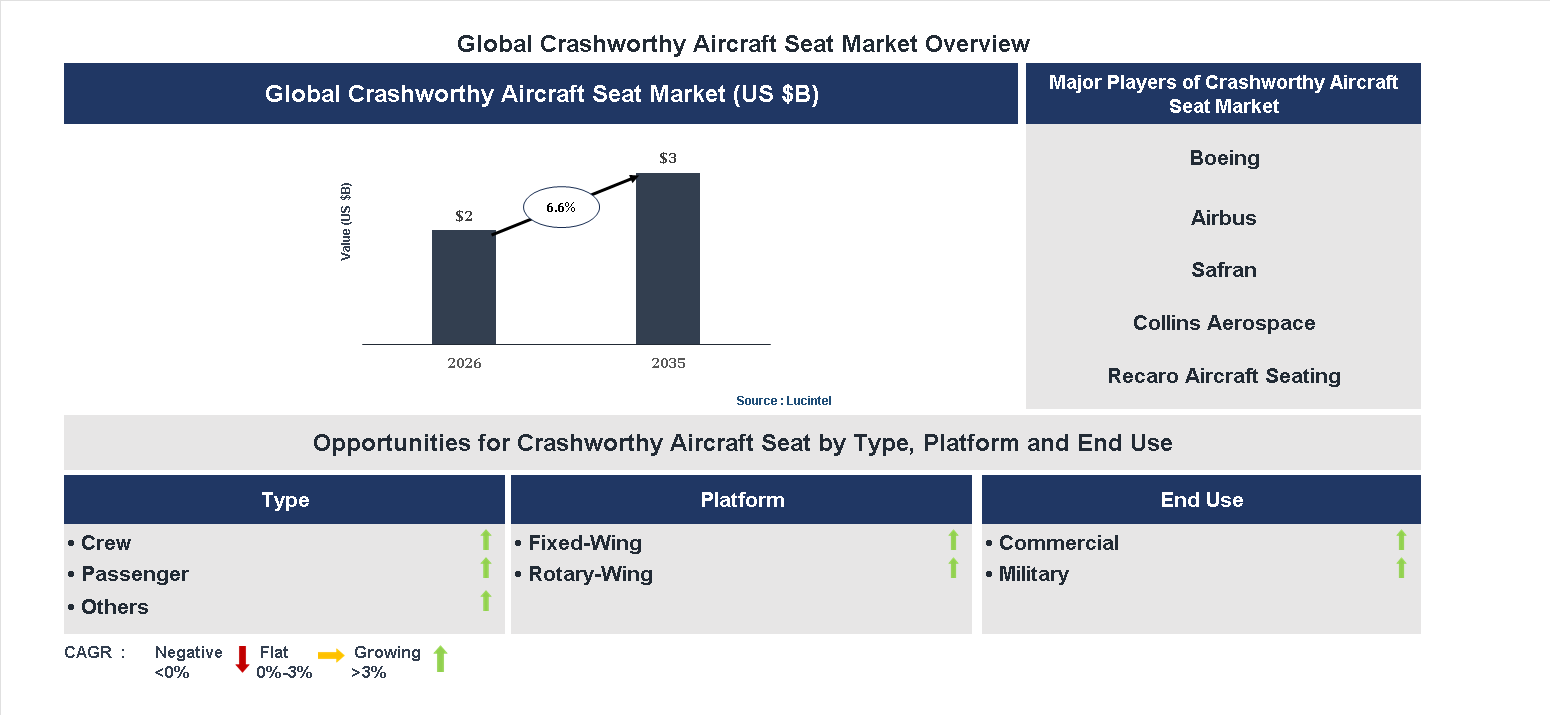
Key data points: The market size in 2035 = $3 billion, growth forecast = 6.6% annually for the next 8 years. Scroll below to get more insights. This market report covers trends, opportunities and forecasts in crashworthy aircraft seat market to 2035 by type (crew, passenger, and others), platform (fixed-wing and rotary-wing), end use (commercial and military), and region (North America, Europe, Asia Pacific, and the Rest of the World)
We'll send your sample report shortly.
• Lucintel forecasts that, within the type category, passenger is expected to witness higher growth over the forecast period.
• Within the end use category, commercial is expected to witness higher growth.
• In terms of region, APAC is expected to witness the highest growth over the forecast period. Gain valuable insights for your business decisions with our comprehensive 150+ page report. Sample figures with some insights are shown below.
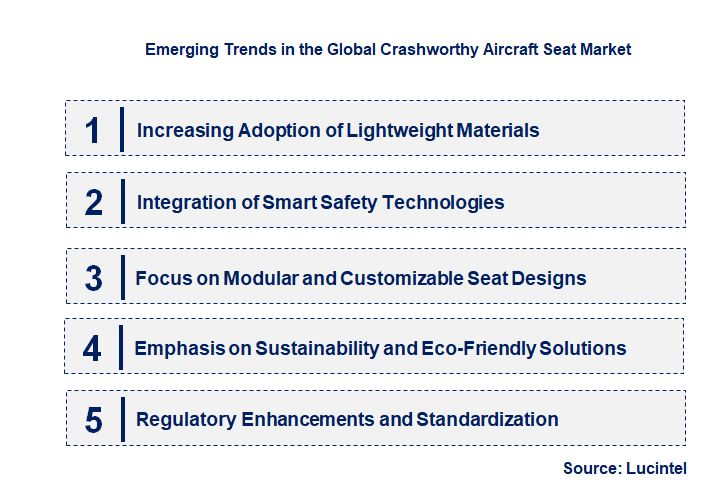
• Increasing Adoption of Lightweight Materials: The use of advanced lightweight materials such as composites and high-strength alloys is on the rise. These materials reduce the overall weight of aircraft seats, leading to improved fuel efficiency and lower emissions. Additionally, lightweight materials contribute to better crashworthiness by absorbing impact forces more effectively. Manufacturers are investing in research to develop durable, lightweight components that meet safety standards while enhancing passenger comfort. This trend is driven by regulatory pressures and airline demand for cost-effective, eco-friendly solutions, ultimately transforming seat design and material selection.
• Integration of Smart Safety Technologies: The incorporation of smart safety features, including sensors, real-time monitoring systems, and automated safety mechanisms, is becoming prevalent. These technologies enable proactive safety management by detecting structural weaknesses or impact forces during flights and emergencies. For example, sensors can monitor seat integrity and alert crew members to potential issues before a crash occurs. The integration of IoT (Internet of Things) in seat design enhances crashworthiness and passenger safety, providing data-driven insights for maintenance and safety improvements. This trend is revolutionizing safety protocols and elevating passenger confidence.
• Focus on Modular and Customizable Seat Designs: Modular seat architectures allow for easier maintenance, upgrades, and customization based on airline preferences. Customizable crashworthy seats can be tailored to specific aircraft models, cabin configurations, and safety requirements. This flexibility reduces manufacturing costs and accelerates deployment while ensuring compliance with evolving safety standards. Airlines benefit from adaptable solutions that improve passenger experience and safety. The modular approach also facilitates rapid integration of new safety features, making the market more responsive to technological advancements and regulatory changes.
• Emphasis on Sustainability and Eco-Friendly Solutions: Environmental concerns are prompting manufacturers to develop sustainable crashworthy seats using recyclable materials and eco-friendly manufacturing processes. These seats aim to minimize environmental impact without compromising safety. Innovations include biodegradable components, reduced use of hazardous substances, and energy-efficient production methods. Sustainability initiatives are increasingly mandated by regulations and customer preferences, influencing design choices and material sourcing. This trend is reshaping the market by aligning safety innovations with environmental responsibility, appealing to eco-conscious airlines and passengers alike.
• Regulatory Enhancements and Standardization: Governments and aviation authorities are continuously updating safety regulations to improve crashworthiness standards. New certifications and testing protocols are being introduced, requiring manufacturers to innovate and adapt quickly. Enhanced standards for impact absorption, fire resistance, and structural integrity are driving technological advancements in seat design. Standardization across regions ensures consistent safety levels, fostering global competitiveness. This regulatory environment compels manufacturers to invest in R&D, leading to safer, more reliable crashworthy seats that meet stringent international criteria, ultimately elevating overall aviation safety. These trends are collectively transforming the crashworthy aircraft seat market by emphasizing safety, sustainability, technological integration, and customization. They are fostering innovation, improving passenger protection, and aligning industry practices with evolving regulatory and environmental standards. As these developments continue, the market is poised for significant growth, driven by a shared commitment to safety and efficiency in aviation.
• Technological Innovations in Seat Design: The integration of advanced materials like carbon fiber and energy-absorbing foams has significantly improved crashworthiness. These materials reduce weight while enhancing impact absorption, leading to safer passenger experiences. Innovations also include modular seat designs for easier maintenance and customization. The adoption of smart sensors for real-time safety monitoring is gaining traction, providing data to improve crashworthiness further. These advancements are driving market growth by meeting safety standards and increasing airline demand for safer seating options.
• Regulatory Standards and Compliance: Stricter safety regulations from agencies like FAA and EASA are pushing manufacturers to develop more crashworthy seats. New standards mandate enhanced impact resistance, fire safety, and evacuation features, prompting innovation. Compliance requires significant R&D investment, leading to the development of seats that can withstand higher impact forces and facilitate quicker evacuations. These regulatory pressures are shaping the market by encouraging the adoption of advanced safety features and increasing demand for certified crashworthy seats across commercial and military aircraft.
• Material Advancements for Enhanced Safety: The use of lightweight, high-strength materials such as composites and specialized foams has revolutionized crashworthy seat design. These materials absorb impact energy more effectively, reducing injury risks during crashes. They also contribute to fuel efficiency by decreasing overall weight. Ongoing research into new composites and energy-absorbing layers promises further safety improvements. The market benefits from these innovations as airlines seek to balance safety, weight reduction, and cost-effectiveness, expanding the scope of crashworthy seating solutions.
• Focus on Passenger Comfort and Safety Integration: Manufacturers are combining crashworthiness with passenger comfort features, such as ergonomic designs and noise reduction, without compromising safety. Innovations include adjustable headrests, lumbar support, and improved cushioning, all integrated with safety features like energy absorption zones. This holistic approach enhances passenger experience while maintaining safety standards. The market is witnessing increased demand for seats that offer both comfort and crash safety, driving product diversification and technological integration in seat manufacturing.
• Emerging Markets and Increasing Air Traffic: Rapid growth in emerging markets like Asia-Pacific and Africa is expanding the demand for aircraft and, consequently, crashworthy seats. Rising middle-class populations and increased air travel necessitate safer aircraft interiors. Airlines in these regions are investing in advanced safety features to meet international standards, boosting market growth. Additionally, modernization of aging fleets in developed markets creates opportunities for retrofitting with crashworthy seats. These trends are significantly impacting the market by broadening the customer base and accelerating adoption of safety innovations. The recent developments in crashworthy aircraft seats are significantly enhancing safety standards, driven by technological innovations, stricter regulations, and expanding markets. These advancements are not only improving passenger safety during emergencies but also influencing aircraft design and manufacturing strategies worldwide. As safety remains a top priority, the market is poised for continued growth, with innovations fostering safer, more comfortable, and efficient aircraft seating solutions that meet evolving industry demands.
• Enhanced Safety Features in Commercial Aircraft Seats: Incorporating advanced crashworthiness technologies such as energy-absorbing materials, reinforced structures, and emergency evacuation systems can significantly improve passenger safety. These innovations meet stringent safety regulations and boost airline confidence, leading to increased adoption. The focus on passenger safety during accidents and emergencies drives demand for seats with superior crashworthiness, especially in long-haul and regional aircraft. Continuous R&D efforts are vital for developing lightweight yet durable safety features.
• Growing Demand for Military and Defense Aircraft Seats: Military aircraft require crashworthy seats that can withstand high-impact forces during combat or emergency landings. The need for lightweight, high-strength materials and integrated safety systems presents opportunities for specialized seat designs. As defense budgets increase globally, investments in advanced crashworthy seating solutions are expected to rise. Customization for different aircraft types, including fighter jets and transport planes, further expands market potential.
• Technological Innovations in Seat Design and Materials: The integration of smart materials, such as energy-absorbing composites and lightweight alloys, enhances crashworthiness while reducing weight. Advanced manufacturing techniques like 3D printing enable complex, high-strength seat components. Incorporating sensors and real-time monitoring systems can improve safety during emergencies. These innovations not only meet safety standards but also contribute to fuel efficiency and operational cost reduction, making them attractive for airlines and manufacturers.
• Expansion of Private and Business Aviation Markets: The increasing popularity of private jets and business aircraft demands high-quality, crashworthy seating solutions tailored for luxury and safety. Customizable seats with advanced safety features can attract high-net-worth individuals and corporate clients. The growth of this segment offers opportunities for premium seat manufacturers to develop lightweight, durable, and safety-compliant seats that enhance passenger comfort and safety during emergencies, fostering market expansion.
• Regulatory Changes and Standards Driving Market Growth: Stricter safety regulations and international standards compel aircraft manufacturers to adopt crashworthy seating solutions. Compliance with standards such as FAA and EASA mandates encourages innovation and adoption of advanced safety features. Governments and regulatory bodies are increasingly emphasizing passenger safety, which accelerates market growth. Companies investing in R&D to meet evolving standards can gain competitive advantages and expand their market share globally. The crashworthy aircraft seat market is poised for substantial growth driven by technological advancements, regulatory requirements, and expanding aviation sectors. Opportunities across commercial, military, and private aviation segments will foster innovation and market expansion. Companies that focus on safety, lightweight materials, and customization will be well-positioned to capitalize on these emerging trends, ultimately enhancing passenger safety and operational efficiency worldwide.
• Technological Innovation: The development of advanced crashworthy seat designs incorporating energy absorption, lightweight materials, and improved safety features is a primary driver. These innovations enhance passenger safety during crashes and meet stringent safety standards. Continuous R&D efforts enable manufacturers to produce seats that are not only safer but also lighter, contributing to fuel efficiency. The integration of smart sensors and real-time monitoring systems further boosts safety and reliability. As airlines prioritize passenger safety, manufacturers are motivated to invest heavily in innovative solutions, fostering market growth and setting new industry benchmarks.
• Regulatory Standards and Compliance: Stringent safety regulations imposed by aviation authorities such as FAA and EASA significantly influence the market. These standards mandate crashworthiness, fire resistance, and durability, compelling manufacturers to develop compliant seating solutions. Evolving regulations often require redesigns and upgrades, creating a steady demand for new products. Compliance ensures market access and enhances brand reputation, encouraging airlines to adopt advanced crashworthy seats. Regulatory pressures also stimulate innovation, pushing companies to develop seats that surpass minimum safety requirements, thereby expanding market opportunities and fostering industry growth.
• Increasing Focus on Passenger Safety and Comfort: Growing awareness among passengers regarding safety and comfort is a key driver. Airlines are investing in crashworthy seats that offer enhanced protection and comfort, especially for long-haul flights. The demand for ergonomic designs, adjustable features, and safety enhancements influences product development. Passenger preferences for premium seating options drive manufacturers to innovate, integrating safety with comfort. This trend not only boosts sales but also differentiates airline offerings in a competitive market. As safety becomes a top priority, the market experiences sustained growth driven by consumer expectations and airline policies.
• Rising Air Travel and Fleet Expansion: The global increase in air travel and expansion of airline fleets directly impact the demand for crashworthy seats. As airlines acquire new aircraft, they require modern, compliant seating solutions to ensure passenger safety. The growth in regional and low-cost carriers further amplifies demand, as these airlines seek cost-effective yet safe seating options. Fleet modernization programs also necessitate the replacement of older seats with advanced crashworthy alternatives. This expanding market base encourages manufacturers to innovate and scale production, supporting overall industry growth and technological advancement.
• Technological Advancements in Materials and Design: The adoption of lightweight, durable materials such as composites and advanced polymers enhances crashworthiness while reducing weight. Innovative design techniques improve energy absorption and structural integrity during crashes. These advancements enable the production of safer, more efficient seats that meet or exceed safety standards. The integration of modular designs allows easier maintenance and upgrades, further supporting market expansion. As material science progresses, manufacturers can develop seats that balance safety, weight, and cost, driving competitive advantage and market growth. The challenges facing the crashworthy aircraft seat market include:
• High Manufacturing and Development Costs: Developing crashworthy seats involves significant investment in R&D, specialized materials, and testing procedures. These costs can be prohibitive, especially for smaller manufacturers, limiting market entry and innovation. The need for rigorous safety testing and certification adds to expenses, often resulting in higher product prices. Airlines may be hesitant to adopt expensive solutions without clear cost-benefit advantages, which can slow market growth. Balancing safety enhancements with affordability remains a critical challenge for industry players aiming to expand their market share.
• Regulatory Compliance Complexities: Navigating the complex landscape of international safety standards and certification processes poses a major challenge. Different regions have varying requirements, leading to delays and increased costs for product approval. Ensuring compliance with evolving regulations demands continuous updates to designs and documentation, straining resources. Non-compliance risks include legal penalties, market restrictions, and damage to reputation. Manufacturers must invest in extensive testing and certification processes, which can hinder rapid product deployment and innovation, ultimately impacting market growth.
• Technological Integration and Compatibility Issues: Incorporating new safety technologies into existing aircraft designs can be challenging due to compatibility issues and structural constraints. Upgrading seats in operational aircraft requires extensive modifications, leading to increased downtime and costs. Integrating smart sensors and energy absorption systems demands advanced engineering and testing, which can delay deployment. Additionally, ensuring that new crashworthy seats are compatible with various aircraft models complicates manufacturing. Overcoming these technical hurdles is essential for widespread adoption but remains a significant obstacle for manufacturers and airlines alike. A comprehensive understanding of these drivers and challenges reveals a dynamic market landscape. While technological innovations, regulatory compliance, and increasing air travel fuel growth, high costs, regulatory complexities, and integration issues pose hurdles. Stakeholders must navigate these factors strategically to capitalize on emerging opportunities. Emphasizing R&D, fostering regulatory collaboration, and investing in adaptable designs will be crucial for sustained success. Overall, the crashworthy aircraft seat market is poised for growth, driven by safety priorities, but must address significant challenges to realize its full potential in a competitive global aviation industry.
• Boeing
• Airbus
• Safran
• Collins Aerospace
• Recaro Aircraft Seating
• Zodiac Aerospace
• Gkn Aerospace
• Crew
• Passenger
• Others
• Fixed-Wing
• Rotary-Wing
• Commercial
• Military
• North America
• Europe
• Asia Pacific
• The Rest of the World
• United States: The US market has seen increased adoption of lightweight, impact-absorbing materials and advanced crash testing standards. Major manufacturers are integrating smart sensors for real-time safety monitoring, and regulatory agencies like the FAA are updating safety protocols to incorporate new technologies, boosting innovation and safety compliance.
• China: China is rapidly expanding its aircraft fleet, prompting significant investments in crashworthy seat technology. Domestic manufacturers are focusing on cost-effective yet high-performance safety seats, incorporating new energy absorption systems and collaborating with international firms to meet global safety standards.
• Germany: Germanys aerospace industry is emphasizing high-quality, durable crashworthy seats with enhanced impact resistance. Innovations include the integration of energy-absorbing structures and lightweight composites, driven by stringent EU safety regulations and a focus on passenger safety and comfort.
• India: The Indian market is witnessing increased demand for affordable yet reliable crashworthy seats, driven by expanding airline operations and safety regulations. Local manufacturers are adopting modular designs and improving impact absorption features to meet international safety standards while controlling costs.
• Japan: Japan is focusing on integrating advanced materials and automation in crashworthy seat manufacturing. The country emphasizes research on impact dynamics and safety testing, with collaborations between aerospace firms and research institutions to develop next-generation safety seats that meet rigorous safety and environmental standards.


• Boeing
• Airbus
• Safran
• Collins Aerospace
• Recaro Aircraft Seating
• Zodiac Aerospace
• Gkn Aerospace Q6. Which crashworthy aircraft seat market segment will be the largest in future? Answer: Lucintel forecasts that, within the type category, passenger is expected to witness higher growth over the forecast period. Q7. In crashworthy aircraft seat market, which region is expected to be the largest in next 8 years? Answer: In terms of region, APAC is expected to witness the highest growth over the forecast period. Q8. Do we receive customization in this report? Answer: Yes, Lucintel provides 10% customization without any additional cost.


Choose a license that fits your team. Instant PDF delivery.
Prices exclude taxes. Instant delivery. Custom licensing available on request.
Market Report · July 31, 2026
Market Report · July 31, 2026
Market Report · July 31, 2026
Trusted partner for strategic intelligence and business growth


Receive a complimentary market analysis tailored to your industry. Our analysts will identify key growth opportunities and competitive dynamics specific to your business.

Market size, growth rate, and key trend analysis for your specific sector.

Top competitor positioning and market share analysis.

Strategic recommendations backed by data-driven insights.
Get curated market intelligence and competitive moves straight to your inbox.
By subscribing, you agree to receive our monthly insights. Unsubscribe anytime.
Receive a complimentary market analysis tailored to your industry. Our analysts will identify key growth opportunities and competitive dynamics specific to your business.
Market size, growth rate, and key trend analysis for your specific sector.
Top competitor positioning and market share analysis.
Strategic recommendations backed by data-driven insights.
Get curated market intelligence, emerging trends, and competitive moves straight to your inbox each month.
By subscribing, you agree to receive our monthly insights. Unsubscribe anytime.
We'll send your sample report shortly.