
Market Report · July 22, 2026

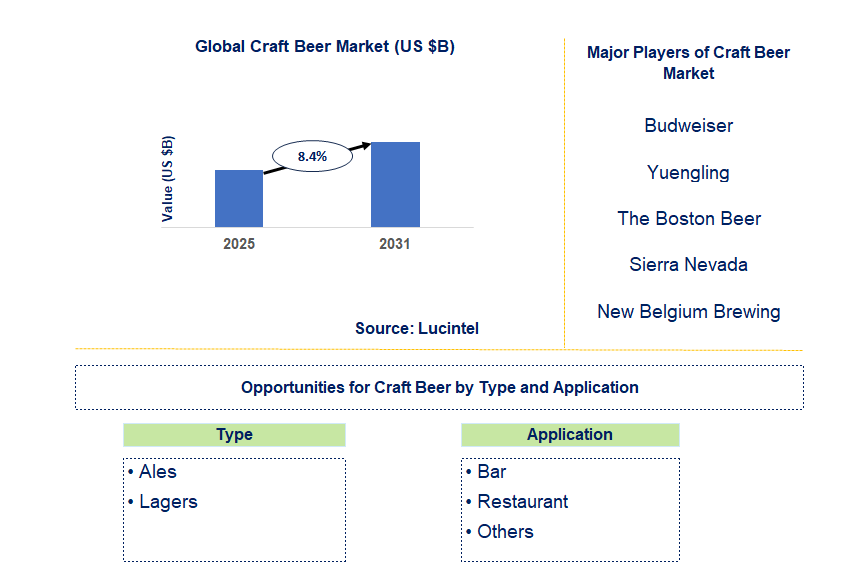
Key data points: The growth forecast = 8.4% annually for the next 7 years. Scroll below to get more insights. This market report covers Trends, opportunities and forecasts in craft beer market to 2031 by type (ales and lagers), application (bar, restaurant, and others), and region (North America, Europe, Asia Pacific, and the Rest of the World)
We'll send your sample report shortly.
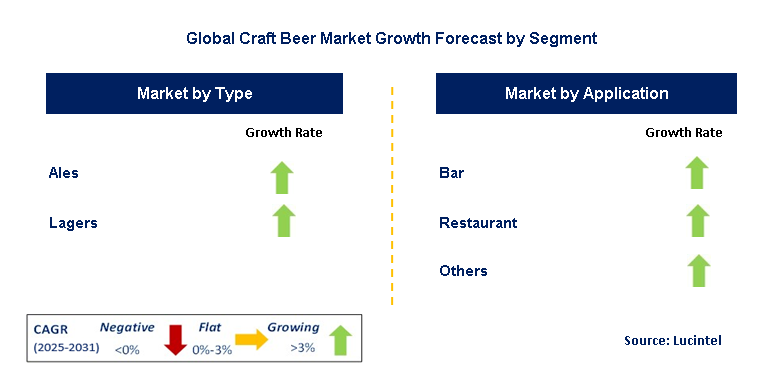
• Lucintel forecasts that, within the type category, ales is expected to witness higher growth over the forecast period.
• Within the application category, bar is expected to witness higher growth.
• In terms of region, North America is expected to witness the highest growth over the forecast period.
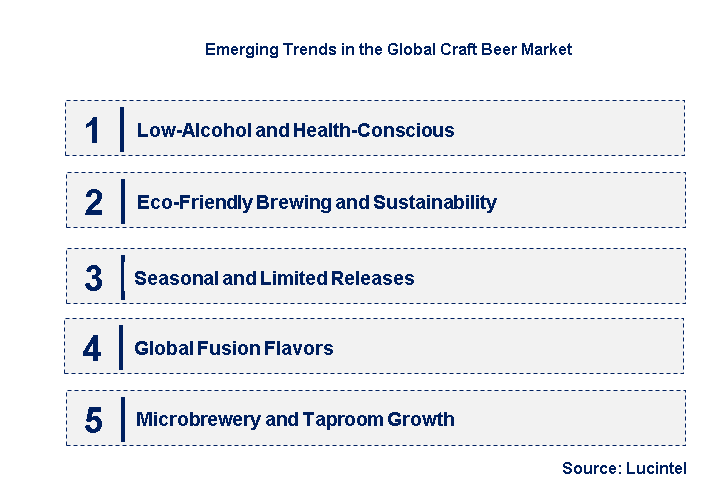
• Low-Alcohol and Health-Conscious: With consumers being more health-aware, breweries are now creating low-alcohol and alcohol-free craft beer. The offerings are targeted towards consumers who would like the experience of craft beer but with reduced calories and less alcohol content. This is picking up pace among consumers who are looking for a healthier lifestyle but still desire premium beer options.
• Eco-Friendly Brewing and Sustainability: Sustainability is taking center stage among breweries globally. From minimizing the use of water and carbon dioxide to employing recyclable packaging materials and locally procured ingredients, breweries are opting for green solutions more and more. Consumers tend to favor sustainable brands, thus sustainability is becoming a must-have factor for businesses in the craft beer industry to thrive.
• Seasonal and Limited Releases: Craft breweries are increasingly innovating with seasonal and limited-release beers that provide novel flavors and experiences. These products are intended to generate buzz and foster customer loyalty. Through the release of new and transient beers, breweries leverage the novelty factor and stand out from mass-produced beer brands.
• Global Fusion Flavors: As a result of globalization, craft breweries are adding international and exotic ingredients and flavors in their beers. By adding spices, fruits, and herbs from other cultures, breweries are introducing new styles of beer that suit various tastes of consumers. This is transforming the craft beer industry, as consumers now look for beers with new and bold flavors.
• Microbrewery and Taproom Growth: Microbreweries and taprooms have grown from the increased demand for artisanal, locally brewed beers. Smaller breweries emphasize high-quality beer production and innovative customer experiences in the form of tours, tastings, and specialty brews. The trend has opened the door for consumers to enjoy fresher beers while supporting local small businesses. The new trends in the craft beer industry, such as health-focused offerings, sustainability, global fusion flavors, and the growth of microbreweries, are transforming the market dynamics. These trends are a manifestation of the evolving tastes of consumers, who are now looking for distinctive, high-quality, and eco-friendly products. As breweries innovate and evolve further, the craft beer industry is set to grow and diversify further, meeting the needs of a more dynamic and aware consumer base.
• Craft Beer Trends in Emerging Markets: Craft beer has become increasingly popular in emerging markets, especially in nations such as China and India, where beer drinkers are becoming more accepting of premium beer products. Middle-class expansion in these economies has created the demand for distinctive and premium beers, offering growth prospects for craft breweries.
• Technology Advances in Brewing: Craft breweries are adopting new technologies like new fermentation methods and automation to enhance efficiency and quality in production. The advances help the breweries be consistent in experimenting with new brewing styles and flavors and be able to cope with increased consumer demands.
• Partnerships and Collaborations: Partnerships and collaborations between craft breweries and other local companies, including restaurants, distilleries, and craft food producers, have emerged as a primary growth area. The partnerships enable the breweries to develop special brews, increase the number of their customers, and establish robust networks within local communities.
• Emphasis on Local Ingredients and Sustainability: Most craft breweries are placing emphasis on local ingredients and sustainable methods. The emphasis on sustainability decreases carbon footprints and assists the local economy, which appeals to consumers who are environmentally friendly and appreciate green production methods.
• Craft Beer Events and Festivals: Craft beer events and festivals are increasingly popular, offering breweries venues to expose their beers and interact with customers. These festivals and events enable breweries to promote their products, create brand awareness, and drive new consumers to their businesses by providing tastings and learning opportunities. Recent trends in the craft beer industry illustrate the industry's reaction to consumers' calls for innovation, sustainability, and high-quality drinks. The growth of craft beer in developing markets, the use of new brewing technology, and the increasing focus on local ingredients are transforming the competitive landscape. These trends set the craft beer market up for long-term growth and success, providing opportunities for both established and emerging players to increase their presence and gain new market share.
• Growth in Emerging Markets: The emerging markets of China, India, and Southeast Asia provide a substantial opportunity for growth in the craft beer segment. Growing disposable income, urbanization, and a trend towards premium products are fueling demand in these markets. Craft breweries entering these markets can capitalize on the demand for distinctive, high-quality beers by providing localized offerings and distinctive flavors. As these markets continue to mature, more consumers will adopt craft beer culture, offering huge opportunities for global and local breweries to increase their presence.
• Launch of Health-Conscious Products: With consumers becoming increasingly health-conscious, there is a growing demand for low-alcohol, low-calorie, and alcohol-free craft beers. Breweries that lead by creating healthier beer offerings, for example, gluten-free, organic, or functional beers (e.g., low-sugar and low-carb), can access a new category of health-conscious consumers. This category is growing fast, particularly in developed markets where lifestyles are changing. Breweries that manage to provide products that fit within health trends will be able to take advantage of an increasing demand for conscious consumption.
• Eco-Friendly Practices and Sustainability: As consumers increasingly become aware of environmental concerns, breweries that go green have an opportunity to set themselves apart. This can range from using environment-friendly packaging to lowering energy costs or using locally sourced, organic ingredients. Adopting sustainability principles allows craft breweries to attract eco-friendly consumers as well as secure brand loyalty. Not only are sustainability practices helpful in safeguarding the environment, but they also provide long-term economic advantages in terms of minimized operational expenses as well as reputation enhancement.
• Expansion to Non-Traditional Channels of Distribution: Craft beer was traditionally marketed and sold via restaurants, bars, and retailing, but there is now growth in new distribution channels for the breweries. Websites, subscription sites, and joint ventures with food delivery organizations represent new routes by which the brewery can contact its consumers. These other channels enable greater visibility, particularly for small craft breweries, and provide consumers with convenience when they want to consume craft beer at home. This growth prospect is especially timely in markets where there is high e-commerce adoption.
• Innovation in Product Line: Innovation in taste, brewing process, and style of beers continues to spur growth in the craft beer segment. By releasing limited-production, seasonal, and experimental beers, craft breweries can create hype and entice passionate beer fans. Also, incorporating regional ingredients, such as unusual fruits, spices, or herbs, can develop new offerings that appeal to consumers in search of novel and distinctive experiences. Product innovation has the ability to make craft breweries stand out among a highly competitive market and attract a loyal consumer base. These five strategic growth opportunities—expansion into emerging markets, introduction of health-conscious options, sustainability initiatives, alternative distribution channels, and product innovation—spotlight areas in which craft breweries can position themselves for success. By taking advantage of these opportunities, breweries can not only increase their consumer base but also stand out in a competitive market. The future growth and success of the craft beer industry will rely on breweries' capacity to evolve in response to shifting consumer tastes, technology, and market forces.
• Budweiser
• Yuengling
• The Boston Beer
• Sierra Nevada
• New Belgium Brewing
• Gambrinus
• Lagunitas
• Bell’s Brewery
• Deschutes
• Stone Brewery
• Ales
• Lagers
• Bar
• Restaurant
• Others
• North America
• Europe
• Asia Pacific
• The Rest of the World
• United States: In the United States, the craft brewing industry continues to expand, with over 8,000 craft breweries in the country. New trends are a rise in experimental beer types like hazy IPAs, sour ales, and barrel-aged beers. Also, the trend of "localization" has become strong, with breweries focusing on using local ingredients and producing regional-specific beers. Although the craft beer market is threatened by saturation and growing competition from major breweries, the market is sustained by consumer interest in distinctive, small-batch beers that provide greater variety and novelty of flavor compared to mass-market beers.
• China: China has seen a budding craft beer phenomenon, though at a smaller scale than in Western nations. The Chinese craft beer market is picking up pace, especially in urban centers such as Beijing, Shanghai, and Guangzhou, where young consumers are increasingly attracted to specialty flavors and high-quality beers. Local craft breweries are starting to innovate with indigenous Chinese ingredients like jasmine, lychee, and tea. But regulatory issues and distribution constraints are some of the challenges that lie ahead. The Chinese craft beer industry is still in its nascent stages but has significant growth potential as the nation's middle class continues to grow and consume varied alcoholic products.
• Germany: Germany, a country with an age-old culture of beer consumption, has also witnessed the growth of the craft beer phenomenon slowly but surely even in its heavily entrenched beer heritage. Recent trends involve a move towards small breweries and experimentation with alternative beer styles like pale ales, IPAs, and stouts, which are different from the nation's traditional lager styles. The "Biergarten" culture has also experienced a blending of craft beers with traditional German beers. Although a late entry into the craft beer market in relation to the U.S., Germany's strong beer culture has been highly accepting of the craft beer movement, particularly with younger consumers demanding greater variety
• India: In India, the market for craft beer has grown rapidly, with much of the growth occurring in the major urban centers of Bangalore, Mumbai, and Delhi. Growing disposable incomes, an urban young population, and increased interest in global trends of food and beverages are driving the craft beer segment. Local breweries are adding different ingredients like Indian spices, fruits, and herbs, and thereby coming up with flavors that are in sync with local tastes. The Indian craft beer market is projected to keep expanding, though it is hampered by issues of distribution, taxation, and attitudes towards drinking alcohol in some areas.
• Japan: The Japanese craft beer market has experienced incredible growth, fueled by a cultural interest in quality, carefully made products. Japanese craft brewers are concentrating on distinctive ingredients, including rice, yuzu, and matcha, putting a unique spin on classic beer. The market is seeing a move towards craft beer bars and the growth of domestic craft beer in foreign markets. Although Japan has a rich lager heritage, the popularity of IPAs, stouts, and other craft beer styles is increasing. The challenges in Japan are to operate in a competitive alcohol market dominated by big brewers and to sustain production efficiency to keep up with increasing demand.


• Budweiser
• Yuengling
• The Boston Beer
• Sierra Nevada
• New Belgium Brewing
• Gambrinus
• Lagunitas
• Bell’s Brewery
• Deschutes
• Stone Brewery Q5. Which craft beer market segment will be the largest in future? Answer: Lucintel forecasts that, within the type category, ales is expected to witness higher growth over the forecast period. Q6. In craft beer market, which region is expected to be the largest in next 5 years? Answer: In terms of region, North America is expected to witness the highest growth over the forecast period. Q7. Do we receive customization in this report? Answer: Yes, Lucintel provides 10% customization without any additional cost.


Choose a license that fits your team. Instant PDF delivery.
Prices exclude taxes. Instant delivery. Custom licensing available on request.
Market Report · July 22, 2026
Market Report · July 22, 2026
Market Report · July 22, 2026
Trusted partner for strategic intelligence and business growth


Receive a complimentary market analysis tailored to your industry. Our analysts will identify key growth opportunities and competitive dynamics specific to your business.

Market size, growth rate, and key trend analysis for your specific sector.

Top competitor positioning and market share analysis.

Strategic recommendations backed by data-driven insights.
Get curated market intelligence and competitive moves straight to your inbox.
By subscribing, you agree to receive our monthly insights. Unsubscribe anytime.
Receive a complimentary market analysis tailored to your industry. Our analysts will identify key growth opportunities and competitive dynamics specific to your business.
Market size, growth rate, and key trend analysis for your specific sector.
Top competitor positioning and market share analysis.
Strategic recommendations backed by data-driven insights.
Get curated market intelligence, emerging trends, and competitive moves straight to your inbox each month.
By subscribing, you agree to receive our monthly insights. Unsubscribe anytime.
We'll send your sample report shortly.