
Market Report · May 18, 2026

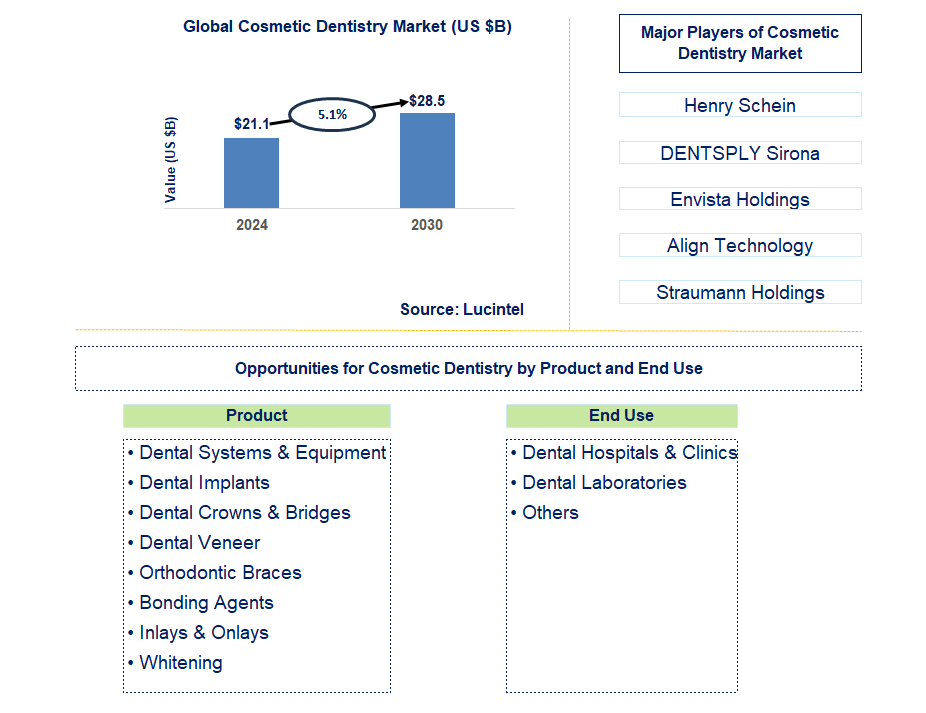
Key data points: The market size in 2030 = $28.5 billion, growth forecast = 5.1% annually for the next 6 years. Scroll below to get more insights. This market report covers trends, opportunities, and forecasts in the global cosmetic dentistry market to 2030 by product (dental systems and equipment, dental implants, dental crowns and bridges, dental veneers, orthodontic braces, bonding agents, inlays and onlays, and whitening), end use (dental hospitals & clinics, dental laboratories, and others), and region (North America, Europe, Asia Pacific, and the Rest of the World)
We'll send your sample report shortly.
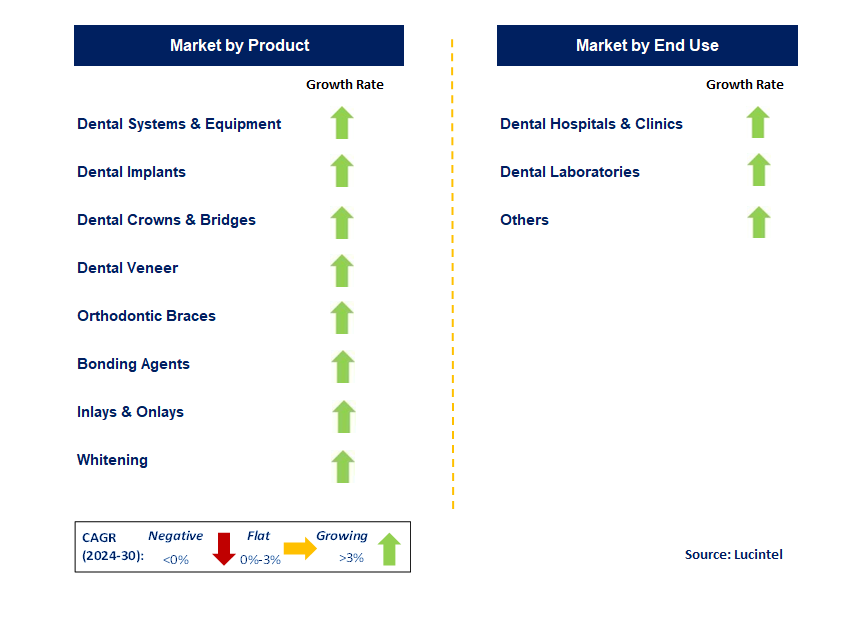
• Lucintel forecasts that, within the product category, dental systems and equipment will remain the largest segment over the forecast period due to its several uses in the dental sector, and technological advancements in dentistry, such as computer-aided tools or gadgets.
• In terms of region, Europe will remain the largest region over the forecast period due to the expansion of the elderly demographic, a readiness to make personal expenditures, and an increasing awareness of oral health and hygiene. Gain valuable insights for your business decisions with our comprehensive 150+ page report.
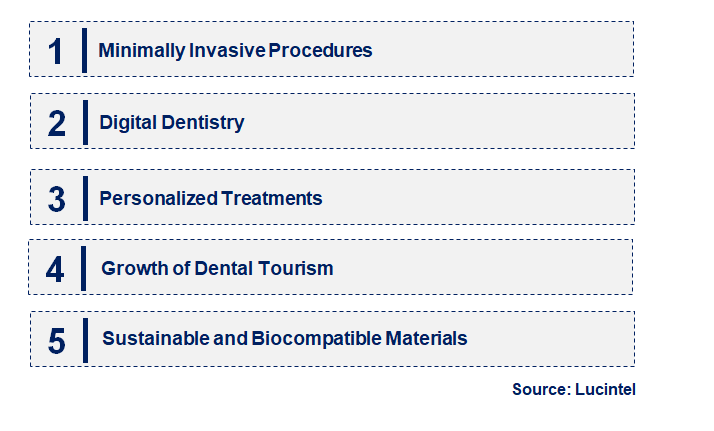
• Minimally Invasive Procedures: There is a growing preference for procedures that require less recovery time and are less invasive. Techniques such as micro abrasion, laser whitening, and minimal-prep veneers are becoming popular for their effectiveness and reduced discomfort.
• Digital Dentistry: The integration of digital technologies, such as 3D imaging and CAD/CAM systems, is transforming cosmetic dentistry. These tools enhance precision in diagnostics and treatment planning, leading to better patient outcomes and more personalized care.
• Personalized Treatments: Patients are increasingly seeking customized solutions that cater to their specific aesthetic goals. Advances in digital smile design and bespoke dental restorations allow for highly individualized treatment plans, improving patient satisfaction.
• Growth of Dental Tourism: There is a rise in dental tourism, where patients travel to other countries for high-quality, cost-effective cosmetic treatments. This trend is driven by affordable options and advanced procedures available in markets like India and Mexico.
• Sustainable and Biocompatible Materials: The use of eco-friendly and biocompatible materials is gaining traction. There is a push toward using materials that are both effective and environmentally responsible, aligning with broader sustainability goals in healthcare. These trends are reshaping the Cosmetic Dentistry market by driving innovation, enhancing treatment personalization, and expanding global accessibility. They contribute to more effective and patient-centered care, influencing how cosmetic dental services are delivered and perceived.
• Digital Imaging Advances: 3D scanning and virtual smile design are some of the advances in the field of digital imaging, offering more accurate diagnostics and treatment planning. As a result of such advancements, accuracy is more assured, allowing customized solutions for treatments.
• Expansion of Minimally Invasive Techniques: With the growth in consumer demand for effective treatment and less downtime, there is a corresponding rise in minimally invasive cosmetic procedures, such as laser whitening and micro-abrasion. Improved comfort and faster recovery can be provided with these techniques.
• CAD/CAM System Integration: CAD/CAM systems have widely revolutionized the creation of dental restorations. They fabricate crowns, veneers, and implants with great precision and high efficiency. This technology enhances the precision and quality of cosmetic dental work.
• Increased Emphasis on Natural Aesthetic Success: Cosmetic dentistry places a greater emphasis on natural aesthetic success. Innovations in materials and techniques continue to enhance the cosmetic and physical properties of restorations.
• Dental Tourism Growth: The rise in dental tourism reflects a higher level of consumer interest in accessing affordable, high-quality cosmetic dental treatments abroad. This trend increases market opportunities and drives competition among dental providers worldwide. These developments in the cosmetic dentistry market reflect progress toward the precision of treatments, increasing options for patients, and an overall high success rate of treatments. They are indicative of a dynamic industry keen on innovation and meeting evolving consumer needs.
• Expanding Services: Offering services such as professional whitening and digital smile design in aesthetic care represents a direction for growth. Such efforts could help the chain gain more customers and become more competitive.
• Digital Technologies: This includes investing in 3D imaging and CAD/CAM systems to enhance treatment options, raising precision and efficiency in procedures. These investments support innovation and improve the overall patient experience.
• Focus on Preventive and Aesthetic Integration: Combining preventive care with aesthetic treatments can offer comprehensive dental solutions. Integrating cosmetic procedures with routine dental care can attract patients seeking both health and beauty benefits.
• Development of Affordable Options: Creating low-cost cosmetic treatments can tap into price-sensitive segments of the market. This will ensure greater accessibility and ultimately lead to increased demand in emerging markets.
• Growth in Emerging Markets: Emerging markets hold enormous growth potential, where interest in cosmetic dentistry is rising. Market segments can be captured by offering services that meet the preferences of and are affordable for the local population. These strategic growth opportunities shape the cosmetic dentistry market by expanding service offerings through technological advancements to cater to diverse consumer needs. They promote market expansion and contribute to significant overall growth potential in the industry.
• Technology Advancement: Advancements in digital imaging, CAD/CAM systems, and laser technologies increase the precision of treatments and reduce treatment time, ensuring patients have a good outcome.
• Growing Interest in Aesthetic Enhancement: The aesthetic enhancement of consumers and growing awareness about personal appearance create demand for cosmetic dental treatments, boosting the market.
• Increased Disposable Incomes: Economically, more people can access cosmetic dental treatments because of higher disposable incomes. This economic factor enhances market growth through the use of treatments that fall under optional or elective categories.
• Expanding Scope of Services: Cosmetic procedures increasingly include minimal invasiveness and the use of advanced materials. This expansion in services appeals to a larger patient base and allows the market to grow.
• Dental Tourism: Growth in dental tourism provides emerging options for market expansion in response to patients' desires to seek quality yet affordable treatments overseas, thus driving competition and growth in this industry. Challenges in the cosmetic dentistry market include:
• Regulatory and Compliance Issues: Highly demanding regulations and differences between countries can complicate market entry. Additionally, this may directly affect the development and approval of new therapies.
• High Costs of Advanced Technologies: Advanced technologies require substantial investment, making technology and materials a barrier for some dental practices to enter the market.
• Economic Downturns: Economic cycles may affect spending on cosmetic dentistry services due to the discretionary nature of these services. This may hinder market growth if the economic situation is poor. Drivers and challenges in the cosmetic dentistry market reflect a complex landscape influenced by technological advancements, economic factors, and regulatory issues. Addressing these elements directly is critical for maintaining growth and moving the industry forward.
• Henry Schein
• DENTSPLY Sirona
• Envista Holdings
• Align Technology
• Straumann Holdings
• 3M Company
• Kuraray
• Planmeca
• Zimmer Biomet Holdings
• Roland
• Dental Systems & Equipment
• Dental Implants
• Dental Crowns & Bridges
• Dental Veneer
• Orthodontic Braces
• Bonding Agents
• Inlays & Onlays
• Whitening
• Dental Hospitals & Clinics
• Dental Laboratories
• Others
• North America
• Europe
• Asia Pacific
• The Rest of the World
• USA: In the USA, there has been an explosion in demand for non-invasive treatments such as teeth whitening and veneering. New technologies like 3D imaging and digital smile design enhance treatment accuracy and patient satisfaction. Teledentistry is gaining popularity for remote consultations and follow-ups.
• China: Cosmetic dentistry is thriving in China, as the number of citizens seeking aesthetic improvements continues to increase. Key factors driving this market include digital imaging, laser technology, an increase in dental tourism, and a focus on high-quality yet affordable procedures.
• Germany: Germany is among the leading countries involved in advanced materials and techniques in cosmetic dentistry. High-quality ceramic material-based veneers and crowns are widely used, and CAD/CAM systems are gradually being adopted for accurate restorations and implants.
• India: With increasing disposable incomes, interest in cosmetic dental treatments among Indians is rising, reflecting a growing awareness of dental aesthetics. As prices become more affordable, options like composite bonding and teeth whitening have become widely available.
• Japan: Japan focuses on merging the traditional art of dentistry with modern cosmetic procedures. There is a strong emphasis on precision and personalization in practice, leading to significant developments in dental aesthetics, particularly with advancements in high technologies such as laser whitening and computer-assisted design.


• Henry Schein
• DENTSPLY Sirona
• Envista Holdings
• Align Technology
• Straumann Holdings
• 3M Company
• Kuraray
• Planmeca
• Zimmer Biomet Holdings
• Roland Q6. Which cosmetic dentistry market segment will be the largest in future? Answer: Lucintel forecasts that dental systems and equipment will remain the largest segment over the forecast period due to its several uses in the dental sector, and technological advancements in dentistry, such as computer-aided tools or gadgets. Q7. In cosmetic dentistry market, which region is expected to be the largest in next 5 years? Answer: Europe will remain the largest region over the forecast period due to the expansion of the elderly demographic, a readiness to make personal expenditures, and an increasing awareness of oral health and hygiene. Q.8 Do we receive customization in this report? Answer: Yes, Lucintel provides 10% customization without any additional cost.


Choose a license that fits your team. Instant PDF delivery.
Prices exclude taxes. Instant delivery. Custom licensing available on request.
Market Report · May 18, 2026
Market Report · May 18, 2026
Market Report · May 18, 2026
Trusted partner for strategic intelligence and business growth


Receive a complimentary market analysis tailored to your industry. Our analysts will identify key growth opportunities and competitive dynamics specific to your business.

Market size, growth rate, and key trend analysis for your specific sector.

Top competitor positioning and market share analysis.

Strategic recommendations backed by data-driven insights.
Get curated market intelligence and competitive moves straight to your inbox.
By subscribing, you agree to receive our monthly insights. Unsubscribe anytime.
Receive a complimentary market analysis tailored to your industry. Our analysts will identify key growth opportunities and competitive dynamics specific to your business.
Market size, growth rate, and key trend analysis for your specific sector.
Top competitor positioning and market share analysis.
Strategic recommendations backed by data-driven insights.
Get curated market intelligence, emerging trends, and competitive moves straight to your inbox each month.
By subscribing, you agree to receive our monthly insights. Unsubscribe anytime.
We'll send your sample report shortly.