
Market Report · July 15, 2026

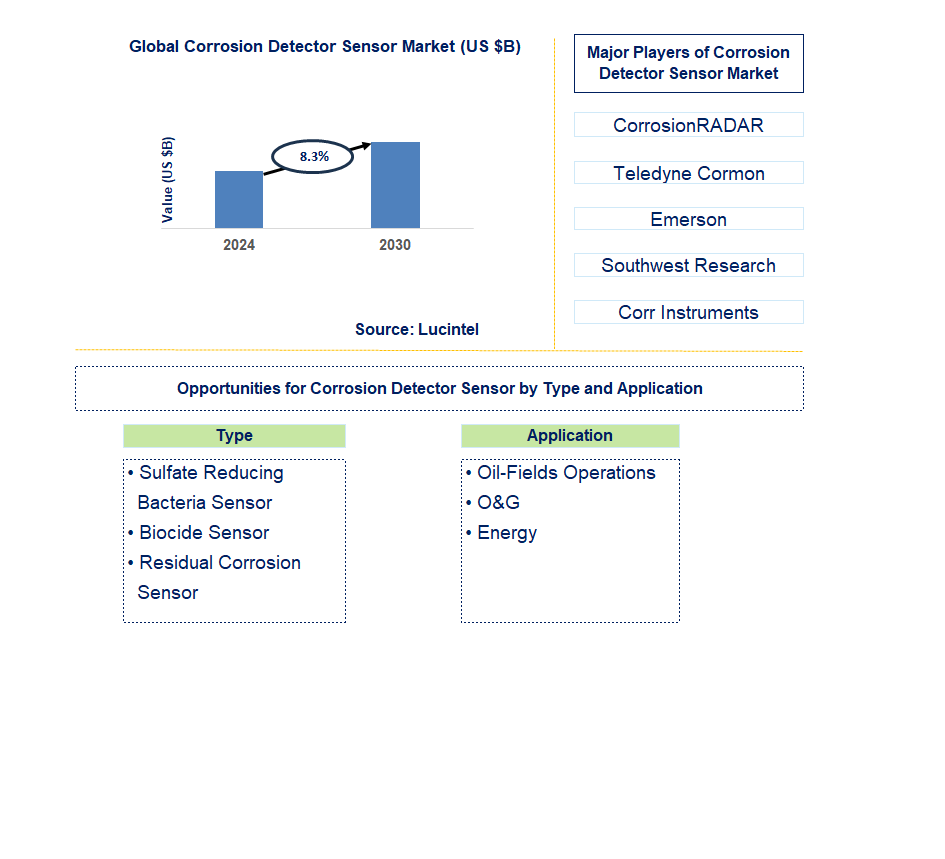
Key data points: The growth forecast = 8.3% annually for the next 6 years. Scroll below to get more insights. This market report covers trends, opportunities, and forecasts in the global corrosion detector sensor market to 2030 by type (sulfate reducing bacteria sensor, biocide sensor, and residual corrosion sensor), application (oil-fields operations, O&G, and energy), and region (North America, Europe, Asia Pacific, and the Rest of the World)
We'll send your sample report shortly.
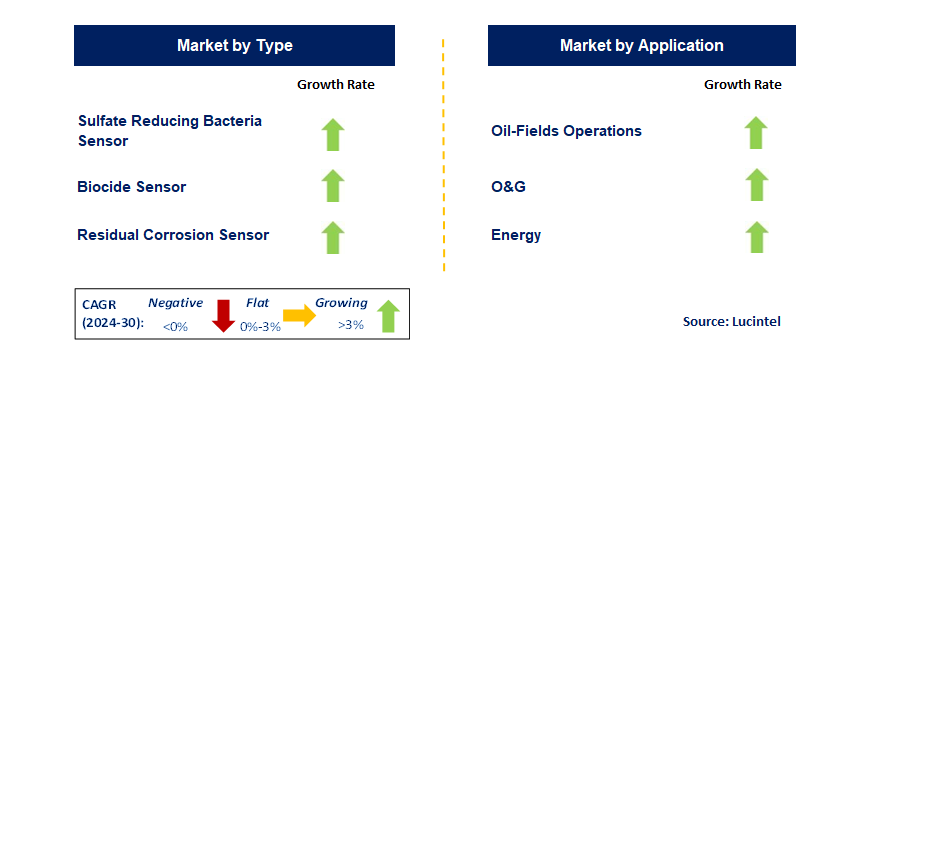
• Lucintel forecasts that, within the type category, sulfate reducing bacteria sensor is expected to witness the highest growth over the forecast period.
• Within the application category, oil field operation is expected to witness the highest growth.
• In terms of regions, APAC is expected to witness highest growth over the forecast period. Gain valuable insight for your business decisions with our comprehensive 150+ page report
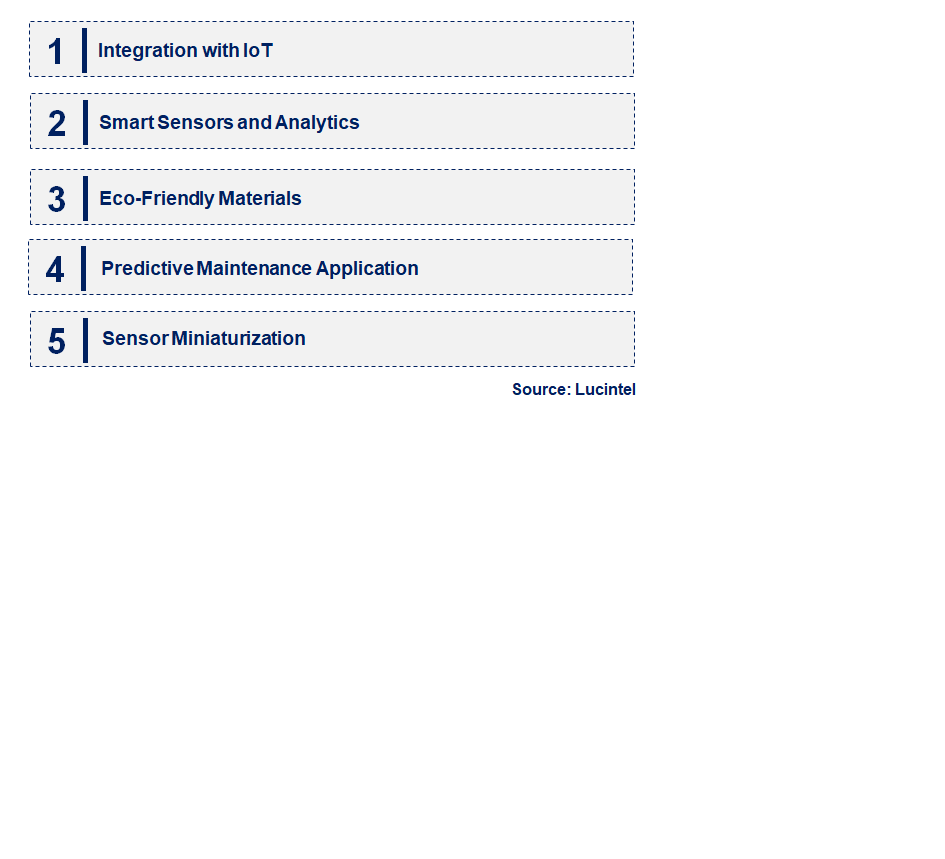
• Integration with IoT: The invention and development of IoT technology have permitted corrosion sensors to connect and send data in real time. This allows for continuous monitoring and early detection of corrosion, thereby enhancing maintenance strategies and reducing downtime in industrial applications.
• Smart Sensors and Analytics: Advanced analytics-enabled smart sensors are becoming popular. Nowadays, sensors can measure environmental conditions and predict corrosion rates, thus becoming cornerstones for preventive maintenance and optimizing resource deployment in industries.
• Eco-Friendly Materials: There is a trend towards sustainability in the design of sensors. Manufacturers are now developing corrosion sensors from materials that address environmental concerns while maintaining performance standards, which appeals to environmentally conscious consumers.
• Predictive Maintenance Application: With the increased interest in predictive maintenance, there is a growing need for corrosion detection sensors that provide early warnings of potential corrosion-related failures, which may cause operational downtimes and increase maintenance expenses.
• Sensor Miniaturization: New technology enables the miniaturization of corrosion sensors, thus allowing more sensors to be placed in difficult locations where they can be monitored without compromising accuracy or reliability. These trends are changing the corrosion detector sensor market by promoting innovation and expanding applications across industries.
• IoT-Enabled Sensors: To detect corrosion, companies have introduced IoT-enabled detectors that can begin transmitting real-time data. This allows industries to monitor corrosion, enhance decision-making processes, and adopt active maintenance strategies.
• Predictive Analytics: Predictive analytics have enabled significant breakthroughs in the development of corrosion detection sensors. Sensors can evaluate environmental data through predictive analytics to predict potential corrosion risks. These analytically driven insights ensure that industries can take preventive measures before corrosion occurs, helping extend the life of their assets.
• Introduction of Eco-Friendly Designs: New products are emerging that fulfill performance requirements while being made from 'eco-friendly' materials. Companies eager to reduce their environmental footprint and comply with sustainability standards will be attracted to such new products.
• Industry Solutions Focus: Manufacturers are engineering corrosion detection solutions to meet specific industry requirements, including oil and gas or marine-specific applications. These customized solutions enhance performance in hostile environments while addressing the unique needs of individual industries.
• Enhanced Environmental Resistance of Sensors: Recent improvements focus on developing resistance in sensors against environmental conditions. Materials and coatings for sensors are being developed to increase life expectancy and reliability in various harsh applications. These developments are significantly impacting the corrosion detector sensor market, driving innovation and improving product offerings across various sectors.
• Oil and Gas Industry: There is promising growth in this sector because the oil and gas industries operate under demanding environments and require safe and efficient operations, thereby necessitating advanced corrosion detection technologies for asset reliability.
• Infrastructure Maintenance: The number of aging infrastructures across many countries is generating a demand for effective corrosion monitoring solutions. Corrosion detectors can aid in extending the life of critical structures, thereby opening significant opportunities for public works and utilities.
• Automotive Industry: The lifespan of vehicles is likely to increase as the automotive sector places more emphasis on corrosion prevention. Innovative corrosion sensors could improve quality control in the manufacturing process and ensure durability for automotive products.
• Marine: Due to the relentless scrutiny that the marine environment imposes concerning seawater conditions, strong corrosion-detecting solutions are necessary in the marine industry. Sensors designed for a marine environment present important growth opportunities regarding safety and operational performance.
• Renewable Energy: In the renewable energy sector, which is poised for growth, corrosion management in wind installations and photovoltaic solar will become increasingly relevant. Ensuring integrity through corrosion sensors means reliability in the long term. These growth opportunities outline the evolving environment of the corrosion detector sensor market, becoming more complex, innovative, and expansive across different industries.
• Technological Advancements: Increased performance and reliability are direct outcomes of ongoing advancements in sensor technologies. With the integration of IoT and the adoption of predictive analytics, the demand for high-end corrosion detection is rising across various industries.
• Growing Safety Regulations: The increase in safety and maintenance regulations across various sectors, including oil and gas and infrastructure, has led to the adoption of corrosion detection sensors, particularly with an orientation towards proactive monitoring.
• Aged Infrastructure: Many nations face aging infrastructure, which demands effective corrosion management solutions. This creates significant demand for corrosion detectors to ensure safety and prolong asset lifespans.
• Industrialization: In emerging markets, rapid industrialization significantly drives corrosion detection technologies. As industries expand, there is a growing need for efficient monitoring systems to manage corrosion risks.
• Growing Environmental Concerns: Increased awareness of environmental issues has prompted industries to opt for eco-friendly solutions. Solutions addressing corrosion detection attract companies eager to minimize their environmental footprint and comply with related regulations. Challenges in the corrosion detector sensor market include:
• High Initial Costs: Advanced corrosion detection systems may deter organizations due to relatively high upfront costs. Companies must reconcile their long-term expectations against these investments when considering new technologies.
• Integration with Existing Infrastructures: Integrating new corrosion detection systems with existing infrastructures can be challenging. Compatibility issues and the need for adequate personnel training to implement such new technologies may pose problems.
• Market Competition: The market for corrosion detectors is becoming increasingly competitive as more players vie for market share. Companies must constantly innovate to differentiate themselves and achieve profitability. These drivers and challenges shape the corrosion detector sensor market's landscape, influencing strategies and investment decisions in various sectors.
• CorrosionRADAR
• Teledyne Cormon
• Emerson
• Southwest Research Institute
• Corr Instruments
• Sulfate Reducing Bacteria Sensor
• Biocide Sensor
• Residual Corrosion Sensor
• Oil-Fields Operations
• O&G
• Energy
• North America
• Europe
• Asia Pacific
• The Rest of the World
• United States: IoT connectivity is driving smart corrosion detection technologies with real-time monitoring and analytical functionality. Companies are producing sensors that deliver analytically precise data required by industries for proactive management of corrosion risks. Innovation in this area is being catalyzed by increased regulatory pressure to improve safety standards.
• China: Corrosion detector sensors are rapidly expanding in China, primarily driven by infrastructure and manufacturing investments. The emphasis is on affordable sensors that ensure high accuracy and reliability. Progress is supported by government initiatives to enhance industrial safety and reduce maintenance costs.
• Germany: Germany is at the forefront of advanced materials and sensor technologies for corrosion detection. The main area of concentration is integration with predictive maintenance systems, particularly in the automotive and manufacturing industries. German companies are also highlighting sustainable solutions through the development of greener materials for sensors that meet stringent environmental criteria.
• India: The expansion of India's industrialization into more infrastructure projects contributes to the growth of the corrosion detector sensor market. Local companies are developing low-cost solutions with applications in oil and gas, among others, to cater to diverse requirements. Safety and international standards spur demand for advanced corrosion detection technologies.
• Japan: In Japan, there is an emphasis on nanotechnology-based, high-precision corrosion-detecting sensors in the market and various sectors. Smart sensors are increasingly penetrating energy and transportation-related sectors, and companies in the country are focusing on research and development to improve sensor accuracy and long-term durability in harsh environments.


• CorrosionRADAR
• Teledyne Cormon
• Emerson
• Southwest Research Institute
• Corr Instruments Q5. Which corrosion detector sensor market segment will be the largest in future? Answer: Lucintel forecasts that sulfate reducing bacteria sensor is expected to witness the highest growth over the forecast period. Q6. In corrosion detector sensor market, which region is expected to be the largest in next 5 years? Answer: In terms of regions, APAC is expected to witness highest growth over the forecast period. Q.7 Do we receive customization in this report? Answer: Yes, Lucintel provides 10% customization without any additional cost.


Choose a license that fits your team. Instant PDF delivery.
Prices exclude taxes. Instant delivery. Custom licensing available on request.
Market Report · July 15, 2026
Market Report · July 13, 2026
Market Report · July 13, 2026
Trusted partner for strategic intelligence and business growth


Receive a complimentary market analysis tailored to your industry. Our analysts will identify key growth opportunities and competitive dynamics specific to your business.

Market size, growth rate, and key trend analysis for your specific sector.

Top competitor positioning and market share analysis.

Strategic recommendations backed by data-driven insights.
Get curated market intelligence and competitive moves straight to your inbox.
By subscribing, you agree to receive our monthly insights. Unsubscribe anytime.
Receive a complimentary market analysis tailored to your industry. Our analysts will identify key growth opportunities and competitive dynamics specific to your business.
Market size, growth rate, and key trend analysis for your specific sector.
Top competitor positioning and market share analysis.
Strategic recommendations backed by data-driven insights.
Get curated market intelligence, emerging trends, and competitive moves straight to your inbox each month.
By subscribing, you agree to receive our monthly insights. Unsubscribe anytime.
We'll send your sample report shortly.