
Report Feature
Coriander Oil Market Trends and Forecast
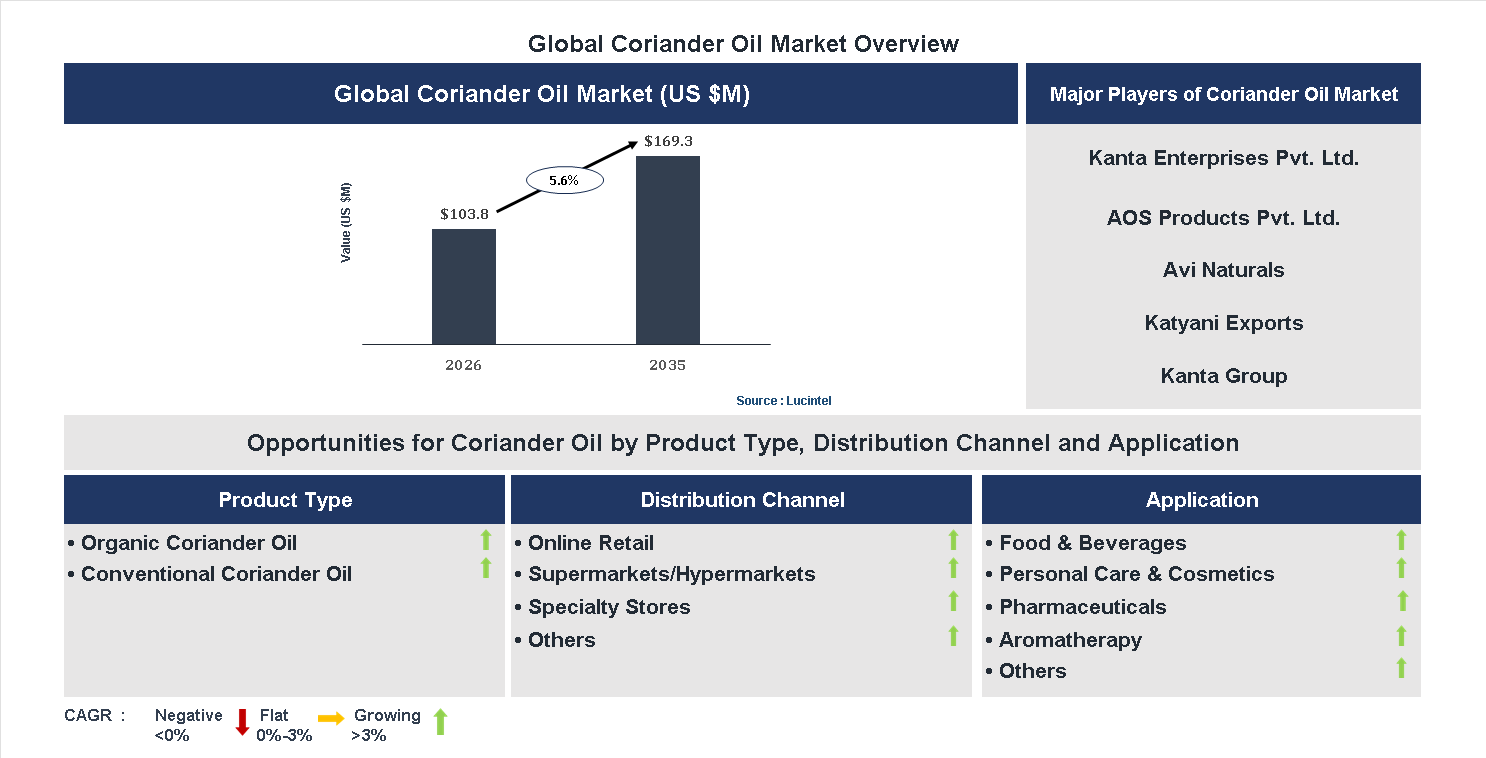
The future of the global coriander oil market looks promising with opportunities in the food & beverage, personal care & cosmetic, pharmaceutical, and aromatherapy markets. The global coriander oil market is expected to reach an estimated $169.3 million by 2035 with a CAGR of 5.6% from 2026 to 2035. The major drivers for this market are the increasing demand for natural healing oils, the rising popularity of herbal wellness products, and the growing use of essential oils in cosmetics.• Lucintel forecasts that, within the product type category, organic coriander oil is expected to witness higher growth over the forecast period.
• Within the application category, food & beverage is expected to witness the highest growth.
• In terms of region, APAC is expected to witness the highest growth over the forecast period. Gain valuable insights for your business decisions with our comprehensive 150+ page report. Sample figures with some insights are shown below.
Emerging Trends in the Coriander Oil Market
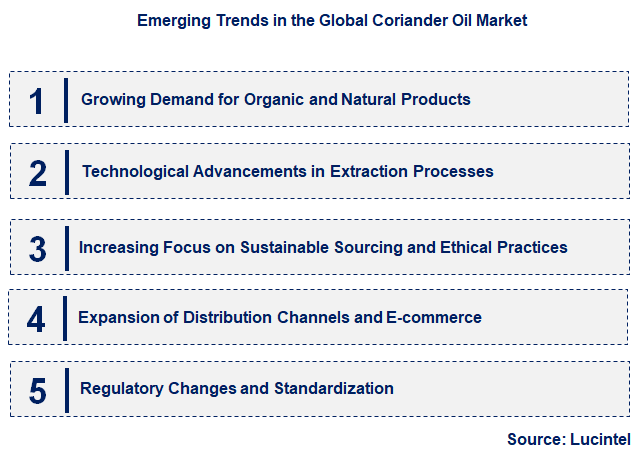
The coriander oil market is experiencing a significant transformation driven by changing consumer preferences, technological advancements, and sustainability concerns. As health-conscious consumers seek natural and organic products, the industry is adapting through innovation and strategic positioning. Market players are focusing on product quality, sustainable sourcing, and expanding distribution channels to meet rising demand. Additionally, regulatory frameworks and global trade dynamics are influencing market growth and competition. These emerging trends are not only shaping the current landscape but also setting the stage for future developments, making the market more dynamic and competitive. Understanding these key trends is essential for stakeholders aiming to capitalize on growth opportunities.• Growing Demand for Organic and Natural Products: Consumers are increasingly prioritizing organic, chemical-free coriander oil for health benefits and safety. This trend drives producers to adopt organic farming practices and obtain certifications, which enhances product credibility and appeals to health-conscious buyers. The shift towards natural products is also encouraging innovation in extraction methods to preserve purity and nutritional value. As a result, the market is witnessing a surge in premium, organic coriander oil offerings, expanding market size, and consumer base.
• Technological Advancements in Extraction Processes: Innovations such as supercritical CO2 extraction and cold-pressing techniques are improving oil yield and quality while reducing environmental impact. These advanced methods enable better preservation of flavor, aroma, and bioactive compounds, which are crucial for consumer satisfaction. The adoption of such technologies enhances efficiency, reduces costs, and ensures compliance with quality standards. Consequently, companies that leverage these innovations can differentiate their products, meet regulatory requirements, and cater to the growing demand for high-quality coriander oil.
• Increasing Focus on Sustainable Sourcing and Ethical Practices: Sustainability is becoming a key factor influencing purchasing decisions. Producers are adopting eco-friendly cultivation practices, reducing pesticide use, and supporting fair trade initiatives. Sustainable sourcing not only appeals to environmentally conscious consumers but also ensures long-term supply stability. Certification programs like Organic and Fair Trade are gaining importance, helping brands build trust and loyalty. This trend encourages responsible production, minimizes environmental impact, and aligns the market with global sustainability goals.
• Expansion of Distribution Channels and E-commerce: The rise of online retail platforms and direct-to-consumer sales channels is broadening market reach. E-commerce provides consumers with easy access to a wide range of coriander oil products, including organic and specialty variants. Digital marketing strategies and online marketplaces are facilitating brand visibility and consumer engagement. This expansion is especially vital in emerging markets, where traditional retail infrastructure may be limited. As a result, companies are investing in digital channels to capture new customer segments and increase sales volume.
• Regulatory Changes and Standardization: Governments and industry bodies are implementing stricter regulations regarding product quality, labeling, and safety standards. These measures aim to ensure consumer protection and product authenticity. Compliance with international standards such as ISO and GMP is becoming essential for market access and competitiveness. Regulatory developments also influence product formulation, packaging, and marketing strategies. Companies that proactively adapt to these changes can avoid penalties, enhance credibility, and expand into new markets, fostering a more transparent and trustworthy industry environment. In summary, these trends are collectively reshaping the coriander oil market by emphasizing quality, sustainability, technological innovation, and digital expansion. They are fostering a more competitive, transparent, and consumer-centric industry, poised for sustained growth and diversification. Stakeholders who adapt to these developments will be better positioned to capitalize on emerging opportunities and navigate future challenges effectively.
Recent Development in the Coriander Oil Market
The coriander oil market is experiencing significant growth driven by increasing demand in the culinary, pharmaceutical, and cosmetic industries. Innovations in extraction techniques and expanding applications are fueling market expansion globally. Consumer preferences for natural and organic products further boost this sector. Market players are investing in sustainable sourcing and product diversification to capture emerging opportunities. These developments are shaping a competitive landscape, encouraging innovation, and expanding market reach, ultimately influencing global supply chains and consumer choices.• Growing Demand in the Food and Beverage Industry: The increasing popularity of coriander oil as a flavor enhancer and preservative is expanding its use in various culinary applications. Consumers’ preference for natural ingredients boosts demand, prompting manufacturers to innovate and improve product quality. This trend is leading to higher production volumes and new product launches, which strengthen market growth. The food sectors expansion directly impacts coriander oil sales, creating opportunities for suppliers and exporters worldwide.
• Advancements in Extraction Technologies: New extraction methods like supercritical fluid extraction and cold pressing are improving the yield and purity of coriander oil. These innovations reduce processing costs and environmental impact, making the product more sustainable and appealing. Enhanced extraction techniques also ensure better flavor and aroma retention, increasing consumer satisfaction. As a result, manufacturers can offer higher-quality products, boosting market competitiveness and opening avenues for premium product segments.
• Rising Use in Pharmaceutical and Personal Care Products: Coriander oils medicinal properties, including anti-inflammatory and antimicrobial effects, are driving its adoption in pharmaceuticals and cosmetics. The demand for natural remedies and organic skincare products fuels this trend. Companies are developing formulations that leverage coriander oil’s benefits, expanding its application scope. This growth enhances market value, encourages research and development, and attracts new entrants seeking to capitalize on the health and wellness trend.
• Focus on Sustainable Sourcing and Organic Certification: Consumers and regulators are emphasizing sustainable cultivation and organic certification for coriander oil. Producers adopting eco-friendly farming practices and obtaining certifications are gaining a competitive edge. This focus ensures product quality, safety, and environmental responsibility, which appeals to health-conscious consumers. Sustainable sourcing also supports long-term supply chain stability, encouraging investments in organic farming and fair trade practices, thereby positively impacting market reputation and growth.
• Expansion into Emerging Markets: Increasing disposable incomes and changing lifestyles in emerging economies are boosting coriander oil consumption. Market players are expanding distribution channels and establishing local partnerships to tap into these regions. The growing awareness of health benefits and culinary uses further accelerates demand. This expansion offers significant growth opportunities, diversifies market sources, and enhances global supply chain resilience, ultimately contributing to the overall market expansion and increased competitiveness. These recent developments are significantly impacting the coriander oil market by fostering innovation, expanding application areas, and emphasizing sustainability. Advancements in extraction, rising demand across industries, and market expansion into emerging regions are driving growth. These opportunities are not only increasing market size but also encouraging sustainable practices and product diversification. As a result, the market is becoming more competitive, resilient, and aligned with consumer preferences for natural, high-quality products.
Strategic Growth Opportunities in the Coriander Oil Market
The coriander oil market is experiencing significant growth driven by increasing demand in the culinary, pharmaceutical, and cosmetic industries. Rising consumer awareness about natural and organic products, along with expanding applications in aromatherapy and traditional medicine, is fueling market expansion. Technological advancements in extraction methods and the growing popularity of ethnic cuisines further contribute to this upward trajectory. Market players are focusing on innovation, strategic partnerships, and expanding distribution channels to capitalize on emerging opportunities and meet the evolving needs of consumers worldwide.• Growing Demand in Culinary Applications: Coriander oil is increasingly used as a flavoring agent in various cuisines, especially in Asian, Middle Eastern, and European dishes. Its aromatic and health-beneficial properties make it a preferred choice for chefs and food manufacturers. The rising popularity of organic and natural ingredients in food products is boosting coriander oil consumption. Additionally, the trend toward gourmet and ethnic foods is expanding the market scope, encouraging producers to innovate and develop new flavor profiles. This growth is expected to continue as consumer preferences shift toward natural seasonings.
• Expansion in Pharmaceutical and Healthcare Sectors: Coriander oil is gaining traction in the pharmaceutical industry due to its antioxidant, anti-inflammatory, and digestive properties. It is used in herbal medicines, supplements, and natural remedies to treat various ailments such as indigestion, arthritis, and skin conditions. The increasing inclination toward alternative medicine and natural therapies is driving demand. Moreover, research into its bioactive compounds is opening new avenues for drug development. As consumers seek safer, plant-based health solutions, coriander oil’s role in healthcare is poised for substantial growth.
• Rising Use in Cosmetic and Personal Care Products: The cosmetic industry is increasingly incorporating coriander oil for its antimicrobial, anti-aging, and skin-soothing benefits. It is used in skincare, haircare, and aromatherapy products to promote healthy skin and hair. The natural and organic trend in cosmetics is boosting demand for coriander oil as a key ingredient. Manufacturers are developing innovative formulations, including essential oils and serums, to cater to health-conscious consumers. The expanding beauty and wellness market globally is expected to further propel coriander oil’s application in this sector.
• Technological Advancements in Extraction Methods: Innovations in extraction techniques, such as supercritical fluid extraction and cold-pressing, are enhancing the yield and purity of coriander oil. These methods reduce solvent residues and preserve bioactive compounds, improving product quality. Such advancements lower production costs and enable the development of high-quality, organic, and sustainable products. As consumers demand cleaner and more potent oils, manufacturers adopting advanced extraction technologies will gain a competitive edge, fostering market growth and product diversification.
• Increasing Focus on Sustainable and Organic Production: Consumers and regulatory bodies are emphasizing sustainability and organic certification in food and personal care products. This trend encourages producers to adopt eco-friendly cultivation and extraction practices for coriander oil. Organic coriander oil commands premium pricing and appeals to health-conscious buyers. Investments in sustainable farming, fair trade practices, and eco-friendly processing are becoming standard. This focus on sustainability not only enhances brand reputation but also ensures long-term supply stability, supporting the overall growth and acceptance of coriander oil in global markets. The overall impact of these opportunities is set to significantly expand the coriander oil market, driven by diverse applications and consumer preferences for natural, sustainable, and health-beneficial products. Market players who innovate and adapt to these trends will be well-positioned for sustained growth and competitive advantage in the evolving landscape.
Coriander Oil Market Driver and Challenges
The coriander oil market is influenced by a variety of technological, economic, and regulatory factors that shape its growth trajectory. Advances in extraction and processing technologies have improved yield and quality, while increasing consumer awareness about health benefits has driven demand. Economic factors such as rising disposable incomes and expanding food and beverage industries further propel market expansion. Regulatory frameworks concerning food safety and organic certification also impact production and marketing strategies. However, the market faces challenges, including fluctuating raw material prices, regulatory compliance complexities, and environmental concerns related to cultivation practices. Understanding these drivers and challenges is essential for stakeholders to navigate the evolving landscape effectively. The factors responsible for driving the coriander oil market include:• Technological Innovations: The development of advanced extraction methods like supercritical fluid extraction has enhanced oil yield and purity, reducing processing time and costs. These innovations enable producers to meet increasing demand for high-quality coriander oil, especially in health-conscious markets. Additionally, improvements in storage and packaging technologies extend shelf life, making the product more appealing to consumers and retailers. As technology continues to evolve, it is expected to further optimize production efficiency and product quality, supporting market growth.
• Rising Health Awareness and Consumer Preferences: Growing awareness of coriander oils health benefits, such as its antioxidant, anti-inflammatory, and digestive properties, has increased consumer demand. The shift towards natural and organic products in the food, beverage, and personal care sectors fuels this trend. Consumers are increasingly seeking plant-based, chemical-free options, which coriander oil can fulfill. This demand is further supported by marketing campaigns emphasizing health benefits, leading to expanded applications and higher consumption levels across various regions.
• Expansion of the Food and Beverage Industry: The global food and beverage sectors growth significantly impacts the coriander oil market. As consumers demand flavorful, natural ingredients, coriander oil is increasingly used as a flavoring agent in processed foods, snacks, and beverages. The rise of ethnic cuisines and gourmet products also boosts demand. Moreover, the use of coriander oil in functional foods and dietary supplements is expanding, driven by health trends. This industrial growth creates a steady demand pipeline, encouraging producers to scale operations and innovate.
• Regulatory Support and Certification Standards: Governments and industry bodies are implementing regulations to ensure food safety, quality, and organic authenticity. Certification standards such as organic and non-GMO labels enhance consumer trust and open access to premium markets. Compliance with these standards often requires investment in quality control and sustainable cultivation practices, which can be challenging but ultimately beneficial. Regulatory support, including subsidies and favorable policies in certain regions, further stimulates market development by encouraging sustainable farming and fair trade practices.
• Growing Export Opportunities: Increasing international trade and globalization have opened new markets for coriander oil producers. Countries with high demand, such as the US, Europe, and parts of Asia, offer lucrative export opportunities. Trade agreements and reduced tariffs facilitate market entry, while rising global awareness of coriander oils health benefits boosts export volumes. Export growth encourages producers to meet international standards, invest in quality improvements, and expand production capacities, thereby fostering overall market expansion. The challenges facing the coriander oil market include:
• Fluctuating Raw Material Prices: The price of coriander seeds, the primary raw material, is highly volatile due to factors like weather conditions, crop yields, and geopolitical issues. Price fluctuations can significantly impact profit margins for producers and lead to inconsistent supply levels. This unpredictability complicates pricing strategies and long-term planning, potentially hindering market stability. Producers may need to hedge against price risks or seek alternative sourcing strategies, which can increase operational costs and affect overall competitiveness.
• Regulatory Compliance and Certification Complexities: Navigating diverse regulatory frameworks across different countries poses a significant challenge. Achieving and maintaining certifications such as organic or non-GMO requires rigorous documentation, testing, and adherence to standards, which can be resource-intensive. Non-compliance risks include product recalls, legal penalties, and damage to brand reputation. Smaller producers, in particular, may struggle with the costs and complexities of compliance, limiting their ability to access premium markets and constraining overall market growth.
• Environmental and Sustainability Concerns: Cultivation of coriander involves land use, water consumption, and pesticide application, raising environmental sustainability issues. Unsustainable farming practices can lead to soil degradation, water scarcity, and biodiversity loss, which threaten long-term supply stability. Increasing environmental regulations and consumer demand for eco-friendly products compel producers to adopt sustainable practices, often at higher costs. Balancing productivity with environmental responsibility remains a key challenge for industry stakeholders aiming to ensure sustainable growth. In summary, the coriander oil market is driven by technological advancements, health-conscious consumer trends, expanding food industries, supportive regulations, and export opportunities. However, it faces challenges such as raw material price volatility, regulatory complexities, and environmental sustainability concerns. These factors collectively influence market dynamics, requiring stakeholders to innovate, adapt, and implement sustainable practices. While growth prospects remain promising, addressing these challenges is crucial for long-term stability and competitiveness in the global coriander oil industry.
List of Coriander Oil Companies
Companies in the market compete on the basis of product quality offered. Major players in this market focus on expanding their manufacturing facilities, R&D investments, infrastructural development, and leverage integration opportunities across the value chain. With these strategies coriander oil companies cater increasing demand, ensure competitive effectiveness, develop innovative products & technologies, reduce production costs, and expand their customer base. Some of the coriander oil companies profiled in this report include-• Kanta Enterprises Pvt. Ltd.
• AOS Products Pvt. Ltd.
• Avi Naturals
• Katyani Exports
• Kanta Group
• The Good Scents Company
• Young Living Essential Oils
• doTERRA International LLC
• NOW Foods
• Plant Therapy Essential Oils
Coriander Oil Market by Segment
The study includes a forecast for the global coriander oil market by product type, distribution channel, application, and region.Coriander Oil Market by Product Type [Value from 2019 to 2035]:
• Organic Coriander Oil
• Conventional Coriander Oil
Coriander Oil Market by Distribution Channel [Value from 2019 to 2035]:
• Online Retail
• Supermarkets/Hypermarkets
• Specialty Stores
• Others
Coriander Oil Market by Application [Value from 2019 to 2035]:
• Food & Beverages
• Personal Care & Cosmetics
• Pharmaceuticals
• Aromatherapy
• Others
Coriander Oil Market by Region [Value from 2019 to 2035]:
• North America
• Europe
• Asia Pacific
• The Rest of the World
Country Wise Outlook for the Coriander Oil Market
The coriander oil market has experienced significant shifts driven by changing consumer preferences, technological advancements, and global trade dynamics. As health-conscious consumers seek natural and organic products, demand for coriander oil has increased across various regions. Innovations in extraction methods and sustainable sourcing practices are also shaping the market landscape. Countries are focusing on expanding production capacities and exploring new applications in food, cosmetics, and pharmaceuticals. These developments reflect a broader trend towards natural ingredients and eco-friendly practices, influencing market growth and competitive strategies worldwide.• United States: The U.S. market for coriander oil has seen rising demand due to increased interest in natural health products and organic foods. Major players are investing in advanced extraction technologies to improve yield and purity. The food and beverage sector remains the primary consumer, with expanding applications in cosmetics and aromatherapy. Regulatory standards are becoming stricter, encouraging quality improvements and organic certifications. E-commerce platforms are boosting accessibility and sales, contributing to market growth. Overall, the U.S. market is characterized by innovation, sustainability focus, and expanding consumer awareness.
• China: China has emerged as a significant producer and consumer of coriander oil, driven by a growing herbal medicine industry and food sector. The government’s support for organic farming and sustainable practices has enhanced production quality. Technological advancements in extraction and processing have increased efficiency and product purity. The domestic market is expanding rapidly, with increasing exports to neighboring countries. Consumer preferences are shifting towards natural and herbal products, boosting demand. Additionally, Chinese companies are investing in R&D to develop new formulations for cosmetics and health supplements, positioning China as a key player in the coriander oil market.
• Germany: Germany’s coriander oil market is characterized by high-quality standards and a strong emphasis on organic and sustainable sourcing. The country’s robust food, cosmetics, and pharmaceutical industries are major consumers. Innovations in cold-press extraction methods have improved product quality and shelf life. Consumer awareness about health benefits and clean-label products is driving demand. Germany also serves as a hub for research and development, with collaborations between academia and industry to explore new applications. The market is expected to grow steadily, supported by strict regulations and a focus on eco-friendly practices.
• India: India remains the largest producer and exporter of coriander oil, leveraging its extensive agricultural base. Recent developments include the adoption of organic farming practices and sustainable harvesting techniques, which enhance product quality. The government’s initiatives to promote herbal and natural products have boosted domestic consumption and export opportunities. Innovations in extraction technology have increased yield and purity. The growing popularity of Ayurveda and natural remedies has expanded demand in both domestic and international markets. India’s coriander oil industry is also focusing on value-added products and branding to strengthen its global position.
• Japan: Japan’s coriander oil market is driven by a strong demand for natural and functional ingredients in cosmetics and health supplements. The country’s focus on quality and safety standards has led to the adoption of advanced extraction and purification techniques. Consumer interest in traditional herbal remedies and organic products is increasing. Japanese companies are investing in R&D to develop innovative formulations with coriander oil, especially for skincare and wellness products. The market is also influenced by global trends towards sustainability and eco-friendly sourcing. Overall, Japan’s market is characterized by high standards, innovation, and a focus on health-conscious consumers.

Features of the Global Coriander Oil Market
Market Size Estimates: Coriander oil market size estimation in terms of value ($M). Trend and Forecast Analysis: Market trends (2019 to 2025) and forecast (2026 to 2035) by various segments and regions. Segmentation Analysis: Coriander oil market size by product type, distribution channel, application, and region in terms of value ($M). Regional Analysis: Coriander oil market breakdown by North America, Europe, Asia Pacific, and Rest of the World. Growth Opportunities: Analysis of growth opportunities in different product types, distribution channels, applications, and regions for the coriander oil market. Strategic Analysis: This includes M&A, new product development, and competitive landscape of the coriander oil market. Analysis of competitive intensity of the industry based on Porter’s Five Forces model.
FAQ
Q1. What is the coriander oil market size? Answer: The global coriander oil market is expected to reach an estimated $169.3 million by 2035. Q2. What is the growth forecast for coriander oil market? Answer: The global coriander oil market is expected to grow with a CAGR of 5.6% from 2026 to 2035. Q3. What are the major drivers influencing the growth of the coriander oil market? Answer: The major drivers for this market are the increasing demand for natural healing oils, the rising popularity of herbal wellness products, and the growing use of essential oils in cosmetics. Q4. What are the major segments for coriander oil market? Answer: The future of the coriander oil market looks promising with opportunities in the food & beverage, personal care & cosmetic, pharmaceutical, and aromatherapy markets. Q5. Who are the key coriander oil market companies? Answer: Some of the key coriander oil companies are as follows:• Kanta Enterprises Pvt. Ltd.
• AOS Products Pvt. Ltd.
• Avi Naturals
• Katyani Exports
• Kanta Group
• The Good Scents Company
• Young Living Essential Oils
• doTERRA International LLC
• NOW Foods
• Plant Therapy Essential Oils Q6. Which coriander oil market segment will be the largest in future? Answer: Lucintel forecasts that, within the product type category, organic coriander oil is expected to witness higher growth over the forecast period. Q7. In coriander oil market, which region is expected to be the largest in next 5 years? Answer: In terms of region, APAC is expected to witness the highest growth over the forecast period. Q8. Do we receive customization in this report? Answer: Yes, Lucintel provides 10% customization without any additional cost.
Table of Contents
List of Figures
List of Tables
Methodology
- In-depth interviews of the major players in this market
- Detailed secondary research from competitors’ financial statements and published data
- Extensive searches of published works, market, and database information pertaining to industry news, company press releases, and customer intentions
- A compilation of the experiences, judgments, and insights of Lucintel’s professionals, who have analyzed and tracked this market over the years.


Buy Now
Choose a license that fits your team. Instant PDF delivery.
Prices exclude taxes. Instant delivery. Custom licensing available on request.
Key Questions
- • What are some of the most promising, high-growth opportunities for the coriander oil market by product type (organic coriander oil and conventional coriander oil), distribution channel (online retail, supermarkets/hypermarkets, specialty stores, and others), application (food & beverages, personal care & cosmetics, pharmaceuticals, aromatherapy, and others), and region (North America, Europe, Asia Pacific, and the Rest of the World)?
- • Which segments will grow at a faster pace and why?
- • Which region will grow at a faster pace and why?
- • What are the key factors affecting market dynamics? What are the key challenges and business risks in this market?
- • What are the business risks and competitive threats in this market?
- • What are the emerging trends in this market and the reasons behind them?
- • What are some of the changing demands of customers in the market?
- • What are the new developments in the market? Which companies are leading these developments?
- • Who are the major players in this market? What strategic initiatives are key players pursuing for business growth?
- • What are some of the competing products in this market and how big of a threat do they pose for loss of market share by material or product substitution?
- • What M&A activity has occurred in the last 7 years and what has its impact been on the industry? For any questions related to Coriander Oil Market, Coriander Oil Market Size, Coriander Oil Market Growth, Coriander Oil Market Analysis, Coriander Oil Market Report, Coriander Oil Market Share, Coriander Oil Market Trends, Coriander Oil Market Forecast, Coriander Oil Companies, write Lucintel analyst at email: helpdesk@lucintel.com. We will be glad to get back to you soon.


