
Market Report · July 31, 2026

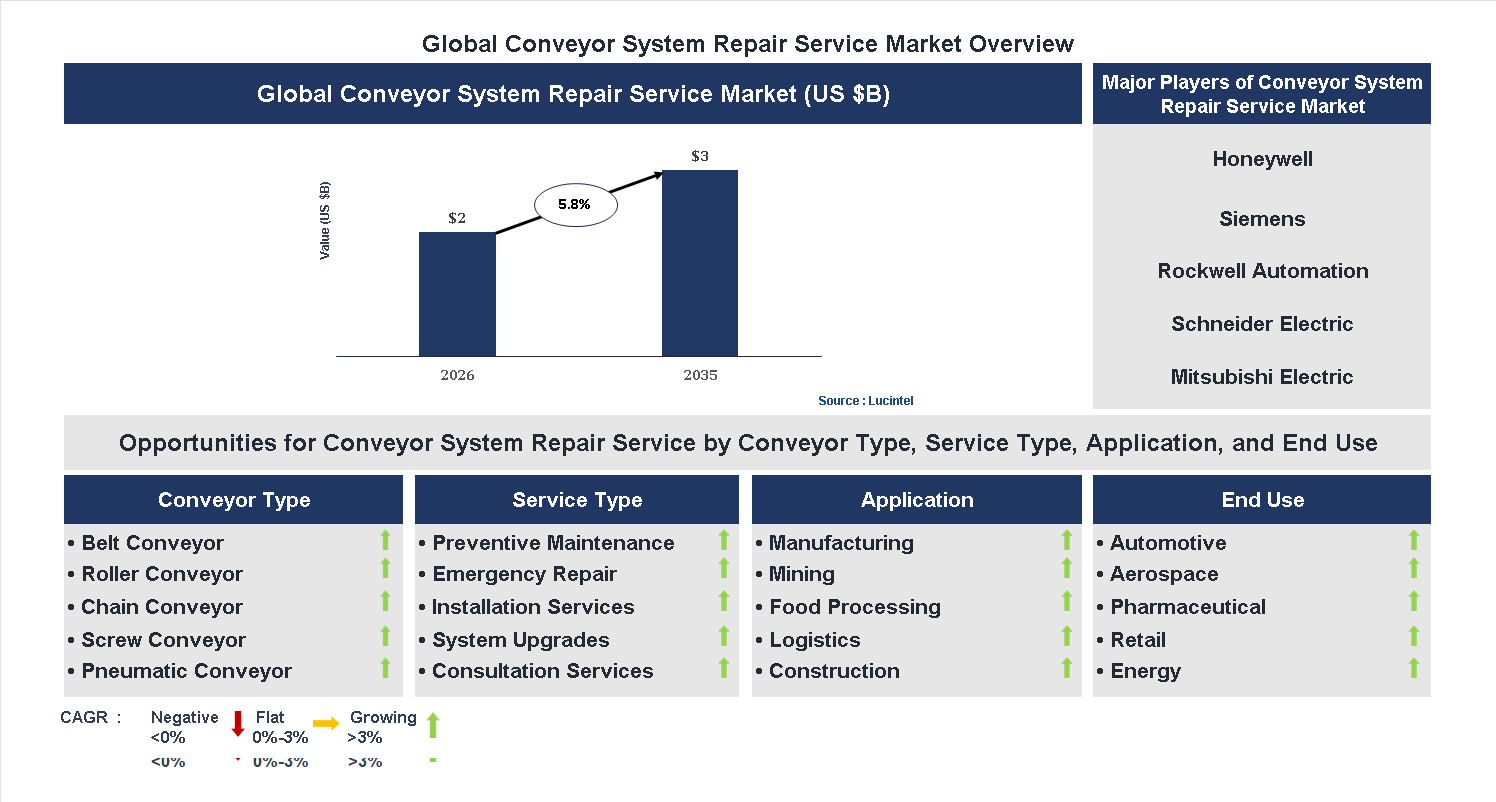
Key data points: The market size in 2035 = $3 billion, growth forecast = 5.8% annually for the next 8 years. Scroll below to get more insights. This market report covers trends, opportunities and forecasts in conveyor system repair service market to 2035 by conveyor type (belt conveyor, roller conveyor, chain conveyor, screw conveyor, and pneumatic conveyor), service type (preventive maintenance, emergency repair, installation services, system upgrades, and consultation services), application (manufacturing, mining, food processing, logistics, and construction), end use (automotive, aerospace, pharmaceutical, retail, and energy), and region (North America, Europe, Asia Pacific, and the Rest of the World)
We'll send your sample report shortly.
• Lucintel forecasts that, within the conveyor type category, belt conveyor is expected to witness the highest growth over the forecast period.
• Within the end use category, automotive is expected to witness the highest growth.
• In terms of region, APAC is expected to witness the highest growth over the forecast period. Gain valuable insights for your business decisions with our comprehensive 150+ page report. Sample figures with some insights are shown below.
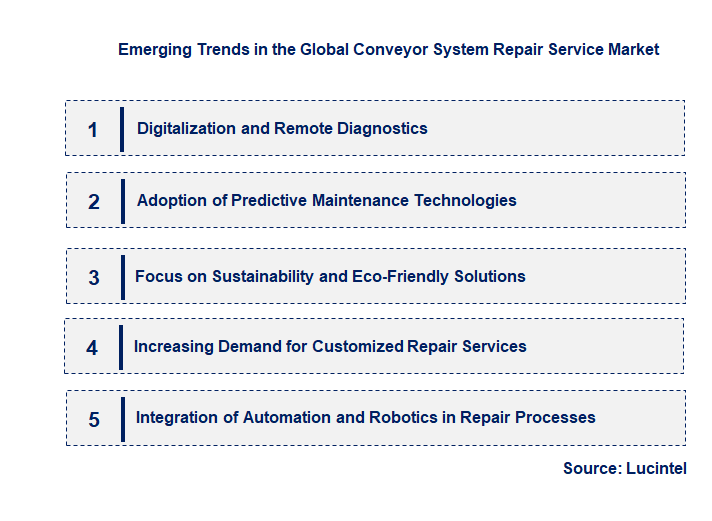
• Digitalization And Remote Diagnostics : The integration of IoT and sensor technologies enables real-time monitoring of conveyor systems. This trend allows service providers to diagnose issues remotely, predict failures before they occur, and schedule maintenance proactively. Digital tools improve response times, reduce downtime, and lower maintenance costs, making conveyor systems more reliable and efficient. Companies adopting these technologies gain a competitive edge by minimizing operational disruptions and enhancing system longevity.
• Adoption Of Predictive Maintenance Technologies : Predictive analytics driven by machine learning algorithms are increasingly used to forecast potential failures based on historical data and operational patterns. This approach shifts maintenance from reactive to proactive, reducing unexpected breakdowns and extending equipment lifespan. The impact is significant, as it optimizes resource allocation, decreases maintenance costs, and improves overall system uptime, especially in high-volume industries like manufacturing and logistics.
• Focus On Sustainability And Eco-Friendly Solutions : The market is witnessing a push towards environmentally sustainable repair practices. This includes using eco-friendly lubricants, recyclable materials, and energy-efficient repair techniques. Such initiatives help companies reduce their carbon footprint and comply with environmental regulations. The adoption of sustainable practices not only enhances corporate responsibility but also appeals to eco-conscious clients, creating a competitive advantage in the market.
• Increasing Demand For Customized Repair Services : As conveyor systems become more complex and industry-specific, there is a rising need for tailored repair solutions. Service providers are offering specialized maintenance packages that address unique operational requirements, ensuring minimal disruption and optimal performance. Customized services improve customer satisfaction, foster long-term relationships, and enable providers to command premium pricing in niche markets such as food processing, pharmaceuticals, and e-commerce.
• Integration Of Automation And Robotics In Repair Processes : The use of robotic systems and automated tools in repair and maintenance tasks is gaining traction. These technologies enhance precision, reduce human error, and speed up repair times. Automated repair solutions are particularly valuable in hazardous or hard-to-reach environments, improving safety and efficiency. This trend is transforming traditional repair workflows, enabling faster turnaround times and higher quality service delivery, which is crucial for industries with high throughput demands. These emerging trends are collectively reshaping the conveyor system repair service market by emphasizing technological innovation, sustainability, and customization. Digitalization and predictive maintenance are driving efficiency and reducing costs, while eco-friendly practices align the industry with global sustainability goals. The shift towards automation and robotics enhances safety and speed, and tailored services meet the specific needs of diverse industries. Overall, these developments are fostering a more resilient, efficient, and customer-centric market, positioning service providers to better support the evolving needs of industries reliant on conveyor systems.
• Growing Industrial Automation: The surge in automation across manufacturing, logistics, and food processing industries is boosting demand for conveyor repair services. Automated systems require regular maintenance to ensure efficiency and prevent costly breakdowns. As industries adopt smart technologies, the need for specialized repair services that can handle complex machinery increases. This growth enhances operational productivity and reduces downtime, making conveyor repair services a critical component of industrial infrastructure. The market benefits from increased investments in automation and maintenance solutions.
• Rising Infrastructure Development Projects: Infrastructure expansion in emerging economies is significantly impacting the conveyor repair market. Construction of airports, seaports, and logistics hubs relies heavily on conveyor systems, which require ongoing maintenance and repairs. Governments and private sectors are investing in large-scale projects, creating a steady demand for repair services to ensure smooth operations. This trend supports local economies and enhances supply chain efficiency. The market sees growth opportunities in providing timely, cost-effective repair solutions tailored to large infrastructure projects.
• Aging Conveyor Equipment: Many industries operate with outdated conveyor systems that require frequent repairs and upgrades. The aging infrastructure leads to increased downtime and operational costs, prompting companies to seek specialized repair services. Upgrading or refurbishing old systems extends their lifespan and improves safety standards. This demand for maintenance and retrofitting services is expected to grow as companies aim to optimize existing assets rather than replace entire systems. The market benefits from a focus on cost-effective, sustainable repair solutions.
• Technological Advancements in Repair Solutions: Innovations such as predictive maintenance, IoT integration, and remote diagnostics are transforming the conveyor repair landscape. These technologies enable early detection of faults, reducing unplanned downtime and repair costs. Service providers adopting advanced tools can offer faster, more efficient solutions, enhancing customer satisfaction. The integration of AI and data analytics allows for proactive maintenance strategies, improving system reliability. This technological shift is creating new revenue streams and competitive advantages within the market.
• Increasing Focus on Sustainability and Safety: Environmental regulations and safety standards are driving the demand for eco-friendly and safer conveyor repair practices. Companies are seeking sustainable materials and energy-efficient solutions to reduce carbon footprints. Additionally, safety compliance during repairs minimizes workplace accidents and liabilities. Service providers offering green and safe repair options are gaining a competitive edge. This focus aligns with global sustainability goals and enhances brand reputation, encouraging industries to invest in responsible maintenance practices that support long-term operational stability. These developments are significantly transforming the conveyor system repair service market by fostering innovation, expanding opportunities in emerging economies, and emphasizing sustainability. The integration of advanced technologies and focus on safety are enhancing service efficiency and reliability. As industries continue to modernize and expand infrastructure, the market is poised for sustained growth, driven by the increasing need for specialized, cost-effective, and environmentally responsible repair solutions. This evolution ultimately benefits stakeholders through improved operational performance and competitive positioning.
• Growing Demand for Preventive Maintenance Services: The increasing complexity of conveyor systems and the high costs associated with unexpected breakdowns are driving the adoption of preventive maintenance. Companies are investing in regular inspections, real-time monitoring, and predictive analytics to minimize downtime and extend equipment lifespan. This proactive approach reduces operational disruptions and enhances productivity, creating substantial opportunities for repair service providers to offer tailored maintenance packages and remote diagnostics.
• Expansion of Automation and Robotics in Conveyor Systems: The integration of automation and robotics in conveyor systems is transforming repair service requirements. Advanced diagnostic tools, remote troubleshooting, and automated repair solutions are emerging as key trends. Service providers are developing specialized skills to handle complex automated systems, offering quick turnaround times and minimizing operational interruptions. This growth segment includes smart sensors, IoT-enabled systems, and AI-driven diagnostics, opening avenues for innovative repair solutions.
• Increasing Adoption of Eco-Friendly and Energy-Efficient Solutions: Environmental regulations and sustainability initiatives are prompting industries to upgrade conveyor systems with energy-efficient components and eco-friendly materials. Repair services now focus on retrofitting existing systems with energy-saving technologies, such as variable frequency drives and low-friction belts. This shift not only reduces operational costs but also aligns with corporate sustainability goals, creating opportunities for specialized repair services that emphasize green solutions and compliance.
• Rising Demand in E-Commerce and Logistics Sectors: The exponential growth of e-commerce and logistics industries has led to increased installation and maintenance of conveyor systems in warehouses and distribution centers. Repair services are in high demand to ensure seamless operations, especially during peak seasons. Service providers are offering rapid response, on-site repairs, and system upgrades to handle high throughput and prevent delays, thus supporting the continuous flow of goods and enhancing customer satisfaction.
• Technological Innovations in Remote Monitoring and Diagnostics: The adoption of IoT and AI technologies enables remote monitoring and diagnostics of conveyor systems, reducing the need for on-site visits. These innovations facilitate early detection of faults, predictive maintenance, and real-time performance analysis. Service providers leveraging these technologies can offer more efficient, cost-effective repair solutions, minimize downtime, and improve system reliability. This trend is expected to accelerate as digital transformation continues across industries. The overall market outlook indicates that these growth opportunities will significantly enhance service providers capabilities, foster innovation, and drive market expansion, ultimately supporting industries in maintaining efficient, reliable conveyor systems.
• Technological Advancements: The integration of Industry 4.0, IoT, and predictive maintenance tools enhances the efficiency and reliability of conveyor systems. These innovations enable real-time monitoring and proactive repairs, reducing downtime and operational costs. As industries adopt smarter systems, the demand for specialized repair services increases, creating a significant growth opportunity. Service providers investing in advanced diagnostic tools and skilled personnel are better positioned to capitalize on this trend, ensuring faster turnaround times and improved customer satisfaction.
• Growing Industrialization: Rapid industrial growth across sectors such as manufacturing, logistics, and mining fuels the need for robust conveyor systems. As industries expand, the complexity and scale of conveyor networks increase, necessitating frequent repairs and maintenance. This growth directly correlates with higher service demand, especially in regions experiencing infrastructural development. The need for reliable conveyor systems to ensure uninterrupted operations makes repair services indispensable, supporting market expansion.
• Increasing Focus on Safety and Compliance: Stringent safety regulations and environmental standards compel industries to maintain conveyor systems in optimal condition. Regular repairs and inspections are mandated to prevent accidents and ensure compliance, driving demand for professional repair services. Service providers offering certified and compliant solutions gain a competitive edge, fostering trust and long-term relationships with clients. This regulatory environment encourages ongoing maintenance contracts, stabilizing revenue streams for repair service providers.
• Rising Adoption of Automation and Industry 4.0: The shift towards automated conveyor systems integrated with IoT and data analytics enhances operational efficiency. However, these sophisticated systems require specialized repair and maintenance expertise. The growing adoption of such technologies creates a demand for highly skilled technicians and advanced diagnostic tools. Service providers investing in training and technology are better equipped to meet the needs of modern industries, fueling market growth and innovation.
• Expansion in Emerging Markets: Developing economies are witnessing rapid industrialization, infrastructure development, and urbanization, which boost the demand for conveyor systems and related repair services. As these markets grow, the need for reliable maintenance solutions becomes critical to sustain industrial productivity. Local service providers are expanding their capabilities to cater to this demand, often supported by international players entering these regions. This expansion presents significant opportunities for market players to establish a foothold and capture new customer segments. The challenges facing the conveyor system repair service market include:
• Rapid Technological Changes: The fast pace of technological innovation in conveyor systems demands continuous skill upgrades and investment in new diagnostic tools. Service providers may struggle to keep pace with evolving technologies, leading to skill gaps and increased training costs. Additionally, outdated repair methods can become obsolete quickly, risking service quality and customer satisfaction. Staying ahead requires significant R&D investment and strategic partnerships, which can be resource-intensive for smaller players.
• High Maintenance Costs: The complexity of modern conveyor systems, especially those integrated with IoT and automation, results in higher repair and maintenance costs. Specialized parts, advanced diagnostic equipment, and skilled technicians contribute to increased expenses. These costs can impact profit margins and pricing strategies, making it challenging for service providers to remain competitive while maintaining quality standards. Clients may also delay repairs due to cost concerns, affecting overall market growth.
• Regulatory and Safety Compliance: Navigating diverse safety and environmental regulations across different regions poses a significant challenge. Ensuring compliance requires ongoing training, documentation, and adherence to standards, which can be resource-intensive. Non-compliance risks legal penalties, operational shutdowns, and reputational damage. Service providers must stay updated with changing regulations and invest in compliance measures, adding complexity and cost to their operations, especially in international markets. The conveyor system repair service market is driven by technological innovations, industrial growth, safety regulations, and emerging market opportunities. However, rapid technological changes, high maintenance costs, and regulatory compliance challenges pose significant hurdles. These factors collectively influence the market’s evolution, requiring stakeholders to adapt strategically. Embracing technological advancements and expanding into emerging markets can foster growth, but addressing cost and compliance challenges is essential for long-term sustainability. Overall, the market’s future depends on balancing innovation with operational efficiency and regulatory adherence.
• Honeywell
• Siemens
• Rockwell Automation
• Schneider Electric
• Mitsubishi Electric
• KUKA
• Emerson Electric
• Belt Conveyor
• Roller Conveyor
• Chain Conveyor
• Screw Conveyor
• Pneumatic Conveyor
• Preventive Maintenance
• Emergency Repair
• Installation Services
• System Upgrades
• Consultation Services
• Manufacturing
• Mining
• Food Processing
• Logistics
• Construction
• Automotive
• Aerospace
• Pharmaceutical
• Retail
• Energy
• North America
• Europe
• Asia Pacific
• The Rest of the World
• United States: The US market has seen rapid adoption of IoT-enabled repair services, with many companies investing in predictive maintenance solutions to minimize downtime. The rise of Industry 4.0 has led to increased demand for advanced repair technologies and skilled technicians. Major players are expanding their service networks nationwide, focusing on automation and smart diagnostics. Regulatory standards for safety and environmental compliance are also driving innovation in repair practices. Additionally, the US government’s infrastructure projects are boosting market growth, emphasizing sustainable and energy-efficient repair solutions.
• China: China’s conveyor repair service market is expanding due to its booming manufacturing and e-commerce sectors. The country is adopting automation and robotics to improve supply chain efficiency, which increases the need for specialized repair services. Local companies are investing in advanced diagnostic tools and training to meet rising demand. Government initiatives aimed at upgrading industrial infrastructure and promoting smart manufacturing are further fueling growth. The integration of AI and IoT in repair services is becoming more prevalent, helping reduce costs and improve turnaround times. China’s focus on sustainable practices is also influencing repair service innovations.
• Germany: Germany’s market is characterized by a strong emphasis on precision, quality, and technological innovation. The country’s robust automotive and machinery industries drive demand for high-end repair services. German companies are adopting Industry 4.0 technologies, including predictive analytics and automation, to enhance service efficiency. The focus on sustainability and energy efficiency is leading to eco-friendly repair solutions. Skilled labor availability and stringent safety standards ensure high-quality service delivery. The market is also witnessing increased collaboration between manufacturers and repair service providers to develop customized solutions for complex conveyor systems.
• India: The Indian conveyor repair service market is experiencing rapid growth due to expanding manufacturing, logistics, and infrastructure projects. The adoption of automation and digital tools is increasing, with a focus on reducing operational costs and downtime. Local service providers are expanding their capabilities through training and technology upgrades. Government initiatives like Make in India are boosting industrial activity, thereby increasing demand for repair services. The market is also seeing a shift towards preventive maintenance and remote diagnostics, driven by the need for cost-effective and efficient solutions in a competitive environment.
• Japan: Japan’s market is driven by its advanced manufacturing sector, including automotive and electronics industries. The country emphasizes high-quality, reliable repair services incorporating the latest technologies such as IoT and AI. Japanese companies are investing in smart maintenance systems to improve system longevity and reduce operational disruptions. The focus on sustainability and energy efficiency influences repair practices, with an emphasis on eco-friendly solutions. Skilled workforce availability and a culture of innovation support the development of sophisticated repair services. Collaboration between industry and academia is fostering new technological advancements in conveyor system maintenance.


• Honeywell
• Siemens
• Rockwell Automation
• Schneider Electric
• Mitsubishi Electric
• KUKA
• Emerson Electric Q6. Which conveyor system repair service market segment will be the largest in future? Answer: Lucintel forecasts that, within the conveyor type category, belt conveyor is expected to witness the highest growth over the forecast period. Q7. In conveyor system repair service market, which region is expected to be the largest in next 8 years? Answer: In terms of region, APAC is expected to witness the highest growth over the forecast period. Q8. Do we receive customization in this report? Answer: Yes, Lucintel provides 10% customization without any additional cost.


Choose a license that fits your team. Instant PDF delivery.
Prices exclude taxes. Instant delivery. Custom licensing available on request.
Market Report · July 31, 2026
Market Report · July 31, 2026
Market Report · July 31, 2026
Trusted partner for strategic intelligence and business growth


Receive a complimentary market analysis tailored to your industry. Our analysts will identify key growth opportunities and competitive dynamics specific to your business.

Market size, growth rate, and key trend analysis for your specific sector.

Top competitor positioning and market share analysis.

Strategic recommendations backed by data-driven insights.
Get curated market intelligence and competitive moves straight to your inbox.
By subscribing, you agree to receive our monthly insights. Unsubscribe anytime.
Receive a complimentary market analysis tailored to your industry. Our analysts will identify key growth opportunities and competitive dynamics specific to your business.
Market size, growth rate, and key trend analysis for your specific sector.
Top competitor positioning and market share analysis.
Strategic recommendations backed by data-driven insights.
Get curated market intelligence, emerging trends, and competitive moves straight to your inbox each month.
By subscribing, you agree to receive our monthly insights. Unsubscribe anytime.
We'll send your sample report shortly.