
Report Feature
Continuous Glucose Monitoring System Market Trends and Forecast
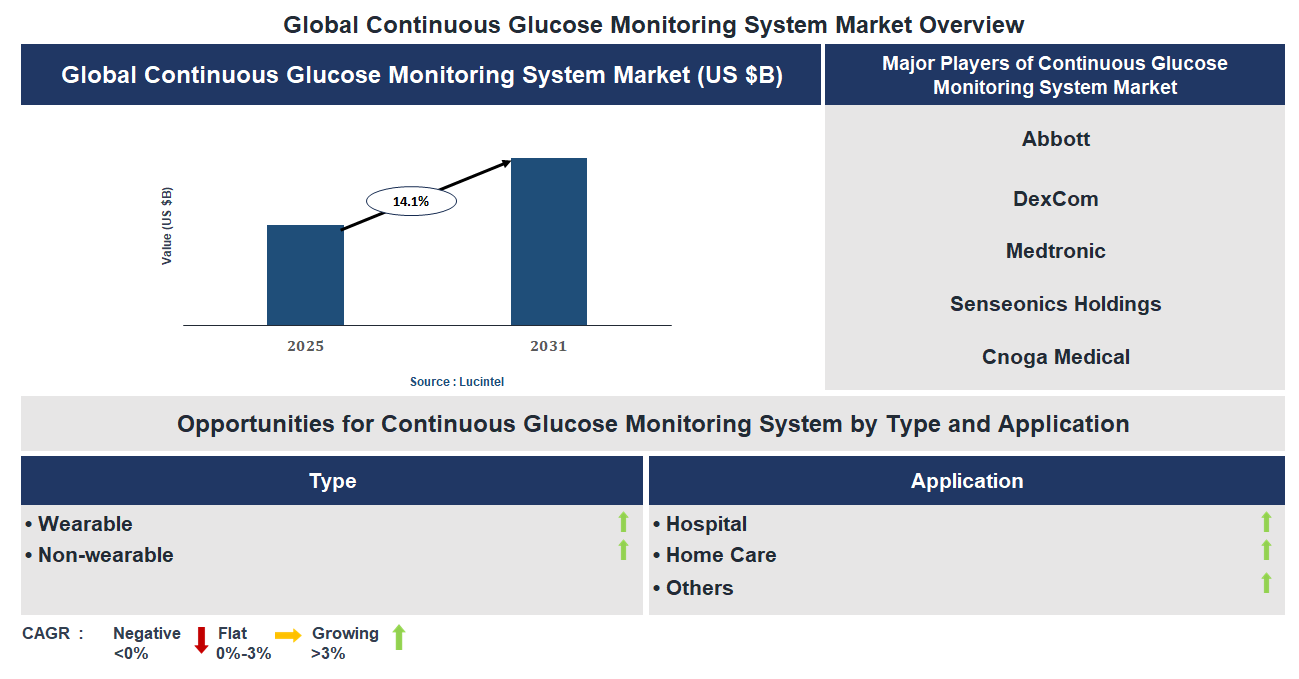
The future of the global continuous glucose monitoring system market looks promising with opportunities in the hospital and home care markets. The global continuous glucose monitoring system market is expected to grow with a CAGR of 14.1% from 2025 to 2031. The major drivers for this market are the increasing adoption of wearable health devices, the rising prevalence of diabetes cases, and the growing demand for personalized healthcare solutions.• Lucintel forecasts that, within the type category, wearable is expected to witness higher growth over the forecast period.
• Within the application category, home care is expected to witness higher growth.
• In terms of region, APAC is expected to witness the highest growth over the forecast period. Gain valuable insights for your business decisions with our comprehensive 150+ page report. Sample figures with some insights are shown below.
Emerging Trends in the Continuous Glucose Monitoring System Market
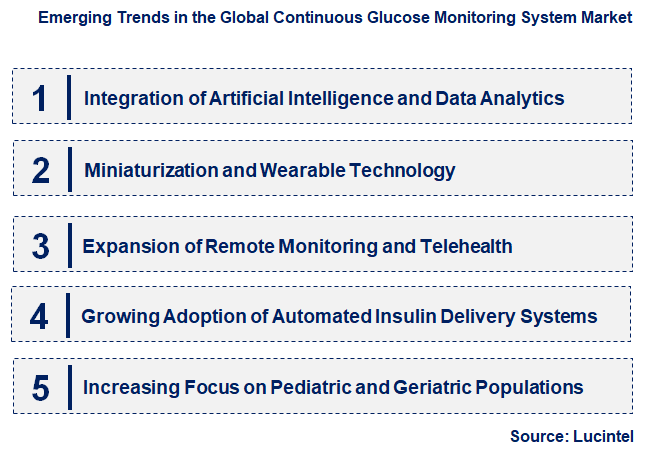
The continuous glucose monitoring system market is experiencing rapid growth driven by technological advancements, increasing prevalence of diabetes, and a shift towards personalized healthcare. As consumers and healthcare providers seek more efficient, real-time solutions for blood sugar management, the market is evolving with innovative products and expanding applications. These developments are not only improving patient outcomes but also transforming the landscape of diabetes care. The following key trends highlight the major shifts shaping this dynamic market, reflecting a move towards smarter, more integrated, and patient-centric solutions.• Integration of Artificial Intelligence and Data Analytics: AI and advanced data analytics are increasingly incorporated into CGM systems to provide predictive insights and personalized recommendations. These technologies enable real-time analysis of glucose patterns, helping users anticipate fluctuations and make proactive adjustments. This integration enhances the accuracy and usability of CGM devices, leading to better glycemic control and reducing complications. As AI-driven features become more sophisticated, they are expected to further personalize diabetes management, making CGM systems more intuitive and effective.
• Miniaturization and Wearable Technology: The trend towards smaller, more discreet devices is gaining momentum, driven by advancements in miniaturization and wearable tech. Compact CGM sensors and stylish, comfortable wearable devices improve user compliance and convenience. These innovations allow continuous monitoring without discomfort or social stigma, encouraging consistent use. The development of patch-like sensors and integration with smartwatches or smartphones enhances user experience, making glucose monitoring seamless and less intrusive, which is crucial for long-term adherence and improved health outcomes.
• Expansion of Remote Monitoring and Telehealth Integration: The COVID-19 pandemic accelerated the adoption of telehealth, and CGM systems are now increasingly integrated into remote patient monitoring platforms. This trend allows healthcare providers to track glucose levels in real-time, enabling timely interventions without in-person visits. Remote monitoring improves patient engagement, facilitates better disease management, and reduces healthcare costs. The integration of CGM data with telehealth services is transforming diabetes care by making it more accessible, especially for patients in remote or underserved areas.
• Growing Adoption of Automated Insulin Delivery Systems: The development of closed-loop systems, also known as artificial pancreas systems, is a significant trend. These systems automatically adjust insulin delivery based on continuous glucose readings, reducing the burden on patients and improving glycemic control. The integration of CGM with insulin pumps is making diabetes management more precise and less labor-intensive. As technology advances, these automated systems are becoming more reliable and affordable, promising better quality of life for users and reducing the risk of hypoglycemia and hyperglycemia.
• Increasing Focus on Pediatric and Geriatric Populations: Market growth is driven by expanding applications for children and elderly patients. Pediatric-focused CGM devices are designed to be safe, easy to use, and minimally invasive, addressing specific needs of young users. Similarly, geriatric populations benefit from simplified interfaces and enhanced safety features. This focus broadens the market scope and encourages innovation tailored to these vulnerable groups. As awareness and acceptance grow, the adoption rates in these populations are expected to rise, leading to improved health outcomes and quality of life. In summary, these trends are collectively reshaping the continuous glucose monitoring system market by making devices smarter, more user-friendly, and integrated into broader healthcare ecosystems. They are driving innovation, improving patient adherence, and enabling more personalized, efficient diabetes management, ultimately transforming how the condition is monitored and controlled.
Recent Development in the Continuous Glucose Monitoring System Market
The continuous glucose monitoring system market has experienced rapid growth driven by technological advancements, increasing diabetes prevalence, and a shift towards personalized healthcare. Innovations in sensor technology, data integration, and user-friendly devices are transforming patient management and clinical practices. The market is also witnessing strategic collaborations and regulatory approvals that enhance product offerings and expand access. As awareness about diabetes management improves globally, the markets trajectory remains positive, with new entrants and existing players competing to deliver more accurate, affordable, and convenient CGM solutions. These developments collectively are shaping a more efficient and patient-centric glucose monitoring landscape.• Technological Advancements: Enhanced sensor accuracy and miniaturization have improved device reliability and comfort, leading to increased adoption among users and healthcare providers.
• Integration with Digital Health Platforms: CGM systems now seamlessly connect with smartphones and health apps, enabling real-time data sharing, remote monitoring, and better disease management.
• Regulatory Approvals and Reimbursements: Increased approvals from authorities like the FDA and expanded insurance coverage have made CGM devices more accessible and affordable for a broader patient base.
• Strategic Collaborations and Partnerships: Companies are forming alliances with tech firms and healthcare providers to develop innovative solutions, expand distribution channels, and improve user experience.
• Market Expansion in Emerging Economies: Rising awareness, improving healthcare infrastructure, and decreasing device costs are driving adoption of CGM systems in developing countries, broadening the market scope. These developments are collectively enhancing the accuracy, accessibility, and integration of CGM systems, leading to improved diabetes management outcomes. The market is becoming more competitive and patient-centric, fostering innovation and expanding global reach. As a result, the CGM System Market is poised for sustained growth, driven by technological progress and increasing demand for effective diabetes care solutions.
Strategic Growth Opportunities in the Continuous Glucose Monitoring System Market
The continuous glucose monitoring system market is experiencing rapid growth driven by technological advancements, increasing prevalence of diabetes, and a shift towards personalized healthcare. As the demand for real-time glucose monitoring rises, key applications are emerging as significant growth drivers. These opportunities are transforming patient management, improving outcomes, and expanding market reach. Companies are focusing on innovation across various sectors to capitalize on these trends, making the market highly dynamic and competitive. Understanding these growth opportunities is essential for stakeholders aiming to leverage emerging trends and enhance their strategic positioning in this evolving landscape.• Diabetes Management: Expanding adoption of CGM systems for better glucose control : The increasing prevalence of diabetes worldwide is driving demand for continuous monitoring solutions, leading to improved patient outcomes and reduced complications.
• Sports and Fitness: Growing use of CGM devices for athletic performance and health monitoring : Athletes and fitness enthusiasts are adopting CGM technology for real-time insights into glucose levels, optimizing training and nutrition strategies.
• Pediatric Care: Enhanced monitoring solutions for children with diabetes : Development of child-friendly, non-invasive CGM devices is improving disease management in pediatric populations, ensuring better quality of life.
• Hospital and Clinical Settings: Integration of CGM systems for inpatient and outpatient care : Hospitals are adopting CGM technology for precise glucose management, reducing hypoglycemia risks and streamlining treatment protocols.
• Research and Development: Utilization of CGM data for clinical studies and innovation : Researchers leverage CGM data to develop new therapies, improve device accuracy, and advance personalized medicine approaches. In summary, these growth opportunities are significantly impacting the CGM market by broadening application scopes, enhancing patient care, and fostering innovation. They are driving market expansion, attracting investments, and encouraging technological advancements, ultimately shaping a more responsive and comprehensive diabetes management ecosystem.
Continuous Glucose Monitoring System Market Driver and Challenges
The continuous glucose monitoring system market is influenced by a variety of technological, economic, and regulatory factors. Advances in sensor technology, data analytics, and wireless connectivity are transforming how diabetes management is approached, making systems more accurate and user-friendly. Economic factors such as increasing healthcare costs and rising diabetes prevalence drive demand for cost-effective monitoring solutions. Regulatory frameworks ensure safety and efficacy, fostering innovation while maintaining standards. However, challenges such as high device costs, regulatory hurdles, and data privacy concerns pose significant barriers. Understanding these drivers and challenges is essential for stakeholders aiming to capitalize on market opportunities and address potential risks effectively. The factors responsible for driving the continuous glucose monitoring system market include:• Technological Advancements: The development of minimally invasive sensors, real-time data transmission, and integration with smartphones has significantly improved user experience. These innovations enable more accurate, continuous monitoring, and facilitate better disease management. Enhanced sensor lifespan and improved calibration techniques reduce the need for frequent replacements, making systems more practical and appealing. As technology evolves, the market benefits from increased adoption among both patients and healthcare providers, leading to better health outcomes and reduced long-term healthcare costs.
• Rising Diabetes Prevalence: The global increase in diabetes cases, driven by sedentary lifestyles, unhealthy diets, and obesity, directly boosts demand for continuous glucose monitoring solutions. As more individuals require regular blood sugar tracking, the market expands rapidly. Governments and healthcare organizations are emphasizing early diagnosis and ongoing management, further fueling market growth. This trend underscores the importance of accessible, reliable monitoring systems to improve patient quality of life and reduce complications associated with unmanaged diabetes.
• Economic Factors: The rising costs of traditional blood glucose testing methods and the economic burden of diabetes complications create a strong incentive for adopting continuous monitoring systems. These devices, despite their initial costs, offer long-term savings by reducing hospitalizations and preventing severe health issues. Insurance coverage and reimbursement policies are gradually improving, making these systems more affordable for a broader population. Additionally, the increasing affordability of sensors and devices due to technological economies of scale supports market expansion, especially in emerging economies.
• Regulatory Support and Approvals: Stringent regulatory frameworks ensure the safety, efficacy, and quality of continuous glucose monitoring systems. Approval from agencies like the FDA and EMA facilitates market entry and builds consumer trust. Regulatory support also encourages innovation by setting clear standards for device performance and data security. As regulatory pathways become more streamlined, companies can accelerate product development and launch, fostering a competitive environment that benefits consumers through improved options and technological advancements.
• Growing Awareness and Acceptance: Increased awareness about diabetes management and the benefits of continuous monitoring has led to higher adoption rates. Educational campaigns, healthcare provider endorsements, and patient testimonials contribute to greater acceptance of these systems. As users experience improved glycemic control and quality of life, demand continues to rise. This shift in perception is crucial for market growth, especially in regions where traditional testing methods were previously preferred, helping to normalize the use of advanced monitoring technologies. The challenges in the continuous glucose monitoring system market are:
• High Device Costs: Despite technological advancements, the high cost of continuous glucose monitoring devices remains a significant barrier, especially in low- and middle-income countries. The expense of sensors, transmitters, and associated devices limits accessibility for many patients, reducing market penetration. Reimbursement issues and lack of insurance coverage further exacerbate affordability concerns. This financial barrier hampers widespread adoption, particularly among economically disadvantaged populations, and may slow overall market growth despite increasing demand.
• Regulatory Hurdles: Navigating complex regulatory landscapes can delay product approvals and market entry. Variations in approval processes across regions create additional challenges for companies seeking global expansion. Stringent requirements for safety, efficacy, and data security demand extensive clinical trials and documentation, increasing time and costs. These hurdles can stifle innovation and limit the availability of new, improved systems, ultimately impacting market growth and the pace of technological advancement.
• Data Privacy and Security Concerns: Continuous glucose monitoring systems generate vast amounts of sensitive health data, raising concerns about privacy and cybersecurity. Breaches or misuse of data can undermine user trust and lead to legal and ethical issues. Ensuring robust data protection measures requires significant investment and compliance with evolving regulations like GDPR. These concerns may hinder user adoption and restrict integration with other digital health platforms, posing a challenge to the full potential of connected monitoring systems. In summary, the continuous glucose monitoring system market is driven by technological innovations, increasing diabetes prevalence, economic incentives, regulatory support, and growing awareness. However, high costs, regulatory complexities, and data security issues present notable challenges. These factors collectively shape the market landscape, influencing adoption rates and innovation trajectories. While opportunities for growth are substantial, addressing these challenges is crucial for sustainable expansion and improved patient outcomes. Stakeholders must focus on affordability, regulatory efficiency, and data security to unlock the full potential of this evolving market.
List of Continuous Glucose Monitoring System Companies
Companies in the market compete on the basis of product quality offered. Major players in this market focus on expanding their manufacturing facilities, R&D investments, infrastructural development, and leverage integration opportunities across the value chain. With these strategies continuous glucose monitoring system companies cater increasing demand, ensure competitive effectiveness, develop innovative products & technologies, reduce production costs, and expand their customer base. Some of the continuous glucose monitoring system companies profiled in this report include-• Abbott
• DexCom
• Medtronic
• Senseonics Holdings
• Cnoga Medical
• Meiqi Medical
• Medtrum Technologies
• MicroTech Medical
• POCTech
• SIBIONICS
Continuous Glucose Monitoring System Market by Segment
The study includes a forecast for the global continuous glucose monitoring system market by type, application, and region.Continuous Glucose Monitoring System Market by Type [Value from 2019 to 2031]:
• Wearable
• Non-wearable
Continuous Glucose Monitoring System Market by Application [Value from 2019 to 2031]:
• Hospital
• Home Care
• Others
Continuous Glucose Monitoring System Market by Region [Value from 2019 to 2031]:
• North America
• Europe
• Asia Pacific
• The Rest of the World
Country Wise Outlook for the Continuous Glucose Monitoring System Market
The continuous glucose monitoring system market has experienced significant growth globally, driven by technological advancements, increasing prevalence of diabetes, and rising awareness about disease management. Countries are adopting innovative solutions to improve patient outcomes and reduce healthcare costs. Regulatory approvals and collaborations between tech firms and healthcare providers are accelerating market expansion. The integration of artificial intelligence and data analytics is enhancing device accuracy and user experience. As the market evolves, regional differences in adoption rates and technological adoption are becoming more apparent, reflecting varying healthcare infrastructures and economic factors.• United States: The US market for CGM systems is expanding rapidly, with major players launching advanced devices featuring real-time data sharing and improved accuracy. Regulatory bodies like the FDA have approved several innovative products, boosting adoption. Increasing awareness and insurance coverage are driving higher usage among diabetics. Telehealth integration and remote monitoring capabilities are becoming standard, especially post-pandemic. The US also sees significant investments in R&D, focusing on miniaturization and AI-driven analytics to enhance device performance.
• China: China’s CGM market is witnessing rapid growth due to rising diabetes prevalence and government initiatives promoting digital health. Local companies are developing cost-effective devices tailored for the Chinese population, increasing accessibility. The government’s support for healthcare digitization and insurance coverage expansion are facilitating market penetration. Technological advancements include integration with mobile apps and cloud platforms for better data management. Collaborations between domestic firms and international tech companies are fostering innovation, making CGM systems more affordable and user-friendly.
• Germany: Germany’s market is characterized by high adoption rates driven by a well-established healthcare infrastructure and strong regulatory standards. The focus is on integrating CGM systems with other diabetes management tools and electronic health records for comprehensive care. Innovations include improved sensor longevity and reduced calibration needs. The country’s emphasis on personalized medicine and digital health solutions is encouraging the development of more sophisticated devices. Reimbursement policies and clinician acceptance are key factors supporting market growth, alongside increasing patient awareness about advanced diabetes management options.
• India: The Indian CGM market is emerging, with increasing awareness of diabetes management and affordability being key drivers. Local manufacturers are launching budget-friendly devices to cater to a large population with limited healthcare access. Government initiatives aimed at improving healthcare infrastructure and digital health adoption are supporting growth. Technological innovations focus on making devices more affordable, portable, and easy to use. Partnerships with healthcare providers and telemedicine platforms are expanding reach, especially in rural areas. The market is expected to grow significantly as awareness and affordability improve.
• Japan: Japan’s CGM market is mature, with high adoption rates among diabetics and healthcare providers. The focus is on enhancing device comfort, accuracy, and integration with other health monitoring systems. Regulatory approval processes are streamlined, facilitating rapid introduction of new technologies. Innovations include longer-lasting sensors and seamless data sharing with smartphones and healthcare providers. The aging population drives demand for reliable, non-invasive monitoring solutions. Reimbursement policies and strong healthcare infrastructure support continued growth, with a focus on personalized and integrated diabetes management solutions.

Features of the Global Continuous Glucose Monitoring System Market
Market Size Estimates: Continuous glucose monitoring system market size estimation in terms of value ($B). Trend and Forecast Analysis: Market trends (2019 to 2024) and forecast (2025 to 2031) by various segments and regions. Segmentation Analysis: Continuous glucose monitoring system market size by type, application, and region in terms of value ($B). Regional Analysis: Continuous glucose monitoring system market breakdown by North America, Europe, Asia Pacific, and Rest of the World. Growth Opportunities: Analysis of growth opportunities in different types, applications, and regions for the continuous glucose monitoring system market. Strategic Analysis: This includes M&A, new product development, and competitive landscape of the continuous glucose monitoring system market. Analysis of competitive intensity of the industry based on Porter’s Five Forces model.
FAQ
Q1. What is the growth forecast for continuous glucose monitoring system market? Answer: The global continuous glucose monitoring system market is expected to grow with a CAGR of 14.1% from 2025 to 2031. Q2. What are the major drivers influencing the growth of the continuous glucose monitoring system market? Answer: The major drivers for this market are the increasing adoption of wearable health devices, the rising prevalence of diabetes cases, and the growing demand for personalized healthcare solutions. Q3. What are the major segments for continuous glucose monitoring system market? Answer: The future of the continuous glucose monitoring system market looks promising with opportunities in the hospital and home care markets. Q4. Who are the key continuous glucose monitoring system market companies? Answer: Some of the key continuous glucose monitoring system companies are as follows:• Abbott
• DexCom
• Medtronic
• Senseonics Holdings
• Cnoga Medical
• Meiqi Medical
• Medtrum Technologies
• MicroTech Medical
• POCTech
• SIBIONICS Q5. Which continuous glucose monitoring system market segment will be the largest in future? Answer: Lucintel forecasts that, within the type category, wearable is expected to witness higher growth over the forecast period. Q6. In continuous glucose monitoring system market, which region is expected to be the largest in next 5 years? Answer: In terms of region, APAC is expected to witness the highest growth over the forecast period. Q7. Do we receive customization in this report? Answer: Yes, Lucintel provides 10% customization without any additional cost.
Table of Contents
List of Figures
List of Tables
Methodology
- In-depth interviews of the major players in this market
- Detailed secondary research from competitors’ financial statements and published data
- Extensive searches of published works, market, and database information pertaining to industry news, company press releases, and customer intentions
- A compilation of the experiences, judgments, and insights of Lucintel’s professionals, who have analyzed and tracked this market over the years.


Buy Now
Choose a license that fits your team. Instant PDF delivery.
Prices exclude taxes. Instant delivery. Custom licensing available on request.
Key Questions
- • What are some of the most promising, high-growth opportunities for the continuous glucose monitoring system market by type (wearable and non-wearable), application (hospital, home care, and others), and region (North America, Europe, Asia Pacific, and the Rest of the World)?
- • Which segments will grow at a faster pace and why?
- • Which region will grow at a faster pace and why?
- • What are the key factors affecting market dynamics? What are the key challenges and business risks in this market?
- • What are the business risks and competitive threats in this market?
- • What are the emerging trends in this market and the reasons behind them?
- • What are some of the changing demands of customers in the market?
- • What are the new developments in the market? Which companies are leading these developments?
- • Who are the major players in this market? What strategic initiatives are key players pursuing for business growth?
- • What are some of the competing products in this market and how big of a threat do they pose for loss of market share by material or product substitution?
- • What M&A activity has occurred in the last 5 years and what has its impact been on the industry? For any questions related to Continuous Glucose Monitoring System Market, Continuous Glucose Monitoring System Market Size, Continuous Glucose Monitoring System Market Growth, Continuous Glucose Monitoring System Market Analysis, Continuous Glucose Monitoring System Market Report, Continuous Glucose Monitoring System Market Share, Continuous Glucose Monitoring System Market Trends, Continuous Glucose Monitoring System Market Forecast, Continuous Glucose Monitoring System Companies, write Lucintel analyst at email: helpdesk@lucintel.com. We will be glad to get back to you soon.


