
Market Report · May 18, 2026

This market report covers trends, opportunities, and forecasts in the global contact cpu card chip market to 2031 by technology (memory cards, microprocessor cards, and multi-component cards), application (banking, telecommunications, government, transportation, healthcare, and others), and region (North America, Europe, Asia Pacific, and the Rest of the World)
We'll send your sample report shortly.
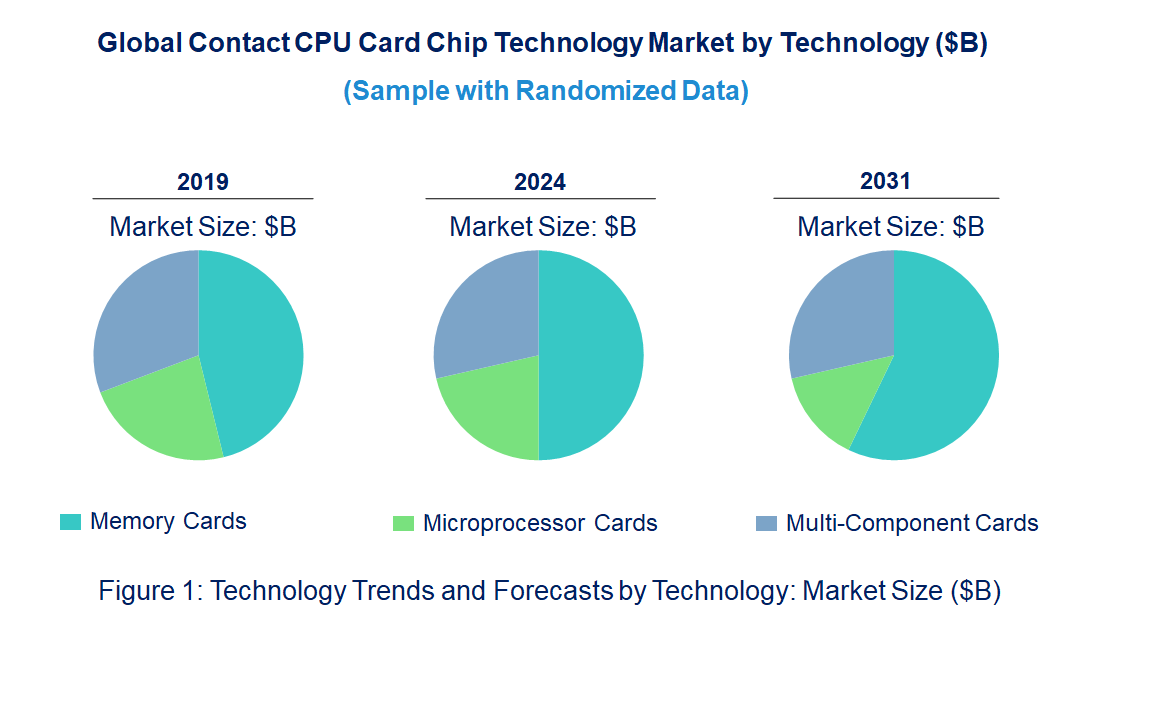
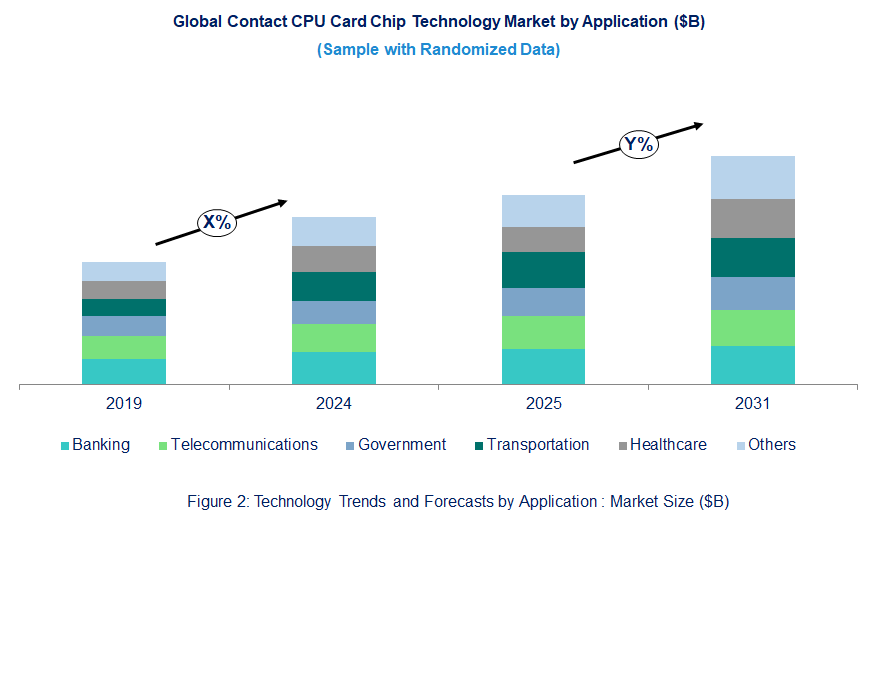
• From Memory Cards to Microprocessor Cards: The market has recently shifted from conventional memory cards to microprocessor-based cards. Microprocessor-based cards provide better data processing, security, and flexibility, which are integral elements for applications in the banking, healthcare, and telecommunications industries. This trend enables more complex operations and advanced data encryption, ensuring the highest level of security.
• Multi-Component Card Technologies: Multi-component cards, in which several technologies are integrated into a single unit, are gaining popularity. The performance is better, and the security features are also improved, with more functionality. These cards are ideal for applications in banking and telecommunications, where high security and efficiency are required, integrating memory, processors, and security features.
• Advanced Encryption and Security Features Integration: With the rise in cyber threats, there is an enhanced focus on incorporating advanced encryption and security features into CPU card chips. Biometrics, facial recognition, and multi-factor authentication are robust security protocols that ensure chip cards meet the highest standards of data protection in industries like banking and healthcare.
• Miniaturization and High Performance: As industries demand smaller and more efficient solutions, CPU card chips have become more compact without losing performance. Miniaturization allows for greater portability and integration into various applications, from government services to transportation systems, while increasing overall performance in terms of speed and data handling.
• Adoption of Contactless Technology: Incorporating contactless capabilities into CPU card chips is an increasing trend. Users, especially in areas demanding seamless, high-speed, and secure transfers, such as the transportation or banking sectors, require higher user-friendliness and convenience. These solutions ensure that appropriate security measures are in place for risk-free data transfer. These emerging trends, ranging from the shift to microprocessor cards, multi-component technology, enhanced security features, miniaturization, and the rise of contactless options, are revolutionizing the contact CPU card chip market. These innovations are helping meet the growing demand for secure, efficient, and flexible solutions across various industries, particularly in banking, telecommunications, healthcare, and government services.
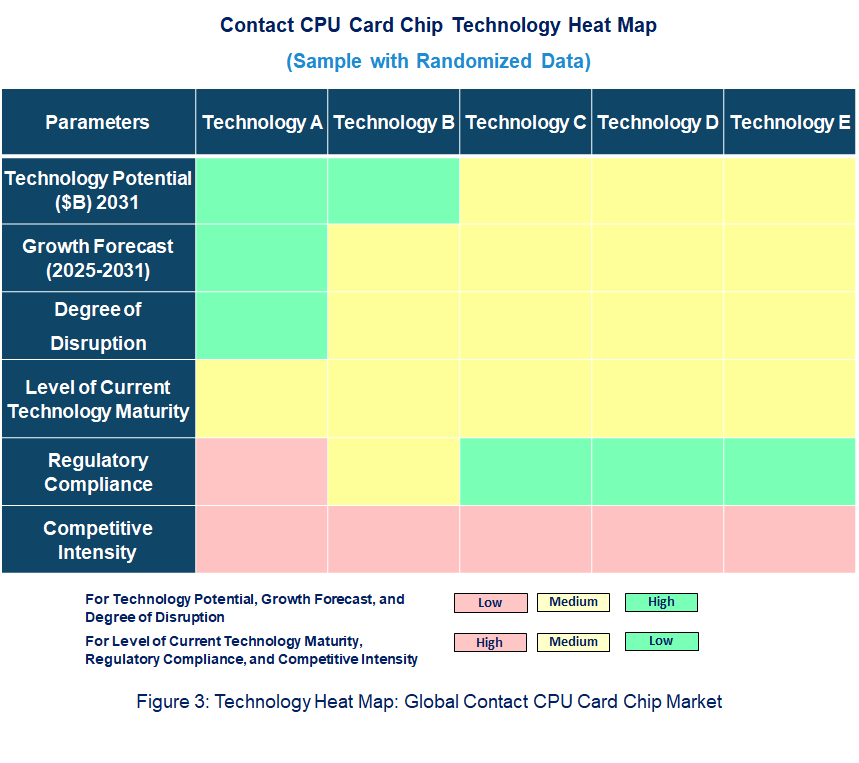
• Technology Potential: The contact CPU card chip market has significant potential for growth, driven by advancements in microprocessor-based cards, multi-component systems, and security features like encryption and biometrics. These technologies enhance data processing, security, and functionality, making them crucial for banking, healthcare, and government applications.
• Degree of Disruption: The degree of disruption is high, with innovations such as contactless technology and miniaturization leading to substantial changes in how card systems are used across sectors. These trends enhance user convenience, speed, and security, disrupting traditional card-based solutions.
• Level of Current Technology Maturity: The technology in this market is moderately mature. While microprocessor cards and encryption technologies are well-established, new features such as biometrics and contactless systems are still evolving and improving in terms of reliability and scalability.
• Regulatory Compliance: Compliance with industry standards and regulations is critical. Strict guidelines on data security and privacy, such as GDPR and PCI-DSS, govern the development of contact CPU card chips to ensure that they meet security requirements and protect user data.
• Gemalto N.V.: Gemalto has introduced advanced contact CPU cards that incorporate cutting-edge security features such as biometric authentication and multi-factor authentication. These innovations have improved data protection and enhanced user experience, making them ideal for applications in banking, healthcare, and government sectors where security is paramount.
• Infineon Technologies AG: Infineon has developed next-generation contact CPU chips that focus on higher performance and greater energy efficiency. Their advancements in encryption technologies and integration with biometric features have improved the overall security and reliability of the cards, especially in the fields of finance and government services.
• NXP Semiconductors N.V.: NXP has been a leading player in introducing contactless capabilities in CPU card chips, making them more functional and faster for secure transactions. Innovations in contactless payment and advanced security features have revolutionized banking and transportation applications, providing seamless, high-speed transactions along with robust data protection.
• Giesecke+Devrient GmbH: Giesecke+Devrient has been a pioneer in multi-component technologies integrated into contact CPU cards. Their solutions include memory, processing power, and security features in one chip for more efficient and secure card-based systems. This development is especially critical in sectors such as telecommunications and banking.
• Oberthur Technologies: The contact CPU cards at Oberthur Technologies have been developed with miniaturization and portability without compromising performance. They have produced smaller but powerful chips, thus making their solutions more versatile and flexible in applications such as mobile payment systems and secure access controls.
• STMicroelectronics N.V.: STMicroelectronics has created high-security contact CPU chips, offering advanced data handling capabilities along with robust encryption technologies. These chips are designed for highly secure applications such as government services and telecom, providing higher levels of data protection to support advanced payment systems, making them a key player in the evolution of secure card technologies. These advancements from major players are revolutionizing performance, security, and flexibility in the contact CPU card chip market, making them more versatile for modern technological requirements. They represent essential steps toward solving changing needs within many industries for secure, efficient, and flexible solutions.
• Rising Demand for Secure Transactions: The growing demand for secure digital transactions is driving the contact CPU card chip market. With strong encryption and protection requirements from various industries like banking and healthcare, the market is expanding to meet these security needs, especially through the implementation of biometric and multi-factor authentication technologies.
• Technological Advancements: Advancements in microprocessor and multi-component card technologies are significantly enhancing performance and functionality. Contactless and biometric technologies are being introduced to ensure more secure and faster transactions, providing substantial improvements in sectors like telecommunications, transportation, and finance.
• Integration of Advanced Encryption: The rising threat of cyberattacks has increased the demand for contact CPU card chips equipped with advanced encryption and multi-level security features. This is critical for ensuring the safety of personal and financial data across applications, such as in government and healthcare institutions. Challenges in the contact CPU card chip market are:
• Miniaturization of Card Technologies: Miniaturization is making card chips more compact and portable, driving innovation in mobile payment systems and access controls. These smaller chips retain high performance, offering greater flexibility in applications while reducing costs and improving usability.
• Regulatory Compliance Requirements: Strict data protection and compliance regulations in banking, healthcare, and other industries are driving the development of secure, standards-compliant card solutions. Conformity to these regulations ensures that contact CPU card chips can play a critical role in serving sensitive industries while complying with international security standards. In conclusion, these growth opportunities, ranging from the need for enhanced security, technological advancements, and miniaturization to regulatory compliance, are reshaping the contact CPU card chip market. The market is adapting to meet the increasing demand for secure, high-performance solutions, driving its expansion across various industries globally.
• Gemalto N.V.
• Infineon Technologies AG
• NXP Semiconductors N.V.
• Giesecke+Devrient GmbH
• Oberthur Technologies
• STMicroelectronics N.V.
• Technology Readiness by Technology Type in the Contact CPU Card Chip Market: In terms of technology readiness, memory cards are well-established, with a high level of market penetration in sectors like transportation and banking, but they are evolving to meet modern security needs. Microprocessor cards are highly mature, offering superior security features and encryption, and are widely adopted in banking and government sectors. Multi-component cards, though still developing, are gaining momentum due to their advanced capabilities in integrating multiple functionalities, making them ideal for applications requiring high security and performance, such as in healthcare and telecommunications. The competitive level for each technology varies, with memory cards and microprocessor cards leading in adoption, while multi-component cards are catching up, offering advanced capabilities for the future. Regulatory compliance remains critical across all technologies, especially for sectors dealing with sensitive data. Each technology must ensure compliance with stringent data protection regulations to be adopted widely across key industries.
• Competitive Intensity and Regulatory Compliance of Different Technologies: The competitive intensity in the contact CPU card chip market is high due to rapid technological advancements in memory cards, microprocessor cards, and multi-component cards. Manufacturers are competing to deliver cutting-edge solutions that offer improved security, speed, and data handling capabilities. Regulatory compliance is becoming increasingly important, with industries such as banking, healthcare, and government imposing strict standards for data protection and security. Memory cards, microprocessor cards, and multi-component cards must adhere to these standards to be considered viable in these sectors. Compliance with regulations such as GDPR and PCI DSS is essential for ensuring the marketability of these technologies. As a result, the competitive landscape is defined by both technological innovation and the ability to meet stringent regulatory requirements.
• Disruption Potential of Different Technologies in the Contact CPU Card Chip Market: The contact CPU card chip market is witnessing significant disruption through advancements in memory cards, microprocessor cards, and multi-component cards. Memory cards have traditionally provided storage but are now evolving with integrated security features, making them more versatile. Microprocessor cards enable higher data processing capabilities and enhanced security, driving their adoption in financial services and telecommunications. Multi-component cards, which combine memory, processing power, and security in a single chip, are enhancing efficiency and reducing costs. These innovations are pushing the boundaries of performance, making card chips smarter and more adaptable to the rapidly changing technological landscape. As the demand for secure, high-performance solutions grows, these technologies will continue to disrupt the market, particularly in sectors such as banking, healthcare, and telecommunications.
• Memory Cards
• Microprocessor Cards
• Multi-Component Cards
• Banking
• Telecommunications
• Government
• Transportation
• Healthcare
• Others
• North America
• Europe
• Asia Pacific
• The Rest of the World
• Latest Developments and Innovations in the Contact CPU Card Chip Technologies
• Companies / Ecosystems
• Strategic Opportunities by Technology Type


Choose a license that fits your team. Instant PDF delivery.
Prices exclude taxes. Instant delivery. Custom licensing available on request.
Market Report · May 18, 2026
Market Report · May 18, 2026
Market Report · May 18, 2026
Trusted partner for strategic intelligence and business growth


Receive a complimentary market analysis tailored to your industry. Our analysts will identify key growth opportunities and competitive dynamics specific to your business.

Market size, growth rate, and key trend analysis for your specific sector.

Top competitor positioning and market share analysis.

Strategic recommendations backed by data-driven insights.
Get curated market intelligence and competitive moves straight to your inbox.
By subscribing, you agree to receive our monthly insights. Unsubscribe anytime.
Receive a complimentary market analysis tailored to your industry. Our analysts will identify key growth opportunities and competitive dynamics specific to your business.
Market size, growth rate, and key trend analysis for your specific sector.
Top competitor positioning and market share analysis.
Strategic recommendations backed by data-driven insights.
Get curated market intelligence, emerging trends, and competitive moves straight to your inbox each month.
By subscribing, you agree to receive our monthly insights. Unsubscribe anytime.
We'll send your sample report shortly.