
Report Feature
Constant Pressure Bilevel Ventilator Market Trends and Forecast
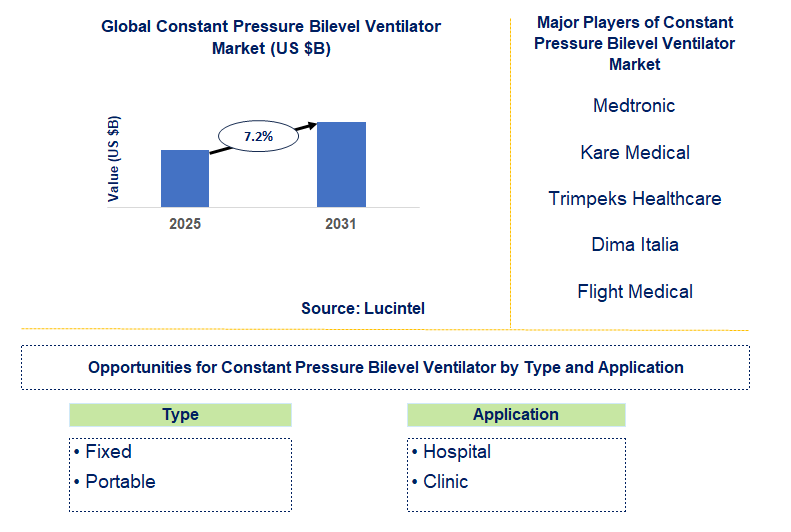
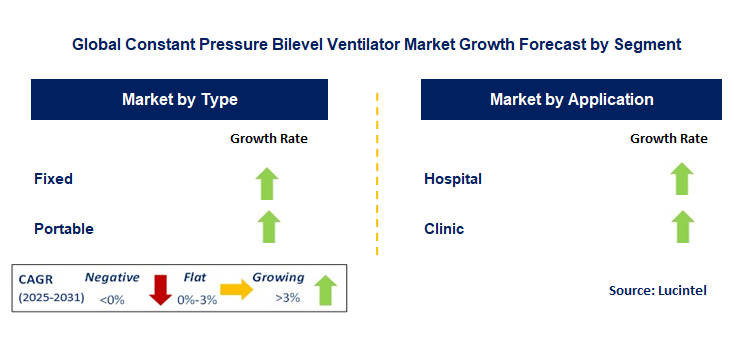
The future of the global constant pressure bilevel ventilator market looks promising with opportunities in the hospital and clinic markets. The global constant pressure bilevel ventilator market is expected to grow with a CAGR of 7.2% from 2025 to 2031. The major drivers for this market are the increasing prevalence of sleep apnea disorders, the rising adoption of advanced respiratory care, and the growing demand for non-invasive ventilation solutions.• Lucintel forecasts that, within the type category, portable is expected to witness higher growth over the forecast period.
• Within the application category, hospital is expected to witness higher growth.
• In terms of region, APAC is expected to witness the highest growth over the forecast period. Gain valuable insights for your business decisions with our comprehensive 150+ page report. Sample figures with some insights are shown below.
Emerging Trends in the Constant Pressure Bilevel Ventilator Market
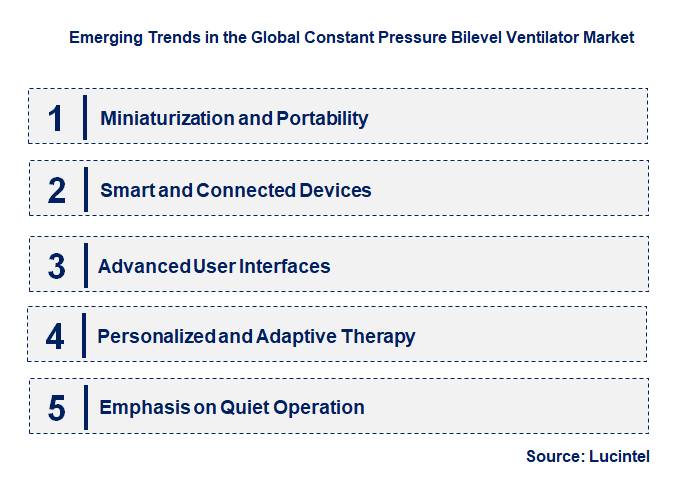
The constant pressure bilevel ventilator market is undergoing a transformative shift, with emerging trends that prioritize technology, patient comfort, and accessibility. These trends are moving beyond basic life support to offer personalized, data-driven, and highly integrated solutions. This evolution is reshaping how respiratory care is delivered, making it more efficient and tailored to individual patient needs.• Miniaturization and Portability: This trend involves developing smaller, lighter, and more compact bilevel ventilators. This makes them easier for patients to carry and use in various settings, from home to travel. The impact is a significant increase in patient mobility and quality of life, extending therapy beyond hospitals and into everyday life.
• Smart and Connected Devices: This trend integrates ventilators with IoT and cloud-based platforms. This allows for real-time remote monitoring by healthcare providers, data logging, and automatic therapy adjustments. The impact is a reduction in hospital visits, improved patient compliance, and enhanced safety through timely alerts for potential issues.
• Advanced User Interfaces: Manufacturers are focusing on creating intuitive and user-friendly interfaces with touchscreens and simple menus. This makes devices easier for patients and caregivers to operate without extensive training. The impact is improved user experience, reducing the learning curve and potential for errors in home-care settings.
• Personalized and Adaptive Therapy: This trend involves the use of AI and advanced algorithms to automatically adjust pressure settings in response to a patient's breathing patterns. This ensures optimal therapy effectiveness and comfort. The impact is more effective treatment, as the device adapts to the user's specific needs, leading to better clinical outcomes and greater patient satisfaction.
• Emphasis on Quiet Operation: This trend focuses on reducing the noise level of the ventilators. Quiet operation is crucial for patient comfort, especially during sleep. The impact is improved patient compliance and a more restful experience, as the noise does not disturb the user or their family, making the therapy more tolerable for long-term use. These trends are reshaping the market by transforming ventilators from bulky medical equipment into intelligent, portable, and patient-centric devices. The focus has shifted from mere functionality to enhancing the overall quality of life for users, while also enabling more efficient and cost-effective healthcare delivery.
Recent Development in the Constant Pressure Bilevel Ventilator Market
The constant pressure bilevel ventilator market is experiencing significant developments, driven by a confluence of technological advancements, evolving healthcare needs, and a greater emphasis on patient-centric care. These developments are not only enhancing the performance and safety of ventilators but are also expanding their applications and accessibility to a wider population.• AI-Based Auto-Titrating Technology: This development involves the use of artificial intelligence to automatically adjust pressure settings in real time based on the patient's breathing. This eliminates the need for manual adjustments and improves therapy effectiveness. The impact is a more personalized and efficient treatment, leading to better patient outcomes and reduced clinical workload.
• Remote Patient Monitoring Capabilities: The integration of connectivity features allows healthcare providers to remotely monitor patient data and device performance. This enables timely intervention and adjustment of settings without the need for an in-person visit. The impact is improved continuity of care, reduced healthcare costs, and enhanced patient safety, particularly in home-care settings.
• Improved Portability and Battery Life: Recent developments have focused on creating smaller, lighter devices with extended battery life. This allows for greater patient mobility and the use of ventilators outside of a hospital or home setting. The impact is enhanced patient independence and a higher quality of life, as they are no longer tethered to a fixed location.
• Enhanced Humidification and Comfort Features: Manufacturers are now incorporating advanced humidification and pressure relief technologies to improve patient comfort and reduce side effects like dry mouth or skin irritation. The impact is higher patient compliance and a more pleasant user experience, which is critical for long-term therapy adherence.
• Integration with Electronic Health Records: This development involves the ability of ventilators to seamlessly share data with a patient's electronic health record. This provides a comprehensive view of the patient's respiratory therapy. The impact is better coordinated care, streamlined workflows for healthcare professionals, and more informed decision-making. These developments are collectively impacting the constant pressure bilevel ventilator market by making products more intelligent, user-friendly, and integrated into the broader healthcare ecosystem. This shift is driving demand and creating new opportunities by improving patient care, reducing costs, and fostering a more connected approach to respiratory health management.
Strategic Growth Opportunities in the Constant Pressure Bilevel Ventilator Market
Strategic growth opportunities in the constant pressure bilevel ventilator market are emerging across various applications, driven by a global focus on improving respiratory care and expanding access to life-saving devices. These opportunities lie in targeting specific user segments and adapting technology to meet the unique needs of different care environments.• Home-Care Applications: The global shift towards home healthcare presents a significant growth opportunity. As chronic respiratory conditions like COPD and sleep apnea rise, patients and healthcare providers prefer at-home treatment to reduce costs and improve comfort. This creates a burgeoning market for portable, user-friendly, and cost-effective bilevel ventilators.
• Hospitals and Critical Care: This segment offers opportunities for advanced, high-end ventilators with sophisticated features for use in ICUs. These devices require advanced modes and monitoring capabilities for critically ill patients. The impact is a focus on R&D for more powerful, versatile, and clinically advanced ventilators to serve the most acute needs.
• Ambulatory and Emergency Settings: The need for portable and robust ventilators for use in ambulances, airlifts, and remote medical facilities is a growing opportunity. These devices must be durable, lightweight, and have long-lasting batteries. The impact is a specialized market for transport ventilators that can withstand demanding conditions while providing reliable respiratory support on the go.
• Pediatric and Neonatal Care: This is a niche but high-growth application requiring small, precise, and gentle ventilators. Products must be specifically designed to handle the delicate respiratory systems of infants and children. The impact is a focus on developing specialized devices that offer accurate pressure delivery and monitoring, ensuring the safety and well-being of young patients.
• Post-Acute and Long-Term Care: This segment is for patients who require long-term ventilation outside of a hospital. These facilities need reliable, easy-to-use, and durable ventilators that can be managed by non-specialized staff. The impact is a market for devices that balance clinical performance with simplicity and reliability for extended use. These opportunities are impacting the market by encouraging diversification and specialization. Companies are moving beyond a one-size-fits-all approach to develop tailored products for specific applications, which is leading to a more competitive and innovative market that is better equipped to meet the diverse needs of patients and healthcare providers.
Constant Pressure Bilevel Ventilator Market Driver and Challenges
The constant pressure bilevel ventilator market is shaped by a variety of drivers and challenges, which include technological, economic, and regulatory factors. Understanding these forces is crucial for market participants to navigate the landscape, seize growth opportunities, and mitigate risks. The market's trajectory is influenced by factors that both accelerate growth and create obstacles. The factors responsible for driving the constant pressure bilevel ventilator market include: 1. Rising Prevalence of Respiratory Diseases: The increasing global incidence of chronic respiratory conditions such as COPD and sleep apnea is a major driver. These diseases necessitate long-term respiratory support, directly boosting the demand for bilevel ventilators. This demographic and health-related trend provides a consistent and expanding customer base for the market. 2. Aging Population: A growing elderly population worldwide is a key driver. As people age, their susceptibility to respiratory illnesses increases, leading to a higher demand for assistive breathing devices. The aging demographic creates a significant and stable market for bilevel ventilators, especially for long-term home use. 3. Technological Advancements: Continuous innovation in ventilator technology, including the integration of AI, IoT, and advanced monitoring systems, is driving market growth. These advancements lead to more effective, user-friendly, and personalized devices. The introduction of smart features enhances patient safety and compliance, making the products more attractive to consumers and healthcare providers. 4. Shift towards Home-Care Settings: There is a global trend of patients opting for home-based care over institutional settings to manage chronic conditions. This shift is a powerful driver for the market, as it increases the demand for portable and easy-to-use bilevel ventilators. This trend reduces healthcare costs and improves patient quality of life. 5. Favorable Reimbursement Policies: In many developed countries, government and private insurance policies offer favorable reimbursement for non-invasive ventilators. These policies reduce the financial burden on patients, making the devices more accessible. This financial support is a critical driver, particularly for long-term therapy that would otherwise be cost-prohibitive for many. Challenges in the constant pressure bilevel ventilator market are: 1. High Cost and Maintenance: The high initial cost of purchasing bilevel ventilators, along with ongoing maintenance and replacement part expenses, is a significant challenge. This can be a barrier to adoption, especially in developing countries. It limits accessibility and can push consumers towards less effective or older models. 2. Lack of Patient and Caregiver Awareness: In many regions, there is a lack of awareness among patients and their caregivers about the benefits and proper use of bilevel ventilators. This information gap can lead to underutilization of the devices and lower market penetration. Educating the public remains a key challenge for manufacturers. 3. Stringent Regulatory Landscape: The market is subject to a complex web of strict regulatory and safety standards. These regulations vary by country and can be time-consuming and expensive to navigate. The need for extensive clinical trials and approvals creates a significant barrier to entry for new companies and can slow down product innovation. The overall impact of these drivers and challenges is a market that is simultaneously dynamic and complex. While strong demand and technological innovation are propelling the market forward, high costs and regulatory hurdles act as significant brakes. For the market to reach its full potential, a balance must be struck between innovation and affordability, while also addressing regulatory and awareness issues.List of Constant Pressure Bilevel Ventilator Companies
Companies in the market compete on the basis of product quality offered. Major players in this market focus on expanding their manufacturing facilities, R&D investments, infrastructural development, and leverage integration opportunities across the value chain. With these strategies constant pressure bilevel ventilator companies cater increasing demand, ensure competitive effectiveness, develop innovative products & technologies, reduce production costs, and expand their customer base. Some of the constant pressure bilevel ventilator companies profiled in this report include-• Medtronic
• Kare Medical
• Trimpeks Healthcare
• Dima Italia
• Flight Medical
• Chirana
• Leistung
• SEFAM
• BMC Medical
• Meditech Equipment
Constant Pressure Bilevel Ventilator Market by Segment
The study includes a forecast for the global constant pressure bilevel ventilator market by type, application, and region.Constant Pressure Bilevel Ventilator Market by Type [Value from 2019 to 2031]:
• Fixed
• Portable
Constant Pressure Bilevel Ventilator Market by Application [Value from 2019 to 2031]:
• Hospital
• Clinic
Constant Pressure Bilevel Ventilator Market by Region [Value from 2019 to 2031]:
• North America
• Europe
• Asia Pacific
• The Rest of the World
Country Wise Outlook for the Constant Pressure Bilevel Ventilator Market
Recent developments in the constant pressure bilevel ventilator market are driven by an aging global population, rising chronic respiratory diseases, and the shift toward home healthcare. Innovations in technology, such as smart features, and improved portability are reshaping the market. These advancements are making ventilators more user-friendly and accessible, extending their use beyond hospitals into home-care settings.• United States: The U.S. market is a leader in technological advancements, with a strong focus on auto-titrating and cloud-connected devices. The market is driven by favorable reimbursement policies from Medicare and a high prevalence of sleep apnea. Developments include AI-based devices that personalize therapy and reduce the need for manual titration, enhancing patient compliance and remote monitoring capabilities.
• China: China's market is growing rapidly due to its large and aging population and increased healthcare spending. Recent developments include a push for domestic manufacturing to reduce reliance on imports. There is also rising demand for cost-effective bilevel ventilators for both hospitals and home-care settings, with manufacturers focusing on balancing affordability with essential functionality.
• Germany: Germany's market is characterized by a strong emphasis on quality, durability, and advanced functionality. Key developments include the integration of sophisticated data analytics and telehealth platforms to enable remote monitoring and personalized care. The market is also seeing an increased focus on energy-efficient and quiet devices to improve patient comfort in home settings.
• India: India's market is expanding significantly, driven by a large patient pool and government initiatives to improve healthcare infrastructure. A key development is the rising demand for affordable ventilators, with domestic manufacturers leveraging the "Make in India" campaign to produce cost-effective devices. There is also a growing shift towards home care, increasing the demand for portable and user-friendly models.
• Japan: The Japanese market is distinguished by its high adoption of sophisticated technology and a rapidly aging population. Recent developments include the use of miniaturization to create highly portable and compact devices, suitable for Japan's densely populated urban areas and small living spaces. The market also prioritizes devices with advanced safety features and user-friendly interfaces.

Features of the Global Constant Pressure Bilevel Ventilator Market
Market Size Estimates: Constant pressure bilevel ventilator market size estimation in terms of value ($B). Trend and Forecast Analysis: Market trends (2019 to 2024) and forecast (2025 to 2031) by various segments and regions. Segmentation Analysis: Constant pressure bilevel ventilator market size by type, application, and region in terms of value ($B). Regional Analysis: Constant pressure bilevel ventilator market breakdown by North America, Europe, Asia Pacific, and Rest of the World. Growth Opportunities: Analysis of growth opportunities in different types, applications, and regions for the constant pressure bilevel ventilator market. Strategic Analysis: This includes M&A, new product development, and competitive landscape of the constant pressure bilevel ventilator market. Analysis of competitive intensity of the industry based on Porter’s Five Forces model.
FAQ
Q1. What is the growth forecast for constant pressure bilevel ventilator market? Answer: The global constant pressure bilevel ventilator market is expected to grow with a CAGR of 7.2% from 2025 to 2031. Q2. What are the major drivers influencing the growth of the constant pressure bilevel ventilator market? Answer: The major drivers for this market are the increasing prevalence of sleep apnea disorders, the rising adoption of advanced respiratory care, and the growing demand for non-invasive ventilation solutions. Q3. What are the major segments for constant pressure bilevel ventilator market? Answer: The future of the constant pressure bilevel ventilator market looks promising with opportunities in the hospital and clinic markets. Q4. Who are the key constant pressure bilevel ventilator market companies? Answer: Some of the key constant pressure bilevel ventilator companies are as follows:• Medtronic
• Kare Medical
• Trimpeks Healthcare
• Dima Italia
• Flight Medical
• Chirana
• Leistung
• SEFAM
• BMC Medical
• Meditech Equipment Q5. Which constant pressure bilevel ventilator market segment will be the largest in future? Answer: Lucintel forecasts that, within the type category, portable is expected to witness higher growth over the forecast period. Q6. In constant pressure bilevel ventilator market, which region is expected to be the largest in next 5 years? Answer: In terms of region, APAC is expected to witness the highest growth over the forecast period. Q7. Do we receive customization in this report? Answer: Yes, Lucintel provides 10% customization without any additional cost.
Table of Contents
Methodology
- In-depth interviews of the major players in this market
- Detailed secondary research from competitors’ financial statements and published data
- Extensive searches of published works, market, and database information pertaining to industry news, company press releases, and customer intentions
- A compilation of the experiences, judgments, and insights of Lucintel’s professionals, who have analyzed and tracked this market over the years.


Buy Now
Choose a license that fits your team. Instant PDF delivery.
Prices exclude taxes. Instant delivery. Custom licensing available on request.
Key Questions
- • What are some of the most promising, high-growth opportunities for the constant pressure bilevel ventilator market by type (fixed and portable), application (hospital and clinic), and region (North America, Europe, Asia Pacific, and the Rest of the World)?
- • Which segments will grow at a faster pace and why?
- • Which region will grow at a faster pace and why?
- • What are the key factors affecting market dynamics? What are the key challenges and business risks in this market?
- • What are the business risks and competitive threats in this market?
- • What are the emerging trends in this market and the reasons behind them?
- • What are some of the changing demands of customers in the market?
- • What are the new developments in the market? Which companies are leading these developments?
- • Who are the major players in this market? What strategic initiatives are key players pursuing for business growth?
- • What are some of the competing products in this market and how big of a threat do they pose for loss of market share by material or product substitution?
- • What M&A activity has occurred in the last 5 years and what has its impact been on the industry? For any questions related to Constant Pressure Bilevel Ventilator Market, Constant Pressure Bilevel Ventilator Market Size, Constant Pressure Bilevel Ventilator Market Growth, Constant Pressure Bilevel Ventilator Market Analysis, Constant Pressure Bilevel Ventilator Market Report, Constant Pressure Bilevel Ventilator Market Share, Constant Pressure Bilevel Ventilator Market Trends, Constant Pressure Bilevel Ventilator Market Forecast, Constant Pressure Bilevel Ventilator Companies, write Lucintel analyst at email: helpdesk@lucintel.com. We will be glad to get back to you soon.


