
Market Report · May 18, 2026

This market report covers trends, opportunities, and forecasts in the global computer to plate equipment market to 2031 by technology (violet ctp, thermal ctp, and uv ctp), end use industry (printing houses & presses, publishing, packaging, and newspaper publishers), and region (North America, Europe, Asia Pacific, and the Rest of the World)
We'll send your sample report shortly.
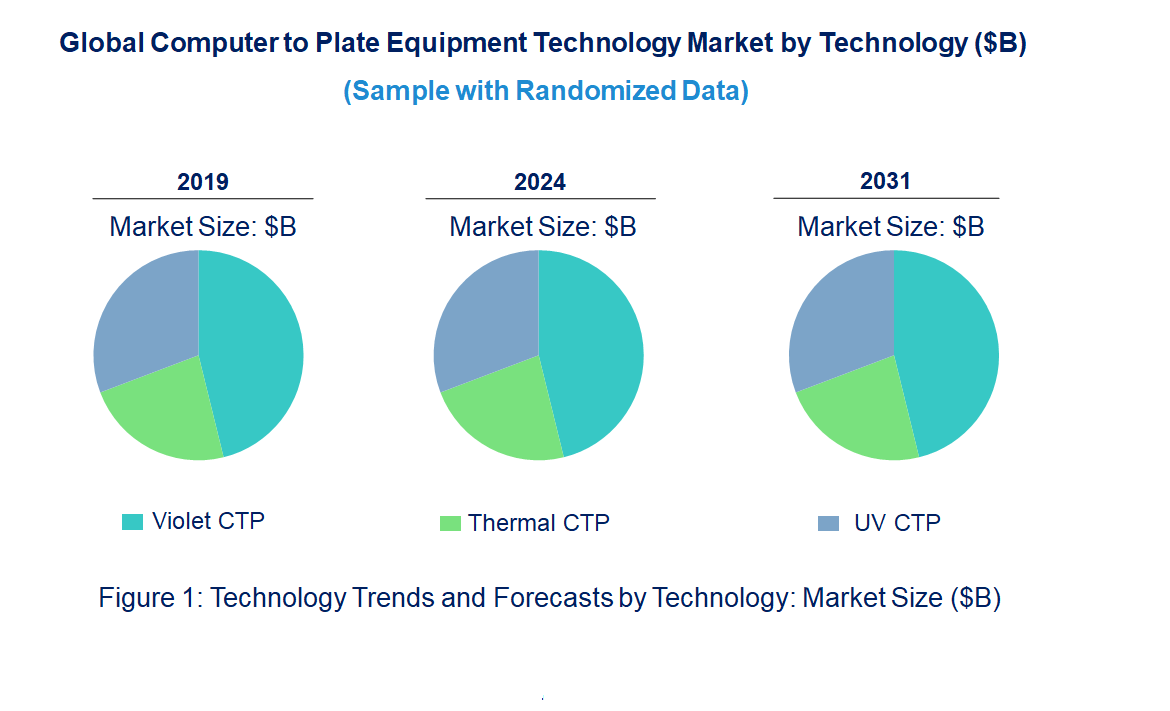
![Computer to Plate Equipment Market Trend and Forecast by End Use Industry [Value from 2019 to 2031]:](https://lucintel.com/images/Computer-to-Plate-Equipment-Technology-Market-Segment.png "Computer to Plate Equipment Market Trend and Forecast by End Use Industry [Value from 2019 to 2031]:")
• AI-Based Imaging Techniques: Increasingly, AI algorithms are used to optimize image processing in CTP equipment. The use of machine learning and neural networks allows CTP systems to detect and correct defects in images before plate exposure, ensuring higher print quality and less material waste. This is improving the speed and consistency of plate production, with a reduction in human error in the alignment of images.
• Predictive Maintenance and Performance Monitoring: AI technologies enable predictive maintenance by analyzing real-time data from CTP equipment. Machine learning models can predict potential equipment failures or maintenance needs, allowing for proactive service and reducing unplanned downtime. This trend not only improves equipment longevity but also helps optimize workflow efficiency, leading to smoother production schedules and cost savings.
• Automated Workflow Optimization: AI is streamlining CTP workflows by automating various stages of the plate-making process. From prepress file preparation to plate output, AI algorithms can intelligently manage resources, prioritize tasks, and adjust parameters in real-time. This automation helps printers achieve faster turnarounds and more accurate job completion while reducing human intervention and errors.
• Integration with Smart Manufacturing Ecosystems: The trend toward Industry 4.0 is impacting CTP equipment as it becomes more integrated into broader smart manufacturing ecosystems. AI-powered CTP systems can now interact seamlessly with other intelligent systems such as digital presses, inventory management, and production scheduling tools. This interconnectivity enables better resource management and data-driven decision-making throughout the entire printing production chain.
• AI-Powered Quality Control and Inspection: AI technologies play an integral part in developing quality checks for CTP equipment, but AI-based visual inspection technology can auto-learn many defects, inconsistencies, and other misalignment problems associated with the plates for delivering plates of better quality alone. This continuous monitoring gives immense consistency in massive print orders while reducing waste associated with plates not meeting the proper requirements in such massive printing jobs. The emerging trends in AI-driven computer to plate technology are revolutionizing the printing industry by fostering greater automation, efficiency, and quality control. From predictive maintenance to smarter workflow management and enhanced image processing, AI is enabling faster production cycles, reduced costs, and more accurate output. As these trends continue to evolve, the future of CTP equipment technology in the AI-driven print ecosystem looks increasingly automated, connected, and data-driven.
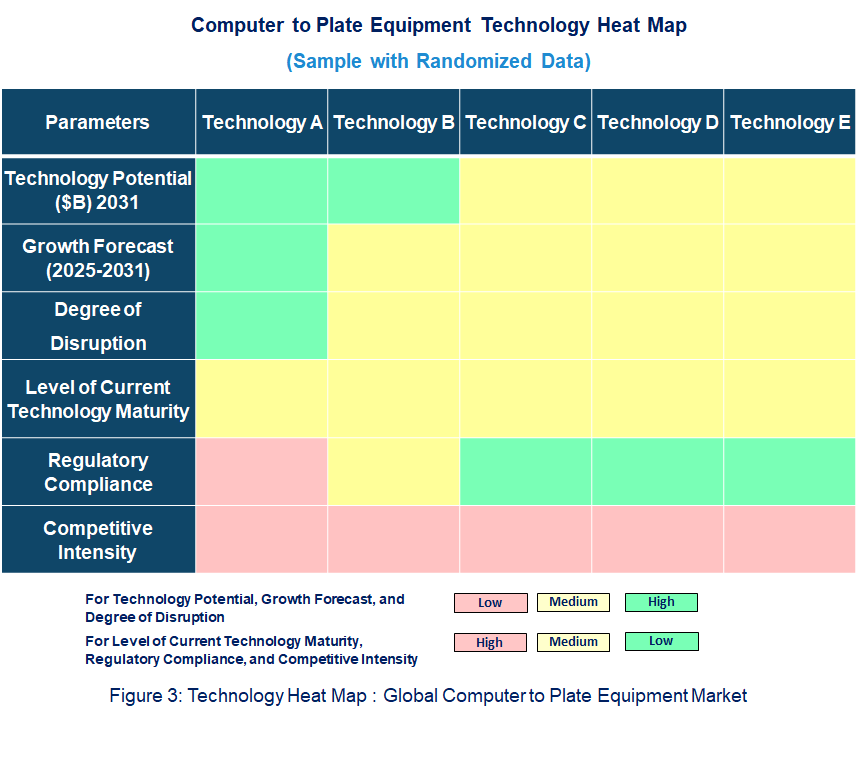
• Technology Potential: The potential of AI within CTP equipment is vast, allowing systems to drive smarter image processing, predictive maintenance, automated quality control, and optimized production workflows. These technologies can greatly enhance print quality, reduce waste, and speed up cycles in production, making them highly valuable to high-volume commercial printers looking to gain efficiency.
• Degree of Disruption: AI integration into CTP systems is a significant disruption to traditional printing workflows, especially by replacing manual intervention with automation and real-time decision-making. This brings operational benefits, but it may require significant investment in training and infrastructure upgrades, which might pose a challenge to small and medium-sized businesses.
• Current Technology Maturity Level: AI in CTP equipment is still in the early stages of full maturity. While there are some good improvements, such as AI-based defect detection and predictive maintenance, they are not yet widespread in the market, and most systems still require human oversight.
• Regulatory Compliance: The main regulatory challenges will be data privacy and AI ethics, especially in industries that handle sensitive data. The CTP equipment manufacturers have to ensure that the industry standards, environmental regulations, and proprietary printing data are handled securely when deploying AI technologies.
• Kodak: Kodak has introduced AI-driven innovations into its CTP solutions, especially into the "Kodak Prinergy" workflow software. Here, the AI helps automate the prepress tasks and optimizes file preparation to further improve plate imaging and enhance the production process, ensuring speed and accuracy. By implementing AI into Kodak’s systems, the human error factor is minimized, and the entire process is streamlined, with more efficiency in print quality delivered to commercial printers.
• Agfa: Agfa has improved its CTP technology through AI-based solutions that focus on predictive maintenance and automated quality control. Agfa’s "Energy Elite" plates with AI ensure faster plate production time, and the company’s inspection systems based on AI provide better defect and inconsistency detection. This reduces plate waste and improves final print quality to make printing operations more sustainable and cost-effective.
• Heidelberger Druckmaschinen: Heidelberger Druckmaschinen has brought AI-based automation into its CTP equipment via the "Prinect" software suite. The "Prinect" software applies AI for workflow optimization, real-time production monitoring, and predictive maintenance. This way, Heidelberg can minimize downtime, optimize its operational efficiency, and enhance the quality consistency of its print runs for large print jobs.
• Fujifilm: Fujifilm’s innovation with AI for CTP includes introducing AI-driven plate imaging. These systems use machine learning to detect distortions in an image and optimize exposure settings online in real time to achieve greater print quality with minimal interference from humans. Fujifilm’s approach enhances productivity and supports greener, more sustainable print operations by making waste in plate production as insignificant as possible.
• BasysPrint: BasysPrint has integrated AI in its UV-CTP technology, specifically in its "UV-Setter" systems. AI algorithms are used to increase the accuracy of images and detect defects, which enhance the accuracy and consistency of plate making. This leads to better quality control and reduced material waste, which is advantageous for high-end commercial and packaging printers.
• DuPont: DuPont has invested in the AI-enhanced plate technologies, including its "Cyrel" Digital Imager that uses AI to streamline the prepress workflows. The AI algorithms focus on optimizing image exposure, detecting plate defects, and reducing the time required for imaging, leading to improved efficiency and sustainability in the production of plates for flexible packaging and commercial printing applications.
• Corey Electromechanical: Corey Electromechanical implemented AI in its CTP systems for real-time image processing and defect detection. Using AI-based visual inspection systems, Corey’s equipment automatically identifies and corrects plate defects before reaching the printing stage, resulting in improved print quality overall and less waste in commercial printing operations.
• Guangzhou Amsky Tech: Guangzhou Amsky Tech concentrated on AI-powered automation for CTP equipment. The machines of the firm use algorithms of AI toreduce plate defects, optimize plate exposure, and enable faster turnarounds. This helps bring about a better efficiency from printing presses and reduces a lot of costs related to plates, making it beneficial even for smaller print shops and giants alike. Liaoning Dazu Guanhua Printing Technology: It has created AI-powered CTP solutions, which integrate with their automatic plate-making systems. With the aid of AI, the adjustments of plate exposure and print parameters are done in real time, thereby providing better accuracy and quality in commercial printing. This innovation enables printers to reduce errors, improve workflow efficiency, and become more sustainable as they have fewer reprint and plate correction needs.
• HuaRui JIngYi HuaRui JIngYi has included AI algorithms to enhance the effectiveness of its CTP gear. The AI-based technology is able to monitor the production process of plates and modify it in real-time. This leads to minimized waste of material and increased plate-making accuracy. Such factors give way to higher-quality print and faster and cheaper production to business. These developments from key players in the CTP equipment sector highlight the growing role of AI in enhancing productivity, improving print quality, and minimizing waste. By leveraging AI for automation, predictive maintenance, defect detection, and workflow optimization, these companies are driving a significant transformation in the printing industry, making operations more efficient, sustainable, and cost-effective.
• Increased Demand for Automation: The demand for automation in the printing industry is key, as AI-powered CTP solutions streamline workflows, reduce human error, and accelerate production speeds. With automation, printing companies can optimize resource allocation and reduce operational costs, leading to more efficient and profitable operations.
• Cost Reduction and Operational Efficiency: AI-driven CTP technology helps bring down waste, energy consumption, and labor costs, hence it ensures huge operational cost savings. By automating tasks such as plate inspection and exposure adjustments AI reduces the need for manual interventions which brings turn-around times down and lowers production costs.
• Improved Print Quality and Consistency: AI’s ability to detect defects in real-time, optimize exposure settings, and ensure precise imaging enhances print quality. This is especially valuable for high-volume commercial printing operations, where consistent and accurate print output is essential for client satisfaction and brand reputation.
• Sustainability and Environmental Concerns: AI technologies contribute to more sustainable printing practices by reducing material waste and energy usage. AI can identify inconsistencies early in the plate-making process, thus minimizing reprints and maximizing the life cycle of plates, which appeals to businesses aiming to meet environmental standards.
• Integration with Industry 4.0 and Smart Manufacturing: Increasing integration into smart manufacturing ecosystems, AI-powered CTP equipment is gaining better connectivity and data exchange. The integration with other AI-driven systems, like digital presses and production scheduling tools, ensures seamless operations, better resource management, and data-driven decision-making for printing companies. Challenges:
• High initial investment costs: The adoption of AI in CTP technology is associated with high upfront investment, both hardware and software. Small print shops may not be able to afford such advanced systems, hence the low adoption rate of AI in CTP equipment in the industry.
• Technical Complexity and Integration Issues: The integration of AI-powered systems into existing CTP infrastructure will be difficult. Older equipment may not be compatible with advanced AI technologies, leading to costly upgrades and adjustments. Moreover, the need for skilled operators to manage AI systems is a further barrier to its widespread use.
• Data Privacy and Security Concerns: The use of AI in CTP equipment involves collecting and analyzing large amounts of production data, raising concerns about data security and privacy. Printing companies must ensure that they comply with relevant regulations and adopt robust cybersecurity measures to protect proprietary information.
• Regulatory Compliance and Standards: The lack of standardized regulations around AI in CTP equipment presents a challenge, as businesses have to navigate varying industry-specific regulations. Ensuring compliance with environmental, health, and safety regulations while deploying AI technologies in printing operations can prove to be a complicating factor to the adoption process.
• Lack of Skilled Workforce: New developments in CTP AI at rapid speeds are producing a requirement for a well-trained workforce that can run these systems. The shortage of trained professionals in AI and machine learning would be a challenge for companies looking to implement these technologies properly. The computer-to-plate equipment technology market, powered by artificial intelligence, is poised for high growth, with some of the drivers being automation, cost reduction, improved print quality, sustainability, and integration with Industry 4.0. However, there are challenges like high costs of investment, technical complexity, regulation issues, and a shortage of workforce that need to be addressed for widespread adoption. Despite these challenges, the efficiency, quality, and sustainability that AI-driven CTP solutions provide to the market are transforming the market and providing opportunities for established players as well as new entrants to lead the way in the printing industry.
• Kodak
• Agfa
• Heidelberger Druckmaschinen
• Fujifilm
• Basysprint
• Dupont
• Technology Readiness by Technology Type: Thermal CTP technology is the most mature one, used widely in high-volume commercial printing, packaging, and newspapers, where speed, accuracy, and quality are critical. Its readiness for mass adoption is high, with advanced systems like Kodak’s Thermal Plates. Violet CTP is technologically less advanced but offers an accessible solution for small to medium-sized print shops, typically used in shorter runs and lower-quality applications such as small business brochures or local newspapers. Its readiness is moderate, with continued improvements in speed and quality. UV CTP, although newer, is gaining ground because of environmental concerns. It is applied in packaging, commercial printing, and label printing, where fast drying and sustainability are key. Its readiness is growing, especially in industries focused on eco-friendly solutions, as UV plates offer faster curing times and reduced VOC emissions.
• Competitive Intensity and Regulatory Compliance: The competitive intensity in the computer to plate equipment market varies with each technology. Thermal CTP remains the market leader in the commercial and packaging segments mainly because of its quality and speed. The leading players in this segment are Kodak and Heidelberg, which hold a very significant share. Violet CTP is cost-effective but lags behind thermal CTP technologies and has limited penetration in high-end markets. UV CTP, which is being driven by environmental sustainability, is gaining ground in markets concentrating on eco-friendly practices, but not out of the competition even from thermal and violet. For UV CTPs, regulatory compliance is very important, especially concerning environmental regulations, because it reduces hazardous chemicals or substances, as UV plates seem more eco-friendly. Violet CTP has fewer regulatory restrictions because it is a relatively simple technology and material.
• Disruption Potential by Technology Type: Violet CTP is a computer-to-plate technology that provides a more affordable alternative to traditional thermal CTP systems. It uses violet laser diodes to expose plates. The disruption potential is significant because it reduces the cost for small print shops, but image quality is lower, and speeds are slower than thermal systems, which is a limitation in high-end commercial printing. Thermal CTP is disruptive because of its high-speed precision and superior quality, commanding high-volume and high-quality print jobs, which tend to displace legacy offset technologies. UV CTP technology is disruptive in using UV-sensitive plates for faster drying and the ability to reduce chemical waste and thereby providing excellent environmental benefits in eco-conscious markets. Each technology disrupts traditional offset processes in different ways, with Violet CTP focusing on cost reduction, Thermal CTP leading in high-end quality and speed, and UV CTP offering sustainability and faster turnaround times.
• Violet CTP
• Thermal CTP
• UV CTP
• Printing Houses & Presses
• Publishing
• Packaging
• Newspaper Publishers
• North America
• Europe
• Asia Pacific
• The Rest of the World
• Latest Developments and Innovations in the Computer to Plate Equipment Technologies
• Companies / Ecosystems
• Strategic Opportunities by Technology Type


Choose a license that fits your team. Instant PDF delivery.
Prices exclude taxes. Instant delivery. Custom licensing available on request.
Market Report · May 18, 2026
Market Report · May 18, 2026
Market Report · May 18, 2026
Trusted partner for strategic intelligence and business growth


Receive a complimentary market analysis tailored to your industry. Our analysts will identify key growth opportunities and competitive dynamics specific to your business.

Market size, growth rate, and key trend analysis for your specific sector.

Top competitor positioning and market share analysis.

Strategic recommendations backed by data-driven insights.
Get curated market intelligence and competitive moves straight to your inbox.
By subscribing, you agree to receive our monthly insights. Unsubscribe anytime.
Receive a complimentary market analysis tailored to your industry. Our analysts will identify key growth opportunities and competitive dynamics specific to your business.
Market size, growth rate, and key trend analysis for your specific sector.
Top competitor positioning and market share analysis.
Strategic recommendations backed by data-driven insights.
Get curated market intelligence, emerging trends, and competitive moves straight to your inbox each month.
By subscribing, you agree to receive our monthly insights. Unsubscribe anytime.
We'll send your sample report shortly.