
Market Report · July 22, 2026

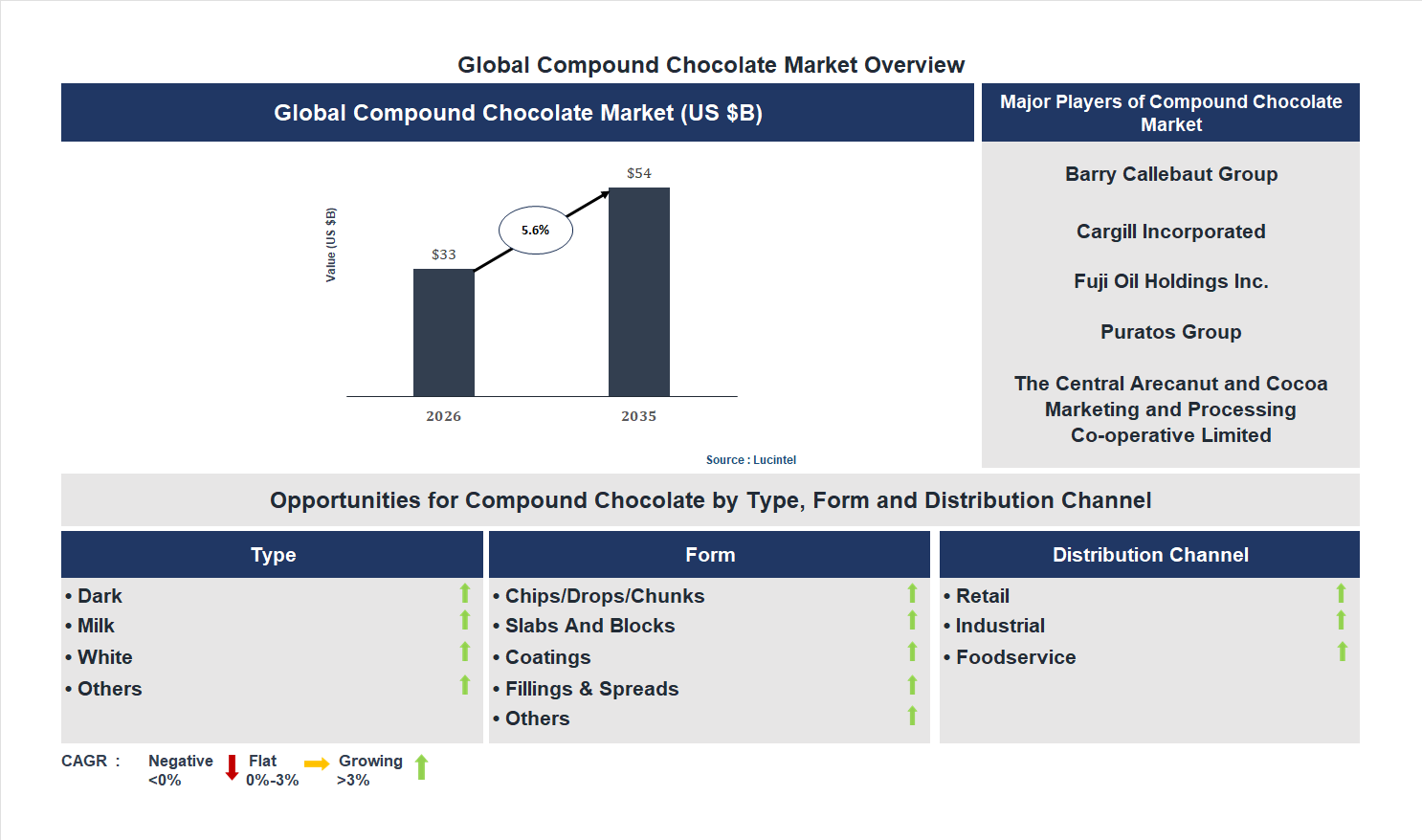
Key data points: The market size in 2035 = $54 billion, growth forecast = 5.6% annually for the next 8 years. Scroll below to get more insights. This market report covers trends, opportunities and forecasts in compound chocolate market to 2035 by type (dark, milk, white, and others), form (chips/drops/chunks, slabs and blocks, coatings, fillings & spreads, and others), distribution channel (retail, industrial, and foodservice), and region (North America, Europe, Asia Pacific, and the Rest of the World)
We'll send your sample report shortly.
• Lucintel forecasts that, within the type category, milk is expected to witness the highest growth over the forecast period.
• Within the distribution channel category, retail is expected to witness the highest growth.
• In terms of region, APAC is expected to witness the highest growth over the forecast period. Gain valuable insights for your business decisions with our comprehensive 150+ page report. Sample figures with some insights are shown below.
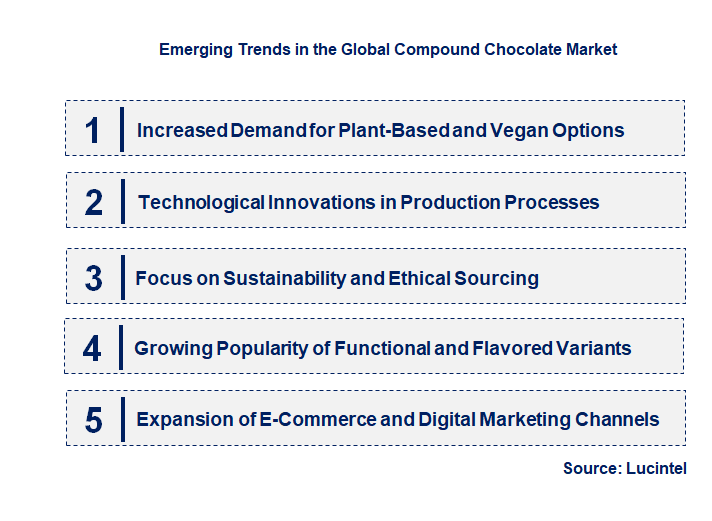
• Increased Demand for Plant-Based and Vegan Options: Consumers are seeking plant-based, vegan-friendly chocolate products. This trend is driven by health consciousness, ethical considerations, and environmental concerns. Manufacturers are developing vegan compound chocolates using alternative fats and plant-based ingredients, which appeal to a broader audience. This shift is expanding market reach and encouraging innovation in formulation, leading to a more inclusive product portfolio that caters to diverse dietary preferences.
• Technological Innovations in Production Processes: Advanced manufacturing technologies such as automation, precision temperature control, and innovative mixing techniques are enhancing product quality and consistency. These innovations reduce production costs and improve scalability, enabling manufacturers to meet rising demand efficiently. Additionally, new techniques like 3D printing of chocolates are opening avenues for customized and intricate designs, boosting product differentiation and consumer engagement in the market.
• Focus on Sustainability and Ethical Sourcing: Consumers are increasingly concerned about the environmental and social impact of their purchases. Companies are adopting sustainable sourcing practices for cocoa and other ingredients, utilizing eco-friendly packaging, and reducing carbon footprints. Certifications like Fair Trade and Rainforest Alliance are gaining prominence, influencing purchasing decisions. This trend is fostering transparency and accountability, which enhances brand loyalty and aligns with the global shift towards responsible consumption.
• Growing Popularity of Functional and Flavored Variants: The market is witnessing a surge in functional chocolates infused with ingredients like vitamins, minerals, and probiotics. Flavored variants such as caramel, mint, and fruit-infused chocolates are also gaining popularity. These innovations cater to health-conscious consumers seeking added benefits and unique taste experiences. The development of such products is expanding the market beyond traditional sweet treats, creating new revenue streams and attracting diverse customer segments.
• Expansion of E-commerce and Digital Marketing Channels: The rise of online retail platforms and social media marketing is transforming how consumers access and discover compound chocolates. E-commerce offers convenience, wider product selection, and direct engagement with brands. Digital marketing strategies, including influencer collaborations and targeted advertising, are increasing brand visibility and consumer loyalty. This trend enables manufacturers to reach global markets efficiently, gather consumer insights, and adapt quickly to changing preferences, thereby accelerating market growth. These trends are collectively reshaping the compound chocolate market by fostering innovation, promoting sustainability, and leveraging digital channels. They are expanding product diversity, enhancing consumer engagement, and driving sustainable growth, positioning the market for a more dynamic and responsible future.
• Growing Demand for Versatile Chocolate Alternatives: The increasing preference for affordable, easy-to-use chocolate substitutes is expanding the compound chocolate market. Its applications in confectionery, bakery, and snack products are rising due to its cost-effectiveness and ease of processing. Manufacturers are innovating with formulations to improve texture, flavor, and shelf life, attracting a broader customer base. This trend is expected to continue, driving market growth and encouraging new product development across various sectors.
• Innovations in Formulation and Product Development: Advances in ingredient technology are enabling the creation of healthier, more sustainable compound chocolates. Incorporating plant-based fats, natural flavors, and functional ingredients enhances product appeal. These innovations improve sensory attributes and nutritional profiles, catering to health-conscious consumers. As a result, companies are launching new lines of organic, vegan, and allergen-free compounds, expanding market reach and fostering competitive differentiation.
• Expansion of Applications Across Industries: Compound chocolate is increasingly used beyond traditional confectionery, including bakery fillings, coatings, and snack bars. Its adaptability allows for integration into diverse product formats, boosting demand. The food industry is leveraging its stability, cost advantages, and ease of handling to develop innovative products. This broad application spectrum is opening new revenue streams and encouraging industry players to explore untapped markets.
• Rising Focus on Sustainability and Ethical Sourcing: Consumers are demanding ethically sourced and environmentally friendly ingredients. Companies are adopting sustainable sourcing practices for raw materials like cocoa substitutes and plant-based fats. Certification programs and transparent supply chains are gaining importance. These initiatives not only enhance brand reputation but also meet regulatory standards, fostering consumer trust. Sustainability efforts are becoming a key differentiator, influencing purchasing decisions and market competitiveness.
• Technological Advancements in Manufacturing Processes: Automation, improved mixing techniques, and quality control technologies are enhancing production efficiency and product consistency. These advancements reduce costs and waste, enabling faster time-to-market. They also facilitate customization and innovation in product formulations. As manufacturing becomes more sophisticated, companies can better meet consumer demands for high-quality, innovative compound chocolates, strengthening their market position and supporting industry growth. These developments are significantly impacting the compound chocolate market by fostering innovation, expanding application areas, and emphasizing sustainability. They enable manufacturers to meet evolving consumer preferences for healthier, ethical, and versatile products. Technological improvements and formulation innovations are driving efficiency and product quality, leading to increased market competitiveness. Overall, these trends are propelling the industry toward a more sustainable, innovative, and consumer-centric future.
• Expansion of Confectionery Applications: Compound chocolate is increasingly used in confectionery products like candies, coatings, and fillings due to its ease of use and cost advantages. The demand for innovative, visually appealing, and shelf-stable confections is driving manufacturers to incorporate compound chocolate. Its versatility allows for various textures and flavors, appealing to a broad consumer base. Growing popularity in premium and functional confectionery segments further boosts its adoption, especially in emerging markets where affordability is crucial.
• Growing Use in Bakery Products: The bakery sector is adopting compound chocolate for cookies, cakes, and pastries, driven by consumer preferences for indulgent and convenient treats. Its ease of melting and molding simplifies production processes, reducing costs and time. The trend toward artisanal and gourmet baked goods also favors high-quality compound chocolates with unique flavors and textures. Additionally, the demand for gluten-free and allergen-free bakery options is encouraging innovation in compound chocolate formulations suitable for diverse dietary needs.
• Rising Demand in Food Manufacturing and Industrial Applications: Food manufacturers utilize compound chocolate in a variety of processed foods, including ice creams, snack bars, and ready-to-eat desserts. Its stability, longer shelf life, and lower production costs make it an attractive ingredient. The trend toward functional foods with added health benefits is prompting the development of fortified compound chocolates. Industrial applications are expanding with innovations in flavor profiles, reduced sugar content, and sustainable sourcing, catering to health-conscious and environmentally aware consumers.
• Innovation in Formulations and Flavors: Continuous R&D efforts are leading to new compound chocolate formulations with enhanced sensory attributes, such as improved mouthfeel, gloss, and melting properties. Flavor innovation, including exotic, spicy, and fruit-infused variants, is attracting diverse consumer segments. The development of reduced-fat, sugar-free, and allergen-free options is also gaining traction. These innovations enable manufacturers to differentiate their products, meet specific dietary requirements, and expand into niche markets, thereby fueling overall market growth.
• Increasing Adoption in Emerging Markets: Rapid urbanization, rising disposable incomes, and expanding retail infrastructure in emerging economies are boosting compound chocolate consumption. Local manufacturers are adopting global formulations to cater to evolving tastes, while international brands are entering these markets with affordable, locally adapted products. The growth of e-commerce and modern retail channels facilitates wider distribution. This expansion offers significant opportunities for market players to tap into new customer bases, diversify product portfolios, and establish a strong presence in developing regions. These growth opportunities collectively enhance the compound chocolate markets potential, fostering innovation, expanding applications, and entering new geographic regions. As consumer preferences shift toward convenience, indulgence, and health-conscious options, the market is poised for sustained growth. Companies that leverage formulation innovations, diversify product offerings, and target emerging markets will be well-positioned to capitalize on these opportunities, ensuring long-term success and market leadership.
• Technological Innovation: The development of advanced manufacturing processes has enabled producers to create high-quality, consistent, and cost-effective compound chocolates. Automation and improved mixing techniques have increased production efficiency, reduced waste, and enhanced product customization. These technological advancements allow manufacturers to meet diverse consumer demands and expand their product portfolios, fueling market growth.
• Rising Consumer Demand for Confectionery: Increasing preference for sweet, indulgent treats, especially among younger demographics, has driven demand for compound chocolates. The convenience, affordability, and versatility of compound chocolate make it a popular choice for confectionery, bakery, and snacking applications. This growing consumer appetite supports market expansion and innovation in product offerings.
• Health and Wellness Trends: Consumers are increasingly seeking healthier options, prompting manufacturers to develop low-sugar, sugar-free, and functional compound chocolates infused with added nutrients. This shift encourages product diversification and opens new market segments, boosting overall market size while aligning with health-conscious trends.
• Regulatory and Quality Standards: Stringent food safety regulations and quality standards across regions influence manufacturing practices and product formulations. Compliance ensures consumer trust and access to global markets. Companies investing in quality assurance and regulatory adherence can expand their reach and strengthen brand reputation, thereby driving market growth. The challenges facing the compound chocolate market are:-
• Fluctuating Raw Material Prices: The market heavily depends on raw materials like cocoa, palm oil, and sweeteners, which are subject to price volatility due to climatic conditions, geopolitical issues, and supply chain disruptions. These fluctuations increase production costs and can squeeze profit margins, making pricing strategies more complex and impacting overall market stability.
• Stringent Regulatory Environment: Evolving food safety laws, labeling requirements, and import-export restrictions pose compliance challenges for manufacturers. Navigating diverse regulatory landscapes can be costly and time-consuming, potentially delaying product launches and limiting market access, especially for small and medium-sized enterprises.
• Competition and Market Saturation: The market faces intense competition from both global and local players, leading to price wars and reduced profit margins. Market saturation in developed regions limits growth opportunities, compelling companies to innovate continuously and explore emerging markets, which requires significant investment and strategic planning. The compound chocolate market is driven by technological advancements, consumer preferences, health trends, and regulatory standards, which collectively foster growth and innovation. However, challenges such as raw material price volatility, regulatory complexities, and intense competition pose significant hurdles. These factors require companies to adopt adaptive strategies, invest in quality and innovation, and explore new markets to sustain long-term growth. Overall, the markets future depends on balancing these drivers and challenges effectively to capitalize on emerging opportunities while mitigating risks.
• Barry Callebaut Group
• Cargill Incorporated
• Fuji Oil Holdings Inc.
• Puratos Group
• The Central Arecanut and Cocoa Marketing and Processing Co-operative Limited
• AAK AB
• Nestle S.A
• Clasen Quality Chocolate, Inc.
• FoodGrid Inc.
• 3F Industries LTD
• Dark
• Milk
• White
• Others
• Chips/Drops/Chunks
• Slabs and Blocks
• Coatings
• Fillings & Spreads
• Others
• Retail
• Industrial
• Foodservice
• North America
• Europe
• Asia Pacific
• The Rest of the World
• United States: The US market has seen increased demand for clean-label and organic compound chocolates, driven by health-conscious consumers. Major companies are investing in sustainable sourcing and innovative formulations that reduce sugar and artificial ingredients. There is also a rising trend in plant-based and allergen-free options, expanding product diversity. Technological advancements in manufacturing processes have improved texture and shelf life, while e-commerce channels have boosted sales and consumer engagement. Overall, the US market is focusing on transparency, health benefits, and sustainability to meet evolving consumer expectations.
• China: Chinas compound chocolate market is rapidly expanding due to rising disposable incomes and a growing middle class seeking affordable indulgence. Local manufacturers are innovating with flavors and packaging to appeal to younger consumers. The market is also witnessing increased adoption of automation and modern production techniques to enhance efficiency and product quality. E-commerce platforms and social media marketing are playing crucial roles in market penetration. Additionally, there is a focus on developing products tailored to regional tastes, with an emphasis on affordability and convenience, fueling the markets rapid growth.
• Germany: Germany remains a mature market with a strong emphasis on quality, sustainability, and innovation. Companies are investing in eco-friendly sourcing and biodegradable packaging to meet strict environmental standards. There is a notable trend toward premium and artisanal compound chocolates, emphasizing natural ingredients and traditional recipes. Technological improvements have enhanced product texture and flavor stability. The market also benefits from a well-established supply chain and a high level of consumer awareness regarding health and sustainability issues, positioning Germany as a leader in sustainable confectionery innovations.
• India: The Indian compound chocolate market is experiencing rapid growth driven by urbanization, changing lifestyles, and increased consumption of confectionery products. Local manufacturers are expanding product portfolios with affordable, flavorful options tailored to regional preferences. There is a rising demand for healthier variants with reduced sugar and natural ingredients. Investment in modern manufacturing facilities and automation is increasing efficiency and product consistency. Additionally, e-commerce and retail expansion are facilitating wider distribution. The market is also witnessing a surge in innovative packaging and marketing strategies aimed at attracting young consumers and expanding market reach.
• Japan: Japans market for compound chocolate is characterized by a focus on high-quality, innovative, and health-oriented products. Consumers prefer products with natural ingredients, reduced sugar, and functional benefits such as added vitamins or antioxidants. Technological advancements in production have improved product texture and shelf life. The market also sees a trend toward premium and artisanal offerings, often incorporating traditional Japanese flavors. Sustainability initiatives, including eco-friendly packaging and responsible sourcing, are gaining importance. Overall, Japans market is driven by a combination of health consciousness, innovation, and a preference for premium, culturally resonant products.


• Barry Callebaut Group
• Cargill Incorporated
• Fuji Oil Holdings Inc.
• Puratos Group
• The Central Arecanut and Cocoa Marketing and Processing Co-operative Limited
• AAK AB
• Nestle S.A
• Clasen Quality Chocolate, Inc.
• FoodGrid Inc.
• 3F Industries LTD Q6. Which compound chocolate market segment will be the largest in future? Answer: Lucintel forecasts that, within the type category, milk is expected to witness the highest growth over the forecast period. Q7. In compound chocolate market, which region is expected to be the largest in next 8 years? Answer: In terms of region, APAC is expected to witness the highest growth over the forecast period. Q8. Do we receive customization in this report? Answer: Yes, Lucintel provides 10% customization without any additional cost.


Choose a license that fits your team. Instant PDF delivery.
Prices exclude taxes. Instant delivery. Custom licensing available on request.
Market Report · July 22, 2026
Market Report · July 22, 2026
Market Report · July 22, 2026
Trusted partner for strategic intelligence and business growth


Receive a complimentary market analysis tailored to your industry. Our analysts will identify key growth opportunities and competitive dynamics specific to your business.

Market size, growth rate, and key trend analysis for your specific sector.

Top competitor positioning and market share analysis.

Strategic recommendations backed by data-driven insights.
Get curated market intelligence and competitive moves straight to your inbox.
By subscribing, you agree to receive our monthly insights. Unsubscribe anytime.
Receive a complimentary market analysis tailored to your industry. Our analysts will identify key growth opportunities and competitive dynamics specific to your business.
Market size, growth rate, and key trend analysis for your specific sector.
Top competitor positioning and market share analysis.
Strategic recommendations backed by data-driven insights.
Get curated market intelligence, emerging trends, and competitive moves straight to your inbox each month.
By subscribing, you agree to receive our monthly insights. Unsubscribe anytime.
We'll send your sample report shortly.