
Market Report · July 17, 2026

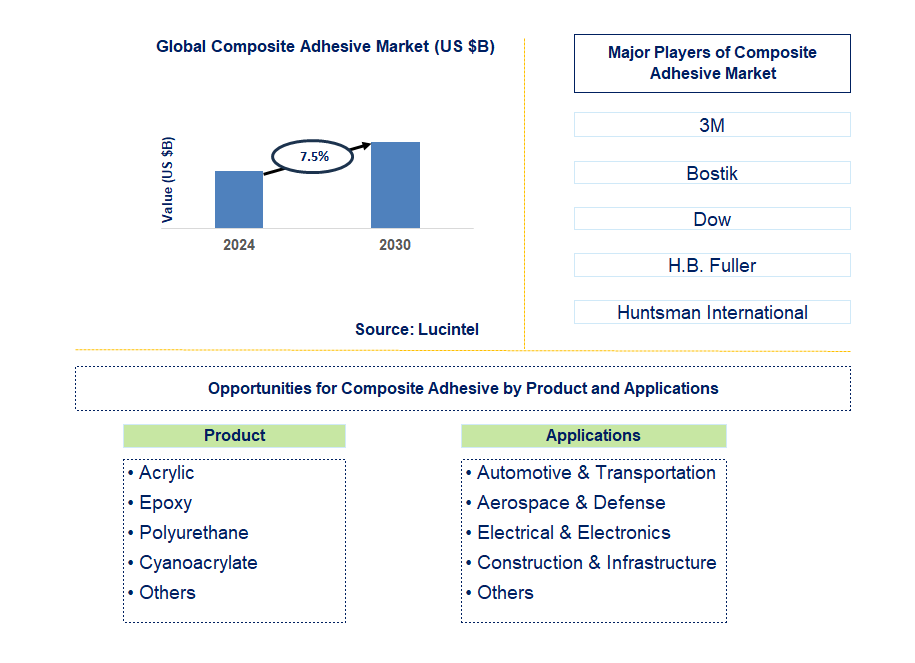
Key data points: The growth forecasts = 7.5% annually for the for the next 6 years. Scroll below to get more insights. This market report covers trends, opportunities, and forecastss in the global composite adhesive market to 2030 by product (acrylic, epoxy, polyurethane, cyanoacrylate, and others), applications (automotive & transportation, aerospace & defense, electrical & electronics, construction & infrastructure, and others), and region (North America, Europe, Asia Pacific, and the Rest of the World)
We'll send your sample report shortly.
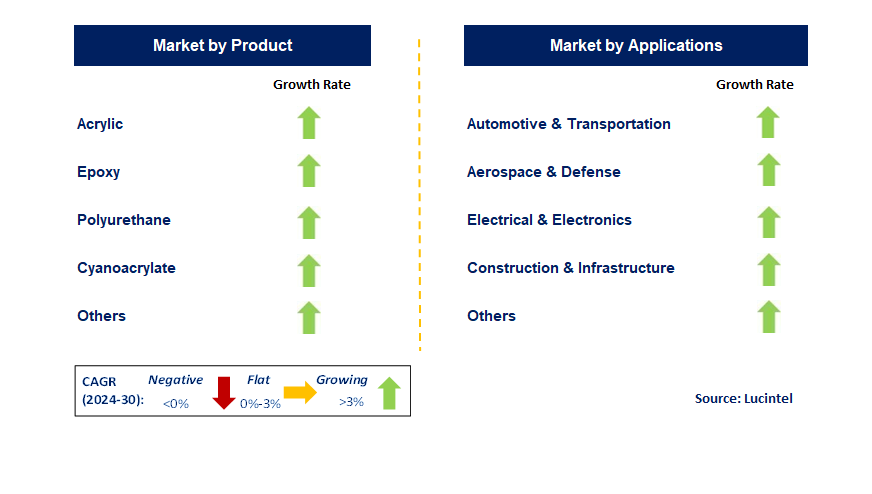
• Lucintel forecasts that, within the product category, epoxy is expected to witness the largest growth over the forecast period due to increasing utilization in numerous end-use industries owing to their ability to withstand extreme environmental conditions.
• Within the application category, aerospace & defense is expected to witness the largest growth as this adhesive provides strong bonding to the composite materials.
• In terms of regions, APAC is expected to witness the largest growth over the forecast period due to growing requirements for composite-based products in EVs, renewables, aerospace & defense, and construction industries. Gain Valuable insights for your business decisions with our comprehensive 150+ page report.
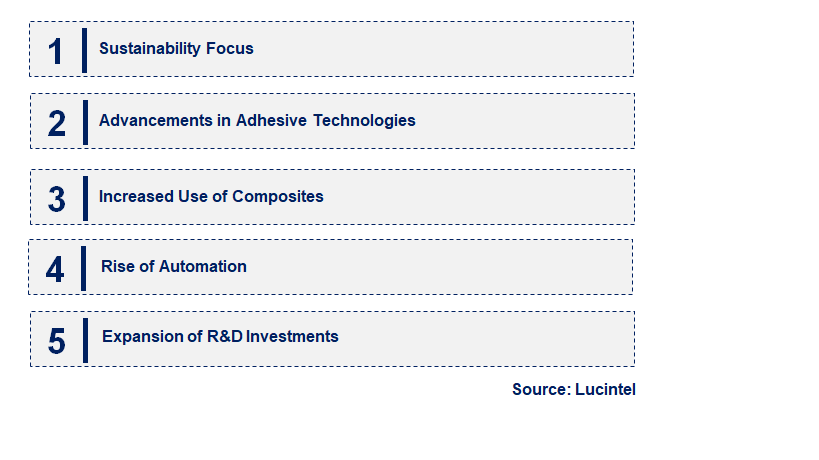
• Sustainability Focus: The drive towards sustainability is becoming a pivotal trend in the composite adhesive market. Manufacturers are increasingly developing bio-based adhesives derived from renewable resources, which reduce environmental impact. This trend is driven by stricter regulations and consumer demand for eco-friendly products. Companies are exploring innovative formulations that minimize volatile organic compounds (VOCs), improving indoor air quality and reducing harmful emissions. As sustainability becomes a competitive differentiator, businesses that prioritize eco-friendly practices are likely to gain market share, ultimately reshaping the industry towards greener alternatives.
• Advancements in Adhesive Technologies: Technological innovations are significantly enhancing the performance of composite adhesives. Recent developments include the formulation of high-temperature resistant adhesives and those that offer improved bonding strength with various substrates. Innovations in nanotechnology are also leading to adhesives with superior properties, such as enhanced durability and flexibility. These advancements enable the use of composites in demanding applications like aerospace and automotive sectors, where performance and reliability are critical. As technology progresses, manufacturers can meet increasingly complex requirements, driving growth in the market.
• Increased Use of Composites: The expanding use of composite materials across industries such as aerospace, automotive, and construction is a key trend impacting the composite adhesive market. Composites offer advantages such as lightweight, high strength, and resistance to corrosion, making them ideal for modern applications. As industries seek to improve efficiency and reduce weight for better fuel economy, the demand for adhesives specifically designed for composite bonding is growing. This trend not only boosts the adhesive market but also encourages further innovation in adhesive formulations tailored to various composite materials.
• Rise of Automation: Automation is transforming the manufacturing landscape for composite adhesives. Automated dispensing systems and robotic applications are improving precision and efficiency in adhesive application processes. This trend reduces waste, increases production rates, and enhances product consistency, meeting the growing demands of high-volume manufacturing. Automation also allows for better integration with smart technologies, such as IoT systems that monitor production quality in real time. As manufacturers adopt automated processes, they can achieve cost savings and improved product quality, thus reshaping competitive dynamics in the market.
• Expansion of R&D Investments: There is a notable increase in research and development investments within the composite adhesive market, driven by the need for innovation and competitiveness. Companies are allocating resources to explore new adhesive formulations and applications, enhancing performance characteristics such as adhesion strength and resistance to environmental factors. Collaborative efforts among manufacturers, universities, and research institutions are fostering innovation and accelerating product development cycles. This trend is critical for meeting evolving market needs and ensuring companies can quickly adapt to new challenges, positioning themselves favorably in the market. These emerging trends are fundamentally reshaping the composite adhesive market. A focus on sustainability, advancements in technology, and increased use of composites are driving innovation and enhancing product offerings. The rise of automation and expanded R&D investments further ensure that the market remains dynamic and responsive to industry demands. As these trends continue to evolve, they are likely to redefine competitive strategies, product development, and overall market growth, creating new opportunities for stakeholders across the industry.
• Innovative Adhesive Formulations: Recent advancements in adhesive formulations have led to the development of high-performance products tailored for specific applications. New epoxy, polyurethane, and acrylic-based adhesives are being designed to provide superior bonding capabilities while maintaining lightweight properties. These innovations are particularly relevant in sectors such as aerospace and automotive, where performance and weight reduction are critical. As manufacturers continue to refine their formulations, the market is expected to see an increase in demand for specialized adhesives that meet stringent industry standards.
• Sustainability Initiatives: A growing emphasis on sustainability has prompted manufacturers to adopt eco-friendly practices in the composite adhesive market. Many companies are now focusing on developing bio-based adhesives that are both effective and environmentally friendly. This shift aligns with global trends toward reducing carbon footprints and minimizing the use of harmful chemicals. The introduction of sustainable adhesives not only helps companies comply with regulations but also appeals to environmentally conscious consumers, ultimately enhancing brand reputation and market competitiveness.
• Advancements in Application Techniques: Advancements in application techniques are significantly impacting the efficiency of adhesive use in manufacturing processes. Innovations such as automated dispensing systems and improved curing methods are streamlining operations, reducing waste, and increasing application precision. These advancements are particularly beneficial in high-volume production environments, where consistency and speed are essential. By adopting these new techniques, manufacturers can enhance product quality and operational efficiency, contributing to overall market growth.
• Strategic Partnerships: Strategic partnerships between manufacturers and research institutions are becoming increasingly common in the composite adhesive market. Collaborations facilitate knowledge sharing and accelerate the development of innovative adhesive solutions. These partnerships often focus on exploring new materials and improving adhesive performance, enabling companies to stay competitive in a rapidly evolving market. As more firms recognize the value of collaboration, the landscape of adhesive development is likely to become more dynamic and innovative.
• Regulatory Changes: Recent regulatory changes aimed at promoting environmental sustainability are influencing the composite adhesive market. Governments are implementing stricter guidelines regarding the use of VOCs and other harmful substances in adhesives, pushing manufacturers toward greener alternatives. Compliance with these regulations is not only necessary for market access but also drives innovation in adhesive formulations. As regulations evolve, companies that adapt quickly to meet these standards will have a competitive advantage, further shaping market dynamics. These key developments are transforming the composite adhesive market by driving innovation, enhancing sustainability, and improving manufacturing processes. As manufacturers adapt to these changes, the market is likely to witness significant growth fueled by the demand for advanced adhesive solutions across various industries. The continued evolution of technology and regulatory frameworks will further influence market dynamics, creating new opportunities and challenges for stakeholders in the industry.
• Automotive Lightweighting: The automotive sector is increasingly focused on lightweight materials to enhance fuel efficiency and reduce emissions. Composite adhesives enable the bonding of lightweight materials like carbon fiber and plastics, facilitating the creation of lighter vehicles without compromising structural integrity. This shift not only supports regulatory compliance regarding emissions but also attracts environmentally conscious consumers. The demand for composite adhesives in automotive applications is expected to grow significantly, reflecting a broader industry trend toward sustainable manufacturing practices.
• Aerospace Applications: Aerospace manufacturers are continually seeking ways to improve the performance and efficiency of their aircraft. Composite adhesives are crucial for bonding composite materials used in airframes and interior components. The lightweight and high-strength characteristics of these adhesives contribute to better fuel economy and operational efficiency. Additionally, the aerospace industry’s push for innovative designs offers substantial growth potential for composite adhesives, particularly as they meet rigorous safety and performance standards, driving increased adoption in new aircraft models.
• Construction and Infrastructure: The construction industry is increasingly leveraging composite materials for improved durability and performance in infrastructure projects. Composite adhesives facilitate the bonding of various materials, including metals, ceramics, and polymers, allowing for greater design flexibility and longevity. As urbanization accelerates and infrastructure projects proliferate, the demand for advanced bonding solutions is expected to rise. This presents an opportunity for composite adhesive manufacturers to expand their market presence in construction applications, particularly in sustainable building initiatives.
• Electronics and Electricals: The rapid evolution of the electronics industry, driven by the demand for miniaturization and enhanced performance, presents another growth opportunity. Composite adhesives are used in applications ranging from printed circuit boards to sensor assemblies, providing excellent thermal and electrical properties. As electronic devices become more compact and complex, the need for reliable bonding solutions that can withstand high temperatures and environmental stressors will increase. This trend positions composite adhesives as key enablers of innovation in the electronics sector.
• Renewable Energy: The renewable energy sector, particularly in wind and solar energy applications, is increasingly adopting composite materials for improved efficiency and longevity. Composite adhesives are essential for bonding turbine blades and solar panels, providing durability against harsh environmental conditions. As global energy policies shift toward sustainability, the demand for composite adhesives in renewable energy applications is expected to grow. This sector not only represents a significant market opportunity but also aligns with broader environmental goals, making it an attractive focus for manufacturers. These strategic growth opportunities highlight the versatility and importance of composite adhesives across various applications. As industries increasingly prioritize efficiency, sustainability, and innovation, the composite adhesive market is poised for significant expansion. Manufacturers that capitalize on these trends can enhance their competitive positioning and contribute to the evolution of modern materials.
• Technological Advancements: Continuous innovations in adhesive formulations and bonding technologies are driving the composite adhesive market. These advancements enhance performance characteristics such as temperature resistance, curing times, and bonding strength. New methods, like 3D printing and automated application processes, increase efficiency and reduce waste, making composite adhesives more appealing to manufacturers. As industries demand higher-performance materials, technological progress ensures that composite adhesives remain at the forefront, facilitating their adoption across diverse applications.
• Rising Demand in End-User Industries: Sectors such as automotive, aerospace, construction, and electronics are experiencing robust growth, driving the demand for composite adhesives. As these industries adopt advanced composite materials for their superior strength-to-weight ratios, the need for effective bonding solutions becomes crucial. This increasing demand not only propels market growth but also encourages innovation in adhesive products tailored to meet specific application requirements, further solidifying the position of composite adhesives in these key sectors.
• Sustainability Efforts: The global emphasis on sustainability and environmentally friendly practices is a significant driver in the composite adhesive market. Manufacturers are increasingly seeking adhesives that are eco-friendly, recyclable, and produced through sustainable processes. The push for lightweight materials that enhance energy efficiency in vehicles and buildings also aligns with sustainability goals. This trend encourages the development of innovative adhesive solutions that not only meet performance requirements but also contribute to reduced environmental impact.
• Increased Production Efficiency: The adoption of composite adhesives often leads to enhanced production efficiency and reduced assembly times. The ability to bond dissimilar materials quickly and effectively can streamline manufacturing processes across various sectors. This efficiency not only lowers production costs but also improves overall product quality. As companies focus on optimizing their operations, the integration of composite adhesives becomes a strategic advantage, thereby boosting market growth as manufacturers seek competitive benefits.
• Regulatory Support: Governments are increasingly promoting the use of advanced materials and technologies through regulations and incentives. Policies encouraging lightweight and sustainable materials in industries like automotive and aerospace enhance the demand for composite adhesives. Compliance with stringent safety and environmental regulations further drives the need for high-performance bonding solutions. This supportive regulatory environment not only creates a favorable market landscape but also incentivizes innovation within the adhesive industry. Challenges in the composite adhesive market are:
• Material Compatibility Issues: One of the primary challenges in the composite adhesive market is ensuring compatibility between adhesives and the various composite materials used across applications. Variations in surface energy, chemical composition, and thermal expansion can lead to suboptimal bonding performance. Manufacturers must invest in research and development to create adhesives that work effectively with a wide range of substrates. Failure to address these compatibility issues can result in product failures, impacting customer satisfaction and market reputation.
• Fluctuating Raw Material Prices: The prices of raw materials used in the production of composite adhesives can be highly volatile due to supply chain disruptions, geopolitical factors, and market demand fluctuations. These price variations can significantly impact profit margins for manufacturers. To mitigate this challenge, companies must adopt strategic sourcing and supply chain management practices. Developing cost-effective alternatives or more sustainable raw materials can also help stabilize pricing and enhance competitiveness in the market.
• Stringent Regulatory Compliance: The composite adhesive market faces stringent regulatory standards concerning safety, environmental impact, and performance, particularly in sectors like automotive and aerospace. Navigating these regulations can be complex and costly, requiring manufacturers to invest in compliance measures and certifications. Non-compliance not only results in financial penalties but can also harm brand reputation. As regulations continue to evolve, staying ahead of compliance requirements will be crucial for market participants aiming to maintain their competitive edge. The composite adhesive market is shaped by a dynamic interplay of drivers and challenges. While technological advancements, rising demand, and sustainability efforts propel growth, issues like material compatibility, fluctuating raw material prices, and regulatory compliance present significant hurdles. Understanding these factors enables manufacturers and stakeholders to strategize effectively, positioning themselves for success in a rapidly evolving market. Balancing these drivers and challenges will be essential for realizing the full potential of the composite adhesive industry.
• 3M
• Bostik
• Dow
• H.B. Fuller
• Huntsman International
• Illinois Tool Works
• Permabond
• Acrylic
• Epoxy
• Polyurethane
• Cyanoacrylate
• Others
• Automotive & Transportation
• Aerospace & Defense
• Electrical & Electronics
• Construction & Infrastructure
• Others
• North America
• Europe
• Asia Pacific
• The Rest of the World
• United States: In the U.S., the composite adhesive market has witnessed a surge in demand due to the aerospace sector's shift towards lighter materials for improved fuel efficiency. Innovations in epoxy-based adhesives are enabling stronger bonding at lower weights, which is crucial for aircraft manufacturing. Furthermore, regulatory pressures for eco-friendly products have prompted manufacturers to invest in bio-based adhesives. Collaboration between companies and research institutions is also driving technological advancements, enhancing performance and durability, and positioning the U.S. as a leader in high-performance adhesive solutions.
• China: Chinese composite adhesive market is rapidly expanding, largely due to its booming automotive and construction industries. The government's push for electric vehicles has increased the use of composite materials, requiring advanced adhesive solutions. Chinese manufacturers are focusing on developing cost-effective adhesives that comply with international standards. Moreover, significant investments in R&D are leading to the creation of high-temperature and moisture-resistant adhesives, essential for various applications. This growth is supported by strong domestic demand and an increasing emphasis on sustainable manufacturing practices.
• Germany: Germany remains at the forefront of innovation in the composite adhesive market, primarily driven by its automotive and aerospace sectors. The country is investing heavily in research and development, focusing on high-performance, lightweight adhesive solutions that enhance the durability and safety of composite materials. Additionally, Germany stringent environmental regulations have catalyzed the shift towards sustainable adhesives, prompting manufacturers to develop bio-based and recyclable products. Collaboration among industry players, universities, and research institutes is fostering a robust innovation ecosystem, solidifying Germany position in the global market.
• India: In India, the composite adhesive market is gaining momentum due to rapid industrialization and infrastructure development. The increasing adoption of composite materials in the automotive and construction sectors is driving demand for innovative adhesive solutions. Local manufacturers are focusing on producing affordable, high-performance adhesives tailored to meet specific regional needs. Additionally, government initiatives promoting "Make in India" are encouraging foreign investments in adhesive technology, boosting the overall market. Environmental sustainability is becoming a priority, with a shift towards eco-friendly adhesive formulations to comply with global standards.
• Japan: Japanese composite adhesive market is characterized by advanced technological developments and a strong emphasis on high-quality products. The country is a leader in electronic and automotive applications, where lightweight and durable adhesive solutions are critical. Japanese companies are investing in nanotechnology to enhance adhesive properties, leading to superior bonding performance. Moreover, there is a growing trend towards eco-friendly adhesives, driven by consumer demand and regulatory frameworks. Collaborations between industry and academia are fostering innovation, ensuring Japan remains competitive in the global composite adhesive market.


• 3M
• Bostik
• Dow
• H.B. Fuller
• Huntsman International
• Illinois Tool Works
• Permabond Q5. Which composite adhesive market segment will be the largest in future? Answer: Lucintel forecasts that, within the product category, epoxy is expected to witness the largest growth over the forecast period due to increasing utilization in numerous end-use industries owing to their ability to withstand extreme environmental conditions. Q6. In composite adhesive market, which region is expected to be the largest in next 5 years? Answer: In terms of regions, APAC is expected to witness the highest growth over the forecast period due to rapid urbanization and growing investment in the construction and automotive industries. Q.7 Do we receive customization in this report? Answer: Yes, Lucintel provides 10% customization without any additional cost.


Choose a license that fits your team. Instant PDF delivery.
Prices exclude taxes. Instant delivery. Custom licensing available on request.
Market Report · July 17, 2026
Market Report · July 17, 2026
Market Report · May 18, 2026
Trusted partner for strategic intelligence and business growth


Receive a complimentary market analysis tailored to your industry. Our analysts will identify key growth opportunities and competitive dynamics specific to your business.

Market size, growth rate, and key trend analysis for your specific sector.

Top competitor positioning and market share analysis.

Strategic recommendations backed by data-driven insights.
Get curated market intelligence and competitive moves straight to your inbox.
By subscribing, you agree to receive our monthly insights. Unsubscribe anytime.
Receive a complimentary market analysis tailored to your industry. Our analysts will identify key growth opportunities and competitive dynamics specific to your business.
Market size, growth rate, and key trend analysis for your specific sector.
Top competitor positioning and market share analysis.
Strategic recommendations backed by data-driven insights.
Get curated market intelligence, emerging trends, and competitive moves straight to your inbox each month.
By subscribing, you agree to receive our monthly insights. Unsubscribe anytime.
We'll send your sample report shortly.