
Market Report · July 15, 2026

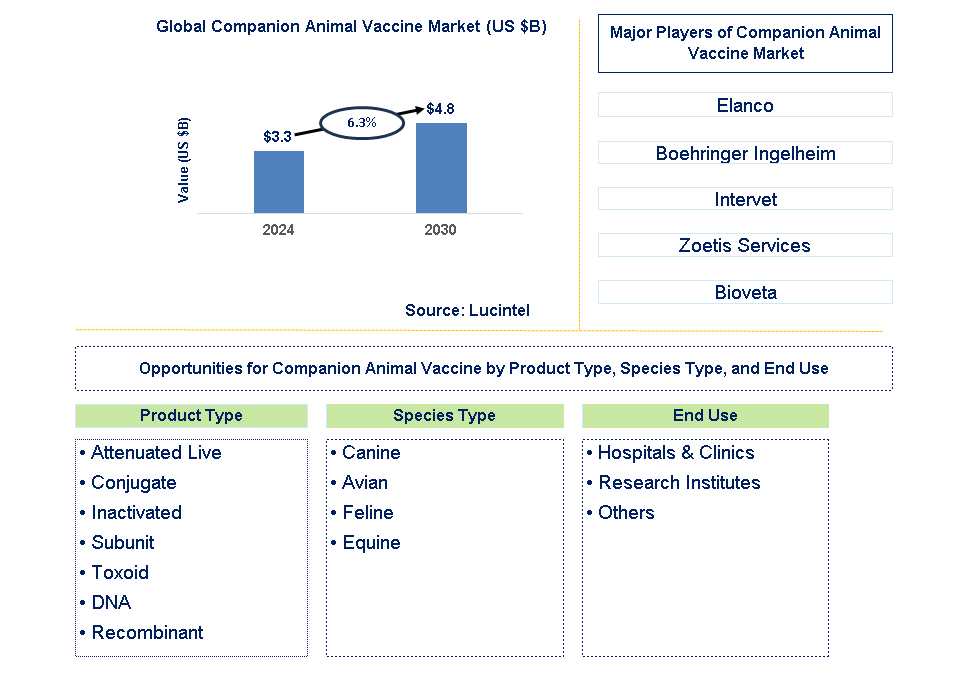
Key data points: The market size in 2030 = $4.8 billion, growth forecast = 6.3% annually for the next 6 years. Scroll below to get more insights. This market report covers trends, opportunities, and forecasts in the global companion animal vaccine market to 2030 by product type (attenuated live, conjugate, inactivated, subunit, toxoid, DNA, and recombinant), species type (canine, avian, feline, and equine), end use (hospitals & clinics, research institutes, and others), and region (North America, Europe, Asia Pacific, and the Rest of the World)
We'll send your sample report shortly.
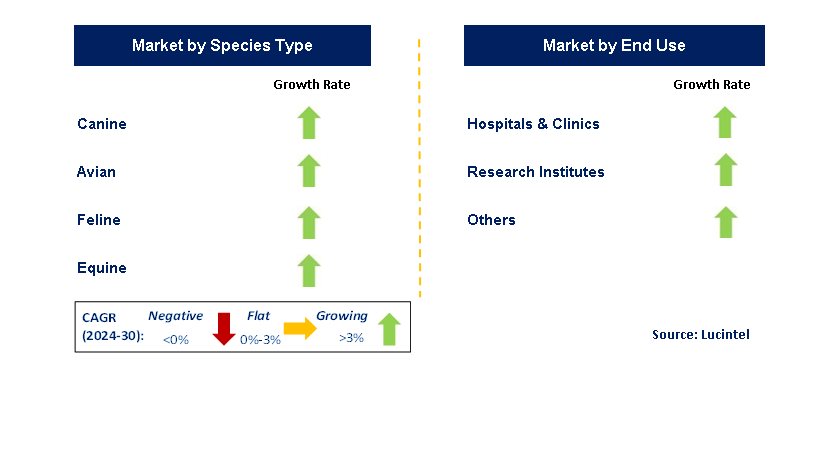
• Lucintel forecasts that, within the species type category, canines will remain the largest segment due to increasing awareness of the importance of this vaccination among dog owners for protecting their pets from serious diseases.
• Within the end use category, hospital & clinics are expected to witness the highest growth over the forecast period.
• In terms of regions, North America will remain the largest region due to high pet ownership rates and increasing awareness of the importance of pet vaccination among the population in the region. Gain valuable insights for your business decisions with our comprehensive 150+ page report.
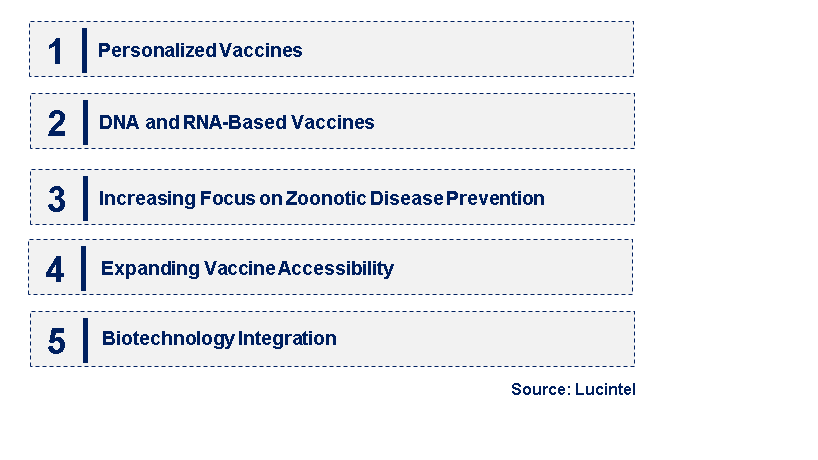
• Personalized Vaccines: Advances in genetic profiling have led to the creation of personalized vaccines tailored to the specific needs of individual pets. This trend is particularly prominent in countries like Japan and the USA, where pet owners seek more customized healthcare solutions for their animals. Personalized vaccines offer enhanced efficacy with fewer side effects, making them increasingly preferred by pet owners.
• DNA and RNA-Based Vaccines: The rise of DNA and RNA vaccines is revolutionizing the industry. These vaccines provide rapid protection against a broad range of diseases, particularly emerging infectious ones. Companies in the US and Europe are leading the development of these next-generation vaccines, which are becoming essential for improving pet health outcomes.
• Focus on Zoonotic Disease Prevention: There is an increasing focus on vaccines that not only protect pets from infectious diseases but also reduce the risk of transmission to humans (zoonotic diseases). Countries like Germany, where public health and animal health are strongly integrated, are at the forefront of this trend. These vaccines are central to developing integrated health strategies.
• Expanding Vaccine Accessibility: Vaccine accessibility is expanding, particularly in emerging economies such as India and China. Efforts to make vaccines more affordable and accessible, through collaborations between businesses and governments, are improving vaccination rates and overall animal health in these regions.
• Biotechnology Integration: The incorporation of advanced biotechnology into vaccine development is transforming the market. Techniques such as CRISPR and synthetic biology are being leveraged to create vaccines that are not only more effective but also safer for pets. This trend is expected to result in new generations of vaccines that are quicker to produce, more cost-efficient, and better suited to meet the evolving needs of the market. These trends indicate a shift toward more individualized, accessible, and efficient vaccines in the companion animal market, which will significantly improve global pet health outcomes.
• Innovative DNA-Based Vaccines: Advances in DNA-based vaccines are making strides toward broader coverage with reduced doses. These vaccines are designed to combat multiple diseases, providing more effective and targeted immunization options for companion animals.
• Global Manufacturing Expansion: Vaccine manufacturers are expanding production facilities, particularly in developing countries like China and India, to increase the global supply of vaccines. This expansion is crucial to meet the rising demand and ensure vaccines are available to a wider market.
• Collaborations for Zoonotic Disease Prevention: Collaborative efforts between veterinary research institutes and pharmaceutical companies are leading to the development of vaccines that protect both pets and humans from zoonotic diseases. These vaccines are gaining importance as part of a holistic public health approach.
• Low-Cost Immunization Plans: Several companies have introduced affordable vaccines, particularly in developing markets, to improve vaccination rates. These initiatives are supported by public health programs aimed at increasing awareness about the importance of pet vaccination and reducing health risks associated with vaccine-preventable diseases.
• Personalized Vaccine Production: The trend toward personalized vaccines is gaining traction, particularly in developed markets like Japan. Research into breed-specific vaccines is growing, as tailored immunizations are believed to offer more effective protection against diseases specific to certain pet breeds. These developments point to a growing emphasis on innovation, affordability, and global accessibility, shaping the future direction of the companion animal vaccine market.
• Disease-Specific Vaccines: Developing vaccines that target specific diseases prevalent in certain regions presents a significant growth opportunity. By focusing on vaccines for hyper-endemic diseases, companies can create tailored solutions that address local health challenges and improve pet health outcomes in those areas.
• Biotechnology-Driven Vaccine Development: The application of biotechnology, including CRISPR and synthetic biology, is opening up new opportunities for developing more effective, safer vaccines. Companies focusing on these technologies have the potential to innovate and capture market share by offering cutting-edge vaccines tailored to the needs of the pet healthcare sector.
• Expansion in Emerging Markets: Rising pet ownership and growing demand for quality veterinary services in emerging markets, such as India and China, represent significant growth opportunities. Establishing local production facilities and distribution networks in these regions can enable companies to tap into these high-growth markets.
• Online and Direct-to-Consumer Sales: The increasing adoption of e-commerce and direct-to-consumer sales channels presents new opportunities for vaccine distribution. Companies leveraging digital platforms and targeted marketing can expand their reach, particularly in areas where access to veterinary services may be limited.
• Preventive Healthcare Packages: The growing popularity of preventive healthcare packages that bundle vaccines, regular check-ups, and other essential services is opening new opportunities. These packages simplify healthcare for pet owners and encourage regular vaccinations, leading to better overall health for companion animals. By capitalizing on these growth opportunities, businesses can position themselves to take advantage of a rapidly changing and evolving market.
• Technological Innovation: Advancements in biotechnology, such as DNA and RNA-based vaccines, are creating more effective and targeted vaccines for pets, contributing to improved health outcomes and driving market growth.
• Increasing Pet Ownership: As more people adopt pets, particularly in urban areas, the demand for companion animal vaccines is growing. Pet owners are becoming more conscious of their pets’ health, driving up the need for vaccinations.
• Rising Awareness of Animal Health: Increased awareness of the importance of disease prevention through vaccination, particularly in developed countries, is driving higher vaccination rates. Pet owners are more informed about the risks associated with preventable diseases, prompting greater demand for vaccines.
• Government Support and Regulations: In emerging markets, supportive government policies and simplified regulatory processes are facilitating vaccine development and distribution, making vaccines more widely available to pet owners.
• Rise of Zoonotic Diseases: The increasing prevalence of zoonotic diseases has led to greater demand for vaccines that can protect both pets and humans, highlighting the need for integrated public health strategies. Challenges in the companion animal vaccine market are:
• Regulatory Hurdles: Navigating complex and varying regulatory environments across different regions can delay vaccine approvals and market entry; this challenge may limit vaccine companies.
• High R&D Costs: High R&D costs, especially for innovative vaccines, can hinder entry into a market and curtail competition from smaller firms.
• Vaccine Hesitancy: Safety concerns, side effects, or false information prevent some pet owners from vaccinating their pets thus hindering market growth. These drivers along with the challenges delineate how the companion animal vaccine market is evolving. There are numerous opportunities associated with technology advancements as well as increasing demand but overcoming economic barriers to regulation will be key if this industry is to continue experiencing growth.
• Elanco
• Boehringer Ingelheim International
• Intervet
• Zoetis Services
• Bioveta
• Sanofi
• Bayer
• Heska
• Virbac
• Hester Biosciences
• Attenuated Live
• Conjugate
• Inactivated
• Subunit
• Toxoid
• DNA
• Recombinant
• Canine
• Avian
• Feline
• Equine
• Hospitals & Clinics
• Research Institutes
• Others
• North America
• Europe
• Asia Pacific
• The Rest of the World
• United States: The US market is seeing significant progress in the development of DNA-based vaccines for companion animals. Research is focused on creating vaccines that provide broader protection with fewer doses, and efforts to improve vaccine distribution networks are also underway.
• China: China is expanding its vaccine production capabilities with government support. Recent developments include the establishment of new manufacturing plants and partnerships with global companies to improve vaccine quality and availability, especially in urban areas.
• Germany: Germany is a leader in developing vaccines for zoonotic diseases. Recent collaborations between veterinary research institutes and pharmaceutical companies are focused on vaccines that not only protect pets but also reduce the risk of disease transmission to humans.
• India: With increasing urban pet ownership, India’s companion animal vaccine market is growing rapidly. Recent initiatives include the launch of affordable vaccine options and awareness campaigns aimed at increasing vaccination rates, supported by government efforts to streamline regulatory approvals.
• Japan: Japan is focusing on personalized vaccines, particularly breed-specific vaccines that address unique health concerns in different dog breeds. Advanced biotechnology is being utilized to create custom-made vaccines based on the genetic profiles of individual pets.


• Elanco
• Boehringer Ingelheim International
• Intervet
• Zoetis Services
• Bioveta
• Sanofi
• Bayer
• Heska
• Virbac
• Hester Biosciences Q6. Which companion animal vaccine market segment will be the largest in the future? Answer: Lucintel forecasts that canine will remain the largest segment due to increasing awareness of the importance of this vaccination among dog owners for protecting their pets from serious diseases. Q7. In the companion animal vaccine market, which region is expected to be the largest in the next 5 years? Answer: North America will remain the largest region due to high pet ownership rates and increasing awareness of the importance of pet vaccination among the population in the region. Q.8 Do we receive customization in this report? Answer: Yes, Lucintel provides 10% customization without any additional cost.


Choose a license that fits your team. Instant PDF delivery.
Prices exclude taxes. Instant delivery. Custom licensing available on request.
Market Report · July 15, 2026
Market Report · June 26, 2026
Market Report · May 18, 2026
Trusted partner for strategic intelligence and business growth


Receive a complimentary market analysis tailored to your industry. Our analysts will identify key growth opportunities and competitive dynamics specific to your business.

Market size, growth rate, and key trend analysis for your specific sector.

Top competitor positioning and market share analysis.

Strategic recommendations backed by data-driven insights.
Get curated market intelligence and competitive moves straight to your inbox.
By subscribing, you agree to receive our monthly insights. Unsubscribe anytime.
Receive a complimentary market analysis tailored to your industry. Our analysts will identify key growth opportunities and competitive dynamics specific to your business.
Market size, growth rate, and key trend analysis for your specific sector.
Top competitor positioning and market share analysis.
Strategic recommendations backed by data-driven insights.
Get curated market intelligence, emerging trends, and competitive moves straight to your inbox each month.
By subscribing, you agree to receive our monthly insights. Unsubscribe anytime.
We'll send your sample report shortly.