
Market Report · July 29, 2026

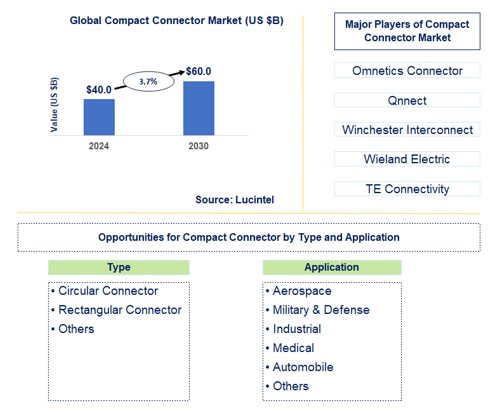
Key data points: The growth forecast = 3.7% annually for the next 6 years. Scroll below to get more insights. This market report covers trends, opportunities, and forecasts in the global compact connector market to 2030 by type (circular connector, rectangular connector, and others), application (aerospace, military & defense, industrial, medical, automobile, and others), and region (North America, Europe, Asia Pacific, and the Rest of the World)
We'll send your sample report shortly.
• United States: In the United States, the compact connector market has seen a surge in demand driven by the rapid growth of the electric vehicle (EV) industry. Manufacturers are focusing on developing high-performance connectors that can handle increased power requirements while maintaining compact designs. Additionally, advancements in materials, such as using lighter and more durable substances, are enhancing connector efficiency and reliability. Companies are also investing in smart technology, integrating connectors with sensors that provide real-time performance data, thus improving maintenance and operational efficiency.
• China: The China compact connector market is rapidly evolving, primarily fueled by the country's booming electronics manufacturing sector. With the rise of smart devices and IoT applications, there is significant demand for miniaturized connectors that ensure high-speed data transfer in limited spaces. Local manufacturers are increasingly adopting automated production technologies to enhance efficiency and reduce costs. Furthermore, government initiatives promoting electric mobility and renewable energy are driving innovation in compact connectors designed for automotive and renewable energy applications, positioning China as a major player in this market.
• Germany: The Germany compact connector market is characterized by a strong emphasis on quality and reliability, particularly in the automotive and industrial sectors. German manufacturers are focusing on engineering high-precision connectors that meet stringent safety and performance standards. Recent developments include the integration of advanced sealing technologies to enhance durability in harsh environments. Additionally, the trend toward Industry 4.0 is driving the demand for connectors that support automation and connectivity in manufacturing processes, leading to innovative solutions that improve operational efficiency and product quality.
• India: In India, the compact connector market is witnessing robust growth due to the increasing adoption of electronics in various sectors, including telecommunications and consumer electronics. Local companies are investing in research and development to create connectors that meet international quality standards while being cost-effective. There is also a notable shift toward environmentally friendly manufacturing practices, with an emphasis on using recyclable materials. As India continues to strengthen its electronics manufacturing ecosystem, opportunities for compact connector innovations are expected to grow significantly, catering to both domestic and international markets.
• Japan: The Japan compact connector market is driven by its advanced technology landscape and a strong focus on innovation. Japanese manufacturers are leading in developing highly compact and efficient connectors suitable for applications in robotics, automotive, and consumer electronics. The trend toward automation and smart manufacturing is propelling demand for connectors that facilitate seamless connectivity between devices. Moreover, Japanese companies are increasingly collaborating with global partners to enhance their product offerings and expand their market reach, ensuring they remain competitive in the rapidly evolving connector landscape.
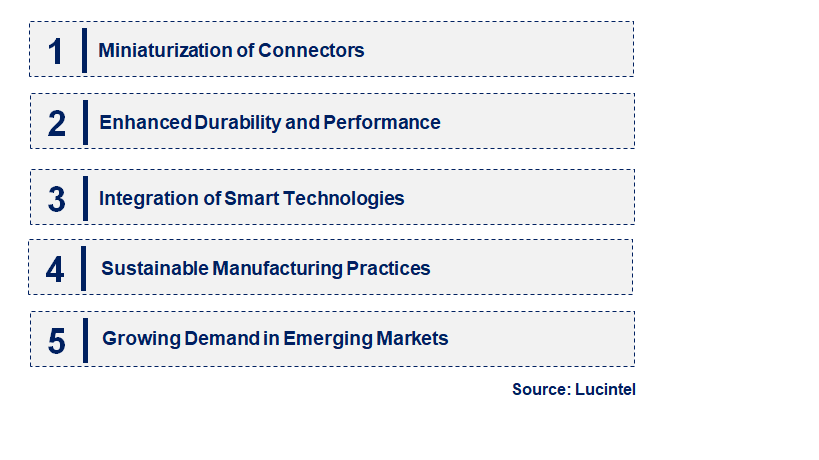
• Miniaturization of Connectors: The trend toward miniaturization is driving the development of compact connectors that occupy less space while delivering high performance. As devices become smaller and more integrated, manufacturers are focusing on reducing the size of connectors without compromising functionality. This miniaturization is particularly important in sectors like consumer electronics, where space is at a premium. Companies that can innovate in design and materials to create smaller connectors will likely gain a competitive edge, meeting the needs of a market increasingly focused on compact solutions.
• Enhanced Durability and Performance: As the demand for compact connectors grows, so does the need for enhanced durability and performance. Manufacturers are developing connectors that can withstand harsh environments, including extreme temperatures and vibrations. Innovations in materials and sealing technologies are crucial for ensuring reliability and longevity in applications such as automotive and industrial machinery. By focusing on creating robust connectors, companies can appeal to industries that require dependable performance, thereby increasing market share and customer loyalty.
• Integration of Smart Technologies: The integration of smart technologies into compact connectors is an emerging trend that enhances their functionality. Connectors with embedded sensors and connectivity features allow for real-time monitoring and diagnostics, improving overall system performance. This innovation is particularly relevant in sectors such as automotive and IoT, where data-driven insights can lead to better decision-making and operational efficiencies. Companies that invest in developing smart connectors can position themselves as leaders in a market increasingly reliant on advanced technology.
• Sustainable Manufacturing Practices: Sustainability is becoming a critical factor in the compact connector market, with consumers and businesses alike prioritizing eco-friendly products. Manufacturers are adopting sustainable practices, such as using recyclable materials and reducing energy consumption in production processes. This trend not only meets consumer demand for environmentally responsible products but also aligns with global initiatives for sustainability. Companies that emphasize their commitment to sustainable manufacturing can enhance their brand image and attract eco-conscious customers, creating new opportunities for growth.
• Growing Demand in Emerging Markets: Emerging markets, particularly in Asia-Pacific, are experiencing rapid growth in the compact connector market due to increasing urbanization and rising disposable incomes. As these regions adopt new technologies in various sectors, including telecommunications and automotive, the demand for compact and efficient connectors is rising. Companies that strategically position themselves to cater to these markets can benefit from the growing consumer base. By investing in local partnerships and understanding regional needs, manufacturers can capitalize on these lucrative opportunities for expansion. Recent developments in the compact connector market reveal a landscape shaped by innovation, sustainability, and evolving consumer demands. As emerging trends such as miniaturization, durability, smart technology integration, sustainability, and growth in emerging markets continue to evolve, companies that embrace these trends will be well-positioned for success. Adapting to these changes will not only drive market growth but also meet the needs of consumers seeking efficient and reliable connectivity solutions.
• Advanced Materials Utilization: Recent developments in the compact connector market have seen manufacturers adopting advanced materials that enhance durability and performance. Materials such as high-temperature plastics and metals resistant to corrosion are increasingly used to improve the lifespan and reliability of connectors. These innovations are essential in industries like automotive and aerospace, where connectors face harsh operating conditions. By leveraging these advanced materials, manufacturers can create connectors that not only withstand demanding environments but also comply with stringent safety and performance standards, thus driving customer trust and satisfaction.
• Integration of Smart Features: The integration of smart features into compact connectors is transforming the market. Many new connectors now include built-in sensors that allow for real-time monitoring of performance metrics such as temperature and current flow. This advancement enables proactive maintenance and enhances operational efficiency, particularly in automated systems and IoT applications. By incorporating smart technology, manufacturers are not only improving the functionality of connectors but also providing end-users with valuable data that can optimize system performance and reduce downtime, making these connectors more appealing in competitive markets.
• Growing Demand for Automotive Applications: The automotive sector is a significant driver of growth in the compact connector market. With the rise of electric vehicles (EVs) and advanced driver-assistance systems (ADAS), the demand for high-performance connectors has surged. These applications require connectors that can handle increased power and data transfer needs while maintaining a compact footprint. Manufacturers are responding by developing connectors specifically designed for automotive use, focusing on high reliability and safety standards. This targeted innovation is crucial for capturing a share of the rapidly evolving automotive market, especially as consumer preferences shift toward electric and hybrid vehicles.
• Enhanced Manufacturing Techniques: Recent advancements in manufacturing techniques, such as automation and additive manufacturing, are revolutionizing the compact connector market. These technologies enable more precise and efficient production processes, reducing waste and improving quality. Automation allows for high-volume production with consistent performance, while additive manufacturing provides the flexibility to create complex designs that were previously unfeasible. By adopting these modern manufacturing methods, companies can enhance their competitive edge, accelerate product development cycles, and respond more effectively to market demands, thereby driving growth in the sector.
• Focus on Sustainability: Sustainability has become a central focus in the compact connector market, with manufacturers increasingly prioritizing eco-friendly practices. This includes using recyclable materials and minimizing energy consumption during production. Companies are also developing connectors that contribute to the overall sustainability of electronic devices, such as those that are more energy-efficient or designed for easier recycling. As consumers and businesses become more environmentally conscious, manufacturers that emphasize sustainable practices and products will not only meet regulatory requirements but also strengthen their brand reputation and appeal to eco-minded customers. Recent developments in the compact connector market reflect a dynamic landscape shaped by technological advancements and evolving consumer demands. Innovations in materials, smart features, automotive applications, manufacturing techniques, and sustainability are driving growth and positioning manufacturers for success. As the market continues to evolve, companies that stay ahead of these trends will be well-equipped to meet the challenges and opportunities that lie ahead.
• Automotive Applications: The automotive industry presents a significant growth opportunity for compact connectors, particularly with the rise of electric vehicles (EVs) and advanced driver-assistance systems (ADAS). These vehicles require high-performance connectors capable of handling increased power demands and complex data transmission. Manufacturers can develop specialized connectors that meet the stringent requirements of automotive standards while ensuring compactness and reliability. This focus on automotive applications will not only enhance performance but also position companies to capitalize on the growing trend toward electrification and automation in transportation.
• Telecommunications: As the telecommunications sector continues to expand with the rollout of 5G networks, the demand for compact connectors that support high-speed data transmission is increasing. These connectors must be capable of handling higher frequencies and bandwidths while maintaining a small form factor. Companies can innovate by creating connectors designed specifically for 5G infrastructure, including base stations and user devices. By prioritizing this application, manufacturers can tap into the lucrative telecommunications market, offering products that meet the evolving connectivity needs of consumers and businesses alike.
• Consumer Electronics: The consumer electronics market is another key growth opportunity for compact connectors, driven by the proliferation of smart devices and wearables. As products become smaller and more integrated, the need for efficient, space-saving connectors is paramount. Manufacturers can focus on developing connectors that facilitate seamless connectivity in devices such as smartphones, tablets, and smart home appliances. By creating high-performance, compact solutions tailored to this market, companies can enhance user experience and establish a strong presence in the rapidly growing consumer electronics sector.
• Industrial Automation: The rise of Industry 4.0 and the increasing automation of manufacturing processes create significant opportunities for compact connectors in industrial applications. These connectors must support robust data and power transmission while withstanding harsh environments. Companies can develop connectors that integrate with smart factory systems, enabling real-time data collection and communication between machines. By focusing on this application, manufacturers can address the needs of industries looking to improve efficiency and productivity through advanced automation technologies.
• Medical Devices: The medical device sector is experiencing growth driven by advancements in healthcare technology and the increasing demand for portable medical equipment. Compact connectors play a crucial role in enabling connectivity in devices such as diagnostic equipment, wearables, and telehealth solutions. Manufacturers can innovate by developing reliable, biocompatible connectors that meet the stringent regulatory requirements of the medical field. By targeting this application, companies can enhance patient care and support the ongoing digital transformation in healthcare, positioning themselves as leaders in a high-growth market. The compact connector market offers numerous strategic growth opportunities across various applications, including automotive, telecommunications, consumer electronics, industrial automation, and medical devices. By focusing on these key areas, manufacturers can leverage evolving technological trends and consumer demands to drive innovation and expand their market presence. As industries continue to embrace connectivity, those who invest in tailored solutions will be well-positioned to capitalize on the growing demand for compact connectors.
• Technological Advancements: Rapid technological advancements are a significant driver of the compact connector market. Innovations in materials and manufacturing processes enable the development of smaller, more efficient connectors that meet the growing demands for high-speed data transfer and power delivery. As industries adopt new technologies, the need for compact, reliable connectors becomes increasingly critical. Furthermore, the integration of smart features, such as sensors and connectivity options, enhances the functionality of connectors, making them essential components in modern electronic devices and industrial applications.
• Growing Demand for Miniaturization: The trend toward miniaturization across various sectors, particularly in consumer electronics and automotive applications, significantly drives the compact connector market. As devices become smaller and more integrated, the need for space-efficient connectors is paramount. This demand pushes manufacturers to innovate and produce connectors that maintain performance while minimizing size. Industries such as wearables, smartphones, and IoT devices are particularly influenced by this trend, as compact connectors are essential for enhancing device functionality without compromising design or performance.
• Expansion of Electric Vehicles (EVs): The automotive industry, particularly with the shift toward electric vehicles, is a major growth driver for the compact connector market. EVs require specialized connectors that can handle higher voltages and currents while maintaining compactness and reliability. The rise of advanced driver-assistance systems (ADAS) further increases the demand for high-performance connectors. As more consumers and manufacturers embrace electrification, the need for innovative connector solutions tailored to the unique requirements of EVs presents a substantial opportunity for market expansion.
• Increase in Industrial Automation: The movement toward Industry 4.0 and greater industrial automation creates significant demand for compact connectors that can support high-speed data transmission and robust power delivery in smart factory environments. As manufacturers integrate IoT devices and automated systems, the need for reliable and compact connectivity solutions becomes critical. This trend allows connector manufacturers to develop specialized products that enhance the efficiency and effectiveness of automated processes, driving growth in the compact connector market across various industrial applications.
• Rising Consumer Electronics Market: The booming consumer electronics market is a crucial driver for the compact connector industry. With the proliferation of smart devices, wearables, and home automation products, the demand for compact and efficient connectors is increasing. As consumers seek enhanced functionality and portability, manufacturers are motivated to innovate and create connectors that can support advanced features while minimizing size. This growing market not only presents opportunities for product development but also encourages companies to differentiate themselves through quality and performance. Challenges in the compact connector market are:
• Intense Competition: The compact connector market is characterized by intense competition among numerous manufacturers. This competitive landscape can lead to price wars, squeezing profit margins and making it challenging for companies to maintain market share. To stand out, manufacturers must invest in innovation and quality, but these efforts require significant resources. Companies need to find ways to differentiate their products through advanced features or specialized applications to combat this competition effectively and sustain profitability.
• Regulatory Compliance: Navigating regulatory compliance is a critical challenge for manufacturers in the compact connector market. Various industries, such as automotive and medical, have stringent safety and performance standards that connectors must meet. Failure to comply with these regulations can result in legal repercussions and damage to brand reputation. Additionally, the process of achieving compliance can be time-consuming and costly, potentially delaying product launches. Companies must invest in quality assurance and regulatory knowledge to ensure their products meet all necessary standards.
• Fluctuating Consumer Preferences: The compact connector market faces challenges related to fluctuating consumer preferences, which can significantly impact demand. Rapid changes in technology and consumer behavior can make it difficult for manufacturers to predict trends and adapt their offerings accordingly. For example, as consumers increasingly seek eco-friendly products, connectors made from sustainable materials may become more desirable. Companies need to stay attuned to market trends and consumer needs, investing in market research and flexible product development to remain competitive and relevant. The compact connector market is shaped by a variety of drivers, including technological advancements, the demand for miniaturization, the growth of electric vehicles, industrial automation, and the expanding consumer electronics market. However, challenges such as intense competition, regulatory compliance, and fluctuating consumer preferences present hurdles that companies must navigate. By understanding these dynamics, manufacturers can develop effective strategies to leverage opportunities while mitigating risks in this evolving landscape.
• Omnetics Connector
• Qnnect
• Winchester Interconnect
• Wieland Electric
• TE Connectivity
• Axon’ Cable
• AirBorn
• Bel Fuse
• Binder
• Glenair
• Circular Connector
• Rectangular Connector
• Others
• Aerospace
• Military & Defense
• Industrial
• Medical
• Automobile
• Others
• North America
• Europe
• Asia Pacific
• The Rest of the World
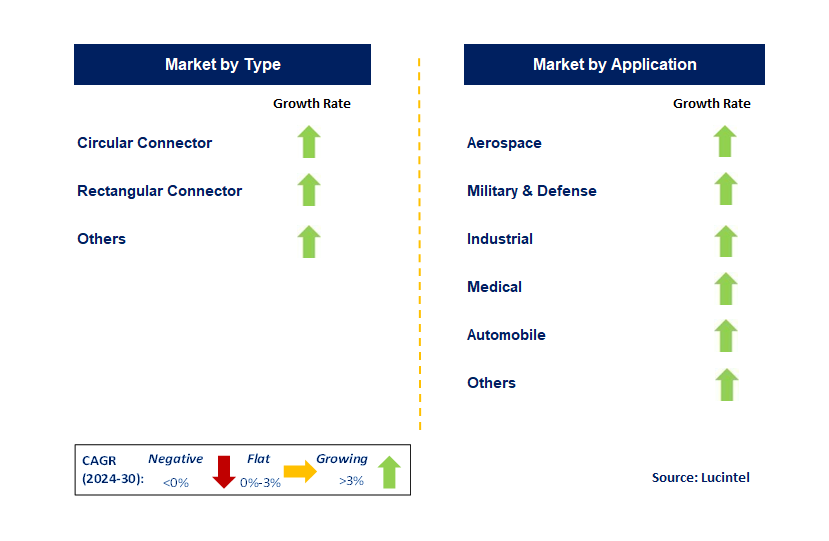
• Lucintel forecasts that, within the type category, circular connector is expected to witness the higher growth.
• Within the application category, industrial is expected to witness the highest growth.
• In terms of regions, North America is expected to witness highest growth. Gain valuable insights for your business decisions with our comprehensive 150+ page report.


• Omnetics Connector
• Qnnect
• Winchester Interconnect
• Wieland Electric
• TE Connectivity
• Axon’ Cable
• AirBorn
• Bel Fuse
• Binder
• Glenair Q5. Which compact connector market segment will be the largest in future? Answer: Lucintel forecasts that circular connector is expected to witness the higher growth. Q6. In compact connector market, which region is expected to be the largest in next 5 years? Answer: North America is expected to witness highest growth. Q.7 Do we receive customization in this report? Answer: Yes, Lucintel provides 10% customization without any additional cost.


Choose a license that fits your team. Instant PDF delivery.
Prices exclude taxes. Instant delivery. Custom licensing available on request.
Market Report · July 29, 2026
Market Report · July 20, 2026
Market Report · July 20, 2026
Trusted partner for strategic intelligence and business growth


Receive a complimentary market analysis tailored to your industry. Our analysts will identify key growth opportunities and competitive dynamics specific to your business.

Market size, growth rate, and key trend analysis for your specific sector.

Top competitor positioning and market share analysis.

Strategic recommendations backed by data-driven insights.
Get curated market intelligence and competitive moves straight to your inbox.
By subscribing, you agree to receive our monthly insights. Unsubscribe anytime.
Receive a complimentary market analysis tailored to your industry. Our analysts will identify key growth opportunities and competitive dynamics specific to your business.
Market size, growth rate, and key trend analysis for your specific sector.
Top competitor positioning and market share analysis.
Strategic recommendations backed by data-driven insights.
Get curated market intelligence, emerging trends, and competitive moves straight to your inbox each month.
By subscribing, you agree to receive our monthly insights. Unsubscribe anytime.
We'll send your sample report shortly.