
Market Report · May 18, 2026

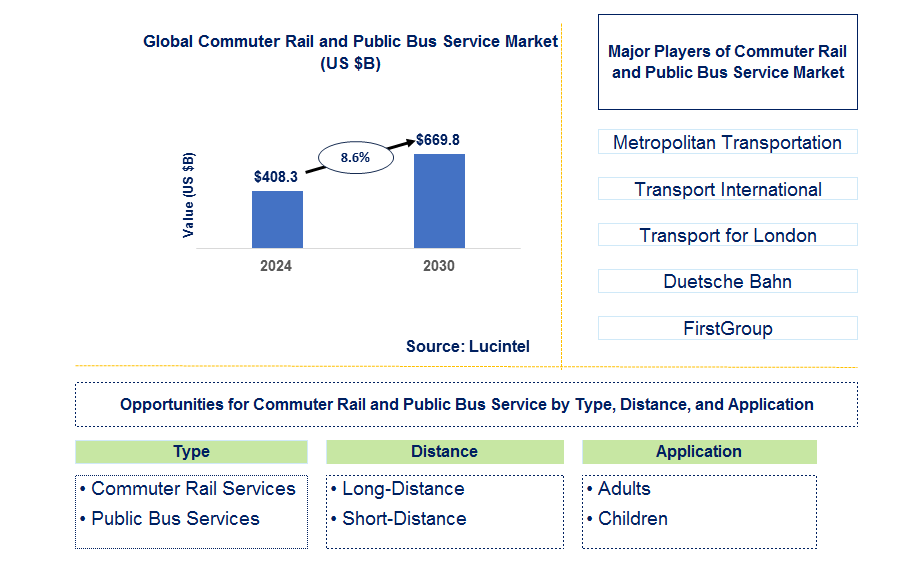
Key data points: The market size in 2030 = $669.8 billion, growth forecast = 8.6% annually for the next 6 years. Scroll below to get more insights. This market report covers trends, opportunities, and forecasts in the global commuter rail and public bus service market to 2030 by type (commuter rail services and public bus services), distance (long-distance and short-distance), application (adults and children), and region (North America, Europe, Asia Pacific, and the Rest of the World)
We'll send your sample report shortly.
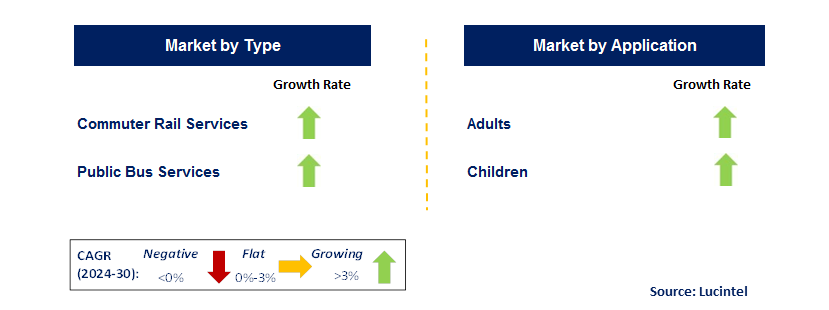
• Lucintel forecasts that, within the type category, public bus service will remain a larger segment over the forecast period because the buses can navigate through narrow streets and reach areas inaccessible by rail, providing more comprehensive coverage and flexibility for passengers.
• In terms of regions, Europe will remain the largest region over the forecast period because the European cities have established an extensive public transportation networks, catering to millions of daily commuters. Gain valuable insights for your business decisions with our comprehensive 150+ page report.
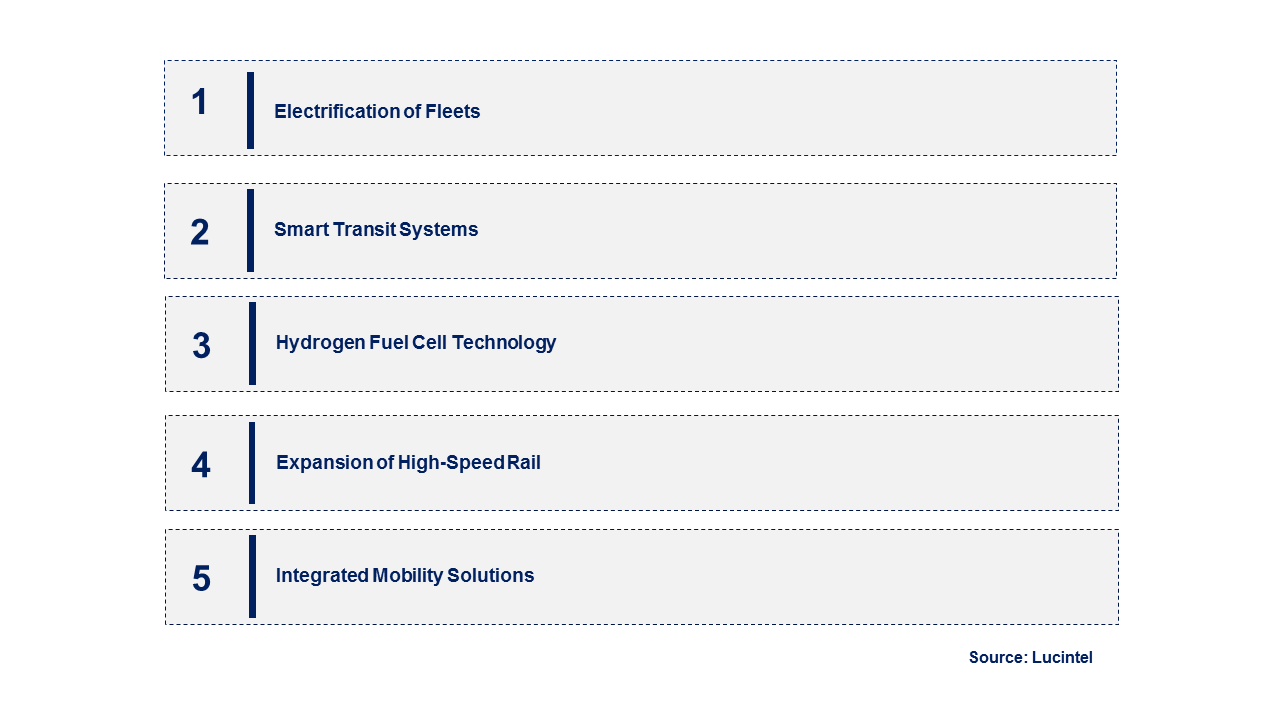
• Electrification of Fleets: The move towards electrically run buses and trains is accelerating due to environmental concerns and progress in battery technology. Electrification helps reduce greenhouse gas emissions and operating expenses, aligning with global sustainability objectives while boosting the effectiveness of public transportation.
• Smart Transit Systems: Public transportation has been transformed through the inclusion of smart technologies such as real-time tracking, predictive maintenance, and digital ticketing. These technologies increase operational efficiency, improve passenger experience, and provide valuable data for route optimization.
• Hydrogen Fuel Cell Technology: Emerging hydrogen fuel cells can minimize emissions from public buses. These provide clean energy sources with quick refueling times and long ranges, making them suitable for various forms of commuting and supporting greener local mass transportation.
• Expansion of High-Speed Rail: The expansion of high-speed rail networks is a key trend, with countries investing in faster and more efficient rail systems. High-speed rail improves connections between cities, minimizes travel time, and supports the economy.
• Integrated Mobility Solutions: The development of integrated mobility platforms that combine different modes of transportation, such as buses, trains, and ride-sharing services, is improving the efficiency and convenience of public transit. These platforms facilitate smooth passenger travel and easy accessibility. Key emerging trends in the commuter rail and public bus service market indicate a shift towards electrification, smart technologies, hydrogen fuel cells, high-speed rail, integrated mobility solutions, and improved accessibility. These trends are driving innovation and transforming public transport to meet contemporary needs for sustainable development.
• Expansion of Electric and Hybrid Buses: The global shift towards electric buses is becoming widespread due to urban air pollution reduction efforts and energy-saving goals. Many cities are investing in fleets of electric buses and their charging stations, among other infrastructural improvements. This will enhance the environmental footprint of mass transit through better energy efficiency, resulting in long-term cost savings.
• Advancements in High-Speed Rail: Development continues within the high-speed railway network sector as new lines are created alongside technological advancements to link major urban centers. Increasing speeds on high-speed railways aim to reduce travel times while integrating with other modes of transportation. These developments will meet the growing demand for fast mass transit, supporting economic growth and regional development.
• Integration of Smart Technologies: Public transport systems are being changed by the adoption of smart technologies. These include real-time tracking, digital ticketing, and predictive maintenance systems that increase efficiency and improve customer experience. These technologies provide data needed to optimize transit operations and simplify the passenger experience.
• Development of Hydrogen Fuel Cell Buses: Clean hydrogen fuel cell technology is emerging as an alternative for public bus fleets. They have zero emissions, short refueling times, and can travel long distances, thereby reducing carbon footprints in public transport. Some cities are testing the performance and scalability of hydrogen fuel cell buses.
• Expansion of Public Transit Networks: Many cities are expanding their public transit networks to improve coverage and accessibility. They aim to connect underserved areas through new bus routes, commuter rail lines, and transit hubs, offering more options for passengers who rely on cars. The goal is to increase the use of available public vehicles while decreasing dependence on private ones. Recent developments in the commuter rail and public bus service market reflect significant advancements in electrification, high-speed rail, smart technologies, hydrogen fuel cells, and network expansion. These innovations aim to improve the efficiency, sustainability, and accessibility of existing transportation systems in line with changing requirements in a rapidly evolving environment.
• Investment in Electric and Hybrid Vehicles: Investing in electric and hybrid buses and trains presents an opportunity for growth as cities and countries strive to curb emissions and improve fuel economy. This trend supports environmental sustainability objectives while aligning with emerging regulatory demands for cleaner public transport solutions.
• Expansion of High-Speed Rail Networks: Increasing regional connectivity and reducing travel times through the creation of high-speed rail networks offer significant opportunities for expansion. By promoting economic development, increasing transit ridership, and providing competitive alternatives to other modes, investment in high-speed rail infrastructure can be leveraged for these benefits.
• Integration of Smart Transit Solutions: Growth opportunities exist in developing smart transit solutions, including real-time tracking, digital payment systems, and predictive analytics that optimize operational efficiency and enhance passenger experience. These technologies can improve transit operations and service delivery.
• Adoption of Hydrogen Fuel Cell Technology: The adoption of hydrogen fuel cell buses offers a growth opportunity by providing a zero-emission alternative to conventional diesel buses. This environmentally friendly technology is attractive to urban centers seeking to diversify their clean energy options.
• Expansion into Emerging Markets: Expanding public transportation services into emerging markets with growing urban populations presents opportunities for growth. Investment in new transit infrastructure and services in these regions can address increasing mobility needs and support economic development. In the commuter rail and public bus service market, stakeholders can adopt new directions that will spur innovation, improve service quality, and address the changing needs of urban transport. Such efforts will enhance the effectiveness and attractiveness of public transport systems while furthering the broader objectives of environmental sustainability, social equity, and urban regeneration.
• Increasing Urbanization: Rapid urban population growth is fueling demand for expanded and improved public transportation systems. Growing demand for effective and reliable transit options has spurred investments in commuter rail and public bus services.
• Government Support and Funding: Government programs and funding aimed at boosting public transport infrastructure and technology upgrades are significant drivers. These efforts accelerate market development and innovation by supporting sustainable mass transit solutions like electric buses and high-speed rails.
• Focus on Environmental Sustainability: Many countries now prioritize reducing carbon emissions, leading to cleaner transportation technologies. Investments in electric vehicles and hydrogen fuel cell vehicles align with global sustainability objectives and regulatory requirements.
• Technological Advancements: New smart technologies have made it easier for people to use available public transport options, such as tracking trains in real time or purchasing digital tickets. Increased operational efficiency resulting from these developments is driving market growth. Challenges in the commuter rail and public bus service market include:
• High Capital Investment: The initial capital investment required for developing and upgrading public transportation infrastructure can be substantial. Expenses related to purchasing new vehicles, constructing railway lines, and installing supporting infrastructure present significant challenges.
• Regulatory and Compliance Issues: Public transportation providers face challenges in navigating complex regulations that enforce compliance standards, making it difficult to meet safety guidelines from environmental management bodies or operational procedures. This leads to increased expenses for involved firms.
• Operational Efficiency: Ensuring efficient operation of a network of interconnected transportation systems is challenging. Factors such as on-time performance, vehicle maintenance programs, and reliability of services all influence overall performance levels and customer satisfaction rates.
• Infrastructure Limitations: Existing infrastructure limitations, such as outdated rail networks and inadequate bus lanes, can slow expansion efforts and negatively affect efficiency across public transportation service areas. Improving or expanding infrastructure will be a significant hurdle to overcome in the future. Urbanization, government support, and advancements in technology are the main factors influencing the commuter rail and public bus service market, while challenges like capital investment, regulatory compliance, operational efficiency, and infrastructure limitations persist. Addressing these challenges should be a top priority for promoting public transportation and meeting future demands.
• Metropolitan Transportation Authority
• Transport International
• Transport for London
• Duetsche Bahn
• FirstGroup
• MTR
• ComfortDelGro
• Stagecoach Group
• Guangzhou Metro
• Kyushu Railway Company
• Commuter Rail Services
• Public Bus Services
• Long-Distance
• Short-Distance
• Adults
• Children
• North America
• Europe
• Asia Pacific
• The Rest of the World
• United States: Recent developments in America show a rise in investment in electric and hybrid buses to minimize emissions and enhance efficiency. Simultaneously, efforts are underway to upgrade commuter rail systems through advanced signaling technologies and higher-speed trains, improving connectivity and reducing travel times. Government funding and policy support typically drive these changes.
• China: To reduce urban air pollution, China has increased the deployment of high-speed rail networks and electric buses. The country’s mobility strategy focuses on expanding high-speed rail lines and developing innovative bus technologies.
• Germany: Germany has been at the forefront of implementing green technologies in public transport systems, including hydrogen fuel cell buses and upgrading the commuter railway network with energy-efficient trains. These innovative sustainability measures aim to reduce carbon emissions while ensuring reliability in local mass transportation.
• India: India is focusing on increasing both availability and modernity in public transport infrastructure. Recent changes include the introduction of new bus rapid transit systems and expanding commuter rail services to connect more regions. Digital ticketing and real-time tracking systems are being adopted widely to boost efficiency and convenience in public transport.
• Japan: Japan has extensive experience in advanced rail technology, with ongoing development of its high-speed Shinkansen network and autonomous train systems. At the same time, integrating smart technologies into public buses aims to improve operational efficiency and passenger experience, enhancing Japan’s position as a leader in cutting-edge transport solutions.


• Metropolitan Transportation Authority
• Transport International
• Transport for London
• Duetsche Bahn
• FirstGroup
• MTR
• ComfortDelGro
• Stagecoach Group
• Guangzhou Metro
• Kyushu Railway Company Q6. Which commuter rail and public bus service market segment will be the largest in future? Answer: Lucintel forecasts that public bus service will remain the larger segment over the forecast period because the buses can navigate through narrow streets and reach areas inaccessible by rail, providing more comprehensive coverage and flexibility for passengers. Q7. In commuter rail and public bus service market, which region is expected to be the largest in next 5 years? Answer: Europe will remain the largest region over the forecast period because the European cities have established an extensive public transportation networks, catering to millions of daily commuters. Q.8 Do we receive customization in this report? Answer: Yes, Lucintel provides 10% customization without any additional cost.


Choose a license that fits your team. Instant PDF delivery.
Prices exclude taxes. Instant delivery. Custom licensing available on request.
Market Report · May 18, 2026
Market Report · May 18, 2026
Market Report · May 18, 2026
Trusted partner for strategic intelligence and business growth


Receive a complimentary market analysis tailored to your industry. Our analysts will identify key growth opportunities and competitive dynamics specific to your business.

Market size, growth rate, and key trend analysis for your specific sector.

Top competitor positioning and market share analysis.

Strategic recommendations backed by data-driven insights.
Get curated market intelligence and competitive moves straight to your inbox.
By subscribing, you agree to receive our monthly insights. Unsubscribe anytime.
Receive a complimentary market analysis tailored to your industry. Our analysts will identify key growth opportunities and competitive dynamics specific to your business.
Market size, growth rate, and key trend analysis for your specific sector.
Top competitor positioning and market share analysis.
Strategic recommendations backed by data-driven insights.
Get curated market intelligence, emerging trends, and competitive moves straight to your inbox each month.
By subscribing, you agree to receive our monthly insights. Unsubscribe anytime.
We'll send your sample report shortly.