
Market Report · July 29, 2026

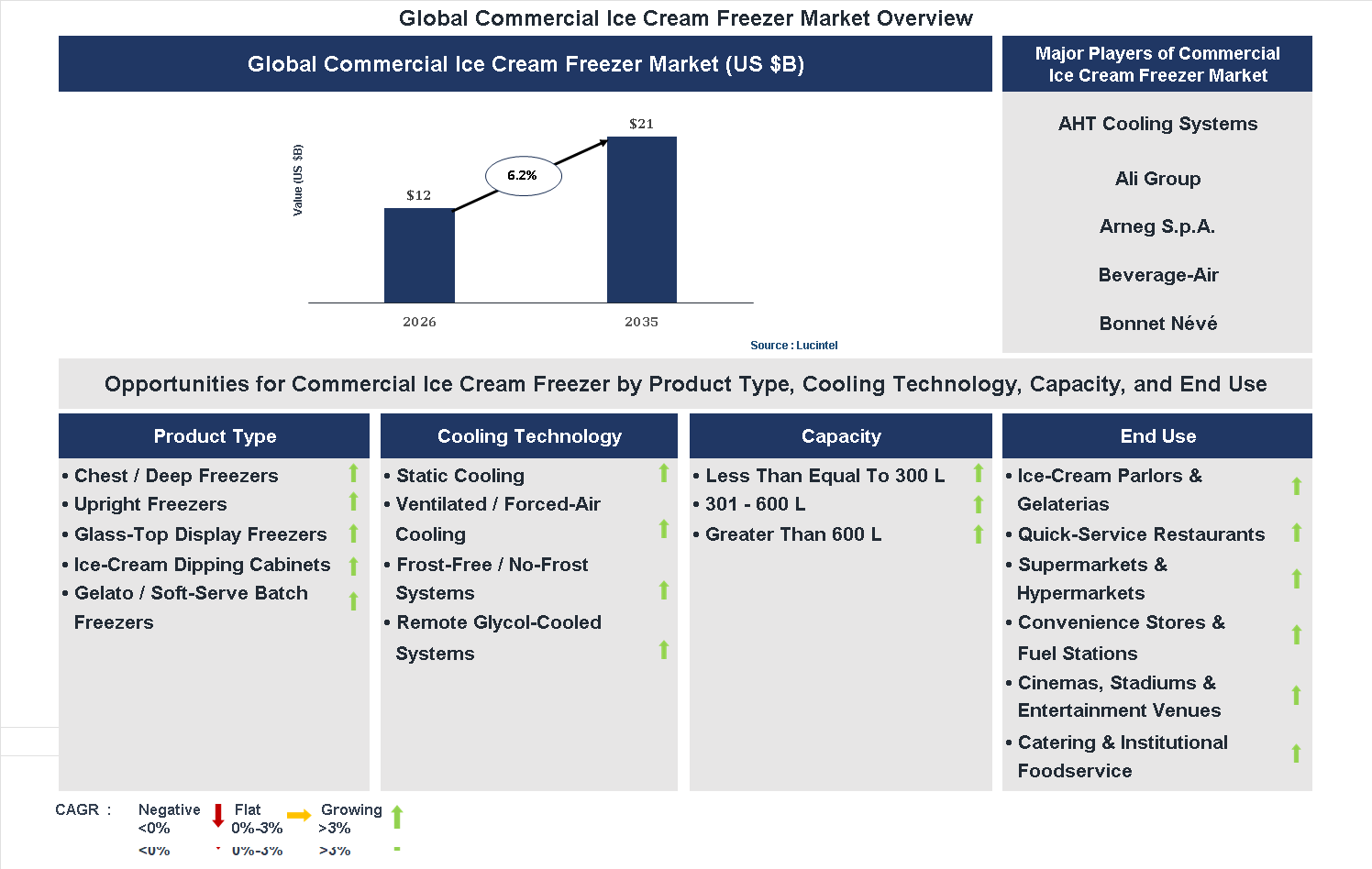
Key data points: The market size in 2035 = $21 billion, growth forecast = 6.2% annually for the next 8 years. Scroll below to get more insights. This market report covers trends, opportunities and forecasts in commercial ice cream freezer market to 2035 by product type (chest / deep freezers, upright freezers, glass-top display freezers, ice-cream dipping cabinets, and gelato / soft-serve batch freezers), cooling technology (static cooling, ventilated / forced-air cooling, frost-free / no-frost systems, and remote glycol-cooled systems), capacity (less than equal to 300 l, 301 - 600 l, and greater than 600 l), end use (ice-cream parlors & gelaterias, quick-service restaurants, supermarkets & hypermarkets, convenience stores & fuel stations, cinemas, stadiums & entertainment venues, and catering & institutional foodservice), and region (North America, Europe, Asia Pacific, and the Rest of the World)
We'll send your sample report shortly.
• Lucintel forecasts that, within the end use category, supermarket & hypermarket is expected to witness the highest growth over the forecast period.
• Within the product type category, chest / deep freezer is expected to witness the highest growth.
• In terms of region, APAC is expected to witness the highest growth over the forecast period. Gain valuable insights for your business decisions with our comprehensive 150+ page report. Sample figures with some insights are shown below.
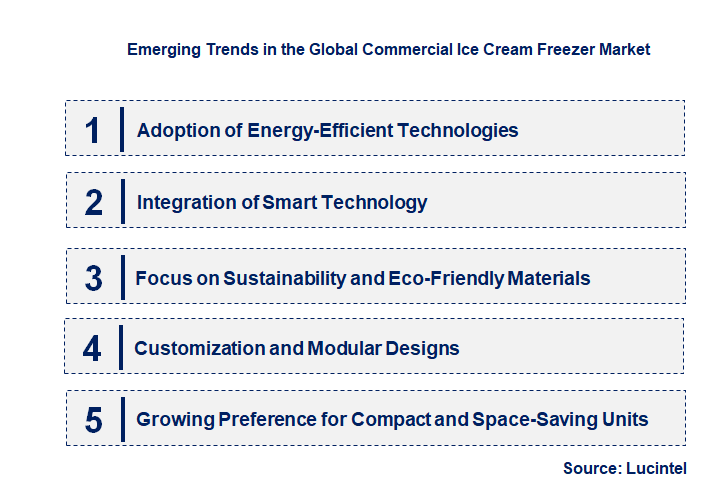
• Adoption of Energy-Efficient Technologies: The market is increasingly shifting towards freezers that incorporate energy-saving features. Advanced insulation, variable speed compressors, and smart controls reduce power consumption, lowering operational costs and environmental impact. This trend is driven by rising energy prices and stricter regulations on carbon emissions, prompting manufacturers to innovate. Energy-efficient freezers not only appeal to eco-conscious consumers but also help businesses achieve sustainability goals, making them a critical component of modern commercial refrigeration solutions.
• Integration of Smart Technology: Smart features such as IoT connectivity, remote monitoring, and automated temperature controls are becoming standard. These technologies enable real-time data collection, predictive maintenance, and enhanced inventory management, reducing downtime and operational costs. Businesses benefit from improved efficiency and compliance with safety standards. The integration of smart technology also allows for better customer engagement through data analytics, providing insights into usage patterns and preferences, which can inform product development and marketing strategies.
• Focus on Sustainability and Eco-Friendly Materials: There is a growing emphasis on environmentally sustainable manufacturing practices and materials. Manufacturers are adopting eco-friendly refrigerants with low global warming potential (GWP) and using recyclable or biodegradable components. This trend aligns with global efforts to reduce carbon footprints and meet regulatory standards. Consumers are increasingly favoring brands that demonstrate environmental responsibility, prompting companies to innovate in sustainable design. These efforts not only improve brand image but also prepare the market for future regulatory changes.
• Customization and Modular Designs: The demand for tailored solutions is rising, with modular freezers allowing for flexible configurations based on specific business needs. Customization options include size, capacity, shelving, and branding. Modular designs facilitate easier maintenance, upgrades, and scalability, making them attractive for diverse commercial settings such as supermarkets, convenience stores, and ice cream parlors. This trend enhances customer satisfaction by providing solutions that precisely fit operational requirements, thereby improving efficiency and reducing waste.
• Growing Preference for Compact and Space-Saving Units: Urbanization and limited commercial space are driving demand for compact, space-efficient freezers. These units are designed to maximize storage capacity while occupying minimal floor space, ideal for small retail outlets and foodservice establishments. Innovations include vertical designs, multi-purpose units, and stackable configurations. This trend allows businesses to optimize their layouts without compromising storage needs, supporting operational flexibility and cost savings. The focus on space-saving solutions is expected to continue as urban markets expand and real estate costs rise. These emerging trends are fundamentally transforming the commercial ice cream freezer market by promoting energy efficiency, technological integration, sustainability, customization, and space optimization. These developments are enabling businesses to operate more sustainably, efficiently, and flexibly, ultimately reshaping the competitive landscape and driving innovation across the industry.
• Growing Demand for Energy-Efficient Freezers: The market is witnessing a surge in demand for energy-efficient commercial ice cream freezers. This trend is driven by increasing environmental awareness and regulatory pressures to reduce energy consumption. Manufacturers are integrating advanced insulation, eco-friendly refrigerants, and smart controls to enhance efficiency. The impact includes lower operational costs for businesses and a reduced carbon footprint, making these freezers more attractive to eco-conscious consumers and operators seeking sustainable solutions.
• Expansion of Storage Capacity and Size Options: There is a notable increase in the availability of larger and more versatile freezers to accommodate growing inventory needs. Businesses require higher storage capacities to meet seasonal demand spikes and diversify product offerings. Innovations include modular designs and multi-temperature zones, allowing customization. This development enables foodservice providers to optimize space, reduce stockouts, and improve operational efficiency, ultimately supporting business growth and customer satisfaction in a competitive market.
• Integration of Smart Technology and IoT: Smart features such as remote monitoring, automated temperature controls, and real-time data analytics are transforming the market. IoT-enabled freezers allow operators to track performance, predict maintenance needs, and prevent spoilage. This technological advancement reduces downtime and operational costs while enhancing product quality. The impact is a more efficient supply chain, improved compliance with safety standards, and increased customer trust, positioning smart freezers as a key differentiator in the industry.
• Rising Popularity of Premium and Artisanal Ice Creams: Consumer preferences are shifting towards high-quality, artisanal, and premium ice creams, prompting manufacturers to develop specialized freezers. These units offer precise temperature control and customizable display options to showcase premium products. This trend boosts sales of high-margin items and attracts a niche customer base. The development supports brand differentiation and allows retailers to capitalize on the growing demand for gourmet frozen desserts, thereby expanding market share in premium segments.
• Regional Market Growth Variations: North America and Europe continue to lead with technological innovations and high consumer spending, while Asia-Pacific shows rapid growth due to urbanization and expanding foodservice sectors. Emerging markets are witnessing increased investments in modern refrigeration infrastructure. These regional differences influence product development, marketing strategies, and distribution channels. The overall impact is a more segmented market with tailored solutions, creating opportunities for global and local players to expand their footprint and meet diverse consumer needs. These developments are significantly impacting the commercial ice cream freezer market by driving innovation, sustainability, and customization. Energy-efficient models, smart technology, and larger capacities are enabling businesses to operate more efficiently and meet evolving consumer demands. Regional growth variations offer new opportunities for market expansion. Overall, these advancements are fostering a competitive environment focused on quality, efficiency, and consumer preferences, ensuring sustained growth and diversification in the industry.
• Expansion Into Premium And Artisanal Ice Cream Segments: Growing consumer interest in high-quality, handcrafted, and unique flavors is driving demand for specialized freezers capable of preserving premium products. Manufacturers are developing advanced freezing technologies to maintain texture and flavor integrity, catering to boutique brands and artisanal producers. This segment offers high-margin opportunities and encourages innovation in storage solutions tailored for small-batch and gourmet ice cream production.
• Adoption Of Energy-Efficient And Eco-Friendly Freezers: Increasing environmental awareness and regulatory pressures are prompting the shift towards energy-efficient refrigeration solutions. Companies are investing in eco-friendly compressors, insulation, and refrigerants to reduce carbon footprints and operational costs. These sustainable freezers appeal to environmentally conscious businesses and consumers, providing a competitive edge. The focus on green technology is expected to accelerate growth in markets prioritizing sustainability and cost savings.
• Integration Of Smart Technology For Enhanced Operations: The incorporation of IoT and automation in commercial freezers enables real-time monitoring, remote management, and predictive maintenance. These smart features improve operational efficiency, reduce downtime, and optimize energy consumption. Businesses benefit from data-driven insights to manage inventory and ensure product quality. The adoption of connected freezers is a key growth driver, especially in large-scale foodservice and retail chains seeking streamlined, tech-enabled solutions.
• Development Of Modular And Customizable Freezing Solutions: Modular freezers offer flexibility for businesses with varying storage needs, allowing easy expansion or reconfiguration. Customizable units enable tailored temperature zones, shelving, and branding options, catering to diverse product portfolios. This adaptability supports small to large enterprises in optimizing space and operational workflows. The trend towards modularity enhances market penetration by addressing specific client requirements and facilitating scalable growth in different application segments.
• Expansion Into Emerging Markets With Growing Foodservice Sectors: Rapid urbanization and rising disposable incomes in emerging economies are fueling demand for commercial ice cream freezers. Local foodservice outlets, supermarkets, and convenience stores are adopting refrigeration solutions to meet consumer preferences. Market players are focusing on affordable, durable, and energy-efficient models suited for these regions. Expanding distribution channels and localized product offerings will unlock new growth opportunities and establish a strong presence in developing markets. The overall impact of these growth opportunities is set to significantly enhance market dynamics, fostering innovation, sustainability, and regional expansion. Companies that strategically leverage these trends will strengthen their competitive position, meet evolving customer demands, and drive long-term growth in the commercial ice cream freezer market.
• Technological Advancements: The integration of energy-efficient refrigeration systems and smart technology has revolutionized commercial freezers. These innovations reduce operational costs, improve product preservation, and enhance user convenience. As consumers demand higher quality and sustainability, manufacturers are investing in eco-friendly compressors and insulation materials. The adoption of IoT-enabled freezers allows real-time monitoring and maintenance, minimizing downtime. Such technological progress not only boosts efficiency but also aligns with regulatory requirements for energy conservation, thereby expanding market potential globally.
• Rising Consumer Demand for Frozen Desserts: Increasing preference for ice cream and frozen desserts across various demographics is a significant growth driver. Urbanization, changing lifestyles, and the influence of Western dietary habits have contributed to higher consumption levels. The proliferation of retail outlets, cafes, and restaurants offering frozen treats further fuels demand. Additionally, innovative flavors, premium products, and health-conscious options like low-fat or sugar-free ice creams attract a broader customer base. This sustained consumer interest encourages manufacturers to expand their product lines and invest in advanced freezing equipment to meet rising demand.
• Expansion of Foodservice and Hospitality Sectors: The growth of the foodservice industry, including restaurants, cafes, and catering services, directly impacts the demand for commercial ice cream freezers. As these sectors expand globally, especially in emerging markets, the need for reliable freezing solutions increases. The trend toward offering diverse dessert menus and premium frozen products necessitates high-capacity, efficient freezers. Moreover, the rise of quick-service restaurants and ice cream parlors requires specialized equipment to ensure product quality and safety, thereby driving market growth through increased sales and technological upgrades.
• Regulatory and Environmental Standards: Stringent food safety regulations and environmental policies influence the market significantly. Governments and international bodies enforce standards related to hygiene, energy efficiency, and refrigerant use. Compliance with these standards compels manufacturers to develop eco-friendly and energy-efficient freezers, which can be more costly initially but offer long-term savings. Regulations also promote the adoption of natural refrigerants and sustainable materials, shaping product design and manufacturing processes. Navigating these regulatory landscapes is crucial for market players to avoid penalties and maintain consumer trust, ultimately impacting market dynamics.
• Growth of E-commerce and Distribution Channels: The rise of online retail platforms and modern distribution networks has expanded market reach. Manufacturers now sell directly to end-users and smaller businesses through digital channels, increasing accessibility and convenience. E-commerce facilitates rapid product dissemination, especially in remote or emerging markets, boosting sales volumes. Additionally, integrated supply chains and logistics innovations ensure timely delivery of frozen products, supporting the expansion of the market. This digital transformation enables companies to gather consumer insights, tailor offerings, and stay competitive in a rapidly evolving industry landscape. The challenges facing the commercial ice cream freezer market include:-
• High Energy Consumption and Operational Costs: Commercial ice cream freezers are energy-intensive, leading to high operational expenses. Rising energy prices and the need for continuous refrigeration increase overall costs for businesses. This challenge is compounded by the demand for larger capacity units and advanced features, which can further escalate expenses. Companies must balance performance with energy efficiency, often requiring significant investments in newer, more sustainable technologies. Managing these costs is critical for maintaining profitability, especially in price-sensitive markets, and can hinder market expansion if not addressed effectively.
• Regulatory Compliance and Environmental Concerns: While regulations promote sustainability, they also pose challenges for manufacturers. Adapting products to meet evolving standards for refrigerants, energy efficiency, and safety can be costly and time-consuming. Non-compliance risks penalties, product recalls, and damage to brand reputation. Additionally, phasing out high-GWP refrigerants requires innovation and investment in alternative solutions. Navigating complex regulatory environments across different regions adds to operational complexity, potentially delaying product launches and increasing compliance costs, which can restrain market growth.
• Market Fragmentation and Intense Competition: The market is highly fragmented with numerous regional and international players competing for market share. Price wars, product differentiation, and technological innovation are constant pressures. Small and medium-sized enterprises often struggle to keep pace with larger corporations that benefit from economies of scale. This competitive landscape can lead to reduced profit margins and increased marketing expenses. Moreover, rapid technological changes require continuous R&D investment, which may be challenging for smaller firms, potentially limiting innovation and market consolidation. The commercial ice cream freezer market is driven by technological innovations, rising consumer demand, sector expansion, regulatory standards, and digital distribution channels. However, it faces challenges such as high energy costs, regulatory compliance complexities, and intense competition. These factors collectively influence market growth, requiring stakeholders to innovate, adapt, and strategize effectively. The overall impact is a dynamic environment with significant opportunities for growth balanced by operational and regulatory hurdles, shaping the future trajectory of the industry.
• AHT Cooling Systems
• Ali Group
• Arneg S.p.A.
• Beverage-Air
• Bonnet Névé
• Delfield
• Electrolux Professional
• Epta Group
• Excellence Industries
• Fagor Industrial
• Chest / Deep Freezers
• Upright Freezers
• Glass-Top Display Freezers
• Ice-Cream Dipping Cabinets
• Gelato / Soft-Serve Batch Freezers
• Static Cooling
• Ventilated / Forced-Air Cooling
• Frost-Free / No-Frost Systems
• Remote Glycol-Cooled Systems
• Less Than Equal To 300 L
• 301 - 600 L
• Greater Than 600 L
• Ice-Cream Parlors & Gelaterias
• Quick-Service Restaurants
• Supermarkets & Hypermarkets
• Convenience Stores & Fuel Stations
• Cinemas, Stadiums & Entertainment Venues
• Catering & Institutional Foodservice
• North America
• Europe
• Asia Pacific
• The Rest of the World
• United States: The US market has seen a surge in demand for energy-efficient and smart ice cream freezers, driven by increasing health consciousness and sustainability initiatives. Major players are introducing advanced refrigeration technologies that reduce energy consumption and operational costs. The growth of fast-food chains and specialty ice cream shops has expanded the market, alongside innovations in portable and compact freezers for small businesses. Additionally, the rise of online retail channels has facilitated easier access to a wide range of products, boosting sales. Regulatory standards for energy efficiency are also influencing product development and market growth.
• China: Chinas commercial ice cream freezer market is expanding rapidly due to rising disposable incomes, urbanization, and a booming foodservice industry. Local manufacturers are investing in innovative, cost-effective, and energy-efficient models to meet increasing demand. The popularity of Western-style ice cream and desserts has further fueled growth, especially in tier-2 and tier-3 cities. E-commerce platforms are playing a crucial role in distribution, making products more accessible. The government’s focus on modernizing food retail infrastructure and supporting small and medium-sized enterprises is also contributing to market expansion. Sustainability practices are gradually gaining importance among consumers and manufacturers.
• Germany: The German market emphasizes energy efficiency and environmental sustainability, with strict regulations promoting eco-friendly refrigeration solutions. Technological advancements include the integration of IoT for remote monitoring and maintenance, enhancing operational efficiency. The demand for premium and customized freezers is rising among high-end cafes and restaurants. Germany’s focus on reducing carbon footprints has led to increased adoption of natural refrigerants and eco-conscious materials. The market also benefits from a well-established foodservice sector and a strong emphasis on quality and safety standards. Innovations in compact and modular freezers are catering to small businesses and urban food outlets.
• India: The Indian commercial ice cream freezer market is witnessing rapid growth due to increasing urbanization, changing lifestyles, and a growing middle class. Local manufacturers are offering affordable, durable, and energy-efficient freezers tailored to regional needs. The expansion of organized retail and foodservice sectors, including ice cream parlors and cafes, is boosting demand. E-commerce platforms are facilitating wider distribution, especially in rural and semi-urban areas. The government’s initiatives to improve cold chain infrastructure and support small businesses are also positively impacting the market. Consumers are increasingly seeking innovative and premium ice cream products, driving market diversification.
• Japan: Japan’s market is characterized by a focus on technological innovation and energy efficiency, driven by strict environmental regulations. Advanced features such as smart temperature controls, energy-saving modes, and IoT connectivity are prevalent. The demand for compact, space-saving freezers aligns with Japan’s urban living trends. The market also sees a rise in premium and customized freezers for boutique cafes and specialty stores. Sustainability is a key concern, leading to increased use of eco-friendly refrigerants and recyclable materials. The aging population and health-conscious consumers are influencing product designs, emphasizing hygiene, convenience, and energy efficiency.


• AHT Cooling Systems
• Ali Group
• Arneg S.p.A.
• Beverage-Air
• Bonnet Névé
• Delfield
• Electrolux Professional
• Epta Group
• Excellence Industries
• Fagor Industrial Q6. Which commercial ice cream freezer market segment will be the largest in future? Answer: Lucintel forecasts that, within the end use category, supermarket & hypermarket is expected to witness the highest growth over the forecast period. Q7. In commercial ice cream freezer market, which region is expected to be the largest in next 5 years? Answer: In terms of region, APAC is expected to witness the highest growth over the forecast period. Q8. Do we receive customization in this report? Answer: Yes, Lucintel provides 10% customization without any additional cost.


Choose a license that fits your team. Instant PDF delivery.
Prices exclude taxes. Instant delivery. Custom licensing available on request.
Market Report · July 29, 2026
Market Report · July 15, 2026
Market Report · July 13, 2026
Trusted partner for strategic intelligence and business growth


Receive a complimentary market analysis tailored to your industry. Our analysts will identify key growth opportunities and competitive dynamics specific to your business.

Market size, growth rate, and key trend analysis for your specific sector.

Top competitor positioning and market share analysis.

Strategic recommendations backed by data-driven insights.
Get curated market intelligence and competitive moves straight to your inbox.
By subscribing, you agree to receive our monthly insights. Unsubscribe anytime.
Receive a complimentary market analysis tailored to your industry. Our analysts will identify key growth opportunities and competitive dynamics specific to your business.
Market size, growth rate, and key trend analysis for your specific sector.
Top competitor positioning and market share analysis.
Strategic recommendations backed by data-driven insights.
Get curated market intelligence, emerging trends, and competitive moves straight to your inbox each month.
By subscribing, you agree to receive our monthly insights. Unsubscribe anytime.
We'll send your sample report shortly.