
Market Report · July 31, 2026

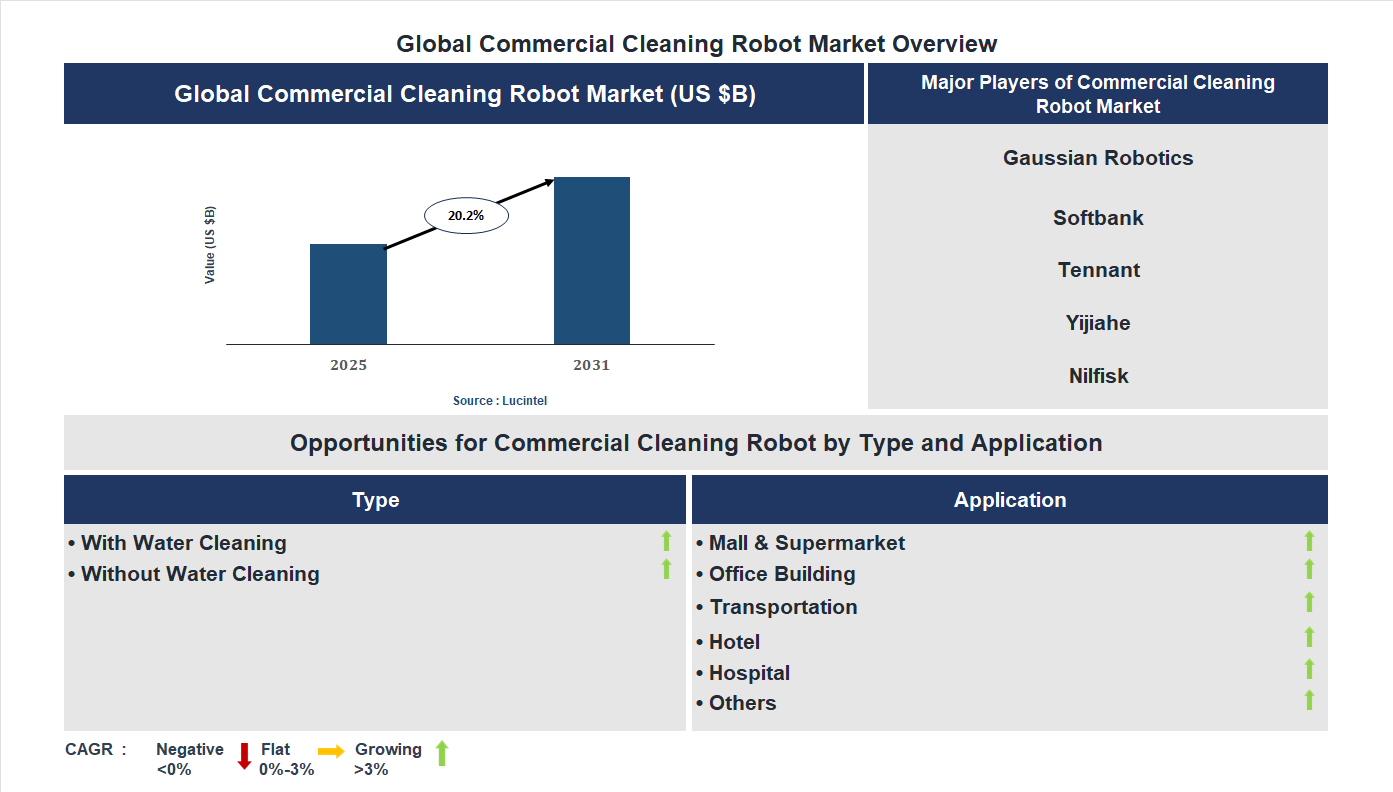
Key data points: The growth forecast = 20.2% annually for the next 7 years. Scroll below to get more insights. This market report covers trends, opportunities and forecasts in commercial cleaning robot market to 2031 by type (with water cleaning and without water cleaning), application (mall & supermarket, office building, transportation, hotel, hospital, and others), and region (North America, Europe, Asia Pacific, and the Rest of the World)
We'll send your sample report shortly.
• Lucintel forecasts that, within the type category, with water cleaning is expected to witness higher growth over the forecast period.
• Within the application category, mall & supermarket is expected to witness the highest growth.
• In terms of region, APAC is expected to witness the highest growth over the forecast period. Gain valuable insights for your business decisions with our comprehensive 150+ page report. Sample figures with some insights are shown below.
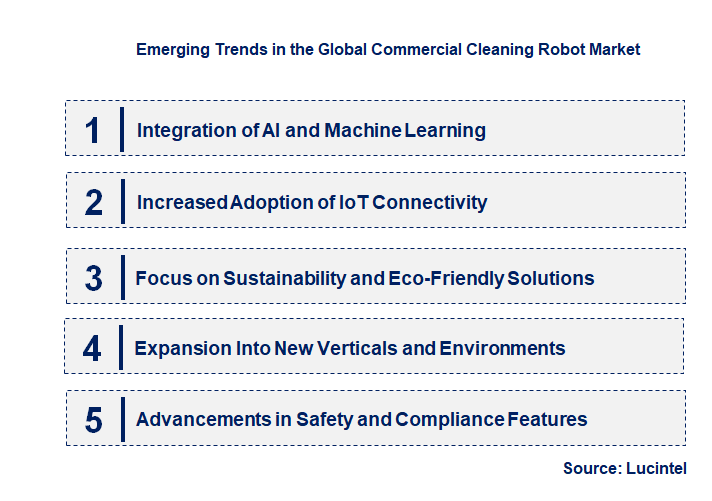
• Integration of AI and Machine Learning: Enhanced Autonomy and Efficiency : AI and machine learning enable cleaning robots to adapt to complex environments, recognize obstacles, and optimize cleaning routes. This results in higher efficiency, reduced human intervention, and improved accuracy in task execution. As these technologies advance, robots become smarter, capable of learning from their environment, and performing more complex tasks, which significantly boosts productivity and reduces operational costs for businesses.
• Increased Adoption of IoT Connectivity: Real-Time Monitoring and Data Analytics : IoT integration allows cleaning robots to connect with centralized management systems, providing real-time data on cleaning status, battery life, and maintenance needs. This connectivity facilitates remote monitoring, predictive maintenance, and data-driven decision-making. As a result, companies can ensure consistent cleaning quality, reduce downtime, and optimize resource allocation, making operations more streamlined and cost-effective.
• Focus on Sustainability and Eco-Friendly Solutions: Green Cleaning Technologies : The market is shifting towards environmentally friendly cleaning robots that use less water, energy, and chemicals. Innovations include the use of biodegradable materials, energy-efficient motors, and eco-friendly cleaning agents. This trend aligns with global sustainability goals, appealing to environmentally conscious clients and regulatory standards, while also reducing operational costs associated with traditional cleaning methods.
• Expansion into New Verticals and Environments: Versatility and Customization : Commercial cleaning robots are increasingly being tailored for diverse settings such as hospitals, airports, shopping malls, and offices. Customizable features like UV sterilization, specialized brushes, and adaptable navigation systems enable robots to meet specific industry requirements. This expansion broadens market reach and opens new revenue streams, as businesses seek specialized solutions for their unique cleaning challenges.
• Advancements in Safety and Compliance Features: Enhanced User and Environment Safety : Modern cleaning robots incorporate advanced safety features such as obstacle detection, emergency stop functions, and compliance with health standards. These improvements ensure safe operation around humans and sensitive equipment, reducing liability and enhancing trust. As safety regulations become more stringent, these features are critical for market acceptance and widespread adoption across various sectors. In summary, these emerging trends are fundamentally reshaping the commercial cleaning robot market by making solutions more intelligent, connected, sustainable, versatile, and safe. This evolution is driving increased adoption across industries, improving operational efficiency, and supporting sustainable business practices, ultimately leading to a more innovative and competitive market landscape.
• Integration of AI and Machine Learning: The adoption of AI and machine learning algorithms has enabled cleaning robots to navigate complex environments more effectively, recognize different surfaces, and optimize cleaning routes. This advancement improves operational efficiency, reduces cleaning time, and enhances adaptability to various commercial settings. As a result, businesses benefit from more reliable and intelligent cleaning solutions, leading to increased market adoption and customer satisfaction.
• Development of Autonomous Navigation Systems: Recent innovations in sensor technology and mapping software have led to highly autonomous cleaning robots capable of precise navigation without human intervention. These systems allow robots to operate seamlessly in dynamic environments, avoid obstacles, and perform scheduled cleaning tasks. The impact is a significant reduction in labor costs and increased operational uptime, making autonomous robots more attractive to large commercial facilities.
• Eco-Friendly and Sustainable Cleaning Solutions: There is a growing emphasis on environmentally friendly cleaning robots that use biodegradable cleaning agents and energy-efficient components. These sustainable solutions appeal to eco-conscious companies and comply with stricter environmental regulations. The market sees increased demand for green cleaning robots, which not only reduce environmental impact but also lower long-term operational costs for businesses.
• Expansion of Robotic Cleaning Services: The rise of service-based models where companies outsource cleaning tasks to specialized robotic service providers has gained momentum. This trend allows businesses to access advanced cleaning technology without significant capital investment. It fosters a competitive market environment, encourages innovation, and broadens the adoption of robotic cleaning solutions across small and medium-sized enterprises.
• Enhanced Connectivity and IoT Integration: The integration of Internet of Things (IoT) technology enables real-time monitoring, remote control, and data analytics of cleaning robots. This connectivity improves maintenance scheduling, performance tracking, and operational transparency. The impact is a more efficient, data-driven approach to facility management, which enhances overall cleaning quality and reduces downtime. In summary, these recent developments are significantly transforming the commercial cleaning robot market by increasing automation, sustainability, and connectivity. They are driving higher adoption rates, reducing operational costs, and improving cleaning standards across various industries. As technology continues to evolve, the market is poised for sustained growth and innovation, meeting the increasing demand for efficient and eco-friendly cleaning solutions.
• Healthcare Facilities: Improved hygiene standards and infection control drive adoption. Cleaning robots ensure thorough sanitation in hospitals and clinics, reducing human error and contamination risks, thus enhancing patient safety and operational efficiency.
• Commercial Office Spaces: Increasing demand for maintaining clean, healthy environments boosts robot deployment. These robots provide consistent cleaning, reduce labor costs, and support sustainability initiatives by minimizing chemical use.
• Hospitality Industry: Enhanced guest experience and hygiene protocols promote robot usage. Automated cleaning ensures quick turnaround times, maintains high cleanliness standards, and reduces staffing challenges in hotels and resorts.
• Retail Stores: Maintaining spotless shopping environments is crucial for customer satisfaction. Cleaning robots offer efficient, regular cleaning, helping retailers meet hygiene standards and improve shopper confidence.
• Industrial and Warehousing: Large-scale facilities require extensive cleaning. Robots improve safety by handling hazardous areas, increase cleaning speed, and reduce downtime, supporting operational continuity. In summary, these growth opportunities are significantly impacting the commercial cleaning robot market by expanding its application scope, increasing adoption rates, and driving technological innovation. As industries prioritize hygiene, efficiency, and cost savings, the market is poised for sustained growth and transformation.
• Technological Innovation: The rapid development of robotics, AI, and sensor technologies has enabled the creation of highly efficient, autonomous cleaning robots. These innovations improve cleaning precision, reduce human labor, and allow for 24/7 operation, making them attractive to commercial entities seeking operational efficiency. As technology advances, costs decrease, and functionalities expand, further fueling market growth.
• Cost Efficiency and Labor Savings: Businesses are increasingly seeking solutions that reduce labor costs and improve productivity. Cleaning robots offer significant savings by minimizing the need for manual labor, especially in large commercial spaces like malls, airports, and hospitals. The long-term operational savings and reduced dependency on human resources make these robots a compelling investment.
• Growing Emphasis on Hygiene and Sanitation: The COVID-19 pandemic heightened awareness around hygiene standards, prompting commercial establishments to adopt advanced cleaning solutions. Robots ensure consistent, thorough cleaning and disinfection, meeting stringent health regulations. This increased focus on sanitation standards accelerates market demand for automated cleaning solutions.
• Regulatory and Environmental Factors: Governments and regulatory bodies are implementing stricter standards for workplace hygiene and environmental sustainability. Cleaning robots that use eco-friendly cleaning agents and consume less energy align with these regulations, encouraging their adoption. Compliance with such standards not only avoids penalties but also enhances corporate reputation. The challenges in the commercial cleaning robot market are:-
• High Initial Investment Costs: Despite long-term savings, the upfront costs of purchasing and deploying cleaning robots can be prohibitive for small and medium-sized enterprises. The expense of advanced hardware, software, and maintenance can hinder widespread adoption, especially in price-sensitive markets.
• Technological Limitations and Reliability: While technology has advanced, cleaning robots still face limitations such as navigation issues in complex environments, battery life constraints, and difficulty handling diverse surface types. These issues can impact operational reliability and customer confidence, slowing market growth.
• Regulatory and Safety Concerns: The deployment of autonomous robots raises safety and liability concerns, especially in crowded or sensitive environments. Regulatory frameworks are still evolving, and compliance can be complex and costly. Ensuring safety standards and addressing legal liabilities remain significant hurdles for market expansion. In summary, the commercial cleaning robot market is driven by technological advancements, cost savings, hygiene priorities, and regulatory support, which collectively foster growth. However, high initial costs, technological challenges, and regulatory uncertainties pose significant barriers. Balancing these drivers and challenges will be crucial for market players to capitalize on emerging opportunities, innovate solutions, and establish sustainable competitive advantages. Overall, the market is poised for substantial growth, provided these factors are effectively managed.
• Gaussian Robotics
• Softbank
• Tennant
• Yijiahe
• Nilfisk
• Avidbots
• Diversey
• ICE Cobotics
• Karcher
• Ecovacs
• With Water Cleaning
• Without Water Cleaning
• Mall & Supermarket
• Office Building
• Transportation
• Hotel
• Hospital
• Others
• North America
• Europe
• Asia Pacific
• The Rest of the World
• United States: The US market has seen significant growth with the adoption of AI-powered cleaning robots in commercial spaces such as offices, airports, and hospitals. Major companies are investing in R&D to enhance robot capabilities, including navigation and obstacle avoidance. The focus is on integrating IoT for real-time monitoring and maintenance, boosting efficiency. Regulatory support and a tech-savvy consumer base have accelerated adoption, making the US a leader in commercial cleaning robot innovation and deployment.
• China: China is rapidly expanding its commercial cleaning robot market, driven by urbanization and government initiatives promoting smart city projects. Local manufacturers are developing cost-effective robots with advanced features like UV sterilization and multi-surface cleaning. The market benefits from a large manufacturing base and increasing demand from shopping malls, airports, and public transport hubs. Strategic partnerships and investments are fueling technological advancements, positioning China as a key player in the global market.
• Germany: Germany emphasizes high-quality, reliable cleaning robots, especially in industrial and healthcare sectors. The focus is on integrating sustainable technologies, such as energy-efficient batteries and eco-friendly cleaning agents. German companies are pioneering in robotics safety standards and precision engineering. The market is characterized by a strong emphasis on customization and compliance with strict EU regulations, fostering innovation in autonomous navigation and sensor technology.
• India: The Indian commercial cleaning robot market is emerging, with increasing adoption in malls, hotels, and corporate offices. Cost-effective solutions tailored to local needs are gaining popularity. The market is supported by rising disposable incomes and a growing awareness of hygiene. Local startups and international players are collaborating to develop affordable, efficient robots. Government initiatives promoting smart cities and sanitation are expected to further boost market growth.
• Japan: Japans market is characterized by advanced robotics integration, with a focus on precision and reliability. The country is leveraging its expertise in robotics to develop sophisticated cleaning systems for hospitals, airports, and large commercial complexes. Innovations include robots capable of detailed surface cleaning and autonomous navigation in complex environments. Japans emphasis on technological excellence and aging population drives demand for autonomous cleaning solutions that reduce labor shortages and improve hygiene standards.


• Gaussian Robotics
• Softbank
• Tennant
• Yijiahe
• Nilfisk
• Avidbots
• Diversey
• ICE Cobotics
• Karcher
• Ecovacs Q5. Which commercial cleaning robot market segment will be the largest in future? Answer: Lucintel forecasts that, within the type category, with water cleaning is expected to witness higher growth over the forecast period. Q6. In commercial cleaning robot market, which region is expected to be the largest in next 5 years? Answer: In terms of region, APAC is expected to witness the highest growth over the forecast period. Q7. Do we receive customization in this report? Answer: Yes, Lucintel provides 10% customization without any additional cost.


Choose a license that fits your team. Instant PDF delivery.
Prices exclude taxes. Instant delivery. Custom licensing available on request.
Market Report · July 31, 2026
Market Report · July 31, 2026
Market Report · July 31, 2026
Trusted partner for strategic intelligence and business growth


Receive a complimentary market analysis tailored to your industry. Our analysts will identify key growth opportunities and competitive dynamics specific to your business.

Market size, growth rate, and key trend analysis for your specific sector.

Top competitor positioning and market share analysis.

Strategic recommendations backed by data-driven insights.
Get curated market intelligence and competitive moves straight to your inbox.
By subscribing, you agree to receive our monthly insights. Unsubscribe anytime.
Receive a complimentary market analysis tailored to your industry. Our analysts will identify key growth opportunities and competitive dynamics specific to your business.
Market size, growth rate, and key trend analysis for your specific sector.
Top competitor positioning and market share analysis.
Strategic recommendations backed by data-driven insights.
Get curated market intelligence, emerging trends, and competitive moves straight to your inbox each month.
By subscribing, you agree to receive our monthly insights. Unsubscribe anytime.
We'll send your sample report shortly.