
Market Report · July 31, 2026

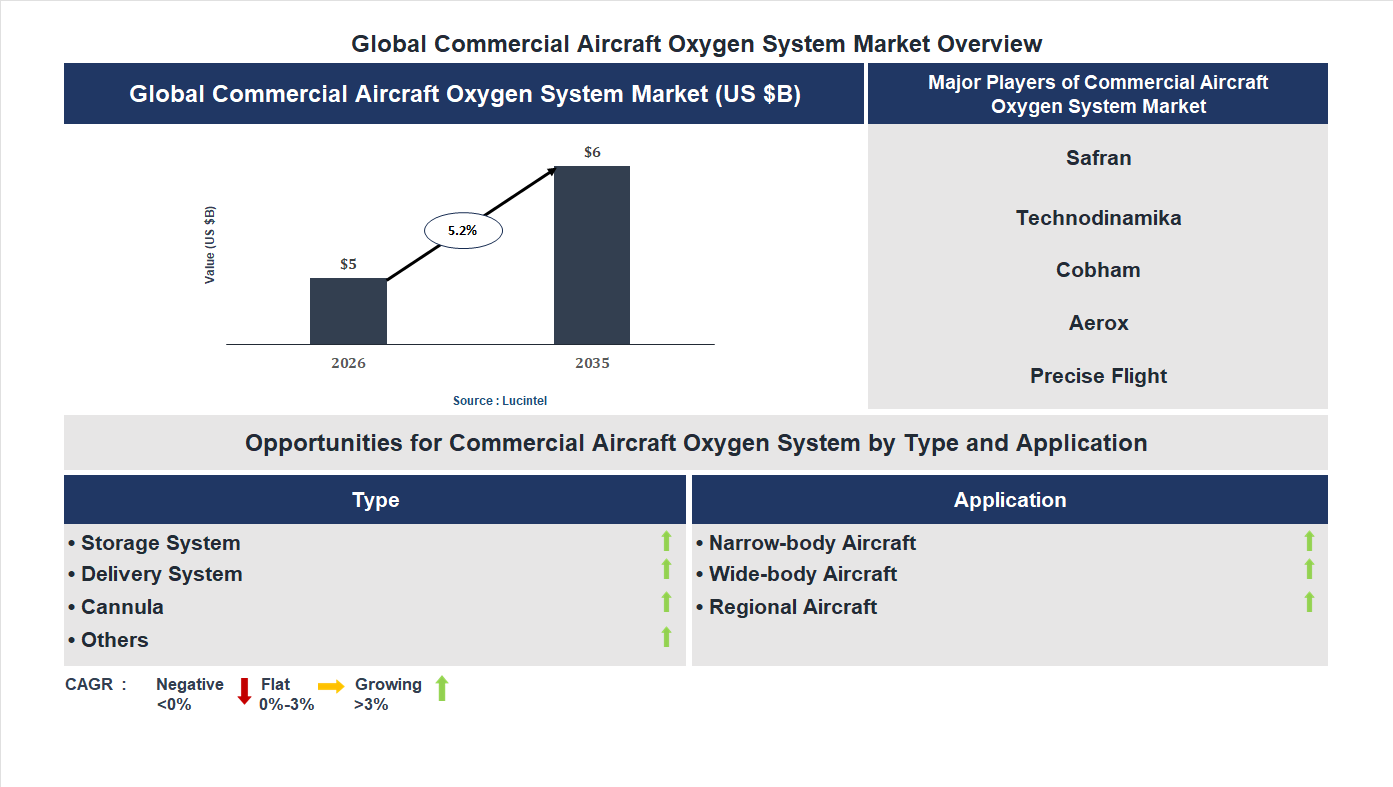
Key data points: The market size in 2035 = $6 billion, growth forecast = 5.2% annually for the next 8 years. Scroll below to get more insights. This market report covers trends, opportunities and forecasts in commercial aircraft oxygen system market to 2035 by type (storage system, delivery system, cannula, and others), application (narrow-body aircraft, wide-body aircraft, and regional aircraft), and region (North America, Europe, Asia Pacific, and the Rest of the World)
We'll send your sample report shortly.
• Lucintel forecasts that, within the type category, delivery system is expected to witness the highest growth over the forecast period.
• Within the application category, narrow-body aircraft is expected to witness the highest growth.
• In terms of region, APAC is expected to witness the highest growth over the forecast period. Gain valuable insights for your business decisions with our comprehensive 150+ page report. Sample figures with some insights are shown below.
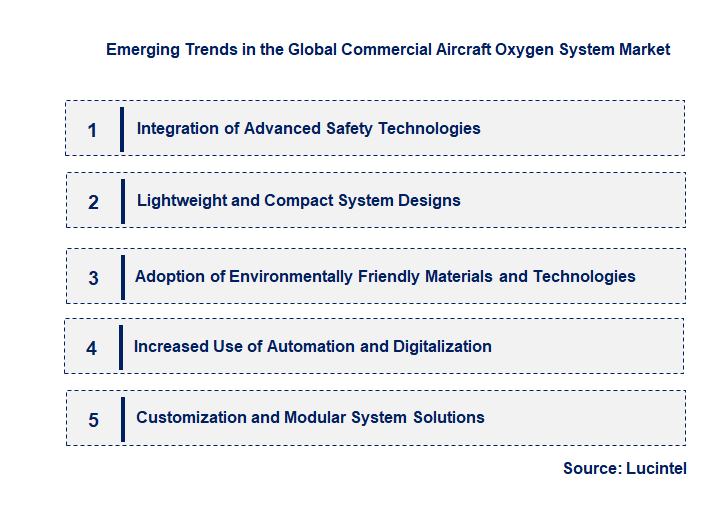
• Integration of Advanced Safety Technologies: This trend involves incorporating smart sensors, automated leak detection, and real-time monitoring systems into oxygen systems. These innovations improve safety by enabling early detection of faults and ensuring rapid response during emergencies. Enhanced safety protocols driven by technological integration reduce risks and increase passenger confidence. Manufacturers are investing in IoT-enabled systems that provide continuous health monitoring, leading to more reliable and maintenance-efficient oxygen systems. This trend ultimately enhances overall flight safety and operational efficiency.
• Lightweight and Compact System Designs: The focus on reducing aircraft weight to improve fuel efficiency has led to the development of lightweight oxygen systems. Advanced materials such as composites and miniaturized components are being used to design more compact units. These systems occupy less space and contribute to overall aircraft weight reduction, which translates into lower fuel consumption and emissions. The trend also supports the design of more flexible cabin configurations, improving passenger comfort and operational flexibility. Lightweight systems are becoming a key differentiator for aircraft manufacturers aiming for sustainability and cost savings.
• Adoption of Environmentally Friendly Materials and Technologies: Sustainability is a major concern in the aerospace industry. The market is witnessing a shift towards eco-friendly materials that reduce environmental impact during manufacturing and disposal. Additionally, innovations such as chemical-free oxygen generation and recyclable components are gaining traction. These environmentally conscious solutions help airlines meet stringent environmental regulations and corporate social responsibility goals. The adoption of green technologies not only benefits the environment but also enhances the airlines brand image, appealing to eco-aware consumers and stakeholders.
• Increased Use of Automation and Digitalization: Automation in oxygen system management is transforming maintenance, monitoring, and emergency response procedures. Digital dashboards, predictive analytics, and automated control systems enable proactive maintenance, reducing downtime and operational costs. Digitalization also facilitates seamless integration with aircraft management systems, providing real-time data for decision-making. This trend enhances safety, efficiency, and reliability, while also reducing human error. As automation becomes more sophisticated, airlines can expect improved system performance and streamlined operations, ultimately leading to safer and more efficient flights.
• Customization and Modular System Solutions: The market is moving towards customizable oxygen systems tailored to specific aircraft models and airline requirements. Modular designs allow for easier upgrades, maintenance, and repairs, reducing lifecycle costs. Customization also enables airlines to optimize cabin layouts and passenger comfort features. This trend supports rapid deployment of new technologies and compliance with evolving safety standards. Modular systems provide flexibility for different aircraft types and operational needs, making them attractive to a diverse range of clients. Overall, this approach enhances adaptability, reduces costs, and accelerates innovation in the market. These emerging trends are collectively reshaping the commercial aircraft oxygen system market by emphasizing safety, sustainability, efficiency, and customization. Integration of advanced safety technologies and automation enhances reliability and operational performance. Lightweight, eco-friendly designs contribute to environmental goals and fuel savings. Modular and customizable solutions offer flexibility and cost-effectiveness, catering to diverse airline needs. As these trends continue to evolve, they are driving innovation, improving passenger safety and comfort, and supporting the industrys shift towards more sustainable and technologically advanced aviation operations.
• Technological Innovations in Oxygen Generation: Advancements in portable and onboard oxygen generation systems are improving reliability and reducing maintenance costs. New materials and compact designs enable quicker deployment and enhanced safety features, making systems more efficient and user-friendly. These innovations are expanding applications beyond commercial aircraft to private jets and military aircraft, broadening market reach and increasing safety standards across the aviation industry.
• Integration of Smart Monitoring Systems: The adoption of IoT-enabled monitoring systems allows real-time tracking of oxygen system performance. These smart systems facilitate predictive maintenance, reduce downtime, and ensure compliance with safety regulations. Airlines benefit from improved operational efficiency and passenger safety, while manufacturers gain insights for continuous product improvement. This integration is setting new industry standards for safety management and operational transparency.
• Regulatory Enhancements and Safety Standards: Governments and aviation authorities are implementing stricter safety regulations requiring advanced oxygen systems. These regulations drive innovation and ensure higher safety levels in commercial flights. Compliance with these standards encourages manufacturers to develop more reliable and efficient systems, fostering market growth. Enhanced safety protocols also boost passenger confidence, supporting industry expansion and global market penetration.
• Development of Lightweight and Space-Saving Designs: New materials and engineering techniques are producing lighter, more compact oxygen systems. These designs contribute to fuel efficiency and increased cabin space, aligning with airlines operational goals. The reduced weight also lowers overall aircraft weight, leading to cost savings. These innovations are particularly impactful for narrow-body and regional aircraft, opening new market segments and increasing adoption rates.
• Expansion of Aftermarket and Maintenance Services: The growing installed base of oxygen systems creates a significant demand for maintenance, repair, and overhaul (MRO) services. Companies are investing in specialized training and advanced diagnostic tools to meet this need. This expansion enhances system longevity and safety, while providing additional revenue streams for service providers. The aftermarket growth is crucial for sustaining the overall market, ensuring ongoing safety and performance improvements. These developments are significantly impacting the commercial aircraft oxygen system market by driving innovation, enhancing safety, and expanding market opportunities. The integration of advanced technologies and stricter safety standards are fostering a more competitive and resilient industry, ultimately benefiting airlines, manufacturers, and passengers worldwide.
• Increasing Demand for Passenger Safety and Regulatory Compliance: The rising emphasis on passenger safety standards and regulatory mandates is propelling the adoption of advanced oxygen systems. Airlines are investing in reliable, lightweight, and efficient oxygen solutions to meet safety requirements, especially for long-haul and regional flights. This trend encourages manufacturers to innovate and develop systems that comply with international safety norms, thereby expanding market opportunities across different aircraft sizes and configurations.
• Technological Innovations in Oxygen System Design: Advances in materials, miniaturization, and automation are transforming oxygen system design. The development of lightweight, compact, and maintenance-friendly systems enhances aircraft performance and passenger comfort. Integration of digital monitoring and control features improves safety and operational efficiency. These innovations open avenues for new product development, catering to both retrofit and new aircraft markets, and attracting OEMs seeking cutting-edge solutions.
• Growing Adoption of Cabin Oxygen Systems in Business Jets and Regional Aircraft: The expanding fleet of business jets and regional aircraft presents a lucrative market for cabin oxygen systems. These aircraft require specialized, space-efficient, and reliable oxygen solutions for passenger and crew safety. The increasing number of private and regional flights, coupled with regulatory requirements, drives demand for customized oxygen systems, creating opportunities for manufacturers to diversify product portfolios and target niche segments.
• Expansion in Emerging Markets and Developing Regions: Rapid economic growth and rising air travel in regions like Asia-Pacific, Latin America, and Africa are fueling market expansion. Airlines and private operators in these regions seek cost-effective, durable oxygen systems to meet safety standards and operational needs. Local manufacturing, strategic partnerships, and tailored solutions are key strategies to tap into these emerging markets, offering significant growth potential for industry stakeholders.
• Strategic Collaborations and Mergers to Accelerate Market Penetration: Partnerships between OEMs, component suppliers, and service providers facilitate technology sharing and product innovation. Mergers and acquisitions enable companies to expand their market reach, enhance R&D capabilities, and streamline supply chains. These strategic moves help accelerate product development, reduce costs, and improve distribution channels, ultimately strengthening market position and enabling rapid response to evolving customer demands. These growth opportunities are poised to significantly influence the commercial aircraft oxygen system market by fostering innovation, expanding geographic reach, and enhancing safety standards. Companies that leverage technological advancements, strategic collaborations, and regional market potential will be well-positioned to capitalize on the expanding demand for reliable, efficient oxygen solutions in the aviation industry.
• Technological Innovation: The continuous development of advanced oxygen systems, including lightweight and more reliable designs, enhances safety and efficiency. Innovations such as automated oxygen management and integration with aircraft systems improve operational performance. These technological advancements meet increasing safety standards and passenger expectations, fostering market growth. Additionally, the adoption of new materials and manufacturing techniques reduces system weight, contributing to fuel efficiency and environmental sustainability, which are critical in modern aircraft design.
• Increasing Air Travel Demand: The surge in global air travel, driven by economic growth and rising disposable incomes, significantly boosts demand for commercial aircraft. As airlines expand their fleets to accommodate more passengers, the need for reliable oxygen systems becomes paramount. This increased demand encourages aircraft manufacturers to invest in advanced oxygen solutions to ensure passenger safety and compliance with international safety standards, thereby expanding the market.
• Regulatory and Safety Standards: Stringent safety regulations imposed by aviation authorities such as the FAA and EASA mandate the use of certified oxygen systems in commercial aircraft. These regulations ensure passenger and crew safety during emergencies, prompting airlines and manufacturers to adopt compliant systems. The evolving regulatory landscape encourages innovation and higher safety standards, which in turn drive market growth by creating a consistent demand for certified oxygen solutions.
• Focus on Passenger Safety and Comfort: Airlines and manufacturers prioritize passenger safety and comfort, leading to the integration of sophisticated oxygen systems that ensure safety during emergencies. Enhanced safety features, such as quick-deploy oxygen masks and automated systems, improve passenger confidence and satisfaction. This focus on safety and comfort encourages airlines to upgrade existing systems and adopt new technologies, fueling market expansion.
• Growth in Aircraft Fleet Modernization: Airlines are modernizing their fleets with newer, more efficient aircraft equipped with advanced safety features, including improved oxygen systems. This modernization trend supports the adoption of state-of-the-art oxygen solutions that meet higher safety and performance standards. As fleet renewal accelerates globally, the demand for modern oxygen systems increases, further propelling market growth. The challenges facing the commercial aircraft oxygen system market include:-
• High System Costs: The development, certification, and maintenance of advanced oxygen systems involve significant costs. These expenses can hinder adoption, especially among smaller airlines or in cost-sensitive markets. The high costs impact overall profitability and may slow down the integration of new technologies, limiting market growth potential.
• Regulatory Compliance Complexities: Navigating the complex and evolving regulatory landscape poses a challenge for manufacturers and airlines. Ensuring compliance with international safety standards requires extensive testing, certification, and documentation, which can delay product launches and increase costs. These complexities can act as barriers to rapid market expansion and innovation.
• Technological Integration Issues: Integrating new oxygen systems with existing aircraft architectures can be technically challenging. Compatibility issues, system reliability, and maintenance complexities may arise, affecting operational efficiency. Overcoming these technical hurdles requires significant R&D investment and can slow down the deployment of innovative solutions, impacting overall market growth. The commercial aircraft oxygen system market is driven by technological advancements, increasing air travel, regulatory standards, passenger safety focus, and fleet modernization. However, high costs, regulatory complexities, and integration challenges pose notable hurdles. These factors collectively influence market dynamics, requiring stakeholders to balance innovation with cost-efficiency and regulatory compliance. The markets future growth will depend on how effectively these drivers are leveraged and challenges addressed, ensuring safety, efficiency, and sustainability in commercial aviation.
• Safran
• Technodinamika
• Cobham
• Aerox
• Precise Flight
• Adams Rite Aerospace
• Rockwell Collins
• Storage System
• Delivery System
• Cannula
• Others
• Narrow-body Aircraft
• Wide-body Aircraft
• Regional Aircraft
• North America
• Europe
• Asia Pacific
• The Rest of the World
• United States: The US market has seen substantial innovation with the integration of advanced materials and automation in oxygen systems. Major aerospace companies are developing lightweight, compact systems that improve safety and reduce aircraft weight. Regulatory agencies like the FAA have introduced stricter safety standards, prompting manufacturers to upgrade existing systems. The US also leads in research collaborations focused on enhancing system reliability and emergency response capabilities. Additionally, the rise of retrofit programs for older aircraft has increased demand for modern oxygen solutions, supporting overall market growth.
• China: China’s commercial aircraft oxygen system market is rapidly expanding due to the country’s booming aviation industry and increasing fleet size. Domestic manufacturers are investing heavily in R&D to develop indigenous oxygen systems that meet international standards. The government’s focus on aviation safety and infrastructure development has accelerated market growth. China is also witnessing a rise in aircraft modernization projects, which include upgrading oxygen systems to improve safety and compliance. Strategic partnerships with global aerospace firms are facilitating technology transfer and innovation, positioning China as a key player in this sector.
• Germany: Germany remains a leader in aerospace technology, with a focus on integrating cutting-edge materials and digital solutions into oxygen systems. The country’s stringent safety regulations and high standards for aircraft maintenance drive continuous improvements. German aerospace firms are pioneering lightweight, energy-efficient oxygen systems that enhance aircraft performance. The emphasis on sustainability and innovation is also evident in the development of eco-friendly materials and systems. Germany’s strong aerospace research institutions collaborate with industry players to develop next-generation oxygen systems, ensuring the country maintains its competitive edge in the global market.
• India: India’s commercial aircraft oxygen system market is witnessing rapid growth fueled by expanding airline fleets and increasing air travel demand. Domestic manufacturers are focusing on cost-effective, reliable oxygen solutions suitable for regional and international aircraft. The government’s initiatives to modernize airports and promote aviation safety are boosting market prospects. India is also investing in indigenous R&D to develop systems that comply with international standards while reducing dependence on imports. The rise of low-cost carriers and fleet expansion plans are expected to further drive demand for advanced oxygen systems, making India a significant emerging market in this sector.
• Japan: Japan’s market is characterized by technological innovation and high safety standards. Japanese aerospace companies are developing sophisticated oxygen systems with enhanced automation and monitoring features. The focus on safety and reliability is reinforced by strict regulatory frameworks. Japan is also exploring eco-friendly materials and energy-efficient designs to align with sustainability goals. The country’s aerospace industry benefits from strong government support and collaborations with global firms to advance oxygen system technology. As a result, Japan remains a key player in the development of innovative, high-performance oxygen systems for commercial aircraft.


• Safran
• Technodinamika
• Cobham
• Aerox
• Precise Flight
• Adams Rite Aerospace
• Rockwell Collins Q6. Which commercial aircraft oxygen system market segment will be the largest in future? Answer: Lucintel forecasts that, within the type category, delivery system is expected to witness the highest growth over the forecast period. Q7. In commercial aircraft oxygen system market, which region is expected to be the largest in next 8 years? Answer: In terms of region, APAC is expected to witness the highest growth over the forecast period. Q8. Do we receive customization in this report? Answer: Yes, Lucintel provides 10% customization without any additional cost.


Choose a license that fits your team. Instant PDF delivery.
Prices exclude taxes. Instant delivery. Custom licensing available on request.
Market Report · July 31, 2026
Market Report · July 31, 2026
Market Report · July 22, 2026
Trusted partner for strategic intelligence and business growth


Receive a complimentary market analysis tailored to your industry. Our analysts will identify key growth opportunities and competitive dynamics specific to your business.

Market size, growth rate, and key trend analysis for your specific sector.

Top competitor positioning and market share analysis.

Strategic recommendations backed by data-driven insights.
Get curated market intelligence and competitive moves straight to your inbox.
By subscribing, you agree to receive our monthly insights. Unsubscribe anytime.
Receive a complimentary market analysis tailored to your industry. Our analysts will identify key growth opportunities and competitive dynamics specific to your business.
Market size, growth rate, and key trend analysis for your specific sector.
Top competitor positioning and market share analysis.
Strategic recommendations backed by data-driven insights.
Get curated market intelligence, emerging trends, and competitive moves straight to your inbox each month.
By subscribing, you agree to receive our monthly insights. Unsubscribe anytime.
We'll send your sample report shortly.