
Market Report · July 31, 2026

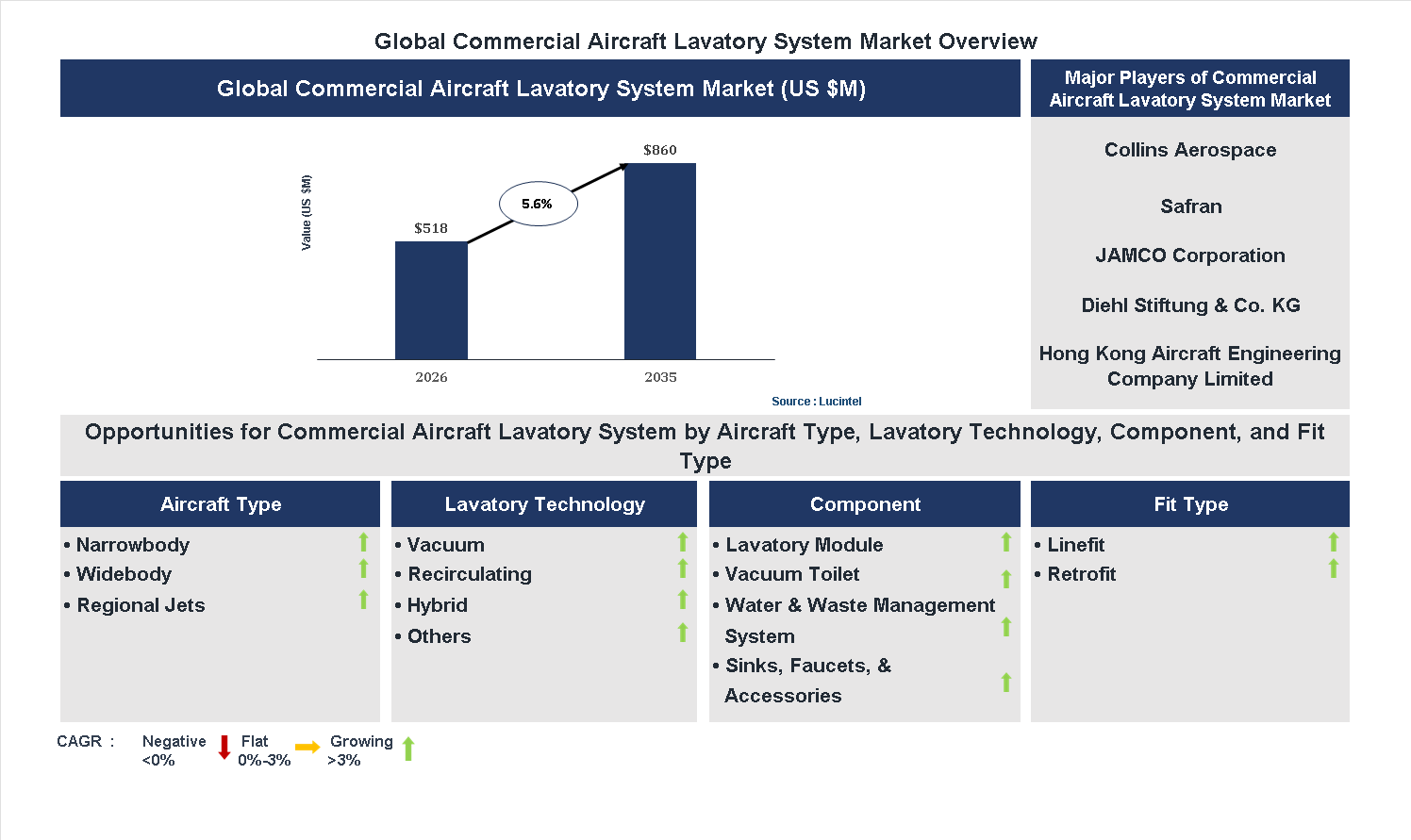
Key data points: The market size in 2035 = $860 million, growth forecast = 5.6% annually for the next 8 years. Scroll below to get more insights. This market report covers trends, opportunities and forecasts in commercial aircraft lavatory system market to 2035 by aircraft type (narrowbody, widebody, and regional jets), lavatory technology (vacuum, recirculating, hybrid, and others), component (lavatory module, vacuum toilet, water & waste management system, and sinks, faucets, & accessories), fit type (linefit and retrofit), and region (North America, Europe, Asia Pacific, and the Rest of the World)
We'll send your sample report shortly.
• Lucintel forecasts that, within the aircraft type category, narrowbody is expected to witness the highest growth over the forecast period.
• Within the fit type category, retrofit is expected to witness higher growth.
• In terms of region, APAC is expected to witness the highest growth over the forecast period. Gain valuable insights for your business decisions with our comprehensive 150+ page report. Sample figures with some insights are shown below.
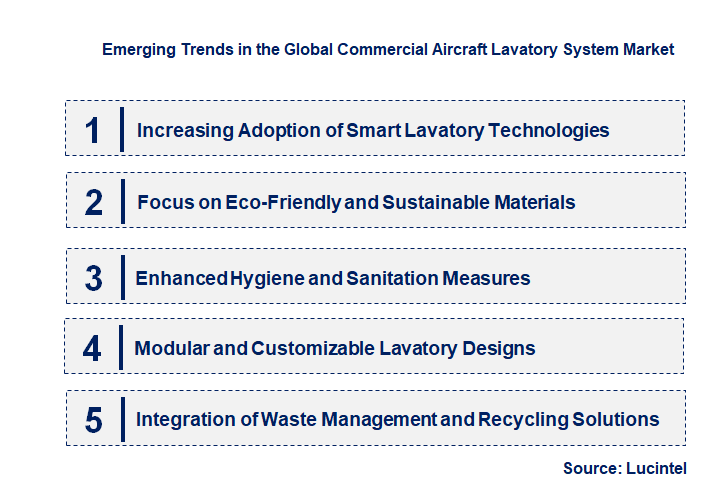
• Increasing Adoption of Smart Lavatory Technologies: Integration of IoT and automation is transforming lavatory systems by enabling real-time monitoring of usage, maintenance needs, and hygiene levels. Smart sensors can detect occupancy, water usage, and waste levels, allowing airlines to optimize cleaning schedules and reduce downtime. This trend enhances passenger experience through improved cleanliness and operational efficiency, while also reducing costs for airlines. The deployment of touchless fixtures and voice-activated controls further minimizes contact points, aligning with health and safety priorities. Overall, smart technologies are making lavatories more efficient, hygienic, and user-friendly.
• Focus on Eco-Friendly and Sustainable Materials: Environmental concerns are prompting manufacturers to develop lavatory systems using sustainable materials such as biodegradable plastics, recycled composites, and low-impact finishes. These eco-friendly components help airlines reduce their carbon footprint and comply with stringent environmental regulations. Additionally, innovations in water-saving fixtures, such as low-flow toilets and faucets, are significantly decreasing water consumption. The shift towards sustainability not only benefits the environment but also appeals to eco-conscious consumers, enhancing airline brand reputation. This trend is driving the market toward greener, more sustainable lavatory solutions that align with global sustainability goals.
• Enhanced Hygiene and Sanitation Measures: The COVID-19 pandemic accelerated the focus on hygiene in aircraft lavatories. Manufacturers are now incorporating antimicrobial surfaces, UV sterilization, and touchless systems to prevent the spread of germs. These features improve passenger confidence and meet health safety standards. Advanced ventilation systems are also being integrated to reduce airborne contaminants. The emphasis on hygiene has led to innovations that make lavatories safer and more sanitary, which is crucial for maintaining airline reputation and passenger trust. This trend underscores the importance of health-conscious design in the future of commercial aircraft lavatory systems.
• Modular and Customizable Lavatory Designs: Airlines are increasingly seeking modular lavatory systems that can be easily customized to fit different aircraft types and cabin configurations. Modular designs facilitate faster installation, maintenance, and upgrades, reducing downtime and operational costs. Customizable features allow airlines to tailor lavatory aesthetics, storage options, and amenities to match brand identity and passenger preferences. This flexibility supports diverse service offerings, from luxury to economy classes. The trend toward modularity and customization enhances operational efficiency and passenger satisfaction, making lavatory systems more adaptable to evolving airline needs and market demands.
• Integration of Waste Management and Recycling Solutions: Waste management is a critical aspect of lavatory system innovation. Emerging solutions include compact, efficient waste disposal units that minimize space and odor, along with systems designed for recycling greywater and waste products. These innovations aim to reduce environmental impact and comply with stringent waste disposal regulations. Recycling initiatives are gaining traction, with some systems capable of separating waste for reuse or safe disposal. Improved waste management not only supports sustainability goals but also reduces maintenance costs and enhances onboard hygiene. This trend reflects a broader commitment to environmentally responsible aviation practices. These emerging trends are collectively transforming the commercial aircraft lavatory system market by emphasizing technological innovation, sustainability, hygiene, flexibility, and waste management. These developments are leading to more efficient, eco-friendly, and passenger-centric solutions, ultimately reshaping how airlines approach lavatory design and functionality in the modern aviation landscape.
• Technological Innovations in Waste Management: Enhanced waste processing systems are now more compact and efficient, reducing maintenance time and operational costs. These systems incorporate advanced sensors for real-time monitoring, improving hygiene standards and minimizing environmental impact. The integration of smart technology allows airlines to optimize lavatory usage and maintenance schedules, leading to increased reliability and passenger satisfaction. This innovation is expected to drive market growth by offering more sustainable and cost-effective solutions.
• Eco-Friendly and Water-Saving Solutions: Manufacturers are focusing on sustainable materials and water-efficient designs to meet environmental regulations and passenger demand for greener travel options. Low-flow toilets and waterless urinals are becoming standard, significantly reducing water consumption onboard. These eco-friendly systems not only lower operational costs but also enhance airline sustainability credentials. As environmental concerns grow, the adoption of such solutions is likely to accelerate, expanding market opportunities.
• Enhanced Passenger Comfort and Hygiene: New lavatory designs prioritize hygiene and comfort, incorporating touchless fixtures, antimicrobial surfaces, and improved ventilation systems. These features reduce cross-contamination risks and improve overall passenger experience. Airlines are investing in modern, spacious lavatories to meet customer expectations for cleanliness and convenience. The focus on hygiene is especially critical post-pandemic, making these innovations vital for market competitiveness and passenger loyalty.
• Integration of Smart Technologies and IoT: The deployment of Internet of Things (IoT) devices enables real-time monitoring of lavatory conditions, inventory levels, and maintenance needs. Smart systems facilitate predictive maintenance, reducing downtime and operational costs. Data analytics help optimize resource allocation and improve service quality. This technological integration enhances operational efficiency and passenger satisfaction, positioning the market for continued growth as airlines seek smarter, more responsive onboard systems.
• Regulatory and Safety Standards Improvements: Stricter safety and hygiene regulations are prompting manufacturers to develop compliant lavatory systems with enhanced safety features. Innovations include fire-resistant materials, improved waste containment, and better ventilation systems. These advancements ensure passenger safety and meet international standards, fostering trust and compliance. The evolving regulatory landscape encourages continuous innovation, creating opportunities for companies to differentiate their offerings and expand their market share. These recent developments are significantly transforming the commercial aircraft lavatory system market by improving efficiency, sustainability, safety, and passenger comfort. As airlines adopt innovative, eco-friendly, and smart solutions, the market is poised for sustained growth. The integration of advanced technologies and stricter regulations will continue to drive innovation, making onboard lavatory systems more reliable, hygienic, and environmentally responsible, ultimately enhancing the overall passenger experience and operational efficiency.
• Technological Innovations in Waste Management Systems: Advancements in waste treatment and disposal technologies, such as vacuum toilets and eco-friendly materials, are transforming lavatory systems. These innovations improve hygiene, reduce water consumption, and lower environmental impact. Manufacturers are focusing on developing compact, lightweight, and efficient solutions suitable for various aircraft sizes. The integration of sensors and automation enhances maintenance and operational efficiency, making these systems more attractive to airlines aiming for sustainability and cost savings.
• Growing Demand for Eco-Friendly and Water-Efficient Solutions: Environmental concerns and regulatory pressures are driving the adoption of water-saving lavatory systems. Innovations like vacuum toilets significantly reduce water usage, aligning with airlines sustainability goals. The shift towards biodegradable materials and waste recycling technologies further supports eco-friendly initiatives. This segment is expanding as airlines seek to minimize environmental footprints while maintaining passenger comfort, creating opportunities for manufacturers to develop innovative, sustainable lavatory solutions tailored to different aircraft types.
• Expansion of Aircraft Fleets and Fleet Modernization Programs: Increasing global air travel demand prompts airlines to expand and modernize their fleets, boosting demand for new lavatory systems. Replacement of aging infrastructure with advanced, lightweight, and maintenance-friendly systems is a key focus. Emerging markets, especially in Asia-Pacific, are investing heavily in fleet expansion, creating substantial opportunities. OEMs and suppliers are collaborating with airlines to customize solutions that meet specific operational and regulatory requirements, fueling market growth across commercial aircraft segments.
• Integration of Automation and Smart Technologies: The adoption of automation, IoT, and smart sensors in lavatory systems enhances passenger experience and operational efficiency. Features like touchless controls, real-time diagnostics, and automated waste management improve hygiene and reduce labor costs. These technologies enable predictive maintenance, minimizing downtime and operational disruptions. As passenger expectations rise, airlines are increasingly investing in smart lavatory solutions, opening avenues for innovation and differentiation in the competitive market landscape.
• Development of Sub-Segments for Business and Regional Aircraft: The growth of regional jets and business aircraft segments presents new opportunities for specialized lavatory systems. Compact, lightweight, and customizable solutions are in high demand for these aircraft types. Manufacturers are focusing on designing versatile systems that cater to the unique needs of smaller fleets and private jets, emphasizing space efficiency and luxury features. This niche segment offers significant growth potential as the market for private and regional air travel expands globally. These growth opportunities are poised to significantly influence the commercial aircraft lavatory system market by fostering innovation, sustainability, and customization. The integration of advanced technologies and eco-friendly solutions will drive market expansion, catering to evolving airline and passenger needs. Strategic focus on emerging segments and modernization efforts will enable industry players to capitalize on new revenue streams and strengthen their competitive positioning in this dynamic market.
• Technological Advancements: The development of innovative, space-efficient, and eco-friendly lavatory systems is a major driver. Manufacturers are investing in touchless and antimicrobial technologies to enhance passenger safety and hygiene. These innovations improve user experience and meet regulatory standards, thereby increasing demand. As aircraft manufacturers seek lighter, more durable, and sustainable solutions, technological progress directly influences market growth and competitiveness.
• Increasing Aircraft Production: The rising demand for new commercial aircraft, driven by expanding global travel and airline fleet modernization, significantly boosts the lavatory system market. OEMs and MRO providers are investing heavily in upgrading existing fleets and producing new aircraft, which requires advanced lavatory systems. This growth in aircraft manufacturing directly correlates with increased demand for efficient, reliable lavatory solutions, fueling market expansion.
• Stringent Regulatory Standards: Governments and aviation authorities impose strict safety, hygiene, and environmental regulations. These standards compel manufacturers to develop compliant lavatory systems that meet health and safety guidelines, such as antimicrobial surfaces and waste management protocols. Compliance ensures market access and enhances brand reputation, making regulatory adherence a key driver for innovation and market growth.
• Passenger Comfort and Hygiene Expectations: Modern travelers prioritize cleanliness and comfort, prompting airlines to upgrade lavatory facilities. Enhanced features like touchless controls, improved ventilation, and antimicrobial surfaces cater to passenger preferences, driving demand for advanced lavatory systems. Meeting these expectations not only improves customer satisfaction but also provides airlines with a competitive edge. The challenges facing the commercial aircraft lavatory system market are:-
• High Development and Maintenance Costs: Developing innovative lavatory systems involves significant R&D investments, and maintaining these systems adds to operational expenses. Costly materials, advanced technology integration, and compliance with strict standards can hinder market growth, especially for smaller manufacturers. Balancing quality, innovation, and affordability remains a persistent challenge.
• Regulatory Complexity and Compliance: Navigating diverse international regulations complicates product development and deployment. Variations in safety, environmental, and waste management standards across regions require manufacturers to customize solutions, increasing costs and time-to-market. Non-compliance risks include penalties and loss of certification, which can impede market expansion.
• Supply Chain Disruptions: The global supply chain for specialized components and materials used in lavatory systems is vulnerable to disruptions caused by geopolitical tensions, pandemics, or logistical issues. These disruptions can delay production, increase costs, and limit product availability, adversely affecting market growth and competitiveness. The commercial aircraft lavatory system market is shaped by technological innovations, increasing aircraft demand, and regulatory pressures, which collectively foster growth and modernization. However, high costs, regulatory complexities, and supply chain vulnerabilities pose significant challenges. These factors require industry stakeholders to innovate strategically, optimize supply chains, and navigate regulatory landscapes effectively. Overall, the markets future hinges on balancing these drivers and challenges to sustain growth and meet evolving passenger and airline needs.
• Collins Aerospace
• Safran
• JAMCO Corporation
• Diehl Stiftung & Co. KG
• Hong Kong Aircraft Engineering Company Limited
• Yokohama Rubber Co., Ltd.
• Geven SpA
• Satys SA
• CIRCOR International, Inc.
• FACC AG
• Narrowbody
• Widebody
• Regional Jets
• Vacuum
• Recirculating
• Hybrid
• Others
• Lavatory Module
• Vacuum Toilet
• Water & Waste Management System
• Sinks, Faucets, & Accessories
• Linefit
• Retrofit
• North America
• Europe
• Asia Pacific
• The Rest of the World
• United States: The US market has seen a surge in the adoption of lightweight, space-efficient lavatory systems to optimize aircraft weight and fuel efficiency. Major manufacturers are integrating touchless technology and antimicrobial surfaces to enhance hygiene standards, especially post-pandemic. Airlines are also focusing on passenger comfort with modernized designs and improved amenities, while regulatory agencies are emphasizing safety and environmental compliance. The growth of low-cost carriers has further driven demand for cost-effective, durable lavatory solutions.
• China: China’s rapid expansion of its commercial fleet has spurred significant investments in advanced lavatory systems. Domestic manufacturers are innovating with smart, integrated systems that improve sanitation and reduce water consumption. The government’s focus on sustainable aviation fuels and eco-friendly designs is influencing product development. Additionally, increasing passenger traffic and modernization of airports are prompting airlines to upgrade lavatory facilities, emphasizing hygiene, efficiency, and passenger experience.
• Germany: In Germany, the market is characterized by a focus on high-quality, durable lavatory systems that meet stringent European safety and environmental standards. Innovations include the integration of IoT technology for maintenance and monitoring, reducing downtime and operational costs. Airlines are prioritizing eco-friendly materials and water-saving features. The emphasis on passenger comfort and hygiene has led to the adoption of touchless and antimicrobial solutions. The strong presence of leading aerospace manufacturers supports continuous technological advancements in this region.
• India: India’s expanding aviation sector is driving demand for affordable, reliable lavatory systems. Manufacturers are introducing cost-effective, lightweight solutions that cater to the growing fleet of domestic and international carriers. There is a rising emphasis on hygiene, with touchless and antimicrobial features becoming standard. Infrastructure development at airports is also facilitating the upgrade of onboard facilities. The government’s initiatives to boost regional connectivity and the growth of low-cost carriers are expected to further propel market expansion and innovation.
• Japan: Japan’s market focuses on integrating advanced technology to enhance passenger safety and comfort. Innovations include smart lavatory systems with real-time monitoring and automated cleaning features. The country’s strict environmental regulations promote water and energy-efficient designs. Japanese manufacturers are also emphasizing sustainability and durability, aligning with global eco-friendly trends. The aging aircraft fleet and ongoing modernization efforts are creating opportunities for upgrading lavatory systems with cutting-edge, reliable solutions that meet high safety and hygiene standards.


• Collins Aerospace
• Safran
• JAMCO Corporation
• Diehl Stiftung & Co. KG
• Hong Kong Aircraft Engineering Company Limited
• Yokohama Rubber Co., Ltd.
• Geven SpA
• Satys SA
• CIRCOR International, Inc.
• FACC AG Q6. Which commercial aircraft lavatory system market segment will be the largest in future? Answer: Lucintel forecasts that, within the aircraft type category, narrowbody is expected to witness the highest growth over the forecast period. Q7. In commercial aircraft lavatory system market, which region is expected to be the largest in next 8 years? Answer: In terms of region, APAC is expected to witness the highest growth over the forecast period. Q8. Do we receive customization in this report? Answer: Yes, Lucintel provides 10% customization without any additional cost.


Choose a license that fits your team. Instant PDF delivery.
Prices exclude taxes. Instant delivery. Custom licensing available on request.
Market Report · July 31, 2026
Market Report · July 31, 2026
Market Report · July 22, 2026
Trusted partner for strategic intelligence and business growth


Receive a complimentary market analysis tailored to your industry. Our analysts will identify key growth opportunities and competitive dynamics specific to your business.

Market size, growth rate, and key trend analysis for your specific sector.

Top competitor positioning and market share analysis.

Strategic recommendations backed by data-driven insights.
Get curated market intelligence and competitive moves straight to your inbox.
By subscribing, you agree to receive our monthly insights. Unsubscribe anytime.
Receive a complimentary market analysis tailored to your industry. Our analysts will identify key growth opportunities and competitive dynamics specific to your business.
Market size, growth rate, and key trend analysis for your specific sector.
Top competitor positioning and market share analysis.
Strategic recommendations backed by data-driven insights.
Get curated market intelligence, emerging trends, and competitive moves straight to your inbox each month.
By subscribing, you agree to receive our monthly insights. Unsubscribe anytime.
We'll send your sample report shortly.