
Report Feature
Commercial Aircraft Landing Gear MRO Market Trends and Forecast
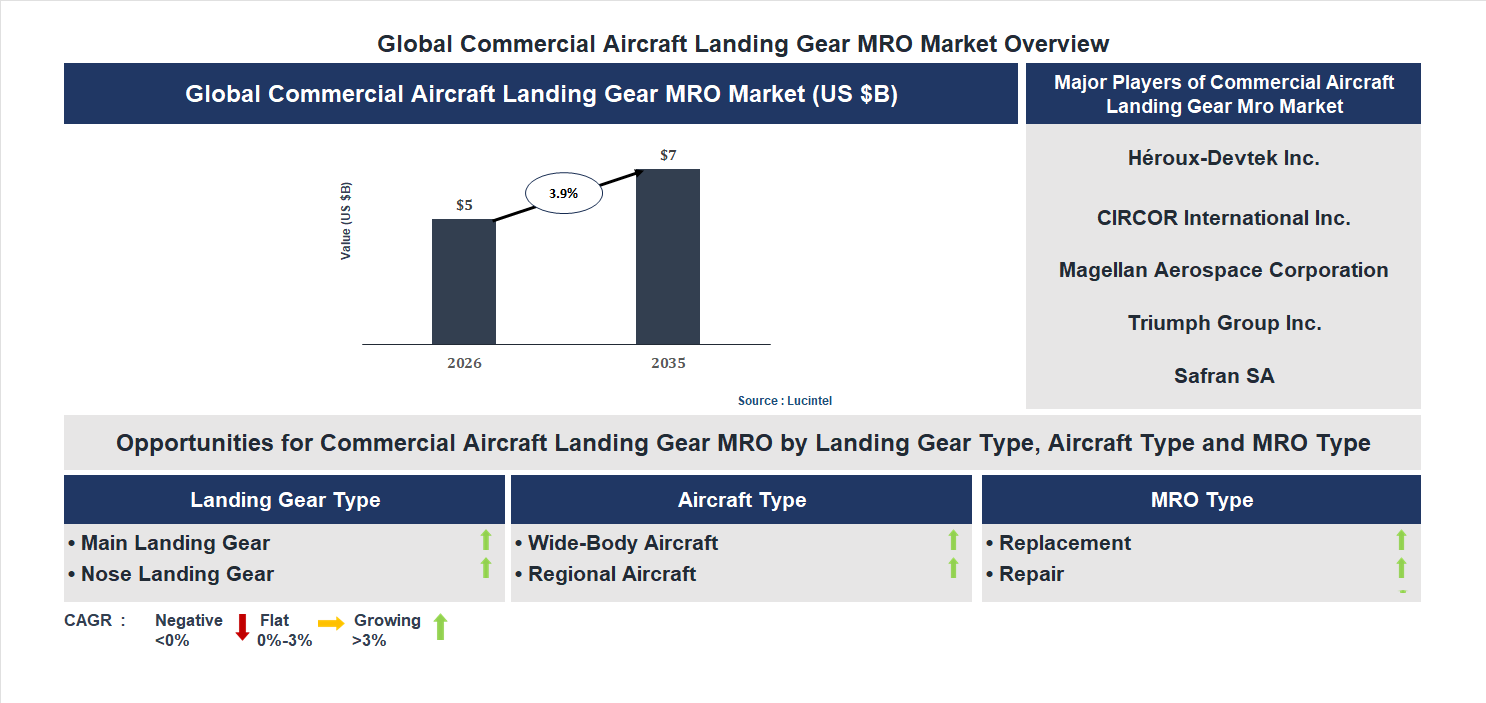
The future of the global commercial aircraft landing gear MRO market looks promising with opportunities in the wide-body aircraft and regional aircraft markets. The global commercial aircraft landing gear MRO market is expected to reach an estimated $7 billion by 2035 with a CAGR of 3.9% from 2026 to 2035. The major drivers for this market are the increasing demand for aircraft maintenance services, the rising fleet expansion boosting MRO activities, and the growing focus on operational safety compliance.• Lucintel forecasts that, within the landing gear type category, main landing gear is expected to witness higher growth over the forecast period.
• Within the aircraft type category, wide-body aircraft is expected to witness higher growth.
• In terms of region, APAC is expected to witness the highest growth over the forecast period. Gain valuable insights for your business decisions with our comprehensive 150+ page report. Sample figures with some insights are shown below.
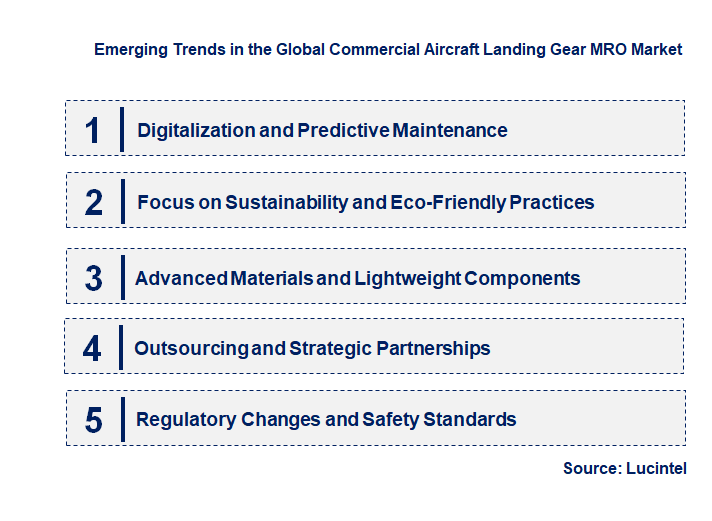
Emerging Trends in the Commercial Aircraft Landing Gear MRO Market
The commercial aircraft landing gear MRO market is experiencing rapid evolution driven by technological advancements, increasing aircraft fleets, and heightened safety standards. As airlines and manufacturers prioritize efficiency and reliability, the market is adapting through innovative solutions and strategic collaborations. Emerging trends are shaping the future landscape, influencing service providers, OEMs, and end-users alike. These developments are not only enhancing operational performance but also driving cost efficiencies and sustainability initiatives. Understanding these key trends is essential for stakeholders aiming to stay competitive and capitalize on growth opportunities in this dynamic sector.• Digitalization and Predictive Maintenance: The integration of digital technologies and IoT sensors enables real-time monitoring of landing gear conditions. Predictive analytics help forecast potential failures before they occur, reducing downtime and maintenance costs. This trend improves safety, enhances operational efficiency, and allows for more precise scheduling of repairs, ultimately extending the lifespan of landing gear components.
• Focus on Sustainability and Eco-Friendly Practices: Environmental concerns are prompting market players to adopt greener maintenance practices. Use of eco-friendly lubricants, recycling of materials, and energy-efficient processes are gaining traction. These initiatives reduce the environmental footprint of MRO activities, align with regulatory requirements, and appeal to environmentally conscious clients, fostering a sustainable growth trajectory.
• Advanced Materials and Lightweight Components: The development of high-strength, lightweight materials such as composites and advanced alloys is revolutionizing landing gear design. These materials improve fuel efficiency and reduce aircraft weight, leading to lower operational costs. MRO providers are increasingly specializing in the maintenance of these complex materials, which require specialized skills and equipment.
• Outsourcing and Strategic Partnerships: Airlines and OEMs are increasingly outsourcing landing gear maintenance to specialized MRO providers to optimize costs and access advanced expertise. Strategic collaborations and global service networks enable faster turnaround times and broader service offerings. This trend enhances market competitiveness and drives innovation through shared knowledge and resources.
• Regulatory Changes and Safety Standards: Stringent safety regulations and certification requirements are shaping MRO practices. Compliance with evolving standards necessitates continuous training, advanced inspection techniques, and rigorous quality control. This trend ensures higher safety levels, boosts customer confidence, and compels service providers to invest in cutting-edge inspection and repair technologies. These emerging trends are transforming the commercial aircraft landing gear MRO market by fostering innovation, enhancing safety, and promoting sustainability. They are driving operational efficiencies, reducing costs, and enabling providers to meet the evolving demands of the aviation industry. As these trends continue to develop, the market is poised for significant growth and increased competitiveness, ultimately benefiting airlines, manufacturers, and passengers alike.
Recent Developments in the Commercial Aircraft Landing Gear MRO Market
The commercial aircraft landing gear MRO market is experiencing rapid growth driven by increasing aircraft fleet sizes, technological advancements, and rising safety standards. As airlines and manufacturers prioritize maintenance efficiency and safety, the market is evolving with innovative solutions and expanding service networks. These developments are creating new opportunities for industry players, fostering competition, and enhancing overall market stability. The following key developments highlight the current trajectory and future potential of this vital sector.• Technological Innovations in Maintenance Processes: Adoption of advanced diagnostic tools and predictive maintenance software is revolutionizing landing gear MRO. These innovations enable real-time monitoring, reduce downtime, and improve repair accuracy. As a result, airlines benefit from cost savings, increased aircraft availability, and enhanced safety. The integration of AI and IoT technologies is expected to further streamline operations, making maintenance more efficient and predictive, thus transforming traditional practices and setting new industry standards.
• Expansion of Service Networks and Aftermarket Opportunities: Major MRO providers are expanding their global service networks to meet rising demand. This includes establishing new facilities and partnerships in emerging markets. Such expansion enhances accessibility, reduces turnaround times, and offers comprehensive maintenance solutions. The growth of aftermarket services, including spare parts supply and overhaul services, is creating lucrative revenue streams. This trend supports market growth by ensuring timely maintenance, boosting customer confidence, and fostering long-term client relationships.
• Increasing Focus on Sustainability and Eco-Friendly Practices: The industry is shifting towards sustainable maintenance practices, including the use of eco-friendly materials and waste reduction techniques. Companies are investing in green technologies to minimize environmental impact. This focus aligns with global regulations and airline sustainability goals, driving innovation in lubricants, cleaning agents, and repair processes. Sustainable practices not only improve corporate responsibility but also appeal to environmentally conscious clients, positioning the market for long-term growth and compliance.
• Rising Demand for Lightweight and Durable Landing Gear Components: Advances in materials science are leading to the development of lightweight, high-strength components that improve aircraft performance and fuel efficiency. These innovations reduce overall aircraft weight, lowering operational costs and emissions. The demand for such components is increasing with the expansion of new aircraft models and retrofit programs. This trend encourages R&D investments, fosters competitive differentiation, and supports the development of more efficient, durable landing gear systems, benefiting manufacturers and operators alike.
• Regulatory Enhancements and Safety Standards: Stringent safety regulations and certification requirements are driving improvements in landing gear maintenance procedures. Regulatory bodies are implementing stricter standards, prompting airlines and MRO providers to upgrade their practices. This ensures higher safety levels, reduces accident risks, and enhances industry credibility. Compliance with these standards necessitates advanced training, quality control, and documentation, which collectively elevate the overall quality and reliability of landing gear MRO services, fostering trust and stability in the market. These developments are significantly impacting the commercial aircraft landing gear MRO market by fostering innovation, expanding service capabilities, and emphasizing safety and sustainability. They are driving market growth, creating new business opportunities, and encouraging technological advancements. As a result, the industry is becoming more efficient, environmentally responsible, and customer-centric, positioning itself for sustained expansion and resilience in a competitive global aviation landscape.
Strategic Growth Opportunities in the Commercial Aircraft Landing Gear MRO Market
The commercial aircraft landing gear MRO market is experiencing significant growth driven by increasing aircraft fleet sizes, technological advancements, and the need for efficient maintenance solutions. Rising air travel demand and aging aircraft fleets are prompting airlines and MRO providers to invest in specialized services. Strategic partnerships, innovations in materials, and regulatory compliance further shape market dynamics. This environment offers numerous opportunities for stakeholders to expand their service offerings, improve operational efficiencies, and capture new customer segments, ultimately fueling market expansion and technological progress.• Maintenance and Overhaul of Landing Gear Components: The demand for comprehensive maintenance, repair, and overhaul services for landing gear components such as wheels, brakes, and struts is increasing. Aging aircraft fleets require regular inspections and replacements to ensure safety and compliance. Advanced diagnostic tools and predictive maintenance techniques are being adopted to reduce downtime and costs. This segment benefits from technological innovations like lightweight materials and corrosion-resistant components, creating opportunities for specialized service providers to expand their offerings.
• Adoption of Digital and Predictive Maintenance Technologies: Integration of digital solutions, including IoT sensors and data analytics, is transforming landing gear MRO. Predictive maintenance enables early detection of faults, reducing unscheduled repairs and enhancing safety. Cloud-based platforms facilitate real-time monitoring and streamlined workflows. This technological shift offers growth opportunities for software developers and MRO providers to deliver smarter, more efficient maintenance services, ultimately minimizing aircraft downtime and operational costs.
• Expansion of Regional MRO Facilities and Service Networks: Growing demand for landing gear maintenance services in emerging markets like Asia-Pacific and the Middle East is prompting companies to establish regional MRO facilities. Localized service centers reduce turnaround times and logistics costs, improving customer satisfaction. Strategic investments in infrastructure and workforce training are key drivers. This expansion enhances market reach, creates employment opportunities, and supports the global supply chain, fostering overall industry growth.
• Development of Lightweight and Durable Landing Gear Materials: Innovations in materials such as composites and advanced alloys are improving landing gear performance by reducing weight and increasing durability. These materials contribute to fuel efficiency and lower maintenance costs. R&D investments in material science are crucial for developing next-generation landing gear components. This opportunity benefits manufacturers and MRO providers focused on integrating new materials into existing maintenance practices, driving technological progress and competitive advantage.
• Increasing Focus on Regulatory Compliance and Safety Standards: Stringent safety regulations and environmental standards are compelling MRO providers to adopt higher-quality materials and advanced inspection techniques. Compliance with certifications like FAA and EASA ensures market access and customer trust. Investment in training and certification programs enhances service quality. This focus on safety and regulation compliance creates opportunities for specialized service providers to differentiate themselves and expand their market share through quality assurance and innovation. The overall impact of these growth opportunities is a robust expansion of the commercial aircraft landing gear MRO market, driven by technological innovation, regional development, and regulatory compliance. Stakeholders who capitalize on these trends can enhance operational efficiency, safety, and customer satisfaction. As the industry evolves, continuous investment in R&D, digital transformation, and strategic partnerships will be essential for sustained growth and competitive advantage in this dynamic market environment.
Commercial Aircraft Landing Gear MRO Market Driver and Challenges
The commercial aircraft landing gear MRO market is influenced by a variety of technological, economic, and regulatory factors. Rapid advancements in aerospace technology, increasing aircraft fleet sizes, and stringent safety standards are shaping the market landscape. Economic factors such as rising airline revenues and the need for cost-effective maintenance solutions also play a crucial role. Additionally, regulatory frameworks aimed at ensuring safety and environmental compliance impact operational practices. These drivers and challenges collectively determine the growth trajectory and competitive dynamics within the market, requiring stakeholders to adapt swiftly to evolving technological innovations, economic conditions, and regulatory requirements. The factors responsible for driving the commercial aircraft landing gear MRO market include:-• Technological Advancements: The continuous development of new materials, such as composites and lightweight alloys, enhances the durability and performance of landing gear components. Innovations in diagnostic tools and predictive maintenance technologies enable more efficient and cost-effective repairs, reducing downtime and extending component life. Automation and robotics in MRO processes improve precision and safety, leading to faster turnaround times. These technological improvements attract airlines seeking reliable, efficient maintenance solutions, thereby fueling market growth and encouraging manufacturers to invest in R&D for advanced landing gear systems.
• Growing Aircraft Fleet and Aging Infrastructure: The global expansion of the commercial aviation sector has resulted in a significant increase in aircraft fleets, necessitating extensive maintenance, repair, and overhaul services. Many existing aircraft are aging, requiring more frequent and complex maintenance activities to ensure safety and compliance. This surge in demand for MRO services creates a lucrative market opportunity for service providers. Additionally, the increasing number of aircraft in operation across emerging markets further amplifies the need for comprehensive landing gear maintenance, spurring investments in specialized facilities and skilled workforce.
• Regulatory and Safety Standards: Stringent safety regulations imposed by aviation authorities such as the FAA and EASA mandate regular inspections, maintenance, and certification of landing gear systems. These regulations ensure passenger safety but also increase compliance costs for airlines and MRO providers. The evolving regulatory landscape encourages the adoption of advanced diagnostic and repair technologies, fostering innovation within the industry. Moreover, compliance with environmental standards, such as reducing aircraft emissions and waste, influences maintenance practices, prompting the development of eco-friendly materials and processes in landing gear MRO.
• Cost Optimization and Outsourcing Trends: Airlines and MRO providers are under constant pressure to reduce operational costs while maintaining high safety standards. Outsourcing landing gear maintenance to specialized service providers offers cost advantages, access to advanced technologies, and faster turnaround times. The trend toward strategic partnerships and global service networks enhances efficiency and scalability. Cost optimization strategies also include the adoption of predictive maintenance, which minimizes unnecessary repairs and prevents costly failures, thereby improving overall profitability and market competitiveness.
• Increasing Focus on Sustainability: Environmental concerns and sustainability initiatives are driving the adoption of eco-friendly materials and processes in the MRO industry. Companies are investing in sustainable repair techniques, recycling components, and reducing waste generation. Regulatory pressures to lower carbon footprints and emissions further incentivize the development of greener maintenance practices. This focus on sustainability not only aligns with global environmental goals but also enhances brand reputation and customer loyalty, creating new opportunities for innovation and differentiation within the landing gear MRO market. The challenges facing the commercial aircraft landing gear MRO market include:-
• High Maintenance Costs and Complex Procedures: Landing gear systems are highly complex and require specialized skills and equipment for maintenance and repair. The high costs associated with spare parts, skilled labor, and advanced diagnostic tools pose significant financial burdens on MRO providers and airlines. Additionally, the intricate procedures involved in inspecting and repairing landing gear increase the risk of errors, which can compromise safety and lead to costly delays. Managing these costs while ensuring compliance with safety standards remains a persistent challenge, especially for smaller operators with limited budgets.
• Rapid Technological Changes and Obsolescence: The fast pace of technological innovation in aerospace components can lead to obsolescence of existing landing gear parts and repair techniques. Keeping up with new materials, design modifications, and diagnostic tools requires continuous investment in training and equipment upgrades. Failure to adapt quickly can result in reduced efficiency, increased downtime, and higher operational costs. Moreover, integrating new technologies into existing maintenance workflows can be complex and disruptive, necessitating careful planning and resource allocation.
• Regulatory Compliance and Certification Delays: Navigating the complex regulatory environment is a significant challenge for the landing gear MRO market. Certification processes for new repair techniques, materials, and components can be lengthy and costly, delaying the deployment of innovative solutions. Variations in regulations across different regions further complicate compliance efforts, increasing operational complexity and costs. Ensuring adherence to evolving safety and environmental standards while maintaining operational efficiency requires continuous monitoring and adaptation, which can strain resources and impact profitability. The commercial aircraft landing gear MRO market is shaped by technological innovations, expanding fleets, and stringent safety standards, which drive growth and competitiveness. However, high maintenance costs, rapid technological obsolescence, and regulatory complexities pose significant challenges. Balancing these drivers and challenges is crucial for market players to capitalize on emerging opportunities while mitigating risks. Overall, the markets future will depend on the ability to innovate, adapt to regulatory changes, and implement cost-effective, sustainable maintenance practices, ensuring safety and efficiency in the evolving aerospace landscape.
List of Commercial Aircraft Landing Gear MRO Companies
Companies in the market compete on the basis of product quality offered. Major players in this market focus on expanding their manufacturing facilities, R&D investments, infrastructural development, and leverage integration opportunities across the value chain. With these strategies commercial aircraft landing gear MRO companies cater increasing demand, ensure competitive effectiveness, develop innovative products & technologies, reduce production costs, and expand their customer base. Some of the commercial aircraft landing gear MRO companies profiled in this report include-• Héroux-Devtek Inc.
• CIRCOR International Inc.
• Magellan Aerospace Corporation
• Triumph Group Inc.
• Safran SA
• Raytheon Technologies Corporation
• Sumitomo Precision Products Co. Ltd
• AAR Corp.
• Liebherr-International Deutschland GmbH
• Honeywell International
Commercial Aircraft Landing Gear MRO Market by Segment
The study includes a forecast for the global commercial aircraft landing gear MRO market by landing gear type, aircraft type, MRO type, and region.Commercial Aircraft Landing Gear MRO Market by Landing Gear Type [Value from 2019 to 2035]:
• Main Landing Gear
• Nose Landing Gear
Commercial Aircraft Landing Gear MRO Market by Aircraft Type [Value from 2019 to 2035]:
• Wide-Body Aircraft
• Regional Aircraft
Commercial Aircraft Landing Gear MRO Market by MRO Type [Value from 2019 to 2035]:
• Replacement
• Repair
Commercial Aircraft Landing Gear MRO Market by Region [Value from 2019 to 2035]:
• North America
• Europe
• Asia Pacific
• The Rest of the World
Country Wise Outlook for the Commercial Aircraft Landing Gear MRO Market
The commercial aircraft landing gear MRO market is experiencing rapid growth driven by increasing air travel demand, technological advancements, and the need for enhanced safety standards. As airlines and manufacturers focus on extending aircraft lifespan and reducing downtime, the market is evolving with innovative repair techniques, digital solutions, and sustainable practices. Key players are investing in R&D to improve efficiency and reduce costs, while regulatory bodies are tightening compliance requirements. These developments are shaping a competitive landscape across major economies, reflecting the global importance of reliable and efficient landing gear maintenance for commercial aviation.• United States: The US market is witnessing significant technological innovation, including the adoption of digital twins and predictive maintenance tools to optimize landing gear repairs. Major MRO providers are expanding their facilities and capabilities, driven by increasing aircraft fleet sizes and aging infrastructure. Regulatory agencies like the FAA are implementing stricter safety standards, prompting upgrades in maintenance procedures. Additionally, partnerships between OEMs and MROs are fostering the development of advanced repair techniques, reducing turnaround times and costs. The US remains a leader in integrating sustainable practices, such as eco-friendly materials and waste reduction in MRO processes.
• China: Chinas commercial aircraft MRO market is rapidly expanding due to the countrys booming aviation sector and government initiatives supporting aerospace growth. Chinese MRO providers are investing heavily in modernizing their facilities and adopting advanced diagnostic technologies. The government encourages domestic maintenance capabilities to reduce reliance on foreign providers, leading to increased local expertise. Strategic collaborations with international firms are also on the rise, facilitating technology transfer. The focus is on developing comprehensive landing gear overhaul services that meet international safety standards, positioning China as a key player in the global market.
• Germany: Germanys MRO industry is characterized by high-quality standards and technological sophistication, driven by its strong aerospace manufacturing sector. Companies are leveraging Industry 4.0 technologies, such as automation and data analytics, to enhance maintenance efficiency. The country is also a hub for innovation in lightweight and durable landing gear components, contributing to fuel efficiency. Regulatory compliance with European Aviation Safety Agency (EASA) standards remains a priority, ensuring safety and reliability. Germanys focus on sustainability is evident through investments in environmentally friendly repair processes and waste management, aligning with broader European green initiatives.
• India: The Indian commercial aircraft MRO market is experiencing rapid growth, supported by increasing domestic airline operations and fleet expansion. Indian MRO providers are adopting advanced repair techniques and digital tools to improve service quality and turnaround times. The government’s "Make in India" initiative encourages local manufacturing and maintenance capabilities, reducing dependence on imports. Strategic partnerships with global MRO firms are facilitating technology transfer and skill development. The focus is on establishing comprehensive landing gear maintenance facilities that adhere to international safety standards, positioning India as a key regional MRO hub.
• Japan: Japans MRO sector is characterized by high precision and technological innovation, driven by its advanced aerospace industry. Japanese companies are investing in automation, robotics, and data-driven maintenance solutions to improve efficiency and safety. The country emphasizes quality assurance and compliance with strict safety regulations, including those from the Japan Civil Aviation Bureau. Sustainable practices, such as recycling and eco-friendly materials, are increasingly integrated into maintenance processes. Japan is also focusing on developing specialized landing gear repair techniques to support its aging aircraft fleet and maintain its reputation for reliability and safety in aviation.

Features of the Global Commercial Aircraft Landing Gear MRO Market
Market Size Estimates: Commercial aircraft landing gear MRO market size estimation in terms of value ($B). Trend and Forecast Analysis: Market trends (2019 to 2025) and forecast (2026 to 2035) by various segments and regions. Segmentation Analysis: Commercial aircraft landing gear MRO market size by landing gear type, aircraft type, MRO type, and region in terms of value ($B). Regional Analysis: Commercial aircraft landing gear MRO market breakdown by North America, Europe, Asia Pacific, and Rest of the World. Growth Opportunities: Analysis of growth opportunities in different landing gear types, aircraft types, MRO types, and regions for the commercial aircraft landing gear MRO market. Strategic Analysis: This includes M&A, new product development, and competitive landscape of the commercial aircraft landing gear MRO market. Analysis of competitive intensity of the industry based on Porter’s Five Forces model.
FAQ
Q1. What is the commercial aircraft landing gear MRO market size? Answer: The global commercial aircraft landing gear MRO market is expected to reach an estimated $7 billion by 2035. Q2. What is the growth forecast for commercial aircraft landing gear MRO market? Answer: The global commercial aircraft landing gear MRO market is expected to grow with a CAGR of 3.9% from 2026 to 2035. Q3. What are the major drivers influencing the growth of the commercial aircraft landing gear MRO market? Answer: The major drivers for this market are the increasing demand for aircraft maintenance services, the rising fleet expansion boosting MRO activities, and the growing focus on operational safety compliance. Q4. What are the major segments for commercial aircraft landing gear MRO market? Answer: The future of the commercial aircraft landing gear MRO market looks promising with opportunities in the wide-body aircraft and regional aircraft markets. Q5. Who are the key commercial aircraft landing gear MRO market companies? Answer: Some of the key commercial aircraft landing gear MRO companies are as follows:• Héroux-Devtek Inc.
• CIRCOR International Inc.
• Magellan Aerospace Corporation
• Triumph Group Inc.
• Safran SA
• Raytheon Technologies Corporation
• Sumitomo Precision Products Co. Ltd
• AAR Corp.
• Liebherr-International Deutschland GmbH
• Honeywell International Q6. Which commercial aircraft landing gear MRO market segment will be the largest in future? Answer: Lucintel forecasts that, within the landing gear type category, main landing gear is expected to witness higher growth over the forecast period. Q7. In commercial aircraft landing gear MRO market, which region is expected to be the largest in next 8 years? Answer: In terms of region, APAC is expected to witness the highest growth over the forecast period. Q8. Do we receive customization in this report? Answer: Yes, Lucintel provides 10% customization without any additional cost.
Table of Contents
List of Figures
List of Tables
Methodology
- In-depth interviews of the major players in this market
- Detailed secondary research from competitors’ financial statements and published data
- Extensive searches of published works, market, and database information pertaining to industry news, company press releases, and customer intentions
- A compilation of the experiences, judgments, and insights of Lucintel’s professionals, who have analyzed and tracked this market over the years.


Buy Now
Choose a license that fits your team. Instant PDF delivery.
Prices exclude taxes. Instant delivery. Custom licensing available on request.
Key Questions
- • What are some of the most promising, high-growth opportunities for the commercial aircraft landing gear MRO market by landing gear type (main landing gear and nose landing gear), aircraft type (wide-body aircraft and regional aircraft), MRO type (replacement and repair), and region (North America, Europe, Asia Pacific, and the Rest of the World)?
- • Which segments will grow at a faster pace and why?
- • Which region will grow at a faster pace and why?
- • What are the key factors affecting market dynamics? What are the key challenges and business risks in this market?
- • What are the business risks and competitive threats in this market?
- • What are the emerging trends in this market and the reasons behind them?
- • What are some of the changing demands of customers in the market?
- • What are the new developments in the market? Which companies are leading these developments?
- • Who are the major players in this market? What strategic initiatives are key players pursuing for business growth?
- • What are some of the competing products in this market and how big of a threat do they pose for loss of market share by material or product substitution?
- • What M&A activity has occurred in the last 5 years and what has its impact been on the industry? For any questions related to Commercial Aircraft Landing Gear MRO Market, Commercial Aircraft Landing Gear MRO Market Size, Commercial Aircraft Landing Gear MRO Market Growth, Commercial Aircraft Landing Gear MRO Market Analysis, Commercial Aircraft Landing Gear MRO Market Report, Commercial Aircraft Landing Gear MRO Market Share, Commercial Aircraft Landing Gear MRO Market Trends, Commercial Aircraft Landing Gear MRO Market Forecast, Commercial Aircraft Landing Gear MRO Companies, write Lucintel analyst at email: helpdesk@lucintel.com. We will be glad to get back to you soon.


