
Market Report · July 31, 2026

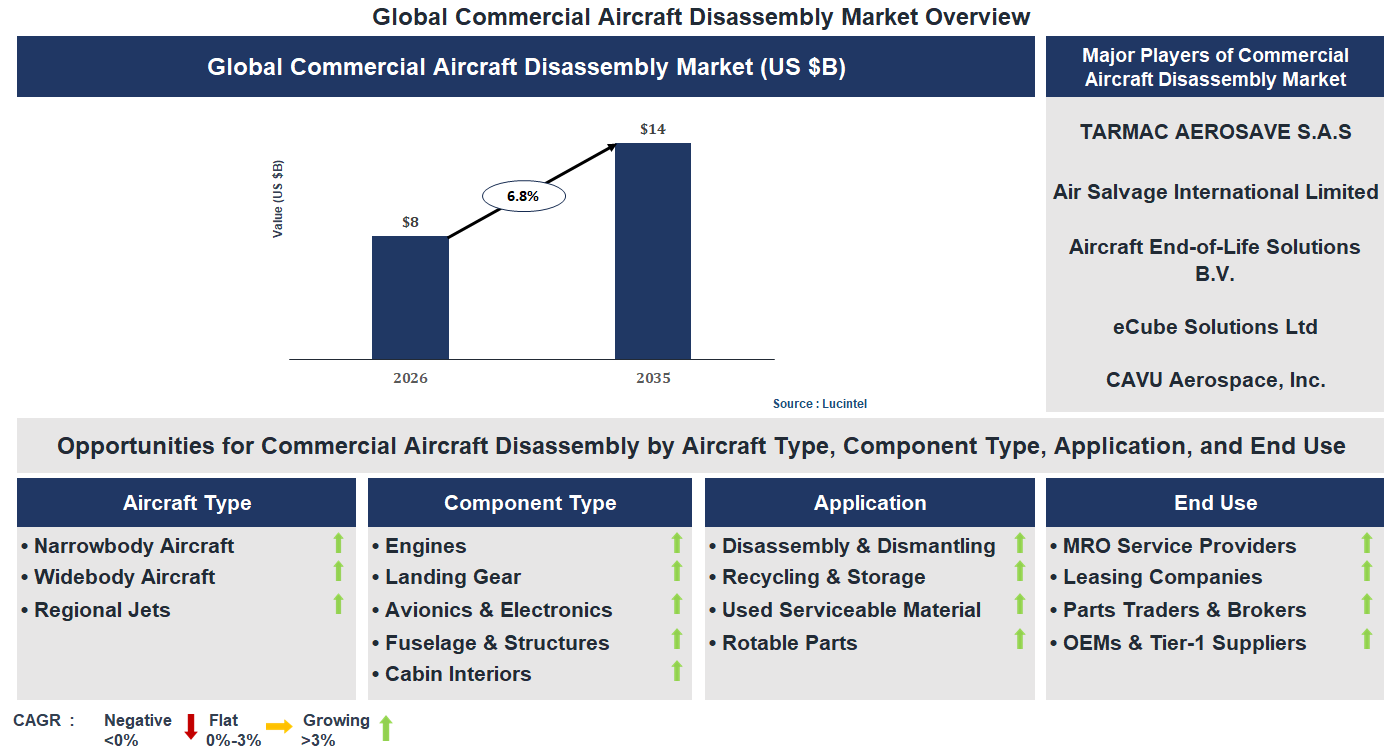
Key data points: The market size in 2035 = $14 billion, growth forecast = 6.8% annually for the next 8 years. Scroll below to get more insights. This market report covers trends, opportunities and forecasts in commercial aircraft disassembly market to 2035 by aircraft type (narrowbody aircraft, widebody aircraft, and regional jets), component type (engines, landing gear, avionics & electronics, fuselage & structures, and cabin interiors), application (disassembly & dismantling, recycling & storage, used serviceable material, and rotable parts), end use (MRO service providers, leasing companies, parts traders & brokers, and OEMs & tier-1 suppliers), and region (North America, Europe, Asia Pacific, and the Rest of the World)
We'll send your sample report shortly.
• Lucintel forecasts that, within the aircraft type category, narrowbody aircraft is expected to witness the highest growth over the forecast period.
• Within the application category, recycling & storage is expected to witness the highest growth.
• In terms of region, North America is expected to witness the highest growth over the forecast period. Gain valuable insights for your business decisions with our comprehensive 150+ page report. Sample figures with some insights are shown below.
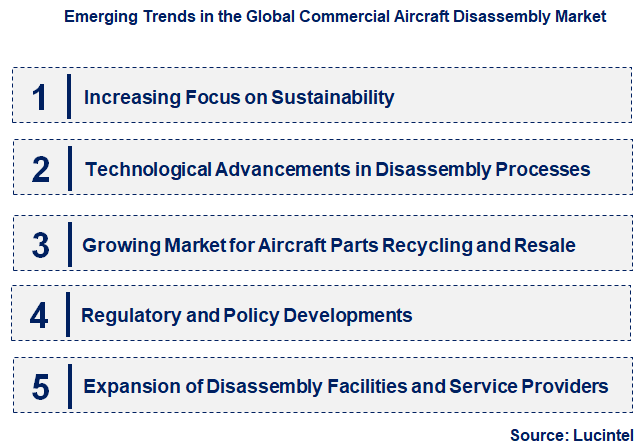
• Increasing Focus on Sustainability: The market is prioritizing eco-friendly disassembly processes to reduce environmental impact. Companies are adopting advanced recycling techniques to recover valuable materials like aluminum, titanium, and composites, minimizing waste. Regulatory pressures and consumer demand for greener practices are driving this trend. Sustainable disassembly not only helps airlines meet environmental standards but also creates economic value through material reuse and resale. This shift is fostering innovation in recycling technologies and encouraging industry-wide adoption of environmentally responsible practices.
• Technological Advancements in Disassembly Processes: Automation, robotics, and AI are revolutionizing aircraft disassembly. These technologies enable faster, safer, and more precise dismantling, reducing labor costs and human error. Digital twin and IoT integration facilitate real-time monitoring and process optimization. As a result, disassembly becomes more efficient, scalable, and cost-effective. The adoption of these innovations is expanding the market’s capacity to handle increasing aircraft retirements and ensuring compliance with safety standards, ultimately transforming traditional disassembly methods into high-tech operations.
• Growing Market for Aircraft Parts Recycling and Resale: The demand for recycled aircraft parts is surging due to cost savings and supply chain efficiencies. Airlines and maintenance providers prefer refurbished components over new ones, especially for non-critical parts. This trend is supported by the increasing availability of certified recycled parts and stringent quality standards. The resale market is expanding, creating new revenue streams for disassembly companies. This shift not only reduces waste but also promotes a circular economy within the aviation industry, making aircraft disassembly a vital part of sustainable asset management.
• Regulatory and Policy Developments: Governments and industry bodies are implementing stricter regulations on aircraft disposal and recycling. These policies aim to promote environmentally responsible disassembly practices and ensure proper handling of hazardous materials like batteries and fluids. Compliance requirements are driving investments in specialized facilities and training. Additionally, international standards are harmonizing disassembly procedures, facilitating cross-border recycling efforts. These regulatory developments are shaping market strategies, encouraging companies to innovate and invest in compliant, sustainable disassembly solutions.
• Expansion of Disassembly Facilities and Service Providers: The market is witnessing significant investments in new disassembly facilities worldwide, especially in regions with high aircraft retirement rates. Service providers are expanding their capabilities to include comprehensive disassembly, recycling, and parts resale services. Strategic partnerships and acquisitions are fueling growth, enabling companies to serve global clients efficiently. This expansion enhances market competitiveness and capacity, supporting the increasing volume of retired aircraft. It also fosters regional development, creating jobs and promoting technological transfer, which collectively reshape the global landscape of aircraft disassembly services. These trends are collectively transforming the commercial aircraft disassembly market into a more sustainable, technologically advanced, and efficient industry. They are driving innovation, regulatory compliance, and market expansion, ultimately reshaping how aircraft are retired, recycled, and repurposed, aligning industry practices with environmental and economic goals.
• Growing Aircraft Retirement Rates: The rising number of aging commercial aircraft reaching end-of-life creates a substantial demand for disassembly services. Airlines and leasing companies are increasingly opting for disassembly over scrapping, driven by the value of salvageable parts and environmental regulations. This trend boosts market growth, encourages infrastructure development, and fosters innovation in disassembly techniques. The increased aircraft retirement rate directly correlates with higher market revenues and expanded service offerings, positioning the industry for sustained expansion.
• Environmental Regulations and Sustainability Goals: Stricter environmental policies worldwide are compelling airlines and manufacturers to adopt sustainable practices, including aircraft disassembly. Proper disassembly reduces waste and promotes recycling of materials, aligning with global sustainability targets. These regulations incentivize the development of eco-friendly disassembly methods and facilities. As governments tighten standards, the market benefits from increased demand for compliant disassembly services, fostering innovation and investment in greener technologies, ultimately supporting the industry’s shift toward sustainable aircraft lifecycle management.
• Technological Advancements in Disassembly Processes: Innovations such as automation, robotics, and advanced materials are transforming aircraft disassembly. These technologies improve efficiency, safety, and precision, reducing labor costs and turnaround times. Enhanced disassembly methods enable the recovery of more valuable components, increasing profitability. The adoption of such technologies attracts investments and encourages industry players to upgrade infrastructure. Overall, technological progress is driving market competitiveness, expanding service capabilities, and enabling scalable, environmentally responsible disassembly operations.
• Increasing Investment in Disassembly Infrastructure: Major players are investing heavily in specialized facilities and equipment to meet rising demand. Modern disassembly centers equipped with advanced tools facilitate faster, safer, and more efficient aircraft breakdowns. Strategic investments also include training programs to develop skilled workforce expertise. These developments improve operational capacity, reduce costs, and attract more clients. The expansion of infrastructure is crucial for supporting market growth, enabling large-scale disassembly projects, and establishing regional hubs, thereby strengthening the industry’s global footprint.
• Rising Demand for Salvageable Aircraft Parts: The market for used aircraft parts is expanding due to cost-conscious airlines and maintenance providers seeking affordable components. Disassembly processes enable the recovery of high-value parts, which are then refurbished and resold. This trend reduces reliance on new manufacturing, lowers costs, and supports sustainability. The increasing demand for salvageable parts drives the need for efficient disassembly and parts management systems. Consequently, the market benefits from higher revenues, improved supply chain resilience, and a greener approach to aircraft lifecycle management. The overall impact of these developments is a dynamic, expanding market characterized by technological innovation, environmental responsibility, and increased profitability. These opportunities are transforming the commercial aircraft disassembly industry into a sustainable, efficient, and globally competitive sector, attracting investments and fostering long-term growth.
• Growing Aircraft Retirement Rates Drive Disassembly Demand: The increasing number of aging commercial aircraft reaching end-of-life stages is fueling demand for disassembly services. Airlines and leasing companies are seeking efficient ways to decommission aircraft, recover valuable components, and comply with environmental regulations. This trend is expected to continue as fleets age and newer, more fuel-efficient models replace older aircraft, creating a steady pipeline of disassembly opportunities.
• Environmental Regulations Promote Sustainable Aircraft Recycling: Stricter environmental policies worldwide are encouraging airlines and manufacturers to adopt sustainable disposal methods. Aircraft disassembly offers eco-friendly solutions by recycling metals, plastics, and other materials, reducing landfill waste. Governments and regulatory bodies are incentivizing recycling practices, which boosts the adoption of disassembly services. This shift toward sustainability is expected to expand the market as stakeholders aim to meet environmental standards and reduce carbon footprints.
• Technological Innovations Enhance Disassembly Efficiency: Advances in disassembly technologies, such as robotic automation and non-destructive testing, are improving process efficiency and safety. These innovations enable faster, more precise disassembly, minimizing damage to reusable components. As technology evolves, companies can recover higher-value parts, increase throughput, and reduce operational costs. The integration of digital tools like AI and IoT further optimizes disassembly workflows, making the process more sustainable and economically viable.
• Increasing Demand for Aircraft Parts Resale and Recycling: The market for used aircraft parts is expanding due to cost-conscious airlines and maintenance providers seeking affordable components. Disassembly facilitates the recovery and resale of high-value parts, creating a lucrative secondary market. Additionally, recycling materials from decommissioned aircraft supports circular economy initiatives. The rising demand for affordable, sustainable aircraft components is expected to drive growth in disassembly services and related parts trading platforms.
• Strategic Partnerships and Mergers Boost Market Expansion: Companies are forming alliances, joint ventures, and acquiring specialized disassembly firms to strengthen market presence. These strategic moves enable access to new markets, advanced technologies, and larger customer bases. Mergers and acquisitions also facilitate resource sharing and innovation, accelerating service offerings. As the industry consolidates, market players can better meet increasing demand, improve operational efficiencies, and expand globally, fostering overall growth in the aircraft disassembly sector. The overall impact of these opportunities is a robust expansion of the commercial aircraft disassembly market, driven by technological, regulatory, and economic factors. Stakeholders who leverage these growth avenues can enhance sustainability, operational efficiency, and profitability. As the market matures, innovative disassembly solutions and strategic collaborations will be pivotal in meeting the rising demand for aircraft recycling and component resale, ensuring long-term industry sustainability and growth.
• Technological Advancements: The development of innovative disassembly and recycling technologies enhances efficiency and sustainability. Automated processes and improved material recovery methods reduce time and costs, making disassembly more viable and environmentally friendly. These innovations attract airlines and disassembly companies seeking eco-conscious disposal options, thereby expanding market opportunities.
• Environmental Regulations and Sustainability Goals: Governments worldwide are implementing strict environmental policies aimed at reducing aircraft waste and promoting recycling. These regulations incentivize airlines and disassembly firms to adopt sustainable practices, boosting demand for disassembly services. The push toward circular economy principles further accelerates market growth by encouraging resource recovery and waste minimization.
• Increasing Aircraft Fleet Size and Lifecycle Management: The expanding global fleet, coupled with the need to manage aging aircraft, drives demand for disassembly services. Airlines seek efficient ways to retire aircraft and recover value from components, fueling market expansion. Lifecycle management strategies also promote early disassembly planning, creating a steady flow of disassembly projects.
• Economic Benefits and Cost Savings: Disassembling aircraft allows for the recovery of valuable materials and components, which can be resold or reused. This process offers significant cost savings compared to new manufacturing or disposal without recycling. The economic incentives motivate airlines and disassembly companies to invest in advanced disassembly facilities and processes, further propelling market growth. The challenges in the commercial aircraft disassembly market are:
• Regulatory Complexities and Compliance Issues: Navigating diverse and evolving regulations across different regions complicates disassembly operations. Compliance with safety, environmental, and waste management standards requires substantial investment and expertise. Non-compliance can lead to penalties and operational delays, hindering market growth.
• High Disassembly and Recycling Costs: The disassembly process involves significant capital investment in specialized equipment and skilled labor. Additionally, the costs associated with hazardous material handling and waste disposal can be substantial. These high costs may limit the profitability of disassembly projects, especially for older or less valuable aircraft.
• Safety and Environmental Concerns: Ensuring safety during disassembly, particularly when dealing with hazardous materials like batteries, fuels, and chemicals, is critical. Mishandling can lead to accidents and environmental contamination, resulting in legal liabilities and reputational damage. Addressing these concerns requires stringent safety protocols and environmental safeguards, increasing operational complexity and costs. The commercial aircraft disassembly market is shaped by technological innovations, regulatory pressures, and economic incentives that promote sustainable and efficient disassembly practices. However, regulatory complexities, high costs, and safety concerns pose significant challenges. These factors collectively influence market dynamics, requiring stakeholders to adopt advanced technologies, comply with regulations, and manage costs effectively. The interplay of drivers and challenges will determine the market's growth trajectory, with opportunities for innovation and sustainability balanced against operational and regulatory hurdles.
• TARMAC AEROSAVE S.A.S
• Air Salvage International Limited
• Aircraft End-of-Life Solutions B.V.
• eCube Solutions Ltd
• CAVU Aerospace, Inc.
• GA Telesis
• Aer Sale, Inc.
• AAR CORP.
• A J Walter Aviation Limited
• Vallair Group SA
• Narrowbody Aircraft
• Widebody Aircraft
• Regional Jets
• Engines
• Landing Gear
• Avionics & Electronics
• Fuselage & Structures
• Cabin Interiors
• Disassembly & Dismantling
• Recycling & Storage
• Used Serviceable Material
• Rotable Parts
• MRO Service Providers
• Leasing Companies
• Parts Traders & Brokers
• OEMs & Tier-1 Suppliers
• North America
• Europe
• Asia Pacific
• The Rest of the World
• United States: The US market has seen rapid expansion with major players investing in advanced disassembly facilities and environmentally friendly recycling methods. Regulatory frameworks now emphasize sustainability, encouraging airlines to partner with certified disassembly providers. Innovations in automated disassembly and parts reuse are gaining traction, reducing costs and environmental impact. The US also benefits from a large fleet of aging aircraft, fueling demand for disassembly services.
• China: China is rapidly developing its aircraft disassembly infrastructure to support its growing aviation sector. The government promotes sustainable practices and has introduced policies to encourage aircraft recycling. Chinese companies are adopting advanced technologies such as robotic disassembly and data-driven sorting systems. The market is also driven by domestic aircraft retirements and the need to recover valuable materials efficiently.
• Germany: Germany leads in integrating eco-friendly disassembly techniques within Europe. The country emphasizes strict environmental standards and innovative recycling solutions. German firms are investing in research to improve disassembly efficiency and material recovery rates. The market benefits from Europe's regulatory environment and the presence of major aerospace manufacturers seeking sustainable disposal options.
• India: India’s aircraft disassembly market is emerging, supported by increasing aircraft retirements and a focus on sustainability. The government encourages environmentally responsible recycling practices. Indian companies are beginning to adopt modern disassembly technologies, though the market still faces challenges related to infrastructure and regulatory frameworks. The growth is also driven by the need to recover valuable components for domestic use.
• Japan: Japan is advancing its aircraft disassembly capabilities with a focus on technological innovation and environmental sustainability. The country emphasizes reducing waste and maximizing resource recovery through sophisticated disassembly processes. Japanese firms are investing in automation and eco-friendly recycling methods. The aging fleet and government initiatives to promote sustainable aviation practices are key drivers of market growth.


• TARMAC AEROSAVE S.A.S
• Air Salvage International Limited
• Aircraft End-of-Life Solutions B.V.
• eCube Solutions Ltd
• CAVU Aerospace, Inc.
• GA Telesis
• Aer Sale, Inc.
• AAR CORP.
• A J Walter Aviation Limited
• Vallair Group SA Q6. Which commercial aircraft disassembly market segment will be the largest in future? Answer: Lucintel forecasts that, within the aircraft type category, narrowbody aircraft is expected to witness the highest growth over the forecast period. Q7. In commercial aircraft disassembly market, which region is expected to be the largest in next 8 years? Answer: In terms of region, North America is expected to witness the highest growth over the forecast period. Q8. Do we receive customization in this report? Answer: Yes, Lucintel provides 10% customization without any additional cost.


Choose a license that fits your team. Instant PDF delivery.
Prices exclude taxes. Instant delivery. Custom licensing available on request.
Market Report · July 31, 2026
Market Report · July 31, 2026
Market Report · July 31, 2026
Trusted partner for strategic intelligence and business growth


Receive a complimentary market analysis tailored to your industry. Our analysts will identify key growth opportunities and competitive dynamics specific to your business.

Market size, growth rate, and key trend analysis for your specific sector.

Top competitor positioning and market share analysis.

Strategic recommendations backed by data-driven insights.
Get curated market intelligence and competitive moves straight to your inbox.
By subscribing, you agree to receive our monthly insights. Unsubscribe anytime.
Receive a complimentary market analysis tailored to your industry. Our analysts will identify key growth opportunities and competitive dynamics specific to your business.
Market size, growth rate, and key trend analysis for your specific sector.
Top competitor positioning and market share analysis.
Strategic recommendations backed by data-driven insights.
Get curated market intelligence, emerging trends, and competitive moves straight to your inbox each month.
By subscribing, you agree to receive our monthly insights. Unsubscribe anytime.
We'll send your sample report shortly.