
Market Report · July 31, 2026

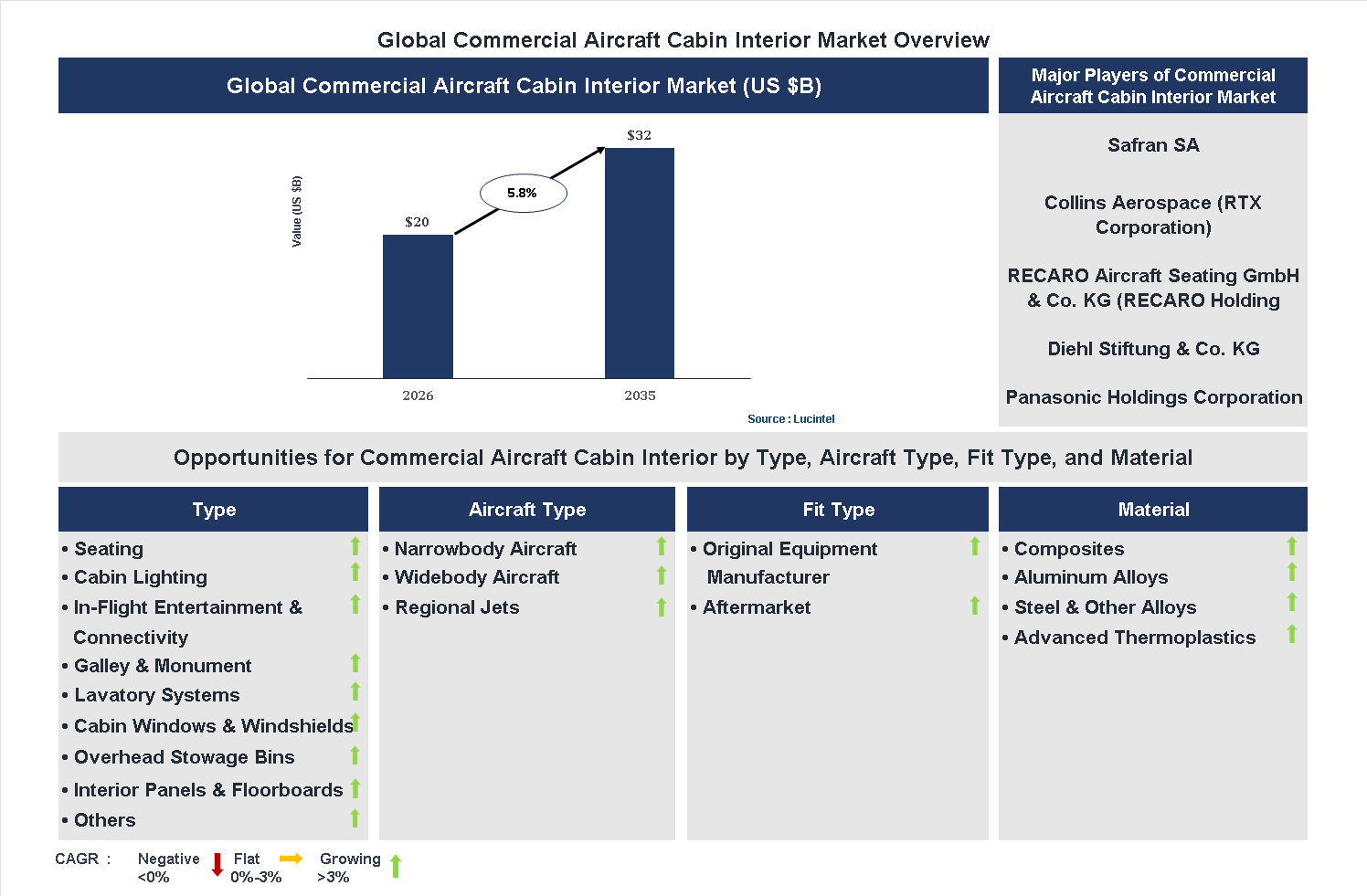
Key data points: The market size in 2035 = $32 billion, growth forecast = 5.8% annually for the next 8 years. Scroll below to get more insights. This market report covers trends, opportunities and forecasts in commercial aircraft cabin interior market to 2035 by type (seating, cabin lighting, in-flight entertainment & connectivity, galley & monument, lavatory systems, cabin windows & windshields, overhead stowage bins, interior panels & floorboards, and others), aircraft type (narrowbody aircraft, widebody aircraft, and regional jets), fit type (original equipment manufacturer and aftermarket), material (composites, aluminum alloys, steel & other alloys, and advanced thermoplastics), and region (North America, Europe, Asia Pacific, and the Rest of the World)
We'll send your sample report shortly.
• Lucintel forecasts that, within the type category, seating is expected to witness the highest growth over the forecast period.
• Within the material category, composite is expected to witness the highest growth.
• In terms of region, APAC is expected to witness the highest growth over the forecast period. Gain valuable insights for your business decisions with our comprehensive 150+ page report. Sample figures with some insights are shown below.
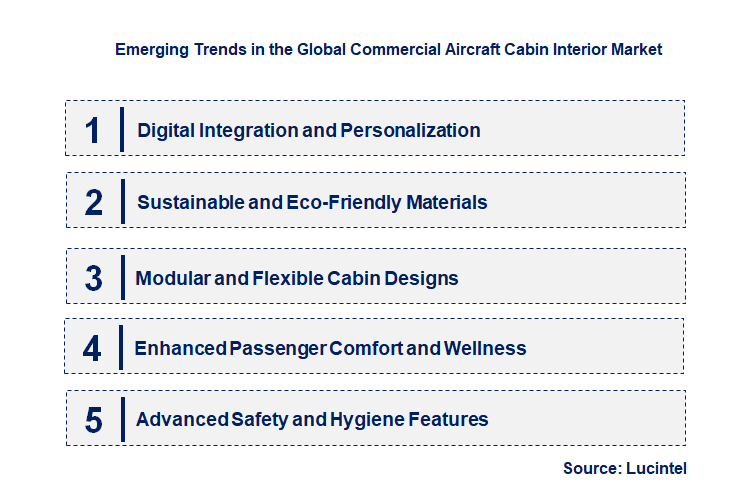
• Digital Integration and Personalization: The trend towards digitalization is transforming cabin interiors by integrating smart technology. Passengers now expect personalized experiences, such as adjustable lighting, entertainment systems, and connectivity options. Airlines are incorporating IoT devices and touchscreens to enhance passenger engagement and streamline operations. This shift improves passenger satisfaction, reduces crew workload, and enables real-time customization, making flights more comfortable and tailored to individual preferences. As digital tools become more sophisticated, cabin interiors will increasingly offer seamless, personalized experiences that meet evolving passenger expectations.
• Sustainable and Eco-Friendly Materials: Environmental concerns are prompting a shift towards sustainable cabin interior components. Manufacturers are adopting eco-friendly materials like recycled plastics, bio-based fabrics, and lightweight composites to reduce aircraft weight and fuel consumption. These materials not only lower the carbon footprint but also meet stricter regulatory standards. The use of sustainable materials is also appealing to environmentally conscious consumers, enhancing airline brand image. This trend is driving innovation in material science, leading to more durable, lightweight, and environmentally responsible cabin components that align with global sustainability goals.
• Modular and Flexible Cabin Designs: Flexibility in cabin layouts is gaining importance to accommodate different passenger needs and operational requirements. Modular interior components allow airlines to reconfigure cabins quickly for varying class configurations, special services, or seasonal demands. This adaptability enhances revenue management and operational efficiency. Additionally, modular designs facilitate easier maintenance and upgrades, reducing downtime and costs. As airlines seek more versatile solutions, modular cabin interiors are becoming a key trend, enabling a more dynamic and responsive approach to cabin management and passenger service.
• Enhanced Passenger Comfort and Wellness: Improving passenger comfort remains a priority, with innovations focused on wellness and relaxation. Features such as ergonomic seating, improved air quality, ambient lighting, and noise reduction are being integrated into cabin designs. Airlines are also exploring wellness zones and sleep-friendly environments to enhance passenger well-being during flights. These enhancements aim to reduce travel fatigue, increase passenger satisfaction, and promote loyalty. As health and comfort become central to travel experience, cabin interiors are evolving to support longer, more comfortable journeys, aligning with broader trends in health-conscious travel.
• Advanced Safety and Hygiene Features: The COVID-19 pandemic accelerated the adoption of hygiene and safety measures within cabin interiors. Touchless controls, antimicrobial surfaces, and improved air filtration systems are now standard features. These innovations help reduce the risk of infection and reassure passengers about their safety. Enhanced safety features also include better fire-resistant materials and improved emergency equipment integration. The focus on hygiene and safety is reshaping cabin interior design, emphasizing health-conscious features that meet new regulatory standards and passenger expectations for safer travel environments. These emerging trends are fundamentally reshaping the commercial aircraft cabin interior market by prioritizing digital innovation, sustainability, flexibility, passenger wellness, and safety. These developments are driving a more personalized, environmentally responsible, and health-conscious approach to cabin design, ultimately enhancing the overall air travel experience and setting new industry standards.
• Cabin Design Innovations: Enhanced passenger comfort and aesthetic appeal are prioritized through lightweight materials, customizable layouts, and modern aesthetics, leading to increased airline competitiveness and passenger satisfaction.
• Sustainable Materials Adoption: The shift towards eco-friendly, recyclable, and lightweight materials reduces environmental impact and operational costs, aligning with global sustainability goals and regulatory requirements.
• In-Flight Entertainment and Connectivity: Advanced in-flight entertainment systems and high-speed connectivity improve passenger experience, driving demand for integrated cabin solutions and creating new revenue streams for airlines.
• Modular Cabin Configurations: Flexible, modular designs allow airlines to quickly adapt cabin layouts for different routes and passenger loads, optimizing space utilization and operational efficiency.
• Smart Cabin Technologies: Integration of IoT, sensors, and automation enhances safety, maintenance, and passenger comfort, leading to more efficient operations and personalized travel experiences. The overall impact of these developments is a more competitive, sustainable, and passenger-centric market. Airlines benefit from cost savings, improved brand loyalty, and enhanced service offerings, while manufacturers gain opportunities for innovation and market expansion. These trends are shaping a future where cabin interiors are smarter, greener, and more adaptable to evolving passenger needs.
• Integration of Sustainable and Eco-Friendly Materials: The adoption of sustainable materials in cabin interiors offers airlines a way to reduce environmental impact and meet regulatory standards. Innovations in lightweight, recyclable, and non-toxic materials improve fuel efficiency and passenger safety. This trend aligns with global sustainability goals, attracting environmentally conscious consumers and airlines seeking to enhance brand reputation. The shift towards eco-friendly interiors is expected to drive product development and market share growth significantly.
• Development of Smart Cabin Technologies for Enhanced Passenger Experience: The deployment of smart technologies, such as IoT-enabled lighting, touchless controls, and personalized entertainment systems, is transforming passenger comfort and operational efficiency. These innovations enable real-time monitoring, maintenance, and customization, leading to improved safety and reduced downtime. Airlines investing in smart cabin solutions can differentiate their services, increase passenger satisfaction, and optimize resource management, creating substantial growth opportunities in the market.
• Customization and Modular Cabin Interior Solutions for Airlines: The demand for tailored cabin interiors allows airlines to differentiate their brand and cater to diverse passenger preferences. Modular designs facilitate quick reconfigurations, maintenance, and upgrades, reducing downtime and costs. Customization extends to seating, lighting, and in-flight amenities, enhancing passenger comfort and loyalty. The ability to offer personalized cabins aligns with evolving market needs, fostering growth in premium and low-cost carrier segments alike.
• Focus on Enhanced In-Flight Comfort and Wellness Features: Increasing passenger expectations for comfort and wellness are driving innovations such as improved seating ergonomics, ambient lighting, and air purification systems. Incorporating wellness features like noise reduction, mood lighting, and healthy air quality enhances overall travel experience. Airlines investing in these features can attract premium travelers and improve customer satisfaction, leading to higher loyalty and revenue, thus presenting a lucrative growth avenue in the cabin interior market.
• Expansion of Aftermarket and Retrofit Services for Existing Aircraft Fleets: The growing number of aging aircraft necessitates interior refurbishments and upgrades to meet modern standards. Aftermarket services, including seat replacement, cabin reconfiguration, and interior refurbishments, offer significant revenue opportunities. Retrofitting allows airlines to extend aircraft lifespan, improve passenger experience, and comply with evolving regulations. This segment is expected to grow steadily, driven by fleet modernization initiatives and increasing demand for cost-effective upgrades. The overall market outlook indicates that these growth opportunities will significantly influence innovation, sustainability, and customer satisfaction, propelling the commercial aircraft cabin interior market toward sustained expansion and technological advancement.
• Technological Innovation: Advances in lightweight materials, in-flight entertainment, and cabin design improve passenger experience and reduce operational costs. These innovations enable airlines to differentiate their services, attract more passengers, and comply with environmental regulations by reducing weight and fuel consumption. The integration of smart cabin systems enhances safety and convenience, making flights more appealing. As technology continues to evolve rapidly, manufacturers and airlines are investing heavily in upgrading cabin interiors to meet rising passenger expectations and regulatory standards, fueling market growth.
• Rising Air Travel Demand: Increasing global travel, especially in emerging markets, drives demand for new aircraft and cabin interior upgrades. Economic growth, rising disposable incomes, and expanding middle classes contribute to higher air travel volumes. Airlines seek to enhance passenger comfort and differentiate their services through modern, stylish cabin interiors, which can lead to increased ticket sales and loyalty. The surge in low-cost carriers also boosts demand for cost-effective yet appealing cabin solutions. This sustained growth in passenger numbers directly correlates with increased investments in cabin interior products and services.
• Focus on Passenger Experience: Airlines are prioritizing passenger comfort and personalization to gain competitive advantage. Enhanced seating, lighting, and entertainment options create a more enjoyable flying experience. The adoption of customizable cabin layouts and premium amenities caters to diverse passenger preferences, encouraging repeat business. This focus on experience drives demand for innovative interior designs and high-quality materials, prompting manufacturers to develop tailored solutions. As customer expectations continue to rise, airlines are willing to invest more in cabin interiors to improve satisfaction and brand loyalty.
• Regulatory and Environmental Standards: Stricter safety, security, and environmental regulations influence cabin interior design and material selection. Compliance with standards such as fire safety, emissions, and waste management necessitates the adoption of advanced, eco-friendly materials and technologies. These regulations often increase costs but also stimulate innovation in sustainable cabin solutions. Airlines and manufacturers must balance regulatory compliance with cost efficiency, which can impact product development timelines and investment strategies. Staying ahead of evolving standards is essential for market players to remain competitive and compliant.
• Technological Integration and Digitalization: The integration of digital systems, IoT, and smart technologies enhances operational efficiency and passenger engagement. Features like touchless controls, personalized entertainment, and real-time data analytics improve service quality and streamline maintenance. Digitalization also enables airlines to gather valuable customer insights, tailor offerings, and optimize cabin management. This technological shift requires significant investment but offers long-term benefits in customer satisfaction and operational cost savings. As digital solutions become more sophisticated, the market for integrated cabin interior systems is expected to expand rapidly. The challenges facing this Market include:-
• High Development and Material Costs: Developing innovative, lightweight, and durable cabin interior components involves significant investment in research, design, and manufacturing. Premium materials and advanced technologies increase production costs, which can be passed on to airlines, affecting pricing and adoption rates. Additionally, the need for compliance with strict safety and environmental standards further escalates costs. These financial barriers may limit entry for smaller players and slow down the pace of innovation, impacting overall market growth and competitiveness.
• Rapid Technological Obsolescence: The fast pace of technological advancements can render existing cabin interior solutions outdated quickly. Airlines and manufacturers face the challenge of balancing investment in current technologies with the risk of obsolescence. Frequent upgrades and replacements increase costs and complicate maintenance. Staying ahead of technological trends requires continuous innovation and adaptation, which can strain resources and lead to increased operational complexities. This rapid evolution can also create compatibility issues with existing systems, hindering seamless integration.
• Regulatory Uncertainty and Compliance: Evolving safety, security, and environmental regulations create a complex landscape for market participants. Uncertainty regarding future standards can delay product development and deployment, increasing risk and costs. Non-compliance can result in penalties, grounding, or reputational damage. Navigating diverse regulatory environments across different regions adds complexity, requiring extensive legal and technical expertise. This regulatory unpredictability can hinder innovation and slow market expansion, especially in emerging markets with evolving standards. The commercial aircraft cabin interior market is driven by technological advancements, rising air travel demand, passenger experience focus, and regulatory compliance. However, high costs, rapid technological changes, and regulatory uncertainties pose significant challenges. These factors collectively influence the pace of innovation, investment strategies, and market competitiveness. While opportunities for growth are substantial, stakeholders must navigate these complexities carefully to sustain long-term success in this evolving industry landscape.
• Safran SA
• Collins Aerospace (RTX Corporation)
• RECARO Aircraft Seating GmbH & Co. KG (RECARO Holding GmbH)
• Diehl Stiftung & Co. KG
• Panasonic Holdings Corporation
• Astronics Corporation
• JAMCO Corporation
• Thompson Aero Seating Limited (Aviation Industry Corporation of China)
• GKN Aerospace Services Limited (Melrose Industries PLC)
• FACC AG
• Seating
• Cabin Lighting
• In-flight Entertainment & Connectivity (IFEC)
• Galley & Monument
• Lavatory Systems
• Cabin Windows & Windshields
• Overhead Stowage Bins
• Interior Panels & Floorboards
• Others
• Narrowbody Aircraft
• Widebody Aircraft
• Regional Jets
• Original Equipment Manufacturer
• Aftermarket
• Composites
• Aluminum Alloys
• Steel & Other Alloys
• Advanced Thermoplastics
• North America
• Europe
• Asia Pacific
• The Rest of the World
• United States: The US market has seen increased adoption of lightweight materials and smart cabin features, driven by major airlines focus on passenger experience and operational efficiency. Innovations include advanced lighting systems, personalized entertainment, and touchless interfaces, enhancing comfort and safety. The rise of sustainable practices has also led to the integration of eco-friendly materials and energy-efficient systems in cabin interiors. Additionally, US manufacturers are investing heavily in R&D to develop next-generation cabin solutions, aligning with airline sustainability goals and passenger expectations for a more connected, comfortable travel experience.
• China: Chinas commercial aircraft interior market is rapidly expanding, fueled by the countrys booming aviation industry and government support for technological innovation. Key developments include the integration of smart cabin systems, such as IoT-enabled features for real-time monitoring and maintenance. Chinese manufacturers are focusing on cost-effective, lightweight materials to improve fuel efficiency. The market also emphasizes customization to cater to diverse passenger preferences, with a growing trend toward luxury and premium cabin interiors. Strategic partnerships with global suppliers are enhancing technological capabilities, positioning China as a significant player in the global market.
• Germany: Germanys market is characterized by a strong emphasis on high-quality, durable materials and innovative design solutions. Leading companies are investing in sustainable materials and energy-efficient lighting systems to meet stringent environmental standards. The focus on digitalization is evident through the deployment of smart cabin management systems that improve passenger comfort and operational efficiency. Germany also leads in the development of modular interior components, allowing airlines to customize cabins easily. The countrys expertise in engineering and manufacturing continues to drive advancements in lightweight, eco-friendly interior solutions, aligning with European sustainability directives.
• India: The Indian commercial aircraft interior market is witnessing rapid growth due to increasing air travel demand and modernization of existing fleets. Key developments include the adoption of cost-effective, lightweight materials to enhance fuel efficiency and passenger comfort. Indian manufacturers are increasingly collaborating with global suppliers to incorporate advanced cabin features such as in-flight connectivity and entertainment systems. The market is also seeing a shift toward premium and luxury cabin interiors, catering to the rising number of high-net-worth individuals and business travelers. Government initiatives to boost regional connectivity are expected to further accelerate market expansion and technological adoption.
• Japan: Japans market focuses on innovative, space-efficient interior designs that maximize passenger comfort within limited cabin space. Recent developments include the integration of smart lighting, touchless controls, and advanced air filtration systems to improve hygiene and safety. Japanese manufacturers emphasize eco-friendly materials and energy-efficient systems to meet environmental standards. The adoption of digital cabin management solutions enhances passenger experience through personalized services. Additionally, Japans expertise in robotics and automation is influencing cabin interior innovations, leading to smarter, more efficient aircraft interiors that cater to both domestic and international airlines seeking high-quality, sustainable solutions.


• Safran SA
• Collins Aerospace (RTX Corporation)
• RECARO Aircraft Seating GmbH & Co. KG (RECARO Holding GmbH)
• Diehl Stiftung & Co. KG
• Panasonic Holdings Corporation
• Astronics Corporation
• JAMCO Corporation
• Thompson Aero Seating Limited (Aviation Industry Corporation of China)
• GKN Aerospace Services Limited (Melrose Industries PLC)
• FACC AG Q6. Which commercial aircraft cabin interior market segment will be the largest in future? Answer: Lucintel forecasts that, within the type category, seating is expected to witness the highest growth over the forecast period. Q7. In commercial aircraft cabin interior market, which region is expected to be the largest in next 8 years? Answer: In terms of region, APAC is expected to witness the highest growth over the forecast period. Q8. Do we receive customization in this report? Answer: Yes, Lucintel provides 10% customization without any additional cost.


Choose a license that fits your team. Instant PDF delivery.
Prices exclude taxes. Instant delivery. Custom licensing available on request.
Market Report · July 31, 2026
Market Report · July 31, 2026
Market Report · July 22, 2026
Trusted partner for strategic intelligence and business growth


Receive a complimentary market analysis tailored to your industry. Our analysts will identify key growth opportunities and competitive dynamics specific to your business.

Market size, growth rate, and key trend analysis for your specific sector.

Top competitor positioning and market share analysis.

Strategic recommendations backed by data-driven insights.
Get curated market intelligence and competitive moves straight to your inbox.
By subscribing, you agree to receive our monthly insights. Unsubscribe anytime.
Receive a complimentary market analysis tailored to your industry. Our analysts will identify key growth opportunities and competitive dynamics specific to your business.
Market size, growth rate, and key trend analysis for your specific sector.
Top competitor positioning and market share analysis.
Strategic recommendations backed by data-driven insights.
Get curated market intelligence, emerging trends, and competitive moves straight to your inbox each month.
By subscribing, you agree to receive our monthly insights. Unsubscribe anytime.
We'll send your sample report shortly.