
Market Report · July 31, 2026

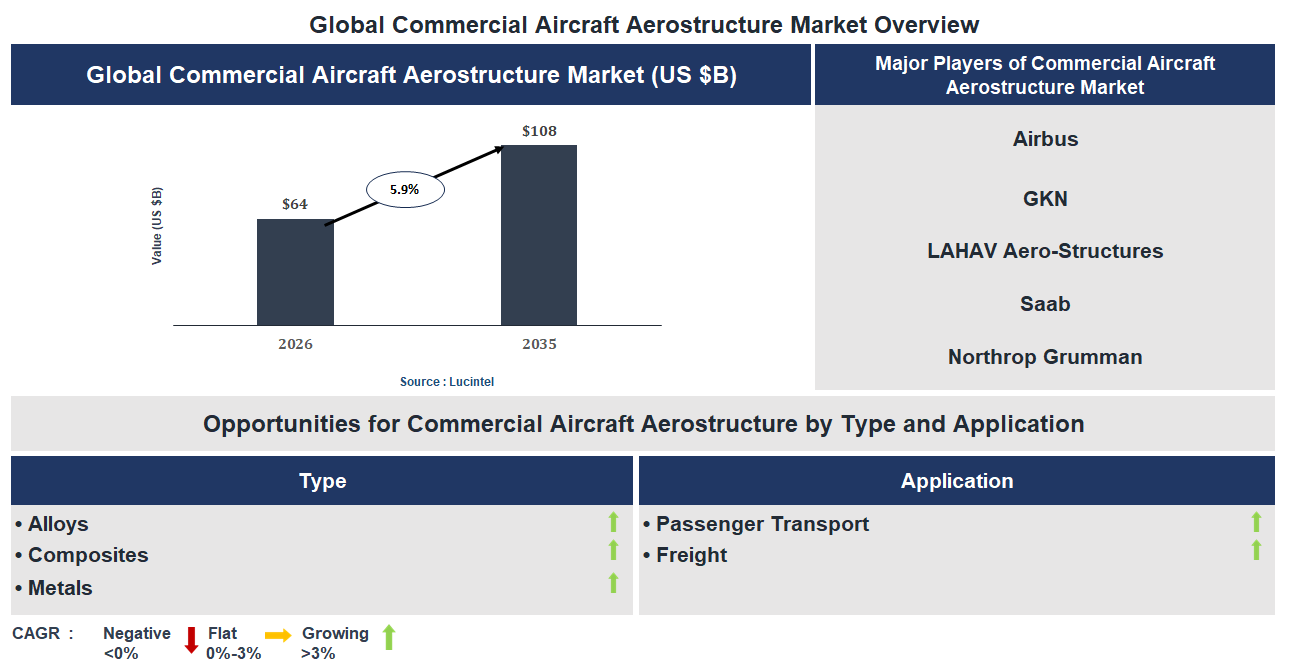
Key data points: The market size in 2035 = $108 billion, growth forecast = 5.9% annually for the next 8 years. Scroll below to get more insights. This market report covers trends, opportunities and forecasts in commercial aircraft aerostructure market to 2035 by type (alloys, composites, and metals), application (passenger transport and freight), and region (North America, Europe, Asia Pacific, and the Rest of the World)
We'll send your sample report shortly.
• Lucintel forecasts that, within the type category, composite is expected to witness the highest growth over the forecast period.
• Within the application category, passenger transport is expected to witness higher growth.
• In terms of region, APAC is expected to witness the highest growth over the forecast period. Gain valuable insights for your business decisions with our comprehensive 150+ page report. Sample figures with some insights are shown below.
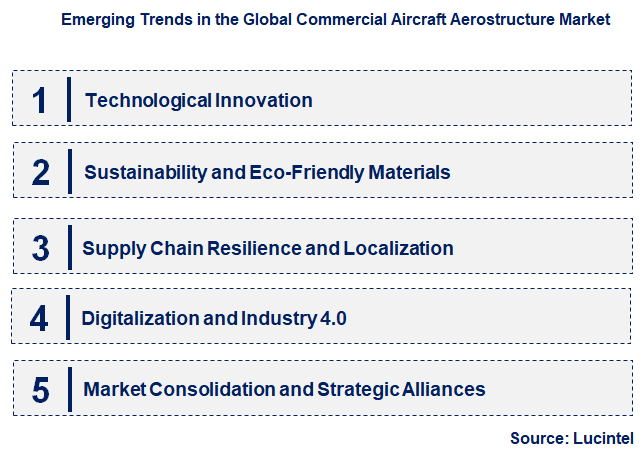
• Technological Innovation: Advancements in materials and manufacturing processes are revolutionizing aerostructures. The adoption of composites, 3D printing, and automation enhances strength, reduces weight, and shortens production cycles. These innovations lead to more fuel-efficient aircraft, lower emissions, and improved performance, giving manufacturers a competitive edge. The integration of digital design tools and smart manufacturing further accelerates development, enabling rapid customization and innovation. This trend is fundamentally reshaping how aerostructures are designed, produced, and maintained, fostering a more agile and sustainable industry.
• Sustainability and Eco-Friendly Materials: Increasing environmental concerns are driving the adoption of sustainable materials and eco-friendly manufacturing practices. Use of bio-composites, recycled materials, and lightweight alloys reduces aircraft weight and carbon footprint. Regulatory pressures and airline commitments to reduce emissions are prompting industry-wide shifts toward greener solutions. Companies investing in sustainable aerostructures are gaining market advantage by aligning with global sustainability goals. This trend is pushing the industry toward more environmentally responsible practices, influencing supply chains, R&D investments, and product offerings, ultimately leading to a greener aviation sector.
• Supply Chain Resilience and Localization: The COVID-19 pandemic exposed vulnerabilities in global supply chains, prompting a shift toward localization and diversification. Manufacturers are now focusing on building resilient supply networks to mitigate risks of disruptions. This includes near-shoring key components, developing strategic supplier partnerships, and increasing inventory buffers. Strengthening supply chain resilience ensures timely production and delivery, reducing costs and enhancing customer satisfaction. This trend is reshaping procurement strategies and fostering regional manufacturing hubs, which contribute to a more stable and responsive market environment.
• Digitalization and Industry 4.0: The integration of digital technologies such as IoT, AI, and data analytics is transforming aerostructure design, manufacturing, and maintenance. Digital twins and predictive analytics enable real-time monitoring and proactive maintenance, reducing downtime and operational costs. Automated quality control and robotic assembly improve precision and efficiency. Industry 4.0 adoption enhances transparency, traceability, and collaboration across the supply chain. This digital shift is creating smarter, more efficient production ecosystems, leading to faster innovation cycles and improved product lifecycle management.
• Market Consolidation and Strategic Alliances: The competitive landscape is witnessing increased mergers, acquisitions, and strategic partnerships. Larger players are consolidating to expand their product portfolios and global reach, while alliances facilitate technology sharing and joint development projects. This trend helps companies leverage economies of scale, reduce costs, and accelerate innovation. It also enables access to new markets and customer segments. Market consolidation is reshaping industry dynamics, fostering a more competitive environment where collaboration and strategic positioning are key to sustained growth and market leadership. These emerging trends are collectively transforming the commercial aircraft aerostructure market by fostering innovation, enhancing sustainability, strengthening supply chains, leveraging digital technologies, and encouraging strategic collaborations. These developments are driving the industry toward a more efficient, resilient, and environmentally conscious future, ultimately reshaping how companies design, produce, and deliver aerostructures in a highly competitive global landscape.
• Material Innovation: Lighter and stronger composites are revolutionizing aerostructures, reducing aircraft weight and fuel consumption. Advanced materials like carbon fiber composites enable manufacturers to produce more durable, corrosion-resistant components, extending aircraft lifespan. This shift improves fuel efficiency, lowers operational costs, and aligns with sustainability goals. The adoption of innovative materials is also opening new design possibilities, allowing for more aerodynamic and efficient aircraft structures, thus boosting competitiveness in the global market.
• Additive Manufacturing: 3D printing technology is transforming aerostructure production by enabling complex, lightweight components with reduced lead times. Additive manufacturing minimizes material waste and allows for rapid prototyping, accelerating development cycles. This technology enhances customization and precision, leading to cost savings and improved performance. As aerospace companies adopt additive manufacturing, the industry benefits from increased flexibility, reduced inventory costs, and the ability to produce intricate parts that were previously impossible with traditional methods.
• Digitalization and Automation: The integration of digital tools and automation in manufacturing processes enhances precision, efficiency, and quality control. Digital twin technology and AI-driven analytics optimize design, production, and maintenance, reducing errors and downtime. Automation streamlines assembly lines, lowering labor costs and increasing throughput. These advancements enable manufacturers to meet tight delivery schedules and maintain high standards, ultimately improving competitiveness and customer satisfaction in a highly demanding market.
• Sustainability Initiatives: Growing emphasis on eco-friendly practices is driving the adoption of sustainable materials and manufacturing processes. Companies are investing in recyclable composites and environmentally responsible production methods to reduce carbon footprints. These initiatives align with global regulations and customer expectations for greener aviation solutions. Sustainable aerostructures not only help airlines meet regulatory requirements but also enhance brand reputation, creating a competitive edge in a market increasingly focused on environmental responsibility.
• Supply Chain Resilience: Recent disruptions have highlighted the need for a resilient supply chain in aerostructure manufacturing. Companies are diversifying suppliers, adopting digital supply chain management tools, and increasing inventory buffers to mitigate risks. Strengthening supply chain resilience ensures timely delivery, reduces costs, and maintains production continuity amid global uncertainties. This focus on resilience is critical for sustaining growth and meeting the rising demand for commercial aircraft in a competitive, fast-changing market. These recent developments are significantly transforming the commercial aircraft aerostructure market by enhancing efficiency, sustainability, and innovation. Material advancements, digitalization, and resilient supply chains are enabling manufacturers to produce lighter, more durable, and eco-friendly aircraft components faster and more cost-effectively. As these trends continue, the market is expected to see increased competitiveness, reduced operational costs, and a stronger focus on sustainability, ultimately shaping a more resilient and innovative future for commercial aviation.
• Growing Demand for Lightweight Materials to Enhance Fuel Efficiency: The shift towards lightweight composites and advanced alloys is crucial for reducing aircraft weight, improving fuel efficiency, and lowering emissions. As airlines seek cost savings and environmental compliance, manufacturers are investing in R&D to develop innovative, durable, and cost-effective materials. This trend is expected to accelerate, creating opportunities for new material suppliers and advanced manufacturing techniques that can meet stringent safety and performance standards.
• Expansion of Aircraft Fleet in Emerging Markets Presents Growth Opportunities: Rapid economic growth in regions like Asia-Pacific and the Middle East is fueling increased demand for new aircraft. Airlines in these markets are expanding their fleets to accommodate rising passenger traffic, creating a need for more aerostructures. Local manufacturing, strategic partnerships, and tailored supply chain solutions will be vital for market players to capture this growth and establish a strong regional presence.
• Adoption of Digital Manufacturing and Automation to Improve Production Efficiency: The integration of Industry 4.0 technologies, such as automation, robotics, and digital twins, is transforming aerostructure manufacturing. These innovations enable faster production cycles, higher precision, and reduced costs. Companies investing in smart factories and digital workflows can enhance quality control, minimize waste, and meet tight delivery schedules, providing a competitive edge in a highly demanding market environment.
• Focus on Sustainability and Eco-Friendly Manufacturing Processes: Environmental regulations and airline sustainability commitments are driving the adoption of eco-friendly manufacturing practices. This includes using recyclable materials, reducing waste, and lowering carbon footprints through energy-efficient processes. Market players that develop sustainable aerostructures and adopt green manufacturing techniques will not only comply with regulations but also appeal to environmentally conscious customers, opening new market segments and enhancing brand reputation.
• Increasing Demand for Customization and Advanced Aerostructure Designs: Airlines and OEMs are seeking tailored aerostructures to optimize aircraft performance, passenger comfort, and operational efficiency. This trend drives innovation in design, materials, and manufacturing processes to deliver bespoke solutions. Companies that can offer flexible, high-quality customization options while maintaining cost-effectiveness will gain a competitive advantage, enabling them to meet diverse customer needs and accelerate market penetration. The overall market landscape is poised for significant growth as these opportunities drive innovation, efficiency, and sustainability. Companies that strategically leverage these trends will strengthen their market position, meet evolving customer demands, and contribute to the sustainable expansion of the commercial aircraft aerostructure industry.
• Technological Innovation: The rapid development of advanced materials like composites and lightweight alloys enhances aircraft efficiency and performance. Innovations in manufacturing techniques such as automation and 3D printing reduce production costs and lead times. These technological strides enable manufacturers to meet increasing demand for fuel-efficient, environmentally friendly aircraft, thereby expanding market opportunities. Continuous R&D investments foster product differentiation and competitiveness, ensuring the industry adapts to evolving customer and regulatory requirements.
• Growing Air Travel Demand: The surge in global air travel, driven by rising middle-class populations and increased disposable incomes, significantly boosts demand for new aircraft. Emerging markets in Asia-Pacific and Africa contribute to this growth, prompting airlines to expand their fleets. This increased demand for aircraft components and structures directly fuels the aerostructure market, encouraging manufacturers to scale production and innovate to meet diverse customer needs. The trend also supports aftermarket services, further stimulating market revenue streams.
• Regulatory and Environmental Standards: Stricter safety, emissions, and sustainability regulations compel manufacturers to develop compliant aerostructures. Governments and international bodies enforce standards that promote lightweight, fuel-efficient designs, pushing innovation in materials and manufacturing processes. Compliance costs and the need for continuous certification pose challenges but also drive technological advancements. These regulations ultimately shape product development, ensuring the market aligns with global environmental and safety commitments.
• Supply Chain Optimization: Efficient supply chain management is crucial for timely production and cost reduction in the aerostructure market. The integration of digital supply chain solutions enhances transparency, reduces lead times, and minimizes disruptions. Strategic sourcing and localization efforts mitigate risks associated with geopolitical tensions and trade restrictions. Optimized supply chains enable manufacturers to meet increasing demand while maintaining quality standards, thus supporting overall market growth and competitiveness.
• Strategic Partnerships and Mergers: Collaborations between OEMs, Tier 1 suppliers, and technology firms foster innovation and resource sharing. Mergers and acquisitions expand capabilities, access to new markets, and technological expertise. These strategic alliances help companies navigate complex regulatory environments and accelerate product development cycles. Such partnerships are vital for maintaining a competitive edge in a market characterized by rapid technological change and high capital investment. The challenges facing the commercial aircraft aerostructure market include:-
• Fluctuating Raw Material Prices: The aerostructure industry heavily relies on materials like aluminum, titanium, and composites, whose prices are subject to volatility due to global supply-demand dynamics. Rising raw material costs increase manufacturing expenses, squeezing profit margins and potentially leading to higher aircraft prices. Price fluctuations also impact supply chain stability and inventory management, complicating production planning and financial forecasting, which can hinder market growth and competitiveness.
• High Development and Certification Costs: Developing new aerostructures involves substantial investment in research, testing, and certification processes to meet stringent safety and regulatory standards. These costs can be prohibitive, especially for smaller players, limiting innovation and market entry. Lengthy certification timelines delay product launches, increasing time-to-market and reducing potential returns. The financial burden associated with compliance and certification remains a significant barrier to rapid technological advancement.
• Geopolitical and Trade Uncertainties: Political tensions, trade restrictions, and tariffs can disrupt global supply chains and market access. These uncertainties lead to increased costs, delays, and reduced market confidence, affecting investment decisions and production schedules. Companies may face challenges in sourcing materials or components from restricted regions, impacting overall efficiency. Such geopolitical risks threaten the stability and growth prospects of the aerostructure market, requiring strategic risk management and diversification. The commercial aircraft aerostructure market is shaped by technological progress, rising demand, and evolving regulatory landscapes, which collectively drive growth and innovation. However, challenges such as raw material price volatility, high certification costs, and geopolitical uncertainties pose significant risks. Navigating these factors requires strategic agility, technological adaptation, and supply chain resilience. Overall, the markets future depends on how effectively industry players can leverage opportunities while mitigating these challenges, ensuring sustainable growth in a competitive global environment.
• Airbus
• GKN
• LAHAV Aero-Structures
• Saab
• Northrop Grumman
• ST Engineering
• Daher
• Aernnova
• Leonardo
• Boeing
• Alloys
• Composites
• Metals
• Passenger Transport
• Freight
• North America
• Europe
• Asia Pacific
• The Rest of the World
• United States: The U.S. market has seen increased investment in composite materials and automation technologies, boosting production efficiency. Major aerospace firms are expanding R&D efforts to develop next-generation aerostructures with improved fuel efficiency and reduced weight. Strategic partnerships between OEMs and suppliers are strengthening, and there is a focus on sustainable manufacturing practices. The U.S. government is also supporting innovation through grants and research programs, fostering advancements in aerostructure design and materials.
• China: China continues to rapidly expand its aerostructure capabilities, driven by government initiatives to develop a self-reliant aerospace industry. Recent developments include the establishment of new manufacturing facilities and increased domestic production of aircraft components. Chinese firms are investing heavily in advanced composites and automation to improve quality and reduce costs. The market is also witnessing collaborations with international partners to access cutting-edge technology, aiming to support the growth of domestic aircraft programs like the COMAC C919.
• Germany: Germany remains a key hub for aerostructure innovation within Europe, with a focus on lightweight materials and precision manufacturing. Recent advancements include the integration of Industry 4.0 technologies into production lines, enhancing automation and quality control. German companies are also leading in the development of environmentally sustainable materials and processes. The country’s aerospace sector benefits from strong collaborations across the European Union, fostering innovation and standardization in aerostructure manufacturing.
• India: India’s aerostructure market is experiencing rapid growth, supported by government initiatives like Make in India and strategic partnerships with global aerospace firms. Recent developments include the establishment of dedicated aerospace parks and increased local manufacturing of aerostructure components. Indian companies are investing in advanced composites and automation to meet international quality standards. The focus is also on developing indigenous capabilities for aircraft component manufacturing, aiming to reduce reliance on imports and support the country’s broader aerospace ambitions.
• Japan: Japan continues to innovate in aerostructure technology, emphasizing lightweight materials and high-precision manufacturing. Recent progress includes the adoption of advanced robotics and automation in production processes, improving efficiency and consistency. Japanese firms are also exploring sustainable materials and eco-friendly manufacturing practices. The country’s aerospace industry benefits from strong research institutions and collaborations with global aerospace companies, driving advancements in aerostructure design and manufacturing to meet the demands of both commercial and defense sectors.


• Airbus
• GKN
• LAHAV Aero-Structures
• Saab
• Northrop Grumman
• ST Engineering
• Daher
• Aernnova
• Leonardo
• Boeing Q6. Which commercial aircraft aerostructure market segment will be the largest in future? Answer: Lucintel forecasts that, within the type category, composite is expected to witness the highest growth over the forecast period. Q7. In commercial aircraft aerostructure market, which region is expected to be the largest in next 8 years? Answer: In terms of region, APAC is expected to witness the highest growth over the forecast period. Q8. Do we receive customization in this report? Answer: Yes, Lucintel provides 10% customization without any additional cost.


Choose a license that fits your team. Instant PDF delivery.
Prices exclude taxes. Instant delivery. Custom licensing available on request.
Market Report · July 31, 2026
Market Report · July 31, 2026
Market Report · July 22, 2026
Trusted partner for strategic intelligence and business growth


Receive a complimentary market analysis tailored to your industry. Our analysts will identify key growth opportunities and competitive dynamics specific to your business.

Market size, growth rate, and key trend analysis for your specific sector.

Top competitor positioning and market share analysis.

Strategic recommendations backed by data-driven insights.
Get curated market intelligence and competitive moves straight to your inbox.
By subscribing, you agree to receive our monthly insights. Unsubscribe anytime.
Receive a complimentary market analysis tailored to your industry. Our analysts will identify key growth opportunities and competitive dynamics specific to your business.
Market size, growth rate, and key trend analysis for your specific sector.
Top competitor positioning and market share analysis.
Strategic recommendations backed by data-driven insights.
Get curated market intelligence, emerging trends, and competitive moves straight to your inbox each month.
By subscribing, you agree to receive our monthly insights. Unsubscribe anytime.
We'll send your sample report shortly.