
Market Report · July 16, 2026

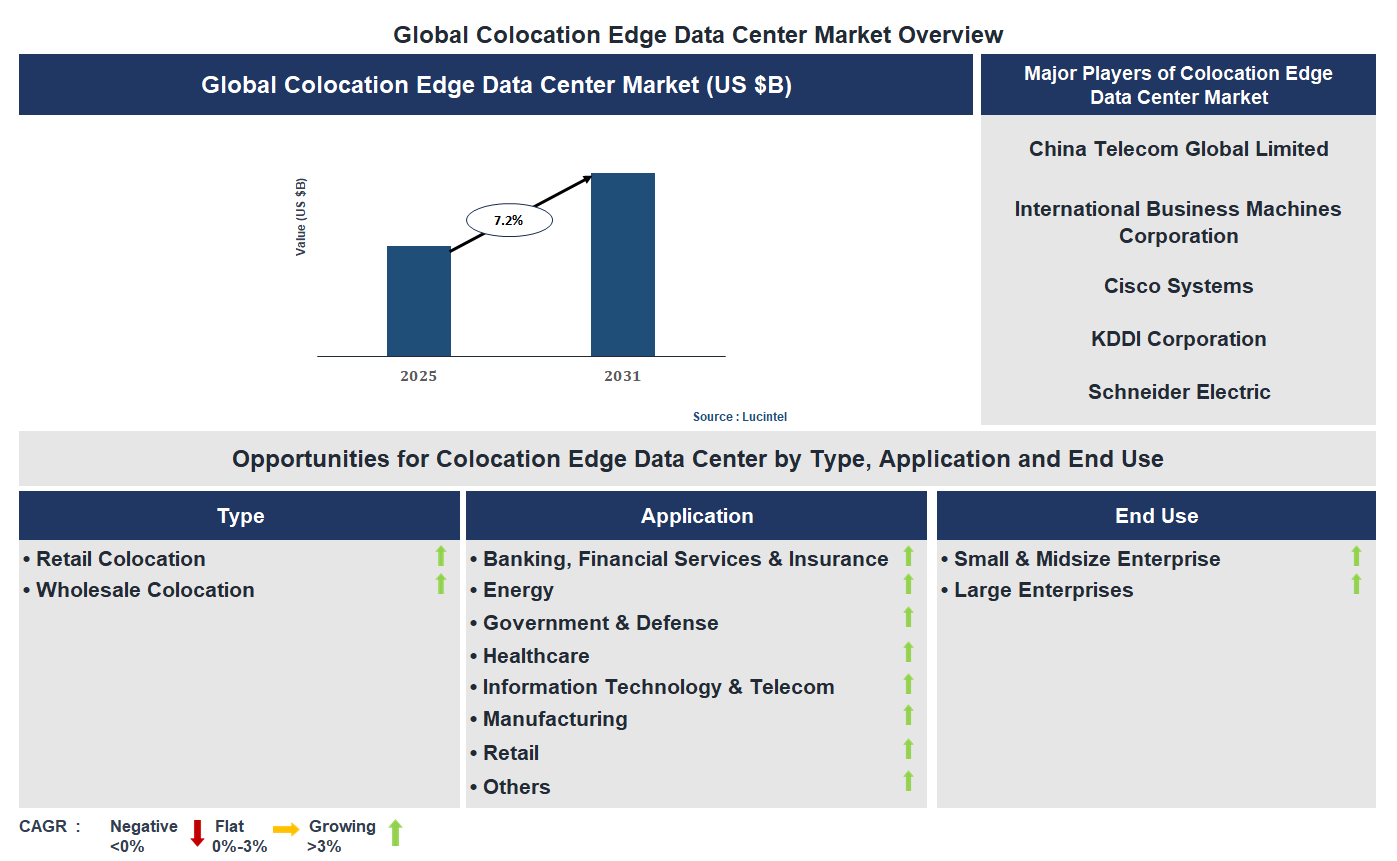
Key data points: The growth forecast = 7.2% annually for the next 7 years. Scroll below to get more insights. This market report covers trends, opportunities and forecasts in colocation edge data center market to 2031 by type (retail colocation and wholesale colocation), application (banking, financial services & insurance, energy, government & defense, healthcare, information technology & telecom, manufacturing, retail, and others), end use (small & midsize enterprise and large enterprises), and region (North America, Europe, Asia Pacific, and the Rest of the World)
We'll send your sample report shortly.
• Lucintel forecasts that, within the type category, retail colocation is expected to witness higher growth over the forecast period.
• Within the end use category, small & midsize enterprise is expected to witness higher growth.
• In terms of region, North America will remain the largest region over the forecast period. Gain valuable insights for your business decisions with our comprehensive 150+ page report. Sample figures with some insights are shown below.
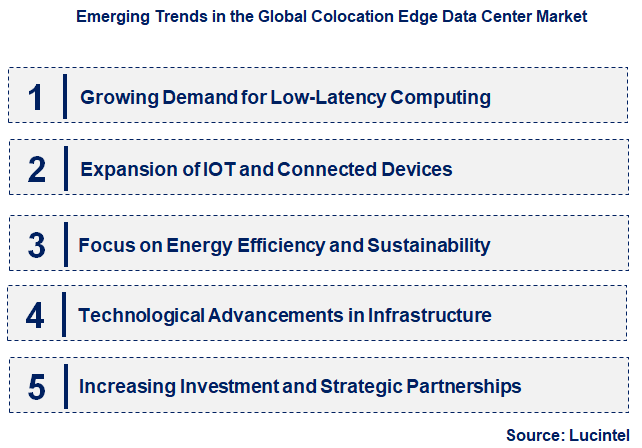
• Growing Demand for Low-Latency Computing: The need for real-time data processing is driving the expansion of edge data centers. Industries such as gaming, autonomous vehicles, and financial services require minimal latency to ensure optimal performance. This trend encourages the deployment of smaller, localized data centers closer to end-users, reducing data transmission times and improving user experience. As digital applications become more latency-sensitive, the market for edge colocation facilities is expected to grow significantly, fostering innovation in network architecture and infrastructure design.
• Expansion of IoT and Connected Devices: The proliferation of Internet of Things (IoT) devices is fueling the demand for edge data centers. IoT applications generate vast amounts of data that need immediate processing at or near the source to enable real-time analytics and decision-making. This trend necessitates the deployment of numerous small-scale data centers in diverse locations, supporting industries like manufacturing, healthcare, and smart cities. The growth of IoT is thus a key driver for the edge colocation market, prompting providers to develop scalable, secure, and energy-efficient solutions to accommodate the surge in connected devices.
• Focus on Energy Efficiency and Sustainability: Environmental concerns and rising energy costs are prompting data center operators to adopt greener practices. Innovations in cooling technologies, renewable energy integration, and energy-efficient hardware are becoming standard. Regulatory pressures and corporate sustainability goals are further incentivizing eco-friendly operations. This trend impacts the market by encouraging the development of sustainable infrastructure, reducing operational costs, and enhancing corporate reputation. As energy efficiency becomes a competitive differentiator, providers investing in green technologies are likely to gain a strategic advantage in the edge colocation space.
• Technological Advancements in Infrastructure: Emerging technologies such as AI-driven management, modular design, and advanced cooling systems are transforming edge data centers. These innovations enable faster deployment, improved scalability, and enhanced reliability. AI and automation optimize resource utilization and maintenance, reducing downtime and operational costs. Modular designs allow for flexible expansion aligned with demand, while advanced cooling solutions address the challenges of high-density deployments. These technological advancements are reshaping the market by making edge data centers more efficient, adaptable, and cost-effective, thus supporting the growing needs of digital enterprises.
• Increasing Investment and Strategic Partnerships: The market is witnessing heightened investment from cloud providers, telecom operators, and private equity firms. Strategic partnerships are forming to develop integrated edge infrastructure, expand geographic reach, and share technological expertise. Governments and private entities are also investing in infrastructure to support 5G rollouts and smart city initiatives. This influx of capital and collaboration accelerates market growth, fosters innovation, and enhances service offerings. It also leads to increased competition, driving providers to differentiate through technology, pricing, and service quality, ultimately shaping a dynamic and competitive landscape. In summary, these trends are collectively reshaping the colocation edge data center market by fostering innovation, enhancing efficiency, and expanding capacity. They are enabling faster, more reliable, and sustainable data processing solutions that meet the evolving needs of digital businesses and consumers. As these developments continue, the market is poised for significant growth, driven by technological progress and strategic investments.
• Expansion of Edge Data Center Infrastructure: Major providers are investing heavily in building new edge facilities closer to end-users, reducing latency and improving service quality. This expansion enhances network performance, supports emerging applications like autonomous vehicles and smart cities, and attracts more enterprise clients seeking localized data solutions.
• Adoption of Renewable Energy and Sustainable Practices: Companies are integrating renewable energy sources and sustainable technologies into their edge data centers. This shift reduces operational costs and carbon footprint, aligning with global environmental goals and appealing to eco-conscious clients, thereby boosting market reputation and compliance.
• Integration of AI and Automation Technologies: Advanced AI-driven management systems and automation are being implemented to optimize operations, improve security, and enhance energy efficiency. These innovations lead to reduced operational costs, increased reliability, and better scalability, making edge data centers more attractive to a broader customer base.
• Strategic Partnerships and Mergers: Market players are forming alliances and acquiring smaller firms to expand their geographic footprint and technological capabilities. These collaborations facilitate faster deployment, access to new markets, and shared expertise, strengthening competitive positioning.
• Focus on Security and Compliance: As data privacy regulations tighten, providers are prioritizing robust security measures and compliance frameworks. This focus ensures data integrity, builds customer trust, and mitigates legal risks, which are critical for market growth and customer retention. In summary, these developments are significantly impacting the colocation edge data center market by driving innovation, expanding capacity, and emphasizing sustainability and security. The market is becoming more agile, customer-centric, and environmentally conscious, positioning it for sustained growth and increased competitiveness in the digital age.
• Enhanced patient data management and telemedicine services : The deployment of edge data centers in healthcare improves real-time data processing, enabling faster diagnostics, remote monitoring, and secure data sharing, ultimately enhancing patient care and operational efficiency.
• Personalized shopping experiences and inventory management : Retailers leverage edge data centers to analyze customer data locally, providing personalized offers, optimizing inventory, and supporting seamless omnichannel experiences, which boost customer satisfaction and sales.
• Real-time production monitoring and predictive maintenance : Manufacturing facilities utilize edge data centers for real-time analytics, enabling predictive maintenance, reducing downtime, and increasing operational efficiency, thus driving Industry 4.0 initiatives.
• Secure, low-latency transaction processing : Financial institutions benefit from edge data centers by enabling rapid transaction processing, fraud detection, and compliance monitoring, which enhances security and customer trust in digital banking.
• Content delivery and live streaming optimization : Media companies deploy edge data centers to deliver high-quality, low-latency streaming services, supporting live broadcasts and on-demand content, thereby improving user experience and reducing latency issues. In summary, these growth opportunities are significantly impacting the colocation edge data center market by expanding its application scope, improving operational efficiencies, and enabling new business models. As organizations across sectors adopt localized data solutions, the market is poised for sustained growth, driven by technological advancements and increasing data demands.
• Technological Innovation: Rapid advancements in networking, cooling, and power management technologies enable more efficient, scalable, and cost-effective edge data centers. These innovations support the deployment of smaller, modular facilities closer to end-users, reducing latency and improving performance. As technology continues to evolve, the ability to integrate AI, automation, and energy-efficient systems will further enhance operational efficiency and attract investments. This ongoing innovation is vital for meeting the increasing demand for real-time data processing and supporting emerging applications like autonomous vehicles and smart cities.
• Growing Data Volumes: The exponential increase in data generated by IoT devices, mobile applications, and digital services necessitates localized data processing. Edge data centers facilitate faster data analysis and decision-making by processing data near its source, reducing bandwidth costs and latency. This trend is driven by industries such as healthcare, manufacturing, and retail, which require real-time insights. As data volumes continue to grow, the demand for edge infrastructure will intensify, making colocation edge data centers essential for managing this data deluge efficiently.
• Cloud Computing and Digital Transformation: The widespread adoption of cloud services and digital transformation initiatives across industries are fueling the need for distributed data centers. Organizations prefer colocating their infrastructure at edge locations to ensure seamless connectivity, enhanced security, and compliance with regional regulations. This shift supports hybrid cloud models and enables businesses to deliver faster, more reliable services to customers. The increasing reliance on cloud-based applications underscores the importance of edge data centers in providing the necessary infrastructure to support digital innovation.
• Cost Optimization and Scalability: Businesses are seeking cost-effective solutions to manage their expanding IT infrastructure. Colocation edge data centers offer a scalable and flexible environment that reduces capital expenditure and operational costs compared to building and maintaining in-house facilities. The ability to quickly scale capacity in response to demand fluctuations allows organizations to optimize resources and improve agility. This economic advantage makes colocation edge data centers an attractive option for enterprises aiming to balance performance with cost efficiency in a competitive market.
• Regulatory and Security Compliance: Increasing regulatory requirements related to data privacy, security, and environmental standards are shaping the market landscape. Data sovereignty laws compel organizations to store data within specific jurisdictions, driving demand for localized data centers. Additionally, the need for robust security measures to protect sensitive information from cyber threats influences infrastructure design and operational protocols. Compliance with standards such as GDPR, HIPAA, and industry-specific regulations is critical for market participants to avoid penalties and maintain customer trust, thereby influencing investment and operational strategies. The challenges facing the colocation edge data center market include:
• Data Privacy and Security Concerns: As data becomes more distributed, ensuring its privacy and security poses significant challenges. Edge data centers are more vulnerable to cyberattacks due to their dispersed nature and often less mature security infrastructure. Protecting sensitive information from breaches requires advanced security protocols, continuous monitoring, and compliance with evolving regulations. Failure to address these concerns can lead to data loss, legal penalties, and damage to reputation, hindering market growth and adoption.
• High Capital and Operational Expenditure: Establishing and maintaining edge colocation facilities involves substantial investment in infrastructure, technology, and skilled personnel. The costs associated with site acquisition, power supply, cooling, and security can be prohibitive, especially for smaller players. Additionally, operational expenses related to maintenance, upgrades, and energy consumption impact profitability. These financial barriers may slow market expansion and limit participation to larger, well-funded organizations.
• Regulatory and Environmental Challenges: Navigating complex regulatory landscapes across different regions can be difficult and costly. Environmental regulations concerning energy consumption and carbon emissions are becoming stricter, requiring investments in sustainable technologies and practices. Compliance with these standards can increase operational costs and complicate deployment strategies. Moreover, local zoning laws and permitting processes may delay project timelines, affecting market agility and growth prospects. In summary, the colocation edge data center market is driven by technological advancements, increasing data demands, cloud adoption, cost efficiencies, and regulatory compliance. However, security concerns, high costs, and regulatory hurdles present significant challenges. The interplay of these factors will shape the market’s evolution, requiring stakeholders to innovate and adapt strategically. Successful navigation of these drivers and challenges will determine the pace and sustainability of growth in this dynamic sector.
• China Telecom Global Limited
• International Business Machines Corporation
• Cisco Systems
• KDDI Corporation
• Schneider Electric
• Fujitsu Limited
• Hewlett Packard Enterprise Company
• NVIDIA Corporation
• NEC Corporation
• Eaton Corporation
• Retail Colocation
• Wholesale Colocation
• Banking, Financial Services & Insurance
• Energy
• Government & Defense
• Healthcare
• Information Technology & Telecom
• Manufacturing
• Retail
• Others
• Small & Midsize Enterprise
• Large Enterprises
• North America
• Europe
• Asia Pacific
• The Rest of the World
• United States: United States, the market is witnessing significant investments in edge infrastructure driven by the proliferation of 5G and IoT devices. Major cloud providers are expanding their edge data centers to reduce latency and improve service delivery. Regulatory frameworks are evolving to support data sovereignty and security, fostering innovation in edge computing solutions. The U.S. also sees increased adoption of AI and machine learning applications at the edge, boosting demand for localized data processing facilities.
• China: China is rapidly advancing its edge data center infrastructure to support its digital economy and smart city initiatives. Government policies favor the development of 5G networks and IoT ecosystems, encouraging investments in edge computing. Chinese firms are focusing on integrating AI and big data analytics at the edge to enhance industrial automation and consumer services. The market is characterized by aggressive infrastructure deployment and strategic partnerships between technology giants and local governments.
• Germany: Germany is emphasizing the development of secure and energy-efficient edge data centers, aligning with its strong focus on data privacy and sustainability. The country is investing in innovative cooling technologies and renewable energy sources to power edge facilities. Regulatory compliance with GDPR influences the design and operation of edge data centers, promoting secure data handling. Germany’s market growth is also driven by the automotive and manufacturing sectors adopting edge solutions for Industry 4.0 applications.
• India: India is experiencing rapid growth in the colocation edge data center market, fueled by digital transformation initiatives and increasing internet penetration. The government’s push for smart cities and digital infrastructure development is encouraging investments in localized data centers. Indian companies are adopting edge computing to support e-commerce, healthcare, and financial services, aiming to reduce latency and improve user experience. The market is characterized by a mix of domestic and international players expanding their presence across urban centers.
• Japan: Japan is focusing on enhancing its edge data center infrastructure to support advanced robotics, autonomous vehicles, and smart city projects. The country’s emphasis on disaster resilience influences the design of edge facilities, incorporating robust security and backup systems. Japan is also investing in energy-efficient technologies and renewable energy integration to align with its sustainability goals. The market growth is driven by the need for real-time data processing in critical sectors such as manufacturing, transportation, and healthcare.


• China Telecom Global Limited
• International Business Machines Corporation
• Cisco Systems
• KDDI Corporation
• Schneider Electric
• Fujitsu Limited
• Hewlett Packard Enterprise Company
• NVIDIA Corporation
• NEC Corporation
• Eaton Corporation Q5. Which colocation edge data center market segment will be the largest in future? Answer: Lucintel forecasts that, within the type category, retail colocation is expected to witness higher growth over the forecast period. Q6. In colocation edge data center market, which region is expected to be the largest in next 5 years? Answer: In terms of region, North America will remain the largest region over the forecast period. Q7. Do we receive customization in this report? Answer: Yes, Lucintel provides 10% customization without any additional cost.


Choose a license that fits your team. Instant PDF delivery.
Prices exclude taxes. Instant delivery. Custom licensing available on request.
Market Report · July 16, 2026
Market Report · May 18, 2026
Market Report · May 18, 2026
Trusted partner for strategic intelligence and business growth


Receive a complimentary market analysis tailored to your industry. Our analysts will identify key growth opportunities and competitive dynamics specific to your business.

Market size, growth rate, and key trend analysis for your specific sector.

Top competitor positioning and market share analysis.

Strategic recommendations backed by data-driven insights.
Get curated market intelligence and competitive moves straight to your inbox.
By subscribing, you agree to receive our monthly insights. Unsubscribe anytime.
Receive a complimentary market analysis tailored to your industry. Our analysts will identify key growth opportunities and competitive dynamics specific to your business.
Market size, growth rate, and key trend analysis for your specific sector.
Top competitor positioning and market share analysis.
Strategic recommendations backed by data-driven insights.
Get curated market intelligence, emerging trends, and competitive moves straight to your inbox each month.
By subscribing, you agree to receive our monthly insights. Unsubscribe anytime.
We'll send your sample report shortly.