
Market Report · July 15, 2026

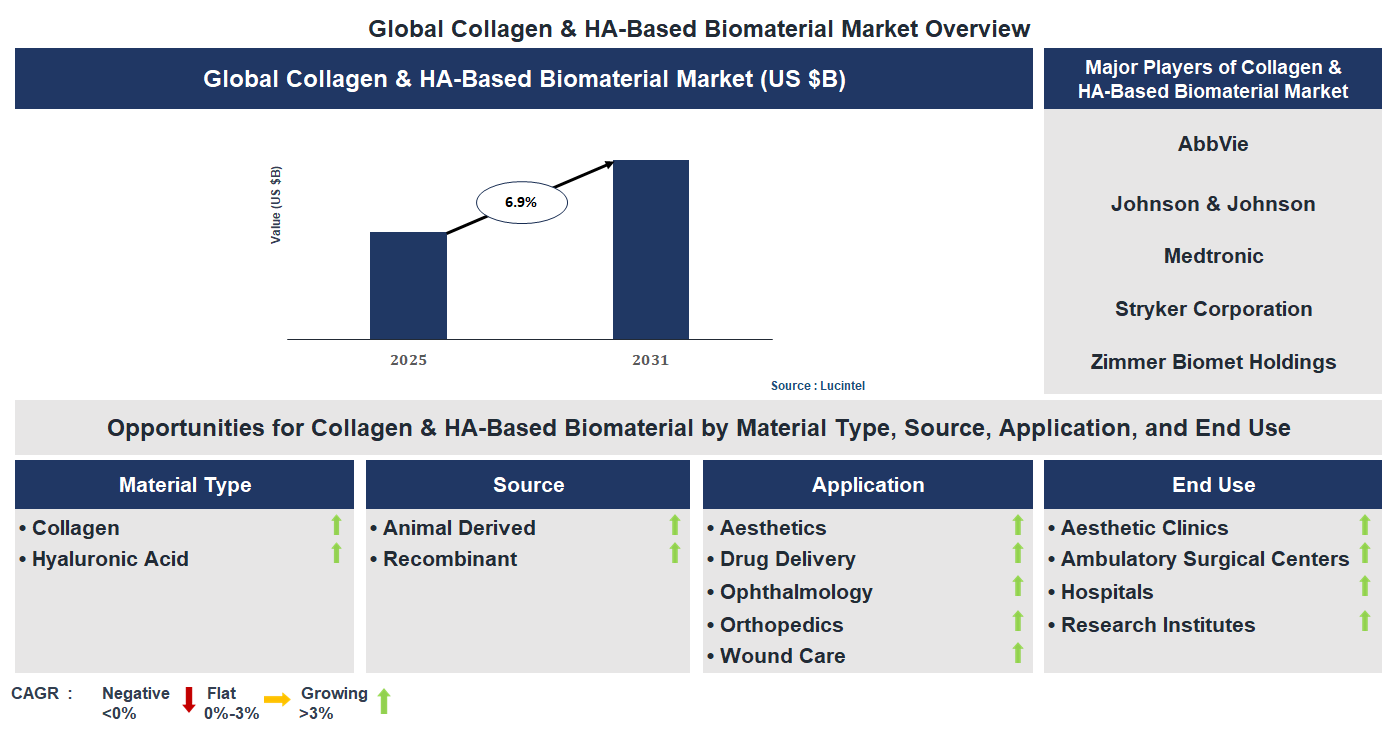
Key data points: The growth forecast = 6.9% annually for the next 7 years. Scroll below to get more insights. This market report covers trends, opportunities and forecasts in collagen & ha-based biomaterial market to 2031 by material type (collagen and hyaluronic acid), source (animal derived and recombinant), application (aesthetics, drug delivery, ophthalmology, orthopedics, and wound care), end use (aesthetic clinics, ambulatory surgical centers, hospitals, and research institutes), and region (North America, Europe, Asia Pacific, and the Rest of the World)
We'll send your sample report shortly.
• Lucintel forecasts that, within the material type category, hyaluronic acid is expected to witness higher growth over the forecast period.
• Within the application category, drug delivery is expected to witness the highest growth.
• In terms of region, North America is expected to witness the highest growth over the forecast period. Gain valuable insights for your business decisions with our comprehensive 150+ page report. Sample figures with some insights are shown below.
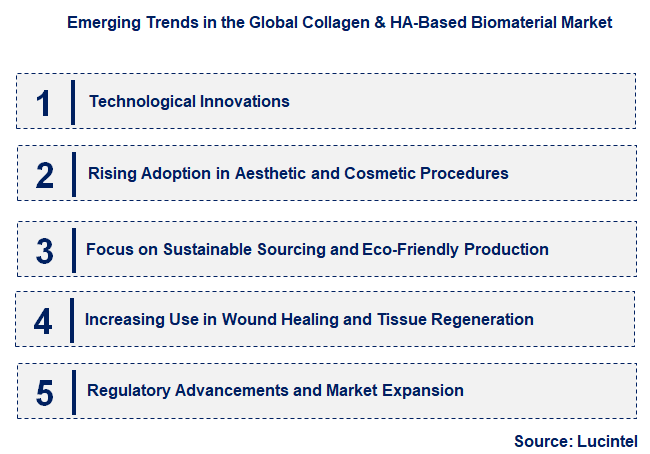
• Technological Innovations: Development of advanced manufacturing techniques such as 3D bioprinting and cross-linking methods. These innovations enhance the structural integrity, functionality, and customization of collagen and HA biomaterials, leading to improved clinical outcomes. They also enable the production of complex tissue constructs, expanding applications in regenerative medicine and personalized treatments. As technology progresses, the market will see more sophisticated, versatile, and cost-effective biomaterials, driving growth and broadening application scopes.
• Rising Adoption in Aesthetic and Cosmetic Procedures: Increasing consumer demand for minimally invasive aesthetic treatments is fueling the use of collagen and HA-based products. These biomaterials are popular for dermal fillers, skin rejuvenation, and anti-aging therapies due to their biocompatibility and effectiveness. The trend is supported by advancements in formulation and delivery methods, making procedures safer and more natural-looking. This growth is expanding the market beyond traditional medical uses, creating new revenue streams and encouraging innovation in product development.
• Focus on Sustainable Sourcing and Eco-Friendly Production: Consumers and regulators are emphasizing sustainability, prompting companies to adopt eco-friendly sourcing of raw materials and environmentally conscious manufacturing processes. Plant-based collagen alternatives and biodegradable HA formulations are gaining traction. This shift not only reduces environmental impact but also appeals to eco-conscious consumers, enhancing brand reputation. Sustainable practices are becoming a competitive advantage, encouraging industry-wide adoption and fostering innovation in sourcing and production methods.
• Increasing Use in Wound Healing and Tissue Regeneration: Collagen and HA biomaterials are increasingly used in advanced wound dressings, tissue scaffolds, and regenerative therapies. Their biocompatibility, biodegradability, and ability to promote cell growth make them ideal for these applications. Innovations such as bioactive scaffolds and drug delivery systems are improving healing times and outcomes. This trend is driven by an aging population and rising prevalence of chronic wounds, positioning the market for sustained growth and expanded therapeutic applications.
• Regulatory Advancements and Market Expansion: Evolving regulatory frameworks are facilitating faster approval and commercialization of collagen and HA-based products. Clearer guidelines and increased safety data are boosting confidence among manufacturers and healthcare providers. Additionally, emerging markets in Asia-Pacific and Latin America are experiencing rapid growth due to rising healthcare infrastructure and increasing awareness. These regulatory and geographic developments are expanding market reach, encouraging innovation, and fostering competitive dynamics across the industry. In summary, these trends are collectively reshaping the collagen & HA-based biomaterial market by fostering innovation, expanding application areas, emphasizing sustainability, and opening new geographic markets. This evolution is making biomaterials more effective, accessible, and aligned with consumer and regulatory expectations, ultimately driving sustained growth and diversification in the industry.
• Technological Innovations: Development of advanced cross-linked collagen and hyaluronic acid formulations has improved product stability and longevity, leading to enhanced clinical outcomes and broader application in tissue engineering and wound healing.
• Regulatory Approvals: Increased approvals from regulatory bodies for collagen and HA-based products have accelerated market growth, instilling greater confidence among healthcare providers and patients, and facilitating wider adoption.
• Expansion in Cosmetic Applications: Rising demand for anti-aging and skin rejuvenation treatments has propelled collagen and HA-based biomaterials into mainstream cosmetic procedures, significantly boosting market revenue.
• Customization and Personalization: Advances in biomaterial customization allow for tailored treatments, improving compatibility and effectiveness, which has increased adoption in personalized medicine and regenerative therapies.
• Sustainable Manufacturing Practices: Adoption of eco-friendly and sustainable production methods has gained momentum, reducing environmental impact and aligning with global sustainability goals, thereby enhancing market reputation and consumer trust. These developments are collectively driving the collagen & HA-based biomaterial market towards greater innovation, safety, and application diversity, ultimately expanding its footprint across healthcare and cosmetic industries.
• Enhanced healing solutions : Collagen and HA-based materials are increasingly used in advanced wound dressings, promoting faster tissue regeneration and reducing infection risks. This application is vital in chronic wound management, especially for diabetic ulcers and burns, leading to improved patient outcomes and reduced healthcare costs.
• Non-invasive treatments : The rising popularity of minimally invasive aesthetic procedures is boosting demand for collagen and HA-based fillers. These biomaterials provide natural-looking results, longer-lasting effects, and improved skin elasticity, fueling growth in the cosmetic industry.
• Regenerative solutions : Collagen and HA-based biomaterials are crucial in cartilage repair, osteoarthritis treatment, and joint regeneration. Their biocompatibility and ability to mimic natural tissue make them ideal for restoring joint function, thus expanding their use in orthopedic applications.
• Scaffold development : These biomaterials serve as scaffolds for cell growth and tissue regeneration, enabling the development of lab-grown organs and tissues. This application is transforming regenerative medicine, offering solutions for organ failure and complex tissue repair.
• Bone grafts and periodontal regeneration : Collagen and HA-based biomaterials are increasingly used in dental surgeries for bone regeneration, periodontal therapy, and implantology. Their biocompatibility and ability to promote tissue integration are driving growth in dental healthcare. In summary, these key growth opportunities are significantly impacting the collagen & HA-based biomaterial market by expanding its application scope, enhancing product innovation, and improving patient outcomes. The market is becoming more diverse and competitive, with increased investments fueling ongoing research and development efforts. This evolution is positioning the industry for sustained growth and technological advancement in the coming years.
• Technological Advancements: The continuous evolution of biotechnological techniques has led to the development of highly purified, customizable collagen and hyaluronic acid (HA) biomaterials. Innovations such as 3D bioprinting and nanotechnology enable precise fabrication of biomaterials tailored for specific medical applications, including tissue engineering and regenerative medicine. These advancements improve biocompatibility, functionality, and ease of use, thereby expanding market potential. As research progresses, new formulations and delivery systems are emerging, further fueling market growth and opening avenues for novel therapeutic solutions.
• Rising Prevalence of Chronic Diseases: The increasing incidence of chronic conditions such as osteoarthritis, rheumatoid arthritis, and skin aging significantly boosts demand for collagen and HA-based products. These biomaterials are widely used in joint repair, wound healing, and aesthetic treatments, making them essential in managing age-related and degenerative diseases. The growing aging population worldwide amplifies this demand, encouraging manufacturers to innovate and expand their product portfolios. Consequently, this trend sustains a steady market growth driven by the need for effective, minimally invasive treatment options.
• Growing Cosmetic and Aesthetic Procedures: The rising popularity of cosmetic procedures, including dermal fillers and skin rejuvenation treatments, is a major driver for collagen and HA-based biomaterials. Consumers increasingly seek non-surgical options for anti-aging and skin enhancement, which rely heavily on these biocompatible materials. The expanding beauty industry, coupled with technological improvements that enhance product safety and longevity, propels market growth. Additionally, increasing awareness and acceptance of aesthetic procedures across different regions further contribute to the rising demand, making this a lucrative segment within the market.
• Increasing Healthcare Expenditure and Investment in R&D: Governments and private entities are investing heavily in healthcare infrastructure and research activities related to biomaterials. This financial support accelerates the development of innovative collagen and HA-based products, improves manufacturing processes, and facilitates clinical trials. As healthcare budgets expand, especially in emerging economies, there is greater access to advanced biomaterials, boosting market penetration. The focus on personalized medicine and regenerative therapies also encourages R&D investments, fostering innovation and expanding the application scope of these biomaterials.
• Expansion of Application Areas: The versatility of collagen and HA-based biomaterials allows their use across various medical fields, including orthopedics, dermatology, wound care, and drug delivery systems. Emerging applications such as tissue engineering, regenerative medicine, and minimally invasive surgeries are opening new market segments. Technological progress enables the customization of biomaterials for specific clinical needs, broadening their utility. This diversification not only sustains market growth but also mitigates risks associated with dependence on a single application area, ensuring long-term market stability. The challenges facing the collagen & HA-based biomaterial market include:-
• Stringent Regulatory Frameworks: The approval process for collagen and HA-based biomaterials is complex and time-consuming, involving rigorous safety and efficacy evaluations. Regulatory agencies such as the FDA and EMA impose strict standards, which can delay product launches and increase costs for manufacturers. Navigating these regulatory pathways requires substantial investment in clinical trials and compliance measures, potentially hindering innovation and market entry, especially for smaller players. Additionally, evolving regulations may necessitate ongoing modifications to products, impacting market stability and growth prospects.
• High Manufacturing Costs: Producing high-quality collagen and HA biomaterials involves sophisticated biotechnological processes, including extraction, purification, and stabilization, which are costly. Maintaining consistency, purity, and safety standards adds to manufacturing expenses. These costs are often transferred to consumers, limiting affordability and market penetration in price-sensitive regions. Moreover, scaling up production while ensuring quality control remains a challenge, potentially constraining supply and limiting market expansion.
• Competition from Alternative Materials: The market faces competition from synthetic and other natural biomaterials that may offer similar or superior properties at lower costs. Innovations in alternative materials such as polylactic acid (PLA) or synthetic polymers can threaten the market share of collagen and HA-based products. This competition pressures manufacturers to continuously innovate and reduce costs, which can be challenging given the complex nature of natural biomaterials. The presence of substitutes also influences pricing strategies and market dynamics, potentially restraining growth. In summary, the collagen & HA-based biomaterial market is driven by technological innovations, increasing healthcare needs, and expanding application areas, which collectively foster growth. However, regulatory hurdles, high production costs, and competition from alternative materials pose significant challenges. Balancing innovation with regulatory compliance and cost management will be crucial for market players. Overall, the market’s future depends on how effectively these drivers are leveraged and challenges addressed, shaping a landscape of opportunities and risks that will influence its long-term trajectory.
• AbbVie
• Johnson & Johnson
• Medtronic
• Stryker Corporation
• Zimmer Biomet Holdings
• Smith & Nephew
• Geistlich Pharma
• Anika Therapeutics
• Merz Pharma
• Bloomage Biotechnology Corporation Limited
• Collagen
• Hyaluronic Acid
• Animal Derived
• Recombinant
• Aesthetics
• Drug Delivery
• Ophthalmology
• Orthopedics
• Wound Care
• Aesthetic Clinics
• Ambulatory Surgical Centers
• Hospitals
• Research Institutes
• North America
• Europe
• Asia Pacific
• The Rest of the World
• United States: The US market has seen substantial growth with increased adoption of collagen and HA-based biomaterials in wound healing, orthopedics, and aesthetic procedures. Leading biotech firms are investing in innovative formulations, including cross-linked collagen and hybrid composites. Regulatory agencies like the FDA are streamlining approval processes, fostering faster commercialization. The focus on personalized medicine and tissue engineering has driven research, resulting in new product launches and collaborations between academia and industry. The US remains a global leader in biomaterial R&D and market expansion.
• China: China’s biomaterial market is rapidly expanding due to government initiatives supporting biotech innovation and healthcare infrastructure development. Local companies are increasing R&D investments to develop cost-effective collagen and HA products tailored for domestic needs. The country is witnessing a surge in clinical applications, especially in orthopedics and dental care. Regulatory pathways are becoming more defined, encouraging foreign investment and technology transfer. Additionally, China is focusing on integrating traditional Chinese medicine with modern biomaterials, creating unique product offerings. The market growth is driven by rising healthcare demands and increasing disposable incomes.
• Germany: Germany remains a key player in the European biomaterials market, emphasizing high-quality, biocompatible collagen and HA products. The country benefits from a strong biotech ecosystem, with numerous startups and established firms innovating in tissue regeneration and wound management. Germany’s stringent regulatory standards ensure product safety and efficacy, fostering trust among healthcare providers. Recent developments include the integration of smart biomaterials with drug delivery capabilities and biodegradable scaffolds. The country’s focus on sustainable and environmentally friendly manufacturing processes aligns with global trends, positioning Germany as a leader in premium biomaterial solutions.
• India: The Indian market is witnessing rapid growth driven by increasing healthcare awareness, rising prevalence of chronic diseases, and expanding medical tourism. Local manufacturers are developing affordable collagen and HA-based products to meet domestic demand, often collaborating with international firms for technology transfer. The government’s initiatives to promote biotech startups and innovation hubs are fueling research activities. There is a growing application of biomaterials in orthopedics, dentistry, and wound care. Challenges remain in regulatory approval and quality standards, but ongoing reforms aim to streamline processes. Overall, India is emerging as a significant market for cost-effective biomaterial solutions.
• Japan: Japan’s biomaterial market is characterized by advanced research and high-quality standards. The country focuses on developing innovative collagen and HA-based products for aging populations, particularly in osteoarthritis and skin regeneration. Japanese companies are investing in nanotechnology and bioengineering to enhance biomaterial performance. Regulatory agencies are supporting the commercialization of novel products through accelerated approval pathways. Japan also emphasizes sustainable manufacturing practices and environmentally friendly materials. Collaborations between academia and industry are common, fostering cutting-edge innovations. The market is poised for steady growth, driven by demographic trends and technological advancements.


• AbbVie
• Johnson & Johnson
• Medtronic
• Stryker Corporation
• Zimmer Biomet Holdings
• Smith & Nephew
• Geistlich Pharma
• Anika Therapeutics
• Merz Pharma
• Bloomage Biotechnology Corporation Limited Q5. Which collagen & ha-based biomaterial market segment will be the largest in future? Answer: Lucintel forecasts that, within the material type category, hyaluronic acid is expected to witness higher growth over the forecast period. Q6. In collagen & ha-based biomaterial market, which region is expected to be the largest in next 5 years? Answer: In terms of region, North America is expected to witness the highest growth over the forecast period. Q7. Do we receive customization in this report? Answer: Yes, Lucintel provides 10% customization without any additional cost.


Choose a license that fits your team. Instant PDF delivery.
Prices exclude taxes. Instant delivery. Custom licensing available on request.
Market Report · July 15, 2026
Market Report · June 26, 2026
Market Report · May 18, 2026
Trusted partner for strategic intelligence and business growth


Receive a complimentary market analysis tailored to your industry. Our analysts will identify key growth opportunities and competitive dynamics specific to your business.

Market size, growth rate, and key trend analysis for your specific sector.

Top competitor positioning and market share analysis.

Strategic recommendations backed by data-driven insights.
Get curated market intelligence and competitive moves straight to your inbox.
By subscribing, you agree to receive our monthly insights. Unsubscribe anytime.
Receive a complimentary market analysis tailored to your industry. Our analysts will identify key growth opportunities and competitive dynamics specific to your business.
Market size, growth rate, and key trend analysis for your specific sector.
Top competitor positioning and market share analysis.
Strategic recommendations backed by data-driven insights.
Get curated market intelligence, emerging trends, and competitive moves straight to your inbox each month.
By subscribing, you agree to receive our monthly insights. Unsubscribe anytime.
We'll send your sample report shortly.