
Report Feature
Cold Plate Liquid Cooling Server Market Trends and Forecast
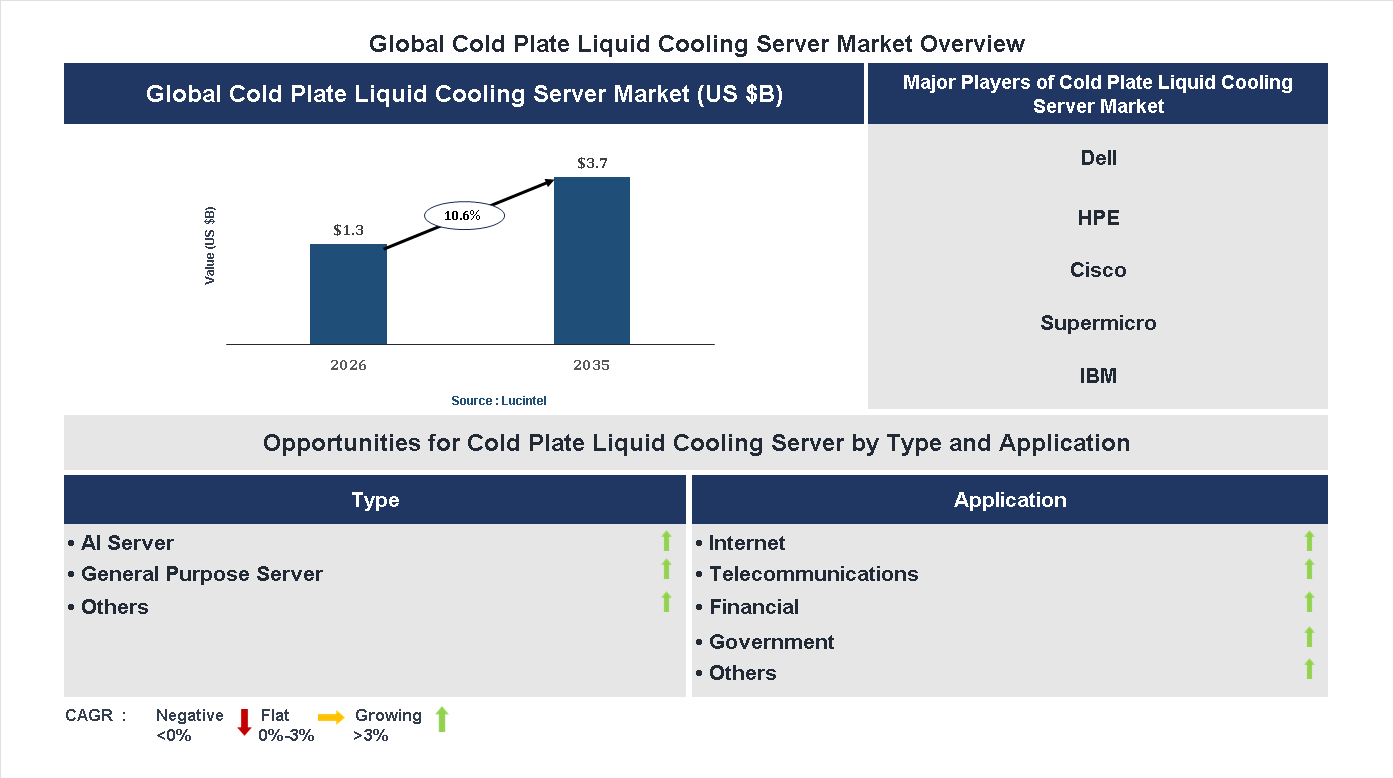
The future of the global cold plate liquid cooling server market looks promising with opportunities in the internet, telecommunication, financial, and government markets. The global cold plate liquid cooling server market is expected to reach an estimated $3.7 billion by 2035 with a CAGR of 10.6% from 2026 to 2035. The major drivers for this market are the increasing demand for energy-efficient cooling solutions, the rising adoption of high-performance computing systems, and the growing need for advanced data center cooling.• Lucintel forecasts that, within the type category, AI server is expected to witness higher growth over the forecast period.
• Within the application category, internet is expected to witness the highest growth.
• In terms of region, APAC is expected to witness the highest growth over the forecast period. Gain valuable insights for your business decisions with our comprehensive 150+ page report. Sample figures with some insights are shown below.
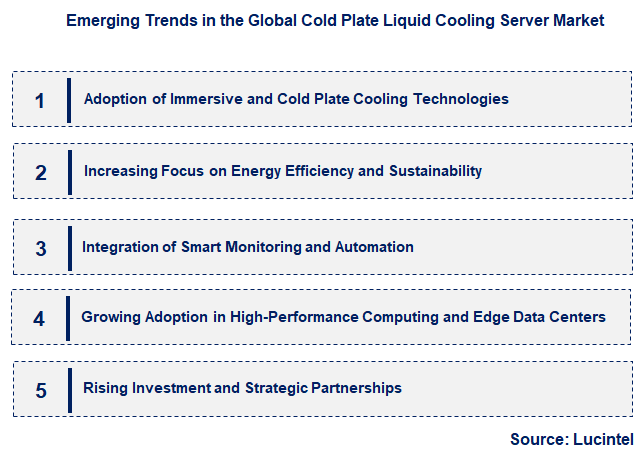
Emerging Trends in the Cold Plate Liquid Cooling Server Market
The cold plate liquid cooling server market is experiencing rapid growth driven by the increasing demand for energy-efficient and high-performance data center solutions. As data centers expand and computing power intensifies, traditional air cooling methods are becoming insufficient and less sustainable. Liquid cooling technologies, particularly cold plate systems, offer superior thermal management, reduced energy consumption, and enhanced server performance. These innovations are transforming the industry landscape, prompting vendors and data center operators to adopt more advanced cooling solutions. The following key trends highlight the evolving dynamics within this market, reflecting technological advancements, environmental considerations, and shifting industry standards.• Adoption of Immersive and Cold Plate Cooling Technologies: The market is witnessing a significant shift towards immersive cooling and cold plate systems, which provide direct heat removal from high-density servers. These methods improve thermal efficiency, reduce energy costs, and enable higher server densities. As data centers seek sustainable and scalable solutions, cold plate liquid cooling is becoming the preferred choice for managing heat in high-performance computing environments. This trend is driven by the need for more effective cooling in compact spaces, supporting the growth of AI, machine learning, and big data applications.
• Increasing Focus on Energy Efficiency and Sustainability: Environmental concerns and rising energy costs are pushing data centers to adopt greener cooling solutions. Cold plate liquid cooling offers substantial energy savings by reducing the reliance on traditional air conditioning systems. This trend is reinforced by government regulations and corporate sustainability goals, encouraging investments in eco-friendly technologies. As a result, market players are innovating with energy-efficient cold plate designs and integrating renewable energy sources, which collectively lower carbon footprints and operational costs, making liquid cooling a key component of sustainable data center infrastructure.
• Integration of Smart Monitoring and Automation: The deployment of IoT-enabled sensors and automation systems in cold plate cooling solutions is enhancing operational efficiency. Real-time monitoring of temperature, flow rates, and system performance allows for predictive maintenance and optimized cooling management. This trend reduces downtime, minimizes energy wastage, and improves overall system reliability. As data centers become more complex, smart cooling systems are essential for maintaining optimal conditions, leading to increased adoption of automated control systems that ensure precise thermal regulation and cost-effective operations.
• Growing Adoption in High-Performance Computing and Edge Data Centers: Cold plate liquid cooling is increasingly favored in high-performance computing (HPC) environments and edge data centers due to its ability to handle intense heat loads efficiently. These applications require compact, reliable, and scalable cooling solutions, which cold plates provide. The trend is driven by the proliferation of AI, 5G, and IoT devices, necessitating localized data processing with minimal thermal constraints. This adoption is expanding the market footprint, enabling faster processing speeds and supporting the deployment of advanced computing infrastructure in diverse locations.
• Rising Investment and Strategic Partnerships: Major technology firms and data center operators are investing heavily in cold plate liquid cooling technologies through acquisitions, joint ventures, and R&D initiatives. These strategic collaborations aim to develop innovative cooling solutions that meet the demands of next-generation data centers. Increased funding accelerates product development, enhances technological capabilities, and expands market reach. This trend indicates a competitive landscape focused on delivering efficient, scalable, and cost-effective cooling systems, ultimately driving market growth and fostering innovation in the cold plate liquid cooling server industry. In summary, these trends are collectively reshaping the cold plate liquid cooling server market by promoting sustainable, efficient, and intelligent cooling solutions. They are enabling data centers to meet the demands of modern computing workloads while reducing environmental impact and operational costs. As these developments continue, the market is poised for significant growth, driven by technological innovation and increasing adoption across various high-performance and edge computing applications.
Recent Development in the Cold Plate Liquid Cooling Server Market
The cold plate liquid cooling server market is experiencing rapid growth driven by increasing data center demands, energy efficiency needs, and technological advancements. As data processing requirements expand, traditional cooling methods face limitations, prompting a shift toward innovative solutions like liquid cooling. This market evolution offers significant opportunities for manufacturers, data center operators, and technology providers to enhance performance, reduce costs, and meet sustainability goals. The following developments highlight key trends shaping this dynamic industry landscape.• Enhanced Energy Efficiency: Adoption of liquid cooling solutions, particularly cold plate technology, significantly reduces energy consumption compared to air cooling. This development leads to lower operational costs and aligns with global sustainability initiatives. Improved thermal management allows servers to operate at higher densities without overheating, boosting overall data center efficiency. As energy costs rise, this trend offers a compelling value proposition for data center operators seeking cost-effective, eco-friendly cooling options.
• Advancements in Cold Plate Materials: New materials such as high-conductivity composites and advanced alloys improve thermal transfer efficiency. These innovations enable more compact, durable, and reliable cold plates, enhancing server performance and lifespan. The use of lightweight, corrosion-resistant materials also reduces maintenance needs and operational downtime. This development supports the deployment of liquid cooling in diverse environments, including high-density and high-performance computing applications, expanding market reach.
• Integration of Smart Monitoring Technologies: Incorporation of IoT sensors and real-time monitoring systems into cold plate cooling solutions enhances operational control and predictive maintenance. These technologies enable precise temperature regulation, leak detection, and performance analytics, minimizing downtime and preventing failures. Improved data insights facilitate proactive management, optimize cooling efficiency, and extend equipment lifespan. This trend is transforming traditional cooling systems into intelligent, adaptive solutions aligned with Industry 4.0 standards.
• Growing Adoption in High-Performance Computing: The demand for liquid cooling in high-performance computing (HPC) environments is accelerating due to the need for efficient heat dissipation in powerful processors. Cold plate systems enable higher processing speeds and increased server densities without thermal constraints. This development supports advancements in AI, machine learning, and scientific research, positioning liquid cooling as essential for next-generation computing infrastructure. The market benefits from increased investments and technological innovation driven by HPC requirements.
• Expansion into Edge and Small-Scale Data Centers: Cold plate liquid cooling solutions are increasingly being adopted in edge computing and small-scale data centers where space and energy efficiency are critical. Compact, scalable, and efficient, these systems address the cooling challenges of localized data processing units. This trend opens new markets for manufacturers and promotes decentralized data management. It also supports the growth of IoT applications and 5G infrastructure, further expanding the market scope and technological diversity. The overall impact of these developments is a more efficient, reliable, and sustainable cold plate liquid cooling server market. Innovations in materials, technology integration, and application scope are driving growth, reducing operational costs, and enabling higher server densities. As these trends continue, the market is poised for significant expansion, supporting the evolving needs of data centers worldwide and fostering technological progress across industries.
Strategic Growth Opportunities in the Cold Plate Liquid Cooling Server Market
The cold plate liquid cooling server market is experiencing rapid growth driven by increasing data center demands, energy efficiency needs, and advancements in thermal management technologies. As data processing requirements expand, traditional cooling methods face limitations, prompting a shift toward innovative solutions like liquid cooling. This market offers significant opportunities for manufacturers and data center operators to enhance performance, reduce operational costs, and meet sustainability goals through strategic adoption of cold plate liquid cooling systems.• Growing Data Center Infrastructure and Demand for Efficient Cooling: The expansion of data centers worldwide necessitates advanced cooling solutions. Cold plate liquid cooling offers superior thermal management, enabling higher server densities and improved energy efficiency. As organizations seek to reduce operational costs and carbon footprints, the adoption of cold plate systems is expected to accelerate, making it a key growth driver in the market.
• Increasing Adoption of High-Performance Computing and AI Applications: The rise of AI, machine learning, and high-performance computing (HPC) requires robust cooling solutions to manage heat generated by powerful processors. Cold plate liquid cooling provides targeted, efficient heat removal, supporting the performance and reliability of these demanding applications. This trend is expected to boost market growth as industries prioritize advanced thermal management.
• Technological Advancements in Cold Plate Design and Materials: Innovations in cold plate materials, such as enhanced thermal conductivity and corrosion resistance, improve system efficiency and lifespan. Developments in compact, modular designs facilitate easier integration into existing server architectures. These technological improvements are expanding the applicability of cold plate cooling, attracting more data centers and OEMs to adopt this technology.
• Rising Focus on Sustainability and Energy Efficiency Regulations: Governments and organizations are emphasizing energy conservation and environmental sustainability. Cold plate liquid cooling reduces energy consumption compared to traditional air cooling, aligning with green initiatives. Compliance with energy efficiency standards encourages data centers to implement cold plate systems, creating a favorable market environment for growth driven by regulatory and corporate sustainability commitments.
• Increasing Market Penetration in Edge and Small-Scale Data Centers: The proliferation of edge computing and smaller data centers demands compact, efficient cooling solutions. Cold plate liquid cooling offers scalable, space-saving options suitable for these environments. As edge infrastructure expands, the market for cold plate systems is expected to grow significantly, providing opportunities for manufacturers to capture new segments and diversify their offerings. The overall market outlook indicates that strategic investments in innovative cooling technologies, driven by data growth, performance demands, and sustainability goals, will significantly shape the future landscape of the cold plate liquid cooling server market. These opportunities will enable industry stakeholders to enhance operational efficiency, meet regulatory standards, and support the evolving needs of digital infrastructure.
Cold Plate Liquid Cooling Server Market Driver and Challenges
The cold plate liquid cooling server market is influenced by a variety of technological, economic, and regulatory factors. Rapid advancements in data center infrastructure, increasing demand for energy-efficient cooling solutions, and stringent environmental regulations are shaping its growth trajectory. Additionally, the rising adoption of high-performance computing and the need to reduce operational costs are significant drivers. However, the market also faces challenges such as high initial investment costs, technological complexities, and regulatory hurdles related to liquid cooling systems. Understanding these drivers and challenges is essential for stakeholders to navigate the evolving landscape effectively and capitalize on emerging opportunities. The factors responsible for driving the cold plate liquid cooling server market include:-• Technological Innovation: The continuous development of advanced cooling technologies, such as cold plate systems, enhances server efficiency and performance. These innovations enable data centers to handle higher processing loads while maintaining optimal temperatures, reducing energy consumption and operational costs. As technology evolves, the integration of smart monitoring and automation further optimizes cooling processes, making liquid cooling solutions more attractive for large-scale deployments.
• Rising Data Center Demand: The exponential growth of data generation and cloud computing has led to increased demand for efficient cooling solutions. Cold plate liquid cooling offers superior thermal management, supporting high-density server configurations. This demand is driven by sectors like AI, big data, and IoT, which require robust infrastructure capable of handling intensive workloads without overheating, thereby fueling market expansion.
• Energy Efficiency and Sustainability Goals: Governments and organizations are prioritizing energy conservation and sustainability. Cold plate liquid cooling significantly reduces energy consumption compared to traditional air cooling methods, aligning with environmental regulations and corporate sustainability targets. This shift towards greener data centers encourages the adoption of liquid cooling solutions, further propelling market growth.
• Cost Savings and Operational Efficiency: Although initial setup costs are high, cold plate liquid cooling offers substantial long-term savings through reduced energy bills and lower cooling maintenance costs. Enhanced thermal management extends hardware lifespan and minimizes downtime, leading to improved operational efficiency. These economic benefits motivate data center operators to invest in advanced cooling technologies.
• Growing Adoption in High-Performance Computing: The need for high-performance computing (HPC) in scientific research, financial modeling, and AI applications drives the adoption of cold plate liquid cooling. These systems efficiently dissipate heat generated by powerful processors, enabling sustained high workloads. As HPC requirements increase, the market for specialized cooling solutions like cold plates expands correspondingly. The challenges in the cold plate liquid cooling server market are:-
• High Initial Investment Costs: Implementing cold plate liquid cooling systems requires significant capital expenditure for equipment, infrastructure modifications, and specialized installation. This high upfront cost can deter small and medium-sized enterprises from adopting the technology, limiting market penetration. Additionally, the return on investment depends on energy savings and operational efficiencies, which may take time to realize.
• Technological Complexity and Maintenance: Cold plate systems involve complex engineering and require specialized knowledge for installation, operation, and maintenance. Potential issues such as leaks, corrosion, and system failures pose risks that can lead to costly repairs and downtime. Ensuring reliable performance necessitates skilled personnel and rigorous maintenance protocols, adding to operational challenges.
• Regulatory and Safety Concerns: Liquid cooling involves the use of potentially hazardous fluids, raising safety and environmental concerns. Regulatory frameworks governing the use, disposal, and handling of cooling liquids vary across regions, complicating compliance. Additionally, concerns about leaks and fluid management can hinder adoption, especially in sensitive or regulated environments. In summary, the cold plate liquid cooling server market is driven by technological advancements, increasing data center demands, sustainability initiatives, economic benefits, and HPC adoption. However, high initial costs, system complexity, and regulatory issues pose significant hurdles. These factors collectively influence market growth, requiring stakeholders to balance innovation with risk management. Strategic investments, technological improvements, and regulatory compliance will be crucial for sustained expansion and competitive advantage in this evolving landscape.
List of Cold Plate Liquid Cooling Server Companies
Companies in the market compete on the basis of product quality offered. Major players in this market focus on expanding their manufacturing facilities, R&D investments, infrastructural development, and leverage integration opportunities across the value chain. With these strategies cold plate liquid cooling server companies cater increasing demand, ensure competitive effectiveness, develop innovative products & technologies, reduce production costs, and expand their customer base. Some of the cold plate liquid cooling server companies profiled in this report include-• Dell
• HPE
• Cisco
• Supermicro
• IBM
• Inspur
• Huawei
• Sugon
• xFusion
• ZTE
Cold Plate Liquid Cooling Server Market by Segment
The study includes a forecast for the global cold plate liquid cooling server market by type, application, and region.Cold Plate Liquid Cooling Server Market by Type [Value from 2019 to 2035]:
• AI Server
• General Purpose Server
• Others
Cold Plate Liquid Cooling Server Market by Application [Value from 2019 to 2035]:
• Internet
• Telecommunications
• Financial
• Government
• Others
Cold Plate Liquid Cooling Server Market by Region [Value from 2019 to 2035]:
• North America
• Europe
• Asia Pacific
• The Rest of the World
Country Wise Outlook for the Cold Plate Liquid Cooling Server Market
The cold plate liquid cooling server market has experienced significant growth driven by the increasing demand for energy-efficient and high-performance data centers worldwide. As data processing needs expand, countries are adopting advanced cooling technologies to improve server efficiency, reduce operational costs, and meet environmental standards. Innovations in liquid cooling solutions, along with government policies promoting sustainable infrastructure, are shaping market dynamics across key regions. The United States, China, Germany, India, and Japan are at the forefront of these developments, each contributing unique advancements aligned with their technological and environmental priorities.• United States: The US market has seen rapid adoption of liquid cooling solutions in hyperscale data centers, driven by major cloud providers like Amazon and Google. Innovations include advanced cold plate designs and integration with AI-driven thermal management systems, enhancing energy efficiency and reducing cooling costs. Regulatory incentives for green data centers further accelerate adoption, positioning the US as a leader in market growth.
• China: China is experiencing robust growth in liquid cooling technology deployment, supported by government initiatives to develop sustainable data infrastructure. Local manufacturers are investing in R&D to produce cost-effective cold plates and integrated cooling modules. Major tech giants are adopting liquid cooling for high-density servers, aiming to improve energy efficiency and comply with stricter environmental regulations.
• Germany: Germanys focus on energy efficiency and sustainability has driven the adoption of liquid cooling solutions in data centers. The market benefits from strong industrial and technological expertise, with companies developing innovative cold plate materials and designs to optimize thermal performance. The government’s emphasis on green energy policies encourages further integration of liquid cooling technologies.
• India: India’s rapidly expanding digital economy and increasing data center investments are fueling demand for efficient cooling solutions. Local companies are adopting cold plate liquid cooling to address high ambient temperatures and energy costs. The government’s push for digital infrastructure and sustainability initiatives is fostering market growth, with a focus on affordable and scalable cooling systems.
• Japan: Japan’s advanced technological landscape and focus on disaster resilience have led to the adoption of cutting-edge liquid cooling systems. Innovations include compact cold plates suitable for space-constrained data centers and integration with IoT for real-time thermal management. The market benefits from government incentives for energy-efficient infrastructure and a strong emphasis on environmental sustainability.

Features of the Global Cold Plate Liquid Cooling Server Market
Market Size Estimates: Cold plate liquid cooling server market size estimation in terms of value ($B). Trend and Forecast Analysis: Market trends (2019 to 2025) and forecast (2026 to 2035) by various segments and regions. Segmentation Analysis: Cold plate liquid cooling server market size by type, application, and region in terms of value ($B). Regional Analysis: Cold plate liquid cooling server market breakdown by North America, Europe, Asia Pacific, and Rest of the World. Growth Opportunities: Analysis of growth opportunities in different types, applications, and regions for the cold plate liquid cooling server market. Strategic Analysis: This includes M&A, new product development, and competitive landscape of the cold plate liquid cooling server market. Analysis of competitive intensity of the industry based on Porter’s Five Forces model.
FAQ
Q1. What is the cold plate liquid cooling server market size? Answer: The global cold plate liquid cooling server market is expected to reach an estimated $3.7 billion by 2035. Q2. What is the growth forecast for cold plate liquid cooling server market? Answer: The global cold plate liquid cooling server market is expected to grow with a CAGR of 10.6% from 2026 to 2035. Q3. What are the major drivers influencing the growth of the cold plate liquid cooling server market? Answer: The major drivers for this market are the increasing demand for energy-efficient cooling solutions, the rising adoption of high-performance computing systems, and the growing need for advanced data center cooling. Q4. What are the major segments for cold plate liquid cooling server market? Answer: The future of the cold plate liquid cooling server market looks promising with opportunities in the internet, telecommunication, financial, and government markets. Q5. Who are the key cold plate liquid cooling server market companies? Answer: Some of the key cold plate liquid cooling server companies are as follows:• Dell
• HPE
• Cisco
• Supermicro
• IBM
• Inspur
• Huawei
• Sugon
• xFusion
• ZTE Q6. Which cold plate liquid cooling server market segment will be the largest in future? Answer: Lucintel forecasts that, within the type category, AI server is expected to witness higher growth over the forecast period. Q7. In cold plate liquid cooling server market, which region is expected to be the largest in next 5 years? Answer: In terms of region, APAC is expected to witness the highest growth over the forecast period. Q8. Do we receive customization in this report? Answer: Yes, Lucintel provides 10% customization without any additional cost.
Table of Contents
List of Figures
List of Tables
Methodology
- In-depth interviews of the major players in this market
- Detailed secondary research from competitors’ financial statements and published data
- Extensive searches of published works, market, and database information pertaining to industry news, company press releases, and customer intentions
- A compilation of the experiences, judgments, and insights of Lucintel’s professionals, who have analyzed and tracked this market over the years.


Buy Now
Choose a license that fits your team. Instant PDF delivery.
Prices exclude taxes. Instant delivery. Custom licensing available on request.
Key Questions
- • What are some of the most promising, high-growth opportunities for the cold plate liquid cooling server market by type (AI server, general purpose server, and others), application (internet, telecommunications, financial, government, and others), and region (North America, Europe, Asia Pacific, and the Rest of the World)?
- • Which segments will grow at a faster pace and why?
- • Which region will grow at a faster pace and why?
- • What are the key factors affecting market dynamics? What are the key challenges and business risks in this market?
- • What are the business risks and competitive threats in this market?
- • What are the emerging trends in this market and the reasons behind them?
- • What are some of the changing demands of customers in the market?
- • What are the new developments in the market? Which companies are leading these developments?
- • Who are the major players in this market? What strategic initiatives are key players pursuing for business growth?
- • What are some of the competing products in this market and how big of a threat do they pose for loss of market share by material or product substitution?
- • What M&A activity has occurred in the last 7 years and what has its impact been on the industry? For any questions related to Cold Plate Liquid Cooling Server Market, Cold Plate Liquid Cooling Server Market Size, Cold Plate Liquid Cooling Server Market Growth, Cold Plate Liquid Cooling Server Market Analysis, Cold Plate Liquid Cooling Server Market Report, Cold Plate Liquid Cooling Server Market Share, Cold Plate Liquid Cooling Server Market Trends, Cold Plate Liquid Cooling Server Market Forecast, Cold Plate Liquid Cooling Server Companies, write Lucintel analyst at email: helpdesk@lucintel.com. We will be glad to get back to you soon.


