
Market Report · July 29, 2026

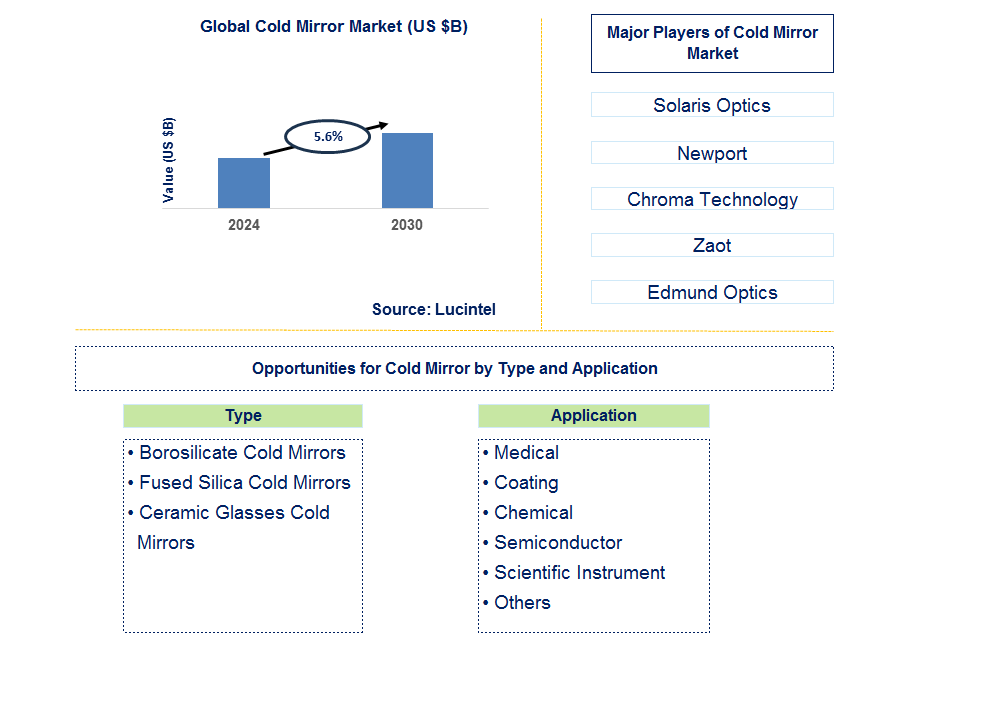
Key data points: The growth forecast = 5.6% annually for the next 6 years. Scroll below to get more insights. This market report covers trends, opportunities, and forecasts in the global cold mirror market to 2030 by type (borosilicate cold mirrors, fused silica cold mirrors, and ceramic glasses cold mirrors), application (medical, coating, chemical, semiconductor, scientific instrument, and others), and region (North America, Europe, Asia Pacific, and the Rest of the World)
We'll send your sample report shortly.
• United States: The United States is seeing increased use of cold mirrors in medical devices and optics, driven by demand for high-performance heat management solutions. Companies are focusing on improving cold mirror coatings for enhanced durability and precision in applications like imaging and laser systems.
• China: China is experiencing rapid growth in the cold mirror market, fueled by the expansion of the consumer electronics and LED lighting industries. Cold mirrors are being integrated into advanced lighting systems to improve energy efficiency and heat management in high-tech applications.
• Germany: In Germany, advancements in automotive lighting and optical systems are driving the cold mirror market. The focus on energy-efficient technologies in the automotive and industrial sectors is leading to the adoption of cold mirrors in headlights and high-temperature lighting applications.
• India: India is seeing growth in the use of cold mirrors in medical equipment and industrial applications. As the healthcare sector expands, demand for high-performance optical components such as cold mirrors is increasing, leading to significant investments in local production and R&D.
• Japan: Japan is advancing in cold mirror technology for precision optics and high-performance display systems. Innovations in light filtering and heat reflection are being integrated into electronics and automotive applications, supporting Japan’s position as a leader in high-tech optical solutions.
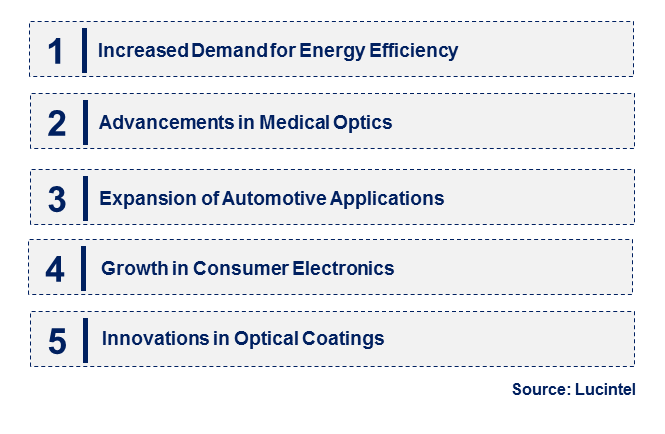
• Increased Demand for Energy Efficiency: Cold mirrors are increasingly used in energy-efficient lighting systems to reduce heat and improve light quality. This trend is driven by the need to lower energy consumption in commercial and industrial settings, supporting sustainable development goals.
• Advancements in Medical Optics: Cold mirrors are becoming essential in medical imaging devices and surgical lighting systems due to their ability to manage heat effectively while maintaining optical clarity. This trend is expanding the scope of cold mirrors in the healthcare industry.
• Expansion of Automotive Applications: The automotive industry is adopting cold mirror technology for advanced lighting systems, particularly in LED headlights and interior lighting. Cold mirrors help manage heat in high-temperature environments, improving safety and performance in vehicles.
• Growth in Consumer Electronics: Cold mirrors are being integrated into display technologies and imaging devices in the consumer electronics sector. The trend toward miniaturization and high-resolution displays is increasing the need for efficient heat management solutions provided by cold mirrors.
• Innovations in Optical Xoatings: Advanced optical coating technologies are improving the durability and performance of cold mirrors. These innovations are enabling their use in more challenging environments, such as high-intensity lighting systems and industrial optical applications. These trends are reshaping the cold mirror market, driving demand for advanced heat management and optical performance in various sectors.
• Advanced Coating Technologies: Innovations in cold mirror coatings are enhancing the performance and durability of optical systems. This development is particularly beneficial for high-temperature environments, improving energy efficiency and extending product lifecycles.
• Integration in LED Systems: Cold mirrors are being widely adopted in LED lighting systems to improve heat dissipation and light quality. This development is driving growth in both residential and commercial lighting applications, reducing energy consumption and operational costs.
• Medical Device Expansion: The use of cold mirrors in medical imaging and surgical lighting is increasing, providing improved heat management and optical precision. This development is enhancing the performance of medical devices, making them more reliable in critical healthcare environments.
• Automotive Industry Adoption: Cold mirrors are increasingly used in automotive lighting systems, such as LED headlights. This development is helping manufacturers meet stringent energy efficiency and safety standards, particularly in electric vehicles and smart cars.
• Optical Instruments: Cold mirrors are becoming essential components in high-precision optical instruments used in research and industrial applications. This development is advancing the capabilities of instruments in fields like photonics, spectroscopy, and microscopy. These developments are propelling the cold mirror market forward, enhancing performance across industries and expanding its range of applications.
• Medical Imaging: Cold mirrors are increasingly used in medical imaging systems to enhance image quality and manage heat. This growth opportunity is driven by advancements in healthcare technologies and the demand for precision optics in diagnostic tools.
• LED Lighting Systems: The integration of cold mirrors in LED lighting applications provides significant growth potential, as industries focus on energy efficiency and reducing heat in lighting systems. This opportunity is particularly strong in commercial and industrial lighting sectors.
• Automotive Lighting: Cold mirrors offer growth opportunities in automotive LED headlights and interior lighting systems. Their ability to manage heat and improve light quality is critical as the automotive industry moves toward more advanced lighting solutions.
• Optical Instruments: Cold mirrors are in demand for high-precision optical instruments used in scientific research and industrial applications. The growth of industries like photonics and spectroscopy is creating new opportunities for cold mirror technology.
• Consumer Electronics: Cold mirrors are finding applications in display technologies and imaging devices, offering growth potential in the consumer electronics market. The trend toward miniaturization and high-performance displays is driving demand for efficient heat management solutions. These growth opportunities are shaping the future of the cold mirror market, allowing for expansion across key applications.
• Increased Demand for Energy-efficient Solutions: The growing focus on energy efficiency across industries is driving demand for cold mirrors, particularly in LED lighting and medical devices. This driver supports sustainability and cost savings in various applications.
• Technological Advancements in Optical Xoatings: Innovations in optical coating technologies are enhancing the performance of cold mirrors, making them more versatile and durable. This is driving their adoption in challenging environments such as automotive and industrial applications.
• Growth in Medical Devices: The expansion of the healthcare industry, particularly in diagnostic and imaging devices, is boosting demand for cold mirrors. Their ability to manage heat while maintaining optical clarity is critical in these applications.
• Regulatory Support for Energy Efficiency: Government regulations promoting energy-efficient lighting and heat management are driving the use of cold mirrors. This regulatory environment is pushing industries to adopt more sustainable and advanced lighting technologies.
• Expansion of the Automotive Industry: The growing automotive industry, particularly in electric vehicles, is driving demand for cold mirrors in advanced lighting systems. Their role in improving light performance and safety is critical in meeting regulatory standards. Challenges in the cold mirror market are:
• High Production Costs: Despite technological advancements, the production of high-quality cold mirrors remains expensive. This poses a challenge for manufacturers aiming to lower costs and improve profitability.
• Raw Material Availability: The availability of raw materials for cold mirror production can impact the market. Fluctuations in supply can affect production timelines and product pricing, creating challenges for manufacturers.
• Competition from Alternative Technologies: Cold mirrors face competition from other heat management solutions, such as dichroic mirrors and thermal management coatings. Manufacturers need to demonstrate superior performance to stay competitive in the market.
• Limited Awareness in Emerging Markets: In some emerging markets, awareness of the benefits of cold mirror technology is limited. This poses a challenge for market penetration and growth, particularly in sectors like lighting and medical devices.
• Environmental Regulations: While cold mirrors contribute to energy efficiency, the manufacturing process can have environmental impacts. Adhering to stringent environmental regulations can be a challenge for companies in the market. In conclusion, while the cold mirror market is driven by technological advancements and growing industry demand, challenges related to cost, raw material supply, and competition must be addressed for sustained growth.
• Solaris Optics
• Newport
• Chroma Technology
• Zaot
• Edmund Optics
• Optics Balzers
• Abrisa Technologies
• Borosilicate Cold Mirrors
• Fused Silica Cold Mirrors
• Ceramic Glasses Cold Mirrors
• Medical
• Coating
• Chemical
• Semiconductor
• Scientific Instrument
• Others
• North America
• Europe
• Asia Pacific
• The Rest of the World
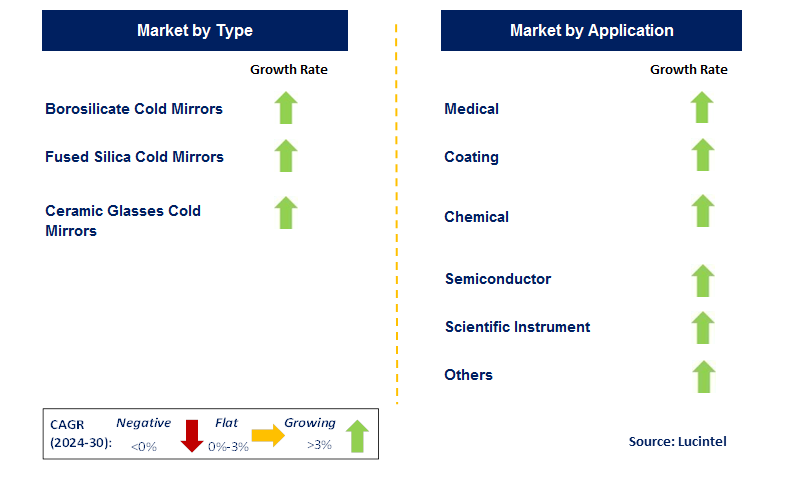
• Lucintel forecasts that, within the type category, borosilicate cold mirror will remain the largest segment over the forecast period.
• Within the application category, medical is expected to witness the highest growth.
• In terms of regions, North America is expected to witness the highest growth over the forecast period.

• Solaris Optics
• Newport
• Chroma Technology
• Zaot
• Edmund Optics
• Optics Balzers
• Abrisa Technologies Q5. Which cold mirror market segment will be the largest in future? Answer: Lucintel forecasts that, within the type category, borosilicate cold mirror will remain the largest segment over the forecast period. Q6. In cold mirror market, which region is expected to be the largest in next 5 years? Answer: In terms of regions, North America is expected to witness the highest growth over the forecast period. Q.7 Do we receive customization in this report? Answer: Yes, Lucintel provides 10% customization without any additional cost.


Choose a license that fits your team. Instant PDF delivery.
Prices exclude taxes. Instant delivery. Custom licensing available on request.
Market Report · July 29, 2026
Market Report · July 20, 2026
Market Report · July 20, 2026
Trusted partner for strategic intelligence and business growth


Receive a complimentary market analysis tailored to your industry. Our analysts will identify key growth opportunities and competitive dynamics specific to your business.

Market size, growth rate, and key trend analysis for your specific sector.

Top competitor positioning and market share analysis.

Strategic recommendations backed by data-driven insights.
Get curated market intelligence and competitive moves straight to your inbox.
By subscribing, you agree to receive our monthly insights. Unsubscribe anytime.
Receive a complimentary market analysis tailored to your industry. Our analysts will identify key growth opportunities and competitive dynamics specific to your business.
Market size, growth rate, and key trend analysis for your specific sector.
Top competitor positioning and market share analysis.
Strategic recommendations backed by data-driven insights.
Get curated market intelligence, emerging trends, and competitive moves straight to your inbox each month.
By subscribing, you agree to receive our monthly insights. Unsubscribe anytime.
We'll send your sample report shortly.