
Market Report · July 31, 2026

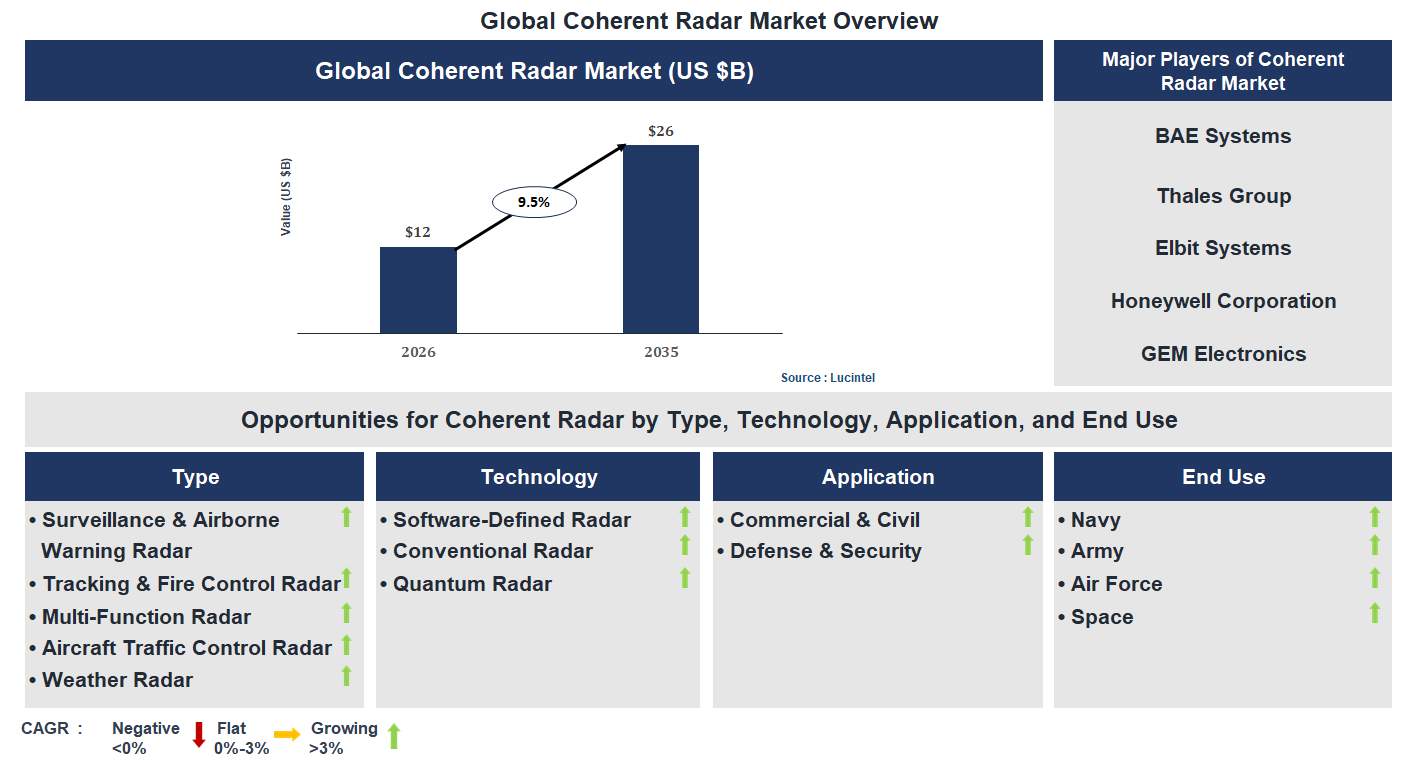
Key data points: The market size in 2035 = $26 billion, growth forecast = 9.5% annually for the next 8 years. Scroll below to get more insights. This market report covers trends, opportunities and forecasts in coherent radar market to 2035 by type (surveillance & airborne warning radar, tracking & fire control radar, multi-function radar, aircraft traffic control radar, and weather radar), technology (software-defined radar, conventional radar, and quantum radar), application (commercial & civil and defense & security), end use (navy, army, air force, and space), and region (North America, Europe, Asia Pacific, and the Rest of the World)
We'll send your sample report shortly.
• Lucintel forecasts that, within the type category, multi-function radar is expected to witness the highest growth over the forecast period.
• Within the application category, defense & security is expected to witness higher growth.
• In terms of region, APAC is expected to witness the highest growth over the forecast period. Gain valuable insights for your business decisions with our comprehensive 150+ page report. Sample figures with some insights are shown below.
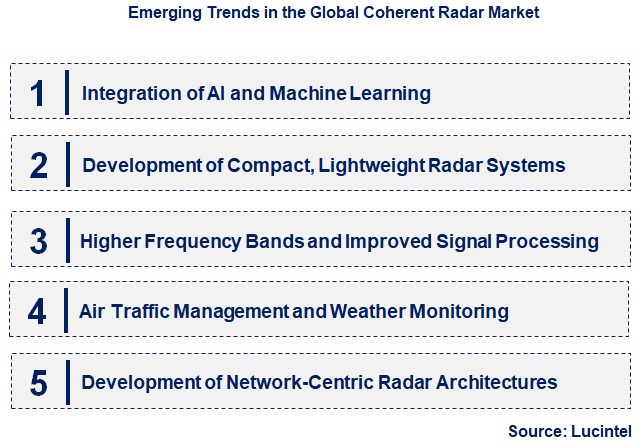
• Integration of AI and Machine Learning: The incorporation of AI and machine learning algorithms enhances radar signal processing, target detection, and tracking accuracy. These technologies enable systems to adapt to complex environments, reduce false alarms, and improve real-time decision-making. As a result, coherent radars become more efficient, autonomous, and capable of handling sophisticated threats, thereby expanding their application scope across defense, aviation, and maritime sectors.
• Development of Compact, Lightweight Radar Systems: Advances in materials and electronic components have led to smaller, portable coherent radar units. This trend allows for deployment in diverse environments, including unmanned vehicles, drones, and portable surveillance units. The increased portability broadens the market reach, making radar systems more accessible for tactical operations, border security, and emergency response, while also reducing installation and maintenance costs.
• Higher Frequency Bands and Improved Signal Processing: Innovations in frequency management and signal processing techniques have significantly increased the resolution and operational range of coherent radars. These improvements enable detailed imaging and long-distance detection, critical for early warning systems and strategic surveillance. Enhanced resolution also facilitates better target discrimination, reducing clutter and false positives, thus improving overall system reliability and effectiveness.
• Air Traffic Management and Weather Monitoring: Beyond defense, coherent radars are increasingly adopted in civil sectors such as air traffic control, weather forecasting, and disaster management. Their ability to provide precise, real-time data enhances safety and operational efficiency. This diversification of applications is expanding market opportunities, encouraging investments in dual-use radar technologies, and fostering collaborations between military and civilian sectors.
• Development of Network-Centric Radar Architectures: The trend toward networked radar systems allows multiple radars to operate cohesively, sharing data for comprehensive situational awareness. This integration improves coverage, redundancy, and resilience against electronic warfare. Network-centric architectures facilitate real-time data sharing across platforms, enabling coordinated responses and enhancing overall security, especially in complex operational environments like maritime patrols and border security. These emerging trends are fundamentally reshaping the coherent radar market by enhancing system capabilities, expanding application domains, and improving operational efficiency. The integration of advanced technologies and the focus on portability and network connectivity are driving innovation, making coherent radar systems more versatile, reliable, and essential across both military and civilian sectors. This evolution is poised to unlock new growth opportunities and redefine the competitive landscape of the market.
• Growing Adoption of Phased Array Technology: Phased array systems are increasingly being integrated into coherent radar solutions, offering superior target detection, tracking, and imaging capabilities. This technology enables rapid beam steering without moving parts, improving response times and accuracy. Its adoption is driven by military and commercial sectors seeking enhanced situational awareness and operational efficiency. The shift towards phased array technology is expected to accelerate, fostering innovation and expanding application scopes in defense, weather monitoring, and autonomous vehicles.
• Advancements in Signal Processing Algorithms: Recent developments focus on sophisticated signal processing algorithms that improve radar resolution, clutter suppression, and target identification. These innovations enhance the radar’s ability to operate effectively in complex environments, such as urban areas or battlefield conditions. Improved algorithms also reduce false alarms and increase detection range, making systems more reliable. This progress is crucial for defense applications, air traffic management, and autonomous navigation, ultimately boosting market competitiveness and operational effectiveness.
• Integration of Artificial Intelligence (AI): The incorporation of AI into coherent radar systems is revolutionizing data analysis, target recognition, and decision-making processes. AI-driven algorithms enable real-time processing of vast data sets, improving accuracy and response times. This integration supports autonomous systems, surveillance, and threat detection, providing a strategic advantage. As AI technology matures, its adoption in radar systems is expected to grow, leading to smarter, more adaptive solutions that meet the evolving needs of defense and commercial markets.
• Miniaturization and Cost Reduction: Innovations in materials and manufacturing techniques are enabling the development of smaller, more affordable coherent radar systems. Miniaturization allows deployment in a wider range of platforms, including drones, small satellites, and portable devices. Cost reductions make these advanced systems accessible to a broader customer base, fostering market expansion. This trend is particularly impactful for commercial applications, such as automotive collision avoidance and weather monitoring, where affordability and size are critical factors.
• Expansion into Civil and Commercial Sectors: Traditionally dominated by defense, coherent radar technology is now increasingly penetrating civil and commercial markets. Applications include air traffic control, weather forecasting, automotive safety, and infrastructure monitoring. This diversification is driven by technological improvements and the need for precise, reliable sensing solutions across industries. The expansion broadens market opportunities, stimulates innovation, and encourages cross-sector collaborations, ultimately accelerating growth and adoption of coherent radar systems globally. The overall impact of these developments is a more versatile, efficient, and accessible coherent radar market. Enhanced capabilities and reduced costs are driving wider adoption across multiple sectors, fostering innovation and competitive advantages. As these trends continue, the market is poised for sustained growth, with increased integration of advanced technologies shaping its future trajectory.
• Integration of AI and Machine Learning for Enhanced Radar Performance: Incorporating AI and machine learning algorithms into coherent radar systems enables real-time data processing, improved target detection, and adaptive signal processing. This enhances accuracy, reduces false alarms, and allows for better clutter suppression. AI-driven systems can predict target movements and optimize radar parameters dynamically, making them more effective in complex environments. The adoption of these technologies is expected to revolutionize military and civilian applications, providing a competitive edge and opening new market segments.
• Growing Demand for Automotive Coherent Radar for Advanced Driver Assistance Systems: The automotive industry is increasingly adopting coherent radar for advanced driver assistance systems (ADAS) and autonomous vehicles. These radars offer high-resolution imaging, long-range detection, and reliable performance in adverse weather conditions. As safety regulations tighten and consumer demand for autonomous features rises, automakers are investing heavily in coherent radar technology. This trend is expected to expand the market significantly, fostering innovation and integration with other sensors for comprehensive vehicle perception systems.
• Expansion of Military and Defense Applications for Secure and Accurate Target Tracking: Military and defense sectors are major consumers of coherent radar systems for surveillance, missile guidance, and battlefield awareness. The need for secure, high-precision, and resilient radar solutions is driving research and procurement. Advances in phased-array technology and electronic warfare capabilities are enhancing target tracking and threat detection. Growing geopolitical tensions and defense budgets worldwide are further propelling this opportunity, making coherent radar a critical component in modern defense strategies.
• Miniaturization and Integration of Coherent Radar for Space and UAV Applications: The trend toward miniaturization is enabling coherent radar systems to be integrated into small satellites, UAVs, and portable devices. These compact radars provide high-resolution imaging and surveillance capabilities in space exploration, environmental monitoring, and border security. Technological innovations in materials and electronics are reducing size, weight, and power consumption, broadening application scope. This growth supports the development of cost-effective, versatile radar solutions for diverse sectors, including commercial and scientific research.
• Increasing Adoption of Coherent Radar in Weather Monitoring and Climate Studies: Coherent radar systems are vital for accurate weather forecasting, storm tracking, and climate research. Their ability to detect precipitation, wind patterns, and atmospheric disturbances with high precision improves predictive models. As climate change intensifies and the need for early warning systems grows, investments in advanced radar infrastructure are rising. This opportunity fosters collaboration between meteorological agencies and technology providers, expanding the market and enhancing global weather monitoring capabilities. The overall market outlook is positively influenced by these growth opportunities, promising technological innovation, increased adoption across sectors, and strategic investments. As coherent radar systems become more sophisticated and versatile, they will play a crucial role in defense, automotive, space, and environmental applications. This evolution will drive market expansion, foster competitive innovation, and meet the increasing demand for precise, reliable, and multifunctional radar solutions worldwide.
• Technological Advancements: The continuous evolution of coherent radar technology, including improvements in signal processing, resolution, and detection capabilities, is a primary driver. These innovations enable more accurate and reliable surveillance, navigation, and target identification, which are critical for defense and civilian applications. As technology becomes more sophisticated and cost-effective, adoption rates increase, fueling market growth. Additionally, integration with other systems like AI and IoT enhances functionality, making coherent radar systems more versatile and appealing to a broader range of users.
• Increasing Defense Spending: Governments worldwide are boosting their defense budgets to modernize military capabilities and enhance national security. Coherent radar systems are vital for missile defense, aircraft detection, and battlefield surveillance. This increased expenditure directly correlates with higher procurement and deployment of advanced radar systems, stimulating market expansion. Countries are also investing in indigenous radar technology to reduce reliance on foreign suppliers, further driving local market growth and innovation.
• Growing Demand for Civil and Commercial Applications: Beyond defense, coherent radar technology is increasingly used in air traffic management, weather monitoring, and autonomous vehicle navigation. The rising need for precise, real-time data in these sectors is expanding the market. For instance, autonomous vehicles rely heavily on coherent radar for obstacle detection and collision avoidance, creating new revenue streams. The integration of radar systems into civilian infrastructure enhances safety and operational efficiency, broadening the market scope and encouraging technological development.
• Regulatory and Standardization Frameworks: The development of international standards and regulatory policies for radar systems influences market growth. Clear guidelines ensure interoperability, safety, and security, encouraging adoption across sectors. Regulatory support for spectrum management and export controls also facilitates international trade and collaboration. Conversely, stringent regulations can pose barriers to entry and increase compliance costs, impacting market dynamics. Overall, a balanced regulatory environment promotes innovation while safeguarding national and global interests. The challenges facing the coherent radar market include:-
• High Development and Production Costs: Developing advanced coherent radar systems involves significant investment in research, technology, and manufacturing infrastructure. These costs can limit entry for smaller players and slow down innovation. Additionally, the high costs impact pricing strategies, potentially making systems less accessible to some markets. Budget constraints in certain regions further restrict procurement, hindering widespread adoption and market growth.
• Technological Complexity and Integration Challenges: Coherent radar systems require sophisticated technology and seamless integration with other military or civilian systems. This complexity can lead to delays in deployment, increased maintenance costs, and compatibility issues. Ensuring interoperability across different platforms and environments remains a significant challenge, potentially limiting the effectiveness and reliability of radar systems. Overcoming these technical hurdles demands ongoing research and development, which can be resource-intensive.
• Geopolitical and Regulatory Risks: International tensions and export restrictions can impede the global trade of radar technology. Countries may impose sanctions or control measures that restrict the transfer of sensitive technology, limiting market access and collaboration opportunities. Additionally, geopolitical conflicts can disrupt supply chains and influence procurement decisions, creating uncertainty for manufacturers and buyers alike. Navigating these risks requires strategic planning and compliance, adding complexity to market operations. The coherent radar market is driven by rapid technological advancements, increased defense and civilian demand, and supportive regulatory frameworks. However, high development costs, technological complexities, and geopolitical risks pose significant challenges. These factors collectively influence the pace and direction of market growth, requiring stakeholders to innovate strategically and adapt to evolving regulatory and geopolitical landscapes. Overall, the markets future will depend on balancing these drivers and challenges to harness opportunities while mitigating risks.
• BAE Systems
• Thales Group
• Elbit Systems
• Honeywell Corporation
• GEM Electronics
• Lockheed Martin Corporation
• Israel Aerospace Industries
• Leonardo S.P.A.
• Raytheon Technologies Corporation
• Bharat Electronics
• Surveillance & Airborne Warning Radar
• Tracking & Fire Control Radar
• Multi-Function Radar
• Aircraft Traffic Control Radar
• Weather Radar
• Software-Defined Radar
• Conventional Radar
• Quantum Radar
• Commercial & Civil
• Defense & Security
• Navy
• Army
• Air Force
• Space
• North America
• Europe
• Asia Pacific
• The Rest of the World
• United States: The US market has seen substantial growth with increased defense budgets and technological innovation. Major defense contractors are developing advanced phased-array and AESA radars, integrating AI for better threat detection. The US military is also investing in multi-function radar systems to improve battlefield awareness and missile defense capabilities. Additionally, commercial applications in weather monitoring and air traffic management are expanding, driven by government initiatives and private sector investments.
• China: China is rapidly advancing its coherent radar technology, focusing on indigenous development to reduce reliance on foreign systems. The country has launched several projects to enhance its military radar capabilities, including phased-array and multi-function radars. China is also investing in AI integration to improve target tracking and threat identification. The commercial sector is growing as well, with applications in weather forecasting and civil aviation, supported by government policies aimed at technological self-sufficiency.
• Germany: Germanys market is characterized by a focus on defense modernization and civil applications. The country is upgrading its radar systems for air traffic control, maritime surveillance, and military defense. German companies are actively involved in developing high-resolution, multi-mode coherent radars, often collaborating with European partners. The emphasis on research and innovation is driven by NATO requirements and the need for enhanced homeland security, alongside growing interest in weather and environmental monitoring.
• India: India is investing heavily in indigenous radar technology to strengthen its defense capabilities amid regional tensions. The country is deploying advanced phased-array radars for missile defense, air surveillance, and battlefield management. The government is promoting domestic manufacturing under the "Make in India" initiative, leading to increased R&D activities. The commercial sector is also exploring applications in weather forecasting and civil aviation, with collaborations between public and private entities to develop cost-effective solutions.
• Japan: Japan is focusing on upgrading its defense radar systems to counter regional threats, including missile and aircraft detection. The country is investing in AESA and multi-function radars with enhanced sensitivity and range. Japan is also integrating AI and sensor fusion technologies to improve operational efficiency. The civil sector is expanding as well, with applications in weather monitoring and air traffic control, supported by government funding and partnerships with international technology firms.


• BAE Systems
• Thales Group
• Elbit Systems
• Honeywell Corporation
• GEM Electronics
• Lockheed Martin Corporation
• Israel Aerospace Industries
• Leonardo S.P.A.
• Raytheon Technologies Corporation
• Bharat Electronics Q6. Which coherent radar market segment will be the largest in future? Answer: Lucintel forecasts that, within the type category, multi-function radar is expected to witness the highest growth over the forecast period. Q7. In coherent radar market, which region is expected to be the largest in next 8 years? Answer: In terms of region, APAC is expected to witness the highest growth over the forecast period. Q8. Do we receive customization in this report? Answer: Yes, Lucintel provides 10% customization without any additional cost.


Choose a license that fits your team. Instant PDF delivery.
Prices exclude taxes. Instant delivery. Custom licensing available on request.
Market Report · July 31, 2026
Market Report · July 31, 2026
Market Report · July 31, 2026
Trusted partner for strategic intelligence and business growth


Receive a complimentary market analysis tailored to your industry. Our analysts will identify key growth opportunities and competitive dynamics specific to your business.

Market size, growth rate, and key trend analysis for your specific sector.

Top competitor positioning and market share analysis.

Strategic recommendations backed by data-driven insights.
Get curated market intelligence and competitive moves straight to your inbox.
By subscribing, you agree to receive our monthly insights. Unsubscribe anytime.
Receive a complimentary market analysis tailored to your industry. Our analysts will identify key growth opportunities and competitive dynamics specific to your business.
Market size, growth rate, and key trend analysis for your specific sector.
Top competitor positioning and market share analysis.
Strategic recommendations backed by data-driven insights.
Get curated market intelligence, emerging trends, and competitive moves straight to your inbox each month.
By subscribing, you agree to receive our monthly insights. Unsubscribe anytime.
We'll send your sample report shortly.