
Market Report · May 18, 2026

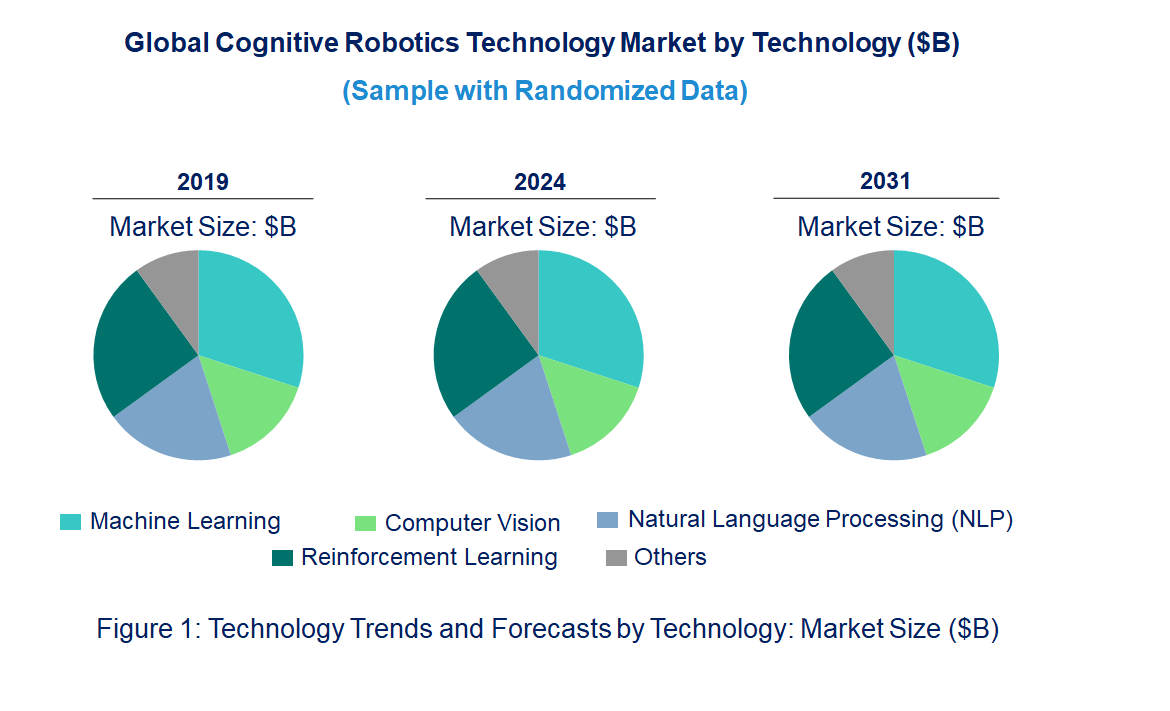
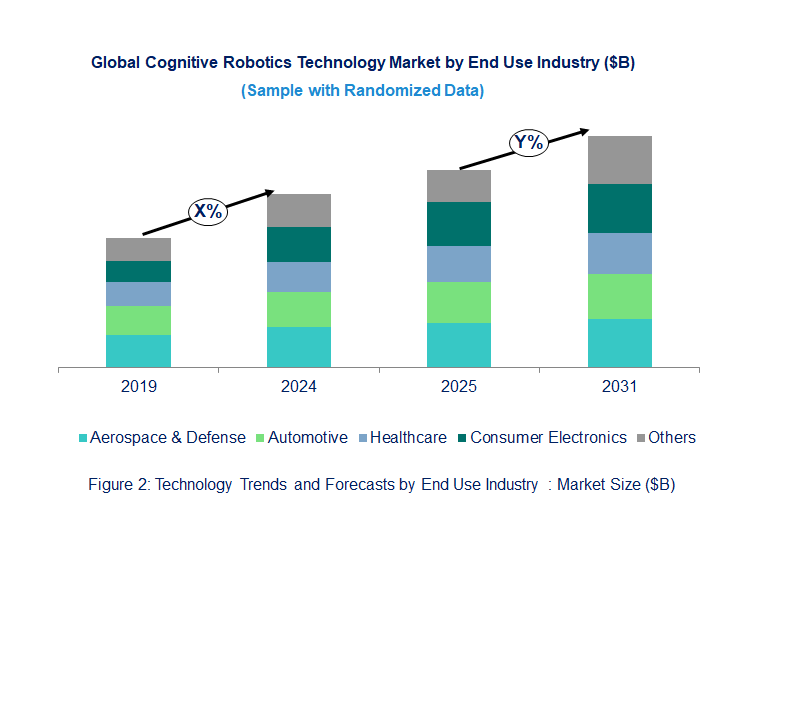
This market report covers trends, opportunities, and forecasts in the global cognitive robotics market to 2031 by technology (machine learning, computer vision, natural language processing (nlp), reinforcement learning, and others), end use (aerospace & defense, automotive, healthcare, consumer electronics, commercial, and others), and region (North America, Europe, Asia Pacific, and the Rest of the World)
We'll send your sample report shortly.
• Increased Human-Robot Collaboration: The development of robots capable of interacting seamlessly with humans is a significant trend. Cognitive robots are increasingly designed to work alongside humans in shared environments. This collaborative approach enables robots to handle repetitive, hazardous, or physically demanding tasks, while humans can focus on decision-making and more complex activities. This trend is transforming industries like manufacturing, healthcare, and customer service.
• Advances in Autonomous Decision-Making: Autonomous decision-making, driven by reinforcement learning (RL) and deep learning techniques, is making robots more independent and adaptable. Cognitive robots can learn from experience and feedback, making decisions based on real-time data without human intervention. This trend has a profound impact on industries that require robots to navigate dynamic and unpredictable environments, such as autonomous vehicles, warehouses, and logistics.
• Improved Human-Robot Interaction through NLP: Natural Language Processing (NLP) is playing a critical role in enhancing communication between humans and robots. Cognitive robots are now able to understand, process, and respond to spoken or written language, making them more intuitive to interact with. This development is revolutionizing customer service applications, such as chatbots and virtual assistants, as well as healthcare robots, where robots can communicate directly with patients.
• Edge Computing and Real-Time Processing: The integration of edge computing allows cognitive robots to process data closer to the source, reducing latency and improving real-time decision-making. This trend is particularly important for robots deployed in environments that require fast responses, such as autonomous delivery systems, drones, and robotic systems in healthcare. Edge computing enables more efficient and autonomous robots, with faster reaction times and reduced reliance on cloud-based processing.
• Enhanced Sensory and Perceptual Abilities: With advancements in sensor fusion and computer vision, cognitive robots are becoming increasingly adept at perceiving and interpreting their environment. These robots can recognize objects, detect obstacles, and navigate complex environments with precision. This trend is particularly valuable in applications such as autonomous vehicles, where robots need to make quick decisions based on visual and sensory data. These emerging trends in cognitive robotics are reshaping industries by enabling more intelligent, adaptable, and human-like robots. Through advancements in human-robot collaboration, autonomous decision-making, natural language processing, edge computing, and sensory perception, cognitive robotics is poised to revolutionize sectors like manufacturing, logistics, healthcare, and customer service, bringing robots closer to everyday applications. As these technologies continue to mature, the potential for robots to augment human capabilities and improve operational efficiency will only increase.
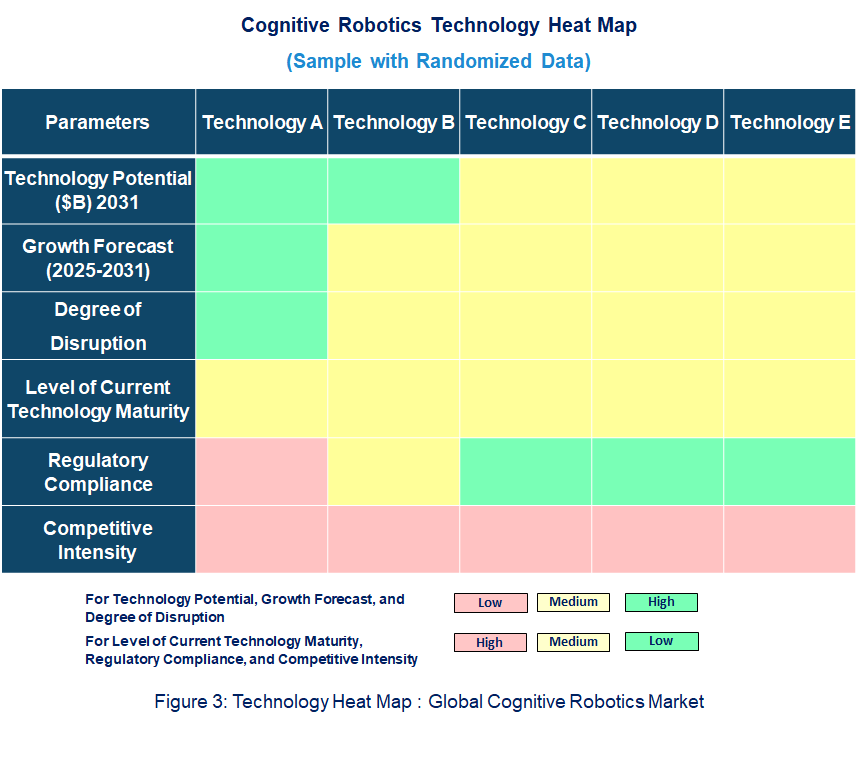
• Potential in Technology: Cognitive robotics technology holds significant potential to transform a wide range of industries by enhancing automation, decision-making, and human-robot interaction. The ability to make autonomous decisions, adapt to complex environments, and communicate with humans through natural language processing (NLP) gives cognitive robots the capacity to perform tasks traditionally handled by humans, from manufacturing to healthcare. Technologies like machine learning (ML), reinforcement learning, computer vision, and NLP are advancing rapidly, allowing robots to learn from data and experiences, making them increasingly efficient and adaptable.
• Degree of Disruption: The degree of disruption is high, as cognitive robotics can lead to increased automation, reduced human error, and enhanced productivity across industries. For example, robots can now work alongside humans in shared spaces, enhancing collaboration in fields like manufacturing, logistics, and healthcare. Cognitive robotics also has the potential to revolutionize customer service through chatbots and virtual assistants, enabling more intuitive and responsive systems.
• Current Technology Maturity Level: Current technology maturity is advancing, with many cognitive robotics solutions already in use. However, challenges remain in achieving fully autonomous, general-purpose robots capable of adapting to diverse environments and tasks.
• Regulatory Compliance: Regulatory compliance is critical, especially in industries like healthcare and autonomous vehicles, where safety, data privacy, and ethical considerations are paramount. Standards for cognitive robotics are being developed to ensure reliability and safety in real-world applications.
• Haapie SAS: Haapie SAS has developed advanced cognitive robots for healthcare and elderly assistance. Their robots are designed to understand and respond to natural human emotions, facilitating more intuitive and empathetic interactions with patients. By incorporating machine learning and AI, Haapie’s robots can adapt to individuals’ needs, enhancing patient care and support.
• KinderLab Robotics: KinderLab Robotics focuses on educational robots for children, using cognitive robotics to improve STEM learning. Their robots are programmed to teach kids about coding and computational thinking through hands-on experiences, promoting problem-solving and creativity. This development is shaping the future of education by integrating robotics and AI into early childhood development.
• Tinybots: Tinybots specializes in cognitive robots for home care, particularly for people with dementia. Their robots are designed to aid in memory care by interacting with patients, reminding them of important tasks, and engaging them in stimulating activities. This advancement is improving the quality of life for elderly individuals while providing support to caregivers.
• BKIN Technologies: BKIN Technologies is enhancing human-robot interaction by focusing on cognitive robotics that can monitor human gestures and emotions. Their robots are used for industrial and service applications, enabling more effective collaboration between humans and robots. The integration of emotion recognition capabilities into robots is revolutionizing human-robot interactions, especially in sensitive environments.
• R.U. Robots: R.U. Robots is working on cognitive robots with high-level autonomy for logistics and warehouse automation. Their robots use AI to navigate and optimize workflows, significantly improving efficiency in warehouses. These robots can learn and adapt to new tasks, making them invaluable assets for businesses looking to streamline operations. These developments highlight the diverse applications of cognitive robotics across various sectors, from healthcare and education to logistics and industrial settings. As these players continue to innovate, cognitive robotics is poised to create new efficiencies and transform industries globally.
• Advancements in AI and Machine Learning: The integration of AI and machine learning is enabling robots to make decisions autonomously, adapt to dynamic environments, and learn from experience. This technology is crucial in applications like autonomous vehicles and warehouse automation, driving innovation and growth in cognitive robotics. Its potential for high efficiency in real-time decision-making is transformative.
• Human-Robot Collaboration: As cognitive robots are designed to work alongside humans, industries like manufacturing, healthcare, and logistics are adopting these robots for tasks such as assembly, caregiving, and customer service. This collaboration improves productivity, safety, and worker efficiency, creating significant growth opportunities for the cognitive robotics market.
• Healthcare Automation: Cognitive robotics is revolutionizing healthcare by improving patient care through robots capable of interacting with patients, administering medication, and providing companionship to the elderly. The increasing demand for healthcare automation is a major driver of growth, offering robots the ability to improve the efficiency of healthcare systems globally. Challenges:
• Technological Limitations: Despite advancements, the cognitive robotics field faces limitations in developing robots that can fully replicate human-like cognition, adaptability, and emotional intelligence. These challenges slow down widespread adoption, especially in industries requiring complex decision-making and emotional interaction, such as healthcare and customer service.
• Regulatory Compliance and Safety: Cognitive robots operating in environments such as healthcare and autonomous driving face stringent safety and regulatory compliance standards. Navigating these regulations can be challenging for manufacturers, slowing the adoption of cognitive robotics in these sectors due to the need for thorough testing, certification, and ongoing oversight. The major drivers, including advancements in AI and machine learning, human-robot collaboration, and healthcare automation, are fueling the growth of the cognitive robotics market. However, technological limitations and regulatory challenges are hindering its widespread implementation. As the technology matures and regulatory frameworks evolve, these opportunities will continue to shape the cognitive robotics landscape, ultimately leading to broader adoption and integration across industries.
• Haapie SAS
• KinderLab Robotics
• Tinybots
• BKIN Technologies
• R.U. Robots
• Technology Readiness by Technology Type: Machine learning is highly mature, with applications in robotics, such as predictive maintenance and autonomous decision-making, being widely adopted. Computer vision is also well-developed, with uses in navigation, object recognition, and visual inspection in manufacturing. NLP is progressing but remains less mature, with its primary use in customer service and virtual assistants. Reinforcement learning is still in the research phase but shows great promise for optimizing robots’ decision-making in dynamic environments. These technologies are ready to enhance robot autonomy and improve human-robot interactions, with applications in industries such as manufacturing, healthcare, and logistics.
• Competitive Intensity and Regulatory Compliance: The competitive intensity in cognitive robotics is high, as multiple players in industries like healthcare, manufacturing, and logistics invest in machine learning, computer vision, NLP, and reinforcement learning. Companies are striving to create the most efficient and capable cognitive robots. However, regulatory compliance remains a challenge, especially in sectors like healthcare, autonomous driving, and security. Safety, data privacy, and ethical considerations regarding AI and machine learning are critical, and companies must navigate strict regulations to ensure their robots meet safety standards. As regulations evolve, firms must balance innovation with compliance to stay competitive.
• Disruption Potential of Different Technologies for Cognitive Robotics: Machine learning, computer vision, natural language processing (NLP), and reinforcement learning hold significant disruption potential for cognitive robotics by enabling robots to learn from data, interact naturally with humans, and adapt to complex environments. Machine learning allows robots to improve their performance autonomously, while computer vision helps them perceive and understand the environment. NLP enables robots to communicate with humans using natural language, enhancing collaboration. Reinforcement learning empowers robots to optimize decision-making based on trial and error, driving innovation in areas such as autonomous driving, healthcare, and customer service. These technologies are transforming industries by making robots more intelligent, adaptable, and capable of performing complex tasks in real-world environments.
• Machine Learning
• Computer Vision
• Natural Language Processing (NLP)
• Reinforcement Learning
• Others
• Aerospace & Defense
• Automotive
• Healthcare
• Consumer Electronics
• Commercial
• Others
• North America
• Europe
• Asia Pacific
• The Rest of the World
• Latest Developments and Innovations in the Cognitive Robotics Technologies
• Companies / Ecosystems
• Strategic Opportunities by Technology Type


Choose a license that fits your team. Instant PDF delivery.
Prices exclude taxes. Instant delivery. Custom licensing available on request.
Market Report · May 18, 2026
Market Report · May 18, 2026
Market Report · May 18, 2026
Trusted partner for strategic intelligence and business growth


Receive a complimentary market analysis tailored to your industry. Our analysts will identify key growth opportunities and competitive dynamics specific to your business.

Market size, growth rate, and key trend analysis for your specific sector.

Top competitor positioning and market share analysis.

Strategic recommendations backed by data-driven insights.
Get curated market intelligence and competitive moves straight to your inbox.
By subscribing, you agree to receive our monthly insights. Unsubscribe anytime.
Receive a complimentary market analysis tailored to your industry. Our analysts will identify key growth opportunities and competitive dynamics specific to your business.
Market size, growth rate, and key trend analysis for your specific sector.
Top competitor positioning and market share analysis.
Strategic recommendations backed by data-driven insights.
Get curated market intelligence, emerging trends, and competitive moves straight to your inbox each month.
By subscribing, you agree to receive our monthly insights. Unsubscribe anytime.
We'll send your sample report shortly.