
Market Report · July 22, 2026

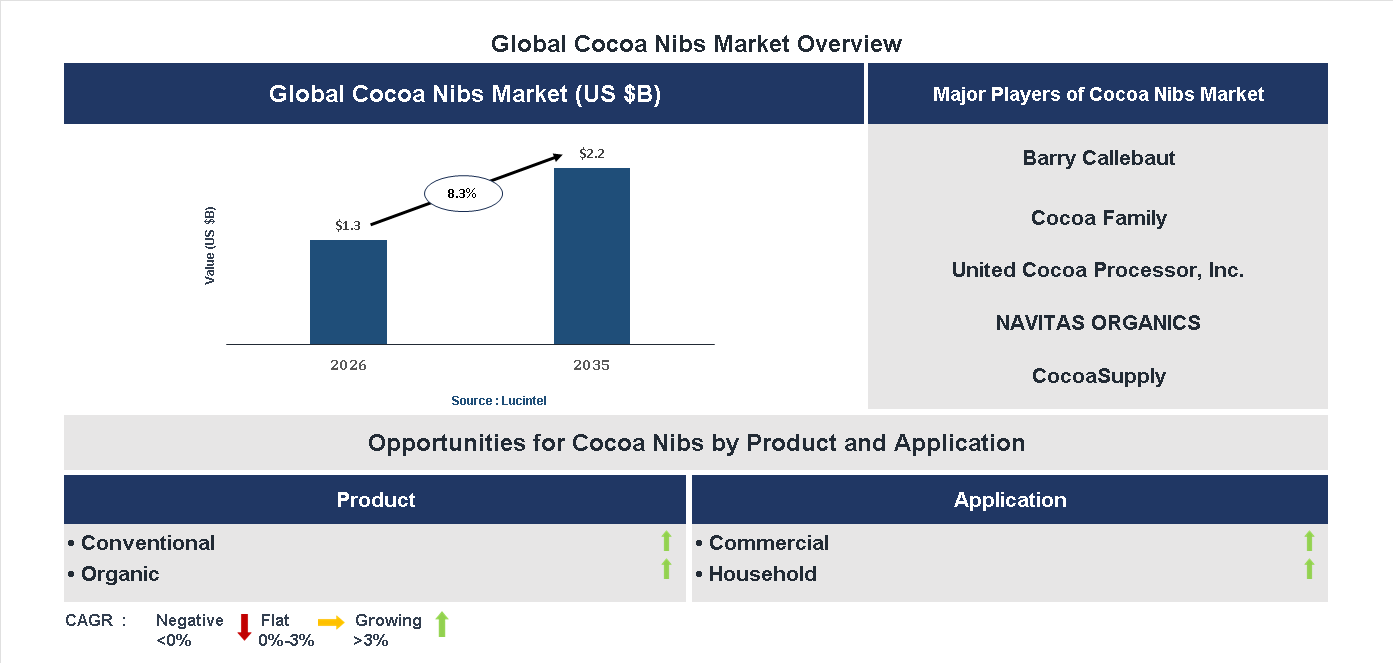
Key data points: The market size in 2035 = $2.2 billion, growth forecast = 8.3% annually for the next 8 years. Scroll below to get more insights. This market report covers trends, opportunities and forecasts in cocoa nibs market to 2035 by product (conventional and organic), application (commercial and household), and region (North America, Europe, Asia Pacific, and the Rest of the World)
We'll send your sample report shortly.
• Lucintel forecasts that, within the product category, conventional will remain a larger segment over the forecast period.
• Within the application category, commercial will remain a larger segment.
• In terms of region, North America will remain the largest region over the forecast period. Gain valuable insights for your business decisions with our comprehensive 150+ page report. Sample figures with some insights are shown below.
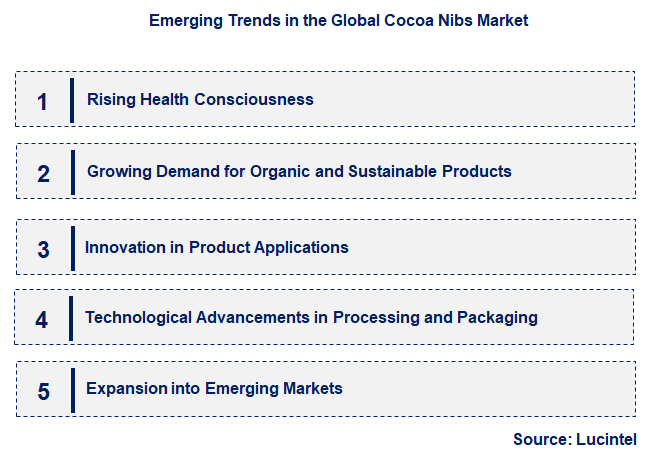
• Rising Health Consciousness: Consumers are increasingly seeking natural, minimally processed foods with health benefits. Cocoa nibs are rich in antioxidants, fiber, and healthy fats, making them attractive as a superfood ingredient. This trend encourages product innovation, such as incorporating cocoa nibs into snacks, cereals, and health supplements, boosting demand. The focus on clean-label and organic products further supports this growth, as consumers prefer transparent, health-oriented ingredients. As awareness of nutritional benefits spreads, the market is expected to expand significantly, driven by health-conscious demographics worldwide.
• Growing Demand for Organic and Sustainable Products: Sustainability and organic certification are becoming key purchasing factors. Consumers prefer cocoa nibs sourced from environmentally responsible farms with fair trade practices. This trend promotes the adoption of sustainable farming methods and organic certification processes, which can increase production costs but add value. Companies are investing in traceability and ethical sourcing to meet consumer expectations. The shift towards organic and sustainable cocoa nibs not only enhances brand reputation but also aligns with global efforts to promote environmentally friendly agriculture, thereby expanding market reach and consumer loyalty.
• Innovation in Product Applications: The versatility of cocoa nibs is leading to innovative product development across various food segments. They are increasingly incorporated into baked goods, beverages, dairy products, and snack foods. This trend is driven by consumer desire for unique, flavorful, and functional ingredients. Food manufacturers are experimenting with new formulations, such as cocoa nib-infused chocolates, energy bars, and dairy blends, to differentiate their offerings. The innovation enhances product appeal and opens new revenue streams, making cocoa nibs a staple ingredient in both mainstream and niche markets, thus broadening their application scope.
• Technological Advancements in Processing and Packaging: Advances in processing techniques improve the quality, flavor retention, and shelf life of cocoa nibs. Innovations such as improved roasting, grinding, and packaging technologies help preserve nutritional content and prevent spoilage. Enhanced packaging solutions, like vacuum sealing and modified atmosphere packaging, extend freshness and reduce contamination risks. These technological improvements increase consumer confidence and reduce waste, supporting longer distribution channels. As a result, manufacturers can offer higher-quality products, expand their market reach, and meet stringent safety standards, further fueling market growth.
• Expansion into Emerging Markets: Emerging economies in Asia, Africa, and Latin America are witnessing increased demand for cocoa products due to rising disposable incomes and changing dietary preferences. Market penetration strategies, local sourcing, and partnerships are facilitating growth in these regions. The expanding middle class and urbanization contribute to higher consumption of health foods, including cocoa nibs. This regional expansion diversifies the market and reduces dependency on traditional markets. It also encourages local production and supply chain development, fostering economic growth and creating new opportunities for global and regional players. In summary, these trends are collectively reshaping the cocoa nibs market by emphasizing health and sustainability, fostering innovation, leveraging technological advancements, and expanding geographical reach. This evolution is making the market more competitive, sustainable, and aligned with modern consumer values, ensuring continued growth and diversification in the coming years.
• Growing Consumer Preference for Natural Ingredients: The increasing demand for natural, minimally processed ingredients is boosting cocoa nibs popularity. Consumers seek healthier alternatives to artificial additives, leading to higher adoption of cocoa nibs in snacks, beverages, and health products. This trend encourages manufacturers to innovate with clean-label products, expanding market reach and driving sales. The shift towards organic and sustainably sourced cocoa nibs further enhances consumer trust and brand loyalty, supporting long-term market growth.
• Expansion of Application in Food and Beverage Industry: Cocoa nibs are increasingly incorporated into various food and beverage products, including chocolates, smoothies, cereals, and baked goods. This diversification broadens the market scope and appeals to health-conscious consumers. The unique flavor and nutritional profile of cocoa nibs add value to products, encouraging manufacturers to develop innovative offerings. As demand for functional foods rises, cocoa nibs are positioned as a key ingredient, fostering market expansion and new revenue streams.
• Rising Awareness of Health Benefits: Consumers are becoming more aware of the health benefits associated with cocoa nibs, such as antioxidants, fiber, and magnesium content. This awareness drives demand for cocoa nibs as a superfood ingredient in dietary supplements, health bars, and functional foods. The perception of cocoa nibs as a healthy alternative to processed snacks boosts their market appeal. Increased marketing efforts and scientific research further support consumer confidence, fueling sustained growth in the market.
• Technological Advancements in Processing: Innovations in processing techniques have improved the quality, shelf life, and flavor retention of cocoa nibs. These advancements enable manufacturers to produce higher-quality products with consistent flavor profiles, meeting consumer expectations. Enhanced processing also reduces waste and energy consumption, supporting sustainability goals. As technology continues to evolve, the market benefits from cost efficiencies and product innovation, strengthening competitive positioning and expanding application possibilities.
• Focus on Sustainable Sourcing and Ethical Practices: Market players are emphasizing sustainable sourcing and ethical production practices to meet consumer demand for responsible products. Certification schemes like Fair Trade and Rainforest Alliance are gaining prominence, ensuring ethical supply chains. This focus enhances brand reputation and appeals to environmentally conscious consumers. Sustainable practices also mitigate supply chain risks and promote long-term viability. As sustainability becomes a key purchasing criterion, the market is poised for growth driven by responsible sourcing initiatives. These recent developments are significantly transforming the cocoa nibs market by fostering innovation, expanding application areas, and emphasizing sustainability. Consumer preferences for natural, healthy, and ethically sourced products are driving market growth and encouraging industry players to adopt responsible practices. Technological advancements and increased awareness of health benefits further support market expansion. Overall, these opportunities are creating a more dynamic, competitive, and sustainable market landscape, promising continued growth and innovation in the cocoa nibs industry.
• Growing Demand for Natural and Organic Cocoa Nibs: Increasing consumer preference for natural, organic, and minimally processed ingredients is boosting demand for cocoa nibs. Consumers seek healthier alternatives to artificial additives, leading to a rise in organic cocoa nib products. This trend is particularly prominent in health-conscious markets, encouraging producers to adopt sustainable farming practices and organic certifications. The shift towards clean-label products is expected to expand the market, attracting new customer segments and premium pricing opportunities.
• Expansion of Cocoa Nibs in Confectionery and Snacks: The confectionery and snack industries are increasingly incorporating cocoa nibs to enhance flavor, texture, and nutritional value. Cocoa nibs add a crunchy texture and rich chocolate flavor, appealing to consumers seeking unique sensory experiences. The trend towards premium and artisanal chocolates, along with healthy snack options, is driving product innovation. Manufacturers are launching new product lines featuring cocoa nibs, which are expected to boost market growth and diversify application areas.
• Technological Advancements in Cocoa Processing: Innovations in processing technologies are improving the quality, yield, and flavor profile of cocoa nibs. Advanced roasting, grinding, and packaging techniques help preserve freshness and enhance flavor intensity. Automation and quality control systems reduce production costs and ensure consistency. These technological improvements enable producers to meet increasing demand for high-quality cocoa nibs, expand product offerings, and enter new markets, thereby supporting overall market growth.
• Rising Popularity of Artisanal and Premium Products: Consumers are increasingly seeking artisanal, craft, and premium chocolate products featuring cocoa nibs. This trend is driven by a desire for unique, high-quality, and ethically sourced ingredients. Artisanal brands emphasize transparency, sustainability, and flavor complexity, which appeals to discerning customers. The growth of specialty stores and online retail channels further promotes premium cocoa nib products. This shift towards premiumization is expected to significantly boost demand and market value.
• Increasing Use of Cocoa Nibs in Functional Foods and Beverages: The incorporation of cocoa nibs into functional foods and beverages is gaining traction due to their health benefits, including antioxidants and mood-enhancing properties. Food and beverage companies are developing products like smoothies, energy bars, and health drinks with cocoa nibs to target health-conscious consumers. This expanding application base offers new revenue streams and market segments, supporting overall growth. The trend aligns with the global focus on wellness and functional nutrition, promising sustained market expansion. The cocoa nibs market is poised for robust growth driven by consumer preferences for natural, healthy, and premium products, technological innovations, and expanding application areas. These opportunities collectively enhance market competitiveness, foster product diversification, and support sustainable development. As demand continues to rise across various sectors, strategic focus on quality, transparency, and innovation will be crucial for market players to capitalize on emerging trends and achieve long-term success.
• Technological Advancements: The development of innovative processing and extraction techniques improves the quality, flavor, and shelf life of cocoa nibs. Automation and quality control technologies streamline production, reduce costs, and ensure compliance with safety standards. These advancements enable manufacturers to meet increasing demand for high-quality, consistent products, thereby expanding market reach and consumer trust.
• Rising Health Consciousness: Consumers are increasingly seeking natural, organic, and minimally processed foods. Cocoa nibs, rich in antioxidants and nutrients, are perceived as a healthy snack option. This trend boosts demand among health-conscious demographics, encouraging product innovation and positioning cocoa nibs as a superfood, which in turn fuels market growth.
• Growing Demand for Premium and Organic Products: The shift towards premium, organic, and ethically sourced cocoa products is driven by consumers’ desire for transparency and sustainability. This demand encourages producers to adopt sustainable farming practices and obtain certifications, which can command higher prices and expand market share in niche segments.
• Expansion of the Confectionery and Snack Industries: The increasing popularity of chocolates, energy bars, and health snacks incorporating cocoa nibs is a significant growth driver. Manufacturers leverage cocoa nibs’ unique flavor and health benefits to differentiate their products, leading to increased adoption across various food categories and expanding market opportunities. The challenges in the cocoa nibs market are:
• Supply Chain Disruptions: Cocoa production is highly susceptible to climate change, pests, and geopolitical issues, which can cause fluctuations in supply. These disruptions lead to price volatility and supply shortages, impacting manufacturers’ ability to meet demand and increasing costs for consumers.
• Regulatory and Certification Barriers: Stringent food safety standards, import/export regulations, and certification requirements for organic and sustainable sourcing pose compliance challenges. Navigating these complex regulatory landscapes can increase operational costs and delay product launches, hindering market growth.
• Price Volatility and Cost Fluctuations: Fluctuations in cocoa bean prices due to weather conditions, market speculation, and demand-supply imbalances directly affect the profitability of cocoa nib producers. This volatility complicates pricing strategies and long-term planning, potentially restraining investment and innovation in the sector. In summary, the cocoa nibs market is shaped by technological innovations, health trends, and consumer preferences for premium products, which collectively drive growth. However, supply chain issues, regulatory hurdles, and price volatility present significant challenges that could hinder expansion. The interplay of these factors requires stakeholders to adopt adaptive strategies, emphasizing sustainability, quality, and resilience to sustain competitive advantage and capitalize on emerging opportunities in this evolving market landscape.
• Barry Callebaut
• Cocoa Family
• United Cocoa Processor, Inc.
• NAVITAS ORGANICS
• CocoaSupply
• Sunfood
• Viva Naturals
• NOW Foods
• urbanplatter
• BMV Cocoa
• Conventional
• Organic
• Commercial
• Household
• North America
• Europe
• Asia Pacific
• The Rest of the World
• United States: The market has seen a surge in organic and fair-trade cocoa nibs, driven by health-conscious consumers. Major brands are launching new products incorporating cocoa nibs, emphasizing sustainability and clean labels. Innovations in packaging and distribution channels, including online retail, have expanded accessibility. The U.S. also witnesses increased demand for artisanal and specialty cocoa products, boosting small-scale producers. Regulatory standards are tightening to ensure product quality and safety, fostering consumer trust.
• China: China has experienced rapid growth in cocoa nib consumption, fueled by rising disposable incomes and a growing middle class interested in premium snacks. Local manufacturers are investing in quality improvement and branding to compete globally. The market benefits from expanding retail networks and e-commerce platforms, making cocoa nibs more accessible. Additionally, health trends are encouraging consumers to explore natural superfoods, including cocoa nibs, for their antioxidant properties. Importantly, import regulations are evolving to facilitate smoother trade flows.
• Germany: Germany remains a key player in the European cocoa nib market, emphasizing organic and sustainable sourcing. Consumer preferences favor high-quality, ethically produced products, prompting companies to adopt transparent supply chains. Germany is also witnessing innovation in product formulations, such as plant-based and functional foods incorporating cocoa nibs. The country’s strict food safety standards and certifications bolster consumer confidence. Moreover, Germany’s focus on environmental sustainability influences production practices, aligning with global eco-friendly initiatives.
• India: India’s cocoa nib market is emerging, with increasing awareness of health benefits and gourmet food trends. Local farmers and producers are investing in better cultivation and processing techniques to improve quality. The growth of premium and organic segments is notable, driven by urban middle-class consumers seeking healthier snack options. E-commerce platforms are playing a vital role in expanding market reach. Government initiatives supporting agricultural diversification and export potential are also contributing to market development. The sector is poised for rapid expansion as consumer interest in superfoods grows.
• Japan: Japan’s market is characterized by a focus on premium, organic, and functional cocoa nib products. Consumers are increasingly health-conscious, seeking natural ingredients with added health benefits. Japanese companies are innovating with product applications, including confectionery, beverages, and health foods. The country’s strict quality standards and emphasis on safety ensure high product standards. Sustainability practices, such as eco-friendly sourcing and ethical production, are gaining importance. The market benefits from a well-established distribution network and a strong culture of gourmet and artisanal foods, supporting continued growth and innovation.


• Barry Callebaut
• Cocoa Family
• United Cocoa Processor, Inc.
• NAVITAS ORGANICS
• CocoaSupply
• Sunfood
• Viva Naturals
• NOW Foods
• urbanplatter
• BMV Cocoa Q6. Which cocoa nibs market segment will be the largest in future? Answer: Lucintel forecasts that, within the product category, conventional will remain a larger segment over the forecast period. Q7. In cocoa nibs market, which region is expected to be the largest in next 5 years? Answer: In terms of region, North America will remain the largest region over the forecast period. Q8. Do we receive customization in this report? Answer: Yes, Lucintel provides 10% customization without any additional cost.


Choose a license that fits your team. Instant PDF delivery.
Prices exclude taxes. Instant delivery. Custom licensing available on request.
Market Report · July 22, 2026
Market Report · July 22, 2026
Market Report · July 22, 2026
Trusted partner for strategic intelligence and business growth


Receive a complimentary market analysis tailored to your industry. Our analysts will identify key growth opportunities and competitive dynamics specific to your business.

Market size, growth rate, and key trend analysis for your specific sector.

Top competitor positioning and market share analysis.

Strategic recommendations backed by data-driven insights.
Get curated market intelligence and competitive moves straight to your inbox.
By subscribing, you agree to receive our monthly insights. Unsubscribe anytime.
Receive a complimentary market analysis tailored to your industry. Our analysts will identify key growth opportunities and competitive dynamics specific to your business.
Market size, growth rate, and key trend analysis for your specific sector.
Top competitor positioning and market share analysis.
Strategic recommendations backed by data-driven insights.
Get curated market intelligence, emerging trends, and competitive moves straight to your inbox each month.
By subscribing, you agree to receive our monthly insights. Unsubscribe anytime.
We'll send your sample report shortly.