
Report Feature
Cloud Security Gateway Market Trends and Forecast
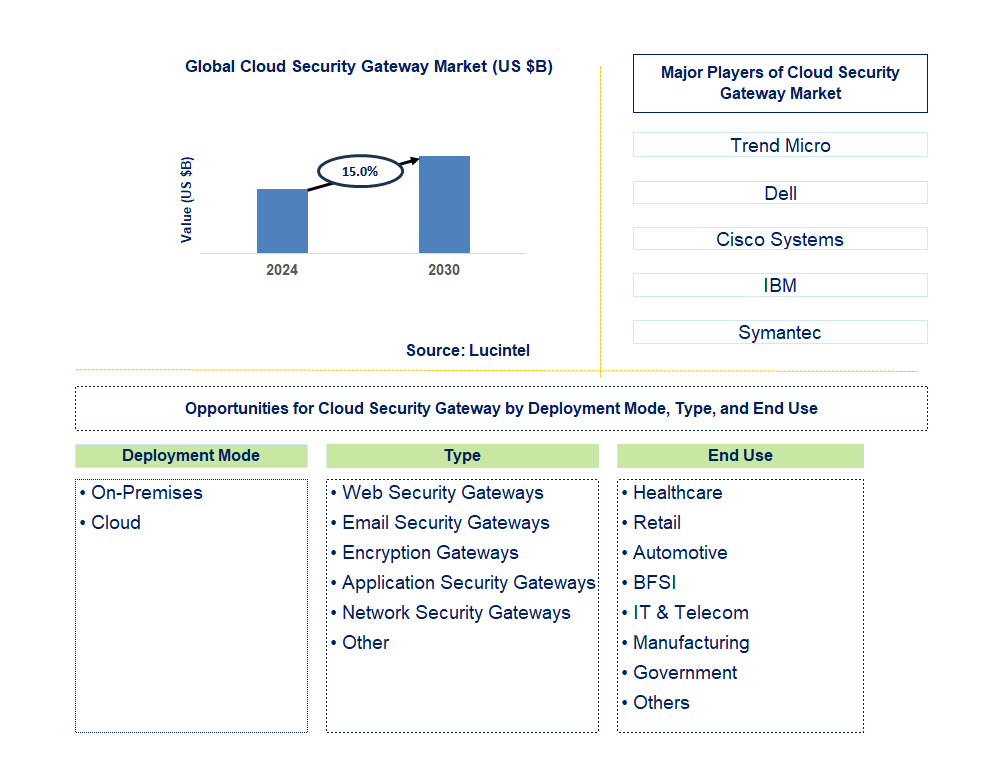
The future of the global cloud security gateway market looks promising with opportunities in the financial service, logistics, and electronic commerce markets. The global cloud security gateway market is expected to grow with a CAGR of 19.8% from 2025 to 2031. The major drivers for this market are the increasing risks from cloud-centric threats, the rising demand for secure application access, and the growing reliance on distributed cloud environments.• Lucintel forecasts that, within the type category, software system is expected to witness higher growth over the forecast period.
• Within the application category, electronic commerce is expected to witness the highest growth.
• In terms of region, APAC is expected to witness the highest growth over the forecast period. Gain valuable insights for your business decisions with our comprehensive 150+ page report. Sample figures with some insights are shown below.
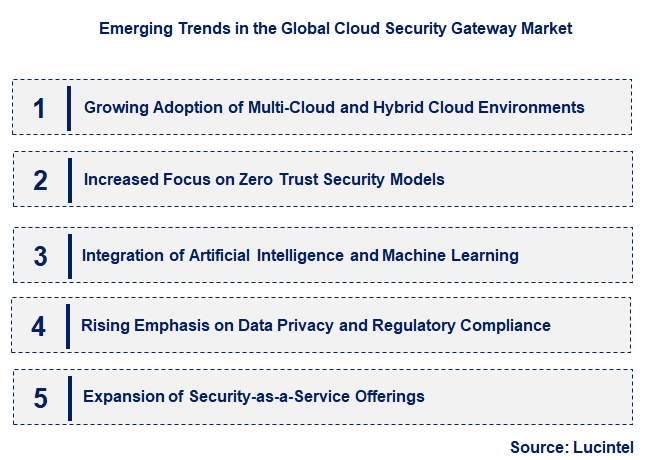
Emerging Trends in the Cloud Security Gateway Market
The cloud security gateway market is experiencing rapid evolution driven by increasing cloud adoption, rising cyber threats, and the need for robust security solutions. As organizations migrate their operations to the cloud, the demand for advanced security gateways that can protect data, ensure compliance, and provide seamless access is growing exponentially. Technological innovations, regulatory changes, and the shift towards hybrid and multi-cloud environments are shaping the landscape. These developments are not only enhancing security but also influencing market dynamics, competitive strategies, and customer expectations. Understanding these emerging trends is crucial for stakeholders aiming to capitalize on the markets growth and address evolving security challenges effectively.• Growing Adoption of Multi-Cloud and Hybrid Cloud Environments: As organizations diversify their cloud infrastructure, the need for flexible, scalable security gateways increases. Multi-cloud and hybrid setups require solutions that can seamlessly integrate across platforms, providing consistent security policies and centralized management. This trend drives vendors to develop adaptable gateways capable of supporting various cloud providers, ensuring comprehensive protection without compromising performance or compliance. The impact is a more complex security landscape that demands innovative, interoperable solutions to safeguard diverse cloud environments effectively.
• Increased Focus on Zero Trust Security Models: The shift towards Zero Trust architecture emphasizes strict identity verification and least-privilege access, reducing reliance on perimeter-based security. Cloud security gateways are evolving to incorporate Zero Trust principles, offering granular access controls, continuous monitoring, and adaptive authentication. This trend enhances security posture by minimizing attack surfaces and preventing lateral movement within networks. Organizations adopting Zero Trust models benefit from improved threat detection and response capabilities, making security gateways a critical component in implementing comprehensive, modern security strategies.
• Integration of Artificial Intelligence and Machine Learning: AI and ML are increasingly embedded into cloud security gateways to enable proactive threat detection, anomaly analysis, and automated response. These technologies facilitate real-time monitoring and predictive analytics, allowing organizations to identify and mitigate threats before they materialize. The integration of AI/ML enhances the accuracy and speed of security operations, reduces false positives, and enables adaptive security policies. This trend is transforming cloud security from reactive to proactive, significantly strengthening defenses against sophisticated cyber threats.
• Rising Emphasis on Data Privacy and Regulatory Compliance: With stricter data protection laws like GDPR and CCPA, organizations are prioritizing compliance in their security strategies. Cloud security gateways now incorporate features such as data encryption, audit trails, and compliance reporting to meet regulatory requirements. This focus ensures that data remains secure and organizations avoid penalties and reputational damage. The trend drives vendors to develop solutions that not only protect data but also facilitate compliance management, making security gateways essential tools for legal and regulatory adherence in cloud environments.
• Expansion of Security-as-a-Service (SECaaS) Offerings: The shift towards cloud-based security solutions is accelerating, with many providers offering Security-as-a-Service models. These services provide scalable, cost-effective security management, reducing the need for extensive on-premises infrastructure. SECaaS offerings include threat intelligence, incident response, and continuous monitoring, enabling organizations to access advanced security features without significant capital investment. This trend democratizes security, making it accessible to small and medium-sized enterprises, and fosters a competitive market landscape focused on flexible, cloud-native security solutions. In summary, these emerging trends are fundamentally reshaping the cloud security gateway market by promoting greater flexibility, enhanced security frameworks, and compliance capabilities. They are driving innovation, expanding market opportunities, and enabling organizations to better defend their cloud environments against evolving cyber threats. As these trends continue to develop, the market is poised for significant growth, with security solutions becoming more intelligent, integrated, and accessible.
Recent Development in the Cloud Security Gateway Market
The cloud security gateway market has experienced rapid growth driven by increasing adoption of cloud services and the rising need for robust security solutions. As organizations migrate to cloud environments, the demand for effective security gateways to protect data and ensure compliance has surged. Recent developments reflect technological advancements, strategic partnerships, and evolving regulatory landscapes, shaping the future of this market. These changes are influencing how businesses secure their cloud infrastructure, enhance operational efficiency, and address emerging cyber threats. Staying abreast of these developments is crucial for stakeholders aiming to maintain competitive advantage and ensure comprehensive cloud security.• Integration of AI and Machine Learning: Enhanced threat detection and response capabilities have been achieved through AI and ML integration, enabling real-time identification of sophisticated cyber threats and reducing false positives, thus improving overall security posture.
• Expansion of Zero Trust Architecture: Adoption of Zero Trust models has increased, emphasizing strict identity verification and least-privilege access, which significantly reduces the attack surface and enhances data protection in cloud environments.
• Strategic Partnerships and Collaborations: Major cloud providers and security vendors are forming alliances to develop integrated security solutions, facilitating seamless deployment and management of cloud security gateways, and expanding market reach.
• Regulatory Compliance and Standards: New regulations and standards, such as GDPR and CCPA, are influencing product development and deployment strategies, prompting vendors to enhance compliance features within their security gateways.
• Growth of Multi-Cloud and Hybrid Cloud Environments: The rising adoption of multi-cloud and hybrid cloud strategies has driven demand for flexible, scalable security gateways capable of managing diverse cloud platforms efficiently. These developments are collectively transforming the cloud security gateway market by improving security effectiveness, fostering innovation, and enabling organizations to confidently leverage cloud technologies. The market is becoming more dynamic, competitive, and aligned with evolving regulatory and technological landscapes, ensuring better protection and operational agility for cloud users.
Strategic Growth Opportunities in the Cloud Security Gateway Market
The cloud security gateway market is experiencing rapid expansion driven by increasing cloud adoption across industries, rising cyber threats, and the need for robust security solutions. As organizations migrate to cloud environments, the demand for advanced security gateways that protect data, ensure compliance, and enable secure access is growing. This market development is shaped by technological innovations, evolving regulatory landscapes, and the increasing complexity of cloud architectures. Key applications such as enterprise security, financial services, healthcare, retail, and government sectors are pivotal in driving growth. Identifying and capitalizing on these opportunities will be crucial for market players aiming to maintain competitive advantage and meet emerging security demands.• Enterprise Security: Enhanced Data Protection and Access Control : As enterprises adopt multi-cloud and hybrid environments, there is a significant need for comprehensive security gateways that provide centralized control, threat detection, and data encryption, ensuring secure access for remote and on-site users.
• Financial Services: Regulatory Compliance and Fraud Prevention : Financial institutions require advanced cloud security gateways to meet strict compliance standards, prevent fraud, and safeguard sensitive customer data, thereby reducing financial and reputational risks.
• Healthcare: Securing Patient Data and Ensuring Privacy : The healthcare sector demands specialized security solutions to protect electronic health records, comply with regulations like HIPAA, and enable secure sharing of data across cloud platforms, improving patient care and data integrity.
• Retail: Protecting Customer Data and Enabling Secure Transactions : Retailers leverage cloud security gateways to secure online transactions, prevent data breaches, and build customer trust, especially with the rise of e-commerce and digital payments.
• Government: Safeguarding National Security and Public Data : Governments utilize cloud security gateways to protect critical infrastructure, sensitive information, and support secure communication channels, ensuring national security and public trust. In summary, these growth opportunities across key applications are significantly shaping the cloud security gateway market by driving innovation, expanding market reach, and addressing sector-specific security challenges. As organizations increasingly rely on cloud solutions, the demand for sophisticated security gateways will continue to rise, fostering market growth and technological advancement.
Cloud Security Gateway Market Driver and Challenges
The cloud security gateway market is influenced by a variety of technological, economic, and regulatory factors that shape its growth and development. Rapid advancements in cloud computing technologies, increasing cyber threats, and evolving regulatory standards are key drivers. Additionally, the rising adoption of remote work and digital transformation initiatives further propel market expansion. However, the market also faces significant challenges such as data privacy concerns, integration complexities, and the high costs associated with deployment and maintenance. Understanding these drivers and challenges is essential for stakeholders to navigate the dynamic landscape effectively and capitalize on emerging opportunities. The factors responsible for driving the cloud security gateway market include:-• Technological Innovation: The continuous evolution of cloud computing and cybersecurity technologies fuels market growth. As organizations migrate to cloud environments, the need for advanced security solutions like cloud security gateways becomes critical. Innovations such as AI and machine learning enhance threat detection and response capabilities, making security gateways more effective and adaptive. This technological progress enables businesses to safeguard their data and applications efficiently, fostering increased adoption and expanding the market.
• Rising Cybersecurity Threats: The increasing frequency and sophistication of cyberattacks, including data breaches, malware, and ransomware, drive the demand for robust security measures. Cloud security gateways provide essential protection by monitoring and controlling data traffic, preventing unauthorized access, and ensuring compliance. As cyber threats evolve, organizations prioritize investing in comprehensive security solutions, which directly contributes to market growth and the development of more advanced security gateways.
• Growing Adoption of Cloud Services: The widespread shift towards cloud-based solutions across industries such as healthcare, finance, and retail accelerates the need for secure cloud access. Cloud security gateways facilitate secure connectivity between on-premises infrastructure and cloud environments, ensuring data integrity and confidentiality. This trend is supported by the increasing adoption of SaaS, IaaS, and PaaS platforms, which require specialized security solutions to mitigate risks associated with cloud migration.
• Regulatory Compliance and Data Privacy: Stringent regulations like GDPR, HIPAA, and CCPA compel organizations to implement effective security measures to protect sensitive data. Cloud security gateways help organizations meet compliance requirements by providing audit trails, encryption, and access controls. The increasing regulatory landscape encourages businesses to invest in security solutions that ensure data privacy and legal adherence, thereby driving market demand.
• Digital Transformation Initiatives: The global push towards digital transformation in various sectors necessitates secure cloud infrastructure. Cloud security gateways are integral to enabling digital workflows while maintaining security standards. As companies modernize their IT environments, the need for scalable, flexible, and secure cloud security solutions becomes more prominent, fueling market expansion. The challenges facing this cloud security gateway market include:-
• Data Privacy and Security Concerns: Despite the benefits, organizations remain cautious about deploying cloud security gateways due to concerns over data privacy and potential vulnerabilities. The fear of data breaches, insider threats, and loss of control over sensitive information can hinder adoption. Ensuring robust security measures and gaining stakeholder trust are ongoing challenges that impact market growth.
• Integration Complexities: Integrating cloud security gateways with existing IT infrastructure can be complex and resource-intensive. Compatibility issues, lack of standardized protocols, and the need for specialized expertise pose significant hurdles. These complexities can lead to delays, increased costs, and operational disruptions, thereby restraining market expansion.
• High Deployment and Maintenance Costs: Implementing advanced cloud security gateways often involves substantial initial investment and ongoing operational expenses. Small and medium-sized enterprises may find these costs prohibitive, limiting their ability to adopt such solutions. Cost concerns can slow down market penetration, especially in price-sensitive regions and sectors. In summary, the cloud security gateway market is driven by rapid technological advancements, increasing cyber threats, and regulatory pressures, which collectively promote growth. However, challenges such as data privacy issues, integration difficulties, and high costs pose significant barriers. The interplay of these factors will shape the market’s trajectory, requiring stakeholders to innovate and strategize effectively. Overall, the markets future hinges on balancing technological progress with addressing these critical challenges to ensure secure and scalable cloud environments.
List of Cloud Security Gateway Companies
Companies in the market compete on the basis of product quality offered. Major players in this market focus on expanding their manufacturing facilities, R&D investments, infrastructural development, and leverage integration opportunities across the value chain. With these strategies cloud security gateway companies cater increasing demand, ensure competitive effectiveness, develop innovative products & technologies, reduce production costs, and expand their customer base. Some of the cloud security gateway companies profiled in this report include-• AT&T
• Bitglass
• Check Point Software Technologies
• CipherCloud
• Cisco Systems
• Forcepoint
• Fortinet
Cloud Security Gateway Market by Segment
The study includes a forecast for the global cloud security gateway market by type, application, and region.Cloud Security Gateway Market by Type [Value from 2019 to 2031]:
• Hardware Devices
• Software System
Cloud Security Gateway Market by Application [Value from 2019 to 2031]:
• Financial Services
• Logistics
• Electronic Commerce
• Others
Cloud Security Gateway Market by Region [Value from 2019 to 2031]:
• North America
• Europe
• Asia Pacific
• The Rest of the World
Country Wise Outlook for the Cloud Security Gateway Market
The cloud security gateway market has experienced rapid growth driven by increasing cloud adoption, rising cyber threats, and the need for robust security solutions across industries. As organizations shift to cloud environments, the demand for advanced security gateways that protect data and ensure compliance has surged globally. Key players are innovating with AI-driven security features, integrating with existing infrastructure, and expanding their service offerings. This evolving landscape reflects a focus on safeguarding digital assets amid growing cyber risks, prompting countries to enhance their cybersecurity strategies and infrastructure investments to stay ahead in this competitive market.• United States: The US market has seen significant advancements with major tech firms launching AI-powered security gateways, enhancing threat detection and response capabilities. Cloud adoption continues to rise across sectors, prompting increased demand for comprehensive security solutions. Regulatory frameworks like CCPA and evolving compliance standards are influencing product development. Additionally, partnerships between cloud providers and security vendors are strengthening, fostering innovation and expanding market reach. The US remains a leader in cloud security gateway deployment, driven by enterprise needs and technological innovation.
• China: China’s market is rapidly expanding, with government initiatives promoting cloud security as part of national cybersecurity strategies. Domestic companies are developing localized security gateways tailored to regulatory requirements and unique threat landscapes. Investments in AI and machine learning are enhancing threat prevention and automation. The government’s emphasis on data sovereignty and security standards is shaping product features and deployment strategies. Chinese firms are also forming strategic alliances to boost technological capabilities and market penetration, positioning China as a key player in the global cloud security gateway landscape.
• Germany: Germany’s market emphasizes compliance with strict data protection laws like GDPR, influencing security gateway features. The adoption of cloud security solutions is driven by industries such as automotive, manufacturing, and finance, which require high security standards. German companies are focusing on integrating security gateways with existing IT infrastructure and adopting zero-trust architectures. There is a growing trend toward using AI and automation to improve threat detection. The market is characterized by a mix of local and international vendors, with a strong focus on privacy and regulatory adherence.
• India: India’s cloud security gateway market is experiencing rapid growth due to increasing cloud adoption among enterprises and government agencies. The focus is on affordable, scalable security solutions that address local regulatory requirements. Indian vendors are investing in AI and automation to enhance threat detection and response. The government’s push for digital transformation and initiatives like Digital India are fueling market expansion. Additionally, partnerships with global security firms are helping local companies improve their offerings and expand their presence in the competitive landscape.
• Japan: Japan’s market is characterized by a focus on advanced security features, including AI and machine learning, to combat sophisticated cyber threats. The adoption of cloud security gateways is driven by sectors such as finance, manufacturing, and healthcare, which demand high security standards. Japanese firms are emphasizing integration with existing security infrastructure and compliance with strict data privacy laws. The market is also witnessing increased investment in research and development to innovate security solutions. Collaboration between domestic and international vendors is common, aiming to enhance technological capabilities and meet evolving security challenges.

Features of the Global Cloud Security Gateway Market
Market Size Estimates: Cloud security gateway market size estimation in terms of value ($B). Trend and Forecast Analysis: Market trends (2019 to 2024) and forecast (2025 to 2031) by various segments and regions. Segmentation Analysis: Cloud security gateway market size by type, application, and region in terms of value ($B). Regional Analysis: Cloud security gateway market breakdown by North America, Europe, Asia Pacific, and Rest of the World. Growth Opportunities: Analysis of growth opportunities in different types, applications, and regions for the cloud security gateway market. Strategic Analysis: This includes M&A, new product development, and competitive landscape of the cloud security gateway market. Analysis of competitive intensity of the industry based on Porter’s Five Forces model.
FAQ
Q1. What is the growth forecast for cloud security gateway market? Answer: The global cloud security gateway market is expected to grow with a CAGR of 19.8% from 2025 to 2031. Q2. What are the major drivers influencing the growth of the cloud security gateway market? Answer: The major drivers for this market are the increasing risks from cloud-centric threats, the rising demand for secure application access, and the growing reliance on distributed cloud environments. Q3. What are the major segments for cloud security gateway market? Answer: The future of the cloud security gateway market looks promising with opportunities in the financial service, logistics, and electronic commerce markets. Q4. Who are the key cloud security gateway market companies? Answer: Some of the key cloud security gateway companies are as follows:• AT&T
• Bitglass
• Check Point Software Technologies
• CipherCloud
• Cisco Systems
• Forcepoint
• Fortinet Q5. Which cloud security gateway market segment will be the largest in future? Answer: Lucintel forecasts that, within the type category, software system is expected to witness higher growth over the forecast period. Q6. In cloud security gateway market, which region is expected to be the largest in next 5 years? Answer: In terms of region, APAC is expected to witness the highest growth over the forecast period. Q7. Do we receive customization in this report? Answer: Yes, Lucintel provides 10% customization without any additional cost.
Table of Contents
List of Figures
List of Tables
Methodology
- In-depth interviews of the major players in this market
- Detailed secondary research from competitors’ financial statements and published data
- Extensive searches of published works, market, and database information pertaining to industry news, company press releases, and customer intentions
- A compilation of the experiences, judgments, and insights of Lucintel’s professionals, who have analyzed and tracked this market over the years.


Buy Now
Choose a license that fits your team. Instant PDF delivery.
Prices exclude taxes. Instant delivery. Custom licensing available on request.
Key Questions
- • What are some of the most promising, high-growth opportunities for the cloud security gateway market by type (hardware devices and software system), application (financial services, logistics, electronic commerce, and others), and region (North America, Europe, Asia Pacific, and the Rest of the World)?
- • Which segments will grow at a faster pace and why?
- • Which region will grow at a faster pace and why?
- • What are the key factors affecting market dynamics? What are the key challenges and business risks in this market?
- • What are the business risks and competitive threats in this market?
- • What are the emerging trends in this market and the reasons behind them?
- • What are some of the changing demands of customers in the market?
- • What are the new developments in the market? Which companies are leading these developments?
- • Who are the major players in this market? What strategic initiatives are key players pursuing for business growth?
- • What are some of the competing products in this market and how big of a threat do they pose for loss of market share by material or product substitution?
- • What M&A activity has occurred in the last 5 years and what has its impact been on the industry? For any questions related to Cloud Security Gateway Market, Cloud Security Gateway Market Size, Cloud Security Gateway Market Growth, Cloud Security Gateway Market Analysis, Cloud Security Gateway Market Report, Cloud Security Gateway Market Share, Cloud Security Gateway Market Trends, Cloud Security Gateway Market Forecast, Cloud Security Gateway Companies, write Lucintel analyst at email: helpdesk@lucintel.com. We will be glad to get back to you soon.


