
Market Report · July 29, 2026

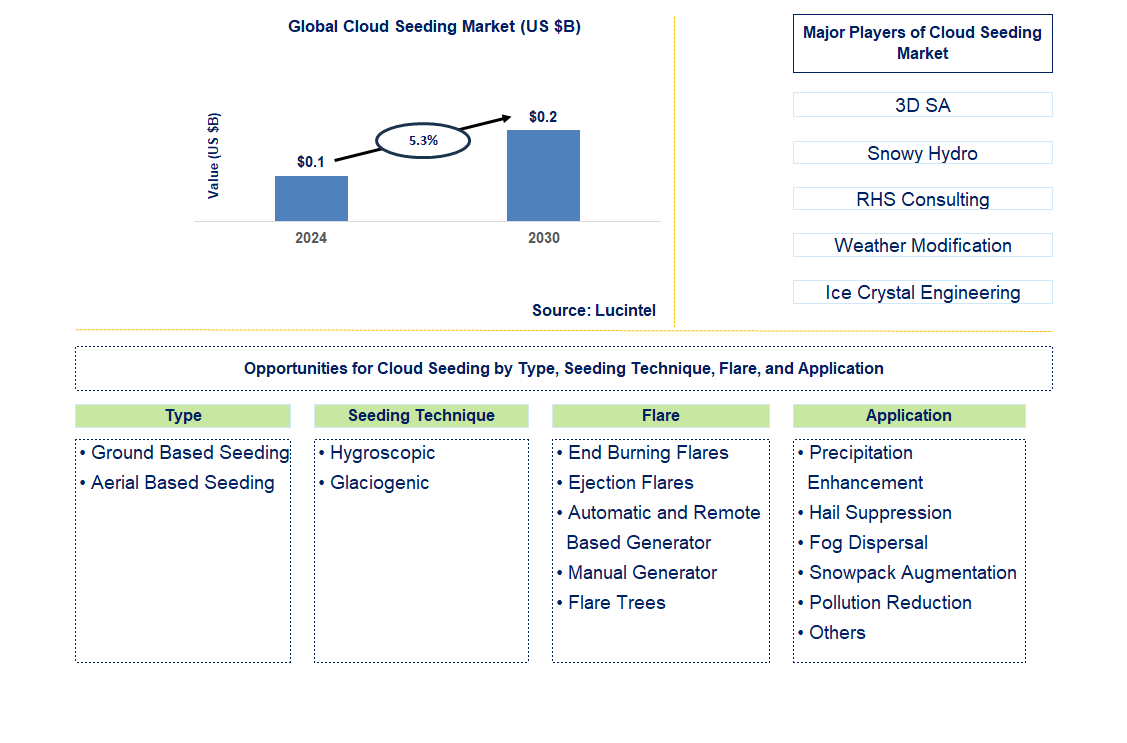
Key data points: The market size in 2030 = $0.2 billion, growth forecast = 5.3% annually for the next 6 years. Scroll below to get more insights. This market report covers trends, opportunities, and forecasts in the global cloud seeding market to 2030 by type (ground based seeding and aerial based seeding), seeding technique (hygroscopic and glaciogenic), flare (end burning flares, ejection flares, automatic and remote based generator, manual generator, and flare trees), application (precipitation enhancement, hail suppression, fog dispersal, snowpack augmentation, pollution reduction, and others), and region (North America, Europe, Asia Pacific, and the Rest of the World)
We'll send your sample report shortly.
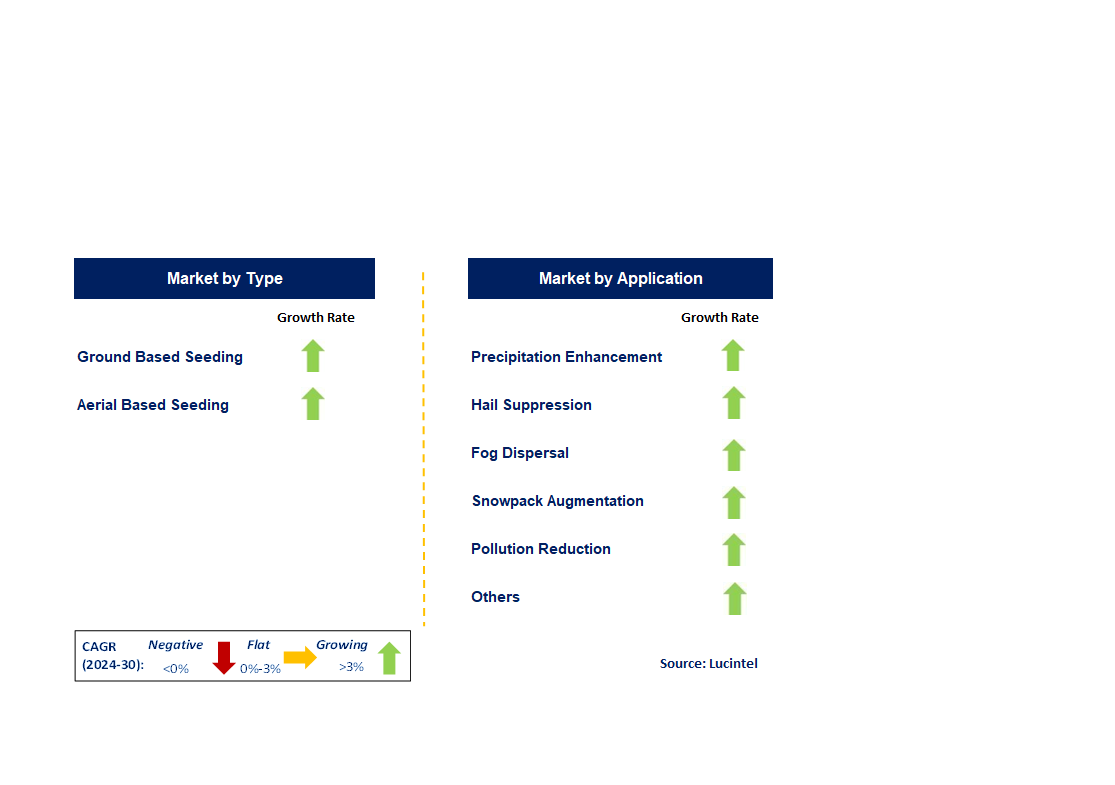
• Lucintel forecasts that, within the type category, aerial is expected to witness higher growth over the forecast period due to its growing demand among the aircraft sector to produce artificial rain and maintain water levels at a specified level in arid regions.
• Within the application category, Precipitation enhancement is expected to witness the highest growth over the forecast period.
• In terms of regions, North America is expected to witness the highest growth over the forecast period due to growing demand for cloud seeding programs for crops, supportive investment in weather modification projects, and the presence of key players in the region. Gain valuable insights for your business decisions with our comprehensive 150+ page report.
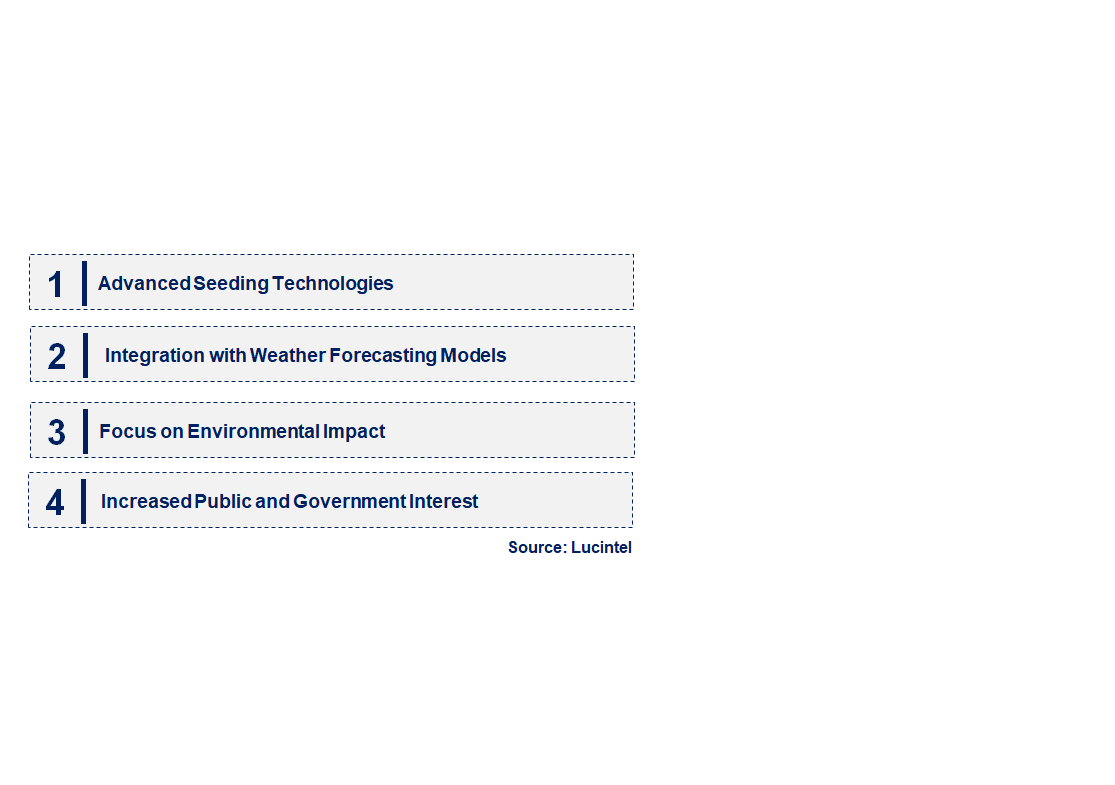
• Advanced seeding technologies: The efficiency of cloud seeding is improved by the introduction of new seeding materials and delivery systems. The use of new compounds and precise dispersal techniques have improved precipitation results while lessening environmental impact.
• Integration with weather forecasting models: Steps are being taken towards the integration of cloud seeding procedures with advanced weather forecasting models. This means that seeding could be done at a particular time or in a particular region to enhance the success of precipitation enhancement.
• Focus on environmental impact: There is a trend toward consolidating efforts to understand the effects of cloud seeding on the environment. This includes the analysis of the potential long-term impact of cloud seeding on ecosystems, water bodies, and even local weather patterns.
• Increased public and government interest: Increased investment by governments and public agencies, particularly toward the use of cloud seeding as one of the climate adaptation options, is increasing interest and allocating more funds to research on managing water problems and droughts. The growing trends are changing cloud seeding markets by promoting new technologies, integrating them into forecasting models, ameliorating the environmental impact, growing interest, and encouraging global cooperation. They help enhance the practice of cloud seeding in more effective and less aggressive ways.
• Improved seeding materials: The efficient use of new seeding agents and related materials will promote better precipitation efficiency and protect the environment. These also include enhanced cloud nucleating substances.
• Enhanced delivery systems: New delivery system innovations, such as better aircraft and ground-based dispersal methods, are enhancing the precision of cloud seeding operations.
• Use of satellite information: It has become common practice to supplement ground seeding with satellite data to help monitor and orient cloud seeding missions. This reduces uncertainty in predicting the efficacy of seeding and helps evaluate its effectiveness.
• More money for research: There is an increase in support for studies focusing on cloud seeding technology and its effects on the environment. An increased input of this kind is resulting in the completion of expanded investigations and general improvements in practices. The overriding effect of these developments is advancing cloud seeding through better materials and delivery systems, blending with space information, growing funding for studies, and changing frameworks. They help in practicing regulated and improved methods of cloud seeding.
• Drought management: Cloud seeding has huge applications in arid areas to increase rainfall, helping in drought management. This application can contribute to ensuring sufficient water supplies and promoting agricultural practices.
• Urban water supply enhancement: Where there is a challenge of water supply in urban areas, cloud seeding can help improve the water sources. This application is especially pertinent for metropolitan centers that are either on the brink of water shortages regularly or are experiencing increasing populations.
• Climate change adaptation: Managing precipitation patterns as a result of weather modification can also be incorporated as a move to adapt to climate change. This also includes making more water available or combating extreme weather events.
• Agricultural support: Cloud seeding can help farmers by inducing rainfall during critical growth periods. These growth opportunities also demonstrate the capability of cloud seeding for drought management, urban water supply, climate change mitigation, agricultural support, and disaster management. They illustrate the versatility of the technology and its application in water and climate issues.
• Technological advancements: Enhancements in particles constituting the seeding materials, mechanisms used for their delivery, and models predicting weather, have continued to appreciate the effectiveness and efficiency of cloud seeding.
• Increasing water scarcity: As water scarcity and drought concerns rise, the possibilities of cloud seeding as an effective method of increasing precipitation and water management rise as well.
• Government support and funding: Due to rising government support and funding for the research and development of cloud seeding technologies, market expansion and innovations are said to be on an upsurge.
• Climate change impact: Adoption of cloud seeding as part of management for extreme weather events and climate change is a necessity brought about by changing climatic conditions.
• International collaboration: International cooperation is enabling the sharing of ideas, technologies, and approaches, which encourages advancements in cloud seeding standardization. Challenges in the cloud seeding market include:
• Environmental and ecological concerns: Issues exist regarding the lasting effects of cloud seeding on the environment and ecosystems. It is critical to ensure that cloud seeding operations do not interfere with ecological systems.
• Regulatory and policy issues: While the legal regime for cloud seeding is changing, different rules exist in each region. For operators, it may be quite cumbersome to adhere to these regulatory requirements during their activities. Factors such as technological advances, water shortages, government encouragement, climate change mitigation and prevention, and global cooperation are the impetus behind the expansion of the cloud seeding market. However, there are issues in terms of pollution, statutory constraints, and the validity of cloud seeding practices. All these factors combined impact the functioning and development of the respective market.
• 3D SA
• Snowy Hydro
• RHS Consulting
• Weather Modification
• Ice Crystal Engineering
• North American Weather Consultants
• AFJets
• Mettech
• SEEDING OPERATIONS and ATMOSPHERIC RESEARCH
• Cloud Seeding Technologies
• Ground Based Seeding
• Aerial Based Seeding
• Hygroscopic
• Glaciogenic
• End Burning Flares
• Ejection Flares
• Automatic and Remote Based Generator
• Manual Generator
• Flare Trees
• Precipitation Enhancement
• Hail Suppression
• Fog Dispersal
• Snowpack Augmentation
• Pollution Reduction
• Others
• North America
• Europe
• Asia Pacific
• The Rest of the World
• United States: This trend has continued, and new research and technological advances are bringing new cloud seeding methods in the United States. In states like California and Texas, there is a commitment to developing more sophisticated seeding methods for drought management and water deficiency solutions. More sophisticated systems, such as enhanced radar and satellite technology, are also improving targeting and efficacy. They are adopting strategies to conduct environmental impact studies on future projects.
• China: China has been aggressive in implementing cloud seeding and employing it extensively, particularly in regions prone to scarcity and metropolitan areas like Beijing. The nation is also investing heavily in cloud seeding technology and building infrastructure to fight air pollution and improve water resources. State projects in China tend to be the focus and involve cloud orbital and geographical acts with environmental departments.
• Germany: The government of Germany, in response to climate change impacts and their effects on the people’s welfare, is looking toward cloud seeding technology to provide relief. In recent years, new alternatives, such as scientific investigations into the benefits and consequences of cloud seeding, have brought university-directorate cooperation into the picture. It emphasizes the application of cloud seeding in conjunction with other climate engineering approaches and adheres to the statutory laws of the European Union.
• Indian: In India, as part of some pilot projects addressing local water deficit and aiming at enhancing the reliability of monsoon rains, cloud seeding is being tested. Indian scientists have also made attempts to work with international specialists in cloud seeding to distribute knowledge on regional techniques for seeding. Indian political leadership is examining the operational aspects and cost-benefit analysis of this water strategy, along with other ways of influencing weather within the water strategy and climate change challenges.
• Japan: Japan has incorporated cloud seeding technology while planning for the management of catastrophes and water resources. Recent trends include the outreach of seeding strategies to increase precipitation associated with dry spells and the threat of typhoons. Japanese sources are developing solutions for seeding devices to reduce the environmental impacts of seeding after certain periods.


• 3D SA
• Snowy Hydro
• RHS Consulting
• Weather Modification
• Ice Crystal Engineering
• North American Weather Consultants
• AFJets
• Mettech
• SEEDING OPERATIONS and ATMOSPHERIC RESEARCH
• Cloud Seeding Technologies Q6. Which cloud seeding market segment will be the largest in future? Answer: Lucintel forecasts that aerial is expected to witness higher growth over the forecast period due to its growing demand among aircraft sector to produce artificial rain and maintain water levels at a specified level in arid regions. Q7. In cloud seeding market, which region is expected to be the largest in next 5 years? Answer: North America is expected to witness the highest growth over the forecast period due to growing demand for cloud seeding programs for crops, supportive investment in weather modification projects, and presence of key players in the region. Q.8 Do we receive customization in this report? Answer: Yes, Lucintel provides 10% customization without any additional cost.


Choose a license that fits your team. Instant PDF delivery.
Prices exclude taxes. Instant delivery. Custom licensing available on request.
Market Report · July 29, 2026
Market Report · July 20, 2026
Market Report · July 20, 2026
Trusted partner for strategic intelligence and business growth


Receive a complimentary market analysis tailored to your industry. Our analysts will identify key growth opportunities and competitive dynamics specific to your business.

Market size, growth rate, and key trend analysis for your specific sector.

Top competitor positioning and market share analysis.

Strategic recommendations backed by data-driven insights.
Get curated market intelligence and competitive moves straight to your inbox.
By subscribing, you agree to receive our monthly insights. Unsubscribe anytime.
Receive a complimentary market analysis tailored to your industry. Our analysts will identify key growth opportunities and competitive dynamics specific to your business.
Market size, growth rate, and key trend analysis for your specific sector.
Top competitor positioning and market share analysis.
Strategic recommendations backed by data-driven insights.
Get curated market intelligence, emerging trends, and competitive moves straight to your inbox each month.
By subscribing, you agree to receive our monthly insights. Unsubscribe anytime.
We'll send your sample report shortly.