
Market Report · May 18, 2026

This market report covers trends, opportunities, and forecasts in the global civil combustible gas detector market to 2031 by technology (catalytic combustion, infrared, electrochemical sensor, photoionization detector (pid), and others), application (family, commercial, hospital, educational institution, and others), and region (North America, Europe, Asia Pacific, and the Rest of the World)
We'll send your sample report shortly.
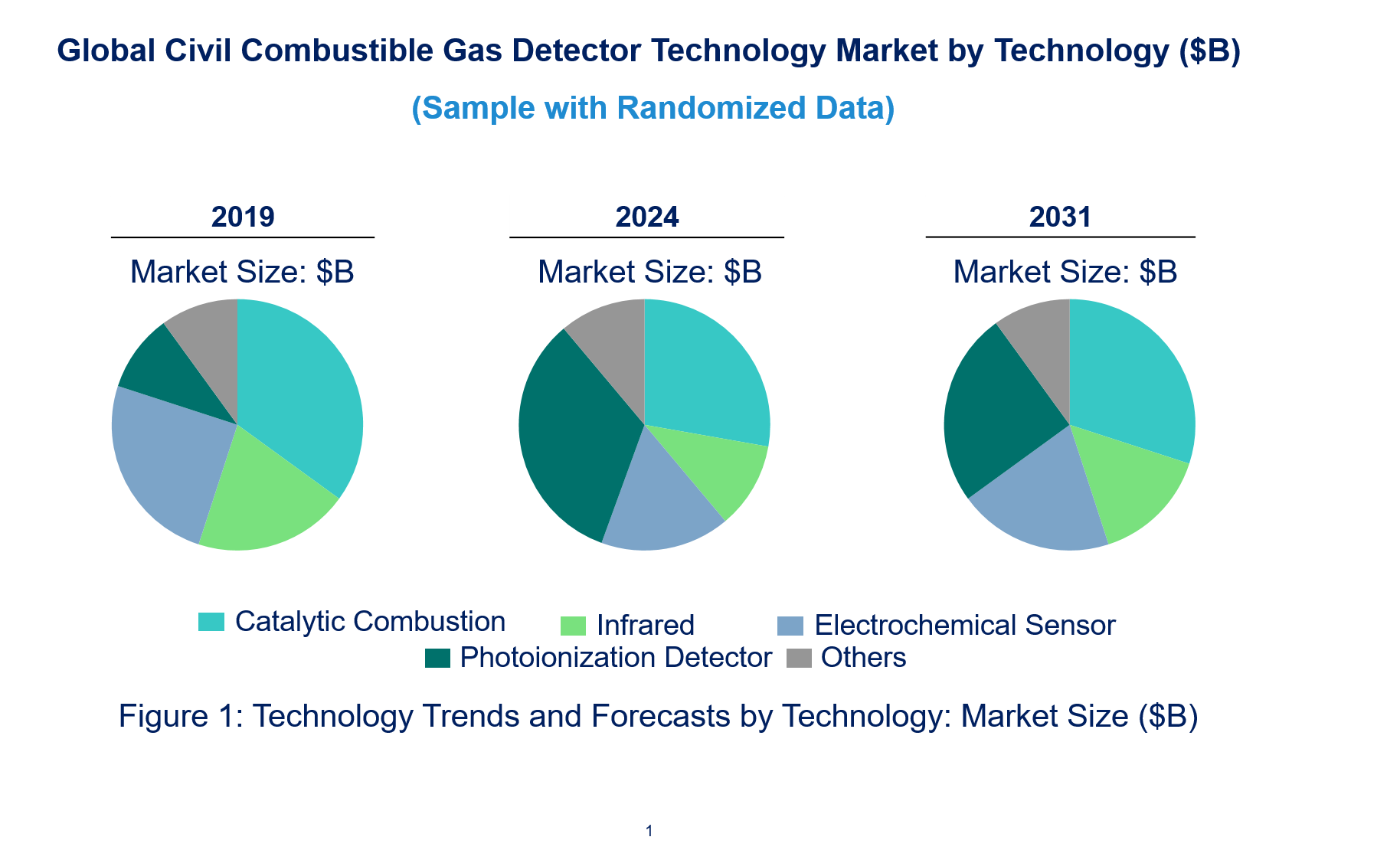
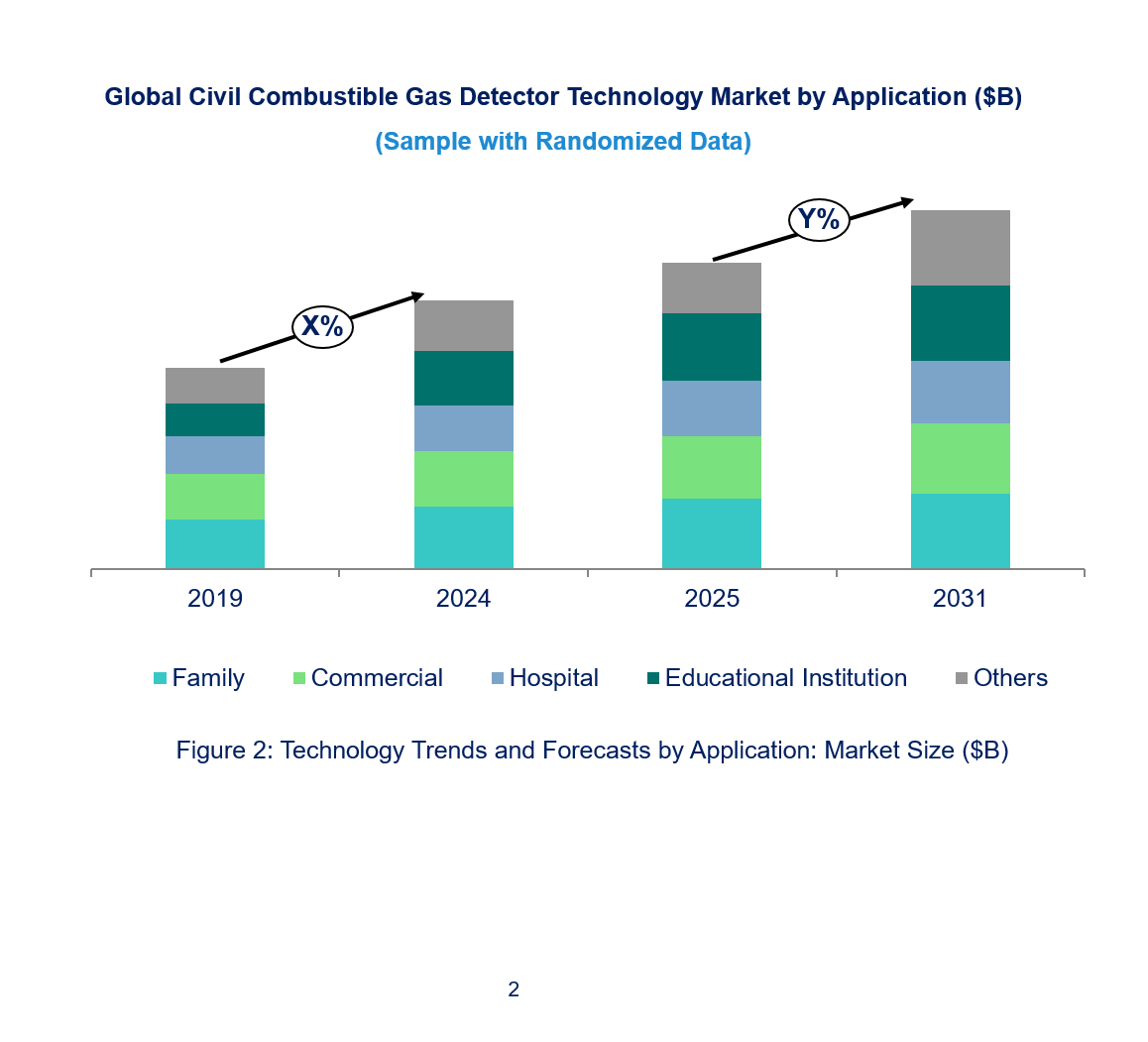
• Integration with IoT and Smart Systems: With IoT-enabled sensors integrated into the gas detectors, users can monitor in real-time, remotely diagnose faults in systems, and receive alerts via a mobile application or cloud-based system, thereby enhancing safety levels.
• Utilization of Cutting-Edge Sensor Technologies: Infrared and PID sensors are gaining preference because they can detect more gases with greater precision and fewer false alarms compared to traditional catalytic combustion devices. Miniaturization of devices, particularly portable, lightweight units designed for personal protection in hazardous environments, is also gaining attention.
• Rising Interest in Multi-Gas Detection: Multi-gas detectors are gaining popularity as they allow the detection of several combustible and toxic gases simultaneously, improving operational efficiency and cost-effectiveness.
• Increasing Significance of Compliance with Regulatory Standards: Strict safety standards in residential, commercial, and industrial sectors are driving demand for certified gas detectors to maintain international safety standards. These trends are enhancing the functionality, reliability, and accessibility of gas detection systems and are contributing to safer environments across various applications.
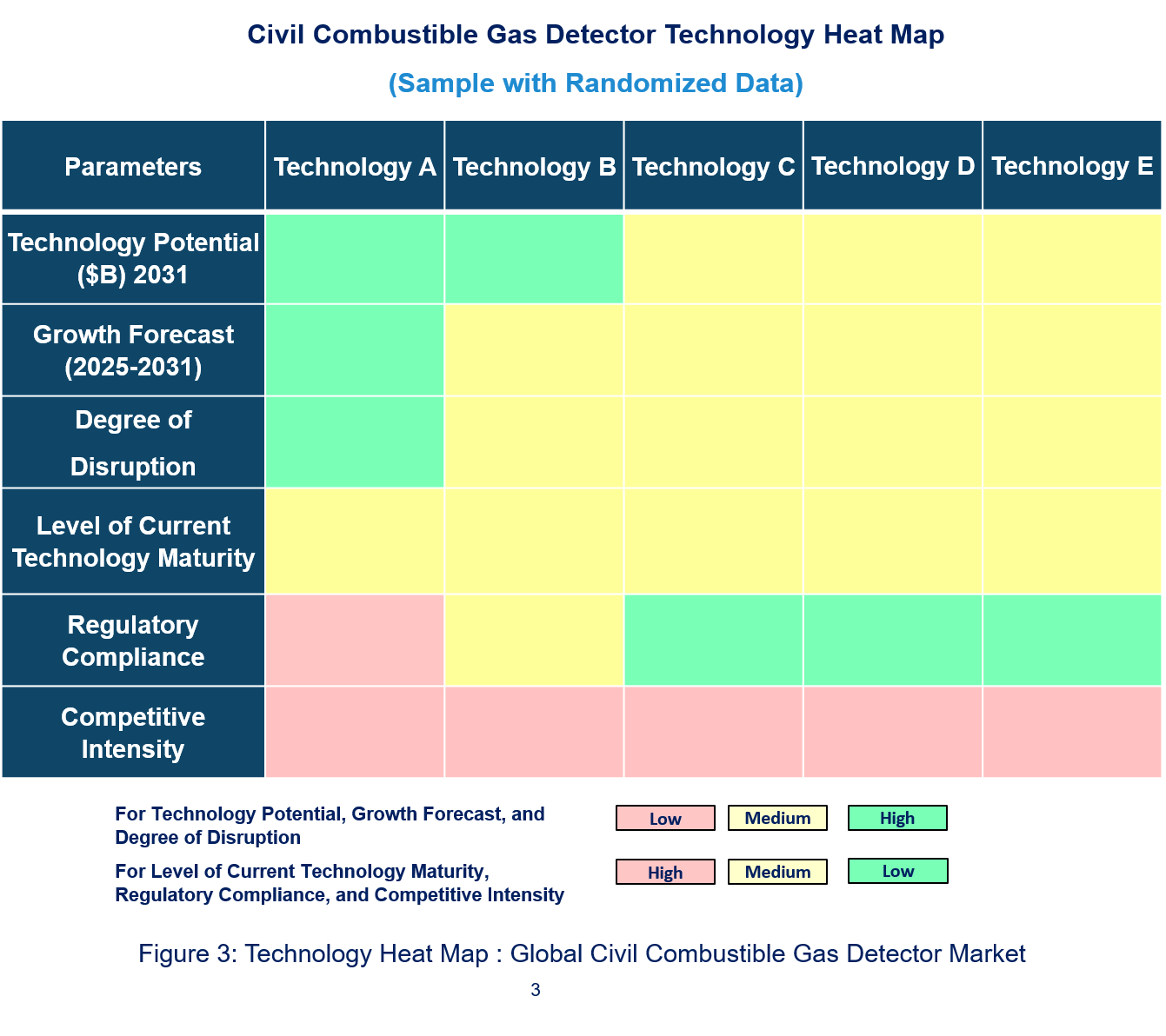
• Potential in Technology: This market has high technology potential, driven by innovations in catalytic combustion, infrared, electrochemical sensors, and photoionization detectors (PID), all of which can detect gases accurately. Further innovation is provided through AI integration and IoT connectivity, enabling capabilities such as real-time monitoring and predictive maintenance.
• Degree of Disruption: Advanced gas detectors significantly disrupt traditional safety systems by offering better accuracy and efficiency. Infrared and electrochemical sensors are revolutionizing the market by reducing false alarms and expanding detection ranges. These advancements enable cost reduction and greater operational efficiency, making gas detectors essential in all applications.
• Current Technology Maturity Level : Most technologies are in a mature stage, widely adopted in commercial and educational institutions. However, ongoing R&D continues to refine sensor sensitivity, battery efficiency, and miniaturization, ensuring sustained innovation.
• Regulatory Compliance: Strict global regulations, such as ISO 10156 and OSHA standards, drive technological compliance, ensuring safety and reliability. Compliance remains a critical factor in market penetration and adoption. The civil combustible gas detector market exhibits a rich interplay between innovation, maturity, and compliance, making it a critical component of global safety solutions.
• Honeywell: Honeywell recently introduced a next-generation gas detector with IoT connectivity, providing real-time data sharing and predictive maintenance capabilities, thus enhancing safety in commercial applications.
• Klein Tools: Klein Tools introduced a robust, portable gas detector with an emphasis on ergonomic design and ease of use for technicians in residential and commercial environments.
• New Cosmos Electric: The company expanded its product range by incorporating infrared sensor technology to improve detection accuracy for methane and other combustible gases.
• RIDGID Tools: RIDGID Tools developed a rugged gas detector with a multi-gas detection feature, responding to the growing demand for versatile devices in industrial settings and hospitals.
• Macurco: Macurco focused on customization by developing modular gas detection systems that can be seamlessly integrated into existing safety frameworks. These changes highlight a strong emphasis on innovation, customer-centric solutions, and strict adherence to regulatory standards, driving growth in the market.
• Rising Safety Needs: Incidents of gas leakage are increasing in residential and commercial sectors, leading to a higher demand for modern gas detection systems to ensure occupant safety.
• Technological Advancements: Innovations in sensor technologies, such as infrared and PID, improve detection sensitivity and broaden the scope of applications.
• Strict Safety Regulations: Governments and regulatory authorities impose strict safety regulations that require businesses and households to install certified gas detectors.
• Increasing Urbanization and Adoption of Smart Homes: Growing urbanization and the widespread adoption of smart home technologies have led to increased demand for modern, networked gas detection systems. Challenges in the civil combustible gas detector market include:
• High Installation Costs: The advanced technologies used in modern gas detectors make them expensive and not easily deployable in mass markets that are price-sensitive.
• False Alarms and Sensor Reliability Issues: The reliability of gas detectors remains a challenge, as false alarms can quickly lead to distrust among users and reduce operational efficiency.
• Integration Complexity: Integrating gas detectors into existing infrastructure or IoT systems presents a significant barrier for small-scale users. The interplay of drivers and challenges is shaping the market dynamics, with growth opportunities driven by innovation and regulatory compliance, despite certain adoption barriers.
• Honeywell
• Klein Tools
• New Cosmos Electric
• Ridgid Tools
• Macurco
• Technology Readiness by Technology Type: Catalytic combustion and electrochemical sensors are mature and ready for residential and commercial markets. Infrared sensors are ready for high-accuracy, premium applications, and PIDs focus on VOC detection. Emerging technologies are in the pilot stage, with multi-gas sensing capabilities. Catalytic and electrochemical sensors dominate cost-sensitive markets, while infrared and PIDs serve niche markets. Regulatory compliance ensures technology readiness, aligning with the growing IoT and smart city trends. Each technology is designed to cater to specific market demands, creating dynamic competition.
• Competitive Intensity and Regulatory Compliance: The civil combustible gas detector market is competitive, with catalytic combustion leading in affordability and infrared sensors targeting premium markets. Electrochemical sensors are growing in low-power, portable applications, while PIDs are essential for VOC detection. Regulatory compliance is crucial, with standards like ATEX and IECEx ensuring product safety. The entry of new technologies faces challenges due to these regulations, pushing companies to balance cost, innovation, and certification. The rise of IoT-enabled solutions intensifies competition while enhancing trust through safety standards.
• Disruption Potential by Technology Type: Catalytic combustion offers cost-effectiveness for residential and industrial use, while infrared sensors provide a high level of sensitivity and durability in commercial applications. Electrochemical sensors excel in detecting low concentrations of toxic gases, while photoionization detectors (PIDs) represent the gold standard for VOC detection. Emerging technologies, such as nanotechnology-based sensors, are driving miniaturization and multi-gas detection. Integration with IoT and AI enhances real-time monitoring, pushing operational efficiency. Competitive pricing, reliability, and adaptability of each technology define their market penetration, with regulatory support amplifying disruption potential.
• Catalytic Combustion
• Infrared
• Electrochemical Sensor
• Photoionization Detector (PID)
• Others
• Family
• Commercial
• Hospital
• Educational Institution
• Others
• North America
• Europe
• Asia Pacific
• The Rest of the World
• Latest Developments and Innovations in the Civil Combustible Gas Detector Technologies
• Companies / Ecosystems
• Strategic Opportunities by Technology Type




Choose a license that fits your team. Instant PDF delivery.
Prices exclude taxes. Instant delivery. Custom licensing available on request.
Market Report · May 18, 2026
Market Report · May 18, 2026
Market Report · May 18, 2026
Trusted partner for strategic intelligence and business growth


Receive a complimentary market analysis tailored to your industry. Our analysts will identify key growth opportunities and competitive dynamics specific to your business.

Market size, growth rate, and key trend analysis for your specific sector.

Top competitor positioning and market share analysis.

Strategic recommendations backed by data-driven insights.
Get curated market intelligence and competitive moves straight to your inbox.
By subscribing, you agree to receive our monthly insights. Unsubscribe anytime.
Receive a complimentary market analysis tailored to your industry. Our analysts will identify key growth opportunities and competitive dynamics specific to your business.
Market size, growth rate, and key trend analysis for your specific sector.
Top competitor positioning and market share analysis.
Strategic recommendations backed by data-driven insights.
Get curated market intelligence, emerging trends, and competitive moves straight to your inbox each month.
By subscribing, you agree to receive our monthly insights. Unsubscribe anytime.
We'll send your sample report shortly.