
Market Report · July 31, 2026

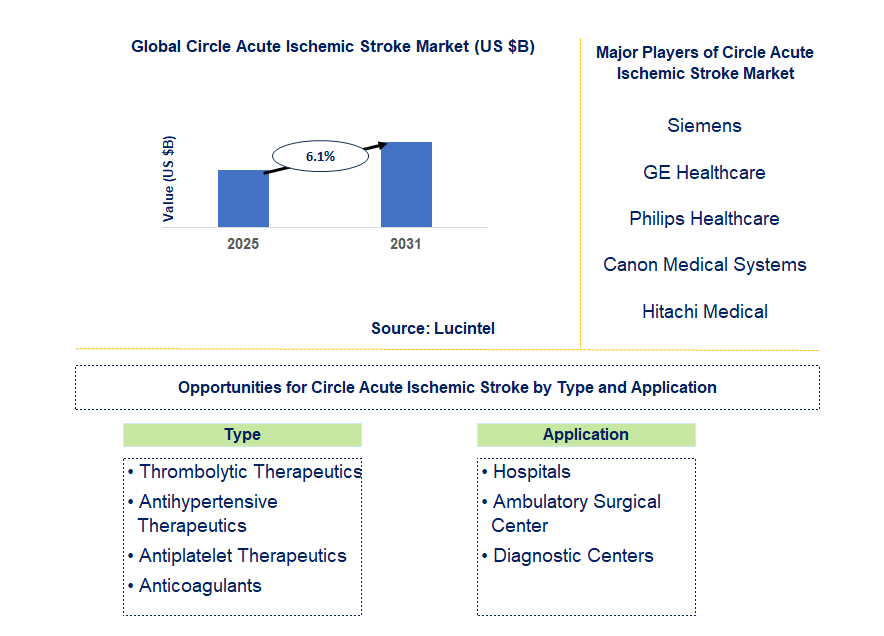
Key data points: The growth forecast = 6.1% annually for the next 7 years. Scroll below to get more insights. This market report covers Trends, opportunities and forecasts in circle acute ischemic stroke market to 2031 by type (thrombolytic therapeutics, antihypertensive therapeutics, antiplatelet therapeutics, and anticoagulants), application (hospitals, ambulatory surgical center, and diagnostic centers), and region (North America, Europe, Asia Pacific, and the Rest of the World)
We'll send your sample report shortly.
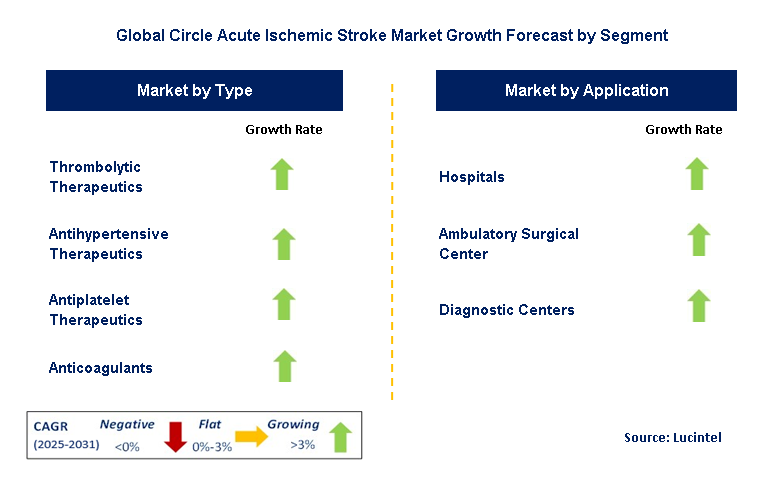
• Lucintel forecasts that, within the type category, antihypertensive therapeutic is expected to witness the highest growth over the forecast period.
• Within the application category, hospital is expected to witness the highest growth.
• In terms of region, North America is expected to witness the highest growth over the forecast period.
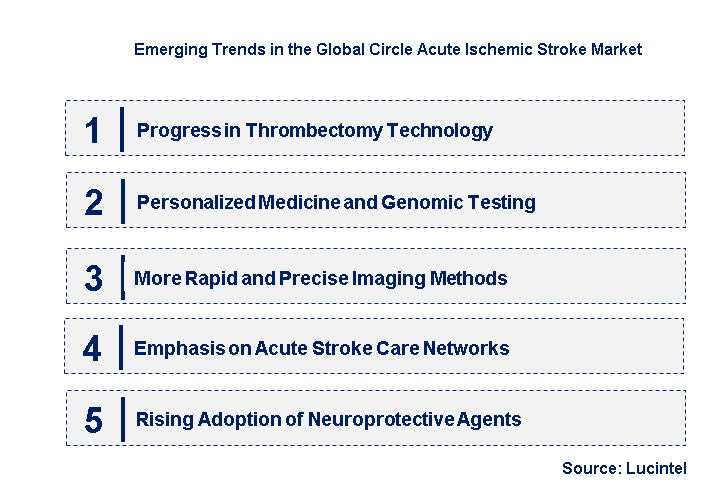
• Progress in Thrombectomy Technology: Thrombectomy equipment, which is employed to remove blood clots in the course of acute ischemic stroke, has been evolving at a high rate technologically. These equipment are increasingly efficient and user-friendly, facilitating faster interventions and better patient outcomes. Their increasing usage in emergency facilities has profoundly affected the circle acute ischemic stroke market, decreasing the likelihood of long-term disability and increasing the rates of recovery.
• Personalized Medicine and Genomic Testing: Personalized medicine, and particularly genomic testing, is transforming the treatment of stroke by isolating patients who would respond more favorably to certain therapies. With growing understanding of genetic and environmental determinants, therapy becomes more and more individualized, and thus better results are achieved. This tendency is increasing the effectiveness of ischemic stroke therapies, such as the application of tPA and thrombectomy, and is poised to propel the growth of the market.
• More Rapid and Precise Imaging Methods: Advances in imaging technologies such as fast CT and MRI scans are enhancing the speed and precision of ischemic stroke diagnosis. The technology helps physicians to rapidly determine the extent of brain injury, allowing for quicker decision-making in treatment. Consequently, early intervention has improved patient outcomes and increased the need for advanced imaging methods in the management of stroke.
• Emphasis on Acute Stroke Care Networks: Development of acute stroke care networks is now a dominant trend in regions with high rates of stroke. These networks intend to streamline the care of patients by having patients rapidly transferred to centers capable of managing ischemic strokes, with many having thrombectomy capabilities as well. This trend is enhancing outcomes through decreased treatment times and is poised to further increase the market as more areas establish such systems.
• Rising Adoption of Neuroprotective Agents: Neuroprotective agents are being investigated as an adjunct to existing ischemic stroke therapies. These medications will protect brain cells from injury after a stroke and reduce long-term disability. Research on their effectiveness is underway, and as clinical trials continue to yield encouraging findings, neuroprotective agents are poised to be a part of the circle acute ischemic stroke market, bringing a new aspect to stroke treatment. Trends like development in thrombectomy technology, growth in personalized medicine, increased imaging speed, expansion of acute stroke care networks, and growth in the adoption of neuroprotective agents are transforming the circle acute ischemic stroke market. Such trends help improve treatment outcomes and increase access to new therapies, setting the stage for the market to grow further.
• Thrombectomy Device Innovation: Thrombectomy devices have improved greatly, and newer devices provide faster clot extraction and improved overall efficacy. The devices have become essential in the treatment of acute ischemic stroke as they can be utilized to remove blood clots physically from occluded brain arteries. Their innovation has transformed the treatment of strokes, enabling faster and more effective interventions that have significantly affected the market.
• Growth of tPA Utilization: Tissue plasminogen activator (tPA), a thrombolytic drug, is still a staple of acute ischemic stroke management. New guidelines and developments in the application of the drug have widened its application window and maximized its efficiency. With increased adoption of the new guidelines across hospitals, utilization of tPA will grow further, boosting market growth and better patient outcomes, provided it is administered promptly.
• Progress in Acute Stroke Care Protocols: As a result of increased emphasis on stroke care, acute ischemic stroke management has been introduced with new protocols and guidelines for treatment across most countries. These protocols prioritize early intervention, the administration of tPA and thrombectomy, and increased integration of the stroke care system. As protocols become routine procedures, they are enhancing the efficacy and timeliness of stroke treatment, directly benefiting market growth.
• Stroke Network Implementation: The implementation of stroke networks, especially in large nations, is enhancing the quality of care delivered to ischemic stroke patients. The networks bring hospitals and emergency response teams together to provide proper care to the patients in a timely manner. The implementation of these networks has greatly enhanced treatment times, leading to improved recovery rates and the growth of the market for acute ischemic stroke care.
• Neuroprotective Drug Development: Increased research into neuroprotective drugs for stroke patients has created new avenues in treatment. These medications are intended to minimize brain damage after ischemic strokes and enhance recovery potential. Although still in the research stage, their potential addition to stroke treatment protocols could greatly improve patient outcomes, increasing the circle acute ischemic stroke market in the next few years. Major developments, such as technological progress in thrombectomy devices, increased utilization of tPA, establishment of acute stroke care networks, and possible introduction of neuroprotective medication, are revolutionizing the circle acute ischemic stroke market. These developments are enhancing treatment success and driving market growth through increased efficiency of ischemic stroke interventions.
• Early Diagnosis and Quick Intervention: Early diagnosis and quick intervention are essential in the treatment of acute ischemic stroke. With healthcare systems all over the world placing greater importance on quicker diagnostic tools and interventions, chances to increase the use of advanced imaging technologies and AI-based diagnostic equipment will keep rising. This is a key opportunity for minimizing delays in treatment and enhancing patient outcomes.
• Expansion of Minimally Invasive Procedures and Thrombectomy: Minimally invasive procedures, including thrombectomy, are becoming increasingly popular because they have proven effective for the treatment of ischemic stroke. An expansion of access to these procedures, especially in countries with poorly developed healthcare infrastructure, is a great opportunity for market expansion. The need for thrombectomy devices and specialists who can perform them will grow accordingly.
• Development of Neuroprotective Drugs: Neuroprotective drug research presents a promising growth prospect, given that such drugs may well restrict brain injury during and following stroke. As clinical trials are ongoing, approval and application of neuroprotective drugs would supplement current therapies, broadening the repertoire of ischemic stroke therapies.
• Stroke Rehabilitation Solutions: Rehabilitation after a stroke is a critical part of stroke recovery, and the need for new rehabilitation therapies is on the rise. Providing advanced rehabilitation solutions, including robotic systems, virtual reality, and AI-driven therapies, offers a major market growth opportunity. These technologies are enhancing recovery outcomes and lowering long-term disability.
• Emerging Markets and Expansion of Healthcare Infrastructure: The development of healthcare infrastructure in emerging markets such as India, China, and regions of Africa provides tremendous growth prospects. With these countries facing a rise in the number of stroke cases, demand for successful treatments, diagnostic equipment, and rehabilitation services will increase, propelling the growth of the market in these regions. Strategic growth prospects in early diagnosis, thrombectomy, neuroprotective medication, stroke rehabilitation, and emerging markets will propel the circle acute ischemic stroke market forward. These prospects will further enhance patient outcomes and increase the accessibility and effectiveness of stroke care worldwide.
• Siemens
• GE Healthcare
• Philips Healthcare
• Canon Medical Systems
• Hitachi Medical
• Fujifilm
• iSchemaView
• VIZ-AI
• Brainomix
• Olea
• Thrombolytic Therapeutics
• Antihypertensive Therapeutics
• Antiplatelet Therapeutics
• Anticoagulants
• Hospitals
• Ambulatory Surgical Center
• Diagnostic Centers
• North America
• Europe
• Asia Pacific
• The Rest of the World
• United States: In the US, the circle acute ischemic stroke market has witnessed considerable progress in treatment protocols and technology. Approval and extensive use of thrombectomy devices, as well as growing use of tissue plasminogen activator (tPA) for early intervention, have been the key milestones. In addition, there has been increased investment in personalized medicine, such as genetic testing to determine stroke risk and tailor treatment strategies. Moreover, healthcare policies have emphasized enhanced response times and stroke care centers, which have led to improved patient outcomes. These advances place the U.S. in a position of leadership in terms of innovative methods of ischemic stroke management.
• China: In China, recent trends in the circle acute ischemic stroke market have been driven by both the increasing incidence of stroke and significant healthcare infrastructure developments. With an increasing emphasis on prevention and management of stroke, China has witnessed a surge in the use of cutting-edge diagnostic imaging technologies such as CT and MRI for identifying ischemic strokes. Besides, application of thrombectomy devices is also on the rise in general hospitals, aided by government initiatives to enhance acute care. Investigation of the specific genetic markers of Chinese stroke patients also provides the possibility of more individualized treatment methods, which will be the force behind market growth.
• Germany: Germany continues to lead the way in ischemic stroke treatment innovation, especially acute treatment and rehabilitation. Germany has established state-of-the-art stroke units within hospitals, which are outfitted with advanced thrombectomy devices and thrombolytic treatments. Furthermore, Germany is placing emphasis on enhancing the timeliness of treatment provision through enhanced stroke network coordination. There are also ongoing clinical trials that explore new treatment approaches and post-stroke treatment, further developing the market. Adoption of advanced stroke imaging technologies for quicker diagnosis is also a major driver of better outcomes and more efficient management of ischemic stroke patients.
• India: India has seen incremental enhancements in the circle acute ischemic stroke market, with increased access to sophisticated treatments and technologies. The rising incidence of stroke due to lifestyle factors has led the Indian government to invest in stroke care centers. There has been a significant trend towards enhancing early diagnosis and intervention, with increased hospitals using tPA and thrombectomy devices. But disparities in access to healthcare, especially in rural settings, create obstacles. In spite of these challenges, research and public health initiatives continue to raise awareness and enhance care for stroke patients nationwide.
• Japan: Japan has significantly improved in the circle acute ischemic stroke market, with developments in treatment and rehabilitation. Application of thrombectomy in acute ischemic stroke is becoming increasingly prevalent in large hospitals, and Japan too is experiencing advancements in imaging technology for quick diagnosis. The aging population of the country has increased the demand for effective stroke management, and Japan is accepting novel therapies, such as neuroprotective agents and individualized treatment strategies. Research into the causes of stroke in relation to genetic and environmental factors is leading the way to more individualized therapies, driving the growth of the market.


• Siemens
• GE Healthcare
• Philips Healthcare
• Canon Medical Systems
• Hitachi Medical
• Fujifilm
• iSchemaView
• VIZ-AI
• Brainomix
• Olea Q5. Which circle acute ischemic stroke market segment will be the largest in future? Answer: Lucintel forecasts that, within the type category, antihypertensive therapeutic is expected to witness the highest growth over the forecast period. Q6. In circle acute ischemic stroke market, which region is expected to be the largest in next 5 years? Answer: In terms of region, North America is expected to witness the highest growth over the forecast period. Q7. Do we receive customization in this report? Answer: Yes, Lucintel provides 10% customization without any additional cost.


Choose a license that fits your team. Instant PDF delivery.
Prices exclude taxes. Instant delivery. Custom licensing available on request.
Market Report · July 31, 2026
Market Report · July 31, 2026
Market Report · July 31, 2026
Trusted partner for strategic intelligence and business growth


Receive a complimentary market analysis tailored to your industry. Our analysts will identify key growth opportunities and competitive dynamics specific to your business.

Market size, growth rate, and key trend analysis for your specific sector.

Top competitor positioning and market share analysis.

Strategic recommendations backed by data-driven insights.
Get curated market intelligence and competitive moves straight to your inbox.
By subscribing, you agree to receive our monthly insights. Unsubscribe anytime.
Receive a complimentary market analysis tailored to your industry. Our analysts will identify key growth opportunities and competitive dynamics specific to your business.
Market size, growth rate, and key trend analysis for your specific sector.
Top competitor positioning and market share analysis.
Strategic recommendations backed by data-driven insights.
Get curated market intelligence, emerging trends, and competitive moves straight to your inbox each month.
By subscribing, you agree to receive our monthly insights. Unsubscribe anytime.
We'll send your sample report shortly.