
Market Report · May 18, 2026

This market report covers trends, opportunities, and forecasts in the global chiral synthesis service market to 2031 by technology (asymmetric hydrogenation, enzyme-catalyzed synthesis, chiral pool synthesis, catalytic asymmetric synthesis, and others), end use industry (pharmaceutical companies, chemical companies, research institutes, and others), and region (North America, Europe, Asia Pacific, and the Rest of the World)
We'll send your sample report shortly.
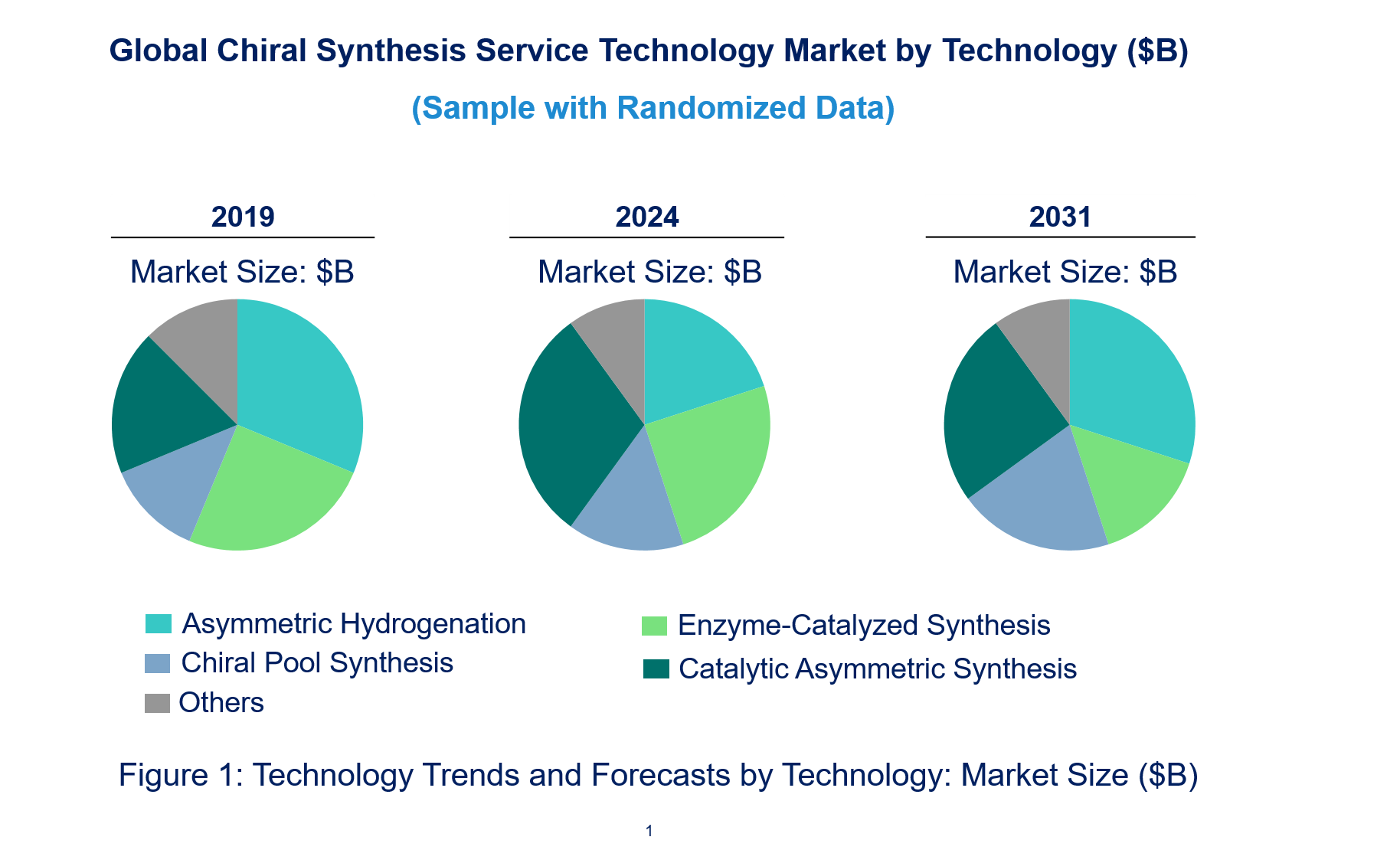
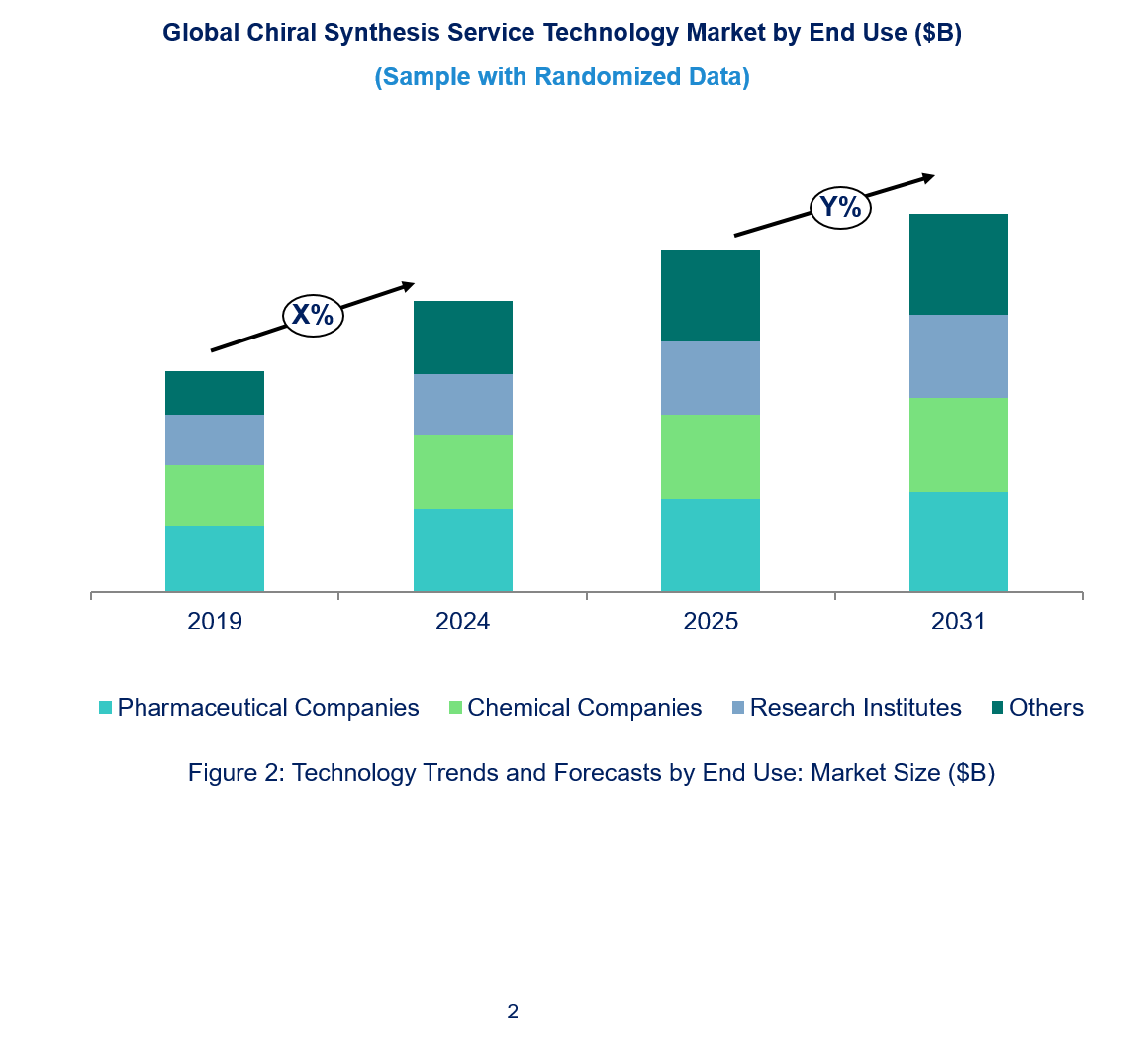
• Green Chemistry Trends: The trend toward sustainability continues, with companies increasingly adopting environmentally friendly processes like enzyme-catalyzed synthesis and catalytic asymmetric Synthesis to reduce waste and minimize hazardous chemical use.
• AI is incorporated in the synthesis to optimize reaction conditions, predict yields, and find new catalysts, especially in asymmetric hydrogenation and catalytic asymmetric synthesis, to enhance efficiency in cost-effective synthesis.
• Growing Demand for Pharmaceuticals: The pharmaceutical industry’s need for enantiomerically pure compounds is increasing. As a result, methods like enzyme-catalyzed synthesis and chiral pool synthesis are being used more frequently to meet the demand for high-quality drugs.
• Biocatalysis Trend: There is increasing market interest in high selectivity with mild reaction conditions and a virtually non-toxic environmental impact due to enzymic catalysis in the synthesis process. This allows manufacturers to meet the high-quality drug demand for chiral molecules.
• Advances in Automation: The continuous increase in the automation of chiral synthesis processes, mainly in catalytic asymmetric synthesis and asymmetric hydrogenation, leads to cost reductions, improved process efficiency, faster production time, and enhanced scalability. These technology trends are transforming the chiral synthesis service market, ensuring improved sustainability, scalability, and efficiency in chiral compound production through growing interest in sustainability and automation.
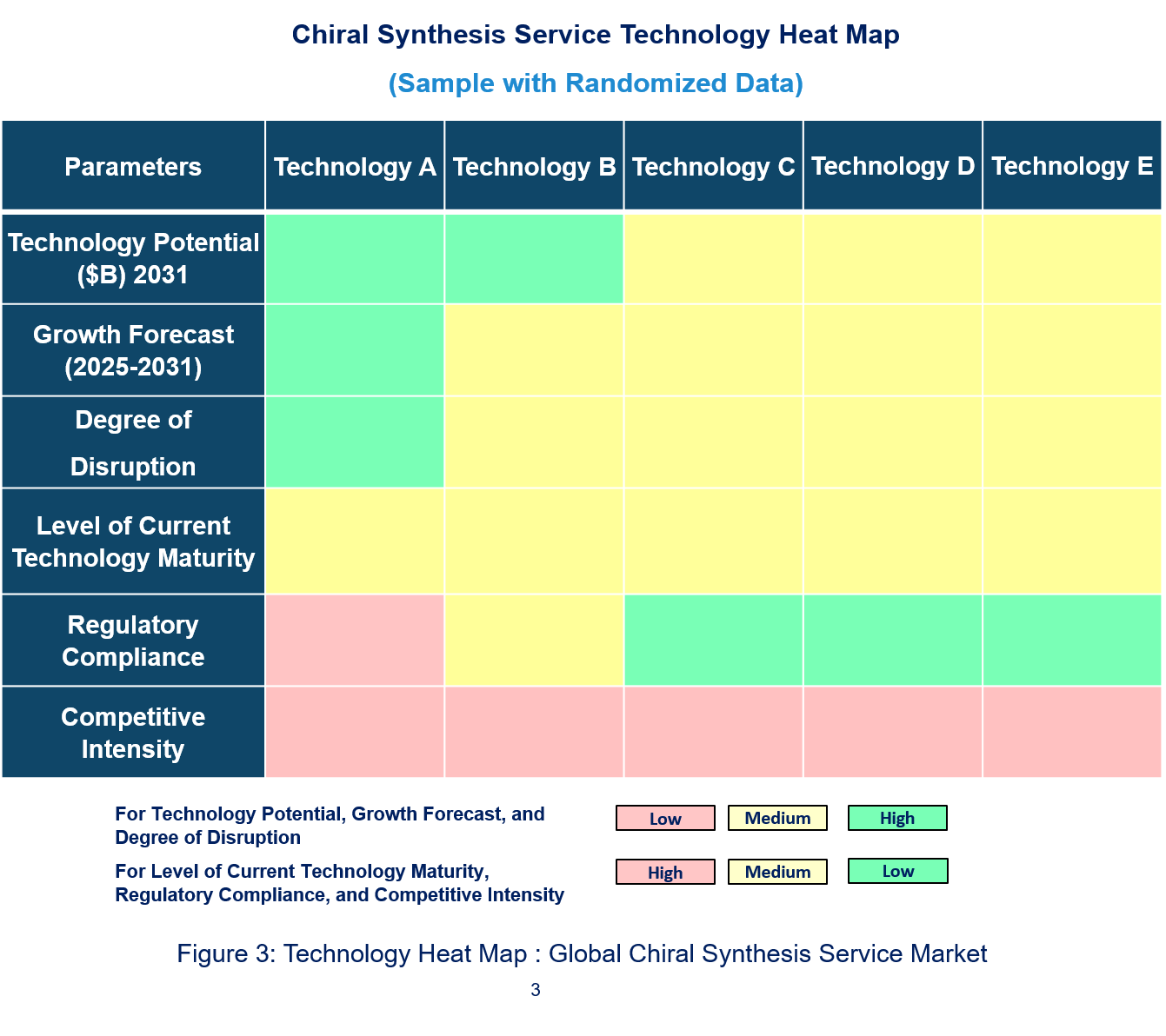
• Potential in Technology: Chiral synthesis holds significant potential, particularly in drug development, where specific enantiomers can improve efficacy and reduce side effects. With advancements in asymmetric catalysis and biocatalysis, the technology promises to expand its application in sustainable and cost-effective chemical manufacturing.
• Degree of Disruption: The degree of disruption in the chiral synthesis service market is moderate. While it significantly impacts industries like pharmaceuticals and agrochemicals, its widespread adoption is limited by high costs and technical challenges in scaling production.
• Current Technology Maturity Level: Chiral synthesis technology is moderately mature. While methods like asymmetric hydrogenation, enzymatic processes, and chiral chromatography are well-established, ongoing research is improving their efficiency and scalability.
• Regulatory Compliance: Regulatory compliance is crucial, especially in pharmaceuticals, as the production of chiral compounds must adhere to stringent standards set by agencies like the FDA and EMA to ensure safety and efficacy. Chiral synthesis technology has promising potential but requires overcoming technical and regulatory challenges to achieve wider adoption.
• Chiral Technologies Inc.: Chiral Technologies has been improving its capabilities in Asymmetric Hydrogenation and Catalytic Asymmetric Synthesis, allowing clients to synthesize complex chiral compounds with high yields. Their continued investment in cutting-edge technologies helps pharmaceutical companies produce drugs with high enantiomeric purity.
• Solvias AG: With a strong focus on Enzyme-Catalyzed Synthesis, Solvias has maintained a high rank in the chiral synthesis market. This synthesis has seen wide application in pharmaceutical and chemical industries for producing eco-friendly and efficient synthesis with low byproducts.
• Johnson Matthey Plc: Johnson Matthey has been improving its catalytic processes, focusing especially on Catalytic Asymmetric Synthesis. Their new catalysts facilitate more selective reactions and have proven indispensable in manufacturing complex chiral compounds for the pharmaceutical industry.
• BASF SE: BASF has extended its chiral synthesis service offerings by including Chiral Pool Synthesis methods in combination with Asymmetric Hydrogenation to offer customers a broader range of synthetic options for pharmaceutical and chemical applications.
• Strem Chemicals Inc.: Strem Chemicals continues expanding its product portfolio based on researchers’ needs through raw materials and reagents supporting Catalytic Asymmetric Synthesis and Enzyme-Catalyzed Synthesis, assisting researchers in obtaining high-purity chiral compounds in less time.
• Chiral Quest: Chiral Quest has developed advanced chiral catalysts that are driving the performance of Asymmetric Hydrogenation processes. This innovation enables the company to offer a more scalable and sustainable solution for the synthesis of chiral intermediates.
• Daicel Corporation: Daicel has been working on the development of highly efficient Enzyme-Catalyzed Synthesis processes, which have been widely applied in the pharmaceutical industry for the production of chiral pharmaceuticals and fine chemicals.
• Chiral Solutions: Chiral Solutions has aggressively expanded its services in Catalytic Asymmetric Synthesis, offering cost-effective and high-yield solutions to a wide range of industries, especially pharmaceuticals and fine chemicals.
• Alfa Aesar: Alfa Aesar has expanded its portfolio of chiral reagents and catalysts. This has advanced work in Catalytic Asymmetric Synthesis and Enzyme-Catalyzed Synthesis, enabling clients to obtain maximum selectivity and purity of the chiral product. Such developments are driving the chiral synthesis service market towards greater efficiency, sustainability, and scalability, particularly in sectors like pharmaceuticals and fine chemicals.
• Higher Demand for Enantiomerically Pure Compounds: Rising demand in pharmaceuticals and agrochemicals for compounds at the highest purities necessitates the integration of advanced catalytic processes, primarily Asymmetric Synthesis, and enzymes.
• Advances in Biocatalysis: Enzyme-catalyzed synthesis is supported by advancements in biocatalysis, which provide greener and more cost-effective alternatives compared to traditional chemical synthesis approaches, enhancing sustainability in production processes.
• Pressure from Regulations Toward Environment-Friendly Practices: Increased demands for sustainable and environmentally friendly solutions through regulations push companies to adopt Chiral Pool Synthesis and Catalytic Asymmetric Synthesis to minimize by-products.
• Expanding Pharmaceutical and Chemical Industries: The pharmaceutical and chemical industries are expanding rapidly, requiring more efficient solutions for chiral synthesis. Asymmetric Hydrogenation is being embraced to meet the demand for chiral intermediates and active pharmaceutical ingredients. Challenges in the chiral synthesis service market include:
• High Cost of Technology Adoption: Adopting advanced technologies such as Catalytic Asymmetric Synthesis and Asymmetric Hydrogenation can be expensive, posing a challenge for smaller players in the market and limiting their ability to compete effectively.
• Complexity in Scaling Production: Scaling up chiral synthesis processes, especially with biocatalysis or Enzyme-Catalyzed Synthesis, can be complex and challenging, requiring significant investment in infrastructure and specialized expertise.
• Availability of Raw Materials: Raw materials for processes such as Catalytic Asymmetric Synthesis and Chiral Pool Synthesis, though of high quality, may be limited. This issue can impact market growth and the production of higher-purity chiral compounds. These drivers and challenges are shaping the future of the chiral synthesis service market by driving innovation among companies facing heavy burdens. However, technology continues to advance, and there remains a growing demand for high-quality chiral compounds. Chiral synthesis technology holds promise but faces technical and regulatory hurdles that need to be overcome to gain wider acceptance.
• Chiral Technologies Inc.
• Solvias AG
• W. R. Grace & Co.
• Johnson Matthey Plc
• BASF SE
• Strem Chemicals Inc.
• Technology Readiness by Technology Type: Asymmetric hydrogenation is well-established in pharmaceuticals but faces regulatory challenges. Enzyme-catalyzed synthesis is gaining popularity in green chemistry but has scalability issues. Chiral pool synthesis is less expensive but lacks flexibility. Catalytic asymmetric synthesis is ready for complex molecules but faces regulatory hurdles. Emerging biocatalysis technologies show high potential but remain in development.
• Competitive Intensity and Regulatory Compliance: The chiral synthesis market is competitive, with each technology offering distinct advantages. Enzyme-catalyzed synthesis faces competition from chemical methods, while catalytic asymmetric synthesis and asymmetric hydrogenation have higher regulatory scrutiny. Compliance is stringent, especially for pharmaceuticals, with agencies monitoring sustainability, impurity levels, and environmental impact. Green chemistry trends are driving a shift toward enzyme-based methods.
• Disruption Potential by Technology Type: Asymmetric hydrogenation provides chiral compounds of high purity and is crucial in the pharmaceutical industry. Enzyme-catalyzed synthesis is disruptive with its green, selective, mild-condition processes. Chiral pool synthesis is economical but limited in scalability. Catalytic asymmetric synthesis is efficient but may struggle with catalyst recycling. The emergence of biocatalysis promises to improve yield and selectivity in drug development and specialty chemicals.
• Asymmetric Hydrogenation
• Enzyme-Catalyzed Synthesis
• Chiral Pool Synthesis
• Catalytic Asymmetric Synthesis
• Others
• Pharmaceutical Companies
• Chemical Companies
• Research Institutes
• Others
• North America
• Europe
• Asia Pacific
• The Rest of the World
• Latest Developments and Innovations in the Chiral Synthesis Service Technologies
• Companies / Ecosystems
• Strategic Opportunities by Technology Type




Choose a license that fits your team. Instant PDF delivery.
Prices exclude taxes. Instant delivery. Custom licensing available on request.
Market Report · May 18, 2026
Market Report · May 18, 2026
Market Report · May 18, 2026
Trusted partner for strategic intelligence and business growth


Receive a complimentary market analysis tailored to your industry. Our analysts will identify key growth opportunities and competitive dynamics specific to your business.

Market size, growth rate, and key trend analysis for your specific sector.

Top competitor positioning and market share analysis.

Strategic recommendations backed by data-driven insights.
Get curated market intelligence and competitive moves straight to your inbox.
By subscribing, you agree to receive our monthly insights. Unsubscribe anytime.
Receive a complimentary market analysis tailored to your industry. Our analysts will identify key growth opportunities and competitive dynamics specific to your business.
Market size, growth rate, and key trend analysis for your specific sector.
Top competitor positioning and market share analysis.
Strategic recommendations backed by data-driven insights.
Get curated market intelligence, emerging trends, and competitive moves straight to your inbox each month.
By subscribing, you agree to receive our monthly insights. Unsubscribe anytime.
We'll send your sample report shortly.