
Market Report · July 31, 2026

Key data points: The market size in 2023 = $51.2 billion, growth forecast = 5% annually next 7 years. Scroll below to get more insights. This market report covers trends, opportunities and forecast in Chinese HVAC equipment market to 2030 by product type (furnace, heat pump, central AC, room AC and others), and end use (residential, office, retail, hospitality, education, healthcare and others)
We'll send your sample report shortly.
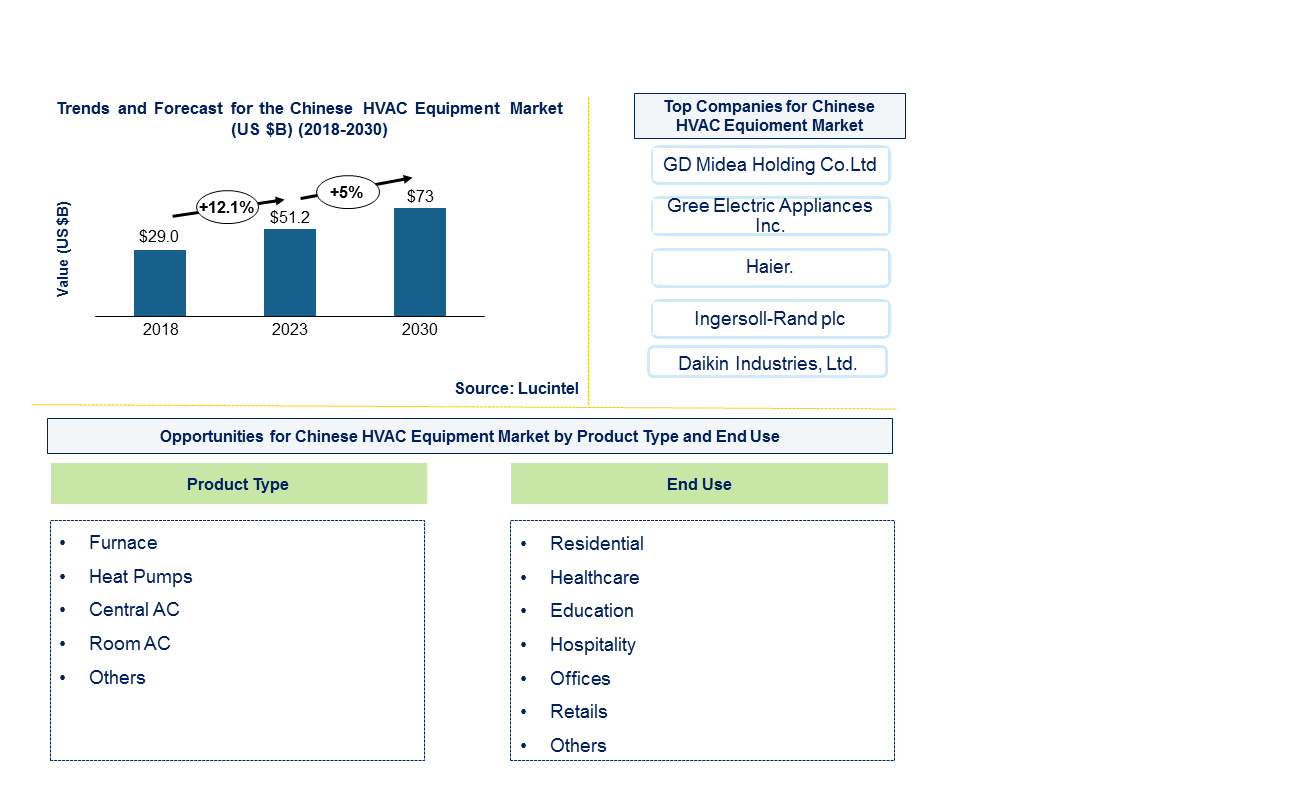
• China HVAC equipment companies profiled in this market report includes Gree Electric Appliances, GD Midea, Haier are the major manufacturers of HVAC equipment in China.
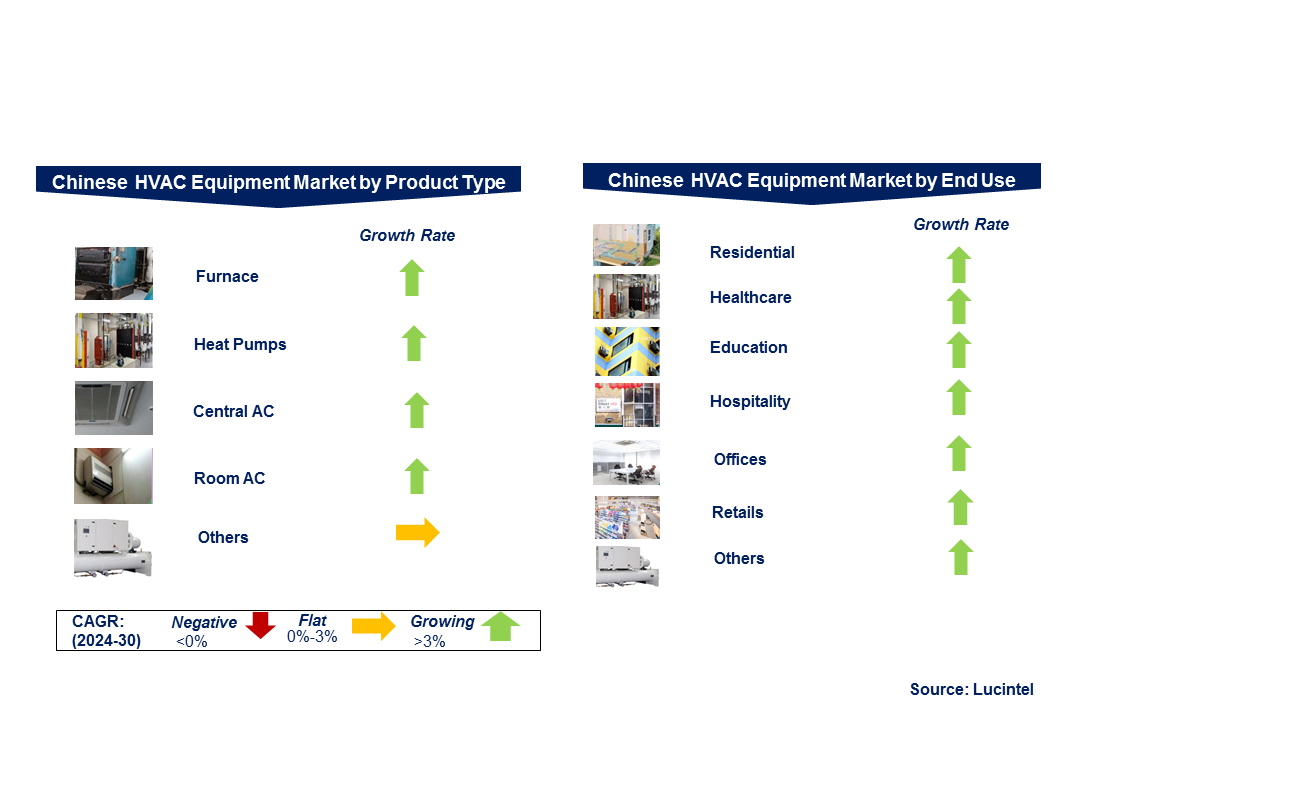
• On the basis of our comprehensive research, Lucintel forecasts that the room AC segment is expected to show above average growth during the forecast period due to a higher rate of urbanization and a higher demand for energy efficient HVAC equipment.
• Within the Chinese HVAC equipment market, residential is expected to remain the largest segment during the forecast period. Increasing penetration and renovation activities are the major driving forces that will spur growth for this segment over the forecast period.
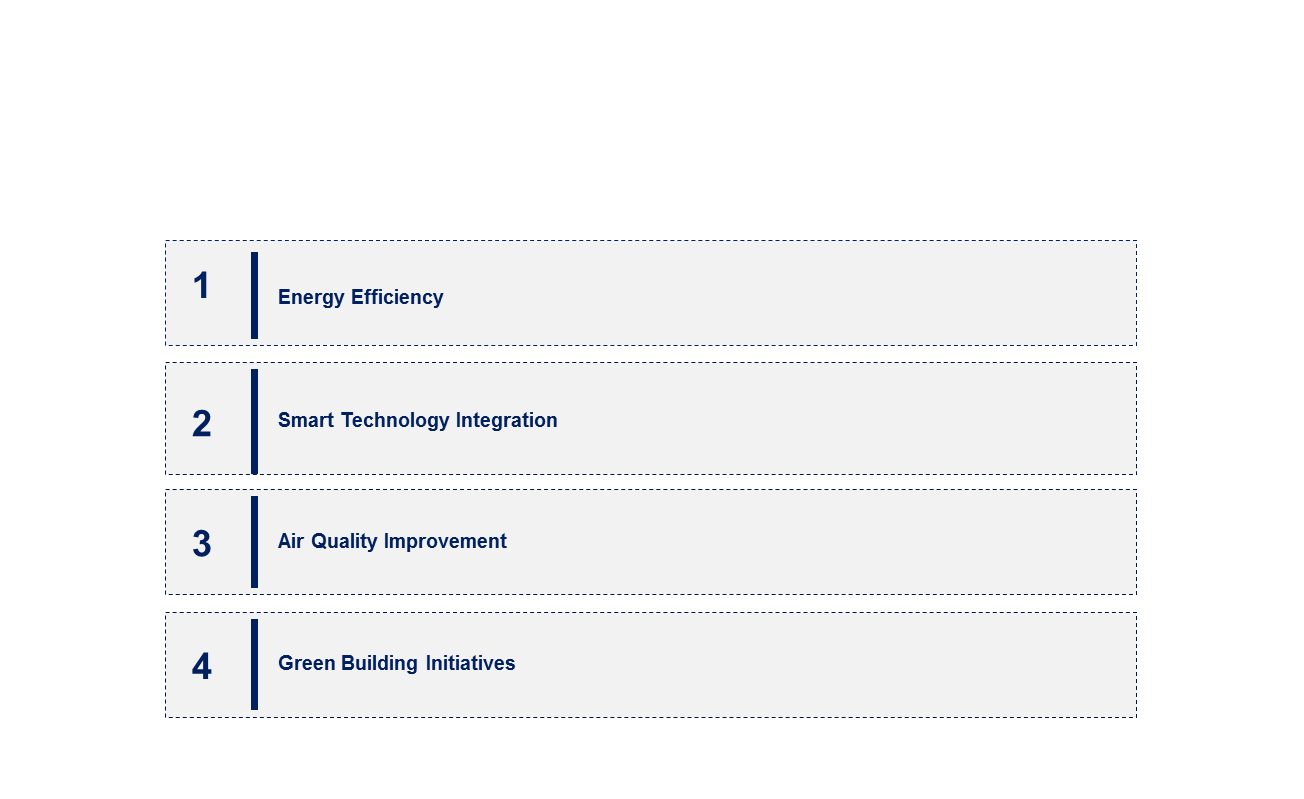
• Energy Efficiency: Increasing focus on energy-efficient HVAC systems driven by government regulations and consumer demand for sustainability.
• Smart Technology Integration: Adoption of smart HVAC solutions with IoT capabilities for remote monitoring, predictive maintenance, and energy management.
• Air Quality Improvement: Growing emphasis on air purification and filtration technologies to address indoor air quality concerns, particularly in urban environments.
• Green Building Initiatives: Integration of HVAC systems into green building designs and certifications, promoting sustainable construction practices.
• Energy Efficiency: Manufacturers are increasingly focusing on improving the energy efficiency of HVAC systems through advanced technologies such as variable refrigerant flow (VRF) systems and energy-efficient compressors.
• Smart HVAC Solutions: Integration of smart technologies, including IoT-enabled devices and cloud-based monitoring systems, to optimize energy consumption, enhance user comfort, and enable remote management.
• Air Quality Management: Development of HVAC systems with enhanced air purification capabilities, including advanced filtration systems and air quality sensors, to address growing concerns about indoor air pollution.
• Green Building Standards: Alignment with green building standards and certifications, such as LEED (Leadership in Energy and Environmental Design), driving the adoption of sustainable HVAC solutions in new construction projects.
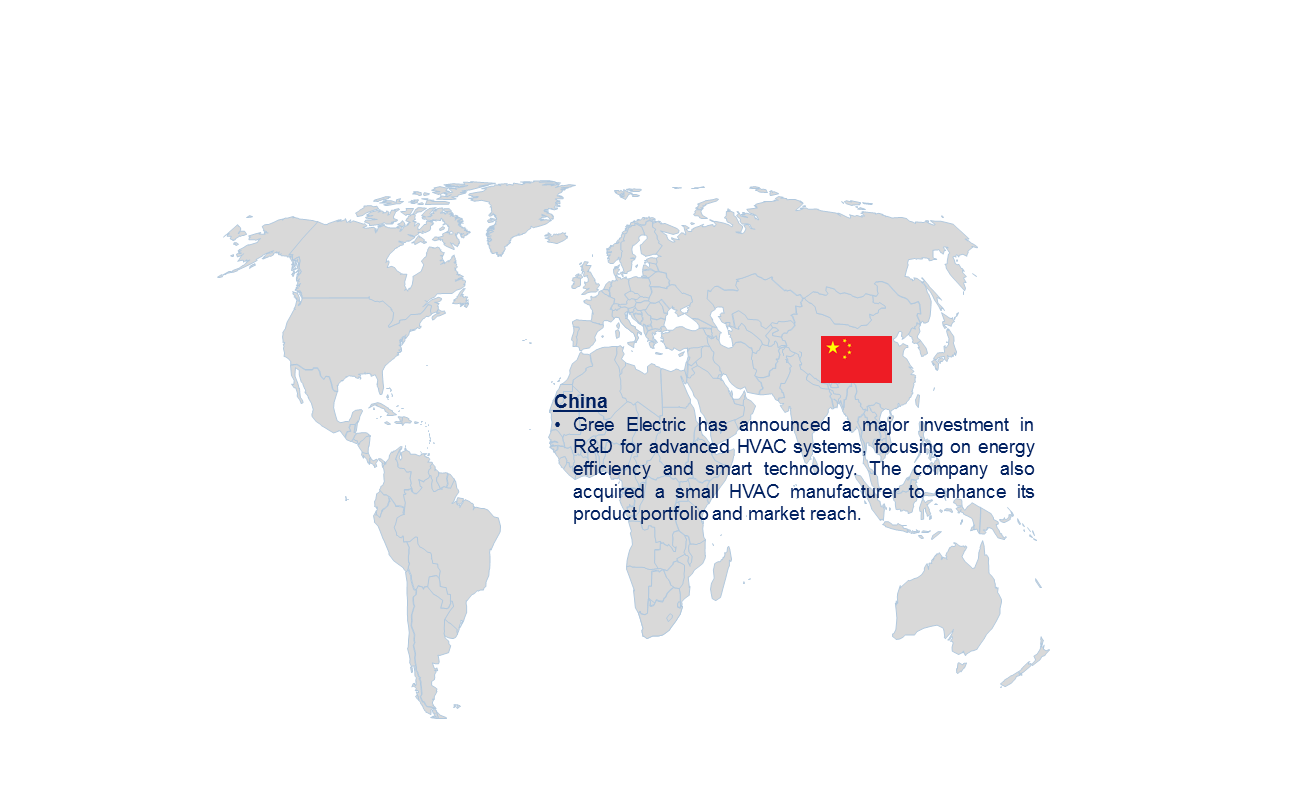
• Market Expansion and Localization: Expansion of production capacities and localization of manufacturing to cater to domestic demand and reduce dependence on imported equipment, supported by government policies promoting self-sufficiency in critical technologies.
• Adoption of Inverter Technology: Increase the penetration of inverter-driven HVAC systems to improve energy efficiency and reduce operational costs.
• Development of High-efficiency Components: Innovate compressors, motors, and heat exchangers to enhance overall system efficiency.
• Compliance with Energy Efficiency Standards: Align product development with stringent government regulations promoting energy-efficient equipment.
Smart HVAC Solutions:• Internet of Things (IoT) Integration: Embed IoT capabilities for remote monitoring, predictive maintenance, and real-time energy management.
• Smart Controls and Automation: Develop advanced control systems that optimize HVAC operation based on occupancy, weather conditions, and user preferences.
• Data Analytics and AI: Utilize data analytics and artificial intelligence to improve system performance, energy efficiency, and user comfort.
Air Quality Management:• Enhanced Filtration Technologies: Integrate advanced filtration systems to improve indoor air quality and address health concerns.
• Air Purification Technologies: Develop HVAC solutions with built-in air purification technologies to capture and neutralize pollutants.
• Compliance with Indoor Air Quality Standards: Ensure HVAC systems meet or exceed national and international indoor air quality standards.
Green Building Initiatives:• LEED and Green Certification: Align HVAC equipment designs with green building standards such as LEED certification to meet sustainable construction requirements.
• Integration with Renewable Energy: Promote the integration of HVAC systems with renewable energy sources like solar and geothermal for greener building solutions.
• Lifecycle Environmental Impact: Focus on reducing the lifecycle environmental impact of HVAC equipment through sustainable design and materials.
Market Expansion and Localization:• Infrastructure Development: Participate in large-scale infrastructure projects, such as urbanization initiatives and industrial parks, to expand market reach.
• Regional Market Penetration: Target growth opportunities in emerging cities and provinces where urbanization is driving demand for modern HVAC solutions.
• Localization of Manufacturing: Establish localized manufacturing facilities to reduce costs, improve supply chain efficiency, and meet local market demands.
Technological Collaboration and Partnerships:• Research and Development Collaboration: Partner with research institutions and universities to drive technological innovation in HVAC equipment.
• Joint Ventures and Acquisitions: Explore strategic partnerships, joint ventures, or acquisitions with local and international firms to leverage complementary strengths and expand market presence.
• Supplier and Distributor Networks: Strengthen relationships with suppliers and distributors to enhance product availability, customer support, and market competitiveness.
• Gree Electric Appliances
• GD Midea
• Haier
• Ingersoll-Rand plc
• Daikin Industries Ltd,
These companies have established themselves as leaders in the China HVAC equipment industry, with extensive product portfolios, global presence, and strong research and development capabilities. They continually strive to enhance their market positions through strategic partnerships, mergers and acquisitions, and product innovations.• Furnace
• Heat Pump
• Central AC
• Room AC
• Others
• Residential
• Healthcare
• Education
• Hospitality
• Office
• Retail
• Others
• Gree Electric Appliances
• GD Midea
• Haier
• Ingersoll-Rand plc
• Daikin Industries Ltd
Q6.Which end use segment will be the largest in future?

Choose a license that fits your team. Instant PDF delivery.
Prices exclude taxes. Instant delivery. Custom licensing available on request.
Market Report · July 31, 2026
Market Report · July 22, 2026
Market Report · July 20, 2026
Trusted partner for strategic intelligence and business growth


Receive a complimentary market analysis tailored to your industry. Our analysts will identify key growth opportunities and competitive dynamics specific to your business.

Market size, growth rate, and key trend analysis for your specific sector.

Top competitor positioning and market share analysis.

Strategic recommendations backed by data-driven insights.
Get curated market intelligence and competitive moves straight to your inbox.
By subscribing, you agree to receive our monthly insights. Unsubscribe anytime.
Receive a complimentary market analysis tailored to your industry. Our analysts will identify key growth opportunities and competitive dynamics specific to your business.
Market size, growth rate, and key trend analysis for your specific sector.
Top competitor positioning and market share analysis.
Strategic recommendations backed by data-driven insights.
Get curated market intelligence, emerging trends, and competitive moves straight to your inbox each month.
By subscribing, you agree to receive our monthly insights. Unsubscribe anytime.
We'll send your sample report shortly.