
Market Report · May 18, 2026

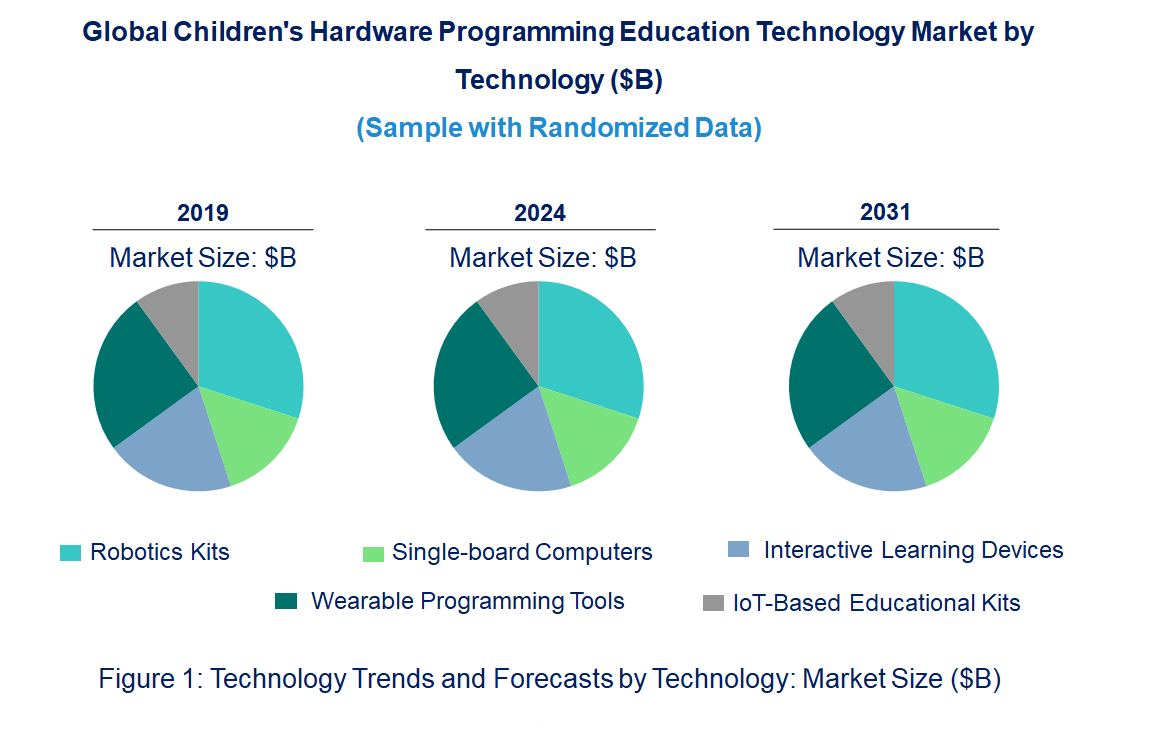
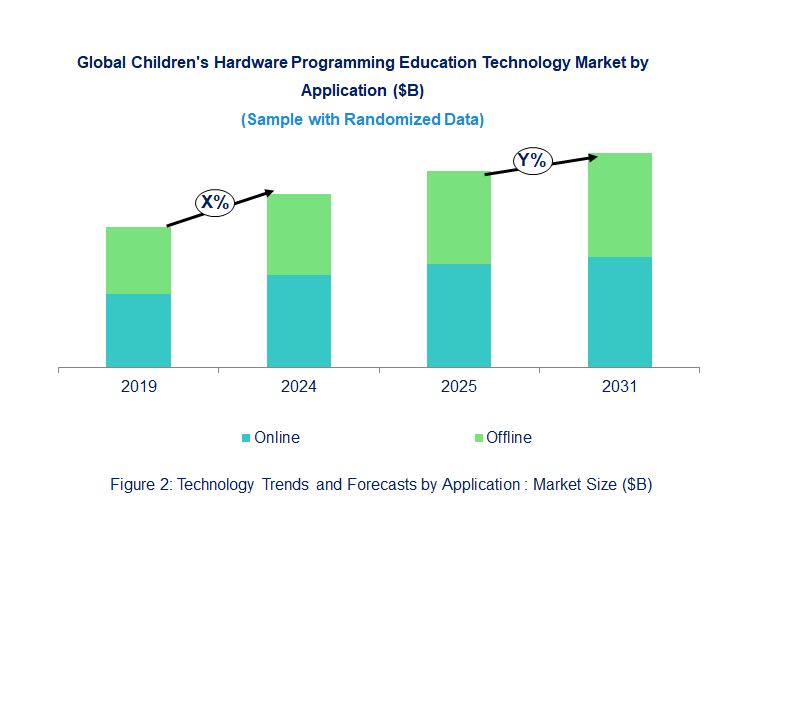
This market report covers trends, opportunities, and forecasts in the global children’s hardware programming education market to 2031 by technology (robotics kits, single-board computers, interactive learning devices, wearable programming tools, and iot-based educational kits), application (online and offline), and region (North America, Europe, Asia Pacific, and the Rest of the World)
We'll send your sample report shortly.
• Integration of AI and Machine Learning: Programming kits now include simplified AI and ML functionalities, allowing children to experiment with voice recognition, image sorting, and pattern detection. This early exposure fosters computational thinking and prepares kids for more advanced digital challenges later in their academic paths.
• Expansion of IoT-Based Learning Kits: IoT kits are teaching children how devices communicate over networks. By programming smart sensors, lights, or home devices, kids learn data exchange, automation, and the concept of the connected world, all while developing practical skills.
• Rise of Wearable Programming Tools: Wearable tech, such as programmable watches or sensor-equipped bands, promotes mobility and personalized learning. These tools engage kids in real-time feedback and fitness coding projects, linking health, coding, and creativity.
• Gamification and Interactive Learning Devices: Augmented reality (AR), virtual reality (VR), and touchscreen interfaces are making programming playful and engaging. Gamified tools transform abstract coding concepts into visual and interactive puzzles, improving retention and motivation.
• Hybrid Learning Models: Blending online platforms with physical kits ensures learning continuity and accessibility. Children can build offline and then test or extend their projects online, promoting both self-paced learning and collaborative exploration across multiple environments.
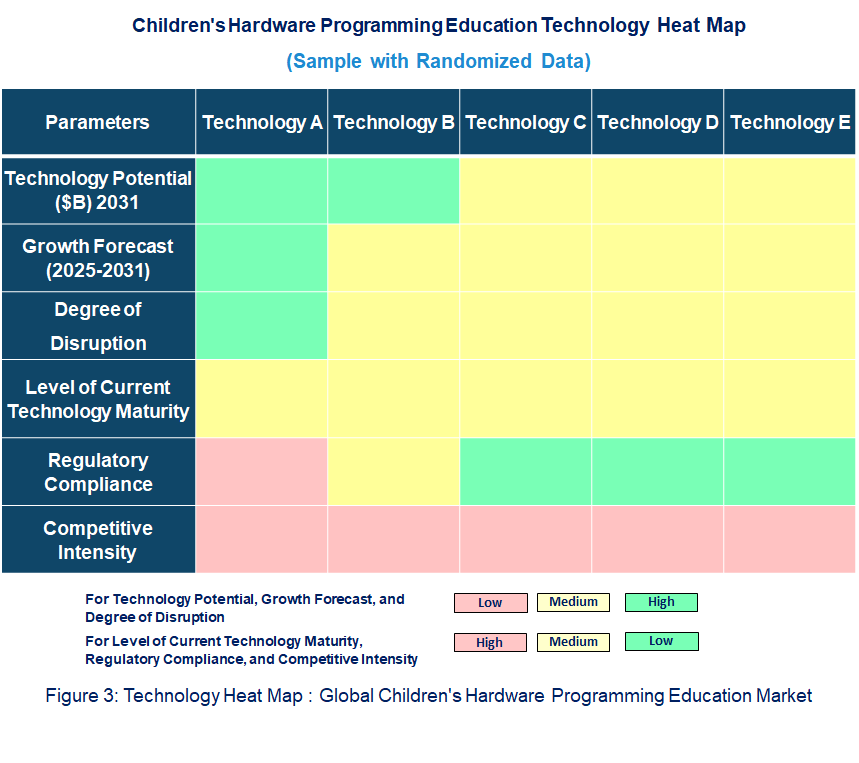
• Technology Potential:
The children’s hardware programming education market holds immense technology potential, empowering the next generation with early exposure to programming concepts.• Degree of Disruption: Technologies like robotics kits and wearable tools are transforming passive learning into interactive, hands-on experiences, significantly disrupting traditional educational models.
• Maturity Level: Robotics kits and single-board computers are relatively mature; however, wearable programming tools and IoT-based kits are still evolving and offer strong future potential.
• Regulatory Compliance: Educational tech must adhere to child safety, data privacy (especially under COPPA and GDPR-K), and content appropriateness guidelines, influencing product design and functionality.
The combined technological and educational potential, if regulated and scaled responsibly, positions this market as a critical frontier for 21st-century learning development.• TCTM Kids IT Education: By integrating cloud-based analytics, TCTM enhances the learning experience, providing real-time performance tracking to help teachers monitor students’ progress and personalize their learning journey.
• Lego: The launch of the updated LEGO® Education SPIKE™ kits, featuring AI capabilities, fosters creativity and interactive learning, encouraging children to explore advanced technology concepts in a playful, hands-on manner.
• Roborobo: With its new robotics education series aligned with national STEAM curricula in Asia, Roborobo is tailoring its offerings to educational standards, ensuring that they remain both relevant and aligned with local academic goals.
• DJI: Expanding its RoboMaster series to include programmable drones, DJI is introducing aerial robotics education to children, offering an innovative, fun way to learn coding while engaging with real-world applications.
• Ozobot: By releasing an open-platform robot compatible with various coding languages, Ozobot enables greater cross-platform compatibility, allowing students to explore a wide range of programming tools and environments.
• Sony: Sony’s development of educational wearables that respond to motion sensors allows children to code physical outputs like sound and light, providing a tangible connection between the digital and physical worlds.
• Robolink: Through collaborations with schools, Robolink has made drone coding programs more accessible, allowing students to engage in aerial robotics education and learn coding through exciting real-world projects.
• Integration of AI and Machine Learning: AI-powered programming kits offer children the opportunity to engage with advanced computing concepts through interactive, hands-on play. These tools enhance critical thinking, problem-solving, and creativity, which are essential for future careers in technology.
• Expansion of IoT-Based Learning Kits: IoT kits teach children about smart devices and real-world data interaction, helping them understand how things are interconnected. These tools enable practical, real-world learning, which is vital for children to grasp networking and technology concepts.
• Rise of Wearable Programming Tools: Wearable devices, like programmable watches, promote mobile, personalized learning that fits into everyday life. These tools encourage active learning, enabling children to explore coding in real-time, making the experience more immersive and engaging.
• Gamification and Interactive Learning Devices: By incorporating AR, VR, and interactive screens, learning becomes game-based, creating an engaging, enjoyable experience. This approach fosters better knowledge retention and boosts children’s enthusiasm to learn programming.
• Hybrid Learning Models: Combining online and offline programming tools ensures that learning is flexible and accessible to children from various backgrounds. This model provides equitable opportunities for children, especially in remote or underserved areas, to engage with programming education.
• Accessibility and Affordability: One of the key challenges is ensuring that hardware kits and programming tools are affordable and accessible to all children, regardless of economic background. High costs could limit access to high-quality learning experiences, especially in low-income areas.
• Regulatory and Safety Concerns: With the growing reliance on digital tools for children’s education, it is crucial to meet data privacy regulations such as COPPA and GDPR-K. Safety concerns, especially with IoT devices and wearables, also pose challenges in terms of ensuring child safety and preventing misuse.
• Keeping Up with Rapid Technological Changes: The pace at which technology evolves presents challenges in keeping the educational content up to date. As new programming languages, tools, and devices emerge, educational providers must continuously adapt and innovate to stay relevant.
• Teacher Training and Support: Many teachers may lack the necessary expertise to effectively teach with hardware programming kits. Professional development and teacher training are essential to ensure successful implementation and to help educators fully utilize these tools in the classroom.
• Screen Time and Health Concerns: Extended use of programming devices, especially wearables and screen-based tools, raises concerns about screen time and its impact on children’s health. Balancing technology use with physical activity and social learning is vital for holistic development.
• TCTM Kids IT Education
• Lego
• Roborobo
• DJI
• OzObot
• Sony
• Technology Readiness by Technology Type: In the children’s hardware programming education market, robotics kits are highly mature, widely used for hands-on coding and robotics education in schools and after-school programs. Single-board computers, such as Raspberry Pi, are also highly ready, with strong community support and educational resources that make them accessible for both children and educators. Interactive learning devices are moderately mature, increasingly popular in the classroom, but still developing in terms of content variety and effectiveness. Wearable programming tools are in the early stages of adoption, with ongoing development aimed at improving user experience and educational value. IoT-based educational kits are emerging, showing strong potential for interactive, real-world learning experiences but still require refinement and wider adoption. Competitive intensity is highest for robotics kits and single-board computers, which have established strong market positions. Regulatory compliance is crucial across all technologies, particularly in data protection, privacy, and safety standards. Key applications for these technologies include STEM education, coding workshops, after-school programs, and integration in school curricula, with growing interest in remote learning tools and online platforms.
• Competitive Intensity and Regulatory Compliance: The competitive intensity in the children’s hardware programming education market is increasing, with various companies offering different products targeting the same goal: enhancing children’s coding skills. Robotics kits, single-board computers, and interactive devices face competition from established players like LEGO, Raspberry Pi, and Makeblock, as well as new entrants with innovative educational tools. Regulatory compliance is an important concern, especially in terms of child safety, data protection, and product quality. Products, particularly wearable programming tools and IoT kits, must adhere to safety standards and privacy regulations like COPPA (Children’s Online Privacy Protection Act) in the U.S. Additionally, manufacturers need to meet international safety standards to ensure the products are child-friendly and secure for educational use. As demand for these tools grows, compliance with data protection and cybersecurity regulations also becomes critical.
• Disruption Potential by Technology Type: The children’s hardware programming education market is experiencing disruption with technologies like robotics kits, single-board computers, interactive learning devices, wearable programming tools, and IoT-based educational kits. Robotics kits offer hands-on learning, encouraging creativity and problem-solving through building and coding robots. Single-board computers like Raspberry Pi are affordable tools for teaching programming and electronics, fostering early STEM education. Interactive learning devices provide engaging, user-friendly platforms for children to learn coding through games and activities. Wearable programming tools introduce immersive learning experiences by allowing children to interact with technology through smart clothing or accessories. IoT-based educational kits enable real-world learning by connecting physical devices to the internet, offering practical, interactive lessons. Collectively, these technologies are transforming how children engage with programming, promoting STEM skills from an early age, and preparing them for the tech-driven future.
• Robotics Kits
• Single-board Computers
• Interactive Learning Devices
• Wearable Programming Tools
• IoT-Based Educational Kits
• Online
• Offline
• North America
• Europe
• Asia Pacific
• The Rest of the World
• Latest Developments and Innovations in the Children’s Hardware Programming Education Technologies
• Companies / Ecosystems
• Strategic Opportunities by Technology Type


Choose a license that fits your team. Instant PDF delivery.
Prices exclude taxes. Instant delivery. Custom licensing available on request.
Market Report · May 18, 2026
Market Report · May 18, 2026
Market Report · May 18, 2026
Trusted partner for strategic intelligence and business growth


Receive a complimentary market analysis tailored to your industry. Our analysts will identify key growth opportunities and competitive dynamics specific to your business.

Market size, growth rate, and key trend analysis for your specific sector.

Top competitor positioning and market share analysis.

Strategic recommendations backed by data-driven insights.
Get curated market intelligence and competitive moves straight to your inbox.
By subscribing, you agree to receive our monthly insights. Unsubscribe anytime.
Receive a complimentary market analysis tailored to your industry. Our analysts will identify key growth opportunities and competitive dynamics specific to your business.
Market size, growth rate, and key trend analysis for your specific sector.
Top competitor positioning and market share analysis.
Strategic recommendations backed by data-driven insights.
Get curated market intelligence, emerging trends, and competitive moves straight to your inbox each month.
By subscribing, you agree to receive our monthly insights. Unsubscribe anytime.
We'll send your sample report shortly.