
Market Report · July 15, 2026

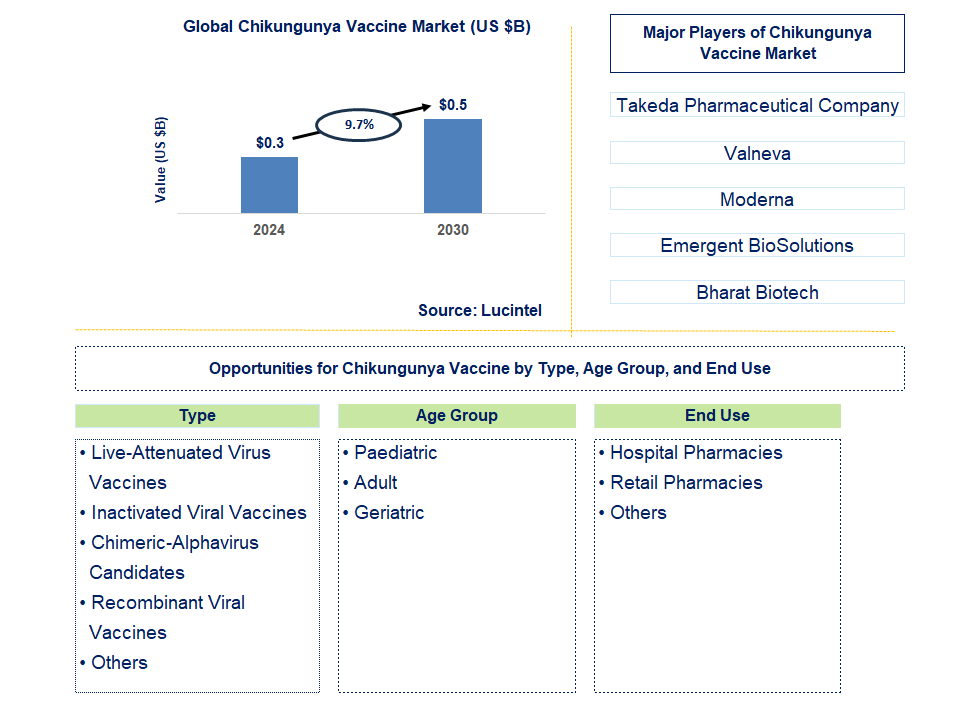
Key data points: The market size in 2030 = $0.5 billion, growth forecast = 9.7% annually for the next 6 years. Scroll below to get more insights. This market report covers trends, opportunities, and forecasts in the global chikungunya vaccine market to 2030 by type (live-attenuated virus vaccines, inactivated viral vaccines, chimeric-alphavirus candidates, recombinant viral vaccines, and others), age group (paediatric, adult, and geriatric), end use (hospital pharmacies, retail pharmacies, and others), and region (North America, Europe, Asia Pacific, and the Rest of the World)
We'll send your sample report shortly.
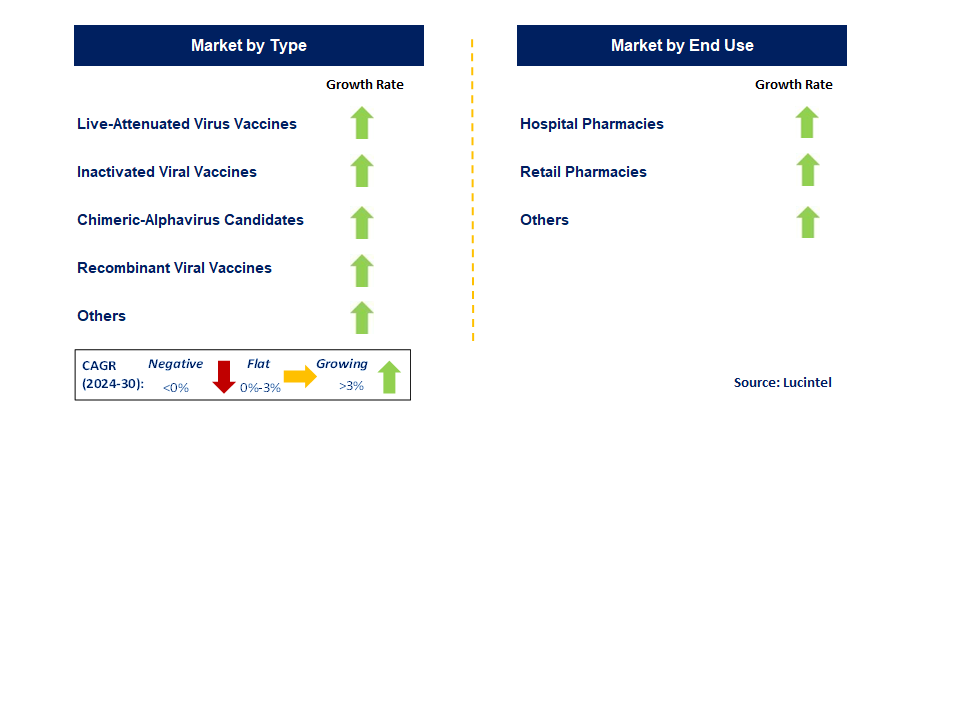
• Lucintel forecasts that, within the type category, live-attenuated is expected to witness the highest growth over the forecast period.
• Within the end use category, hospital pharmacy is expected to witness a higher growth.
• In terms of regions, North America is expected to witness highest growth over the forecast period. Gain valuable insight for your business decisions with our comprehensive 150+ page report
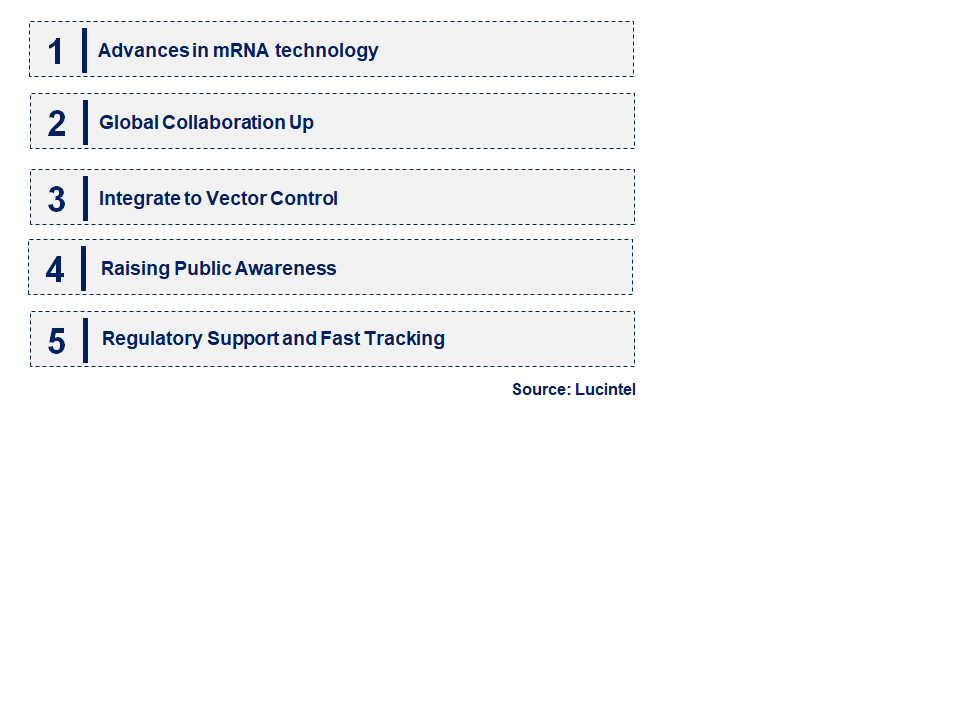
• Advances in mRNA technology: mRNA technology revolutionizes the way vaccines are designed and made—they can now be quickly designed and produced. This platform quickly responds to outbreaks, providing an opportunity for the rapid adaptation of mRNA vaccines toward new strains. Flexibility and speed put the global community at an edge in countering mRNA vaccines as a keystone in chikungunya.
• Global Collaboration Up: Collaboration between governments, NGOs, and private enterprises accelerates vaccine development and manufacturing. Linked resources and expertise enhance and facilitate research capabilities, streamline the process of regulation, and accelerate the response to chikungunya, thus ensuring the vaccine will eventually be available in all parts of the world. This approach needs to become part of infectious disease management that crosses borders.
• Integration to Vector Control: There is a growing practice of combining vaccination packages with vector control techniques. Public health initiatives that target both the decline of vaccination coverage and mosquito populations within a specific region can significantly reduce the transmission rate while realizing improved health statistics. The combination approach is gradually becoming part and parcel of the control measures adopted in endemic areas.
• Raising Public Awareness: Improved sensitization among the population, due to rising health campaigns and awareness among the public through media interaction, will increase the demand for vaccines. Such an enlightened population would be more responsive to an immunization program, and the overall efficiency of public health programs proves to be well above average. This cycle, therefore, underscores education as a crucial element to enhance community participation and health literacy.
• Regulatory Support and Fast Tracking: Regulatory bodies are fast-tracking the approvals of the chikungunya vaccine to expedite its launch into the market. This enables investments in R&D so that there are prompt reactions to outbreaks and improves the general strategies for vaccine distribution. Proactive regulatory frameworks are the basis of public health preparedness. Such new trends are infusing innovation, building collaboration, and addressing public health needs in the chikungunya vaccine market. The conjunction of technological advances, rising awareness levels, and more favorable regulatory architecture has placed the market on a conducive path for substantial growth. As these stakeholders continue to ride these trends, the ability to drive chikungunya outbreaks may increase dramatically, and therefore better health outcomes will follow for the targeted population.
• Approval Status of FDA Vaccine Candidates: Perhaps the most important juncture of interest for those tracking chikungunya vaccine development is that the U.S. FDA has decided to fast-track mRNA vaccine candidates. Showing high efficacy and enabling rapid production, such vaccines would come closest to becoming the first-line response device to deliver a more immediate reaction to outbreaks in the future. This approval can only foster further investment in mRNA technology globally and set a precedent for other candidates.
• International Boost in Clinical Trials: India and Brazil have been leading countries in increasing their clinical trials for chikungunya vaccines due to the growing demand for effective solutions. This automatically allows better access to a more expansive study on vaccine safety and effectiveness, thus guaranteeing a broader area of application and utilization within endemic regions. The results obtained from such research will determine global vaccination policies.
• New Vaccine Technologies: Researchers are studying new vaccine platforms based on nanoparticle and viral vector technologies. Advanced techniques offer better immune responses and longer periods of protection, thus becoming competitive options in the chikungunya vaccine landscape. Their success may change the development approach for vaccines in diseases where vectors are the causative agents.
• More Funding for Research: Investments by both public and private sectors are increasing in chikungunya vaccine research, responding to the health risk posed by this public health issue. Such high investments support extensive clinical tests as well as expedite the development of new vaccine candidates. This encourages innovative research that might blossom into breakthrough solutions.
• International Health Collaborations: As chikungunya vaccine developments gain momentum in intercountry collaborations and international health organizations, joint research undertakings promote knowledge sharing and resource allocation. As the global response is facilitated for vaccines to be developed and disseminated worldwide, effective chikungunya vaccines are becoming available for use. Of greatest value is the fact that this synergy helps foster a more appropriate and timely response to any public health emergency. These prominent developments are fueling innovation, broadening research efforts, and further enhancing international cooperation in the chikungunya vaccine market. All these developments will eventually enhance the capacity to curb chikungunya outbreaks. It is through the earnest collective efforts of these stakeholders that global health security will be formed.
• Partnership with research institutions: Collaborating with research institutions presents an opportunity to introduce innovative approaches to vaccine development. Such partnerships provide access to the latest technologies and expertise, increasing the chances of developing successful candidates. This harmony is crucial for accelerating study findings and bringing forth the best solutions to the market.
• Emphasis on endemic regions: Optimize resource use and improve health outcomes by targeting vaccine delivery in identified high-incidence chikungunya regions. Efforts tailored to local needs are likely to be efficient and impactful, greatly benefiting public health. In other words, the localized approach that these interventions will take may allow for better resource management, leading to greater returns on vaccine efficacy.
• Integrate into health systems: Embedding chikungunya vaccines in health systems can promote harmonization and improve accessibility for populations. Including vaccines in routine immunization schedules facilitates convenient access for at-risk populations. Strengthening health systems further enhances general uptake of the vaccines and their effectiveness.
• Investment in vector control: Combining vaccination efforts with vector control significantly strengthens disease management. This strategy reduces transmission rates and enhances overall public health, making it a viable growth strategy. It presents an excellent opportunity to engage in both prevention and control simultaneously regarding chikungunya outbreaks. These strategic growth opportunities highlight the potential for transformative impacts in the chikungunya vaccine market. A focus on public health initiatives, collaborations, and targeted applications can significantly enhance vaccine accessibility and efficacy. An active undertaking of this nature will be crucial in addressing public health challenges related to ongoing chikungunya outbreaks and improving the health conditions of affected communities.
• Emerging global incidence of chikungunya: The disease has been increasing, creating an urgent need for effective vaccines. This threat calls for significant investments in research and development by governments and organizations. Reducing incidence is vital for protecting communities from the spread of the disease.
• Technological advancements in vaccines: Innovations such as mRNA platforms enable quicker and improved vaccine manufacturing, following a more revolutionary path compared to earlier vaccine versions. Improvements in safety profiles and immune responses have attracted greater investments and interest in chikungunya vaccines.
• Support from governments and NGOs: Increased funding from government departments and non-governmental organizations for research into infectious diseases enhances vaccine production capabilities. Such funding advances clinical research and allows effective vaccines to be rapidly brought to market, reflecting collaborative efforts toward public health and a culture of innovation. Challenges in the chikungunya vaccine market include:
• Regulatory obstacles: Complex regulations can prolong the development and approval of vaccines, requiring substantial resources to navigate. This may further delay the entry of promising candidates into the market. Effective vaccines must be delivered promptly to populations in need.
• Distribution and logistics issues: One of the most significant logistical barriers to vaccine access is reaching remote or socio-economically disadvantaged areas. Unique and adaptable solutions are essential for overcoming geographical barriers to efficient distribution networks. Addressing these logistical challenges in vaccine distribution is crucial for achieving high vaccination rates, particularly in endemic areas. The interplay of drivers and challenges significantly shapes the chikungunya vaccine market. Rising incidence and technological advancements drive progress, although regulatory hurdles, distribution issues, and vaccine hesitancy pose challenges that stakeholders must address tactfully to enhance public health outcomes and effectively combat chikungunya.
• Takeda Pharmaceutical Company
• Valneva
• Moderna
• Emergent BioSolutions
• Bharat Biotech
• Live-Attenuated Virus Vaccines
• Inactivated Viral Vaccines
• Chimeric-Alphavirus Candidates
• Recombinant Viral Vaccines
• Others
• Paediatric
• Adult
• Geriatric
• Hospital Pharmacies
• Retail Pharmacies
• Others
• North America
• Europe
• Asia Pacific
• The Rest of the World
• United States: In the United States, the FDA has fast-tracked approval of chikungunya vaccine candidates, reflecting the urgency of the public health threat. Promising mRNA-based vaccines are in advanced stages of clinical trials, demonstrating robust immunogenicity and safety profiles that have fostered optimism among researchers and health authorities. Collaborations between biotech firms and government agencies are enhancing research capacity and funding—critical factors in bringing effective vaccines to market quickly.
• China: China is advancing rapidly with numerous clinical trials for chikungunya vaccines. Several promising inactivated and recombinant vaccine platforms are under development to elicit immunity. The government is funding innovative solutions to combat diseases like chikungunya, further enhancing its public health infrastructure.
• Germany: Germany is actively engaged in the development of chikungunya vaccines, leading approaches focused on vector control. The country has demonstrated promising results in clinical trials supported by the EU, showcasing successful vaccine candidates with a high safety margin. Emphasizing the synergy between vaccines and vector control strategies allows for comprehensive prevention measures, making Germany a key player in the vaccine market.
• India: India has positioned itself as a major player in the chikungunya vaccine market, with extensive R&D efforts. Several candidates are in advanced clinical trials, showcasing significant efficacy against the disease. Furthermore, India's health agencies have initiated public awareness campaigns, significantly increasing vaccine acceptance within the population. The combined efforts of research institutions, government, and non-profits are likely to yield fruitful results, enhancing overall public health.
• Japan: Japan's involvement in chikungunya vaccine development is driven by increasing incidences of vector-borne diseases. Researchers are examining innovative vaccine platforms while the government supports initiatives for international collaborations and research funding. Japan's robust health systems and infrastructure position it well to integrate vaccines into existing health frameworks once approved. The chikungunya vaccine market is rapidly evolving as countries work collaboratively to address the challenges posed by this disease. Ongoing advancements, increased public awareness, and the integration of innovative technologies will pave the way for improved public health outcomes and the effective management of chikungunya outbreaks globally.


• Takeda Pharmaceutical Company
• Valneva
• Moderna
• Emergent BioSolutions
• Bharat Biotech Q6. Which chikungunya vaccine market segment will be the largest in future? Answer: Lucintel forecasts that live-attenuated is expected to witness the highest growth over the forecast period. Q7. In chikungunya vaccine market, which region is expected to be the largest in next 5 years? Answer: North America is expected to witness highest growth over the forecast period. Q.8 Do we receive customization in this report? Answer: Yes, Lucintel provides 10% customization without any additional cost.


Choose a license that fits your team. Instant PDF delivery.
Prices exclude taxes. Instant delivery. Custom licensing available on request.
Market Report · July 15, 2026
Market Report · June 26, 2026
Market Report · May 18, 2026
Trusted partner for strategic intelligence and business growth


Receive a complimentary market analysis tailored to your industry. Our analysts will identify key growth opportunities and competitive dynamics specific to your business.

Market size, growth rate, and key trend analysis for your specific sector.

Top competitor positioning and market share analysis.

Strategic recommendations backed by data-driven insights.
Get curated market intelligence and competitive moves straight to your inbox.
By subscribing, you agree to receive our monthly insights. Unsubscribe anytime.
Receive a complimentary market analysis tailored to your industry. Our analysts will identify key growth opportunities and competitive dynamics specific to your business.
Market size, growth rate, and key trend analysis for your specific sector.
Top competitor positioning and market share analysis.
Strategic recommendations backed by data-driven insights.
Get curated market intelligence, emerging trends, and competitive moves straight to your inbox each month.
By subscribing, you agree to receive our monthly insights. Unsubscribe anytime.
We'll send your sample report shortly.