
Market Report · July 22, 2026

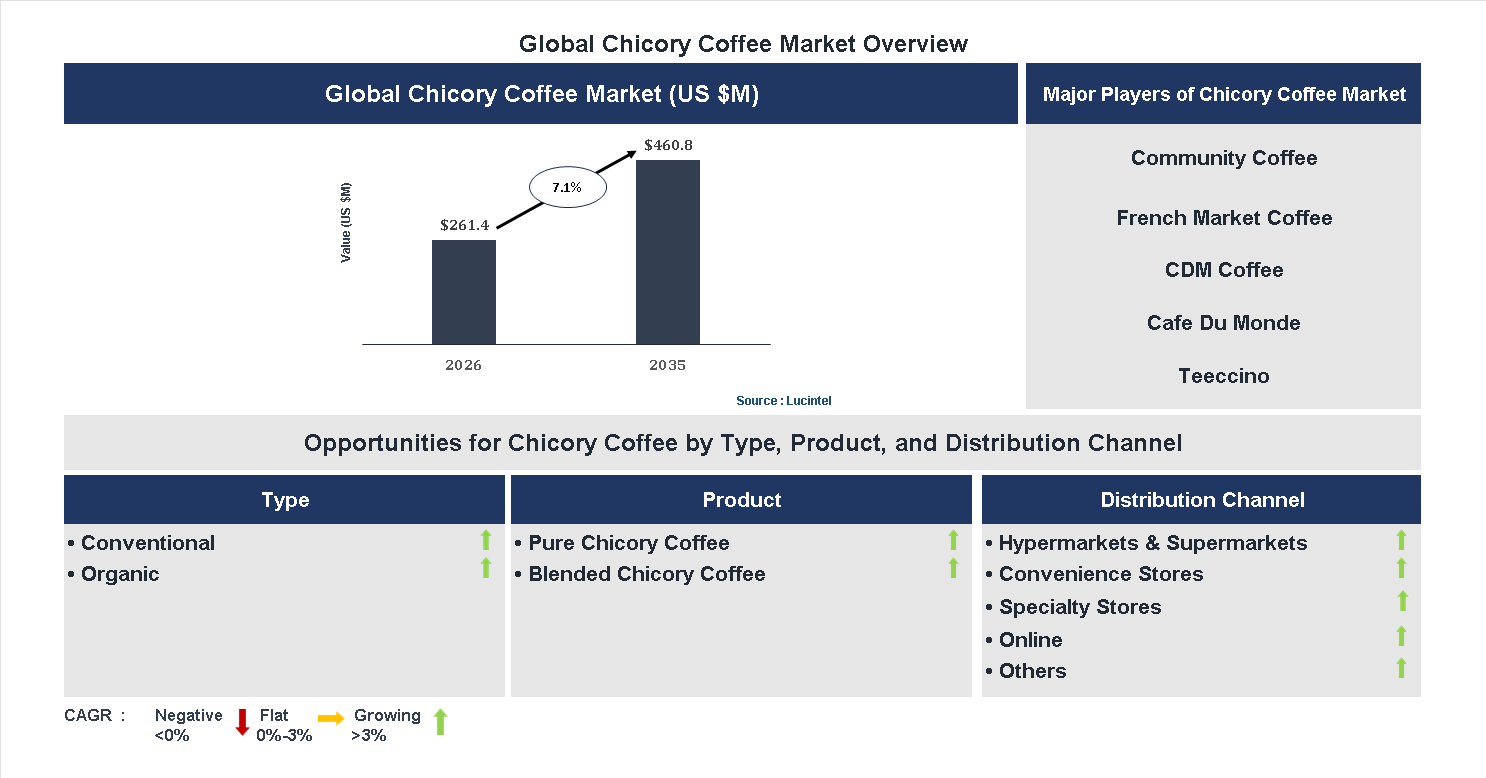
Key data points: The market size in 2035 = $460.8 million, growth forecast = 7.1% annually for the next 8 years. Scroll below to get more insights. This market report covers trends, opportunities and forecasts in chicory coffee market to 2035 by type (conventional and organic), product (pure chicory coffee and blended chicory coffee), distribution channel (hypermarkets & supermarkets, convenience stores, specialty stores, online, and others), and region (North America, Europe, Asia Pacific, and the Rest of the World)
We'll send your sample report shortly.
• Lucintel forecasts that, within the type category, conventional is expected to witness higher growth over the forecast period.
• Within the distribution channel category, hypermarket & supermarket will remain the largest segment.
• In terms of region, North America is expected to witness the highest growth over the forecast period. Gain valuable insights for your business decisions with our comprehensive 150+ page report. Sample figures with some insights are shown below.
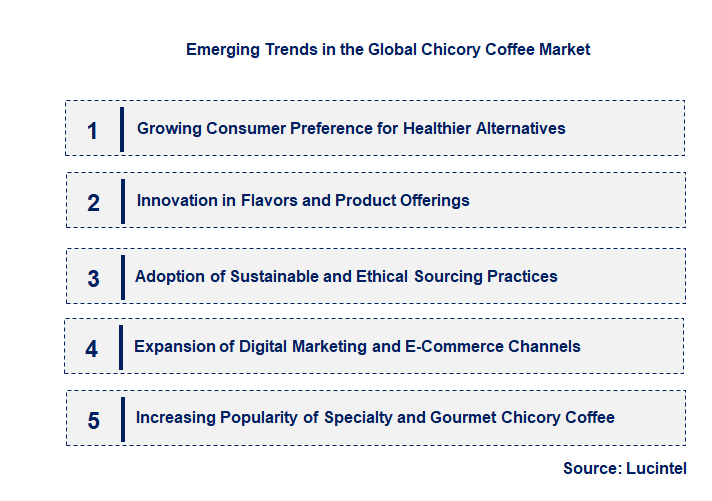
• Growing Consumer Preference for Healthier Alternatives: Increasing awareness of health benefits associated with chicory coffee, such as lower caffeine content and digestive health benefits, is driving demand. Consumers are seeking natural, caffeine-reduced options that align with wellness trends. This shift encourages producers to develop products emphasizing health benefits, expanding market reach among health-conscious demographics. The trend also fosters innovation in product formulations, including organic and additive-free options, which appeal to a broader audience.
• Innovation in Flavors and Product Offerings: Market players are diversifying their product lines by introducing new flavors and blends to attract consumers. This includes adding spices, herbs, or natural flavorings to create unique taste profiles. Such innovation enhances consumer experience and differentiates brands in a competitive landscape. It also caters to evolving palates and cultural preferences, encouraging repeat purchases and expanding market segments. The trend promotes creativity and experimentation, fueling growth in premium and specialty chicory coffee products.
• Adoption of Sustainable and Ethical Sourcing Practices: Consumers increasingly prioritize sustainability and ethical sourcing, prompting brands to adopt responsible practices. This includes sourcing chicory and coffee beans from environmentally friendly farms, ensuring fair trade, and reducing carbon footprints. Transparency in supply chains builds consumer trust and brand loyalty. Sustainable practices also appeal to eco-conscious buyers, opening new market opportunities. This trend encourages industry-wide shifts toward environmentally responsible production, aligning market growth with global sustainability goals.
• Expansion of Digital Marketing and E-Commerce Channels: The rise of online shopping and digital marketing strategies is transforming how chicory coffee brands reach consumers. E-commerce platforms enable direct-to-consumer sales, expanding market access beyond traditional retail outlets. Social media and influencer marketing boost brand visibility and consumer engagement. Virtual tastings, online promotions, and subscription models foster loyalty and convenience. This digital shift allows brands to gather consumer data for targeted marketing, enhancing sales and market penetration in a competitive environment.
• Increasing Popularity of Specialty and Gourmet Chicory Coffee: The demand for premium, artisanal, and gourmet chicory coffee is rising as consumers seek high-quality, unique products. This trend emphasizes craftsmanship, origin stories, and exclusive blends, appealing to connoisseurs and food enthusiasts. Specialty chicory coffee often features organic, single-origin, or small-batch production, commanding higher price points. The focus on quality and authenticity elevates the market, encouraging innovation and differentiation. This trend is reshaping the market by elevating chicory coffee from a traditional additive to a premium beverage category. These trends are collectively reshaping the chicory coffee market by fostering innovation, emphasizing sustainability, leveraging digital channels, and catering to health-conscious and premium-seeking consumers. This evolution is creating new opportunities for growth, differentiation, and global expansion, positioning the market for sustained development in the coming years.
• Growing Health Consciousness: Increasing awareness of health benefits associated with chicory coffee, such as lower caffeine content and digestive health, is driving consumer preference. This trend encourages product innovation and expands the customer base, especially among health-conscious demographics. As consumers seek natural and functional beverages, chicory coffee is positioned as a healthier alternative to traditional coffee, boosting sales and market penetration.
• Product Innovation and Diversification: Companies are introducing new flavors, blends, and organic options to cater to evolving consumer tastes. This diversification enhances product appeal and creates opportunities for premium pricing. Innovations like instant chicory coffee and ready-to-drink formats are making the product more accessible and convenient, thereby expanding market reach and attracting a broader audience.
• Expansion in Emerging Markets: Rising disposable incomes and increasing awareness of health benefits are fueling growth in developing regions such as Asia-Pacific and Latin America. Local manufacturers are adopting regional flavors and packaging to suit consumer preferences. This expansion is opening new revenue streams and establishing chicory coffee as a mainstream beverage in these markets, contributing significantly to global growth.
• E-commerce and Digital Marketing: The rise of online retail platforms and targeted digital marketing campaigns is increasing product visibility and accessibility. E-commerce allows consumers to explore a variety of chicory coffee brands and flavors conveniently. Digital strategies, including social media and influencer collaborations, are enhancing brand engagement and loyalty, thereby accelerating sales and market penetration.
• Sustainability and Ethical Sourcing: Consumers are increasingly demanding sustainably sourced and ethically produced products. Companies adopting eco-friendly practices and transparent supply chains are gaining a competitive advantage. This focus on sustainability not only appeals to environmentally conscious consumers but also encourages brand loyalty, fostering long-term growth and positively impacting the market’s reputation. These recent developments are significantly shaping the chicory coffee market by expanding consumer base, enhancing product offerings, and entering new regions. Health trends, innovation, digital engagement, and sustainability are driving growth and competitiveness. As these factors continue to evolve, the market is expected to experience sustained expansion, attracting new players and increasing consumer loyalty. Overall, these opportunities are creating a dynamic and resilient industry poised for future success.
• Growing Popularity of Alternative Coffee Blends: The increasing consumer shift towards unique coffee blends, including chicory, is expanding market opportunities. Consumers seek diverse flavors and health benefits, making chicory a preferred additive or substitute. This trend encourages product innovation, new formulations, and wider distribution channels, ultimately boosting sales and market penetration. The rising preference for natural, caffeine-free, or low-caffeine options further supports this growth trajectory.
• Rising Consumer Demand for Health and Wellness Products: Consumers are increasingly prioritizing health and wellness, favoring products with natural, organic, and functional ingredients. Chicory, known for its prebiotic properties and caffeine-free nature, appeals to health-conscious buyers. This demand encourages manufacturers to develop organic chicory products, functional blends, and health-focused marketing strategies, thereby expanding the market. The trend also promotes product transparency and certifications, enhancing consumer trust and loyalty.
• Expansion of Product Offerings and Innovations: Market players are investing in product development, introducing new formats such as instant mixes, ground coffee, and ready-to-drink beverages containing chicory. Innovations in flavor profiles, packaging, and processing techniques improve product appeal and convenience. These advancements attract a broader consumer base, including younger demographics and international markets, fostering market growth. Continuous innovation ensures competitiveness and helps meet evolving consumer preferences.
• Increasing Distribution Channels and Market Penetration: The expansion of retail outlets, online platforms, and specialty stores enhances product accessibility. Strategic partnerships and distribution agreements facilitate wider reach across regions, including emerging markets. E-commerce growth allows direct consumer engagement and customized offerings. This increased availability supports higher sales volumes, brand visibility, and consumer adoption, ultimately driving overall market expansion and establishing chicory coffee as a mainstream alternative.
• Growing Awareness and Marketing of Chicory’s Health Benefits: Effective marketing campaigns highlighting chicory’s health advantages, such as digestive health and antioxidant properties, influence consumer purchasing decisions. Educational initiatives and product labeling build awareness and trust. Social media and influencer marketing further amplify reach, attracting health-conscious consumers. As awareness grows, demand for chicory-based products increases, encouraging brands to invest in targeted marketing strategies that reinforce chicory’s position as a healthy coffee alternative. Conclusion: These growth opportunities collectively shape a dynamic and expanding chicory coffee market. By leveraging consumer preferences for health, innovation, and accessibility, market players can capitalize on emerging trends. Strategic focus on product development, marketing, and distribution will drive sustained growth, positioning chicory coffee as a prominent choice among diverse consumer segments. The market’s future appears promising, with ample scope for innovation and expansion across global regions.
• Increasing Health Consciousness: Growing awareness of health benefits associated with chicory coffee, such as its low caffeine content and prebiotic properties, encourages consumers to opt for it as a healthier alternative to traditional coffee. This trend is supported by rising demand for natural and organic products, prompting manufacturers to innovate and expand their product lines. The health-driven consumer shift boosts market growth, especially among aging populations and health-conscious demographics. Moreover, marketing campaigns emphasizing health benefits further stimulate demand, making chicory coffee a preferred choice for wellness-focused consumers.
• Product Innovation and Diversification: Continuous innovation in product offerings, including flavored chicory coffee blends, instant mixes, and organic variants, has expanded consumer options. Companies are investing in R&D to develop unique formulations that cater to diverse tastes and preferences. This diversification helps penetrate new market segments and enhances brand loyalty. Additionally, packaging innovations improve convenience and shelf appeal, attracting a broader customer base. The ability to adapt to changing consumer preferences through product innovation is a key driver that sustains market growth and competitiveness.
• Growing Demand in Emerging Markets: Rapid urbanization, increasing disposable incomes, and changing lifestyles in emerging economies are fueling demand for chicory coffee. Consumers in these regions are seeking alternatives to traditional coffee, driven by health concerns and affordability. Local manufacturers are entering the market, offering region-specific flavors and packaging, which further boosts sales. The expansion into emerging markets presents significant growth opportunities for global players, enabling them to tap into a larger customer base and diversify revenue streams.
• Technological Advancements in Processing: Innovations in extraction, roasting, and packaging technologies have improved the quality, flavor, and shelf life of chicory coffee products. These advancements reduce production costs and enhance product consistency, making chicory coffee more appealing to consumers. Automation and improved supply chain logistics also ensure timely delivery and freshness. Such technological progress supports scalability and helps manufacturers meet increasing demand efficiently, thereby driving overall market expansion.
• Strategic Partnerships and Market Penetration: Collaborations between local and international brands facilitate market entry and expansion. Strategic alliances with distributors, retailers, and online platforms increase product visibility and accessibility. Marketing campaigns and promotional activities tailored to regional preferences further boost sales. These partnerships enable companies to strengthen their distribution networks, improve brand recognition, and accelerate growth in competitive markets, ultimately contributing to the markets overall development. The challenges facing the chicory coffee market include:-
• Regulatory and Compliance Issues: Stringent food safety standards, labeling requirements, and import/export regulations pose significant hurdles. Compliance costs can be high, especially for small and medium-sized enterprises, limiting their ability to expand. Variations in regulations across regions create complexities in product formulation and marketing strategies. Non-compliance risks include product recalls, legal penalties, and damage to brand reputation, which can hinder market growth and innovation.
• Fluctuating Raw Material Prices: The availability and cost of chicory roots and other raw materials are subject to seasonal variations, climate change, and agricultural factors. Price volatility affects profit margins and pricing strategies, making it challenging for manufacturers to maintain consistent supply and competitive pricing. This unpredictability can lead to supply chain disruptions and increased production costs, impacting overall market stability.
• Consumer Preference Shifts: While health consciousness drives demand, changing consumer tastes and preferences can also pose challenges. A preference for other health foods or beverages, such as herbal teas or functional drinks, may divert demand away from chicory coffee. Additionally, skepticism about product efficacy or taste preferences can limit market penetration. Staying aligned with evolving consumer trends requires continuous innovation and marketing efforts, which can be resource-intensive. The chicory coffee market is shaped by a combination of technological innovations, health trends, and expanding market opportunities, especially in emerging economies. However, regulatory complexities, raw material price fluctuations, and shifting consumer preferences present ongoing challenges. These drivers and obstacles collectively influence market growth, requiring stakeholders to adapt strategically. Embracing innovation, ensuring compliance, and understanding consumer needs will be crucial for sustained success in this evolving landscape.
• Community Coffee
• French Market Coffee
• CDM Coffee
• Cafe Du Monde
• Teeccino
• Union Coffee
• New Orleans Roast
• Leroux
• Gourmanity
• Kaveri Coffee
• Conventional
• Organic
• Pure Chicory Coffee
• Blended Chicory Coffee
• Hypermarkets & Supermarkets
• Convenience Stores
• Specialty Stores
• Online
• Others
• North America
• Europe
• Asia Pacific
• The Rest of the World
• United States: The US market has seen increased demand for organic and specialty chicory coffee products, driven by health-conscious consumers. Major brands are investing in sustainable sourcing and innovative blends, including cold brew and ready-to-drink options. E-commerce platforms have expanded access, boosting sales and consumer engagement. Additionally, cafes and restaurants are incorporating chicory coffee into their menus, emphasizing its health benefits and unique flavor profile.
• China: In China, the chicory coffee market is rapidly growing, fueled by rising urbanization and a shift toward Western-style beverages. Local brands are introducing affordable, convenient chicory coffee products to appeal to younger consumers. There is also a focus on blending traditional Chinese flavors with chicory, creating unique fusion products. E-commerce and social media marketing play a significant role in expanding market reach, with consumers showing increasing interest in health benefits and functional beverages.
• Germany: Germanys market emphasizes organic and fair-trade chicory coffee, aligning with the countrys strong sustainability values. Consumers prefer high-quality, ethically sourced products, prompting producers to adopt transparent supply chains. The market also sees a rise in specialty coffee shops offering chicory blends as part of artisanal brews. Innovations include cold brew chicory coffee and functional variants infused with herbs or vitamins, catering to health-conscious demographics.
• India: The Indian market is witnessing a surge in chicory coffee consumption, driven by the popularity of instant coffee and traditional brewing methods. Local brands are launching affordable chicory-based products, often blending with spices or herbs to cater to regional tastes. The growth of e-commerce and retail outlets has made chicory coffee more accessible. Additionally, health benefits such as digestive aid and energy boost are being highlighted in marketing campaigns, appealing to a broad consumer base.
• Japan: Japans chicory coffee market is characterized by a focus on premium, artisanal products. Consumers prefer high-quality, single-origin chicory blends, often used in specialty cafes. There is a trend toward innovative brewing techniques, including cold brew and pour-over methods. Functional variants with added health benefits, such as antioxidants or vitamins, are gaining popularity. The market also benefits from a strong coffee culture, with consumers seeking unique flavors and health-conscious options.


• Community Coffee
• French Market Coffee
• CDM Coffee
• Cafe Du Monde
• Teeccino
• Union Coffee
• New Orleans Roast
• Leroux
• Gourmanity
• Kaveri Coffee Q6. Which chicory coffee market segment will be the largest in future? Answer: Lucintel forecasts that, within the type category, conventional is expected to witness higher growth over the forecast period. Q7. In chicory coffee market, which region is expected to be the largest in next 5 years? Answer: In terms of region, North America is expected to witness the highest growth over the forecast period. Q8. Do we receive customization in this report? Answer: Yes, Lucintel provides 10% customization without any additional cost.


Choose a license that fits your team. Instant PDF delivery.
Prices exclude taxes. Instant delivery. Custom licensing available on request.
Market Report · July 22, 2026
Market Report · July 22, 2026
Market Report · July 22, 2026
Trusted partner for strategic intelligence and business growth


Receive a complimentary market analysis tailored to your industry. Our analysts will identify key growth opportunities and competitive dynamics specific to your business.

Market size, growth rate, and key trend analysis for your specific sector.

Top competitor positioning and market share analysis.

Strategic recommendations backed by data-driven insights.
Get curated market intelligence and competitive moves straight to your inbox.
By subscribing, you agree to receive our monthly insights. Unsubscribe anytime.
Receive a complimentary market analysis tailored to your industry. Our analysts will identify key growth opportunities and competitive dynamics specific to your business.
Market size, growth rate, and key trend analysis for your specific sector.
Top competitor positioning and market share analysis.
Strategic recommendations backed by data-driven insights.
Get curated market intelligence, emerging trends, and competitive moves straight to your inbox each month.
By subscribing, you agree to receive our monthly insights. Unsubscribe anytime.
We'll send your sample report shortly.