
Market Report · May 18, 2026

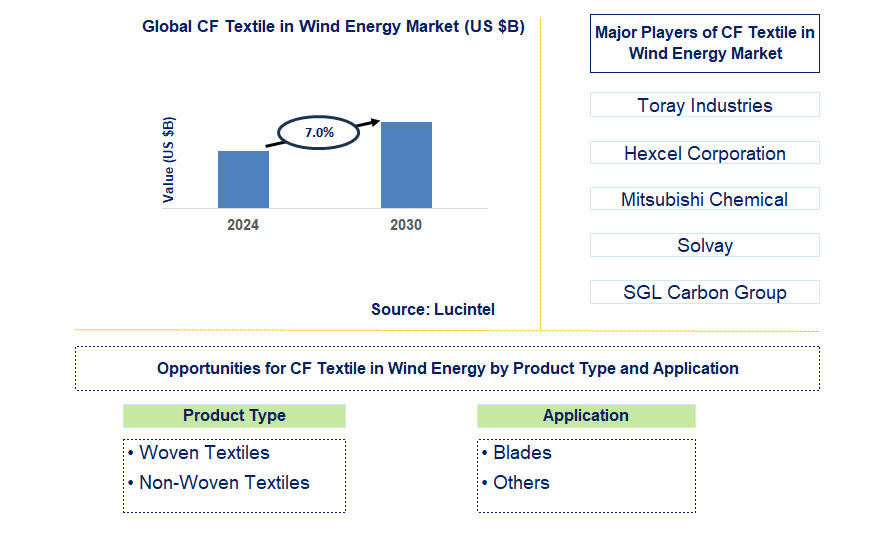
Key data points: The growth forecast = 7.0% annually for the next 6 years. Scroll below to get more insights. This market report covers trends, opportunities, and forecasts in the global CF Textile in wind energy market to 2030 by product type (woven textiles and non-woven textiles), application (blades and others), and region (North America, Europe, Asia Pacific, and the Rest of the World)
We'll send your sample report shortly.
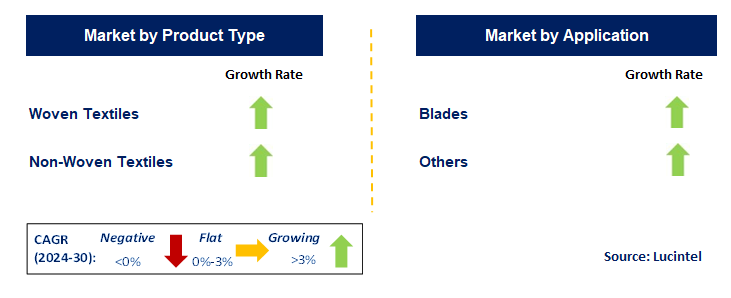
• Lucintel forecasts that, within the product type category, non-woven textiles is expected to witness a higher growth over the forecast period.
• Within the application category, blades is expected to witness a higher growth.
• In terms of regions, APAC is expected to witness the highest growth over the forecast period. A more than 150-page report is developed to help in your business decisions.
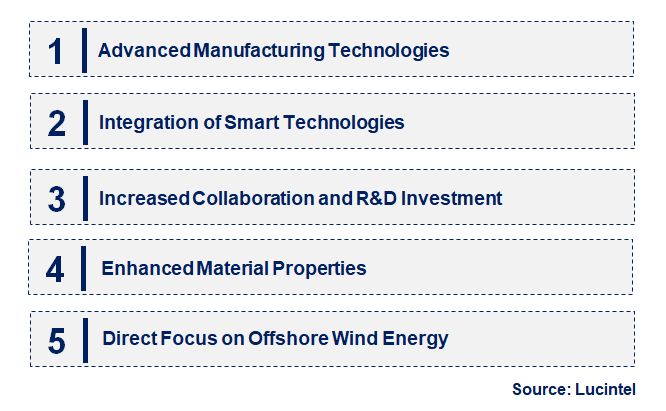
• Advanced Manufacturing Technologies: An increasing trend in the manufacturing sector is the incorporation of automated and advanced manufacturing processes, which have improved the production rate and minimized costs. In the production of intricate components, methods like 3D printing and automated fiber placement are increasingly being used.
• Integration of Smart Technologies: It is becoming more common to integrate IoT and smart sensors into the design and construction of wind turbines. This trend is further supported by the features of CF textiles, which include lightweight and high strength, aiding in the effective monitoring and optimization of performance.
• Increased Collaboration and R&D Investment: It is becoming increasingly common for industrial players, research institutions, and government agencies to work together in partnerships. Such collaborations seek to boost the creation of alternative materials and technology systems applicable in the wind energy sector and increase their competitiveness in the market.
• Enhanced Material Properties: The improvement of the mechanical properties of carbon fibers must be sustained. This includes aspects such as increasing fiber strength and flexibility, as well as improving fatigue resistance, which leads to improved and durable wind turbine components.
• Direct Focus on Offshore Wind Energy: As interest in offshore wind farms has grown, the significance of materials such as CF textiles, which are lightweight and resistant to corrosion, has increased as well. This development is crucial for the improvement and durability of turbine components used in offshore wind farm development in harsh sea conditions. These emerging trends have started influencing the CF textile market in wind energy by encouraging innovation, developing sustainability, deploying new technologies, and lowering the cost of operation. It is by capitalizing on these developments that carbon fiber textiles are being used in the development of advanced wind turbines for the changing energy landscape.
• Advancements in Manufacturing Techniques: The industry is embracing new conversion techniques of easier, less costly, CF textile production methods and greater efficiency. These developments improve the economies of the processes of production which enhance the deploy ability of the CF textiles in the wind energy sector.
• Sustainable Production Practices: Companies continue coming up with measures to achieve sustainability by embracing recycling technologies and opting for bio composites in the production of carbon fibers. This development is necessary in minimizing the carbon emissions associated with the wind energy solutions and in achieving climate change mitigation objectives.
• Collaboration with Research Institutions: Partnerships between the players in industry and those in academic institutions are enhancing R&D of CF textiles. The purpose of these activities is to create new generation materials with improved little performance wind turbines.
• Government Incentives for Renewable Energy: Governments in strategic markets are now offering support for renewable energy projects, increasing the carbon fiber technology investments. These policies are creating requirements for Geopolymers with high adhesion that can be used in most wind energy systems to enhance their performance and durability.
• Focus on Offshore Wind Energy: CF textiles being light and resistant to corroding factors has led to the use of these materials in wind turbine CF textiles for offshore applications as an emerging niche. This development helps to broaden the market for offshore wind power building especially in areas where there is a good wind resource. These developments are beneficial to the CF textile market since they improve the qualities of materials, push for sustainable development and contribute positively to the development of the wind energy. Therefore, there is scope for carbon fiber textiles to cups the future energy needs.
• Offshore Wind Turbines: The increasing concern over space for Onshore wind farms has opened doors for CF Textiles application because of their light weight and anti-corrosive properties which improve the performance of turbines under the sea
• Turbine Blade Manufacturing: Developments in Continued roll forming novel CF Textiles aimed at manufacturing blades for turbine spindles give an added advantage to making longer blades which are efficient in wind energy generation.
• Maintenance and Repair Solutions: Taking in consideration that all machines undergo practical wear and tear, it is important to note that CF Textiles solutions for maintenance and repairs would be able to overcome those challenges and raise the operating time of the parts of wind turbines.
• Hybrid Materials Development: There are also opportunities in the development of hybrid materials that incorporate CF Textiles with other composites for better performing materials suitable for wind energy applications.
• Geographical Expansion: Opening up to newly developing markets possessing enormous wind energy potential creates rooms for development especially in areas that are directing efforts towards constructing renewable energy infrastructural facilities. These strategic growth opportunities are likely to complement the penetration of CF Textiles in wind energy structures thereby facilitating innovation, sustainable growth, and economic benefits within global renewable energy markets.
• Technological Advancements: Advancing carbon fiber reinforcing technology enhances the designed properties of CF textiles for wind energy usage. Better methods of production are reducing the cost as well as the time of production.
• Government Policies and Incentives: There has been an increase in investment in wind energy projects due to the supportive government policies pertaining to the promotion of renewable energy, consequently creating a market for high performance carbon fiber textiles.
• Rising Demand for Renewable Energy: There is a global demand for sustainable energy resources and this has made the wind energy market grow hence, increasing the supply for prospective newer materials that boost turbine efficiency.
• Emphasis on Nurturing the Environment: Getting to know and paying attention to growing issues such as environmental concerns is making suppliers incorporate eco designs such as recycled materials and better systems in the carbon fiber industry.
• Working Together Towards Better Solutions: The industry-academia partnerships are facilitating the innovation of CF textiles, thus developing materials meant for the wind energy room. Challenges in the CF textile in wind energy market are:
• Higher Application costs: Even though some processes have been carried out regarding cost reductions, the cost of carbon fiber processing is still way on the higher side when comparing to the cost of doing the same with traditional materials. This can, however, limit its adoption on a wider scale, especially in the price sensitive ostensible markets.
• Market Dynamics: Competitive analysis of the CF textile market indicates that it is gradually becoming s turn of market where there are many participants with others seeking to have a share of the pie. This competition will definitely affect pricing as well as profit margins.
• Regulatory Issues: In some cases, even though there are those that are jealous to implement some new ideas, they may be limited by the machinations which are sometimes very strict concerning how novelties should be manufactured or the kind of materials used to manufacture them. It is clear that a combination of these drivers and challenges is causing dynamics in the wind energy sector CF textile market availing growth opportunities as well as a hindrance to growth. Controllers of this future carbon fiber textiles design and commercialization will need to contend with these challenges as the industry matures.
• Toray Industries
• Hexcel Corporation
• Mitsubishi Chemical Corporation
• Solvay
• SGL Carbon Group
• Teijin Limited
• Formosa Plastics Corporation
• DowAksa
• Hyosung Corporation
• Nippon Graphite Fiber Corporation
• Woven Textiles
• Non-Woven Textiles
• Blades
• Others
• North America
• Europe
• Asia Pacific
• The Rest of the World
• United States: Manufacturing plants within the USA have been witnessing changes in the new supplies of the CF textile market that relate to wind energy within the recent years which have been embracing new methods and better material attributes. Businesses are putting their money and time in R&D to create carbon fiber composites that are light weight and have better fatigue (fatigue = decreased structural strength technology) thus being ideal for turbine blade designs Fewer carbon fiber composites may be used to impregnate wind turbine blade materials and structures. In addition, turbines acquired for governmental support of environmentally friendly projects add up to advance material use turning the industry into aggressiveness. There is also a growing tendency for universities to work with industry to develop sustainable processes of production and telecommunications.
• China: China is still at the forefront of the CF fabric market for wind energy applications and is increasing its renewable energy investments at a steady pace. Attention is paid to expansion of production capacities of carbon fiber materials in order to satisfy the ever increasing need for wind turbine. It has been observed that in recent times these production units in China have begun implementing new systems of production reducing costs service times. Also, the government aim of reaching carbon neutrality by 2060 is making a lot of investments in high-performance materials, as this will enable the creation of advanced solutions in wind energy.
• Germany: Germany produces the most wind energy technology and the recent changes in CF textiles show how the country is working to further technological advancements. German companies seek to make the carbon fiber manufacturing processes more eco-friendly by implementing recycling techniques and bio-fibers. Furthermore, the need for incorporating smart technologies in the design of wind turbines is on the rise, in which CF textiles are important in minimizing weight without compromising on strength. There is enhanced adoption of advanced composites in the wind energy sector through partnerships of key players such as manufacturers, researchers and energy companies.
• India: Wind energy as a sector in India is experiencing tremendous growth and so will the CF textiles. There are current emerging trends of local firms joining hands with multinationals in technological and capacity enhancement. The development which aims at self-sufficiency, is the ongoing quest to establish local production of carbon fiber textiles. This is going to heavily influence the use of CF textiles in wind energy applications as there is both governmental support in renewable energy and strategies to encourage local manufacturing.
• Japan: In integrating the use of CF textiles in wind energy, Japanese firms have turned their precision engineering cap to high performance materials. One of the most exciting recent developments has been the introduction of composites that are both lightweight and strong to enable the efficiency of the wind blades. Companies in Japan are also working on the possibilities of using new ways of manufacturing like 3D printing in fabricating carbon fiber components. Construction of renewable energy, particularly offshore wind power is creating a growing need for materials that are able to endure extreme environmental conditions by advanced technologies.


• Toray Industries
• Hexcel Corporation
• Mitsubishi Chemical Corporation
• Solvay
• SGL Carbon Group
• Teijin Limited
• Formosa Plastics Corporation
• DowAksa
• Hyosung Corporation
• Nippon Graphite Fiber Corporation Q5. Which CF Textile in wind energy market segment will be the largest in future? Answer: Lucintel forecasts that non-woven textiles is expected to witness the higher growth over the forecast period. Q6. In CF Textile in wind energy market, which region is expected to be the largest in next 6 years? Answer: APAC is expected to witness highest growth over the forecast period. Q.7 Do we receive customization in this report? Answer: Yes, Lucintel provides 10% customization without any additional cost.


Choose a license that fits your team. Instant PDF delivery.
Prices exclude taxes. Instant delivery. Custom licensing available on request.
Market Report · May 18, 2026
Market Report · May 16, 2026
Market Report · May 16, 2026
Trusted partner for strategic intelligence and business growth


Receive a complimentary market analysis tailored to your industry. Our analysts will identify key growth opportunities and competitive dynamics specific to your business.

Market size, growth rate, and key trend analysis for your specific sector.

Top competitor positioning and market share analysis.

Strategic recommendations backed by data-driven insights.
Get curated market intelligence and competitive moves straight to your inbox.
By subscribing, you agree to receive our monthly insights. Unsubscribe anytime.
Receive a complimentary market analysis tailored to your industry. Our analysts will identify key growth opportunities and competitive dynamics specific to your business.
Market size, growth rate, and key trend analysis for your specific sector.
Top competitor positioning and market share analysis.
Strategic recommendations backed by data-driven insights.
Get curated market intelligence, emerging trends, and competitive moves straight to your inbox each month.
By subscribing, you agree to receive our monthly insights. Unsubscribe anytime.
We'll send your sample report shortly.