
Market Report · May 18, 2026

This market report covers trends, opportunities, and forecasts in the global ceramic ptc thermistor market to 2031 by technology (barium titanate (batio₃)-based ptc thermistors, polycrystalline ptc thermistors, single-crystal ptc thermistors, multilayer ptc thermistors (mlptc), and others), application (consumer electronics, automotive, industrial, energy management, and others), and region (North America, Europe, Asia Pacific, and the Rest of the World)
We'll send your sample report shortly.
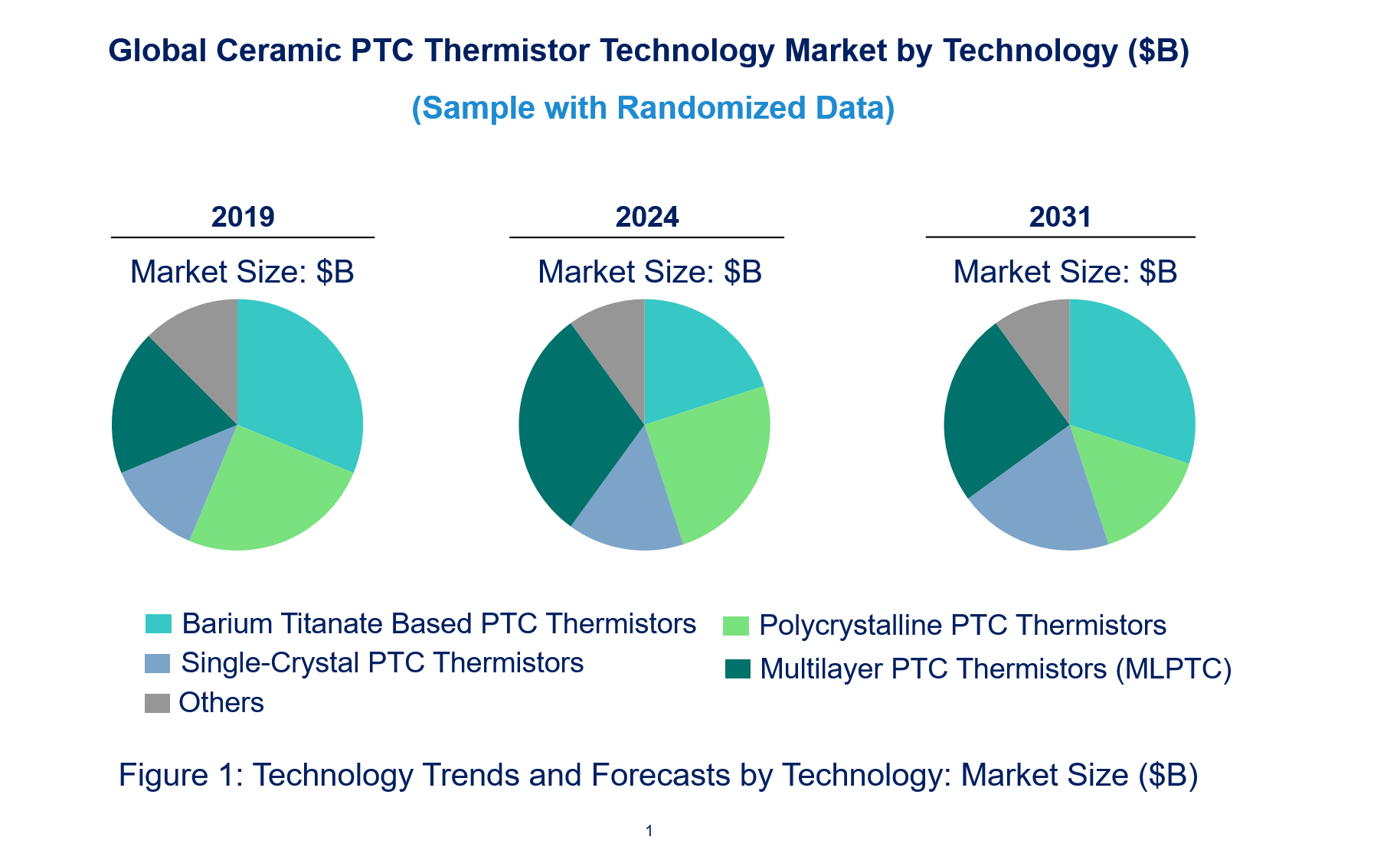
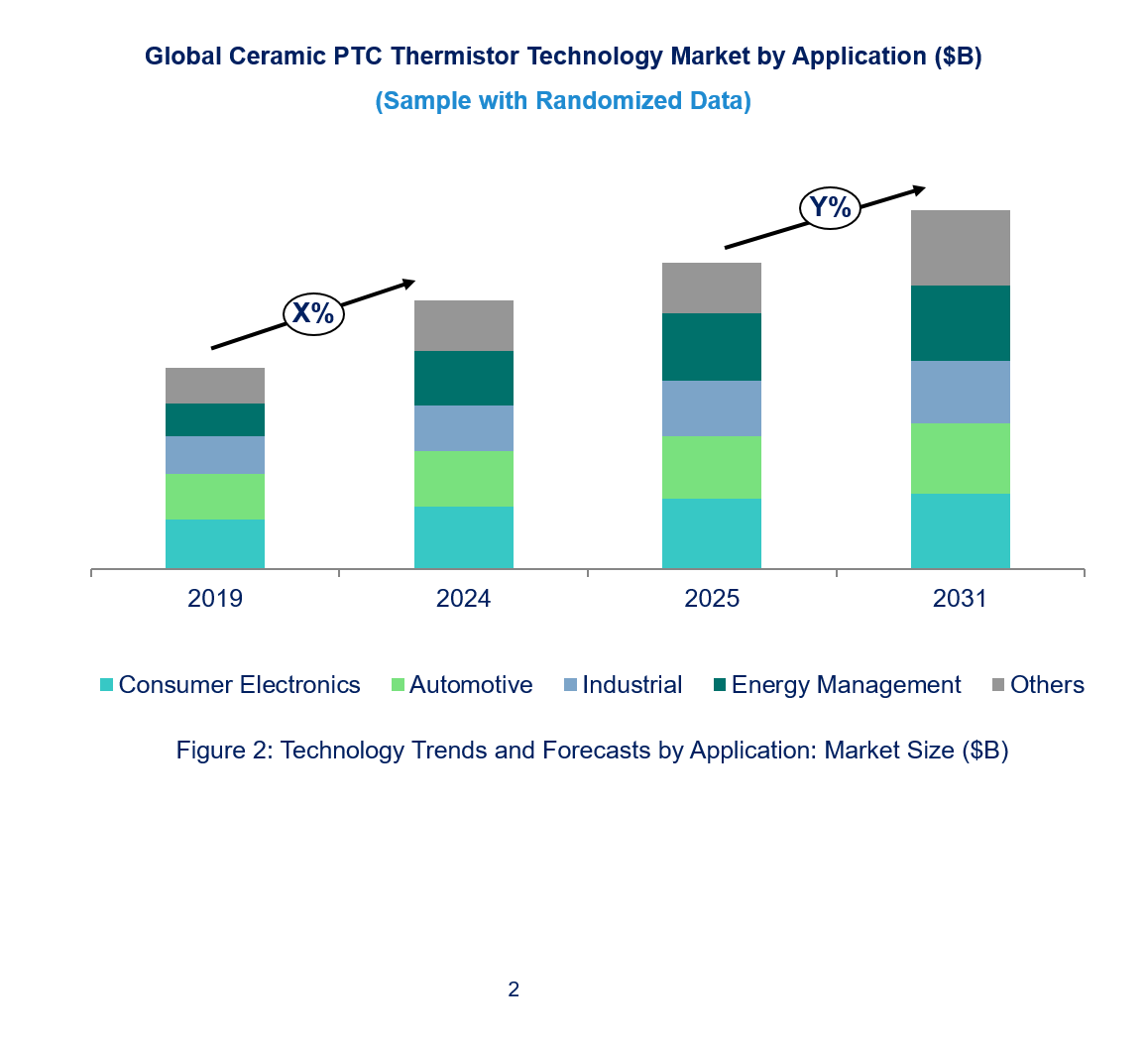
• Miniaturization and Integration: There is a growing trend toward miniaturized and integrated PTC thermistor designs, particularly in the case of MLPTC. These compact devices are well-suited for applications that require a smaller footprint and improved performance. Examples include consumer electronics, automotive, and wearable devices.
• Trend Toward Single-Crystal PTC Thermistors: This trend is gaining momentum due to better stability and superior response to changes in temperature. In many automotive applications, precision and reliability drive this trend.
• Customization and Specialized Applications: As industries require more tailored solutions, manufacturers are offering customized PTC thermistors to meet specific performance criteria. This includes adapting materials and designs to suit application needs in energy management, industrial automation, and medical devices.
• Automation and Smart Integration: The integration of ceramic PTC thermistors is becoming more prominent in smart and automated systems. The advent of the internet of things (IoT) and energy-efficient devices has made the use of PTC thermistors in smart grids, connected devices, and automotive safety systems more common.
• Sustainability and Eco-Friendly Materials: Sustainability is driving the Ceramic PTC Thermistor Market. The trend toward sustainability influences manufacturers to use more eco-friendly materials and production processes for thermistors, reducing environmental footprints. This also aligns with rising consumer and regulatory demands for sustainable products. These technology trends are transforming the ceramic PTC thermistor market into more efficient, compact, and sustainable solutions that cater to the evolving demands of consumers and industries alike.
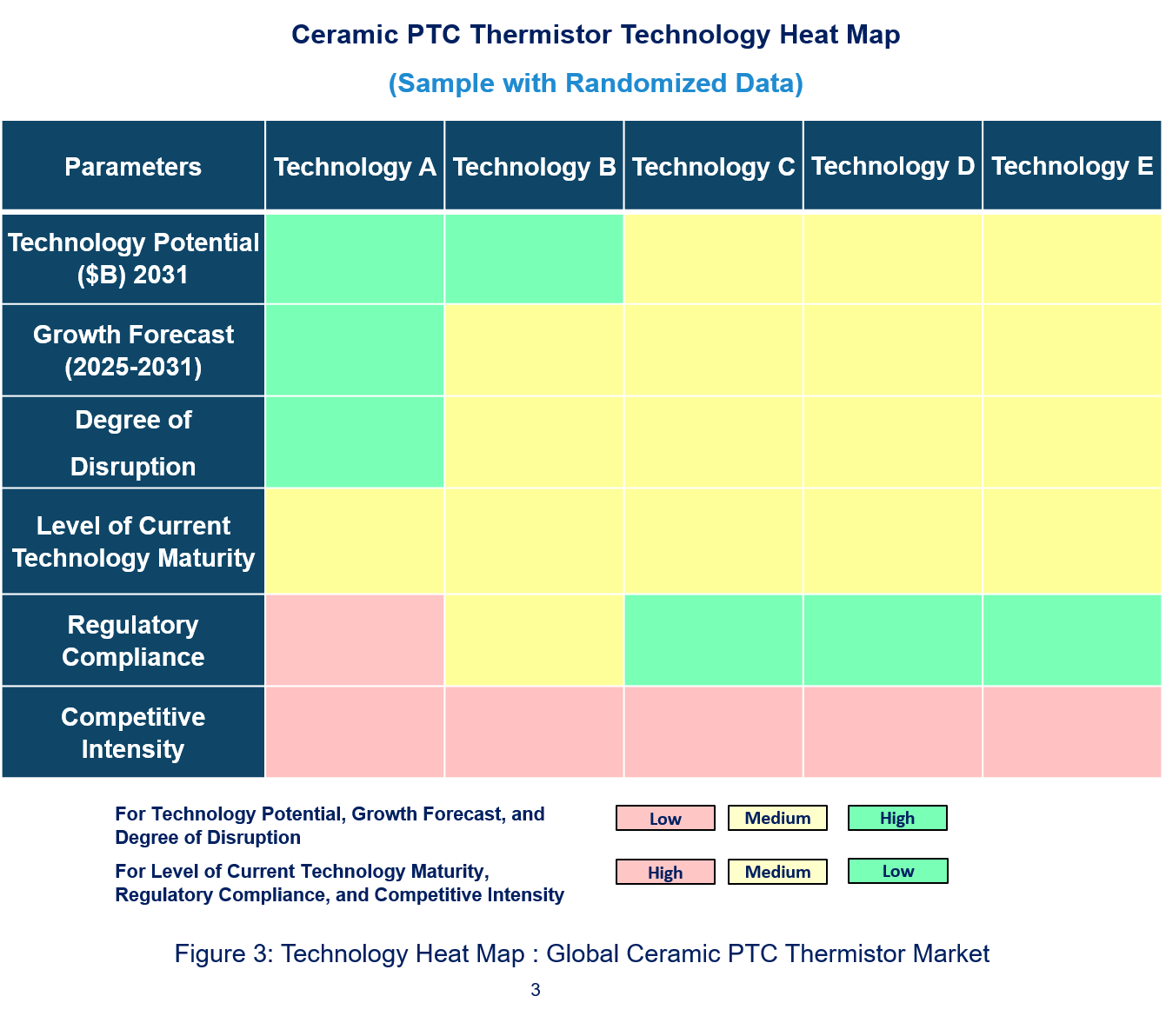
• Potential in Technology: The ceramic PTC thermistor technology has high potential, particularly in applications such as overcurrent protection, temperature sensors, and self-regulating heating systems. Its ability to change resistance with temperature variation provides significant advantages in automotive, electronics, and energy-efficient systems.
• Degree of Disruption: Ceramic PTC thermistors have the potential to disrupt traditional fuse-based protection systems by replacing them with more reliable, reusable, and cost-effective solutions. The integration of smart sensors and IoT connectivity further enhances their disruptive potential, especially in advanced industrial and consumer applications.
• Current Technology Maturity Level: The technology is relatively mature, with manufacturers offering high-performance ceramic PTC thermistors that are well-established in the market. However, there is ongoing development in material science and miniaturization, further enhancing the thermistor’s capabilities.
• Regulatory Compliance: Compliance with international safety standards, such as RoHS (Restriction of Hazardous Substances) and UL (Underwriters Laboratories), is essential for ceramic PTC thermistor manufacturers. These regulations ensure the devices meet environmental and safety criteria. Ceramic PTC thermistor technology presents a high innovation potential, with a mature base that aligns with stringent regulatory frameworks.
• Bourns, Inc: Bourns, Inc. has significantly advanced its work on multilayer PTC thermistors (MLPTC), which have shown high reliability and are widely used in automotive and consumer electronics applications. The company is also expanding its product lines to support the rise of energy-efficient devices.
• Littelfuse, Inc: Littelfuse has introduced a new series of barium titanate (BaTiO₃)-based PTC thermistors aimed at providing improved overcurrent protection. These thermistors are popular for automotive and industrial applications due to their strength and stability under different conditions.
• Murata Manufacturing Co., Ltd: Murata has made advancements in single-crystal PTC thermistors, which provide better performance in high-temperature applications. The company has integrated these thermistors into automotive systems for controlling temperature and overcurrent protection.
• Polytronics Technology Corporation: Polytronics focuses on developing polycrystalline PTC thermistors for next-generation electronics. This thermistor is a low-resistance type used in various consumer electronics, including smartphones and wearables.
• TE Connectivity: TE Connectivity has introduced a new multilayer PTC thermistor family targeting smart device and automotive applications. The company’s focus is on designing thermistors with reduced power consumption and faster response times.
• Wayon: Wayon has launched newly developed ceramic PTC thermistors optimized to minimize energy consumption in a range of applications, from HVAC systems to industrial environments, improving performance.
• Fuzetec: Fuzetec has expanded its portfolio of polycrystalline PTC thermistors for automotive and power supply applications. Fuzetec’s thermistors are designed to improve the robustness and safety of electronic circuits against overcurrent events.
• Sea & Land: The company has focused on producing high-performance PTC thermistors based on barium titanate (BaTiO₃) for over a decade. Their products are in increasing demand in consumer electronics and industrial applications.
• Keter: Keter is investing in the development of single-crystal PTC thermistors for precision applications, primarily in energy management systems and automotive temperature control systems. These thermistors offer higher accuracy and stability.
• Hollyland: Hollyland is expanding its capabilities in the multilayer PTC thermistor market, focusing on applications in telecommunications and energy management. Their products are being designed for higher efficiency and integration into smart grid systems. These developments demonstrate how major players are innovating in the ceramic PTC thermistor market to meet the growing demand for more efficient, reliable, and compact solutions.
• Increased demand for consumer electronics: The growth of consumer electronics, such as smartphones, wearables, and smart home devices, is driving the demand for more compact and efficient PTC thermistors to ensure the reliability and safety of electronics through protection from overcurrent and temperature control.
• Advances in automotive electronics: As automotive systems become more sophisticated, the need for high-performance PTC thermistors in battery management, safety systems, and electronic control units increases. The rise in electric vehicles also accelerates this demand.
• Energy efficiency and sustainability regulations: Growing environmental concerns and regulatory pressures on energy efficiency are pushing industries toward environmentally friendly and energy-efficient thermistors. Ceramic PTC thermistors play a critical role in optimizing energy use in applications like HVAC, industrial automation, and smart grids.
• Growing adoption of IoT and smart devices: The increasing number of Internet of Things (IoT) devices and smart technologies is driving the demand for integrated and miniature PTC thermistors. These components play a vital role in ensuring the safety and efficiency of connected devices in homes, offices, and industries. Challenges in the ceramic PTC thermistor market include:
• Cost and raw material availability: The high cost of raw materials, such as barium titanate (BaTiO₃), used in ceramic PTC thermistors poses a challenge to cost competitiveness for manufacturers, as the raw material may not be readily available to all.
• Complexity in manufacturing: The manufacturing process for single-crystal and multilayer PTC thermistors is complex and requires high-tech technology. This complexity has led to higher production costs and time constraints when scaling production.
• Alternative technologies: Other thermistor materials and solid-state thermistors compete with ceramic-based PTC thermistors. These alternative technologies may offer similar or superior performance for certain applications, which could reduce the market share of ceramic PTC thermistors. Technological innovations are leading to increased demand across various sectors, contributing to significant growth in the ceramic PTC thermistor market. However, challenges related to material costs, manufacturing complexity, and competition from alternative technologies will shape the market's future direction.
• Bourns
• Littelfuse
• Murata Manufacturing
• Polytronics Technology
• TE Connectivity
• Wayon
• Technology Readiness by Technology Type: Barium titanate (BaTiO₃) and polycrystalline PTC thermistors are mature and ready for mass markets. Single-crystal thermistors, though highly advanced, are niche due to their cost. MLPTC thermistors are emerging for compact, high-density applications but face production challenges. Polymer-based PTC thermistors are emerging and show promise but are still under development.
• Competitive Intensity and Regulatory Compliance: The competition is moderate. Barium titanate and polycrystalline PTC thermistors have a competitive advantage in terms of price and availability. Single-crystal and MLPTC thermistors compete in high-performance markets, such as automotive. Regulatory standards are essential, and companies must ensure safety and environmental compliance. Competition will be driven by innovation in packaging and performance, as companies balance cost, regulatory compliance, and technological advancement.
• Disruption Potential by Technology Type: BaTiO₃-based PTC thermistors are highly stable but expensive. Polycrystalline PTC thermistors are less expensive but less accurate. Single-crystal PTC thermistors offer better performance, making them suitable for high-end applications, but they are costly. Multilayer PTC thermistors (MLPTC) are highly suitable for compact, high-performance applications, but the complexity in production increases their cost. New materials, such as polymer-based thermistors, are expected to challenge conventional ceramics, as they can provide cheaper and more flexible options for advanced electronics.
• Barium Titanate (BaTiO₃)-Based PTC Thermistors
• Polycrystalline PTC Thermistors
• Single-Crystal PTC Thermistors
• Multilayer PTC Thermistors (MLPTC)
• Others
• Consumer Electronics
• Automotive
• Industrial
• Energy Management
• Others
• North America
• Europe
• Asia Pacific
• The Rest of the World
• Latest Developments and Innovations in the Ceramic PTC Thermistor Technologies
• Companies / Ecosystems
• Strategic Opportunities by Technology Type




Choose a license that fits your team. Instant PDF delivery.
Prices exclude taxes. Instant delivery. Custom licensing available on request.
Market Report · May 18, 2026
Market Report · May 18, 2026
Market Report · May 18, 2026
Trusted partner for strategic intelligence and business growth


Receive a complimentary market analysis tailored to your industry. Our analysts will identify key growth opportunities and competitive dynamics specific to your business.

Market size, growth rate, and key trend analysis for your specific sector.

Top competitor positioning and market share analysis.

Strategic recommendations backed by data-driven insights.
Get curated market intelligence and competitive moves straight to your inbox.
By subscribing, you agree to receive our monthly insights. Unsubscribe anytime.
Receive a complimentary market analysis tailored to your industry. Our analysts will identify key growth opportunities and competitive dynamics specific to your business.
Market size, growth rate, and key trend analysis for your specific sector.
Top competitor positioning and market share analysis.
Strategic recommendations backed by data-driven insights.
Get curated market intelligence, emerging trends, and competitive moves straight to your inbox each month.
By subscribing, you agree to receive our monthly insights. Unsubscribe anytime.
We'll send your sample report shortly.